
Database hacker and free thinker. Open source user and developer
Joined May 2008
- Tweets 6,775
- Following 435
- Followers 2,539
- Likes 1,298
288 Photos and videos














Giuseppe Maxia retweeted

Jun 5
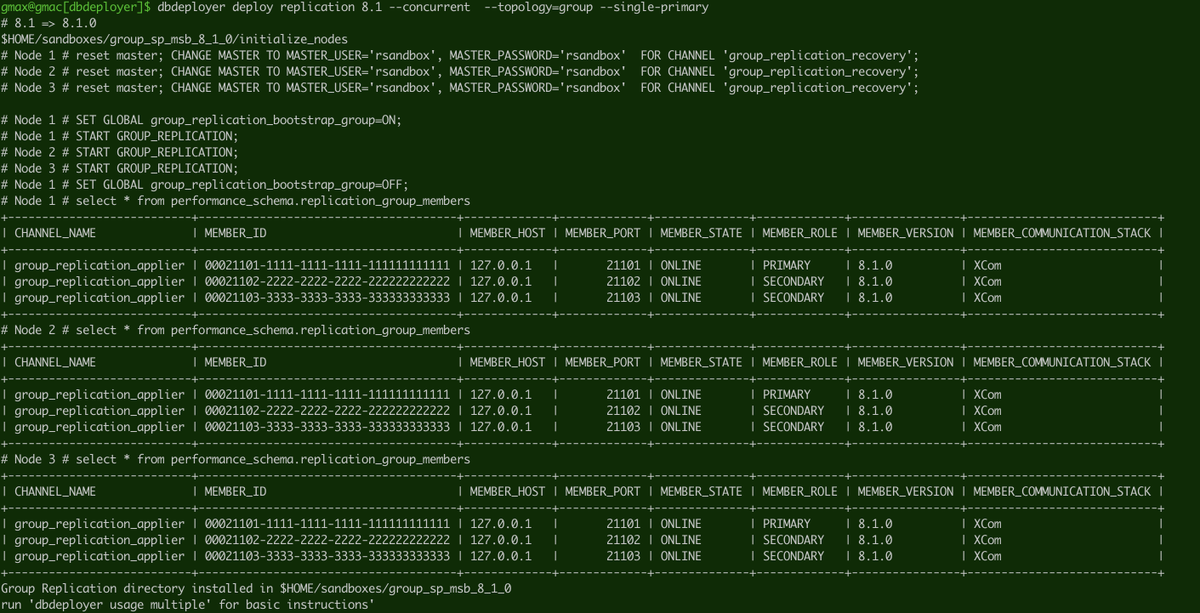
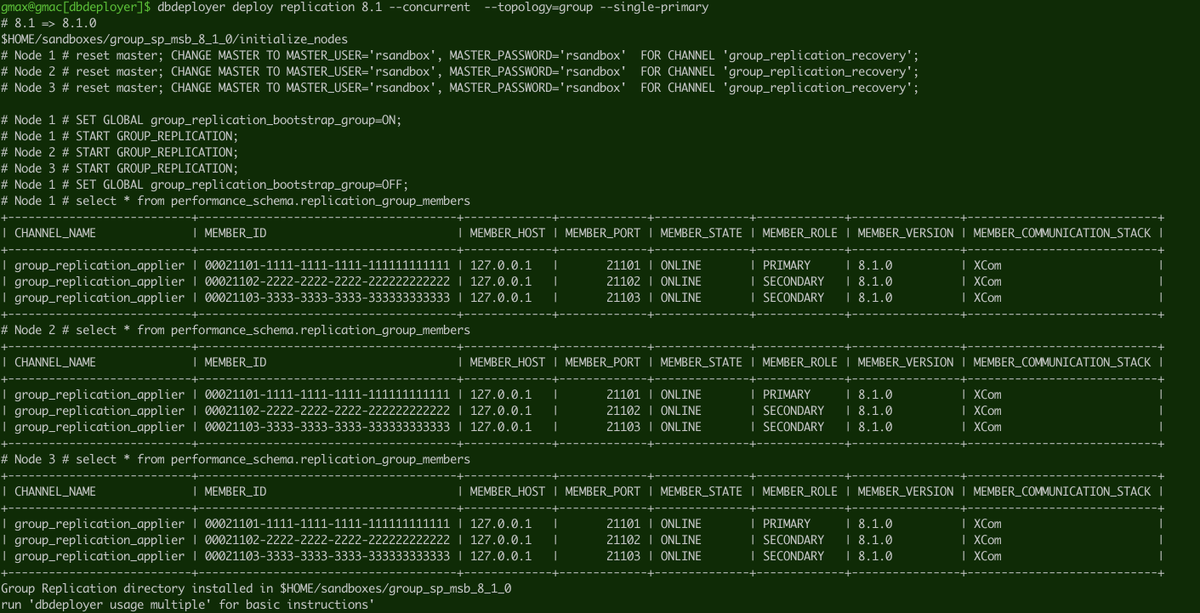
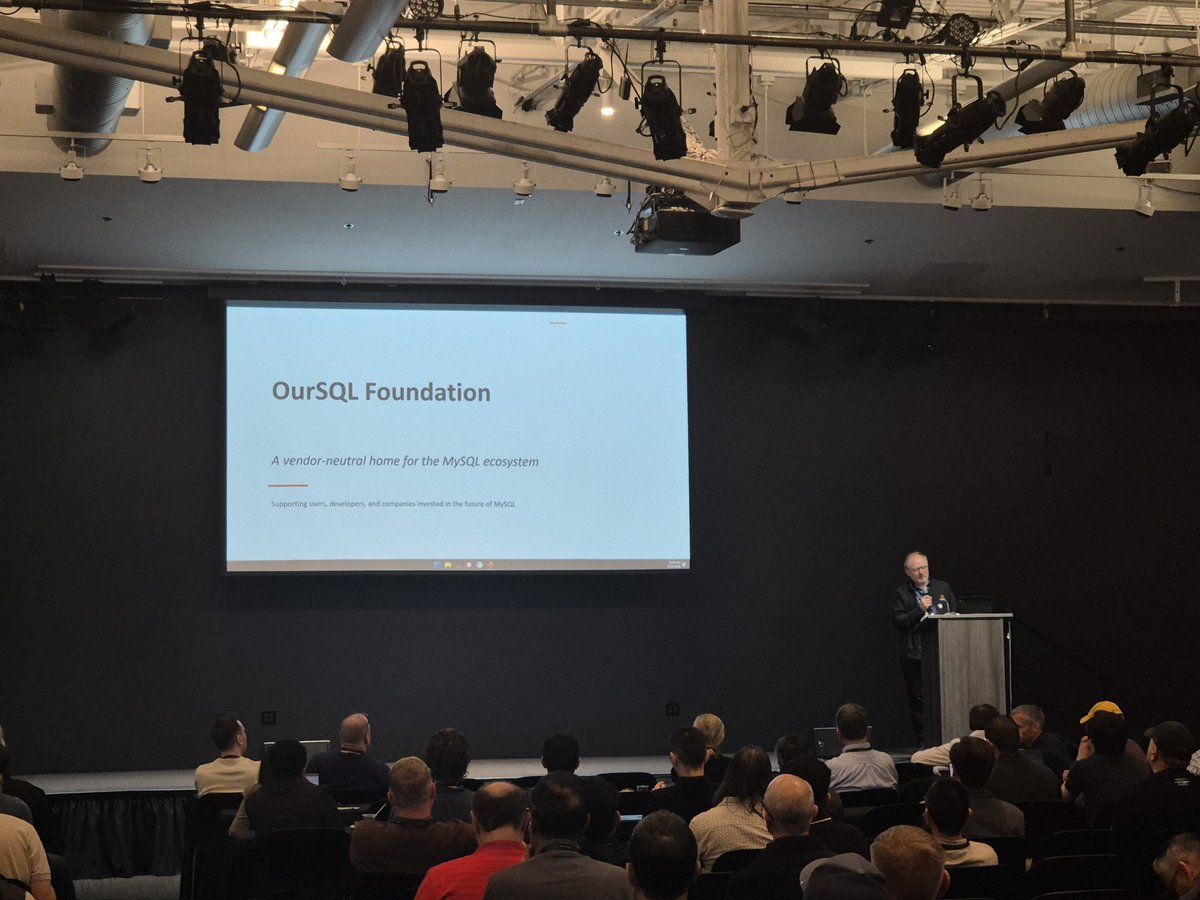
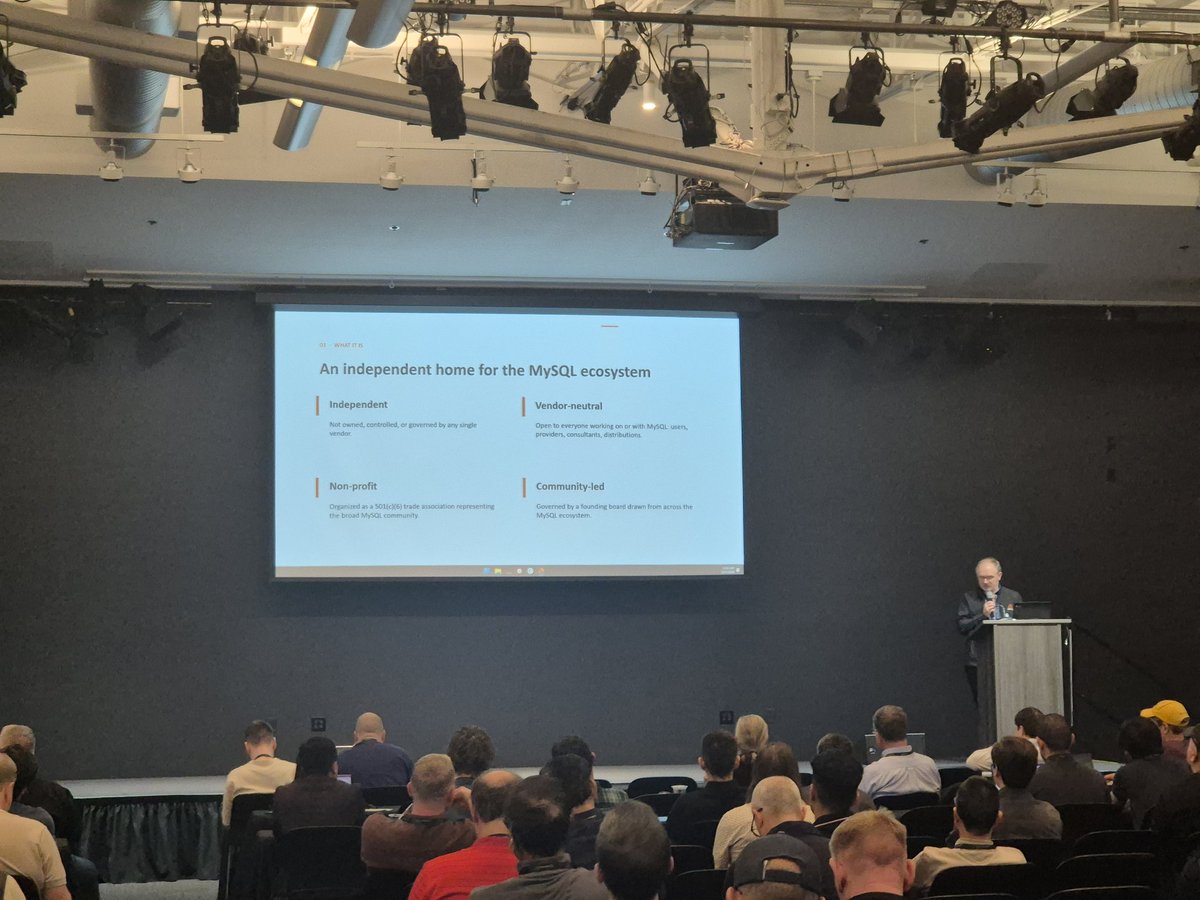
After Percona Live, we turned the PostgreSQL ProxySQL demo into something people can run locally.
dbdeployer can now create PostgreSQL replication sandboxes with ProxySQL included.
Primary replicas ProxySQL helper scripts pgbench stats.
Same workflow used on stage, now reproducible.
proxysql.com/blog/dbdeployer…
#PostgreSQL #ProxySQL #dbdeployer #PerconaLive
1
4
212
Giuseppe Maxia retweeted

😅 Supongo que lo ha mezclado con esto: x.com/aventurasaber/status/2…

¡🗣️ Nueva sección de lengua con Álex Hererro!
Hoy acompañado de Paco Álvarez, autor de ‘El español no nació ayer”.
▶️ Sección completa en: rtve.es/play/videos/la-avent…
@delcastellano @planetadelibros @AlexvonKarma
@la2_tve @rtveplay
1
1
73
Giuseppe Maxia retweeted
May 5
dbdeployer is BACK from the dead, and it’s even better with the ProxySQL team at the wheel
No more crying in the server room trying to spin up test instances manually.
This is great for every dev and DBA who lives in MariaDB/MySQL land.
Thank you @lefred & @mariadb_org the sharing great news! mariadb.org/long-live-to-dbd…

We at the MariaDB Foundation are very happy that dbdeployer has risen from the ashes thanks to the ProxySQL team 🦭 🏗️ 🏕️ buff.ly/GxptWue

1
5
10
893
Giuseppe Maxia retweeted

We at the MariaDB Foundation are very happy that dbdeployer has risen from the ashes thanks to the ProxySQL team 🦭 🏗️ 🏕️ buff.ly/GxptWue
1
4
1,052
Giuseppe Maxia retweeted
Etimología de RECALCITRANTE 🫏 Ya a la venta «El español no nació ayer», un libro divulgativo sobre la evolución del español 🤓 Cómpralo en cualquier librería, NoNacioAyer.com o comenta NO NACIÓ AYER y te paso la información
5
26
1,178
Giuseppe Maxia retweeted

Apr 30
Having been part of the industry for 50 years, I can confidently report that none of this is true.
Sure, writing code has a non-zero cost; this is true of any artifact.
But you know what costs even more, Jonathan?
Writing bad code; writing unnecessary code; writing more code than you really need simply because you think you might need it someday or you are too lazy or sloppy to clean up after yourself.
Anything that costs nothing is often worth nothing as well, and results in significant unintended consequences.
Apr 30

For 50 years, software engineering ran on code rationing. Writing code was expensive, so we rationed it carefully through roadmaps, RFCs, prioritization meetings, and scope reviews.
This created a role: the No Engineer. No, that won't scale. No, we don't have bandwidth. No, that's out of scope. No, we need a design doc first. The No Engineer was valuable for 50 years. Every "no" saved real money. Their judgment was the rationing system.
LLMs will be the end of code rationing. Code is cheap now. And while the No Engineer is explaining why something can't be done, the Yes Engineer has already shipped three versions of it.
If you're a Yes Engineer, the next decade is yours.
85
238
2,313
132,978
Giuseppe Maxia retweeted
Apr 9
Orchestrator is back.
After being archived, it now has a new home at ProxySQL.
For me, this is about more than maintenance:
→ topology intelligence traffic routing
→ MySQL PostgreSQL
→ modern HA, done right
We’ve already started. Much more coming.
👉 github.com/ProxySQL/orchestr…
Announcement: proxysql.com/blog/announcing…
#proxysql #mysql #postgresql #highavailability #databases #failover #dba #opensource
7
17
1,015


ProxySQL is now maintaining dbdeployer.
A key tool for:
✔ local database sandboxes
✔ testing & experimentation
✔ reproducible environments
👉
proxysql.com/blog/proxysql-d…
github.com/ProxySQL/dbdeploy…
#OpenSource #MySQL #PostgreSQL
3
2
245
Giuseppe Maxia retweeted
Apr 4
We took over maintenance of dbdeployer.
For me, this is personal.
I’ve known @datacharmer for ~20 years, and I’ve always respected his work.
Now we’re giving the project a new home, modernizing it, and pushing it forward (MySQL PostgreSQL).
More coming soon.
👉
proxysql.com/blog/proxysql-d… github.com/ProxySQL/dbdeploy…�
#opensource #mysql #postgresql
3
8
377

The future of MySQL needs an open conversation.
Governance, transparency, and a real community voice, are not optional for an ecosystem like MySQL—they are essential to its future.
If you care about where MySQL goes next, read and sign the open letter: bit.ly/4kJGxBJ
5
4
260
Giuseppe Maxia retweeted

Feb 17
An Open Letter to Oracle: Let’s Talk About MySQL’s Future ift.tt/zGtlhxX
1
2
379
Giuseppe Maxia retweeted

Feb 11
Go 1.26 is out, and the announcement says:
"Over the next few weeks, follow-up blog posts will cover some of the topics in more detail. Check back later."
So you can wait a few weeks OR you can read my interactive Go 1.26 tour right away:
antonz.org/go-1-26
3
26
210
8,690
Giuseppe Maxia retweeted

Rarely in human experience has there been a technology so revolutionary, so important, so essential, so mind-blowingly awesome that its creators have to force it on everyone and beg people not to say anything bad about it.
This PhD says: 🤖🫧💥.

NVIDIA CEO Jensen Huang doesn't want "well-respected people" like PhDs and CEOs to criticize AI, especially in front of governments.
He labeled concerns about the AI technology a "doomer narrative": 80.lv/articles/nvidia-ceo-do…

62
964
8,499
192,127

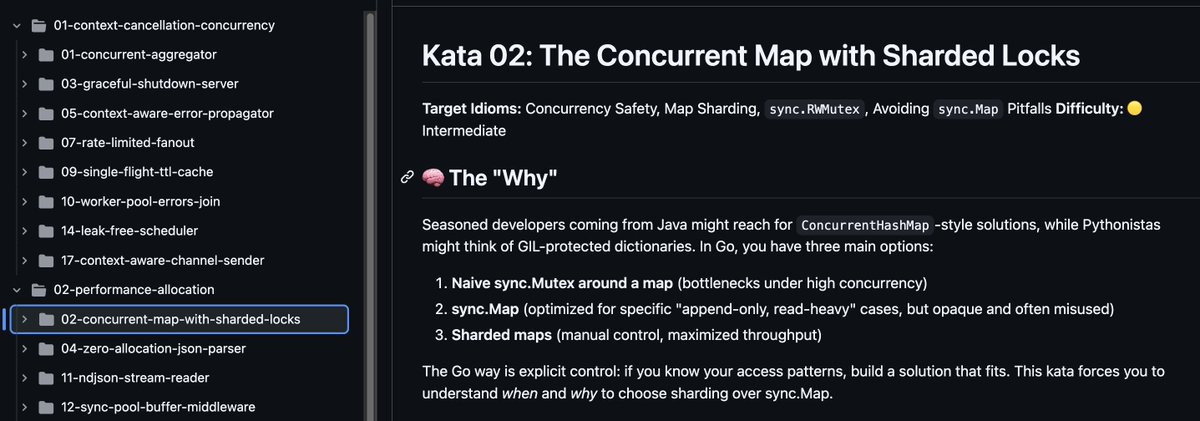
This repository has many Go challenges to help you write idiomatic Go. It looks very promising: github.com/MedUnes/go-kata
7
103
919
39,517
Giuseppe Maxia retweeted
Jan 8
Go 1.26 received a somewhat under-the-radar language change: recursive type constraints in generics.
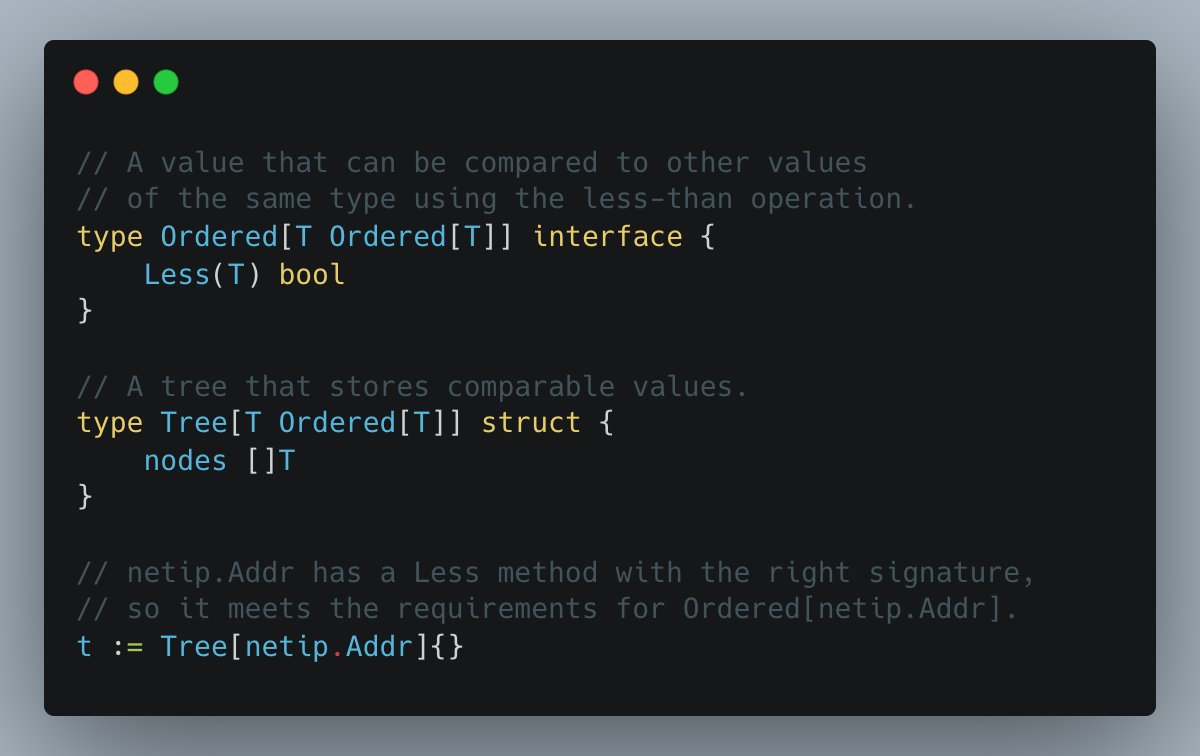
Previously, type constraints couldn't directly or indirectly refer to type parameters. For example, this interface declaration:
type Ordered[T Ordered[T]] interface {
Less(T) bool
}
resulted in a compile error: "invalid recursive type: Ordered refers to itself".
With Go 1.26, it compiles just fine.
A typical use case is a generic type that supports operations with arguments or results of the same type as itself (like Ordered[T]).
We can use such a type as a member in a generic container (like Tree[T Ordered[T]] — see the screenshot).
This makes Go's generics a bit more expressive.
3
28
221
13,046
Giuseppe Maxia retweeted
Jan 7
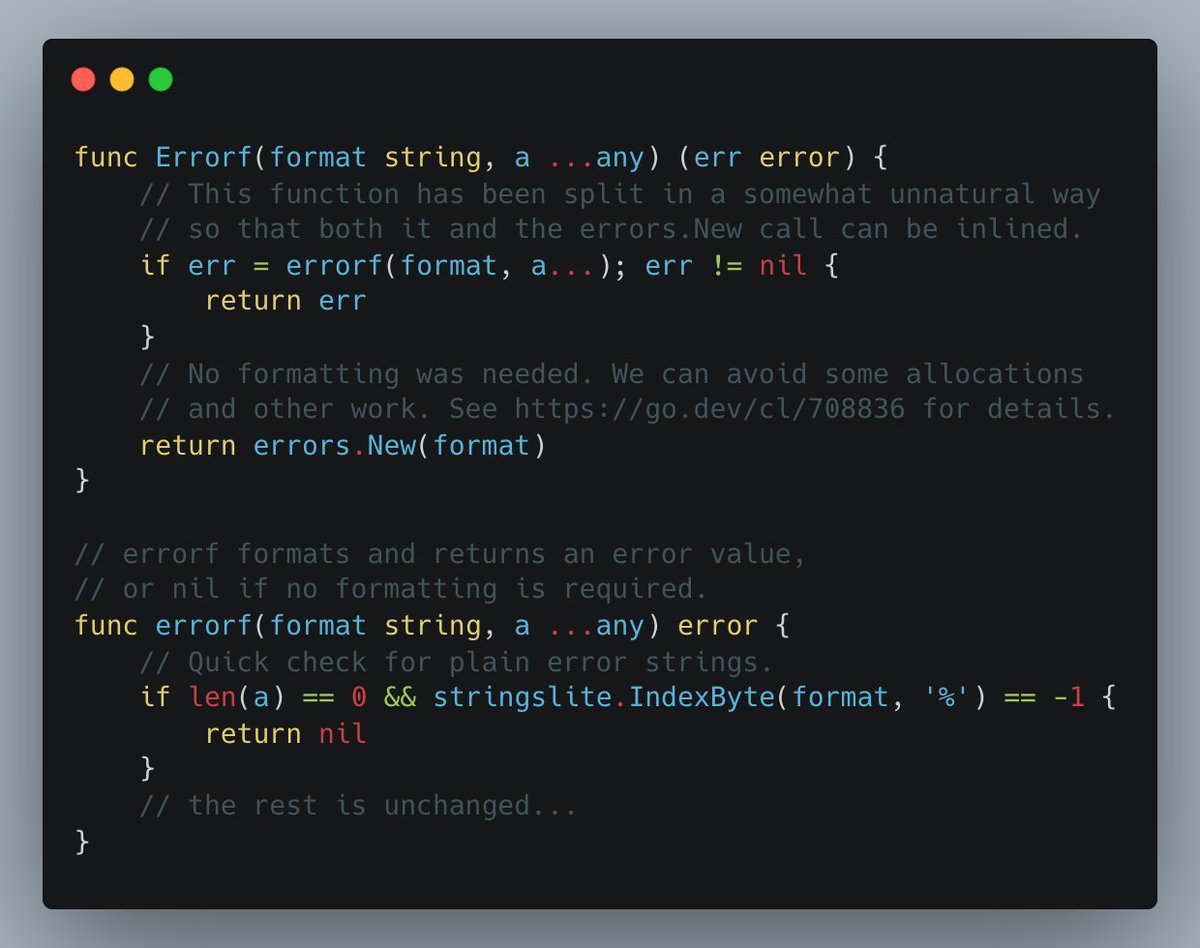
There are a lot of major performance improvements in Go 1.26, but my favorite is this — a small but important one:
Optimized fmt.Errorf
As you know, both errors․New("x") and fmt.Errorf("x") create the same errorString error. So, it's simpler and more consistent to just always use fmt.Errorf.
The thing is, fmt.Errorf was 3x slower than errors․New.
So, one of the core Go developers got tired of hearing "fmt.Errorf is slow" and improved it. He created a fast path so that the "plain error" code branch doesn't involve all the heavy machinery and just calls errors․New right away (see the screenshot).
Now, fmt.Errorf("x") is just one allocation (like errors․New) and is only 20% slower (25ns vs 21ns).
Very nice!
7
14
250
15,674