
physician, integrative health coach, retired US Navy Captain, #ActOnClimate, #EndGunViolence, #Democracy
Joined March 2009
- Tweets 206,750
- Following 12,377
- Followers 12,736
- Likes 341,724
Photos and videos

#ShareTheMeal and help children in need with a tap on your smartphone. ShareTheMeal here:sharethemeal.org/campaigns/p… sharethemeal.org/campaigns/p…
2
I just read "How a kindergarten teacher became the accidental guardian of 200 king penguins." Join me? theguardian.com/environment/…
9
Frances Stewart, M.D. retweeted

"The United States government has intentionally killed at least 205 people outside any lawful circumstances—and the operation is still ongoing. These extrajudicial killings are a form of murder," writes Amnesty International's National Director of Government Relations and Advocacy, Amanda Klasing, in the @BulwarkOnline
Read the full oped👇
Jun 11

The United States government has intentionally killed at least 205 people outside any lawful circumstances—and the operation is still ongoing. That is what the campaign against the "drug boats" is.
New from @AMKlasing:
lnk.thebulwark.com/3PYDQkV
5
78
105
3,984
Frances Stewart, M.D. retweeted

This administration has treated children with disgusting cruelty and callousness. After seeing it up close, I had to take action.
The Dignity and Due Process for Children Act will establish a floor of legal protections every child in this country should expect. This is a floor. A starting place.
We must pass this legislation now. No child belongs in prison, and until this is the law of the land, we must ensure their most basic rights are protected.
CHILDREN must be protected, not treated as criminals.


197
25
47
5,599
Frances Stewart, M.D. retweeted

Jun 12
Is this what “constructive strategic stability” means? I hope this American is released immediately. The detente so many analysts in China were praising recently cannot include the wrongful arrest of citizens from either country.
Jun 12

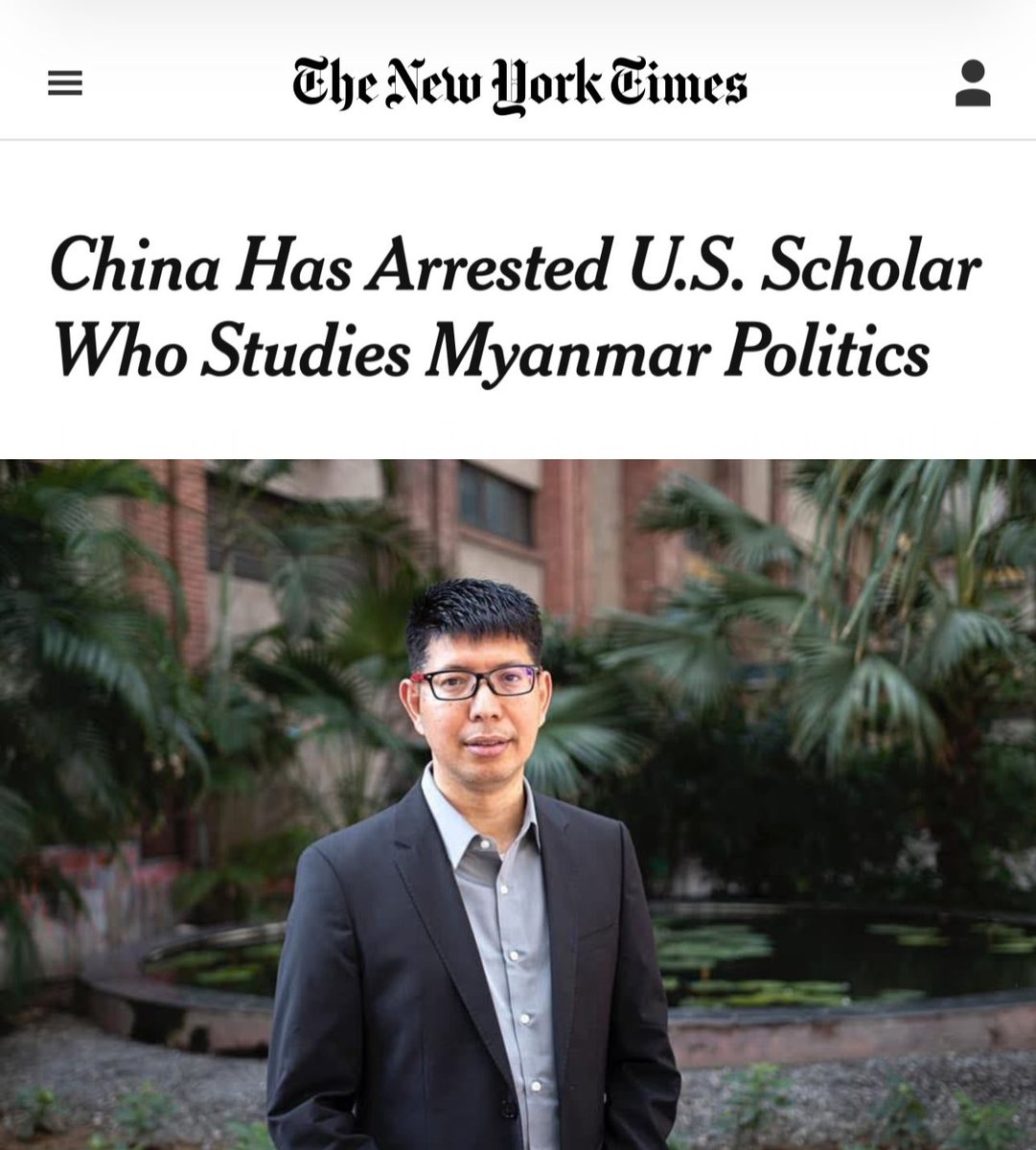
Chinese security officers have arrested Min Zin, a US citizen who studies politics in Myanmar, and accused him of endangering national security.
Min Zin was arrested in early June. He disappeared on June 3 while in Kunming, the capital of Yunnan Province, which borders Myanmar. American diplomats are aware of the arrest.
It is rare for China to arrest a US citizen on charges of a national security crime, and the action against Min Zin takes place as President Trump and Xi Jinping, China’s leader, are trying to establish a type of partnership between the two nations.
Min Zin is a political scientist and executive director of a policy research group originally based in Yangon, the former capital of Myanmar. The group has worked from different locations since a 2021 military coup in Myanmar. Over the years, he has spent time in both the US and his home country of Myanmar, once known as Burma, and he now lives in Thailand.
He has written essays on Myanmar politics for the opinion section of The New York Times, Foreign Policy and other news organizations.
The arrest took place less than three weeks after President Trump attended a summit and state banquet in Beijing hosted by Xi.
China’s arrest of another US citizen and its use of a national security charge complicates that rapprochement.
China keeps about 200 American citizens under some form of detention. Some Americans are imprisoned on drug charges, while others are prevented from leaving the country on “exit bans,” often because of commercial or financial disputes.
It is unclear why Chinese security officers in Yunnan Province arrested Min Zin. There was once a sizable presence of people from Myanmar in Yunnan, but that has dwindled since the pandemic. China has at times provided aid to some armed groups from Myanmar that operate on both sides of the border. But it is unclear whether Min Zin was involved in research or activities involving those people.
The Chinese government has a close relationship with the military-linked government that rules Myanmar. Min Zin wrote extensively on China’s role in Myanmar.
A Nepali research group said in an online post in May that Min Zin was scheduled to be a speaker at a policy and geopolitics forum in Nepal later this month. The speaker biography says his research group founded in Yangon, the Institute for Strategy and Policy Myanmar, is “dedicated to promoting democratic leadership and strengthening civic participation in Myanmar.”
The biography also says he is a PhD candidate in political science at the University of California at Berkeley, and his research interests include civil-military relations, democratization and ethnic conflicts. His LinkedIn page says he has a master’s degree in political science from Berkeley, which he attended from 2010 to 2016.
The handful of opinion pieces he has written for The New York Times have focused on those topics. Several were published soon after the Tatmadaw, the military of Myanmar, overthrew the elected government in early 2021.
In an essay in June 2021, he said that the military and the opposition appeared to be locked in an “intolerable stalemate,” and that the Tatmadaw “appears to believe it can force its way to and through a next election by way of brutal crackdowns, by dissolving the once-ruling National League for Democracy and by threatening to imprison Daw Aung San Suu Kyi, the country’s former de facto leader, for the rest of her life.”
At the same time, he wrote, the anti-coup movement, which included Gen Z protesters and civil servants, “has been shifting tactics away from predominantly peaceful demonstrations to more violent kinds of resistance.”
What Min Zin observed and predicted then has unfolded with force, and Myanmar is now engulfed in a civil war. The Myanmar military carries out airstrikes on civilian areas using Chinese and Russian-made weapons.
nytimes.com/2026/06/11/us/po…
1
27
98
11,547
Frances Stewart, M.D. retweeted

The ICE flight taking Iranian women and others from safety in this country to high danger in the Central African Republic just left the ground.
People on this flight proved to a judge that they were likely to be persecuted in their home countries. This is profoundly unjust.
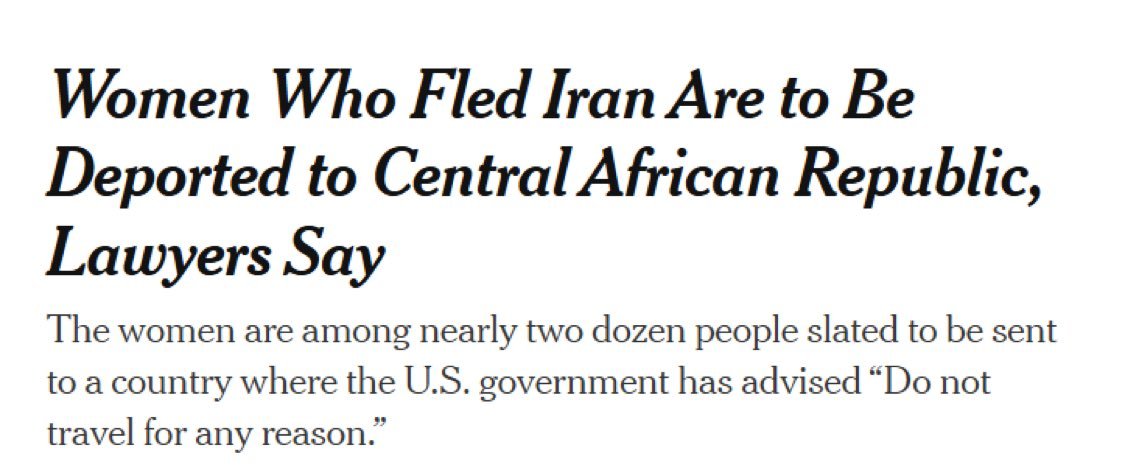
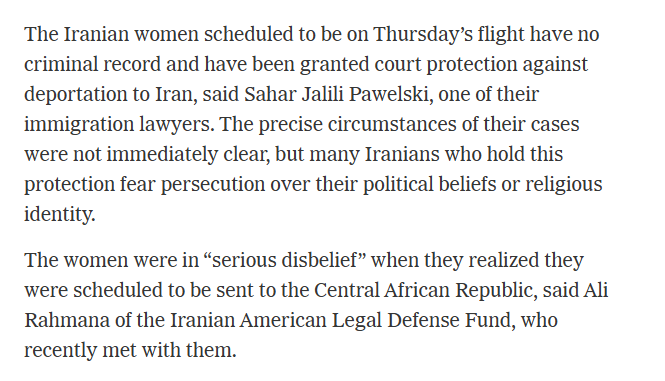

‼️The ICE deportation flight (OAE2272) has just taken off from Alexandria, LA for Ghana. This will be the 1st leg of the flight before stopping in Central African Republic with Iranian, Afghan & Syrian nationals.

17
506
1,006
37,538
Frances Stewart, M.D. retweeted

Jun 11
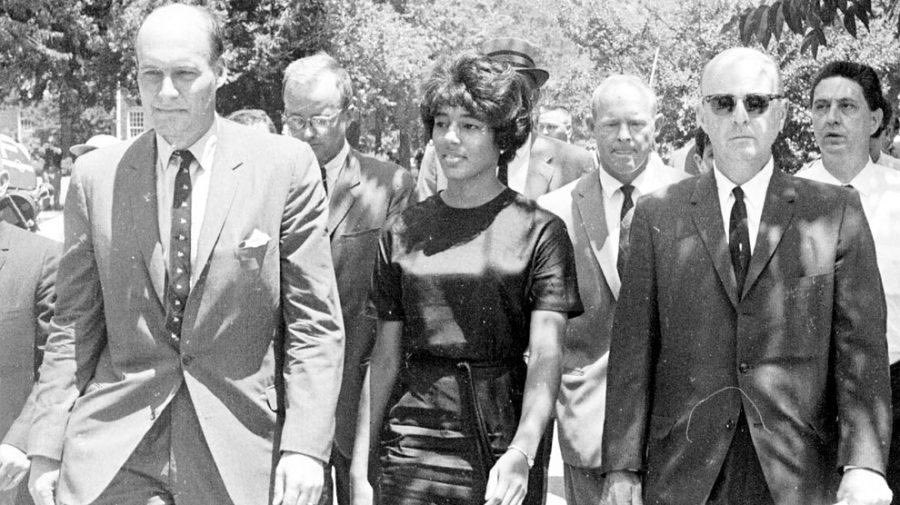
June 11, 1963. My late sister in law - Vivian Malone - with the help of the Department of Justice and President Kennedy integrated the University of Alabama. The Governor of the state, George Wallace, stood in the school house door to prevent her from enrolling. The use of State power to trample on the rights of black Americans. In 2026 this resurgent movement by southern Republicans is both historically familiar and alarming.
Vivian fought.



31
611
1,644
19,407
Frances Stewart, M.D. retweeted

Jun 12
Hegseth removed Chappie James's portrait from the Air Force Art Gallery and left the wall empty.
James flew 179 combat missions across two wars. First Black four-star general in US military history.
Curry passed that portrait every day for a decade. When it came down, he retired.
The wall is still empty.

Jun 9

Sec. Hegseth’s actions continue to be despicable – and they certainly aren’t representative of the Army I served in.
We’ve repeatedly seen how this White House has disparaged and mistreated both active-duty service members and the veterans who raised their hand to serve this country. I’m glad that people are continuing to stand up and speak out.
theatlantic.com/magazine/202…
1,362
10,026
23,731
2,321,632
Frances Stewart, M.D. retweeted

Of all the terrible things happening right now this one is possibly hitting me the hardest. Knowing that most of the bad can be undone keeps me going. But this can’t. You can’t undo the destruction of nature.
The Republicans who represent Texas could’ve stopped this and they didn’t. I’m gutted, and just hoping for a last minute miracle.💔
Jun 11

This week, DHS waived every one of our nation's most important environmental laws to bulldoze new border barriers and roads through Big Bend National Park. This marks the first time in U.S. history these laws have been waived in a national park.
With these laws gutted and a $1.7 billion construction contract already issued, very little stands in the way of DHS contractors plowing into the park, permanently destroying countless archeological sites, blocking off river access and turning this peaceful national park into an industrial construction zone.
We will continue to fight this project every step of the way... more on that soon.
Audio from NPR's fantastic Studio 1A program, which aired across the country last week.
26
574
1,217
18,931
Frances Stewart, M.D. retweeted
Jun 11
Let's walk through what actually happened here, in order.
DOGE cut the USAID program specifically designed to prevent screwworm from crossing the U.S.-Mexico border. DOGE cut USDA's animal disease control and prevention funding. That funding had supported more than 180 outbreak investigations in 22 countries and capacity-building in more than 160 laboratories. The screwworm monitoring and response program that watched the border for exactly this parasite - cut.
Then screwworm showed up in Texas cattle. Texas Governor Greg Abbott declared a disaster for Zavala and Uvalde counties this week.
Agriculture Secretary Brooke Rollins went on CNBC this morning and blamed the Biden administration, 17 months out of office.
Her specific words: "obviously not much had been done to push back."
The program that was supposed to push back existed. DOGE eliminated it in March 2025. Rollins has been Agriculture Secretary since February 13, 2025. The cuts happened on her watch.
Beef prices are already high. Ranchers in south Texas are now dealing with a flesh-eating parasite that was eradicated in this country in the 1960s - eradicated, specifically, using the sterile fly program her department defunded.
The flies existed. The program existed. The budget existed.
Until it didn't.
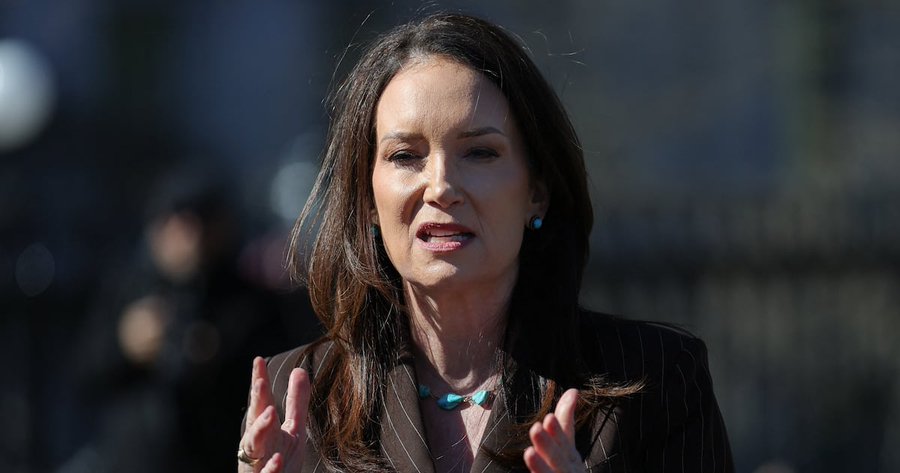

Trump's agriculture secretary laid the blame for the outbreak on the Biden administration, despite it being more than 17 months since Biden's term ended.
thedailybeast.com/brooke-rol…
224
4,515
8,697
221,011
‘Respect’—UEFA Creates History for World Cup Referee Turned Away at U.S. Border si.com/soccer/uefa-creates-h…
7
#ShareTheMeal and help children in need with a tap on your smartphone. ShareTheMeal here:sharethemeal.org/campaigns/p… sharethemeal.org/campaigns/p…
1
I just read "Record number of dams dismantled in Europe in effort to help wildlife thrive." Join me? theguardian.com/environment/…
15
Frances Stewart, M.D. retweeted

Jun 10
Vivek Ramaswamy recently called affordability a “buzzword” and said that Ohioans are “perceiving” rising costs. But what Ohioans are facing is very real. And it keeps getting worse.
I know what it’s like to worry about rising costs, because I’ve lived it too. As governor, I’ll fight from day one to make Ohio affordable again and ensure every family has a fair shot at success.
Jun 10

Breaking:
WASHINGTON (AP) - U.S. inflation rises to highest level in three years, highlighting affordability challenge as elections nears.
88
190
869
22,884
Climate Action Campaign CAC's Museum of Unnatural Disasters Forced to Close Early by Trump Birthday - Climate Action Campaign actonclimate.com/post/cacs-m…
8
I just read "Papua New Guinea announces largest MPA in its history." Join me? oceanographicmagazine.com/ne…
13
#ShareTheMeal and help children in need with a tap on your smartphone. ShareTheMeal here:sharethemeal.org/campaigns/p… sharethemeal.org/campaigns/p…
5
I just read "A First Among Major Nations, India Is Industrializing With Solar." Join me? e360.yale.edu/features/india…
9
#ShareTheMeal and help children in need with a tap on your smartphone. ShareTheMeal here:sharethemeal.org/campaigns/u… sharethemeal.org/campaigns/u…
9
#ShareTheMeal and help children in need with a tap on your smartphone. ShareTheMeal here:sharethemeal.org/campaigns/u… sharethemeal.org/campaigns/u…
6