Passion 4 innovation | CEO at Lodestar | Board Member, Investor, Mentor, Advisor, Ambassador | bit.ly/3K2LzZP | Husband ❤️ father of 3 | Views my own
Joined June 2009
- Tweets 11,782
- Following 1,625
- Followers 2,551
- Likes 23,508
741 Photos and videos






Pinned Tweet

28 Apr 2024
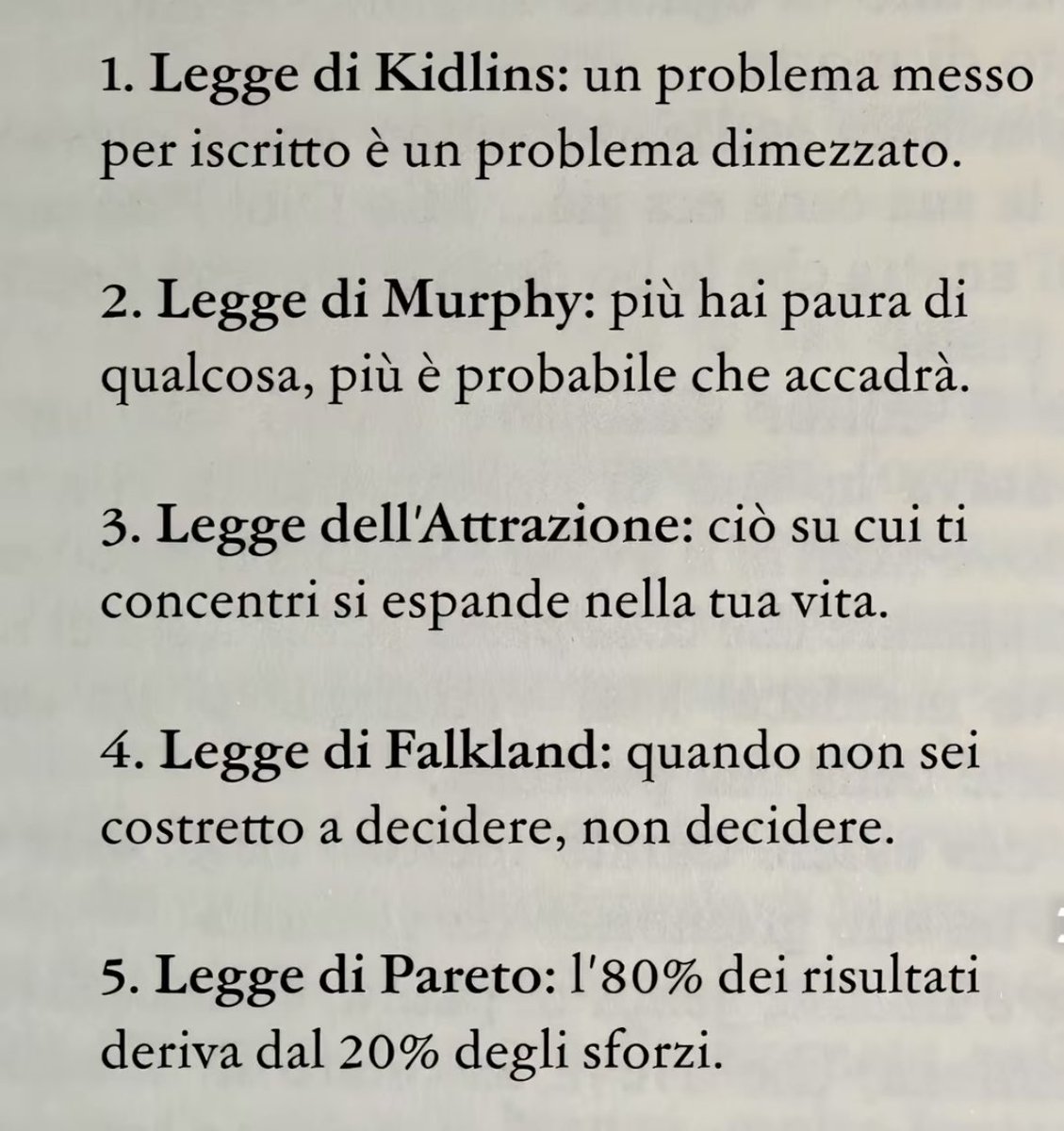
If you change the way you look at things, the things you look at change. (Wayne Dyer)
1
2
436

Fabio Luinetti retweeted

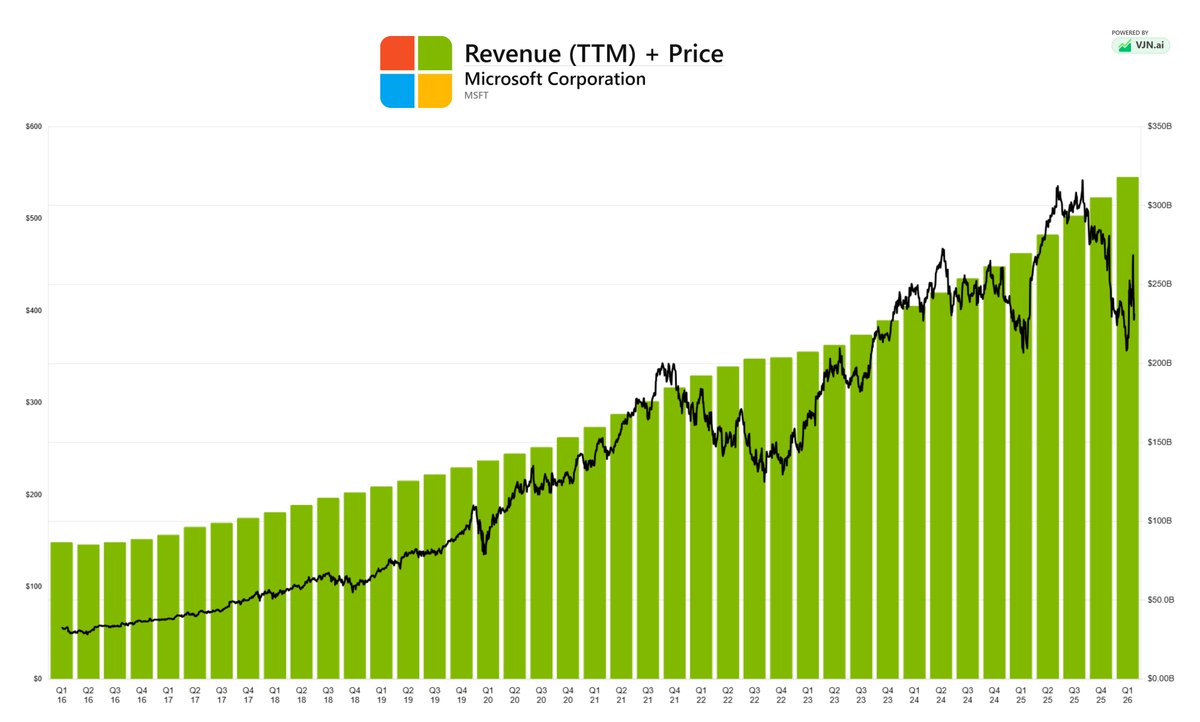
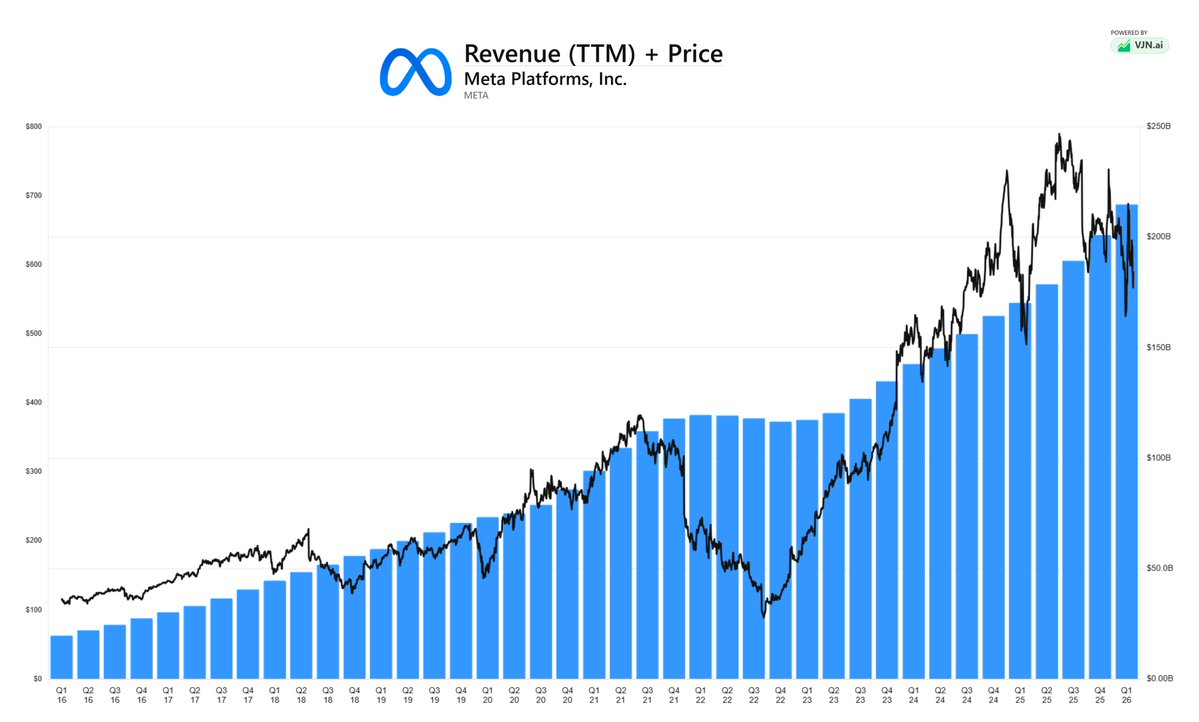
I think very few realize what is going on at $MSFT
There are 2 things in particular:
1. They are developing in-house AI chips with the MAIA platform. These chips are designed for inference and is gonna save BILLIONS of dollars on CapEx.
These chips were launched in 2023 and they are on the 3rd generation already
2. They have already made LLMs in-house. The MAI series of models were released last year and is continuously iterated on
The latest MAI-thinking-1 is said to be somewhere between Claude Sonnet 4.6 and Opus 4.6
So my takeaway from this:
The cost reduction by running inference on their own chips with their own models is so large that they don't need to match Nvidias chips or Anthropics models
If they manage to get even 50-80% of the performance in-house it is a massive win long term
Jun 15

7
9
111
17,333
Fabio Luinetti retweeted

Interessante.
x.com/gartner_inc/status/206…
Jun 15

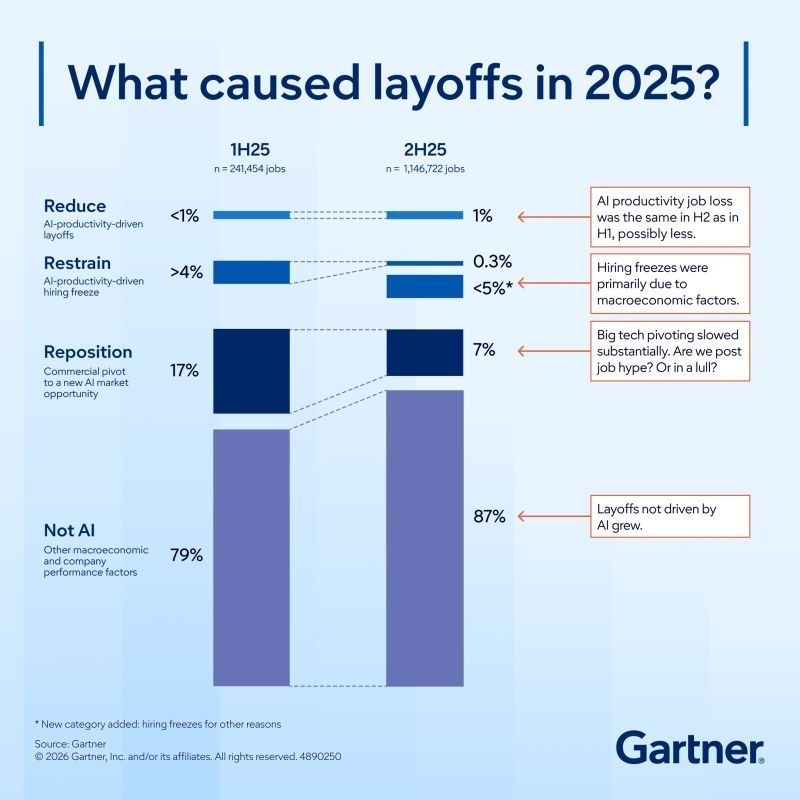
Less than 1% of announced layoffs in the first half of 2025 are attributable to productivity gains from AI.
Gartner forecasts a net increase in jobs from AI beginning in 2028 📈
Here's why organizations should put more effort into transforming jobs than eliminating them: gtnr.it/43WWhJV
3
2
15
1,570
Fabio Luinetti retweeted

Ayrton Senna en el Gran Premio de Mónaco 1990…
A diferencia de las levas actuales detrás del volante, el McLaren MP4/5B de Senna tenía una caja manual de 6 velocidades en forma de H.
Para cambiar de marcha unas 3,600 veces por carrera, Senna debía soltar constantemente el volante con la mano derecha.
Controlaba un indomable motor V10 a más de 250 km/h por calles estrechas con una sola mano.
El auto no contaba con dirección asistida ni suspensión activa. Toda la tracción y corrección en los saltos de Montecarlo dependían puramente de su sensibilidad y fuerza muscular.
201
1,964
11,920
529,194
Fabio Luinetti retweeted

Jun 14
2,791
7,869
39,958
64,356,083
Fabio Luinetti retweeted

Jun 13
The US government, citing national security authorities, has issued an export control directive to suspend all access to Fable 5 and Mythos 5 by any foreign national, whether inside or outside the United States, including foreign national Anthropic employees.
The net effect of this order is that we must abruptly disable Fable 5 and Mythos 5 for all our customers to ensure compliance.
Access to all other Claude models is not affected.
We apologize for this disruption to our customers. We believe this is a misunderstanding and are working to restore access as soon as possible.
Read our full statement: anthropic.com/news/fable-myt…
12,597
25,779
88,094
90,165,105
Fabio Luinetti retweeted

Jun 12
World's Largest Companies By Market Cap:
1. Nvidia $4.97T
2. Alphabet $4.40T
3. Apple $4.29T
4. Microsoft $2.88T
5. Amazon $2.54T
6. TSMC $2.21T
7. SpaceX $2.13T
8. Broadcom $1.81T
9. Saudi Aramco $1.75T
10. Tesla $1.47T
15
44
548
60,300
Fabio Luinetti retweeted

Jun 11
The award for the best ad of the 2026 World Cup goes to Canadian travel agency @flighthubglobal

98
554
6,131
519,242
Fabio Luinetti retweeted

Jun 10
$ORCL earnings is a MASSIVE BUYING OPPORTUNITY 🔥💯
✅ Revenue: $19.18B vs $19.10B est.
✅ EPS: $2.11 vs $1.96 est.
✅ OCI Growth: 93% YoY
✅ Cloud Revenue: 47% YoY
✅ RPO Backlog: $638B ( $85B QoQ) 📈
A few details investors are missing 👇
• 12% of RPO is expected to be recognized in the next 12 months ($77B)
• Another 34% is expected to be recognized in months 13-36 ($217B)
That’s nearly $300B expected to be recognized over the next 3 years.
• $75B of AI contracts include customer-prepaid or customer-supplied GPUs, substantially reducing Oracle’s capital needs.
FY26:
☁️ Revenue: $67.4B ( 17%)
☁️ Cloud Revenue: $34B ( 39%)
☁️ IaaS Revenue: $18.1B ( 77%)
📈 Operating Cash Flow: $32B ( 54%)
🏗️ CapEx: $55.7B
Management expects:
🏗️ FY27 CapEx: ~$70B
💰 FY27 Capital Funding: ~$40B
📈 Raised FY27 non-GAAP EPS guidance to $8.05
Guidance 🔥
📈 Q1 Revenue Growth: 27-29%
☁️ Cloud Growth: 58-64%
💰 EPS: $1.72-$1.76
Long-term targets 👀
🎯 31% Revenue CAGR (FY26-FY30)
🎯 28% EPS CAGR (FY26-FY30)
This CapEx isn’t being spent because demand is weak.
It’s being spent because Oracle has more AI demand than it can currently serve and is racing to build capacity.
The market is focused on the spending.
I’m focused on:
✅ OCI 93%
✅ $638B backlog
✅ Nearly $300B expected to be recognized within 3 years
✅ Raised FY27 EPS guidance
✅ 31% Revenue CAGR target
✅ 28% EPS CAGR target
The market has $ORCL wrong.
This is one of the strongest AI infrastructure stories in the market and it looks like a buy here IMO.


21
25
193
21,668
Fabio Luinetti retweeted

Jun 10
$ORCL Q4 EARNINGS
• Revenue $19.2B vs Est. $19.1B
• EPS $2.11 vs Est. $1.97
• Operating Income $8.6B vs Est. $8.3B
• RPOs $638B vs Est. $590B ( 363% YoY)
FY28 Guidance
• Revenue $90B vs Est. $89B
• EPS $8.05 vs Est. $7.45
Oracle announced a $40B financing plan.

77
82
740
230,906
Fabio Luinetti retweeted

Jun 9
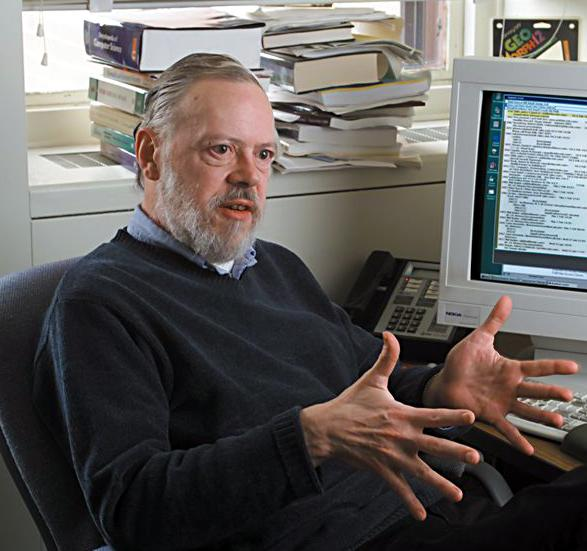
Dennis Ritchie invented C in 1972, co-built Unix in 1969, and his code is running inside every device you are reading this on right now and the colleague who announced his death had to do it through a Google post because no journalist thought to check.
He worked at Bell Labs in New Jersey for 44 years. He never gave a keynote. He never ran a company. He never appeared on a magazine cover. He just wrote code that became the invisible foundation everything else is built on.
Here is what he actually built, and why it matters more than almost anything that happened in tech.
In 1969, Bell Labs had just walked away from one of the most ambitious computing projects in history. The Multics project, a joint effort between MIT, Bell Labs, and General Electric, had collapsed under its own weight. Too complex. Too expensive. Too slow. Bell Labs pulled out.
Ken Thompson and Dennis Ritchie refused to let the ideas die.
Working in a small office in Murray Hill, New Jersey, Thompson wrote the first version of Unix in three weeks during the summer of 1969. One week for the file system. One week for the process management. One week for the command shell. Ritchie was working alongside him, and when the system needed a language that could express what they were building, he built one.
In 1972 he completed C.
C was not just another programming language. It was a different philosophy about what a programming language should be. Before C, most systems code was written in assembly, which meant every program was tied to the specific hardware it ran on. You could not move code between machines. You rewrote it from scratch every time.
C changed that. It sat close enough to the hardware to be fast, but abstract enough to run on anything. When Thompson rewrote the Unix kernel in C in 1973, it became the first operating system that could be picked up and moved to a completely different machine without starting over. Portability was a new idea. Ritchie made it real.
The branching that followed is almost impossible to overstate.
Unix spread from Bell Labs to universities. At Berkeley, it became BSD. BSD became the foundation of macOS and iOS. Unix influenced Linus Torvalds, who built Linux in 1991. Linux now runs every Android phone, every major web server, every supercomputer on the Top500 list, and the overwhelming majority of cloud infrastructure at AWS, Google, and Microsoft.
C became the parent language of C , Java, JavaScript, Python, and Objective-C. Rob Pike, who worked across the hall from Ritchie at Bell Labs for 20 years, said it plainly: "The browsers are written in C. The Unix kernel that the entire internet runs on is written in C. Web servers are written in C, and if they're not, they're written in Java or C , which are C derivatives, or Python or Ruby, which are implemented in C."
Ritchie won the Turing Award in 1983. He won the National Medal of Technology in 1998, presented by President Clinton. He was head of System Software Research at Bell Labs for decades.
He answered emails from strangers with technical questions until the end of his life. His home address stayed listed in the phone book. His colleague Brian Kernighan, who co-authored the definitive C textbook with him, said Ritchie was a private person who did no self-salesmanship. That was not false modesty. It was just who he was.
He died on October 12, 2011, at his home in Berkeley Heights, New Jersey. He was 70. He had been ill for some time. The world did not notice until Rob Pike posted a quiet announcement on Google , and the news spread through the programming community in hushed tones.
No front pages. No tributes from heads of state. No candlelight vigils outside corporate campuses.
The device you are reading this on runs code that traces directly back to what he built. So does the server that delivered it to you. So does the browser or app you opened to get here.
Most people will never know his name.
The ones who built everything you use every day do.
77
846
2,589
83,214
Fabio Luinetti retweeted

Jun 8
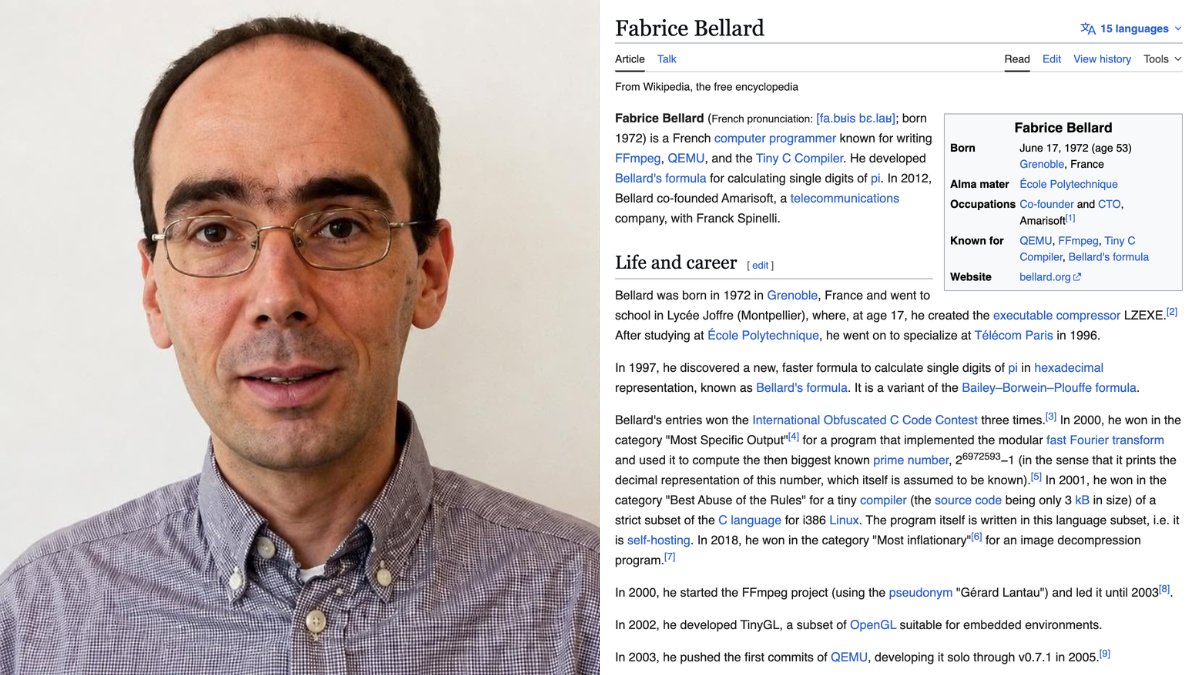
A French engineer who lives quietly in Paris has spent 30 years writing software that the entire internet now runs on without knowing his name.
He wrote the code that streams every YouTube video, every Netflix show, every TikTok clip. He wrote the code that runs the virtual servers underneath AWS, Google Cloud, and Microsoft Azure. He calculated more digits of pi than anyone in history. He has no Twitter. He has no marketing. He just keeps shipping.
His name is Fabrice Bellard.
Here is the story, because almost nobody outside the systems programming world knows what one man has built.
Fabrice was born in 1972 in Grenoble, France. He studied at École Polytechnique, the top French engineering school. He never went to Silicon Valley. He never built a startup empire. He just wrote code.
In 2000 he started a project called FFmpeg, an open-source multimedia framework for encoding, decoding, and streaming video. He was 28. The project did one thing nobody else had done well. It handled every video and audio format that existed, in one library, on every operating system. He led it himself for years.
Today FFmpeg is the invisible engine of the internet. YouTube uses it. Netflix uses it. VLC uses it. Chrome and Firefox use parts of it. Every Android phone, every iPhone, every smart TV, every video editing tool you have ever touched runs FFmpeg somewhere underneath. If you have watched a video on a screen in the last 20 years, Fabrice's code processed it.
He was not done.
In 2003 he started QEMU, a machine emulator and virtualizer. He wrote it solo until version 0.7.1 in 2005. QEMU lets you run any operating system on any other operating system. It became the foundation of modern virtualization. KVM, the Linux kernel hypervisor, runs on top of QEMU. Every major cloud provider, AWS, Google Cloud, Microsoft Azure, IBM Cloud, runs virtual machines on infrastructure built around it. The Quick Emulator is the most cited piece of cloud infrastructure code on Earth.
He kept going.
In 2001 he won the International Obfuscated C Code Contest with a small C compiler that grew into TCC, the Tiny C Compiler. TCC can compile and boot a Linux kernel from source in under 15 seconds. In 2004 he calculated the most digits of pi ever computed at the time, using a personal desktop computer and an algorithm he derived himself called Bellard's formula. In 2011 he wrote a complete PC emulator in pure JavaScript that runs Linux in your browser, a project called JSLinux that engineers still cannot believe is real.
In 2019 he released QuickJS, a small but complete JavaScript engine that fits where V8 cannot. In 2021 he released NNCP, a neural network based lossless data compressor that immediately took the lead on the Large Text Compression Benchmark.
Then he turned his attention to large language models. He built TextSynth Server, a web server with a REST API for running LLMs locally. He released ts_zip and ts_sms, compression utilities that use language models to compress text and short messages at ratios traditional algorithms cannot reach. He released TSAC, a very low bitrate audio compression system. In December 2025 he released Micro QuickJS, a new JavaScript engine for microcontrollers, separate from QuickJS, designed for environments with almost no memory.
Fabrice co-founded a telecom company called Amarisoft in 2012, where he serves as CTO. Amarisoft builds 4G and 5G base station software used by carriers and labs around the world. He has been running it for over a decade while continuing to ship personal projects from his own home page at bellard dot org
He has no Twitter. He has no Instagram. He gives almost no interviews. His personal website is a flat list of projects with no styling, no fonts, no marketing copy. Just titles and links.
A quiet French engineer who never moved to Silicon Valley wrote the code that quietly runs the internet.
He is still shipping.
385
4,573
25,459
3,118,956
Fabio Luinetti retweeted

Jun 9
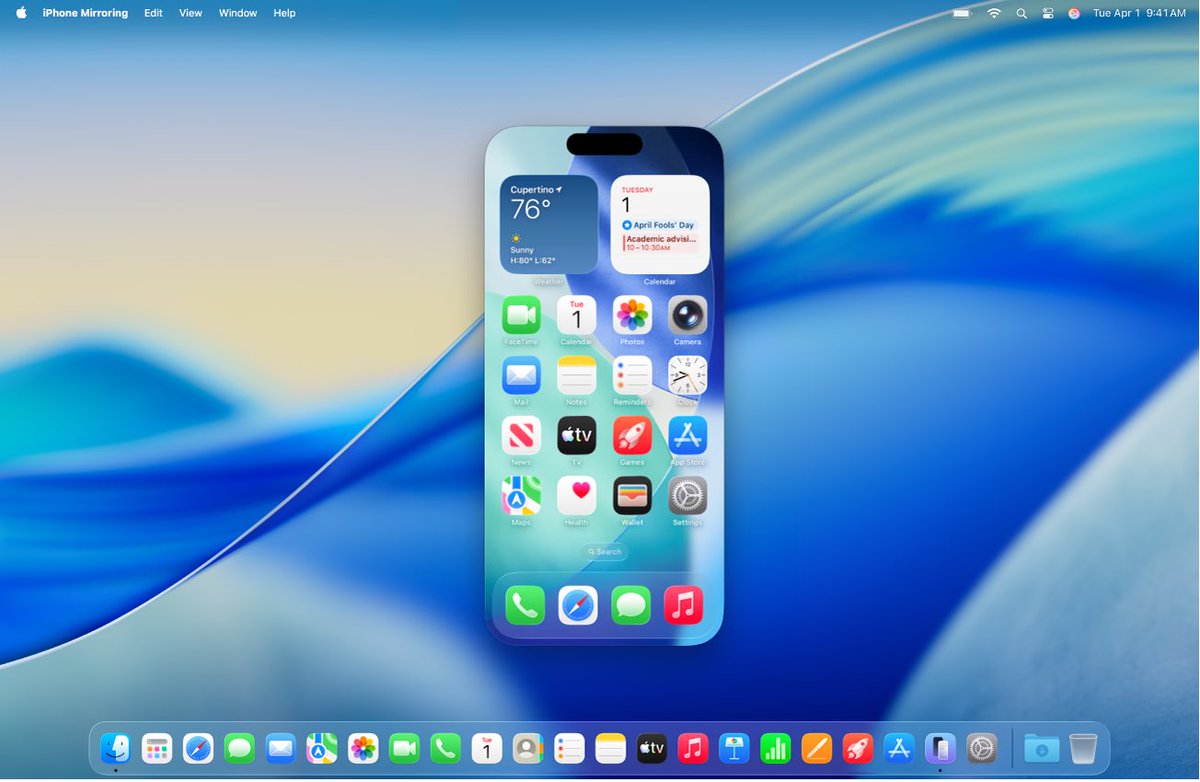
Tra l’altro ricordatevi che noi in Europa ancora non abbiamo visto e potuto usare iPhone mirroring su macOS.
Così per dire. 🇪🇺
#Apple
53
37
964
109,101
Fabio Luinetti retweeted

Jun 9
Every new technology wave reintroduces the concept of "super apps" as a solution to all the opportunities of the new foundational technology. Why don't we use one today?
Ironically it is tech enthusiasts love these all-in-one apps (the way they love convertible devices) so they build them. It is a tech answer to "assembling your app from parts". Tech enthusiasts also love parts and assembling apps.
But normal people find these apps overwhelming. They also find "assembling" impossibly complex. Instead the larger market gravitates towards app categories where they understand them. Anyone with a banking app knows how irritating the "super" part of that app is as they constantly push more stuff into it squeezing out anything you might need to use (Bank of America anyone.) How often do I spontaneously need a loan or new credit card when I launch the app on my phone?
We can see this in every mobile service category where the category continues to thrive even in the face of bundled super apps (like Expedia, Uber, etc.)
It is partially the bundle<>unbundle cycle but also a tension between users who genuinely enjoy the process of assembling the perfect combination of parts into a perfect bundle product. The problem is that isn't most or even a lot of people relative to markets.
This makes growth very difficult for category leaders.
There was a history in ancient MS-DOS where leading companies (and programmers) aimed to build "all in one" apps to compete with the entrenched category leaders. Then the category leaders did their take on all-in-one as a defensive strategy. Neither of those existed.
Then with Windows as category products rose there was immense pressure to build "all-in-one" and to "unify". We actually resisted this internally.
Then the web came along and once there were browsers the view was "what tools can we build into a browser." There were categories of tools like news, mail, ftp, etc. and quickly browsers (MS and Netscape) added those. Many believed that is what caused the hiccup for the Navigator product. The problem primarily was that the web was busy reinventing these categories so the old apps no longer existed as apps, but as web pages. It took a long time but it was happening.
Then came the push to componentize apps once that failed. That rode the Java wave. Suddenly all apps would be made out of assembling small Java Applets. The first target for this was to unbundle Office and make your own domain specific word processor or spreadsheet. This time it would happen in enterprise because the developers were there.
Turned out bundling parts into tools was equally difficult for enterprise. Instead they put web front ends on those tools. Then those tools got reinvented on the backend and gave rise to Salesforce, Workday, etc. No one assembled anything. Data export continued as it always did and API connections got a new model making communication easier but few categories got replaced. Expense reporting is a good example of this where innovation continues as category tools.
Here's an old story on components and Office and the debate that took place that had us under the gun as the web took hold. hardcoresoftware.learningbys…
2
3
25
6,240

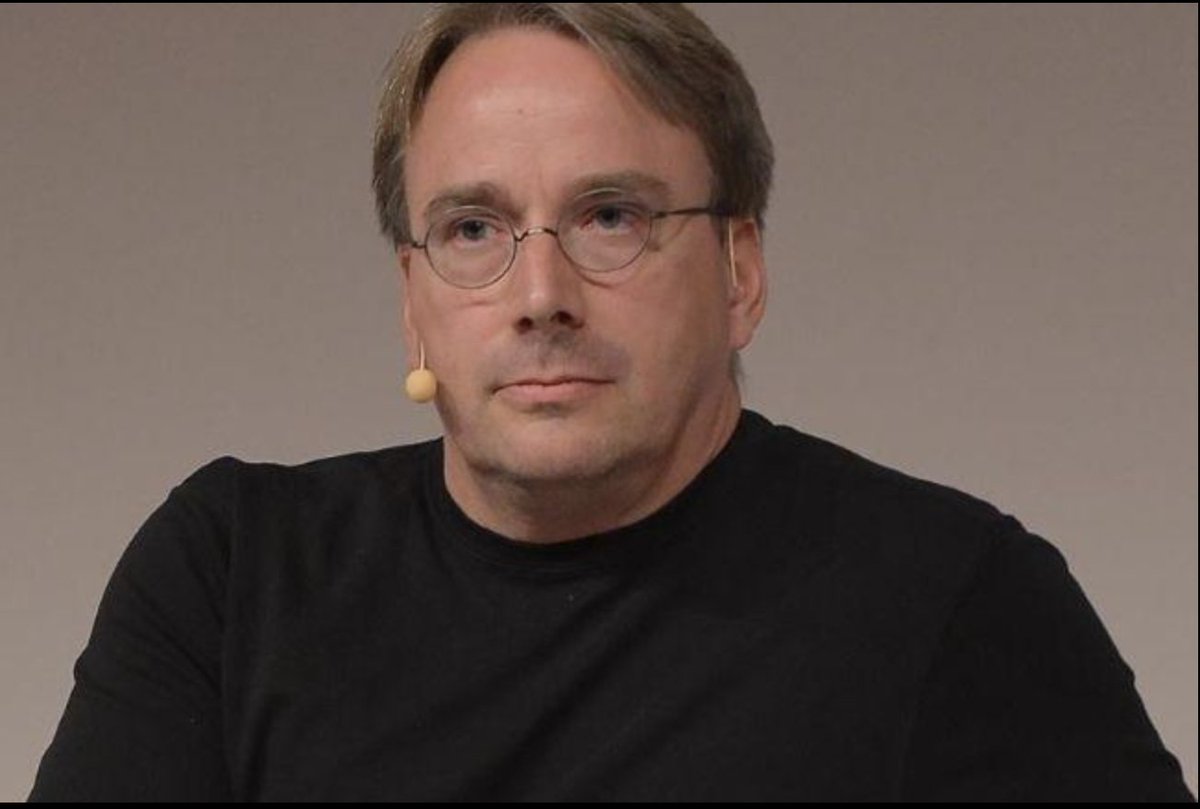
The creator of Linux just publicly called out the AI hype. Word for word.
Linus Torvalds took the stage at Open Source Summit 2026 and said this:
"When I see people saying 99% of our code is written by AI, I literally get angry. Because those same people — I can pretty much guarantee — 100% of their code is written by compilers. But they never say that."
He is not anti AI. The Linux kernel saw a 20% jump in submissions this release because of AI tools. He uses it. He gets it.
His point is something most people are too afraid to say.
AI is a productivity tool exactly like compilers were. Compilers boosted programming by 1000x. AI adds another 10x on top. Enormous. But nobody says "the compiler wrote my code." So why are we saying AI wrote it?
He also flagged something nobody is talking about.
AI is flooding small open source projects with drive-by bug reports. Someone runs a prompt, files a report and disappears when asked for a patch. Maintainers with one or two people are drowning trying to keep up.
"Sometimes AI reports a bug and when you ask for more information the person has done that drive-by and does not even answer your question. That is the real burnout issue."
And his final warning was the sharpest of all.
"People who do not understand the complexity of systems will prompt systems and write processes that will fail."
The AI hype crowd is very loud right now.
Linus has been building real systems for 35 years. When he talks, engineers listen.
Full interview here:
thenewstack.io/torvalds-ai-p…
260
1,686
8,349
790,455
My old Google home mini has now Gemini super power 💪😀
Big improvement
#AI
38
Fabio Luinetti retweeted

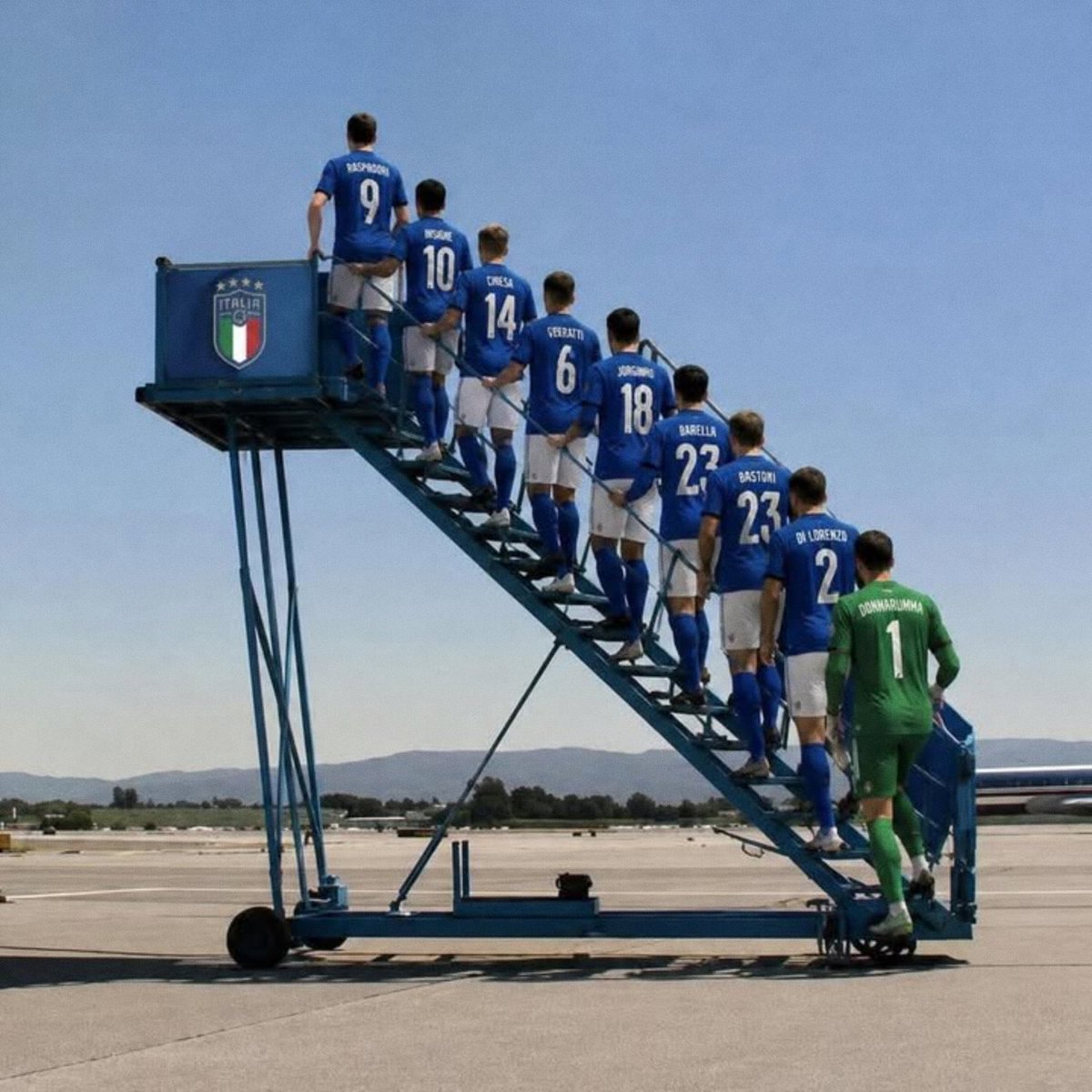
Epic 😂🇮🇹⚽️

50
71
710
65,416
Fabio Luinetti retweeted

Jun 3
There will be an Italian player in the Roland-Garros men's final.
126
797
9,349
337,029

Fabio Luinetti retweeted
May 29
NOVAK YOU CANNOT BE SERIOUS 🤯
#RolandGarros
137
1,174
22,317
995,570