
Director @JLPartnersPolls | Climbing when I can | Formerly @educationgovuk @stackstrat @ukonward @wpi_economics @Policy_Exchange and others
Joined July 2009
- Tweets 834
- Following 2,264
- Followers 1,658
- Likes 1,493
70 Photos and videos










Pinned Tweet

27 Aug 2019
The Grand Wall, Squamish Chief. Exhausting, terrifying, hard, awesome.




1
1
14
Guy Miscampbell retweeted

Jun 3
JL Partners has not ran a voting intention poll in Makerfield. The poll numbers below are unweighted past vote numbers from a large-scale focus group exercise.
Jun 3

There's a Makerfield by-election poll from @JLPartnersPolls going around:
This does not appear to be a voting intention poll, but primarily a focus group. Respondents were also asked their voting intention, but this doesn't seem to be a representative constituency poll
112 Makerfield residents were asked six open-ended questions, which included their views on areas and changes they wanted prioritised, and also asked voting intention
Voting intention among respondents:
Labour: 31.2%
Reform: 30.4%
Green: 10.7%
Conservative: 10.7%
Lib Dem: 3.6%
Others: 13.4%
Article:
theguardian.com/politics/202…
1
12
49
37,731
Guy Miscampbell retweeted

May 10
UKIP pt.2 election boogaloo
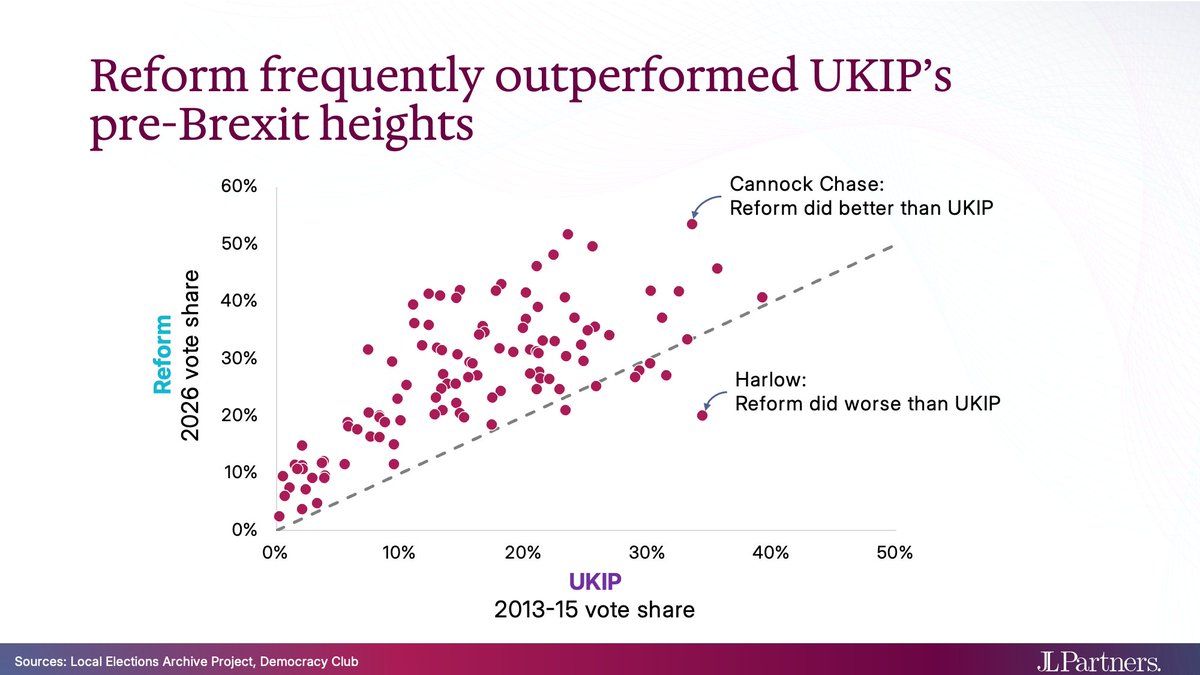
Reform's vote share numbers are something UKIP could only dream of
In all but a handful of councils, Reform has improved on UKIP's best ever performances
But Reform isn't just a juiced-up UKIP. A short 🧵 on this
1
7
10
2,528
Guy Miscampbell retweeted

May 9
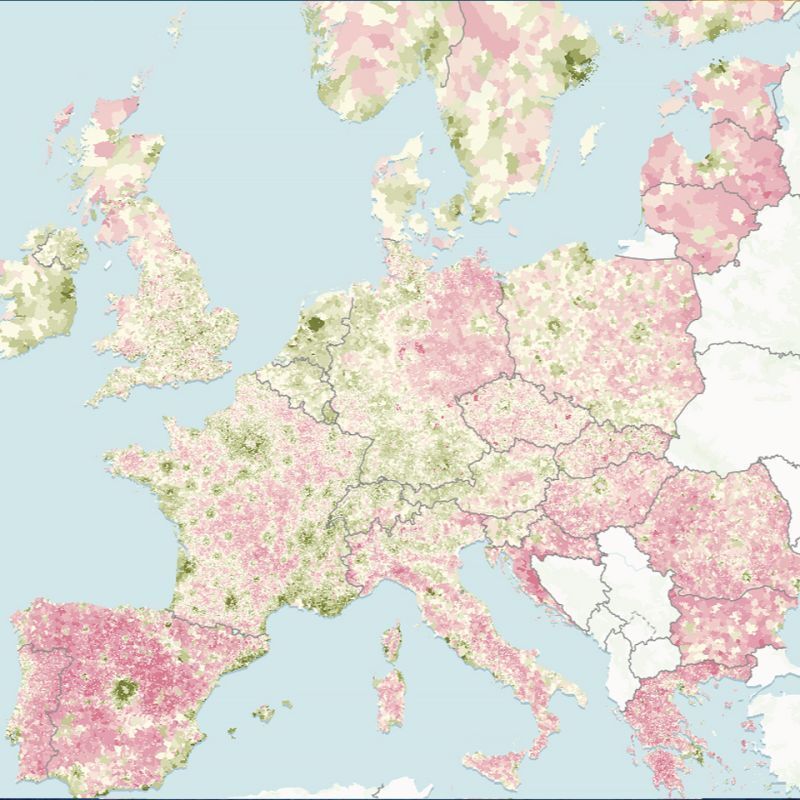
Note how Spain, France, Germany, Italy, Sweden, Poland and so on have seen their poorer areas depopulate and their richer areas grow rapidly, whereas Britain has seen slow but steady growth everywhere. A huge failure of British land use policy, causing regional income divergence.

It's hard to oversell this map - make sure to bookmark it and share it with your friends. Fantastic research that must have been soooo labour intensive: How has the population of evert single small geographic region across Europe changed from 1961 to 2024? You will want to study this map in detail. Source (keep scrolling for a while): correctiv.org/aktuelles/2026…
9
9
146
26,727
Guy Miscampbell retweeted
May 6
SENIOR HIRE: We are delighted to welcome Alex Hickman to @JLPartnersPolls - most recently Senior Managing Director at Teneo, Alex will be running our corporate business development as we grow the firm further.
As featured in @prweek and @politico
prweek.co.uk/article/1957017…
4
3
4,309
Guy Miscampbell retweeted

Mar 24
🚨@CPSThinkTank is recruiting for the best job in Westminster - mine.
I've enjoyed every second at the CPS, and will definitely continue to be involved, but the time has come for someone else to take the reins. Thanks to everyone, for everything...
cps.org.uk/media/post/2026/r…
27
24
206
42,130
Guy Miscampbell retweeted

Mar 18
Extraordinary result in the @JLPartnersPolls polling we ran for @Policy_Exchange👇
🇬🇧Under half (48%) of British adults have a favourable view of the *UK* at the moment.
▶️That includes just 18% who have a very favourable view of the country they live in.
▶️ 45% of British Muslims have a favourable view of the UK
telegraph.co.uk/news/2026/03…
2
4
7
1,380
Guy Miscampbell retweeted

Mar 11
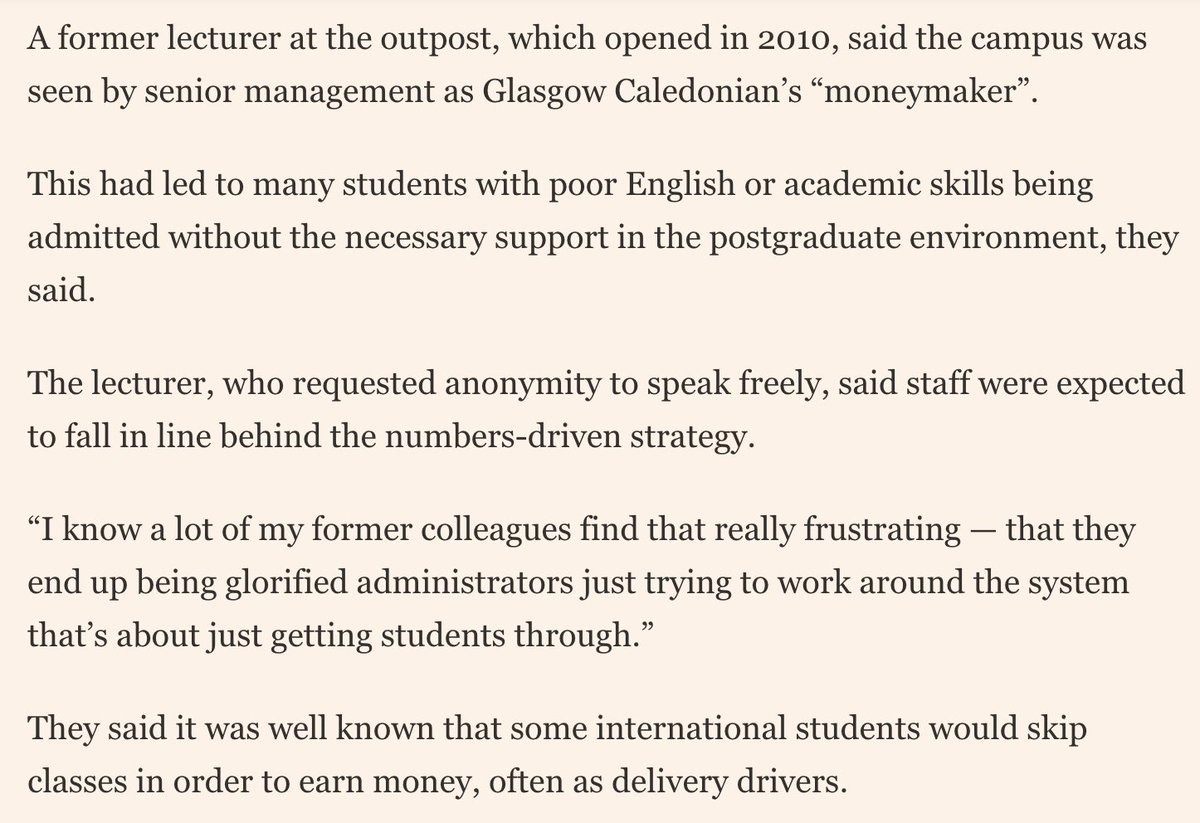
Further evidence for something I’ve worried about for a while. Bad actors in the higher education sector are imperilling public and political support for international students in the rest of the system. The omertà about calling out some dubious universities needs to end.
Mar 11

Alarming story from @georginaquach:
At one UK university, the scramble to attract lucrative international students to the new London campus saw thousands admitted without the necessary English or academic skills, widespread use of ghostwriters, and fraudulent attendance logging
2
8
59
7,231
Guy Miscampbell retweeted
Mar 9
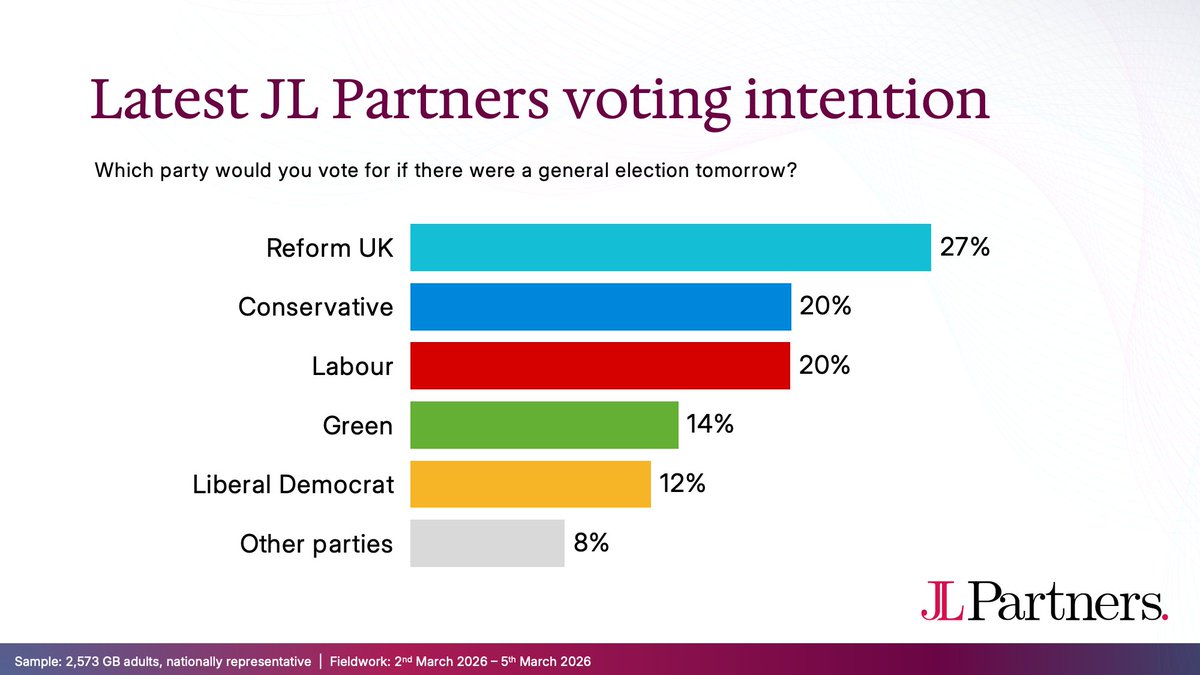
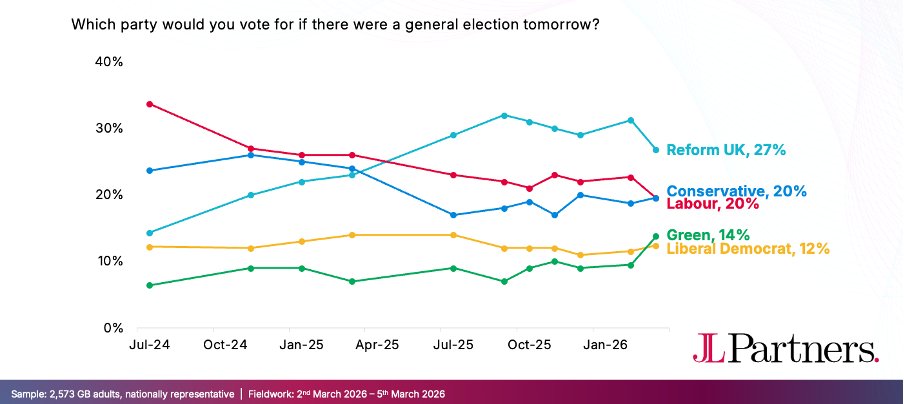
The Greens surge in our latest JL Partners voting intention, but they are still nowhere near second place
A thread on what’s happening in the numbers 🧵
For the first time in our tracking, the Greens have broken the 10% barrier, finally making it into double digits
Mar 9

NEW: GB voting intention
The Green Party overtakes the Liberal Democrats, powered by university graduates
REF 27% (-4)
CON 20% ( 1)
LAB 20% (-3)
GRN 14% ( 5)
LDEM 12% (-)
OTH 8% ( 2)
Fieldwork: 2-5 March, 2,573 GB adults
3
9
21
13,273
When I was at DfE I would frequently tell the sector they were their own worst enemy and if they didn't sort out the nexus of quality and immigration a reckoning was coming.
They were lucky the dependent exemptions were maintained for research courses. Suspect that will now go.
Mar 7

Classic - ministers let students carry on importing relatives on particular course type, universities suddenly LOVING that course type
1
4
623
Guy Miscampbell retweeted

Feb 20
The graduate premium is falling in the UK but rising in the US.
However even if the grad premium was rising everywhere, it still might have nothing to do what students learn at university. It could be the result of the "signal" sent by university attendance - a signal that could be replaced by something far cheaper and less time-consuming.
Even in America, where the grad premium is rising, there are plenty of people who would argue that it's still the result of a signal - not the result of the human capital gained from being at university.
There is a huge academic debate about this which is very hard to settle one way or the other, partly because we have such poor assessment data on universities.
I don't think the value of university is 100% signal. I think it's a mix of human capital & signals.
If we want to tilt it more towards human capital, we need better assessment data. We need to know which universities are the best at teaching certain skills (and which skills are most valuable in the job market).
Graduate earnings data cannot tell you this.
I just don't think it's good enough for the graduate premium to be the sole measure of university impact. You wouldn't measure a hospital by the later earnings of the people it treats! We shouldn't measure universities that way either!
substack.nomoremarking.com/p…
10
22
77
47,474
I don't think I've ever seen a focus group or poll to back up this position...
Feb 18

Bizarre editorial from @thetimes, whose leader writers seem increasingly scrambled by Reform.
“The most promising unoccupied electoral space in British politics would combine a re-embrace of free market principles, while shunning populism in all of its economic and cultural forms.”
Err? 🤨
2
7
1,315
Worth a read from @jim_blagden with @JLPartnersPolls data 👇
Feb 17

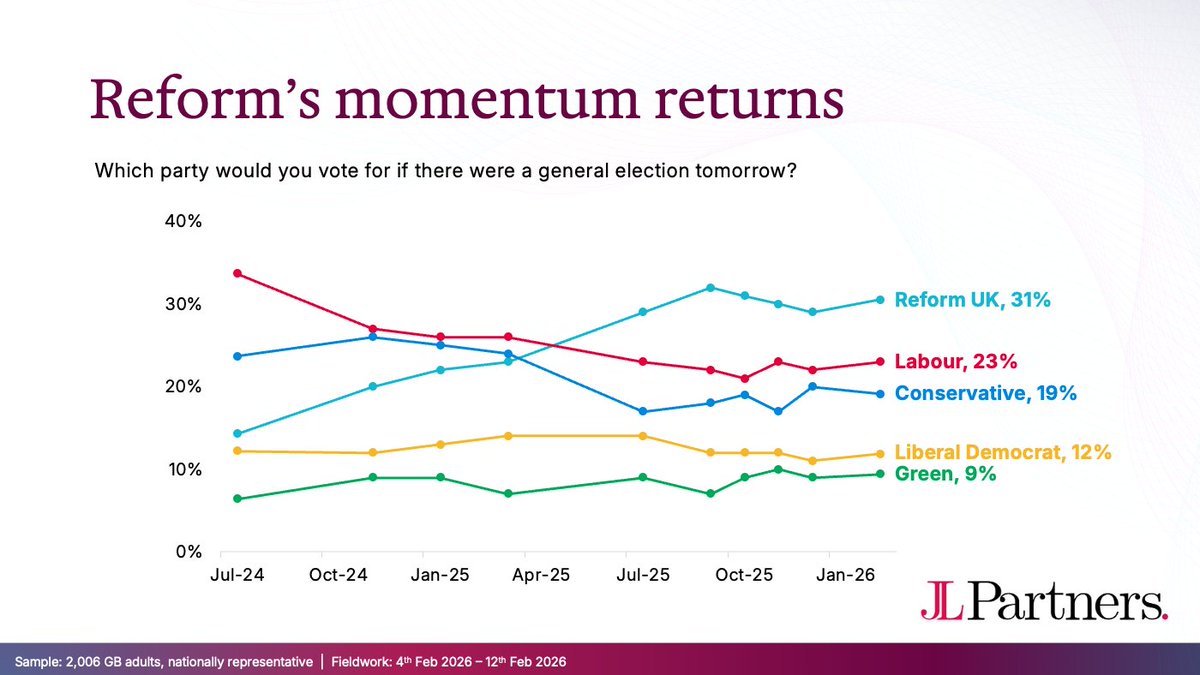
Latest @JLPartnersPolls voting intention sees Reform reach their highest poll rating since September, following a wave of Conservative defections
After losing momentum late last year, the party is back above 30%, signalling a renewed upward trend
3
4
2,577
Guy Miscampbell retweeted
Feb 17
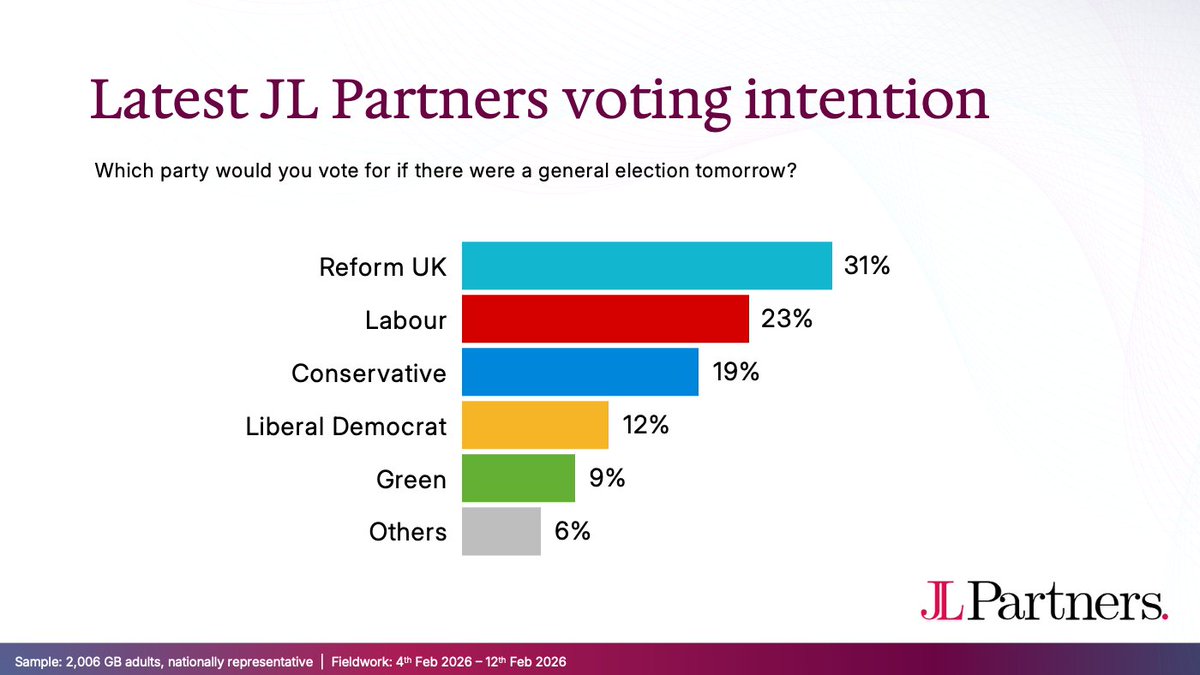
NEW: GB voting intention in @thesun
Reform at highest level of support since September
REF 31% ( 2)
LAB 23% (-)
CON 19% (-1)
LDEM 12% (-)
GRN 9% (-)
OTH 6% (-1)
Fieldwork: 4–12 Feb, 2,006 GB adults
Full results and analysis from @jim_blagden ⬇️
Feb 17
Latest @JLPartnersPolls voting intention sees Reform reach their highest poll rating since September, following a wave of Conservative defections
After losing momentum late last year, the party is back above 30%, signalling a renewed upward trend
66
232
795
99,756
Guy Miscampbell retweeted

16 Dec 2025
You should take all polling with a massive grain of salt right now for a variety of reasons, regardless of your political stripe, but the one thing i find genuinely odd is how if you just listen to mainstream press you'd assume conservatives were down by double digits and in massive trouble, which is not the case.
There are undoubtedly challenges for the CPC right no, but it's a much more competitive and complicated picture than some people are painting.
16 Dec 2025

(Models Available For Subscribers)
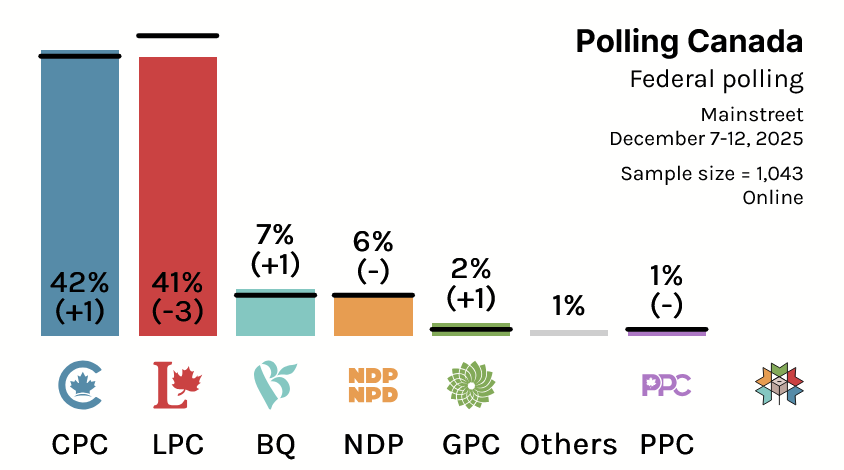
Federal Polling:
CPC: 42% ( 1)
LPC: 41% (-3)
BQ: 7% ( 1)
NDP: 6% (-)
GPC: 2% ( 1)
PPC: 1% (-)
Others: 1%
Mainstreet / Dec 12, 2025 / n=1043 / Online
(% Change w 2025 Federal Election)
Visit @338Canada for polling details: 338canada.com
27
39
279
22,285
Guy Miscampbell retweeted

15 Dec 2025
A quick work update re @jlpartnerspolls and @j_l_partners. I'm immensely proud to share that we started the year on 8 people and we are ending it on close to 20!
Last week we convened our annual retreat to celebrate that success. Taking place on the Red Sea in Egypt, it was an incredible few days of team bonding, strategic and training sessions, and an opportunity for the US and UK firms to come together - plus to plan on how we are going to get even bigger wins in 2026.
I'm hugely proud of every member of these incredible, high-proficiency teams; and of my co-founder @tmlbk and director @guymiscampbell in helping to build them.
On to 2026!



8
9
54
16,996
25 Oct 2025
At the election debrief the morning after I asked:
- Do we think the Conservative c. 40% will hold better than the Liberal one? (Yes)
- Is it likely that the black swan of Trump/Tariffs/drafting Carney is a repeatable trick? (No)
That means stay the course and the Conservatives should be favoured for the next general election. Changing paths feels like madness.
25 Oct 2025

Are the Conservatives once again succumbing to Tory syndrome?
The recent criticism of Pierre Poilievre from within conservative circles has to be understood through the lens of a recurring condition on the Canadian Right: what political scientist George Perlin famously coined the “Tory syndrome.” It’s an enduring impulse—part psychological, part political—that leads Conservatives to question and doubt their own leaders even when they’re succeeding.
The Tory syndrome has deep roots in our political history. It’s the nagging sense among Conservatives that being too forceful or too popular somehow betrays the party’s deeper sense of itself as the defender of order, restraint, and moderation. From Robert Stanfield to Erin O’Toole, Conservative leaders have often faced as much hostility from inside their own tent as from outside it. The result is a pattern of self-doubt and internal critique that can sap the party’s confidence at moments of opportunity.
That dynamic is playing out again. While Poilievre has maintained support at or near record levels—polling roughly where the party stood at the time of April’s election call—Conservatives have spent the week debating his tone, his tactics, and even his temperament. If you didn’t know any better, you’d mistakenly think the party’s support was collapsing instead of actually being tied or leading several polls.
Meanwhile, the governing Liberals have been busy reversing themselves on one major issue after another. The latest about-face on bail reform follows reversals on carbon taxes, Canada Post’s operations, and more. At this point, the Carney government’s most notable accomplishments involve undoing Trudeau-era policies that elected and non-elected Liberals were defending mere months ago. Yet one doesn’t get the sense that Liberals are subjecting themselves to any comparable self-recrimination.
One could say that the Conservatives’ higher standards for themselves and their leaders are admirable. They reflect a seriousness about ideas and institutions that stands in contrast to the Liberals’ reflexive opportunism. But as a matter of politics, it’s hard to see how this kind of infighting advances the Conservative Party’s core goal of winning the next election.
The merger that created the modern Conservative Party in 2003 was supposed to mark the end of these old Tory complexes. It was meant to produce a confident, united party that could compete for power on its own terms.
The past week’s sniping and self-doubt suggest that the Tory syndrome still lingers and that Conservatives haven’t yet fully given up their historic tendency toward internecine politics.
1
231
22 Oct 2025
RT @SirSimonClarke: Great coverage in @Telegraph of our new @ukonward polling report today, The Ballot of The Sexes.
More unique polling w…
8
Guy Miscampbell retweeted

22 Oct 2025
🚨NEW🚨
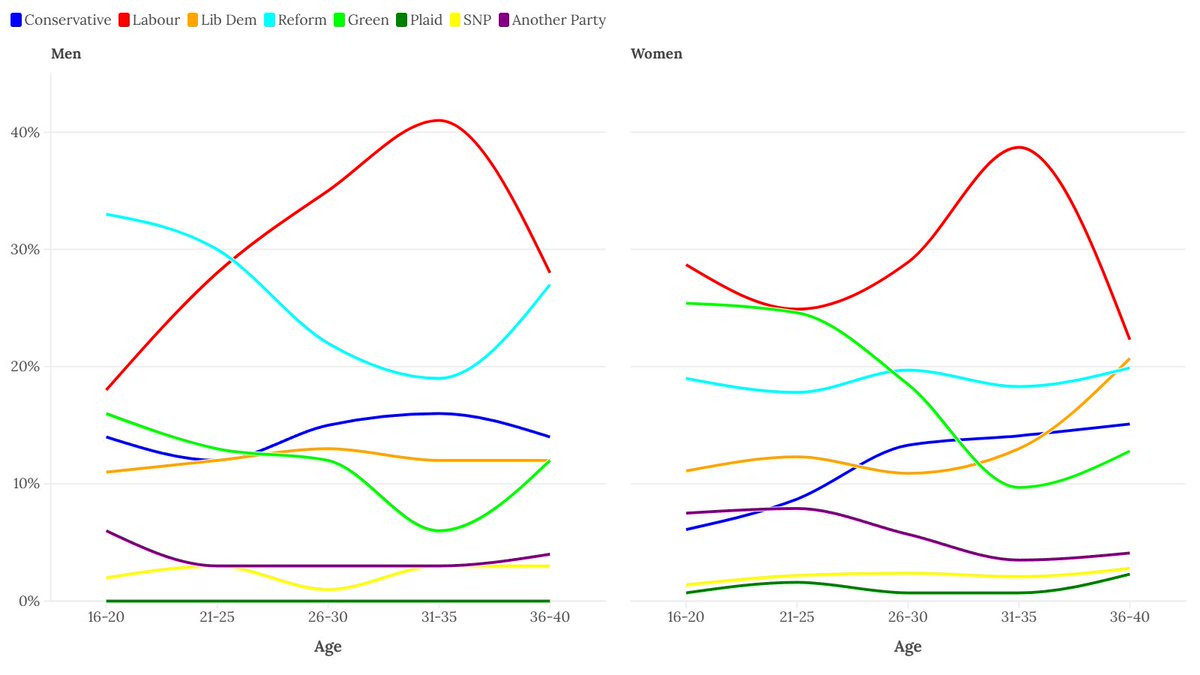
@JLPartnersPolls, KAS, and @ukonward polling of 5,000 16-40 year olds shows a widening gender divide in the UK.
Men aged 16-25:
Reform: 31%
Labour: 24%
Green: 14%
Women aged 16-25:
Labour: 27%
Green: 25%
Reform: 18%
👉 Read the report:
ukonward.com/reports/ballot-…
🧵/
10
49
146
145,566
Guy Miscampbell retweeted
6 Oct 2025
If the Conservative Party has any ambition to return to Government as more than 'the pensioner party' they need to start winning younger voters again
The average Tory voter was aged 43 in 2019, rising to 64 in 2024 and is now almost 70
A 🧵 on new JLP polling for @ukonward
1
10
25
8,203