
Apr 18
I just went deep on @tferriss in conversation with @Nikhil_Kamath and I can't stop thinking about what Tim said about AI that nobody else is saying.
"AI is alcohol, power, and money. It's an amplifier. If your direction is wrong, it will amplify how wrong you are."
Most AI discourse right now is about features, benchmarks, and funding rounds. Tim came in with something different — a ruthlessly practical framework for when AI is and isn't worth your time.
Here are the 9 ideas I'm carrying:
On AI and direction:
→ If you don't have clarity on your #1 priority, adding AI agents will make things worse, not better. It creates an infinite supply of distracting busywork and labyrinths you can chase yourself into
→ Peter Drucker said it: effectiveness is doing the right things, efficiency is doing them well. Doing something well doesn't make it important. Figure out the what before the how
→ His personal use of AI? He uses it dozens of times a day — but only after years of being clear on his zone of genius. He said: "If you need AI to beat the next person, you haven't found your blue ocean yet"
On job loss — his honest, unsanitized take:
Most people hedging on this have large AI investments. Tim called it out directly. The people promising smooth reskilling are "shilling their bags."
The factory worker displacement comparisons from the industrial revolution fall apart when you take a magnifying glass to what actually happened. Those people went from factories to Walmart. That's not a reskilling success story.
→ The social contract for new graduates is broken — study hard, get into a good school, get the job. That last step is gone for analysts, junior lawyers, junior engineers
→ He expects 5-7 years of "disorientation" before labor markets re-stabilize
→ The "everyone will get a leisure class lifestyle" prediction? He'd bet his entire net worth against it. We are wired to compete. Free time without engagement leads to conflict, not utopia
On biohacking and longevity:
Tim's framework is a barbell — subtract first, then consider adding. Not pills and stacks. Subtraction is the lowest risk move.
→ Intermittent fasting, weight training, Zone 2, and VO2 max work. "The fundamentals work because fundamentals work."
→ He fasted all day before the conversation. One coffee, some electrolytes, exogenous ketones before the recording. That's it.
→ He's optimizing for healthspan — functional quality of life up to death — not raw longevity. His personal target: stay fully functional until 85, not live to 120 on a protocol
→ His Alzheimer's family history haunts him. He's watching ketone monoesters, bioelectric headsets like Fion, and cyclical low-dose rapamycin research closely
→ On GLP-1s (Ozempic/Mounjaro): Not dogmatically against them, but has watched friends lose dangerous amounts of muscle mass because they can't eat enough protein on the drug. Warns: if you're in a caloric deficit without protecting lean mass, you're destroying your metabolic engine
The line I keep coming back to:
He described a brilliant, disciplined friend who quit X because it was ruining his life. After a year off — happier, lower anxiety, better relationships. Then a few months ago he started sending links from X again.
Tim's verdict: "He's defenseless now. Like yeah, you can use meth and figure out all the behaviors to offset it — or you could just stop."
He hasn't had social media apps on his phone in 3-4 years. Not as a flex. Because he knows he can't win against teams of PhDs whose entire job is to hijack your attention.
The 4-Hour Work Week turns 20 next year. The insight at its core hasn't changed:
Define. Eliminate. Automate. In that order.
Most people skip to step 3 and wonder why their life feels like a labyrinth.
Thanks @Nikhil_Kamath for the conversation. This one landed. 🎯
#TimFerriss #AI #Productivity #Biohacking #Longevity #GLP1 #JobLoss #4HourWorkWeek #FutureOfWork #NikhilKamath #FutureOfAI #MentalHealth #Healthspan #Dopamine #Fasting
buff.ly/ezNlKBC
9
9
57
37,803

THE 4-HOUR WORKWEEK: LESSONS THAT HELP ENTREPRENEURS SCALE AND BUILD GREAT COMPANIES
The 4 Hour Workweek by Timothy Ferriss challenges a major belief in business: that working more leads to more success. Instead, it teaches that real growth comes from leverage, focus, and systems, not endless effort. Entrepreneurs who understand this don’t just build businesses they build freedom, control, and scalable structures that multiply results without constant pressure or burnout.
One key lesson is elimination. Many entrepreneurs stay busy but not productive. Ferriss applies the 80/20 principle: a small number of actions produce most results. Great entrepreneurs focus on high impact work like sales, strategy, and product improvement. Average companies waste time on low-value tasks, unnecessary meetings, and distractions that slow growth and reduce long-term efficiency and clarity.
Another powerful principle is automation. Businesses should not depend fully on the founder’s time. Systems, tools, and processes should handle repetitive tasks. When operations run smoothly without constant supervision, scaling becomes easier. This is a major difference between average and great companies. Average businesses require constant attention, while great ones are structured for efficiency, consistency, and predictable outcomes.
Outsourcing is also essential. Many entrepreneurs struggle to delegate because they want control. However, growth requires letting go of minor tasks. By assigning work to others, founders can focus on decisions that move the business forward. Delegation creates space for innovation, strategic thinking, and expansion into new opportunities.
Ferriss also introduces lifestyle design. The goal of entrepreneurship is not just money, but control over time. Great entrepreneurs build businesses that support their desired lifestyle, avoiding burnout and maintaining long-term consistency and performance.
Another lesson is testing ideas quickly. Instead of investing heavily upfront, entrepreneurs should validate ideas with small experiments. This reduces risk, increases learning speed, and improves decision making accuracy.
The difference is clear: average companies rely on effort, while great companies rely on systems.
Content like this spreads because it challenges common thinking and invites engagement. Algorithms reward posts that generate replies, shares, and saves, pushing them to wider audiences globally.
If this resonated, share your biggest takeaway below.
#Entrepreneurship #4HourWorkweek #BusinessGrowth #SmartWork #ScaleSmart
1
3
2,980

Jan 18
I just love 2. It all began 1 year ago when I read the book #4hourworkweek by @timferris it outlines exactly how you can escape the normal reality and build a muse than gives you the amount to then live your life as you please.
2
37

Jan 15
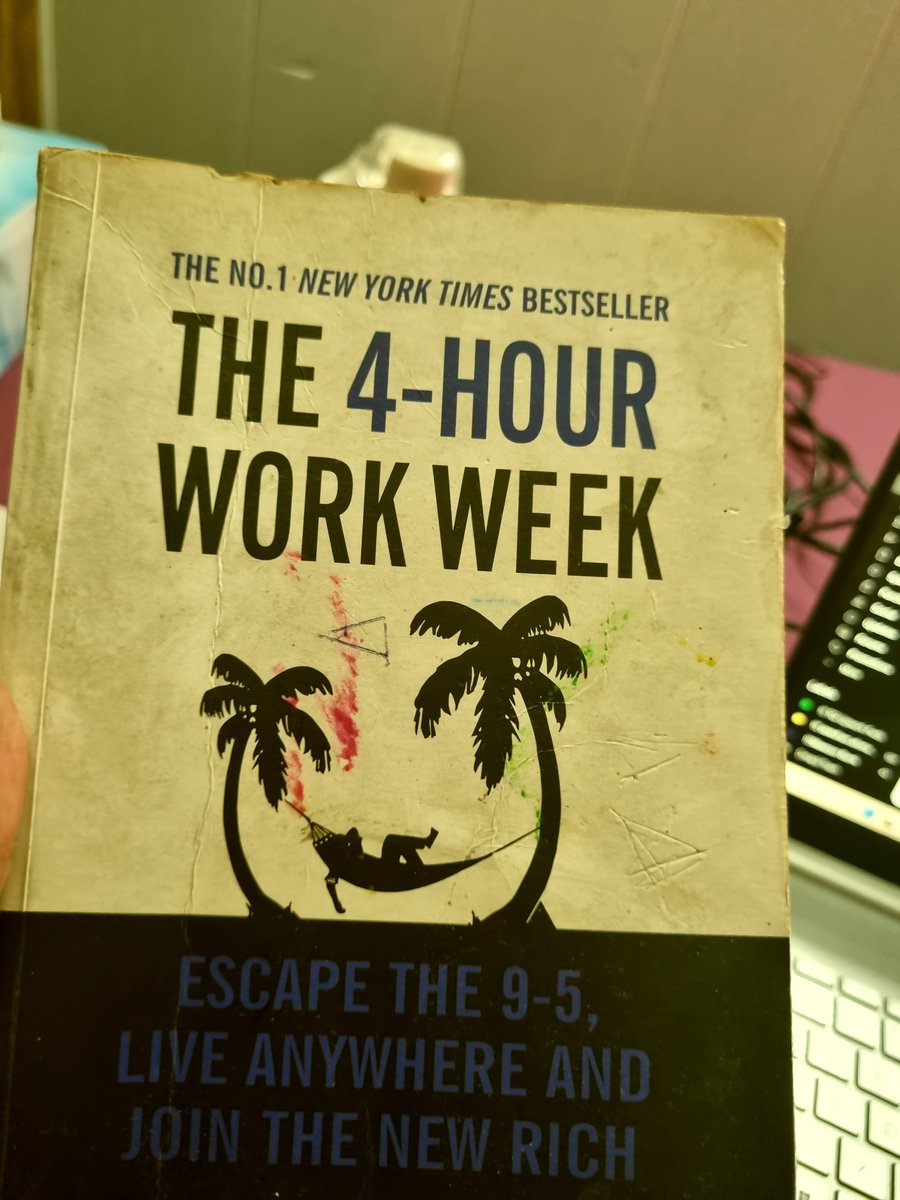
Finally picked this classic back up 📚 just a little reminder that life is too short for the 9-5 grind. let’s live a little! 🙌
#photography #bookstagram #4hourworkweek #relaxation
4
65

6 Nov 2025
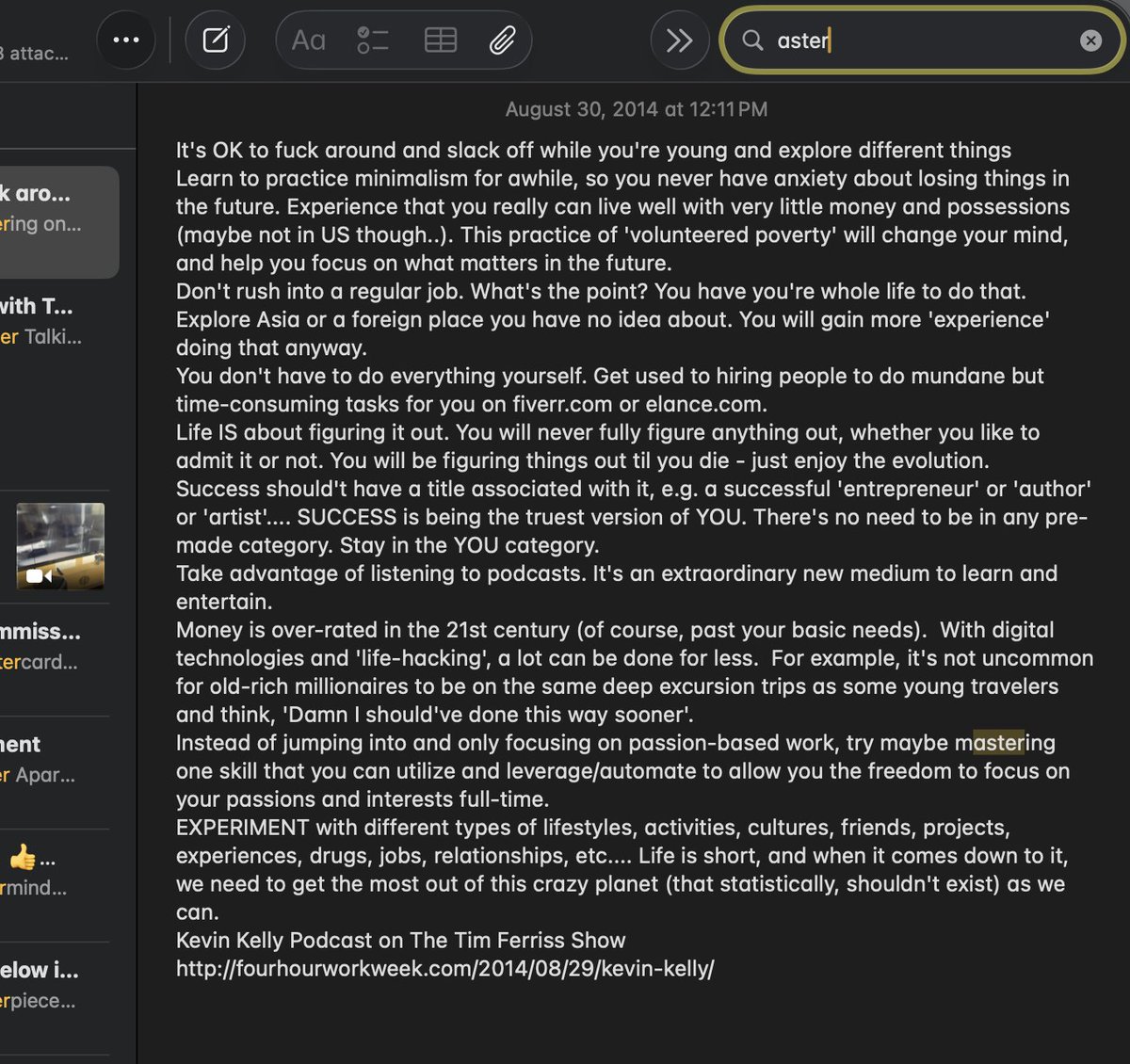
woah totally randomly stumbled on this iPhone note from Aug 2014 ..I wrote down this paragraph from @TimFerrissShow podcast / #4hourworkweek blog 🔥 .. this was 2 months before blasting off to Thailand to make it happen 💪 .. 11 yrs on goin strong.
2
94

21 Oct 2025
The 4-Hour Workweek
Can you really work just 4 hours a week? Our "The 4-Hour Workweek" review examines Tim Ferriss's classic on lifestyle design.
tinyurl.com/4ntc59df
#4HourWorkweek #TimFerriss #LifestyleDesign #BookReview
👉 See why on Amazon: amzn.to/48pLWtl
3
36

1 Feb 2025
What are you going to do?
#books #bookclub #goals #future #motivation #inspiration #book #4hourworkweek #tim #timferris
5
26
286
7,953

5 Jan 2025
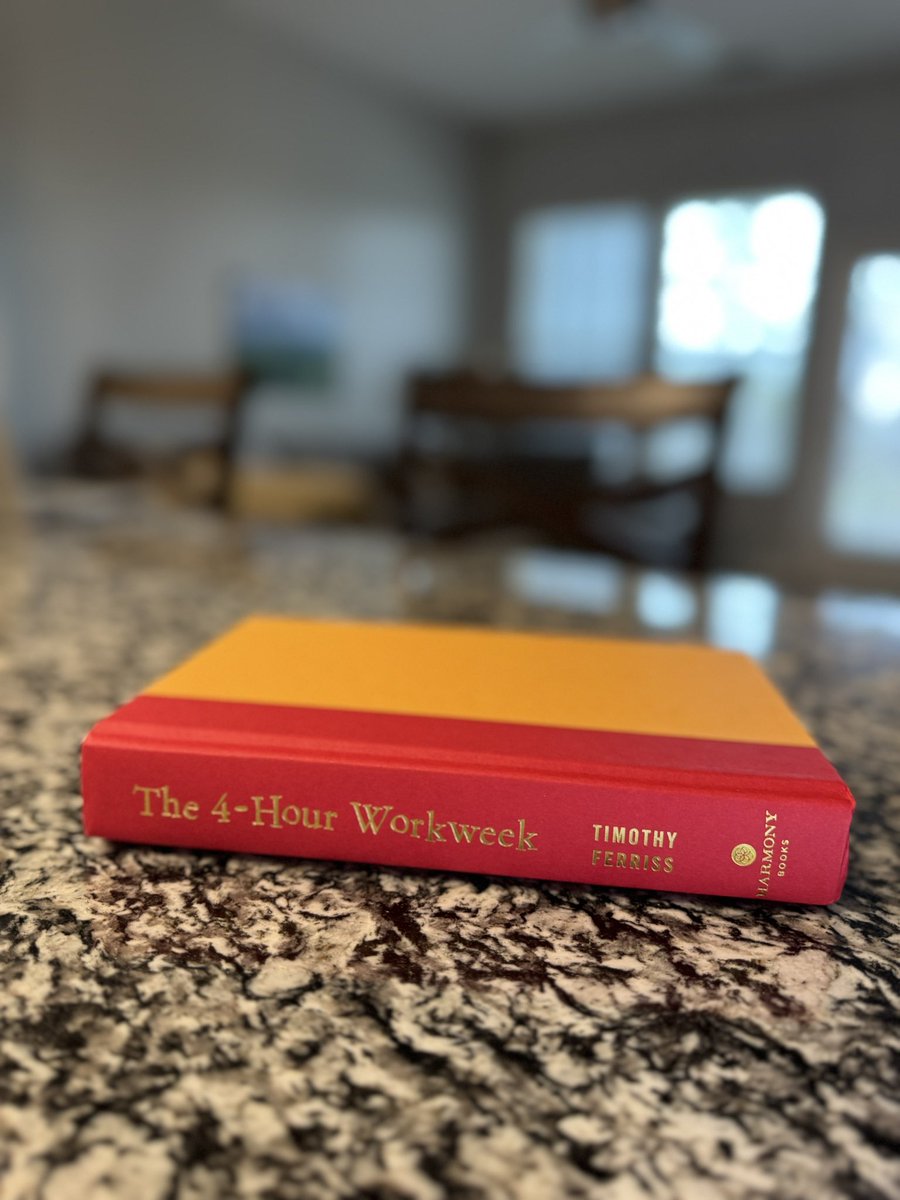
I’m really excited to dig back into this for the first time in years. One of my favorites, and more relevant than ever. @tferriss #4hourworkweek
4
4
35
18,195

4 Jan 2025
4 HOUR WORK WEEK
1️⃣ Ask yourself: “If this is the only thing I accomplish today, will I be satisfied?”
2️⃣ Focus on the 20% of work that brings 80% of the results.
3️⃣ Clearly define time for work and relaxation.
4️⃣ Develop the most important habit: ACTION.
5️⃣ Focus on being productive, not busy.
6️⃣ Delegate and automate unimportant tasks.
7️⃣ Do your most important task before 11 AM.
8️⃣ Improve income per hour, not total income.
9️⃣ Age doesn’t matter, an open mind does.
🔟 Quit things that aren’t working.
1️⃣1️⃣ Learn how to control your time.
1️⃣2️⃣ Leverage your strengths.
TIME TO FOCUS
#ClickWealthZone #TimeFreedom #ProductivityTips #4HourWorkWeek #SuccessHabits #WorkSmarterNotHarder #EntrepreneurMindset #FinancialFreedom #Delegation #ActionPlan #WealthCreation #SelfImprovement
1
80

17 Dec 2024
"Escape the 9-5 grind! 🌍 The 4-Hour Workweek by Tim Ferriss shows you how to design a life of freedom, automate income, and work smarter—not harder. Ready to live more and work less? 🚀
📲 254 785 550 546 / 256 746 040 805
#4HourWorkweek #WorkSmartLiveFree"
1
10

9 Sep 2024
Mwandishi wa #4HourWorkWeek Timothy Ferriss Akimnukuu Herbert Bayard Swope Anasema
Njia Iliyothibitishwa ya Kufeli ni Kujaribu Kumridhisha Kila Mtu
"I can't give you a surefire formula for success, but I can give you a formula for failure: Try to please everybody all the time"
1
3
6
232
7 Sep 2024
Kwenye #4HourWorkWeek wazo kuu la mwandishi ni
Umuhimu wa 'Minimum Effective Load' — Yaani, To do the minimum necessary for maximum effect
Anasema Fanya Kidogo cha Lazima, Fanikiwa zaidi! 💡
Ni Mwendo wa Kuchukua Madini Tu 🧠📚
1
3
6
252

24 Jun 2024
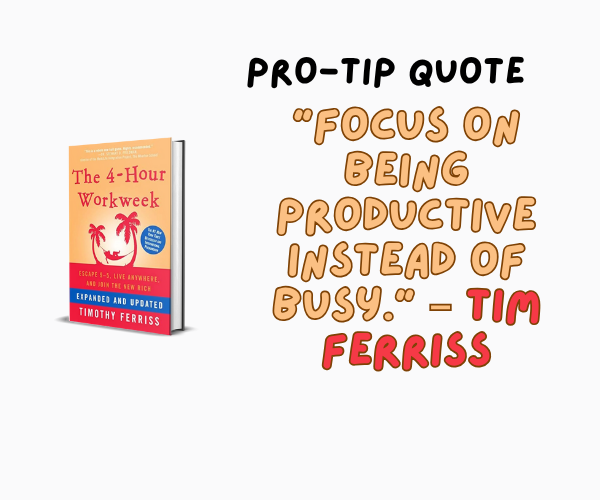
“Focus on being productive instead of busy.”
Timothy Ferriss, The 4-Hour Workweek
#Productivity #Focus #TimFerriss #4HourWorkweek #Efficiency #WorkSmart #Minimalism #SuccessMindset #GetThingsDone #TimeManagement

3
107

31 May 2024
• 📖 "The 4-Hour Workweek" by Tim Ferriss
Ferriss introduced me to the concept of lifestyle design. I learned to automate tasks, outsource efficiently, and focus on high-leverage activities. ⏰ #4HourWorkweek
1
2
15


21 Dec 2023
🌟 Exciting news for fellow Tim Ferriss fans! 📚
Just created my own version of the Dreamline Worksheet 2.0, optimized for online use in Notion. It's efficient, user-friendly, and perfect for those who love 'The 4-Hour Workweek' as much as I do.
🚀 For only $1, you can grab this tool I spent hours perfecting. Let's reach our dreams faster – maybe even before finishing the book! 🌈
👀 Check out the screenshots and see the magic for yourself. Can't wait for you to try it!
Get it here: hayatbiralem.gumroad.com/l/T… ✨
#4HourWorkweek #TimFerriss #ProductivityTools #DreamlineWorksheet
3
1
5
1,193


✅ “Art of Non- Finishing”
I am reading this amazing book called “4 hour Workweek” by @tferriss
Learnt a very important lesson about ‘Low Information Diet’.
It says;
‘Starting something doesn’t automatically justify finishing it’
👉 For example,
If you’re reading an article that sucks, put it down and don’t pick it back up.
If you’re watching a movie and it’s worse, just stop before your mind bursts.
If you’re full, after half a plate of food, put the dam food down and don’t order dessert.
💯 Important lesson :
“More is not better, and stopping something is often 10 times better than finishing it.
Develop the habit of non-finishing that which is boring or unproductive,If a boss isn’t demanding it.”
🔥 For more such Book Tweet ideas,
Do follow @avijeet_writes
#BookTwitter #4hourworkweek
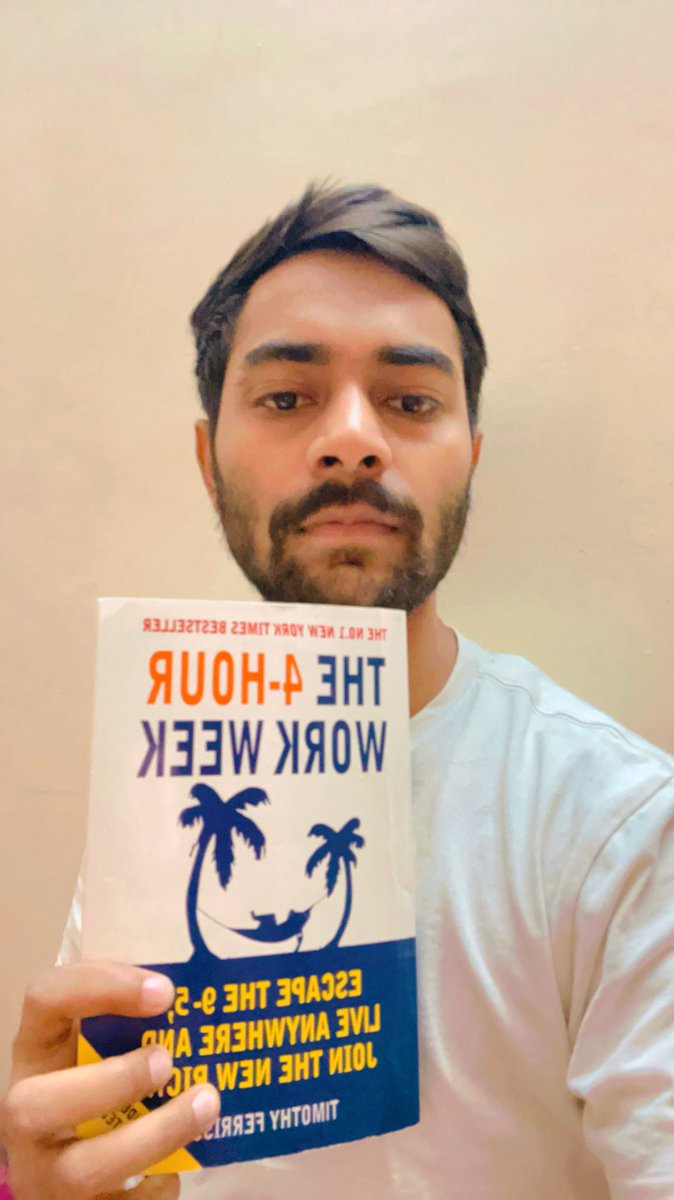
ALT Im very bad in clicking selfies. Trying my best here😆 Please don’t mind😁
3
5
36
3,743

27 Aug 2023
Even if you know what's critical, without deadlines that create focus, the unimportant becomes the important.
- 4HourWorkWeek
2
327