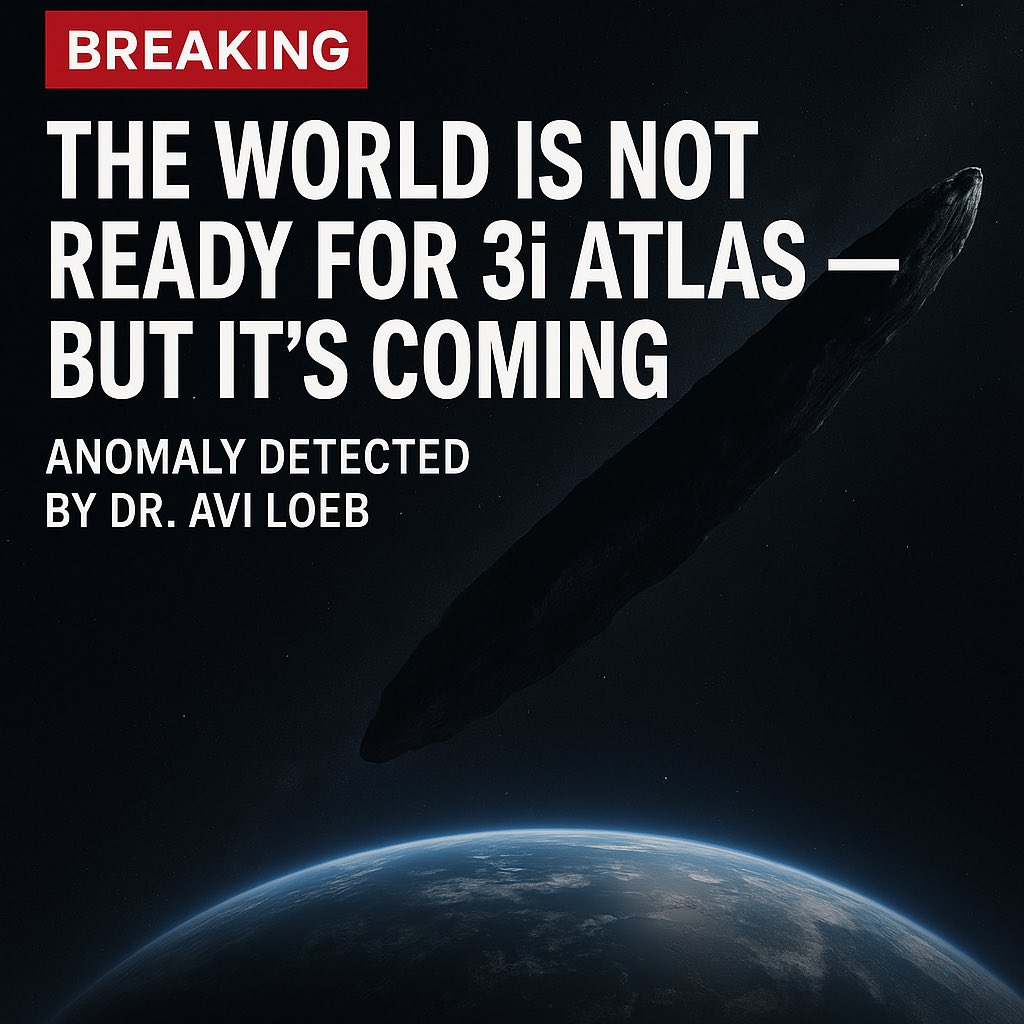
🚨 SPACE ALERT
Last Faint Image of Interstellar Comet 3I/ATLAS Captured
Amateur Astronomers Push Telescopes to the Limit — March 2026
spacetracker.space/timeline
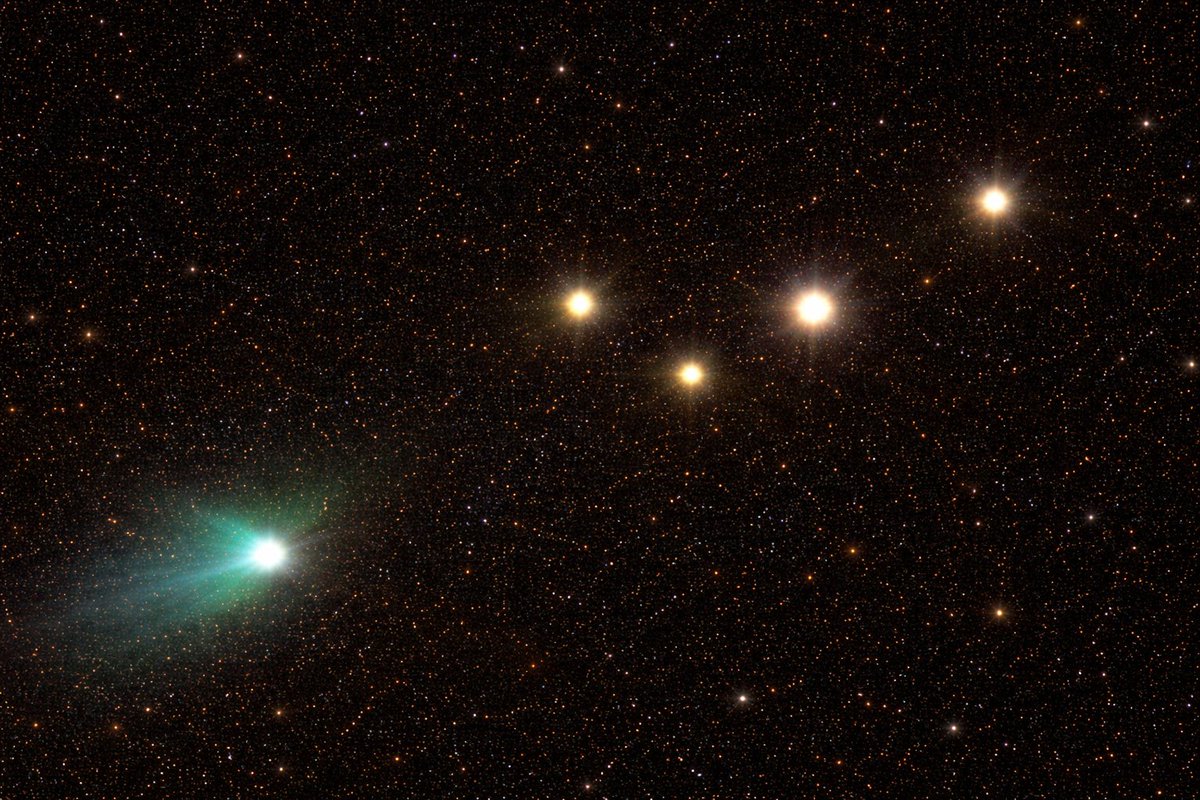
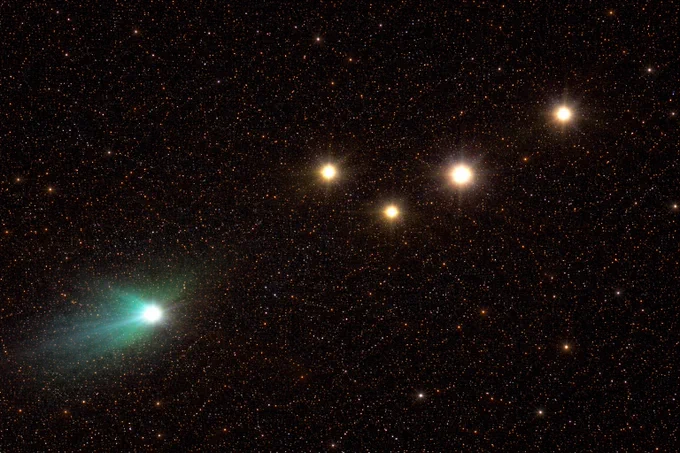
A faint green glow in a crowded star field may represent one of the last visible images of the interstellar comet 3I/ATLAS ever captured from Earth.
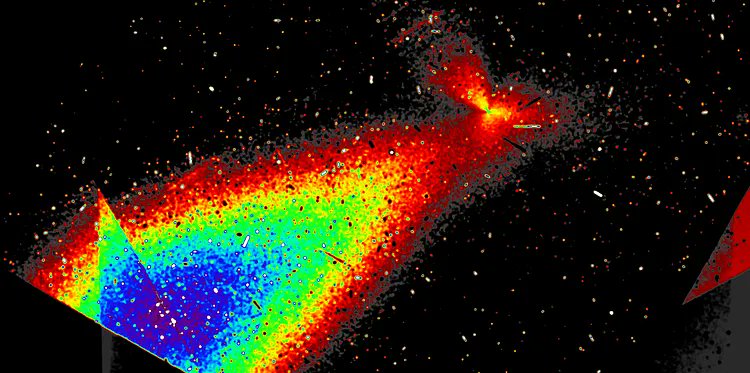
On March 12, 2026, amateur astrophotographer Ray from Ray’s Astrophotography recorded extremely faint stacked exposures of the comet using an advanced telescope system. The comet had already faded to near invisibility, forcing observers to rely on long exposure stacking and heavy signal enhancement to reveal the coma.
Additional raw frames from other amateur astronomers helped confirm the detection.
After careful refinement and enhancement, the final processed view — completed March 16, 2026 — shows the ghost-like turquoise coma drifting through a dense star field.
It is a quiet but powerful moment in modern astronomy.
🔭 What We Are Seeing
The object in the image is 3I/ATLAS, a rare interstellar comet that entered our solar system from deep space.
Discovered July 1, 2025 by the ATLAS asteroid survey, the comet immediately drew global attention due to:
• unusual trajectory
• high velocity
• possible origin outside the solar system
Since discovery, astronomers and sky watchers have followed its journey across the sky.
But by March 2026 the comet had faded dramatically.
Only the most determined observers were still attempting to capture it.
⭐ Amateur Astronomers Made This Possible
This observation highlights the growing role of advanced amateur astronomy.
Detecting a comet this faint requires:
• precise telescope tracking
• multiple long exposures
• careful frame alignment
• stacking dozens of images
• signal enhancement to reveal the coma
What appears as a simple glow actually represents hours of observation and processing.
Across the world, amateur observers contributed raw frames, proving again that scientific discovery is no longer limited to professional observatories.
🌌 The Journey of 3I/ATLAS
The comet’s path through the solar system has been extraordinary.
Key moments in its timeline:
📅 July 1, 2025
Discovery by the ATLAS survey.
🌍 December 2025
Passed through the inner solar system.
🪐 March 16, 2026
Closest approach to Jupiter (~53 million km).
🌠 March 2026
Fading rapidly while leaving the planetary region.
Now the comet is continuing outward toward deep space, gradually disappearing from view.
🧭 A Visitor That Will Never Return
3I/ATLAS is believed to be on a hyperbolic escape trajectory, meaning it will leave the solar system permanently.
Objects like this are fragments from distant planetary systems, wandering the galaxy for millions or billions of years before briefly passing through another star system.
For a short moment, humanity had the chance to observe one.
And now it is already leaving.
🔭 The Future: Waiting for the Next Interstellar Visitor
Astronomers believe that many interstellar objects pass through the solar system every year, but most are too small or faint to detect.
There may be thousands of long-period comets in our solar system and possibly trillions of icy bodies in the Oort Cloud.
Eventually another interstellar object will arrive.
Perhaps it will be named:
4I/ATLAS
It could appear in 2026, 2027, or any year ahead.
And when it does, the first detection might again come from someone watching the sky through a backyard telescope.
🌠 Message to the Amateur Astronomy Community
Do not stop observing.
Every faint object recorded, every stacked frame processed, every night under the stars pushes the frontier of discovery.
The final images of 3I/ATLAS are proof that dedicated amateur astronomers are now part of the global scientific network exploring our universe.
And the next discovery could come from you.
📡 Image Enhancement: March 16, 2026 by Ammar A.
spacetracker.space
🔭 Raw Frames: March 12, 2026
📷 Source: Ray’s Astrophotography contributing observers
spacetracker.space
#Space
#Astronomy
#Astrophotography
#Comet
#Interstellar
#3IATLAS
#ATLASComet
#SpaceNews
#SpaceDiscovery
#Science
#Cosmos
#Universe
#SolarSystem
#DeepSpace
#OortCloud
#Stargazing
#NightSky
#SpacePhotography
#NASA
#JWST
#Hubble
#AstroCommunity
#AstronomyLovers
#AstroPhysics
#SkyWatch
#PlanetaryScience
#Galactic
#MilkyWay
#ScienceNews
#SpaceExploration
#AstroAlert
#BreakingSpace
#SpaceTracker
#SpaceTrackerSpace
#DiscoverSpace
#ExploreTheUniverse
#CosmicJourney
#InterstellarVisitor
#AstronomyDaily
#SkyObserver
#BackyardAstronomy
#AmateurAstronomy
ALT 🚨 SPACE ALERT
☄️ One of the LAST images of interstellar comet 3I/ATLAS has been captured.
A faint stacked detection by amateur astrophotographer Ray’s Astrophotography on March 12, 2026 reveals the ghost-like coma of the comet as it fades while leaving the solar system.
Enhanced final image: March 16, 2026
This detection required extreme stacking and advanced telescope tracking.
Amateur astronomers worldwide helped confirm the faint signal.
3I/ATLAS is now continuing its journey back into deep space — and may never be visible again.
But the search continues.
The next visitor could be 4I/ATLAS.
And it might already be on the way.
🔭 Never stop looking up.
spacetracker.space