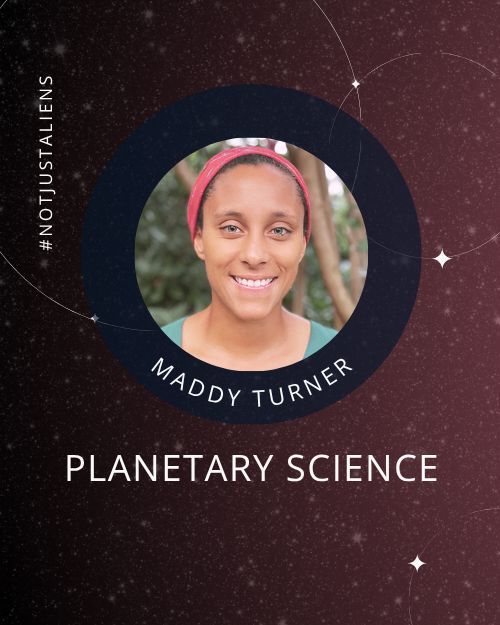
ALT Text: #notjustaliens. Maddy Turner, Planetary Science. Background: Starry night sky. Inset: Photo of Maddy Turner.
ALT Text: Dr. Maddy Turner is a planetary scientist working as a Postdoctoral Research Fellow with the Carl Sagan Center at the SETI Institute. Maddy’s primary research focuses on remote structural mapping and quantitative geomorphology of planetary bodies, including the development and implementation of methods. Background: Starry night sky with graphics of a star and exoplanets in front of it.
ALT Text: As a planetary scientist at the SETI Institute, Maddy works to characterize the Martian and Lunar surfaces through statistical analyses of cratered terrains. Her recent publications describe how changes in Mars’ sedimentary rocks can inform us about regional and global climate patterns in the planet’s history. Background: Starry night sky with graphics of a star and exoplanets.

ALT SETI Institute logo. Graphics: (top) Black hole. (bottom) radio telescope dishes at the Allen Telescope Array. Background: Starry night sky.



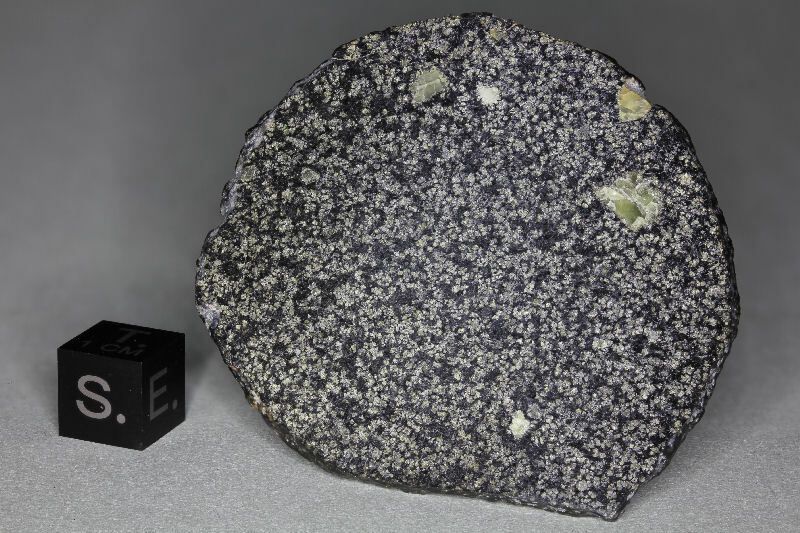
ALT Large slice of a round meteorite revealing white crystals in a black matrix. Several larger green inclusions can be found near the top and the top right. A comparison cube is on the left, showing the orientations of south (out from the sample) and east (to the left) at the time the meteorite was located.


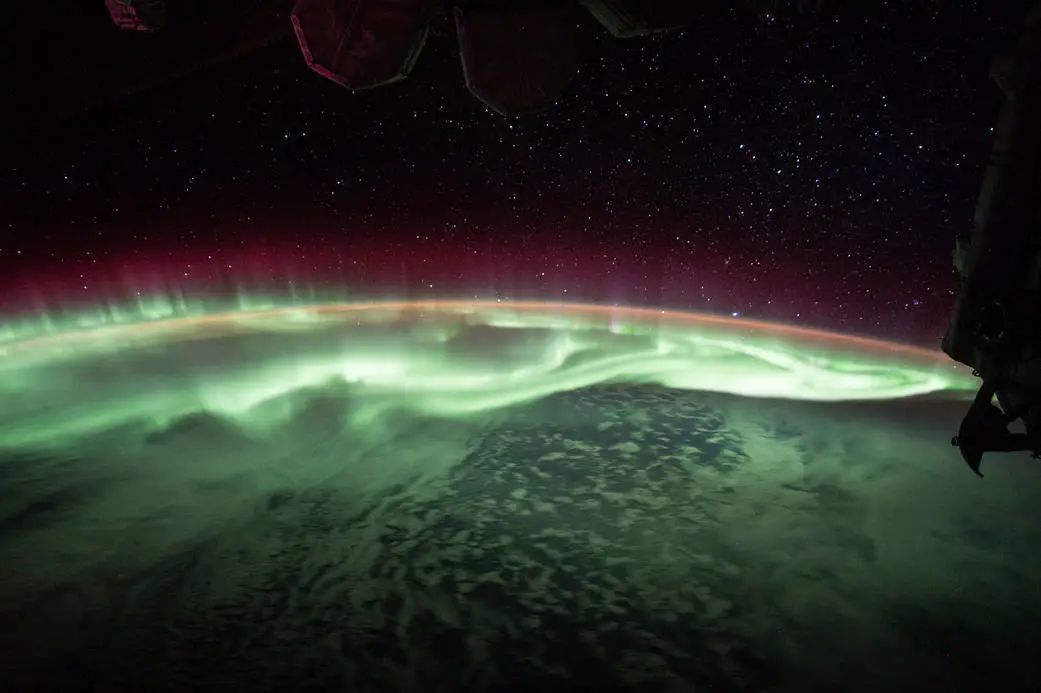
ALT A photograph taken from the International Space Station, parts of which can be seen at the top and right of the image, showing a massive, stunning green and red aurora on Earth.


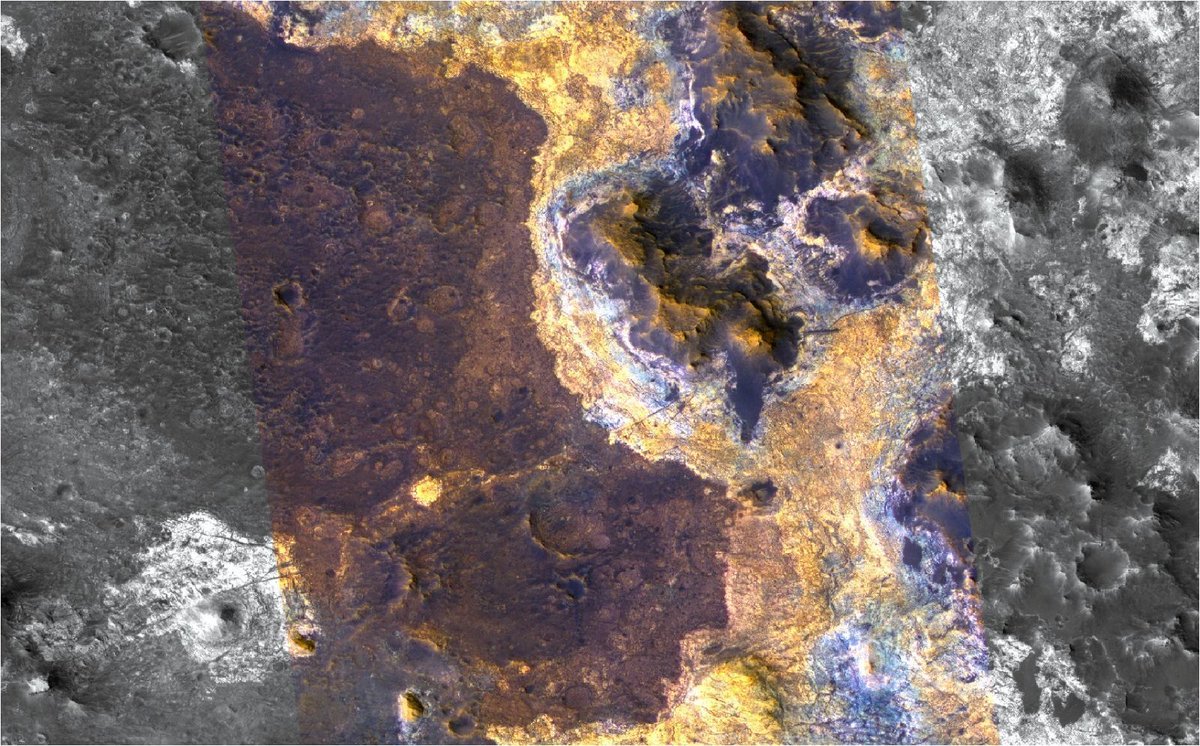
ALT Image taken of the surface of Mars from the Mars Reconnaissance Orbiter showing two different paleo-units running up against each other. The flat unit is lightly cratered. The border is curved and tracks around an outcrop in the middle of the picture. The terrain on the right is rougher. The border may be the edge of an ancient ocean.



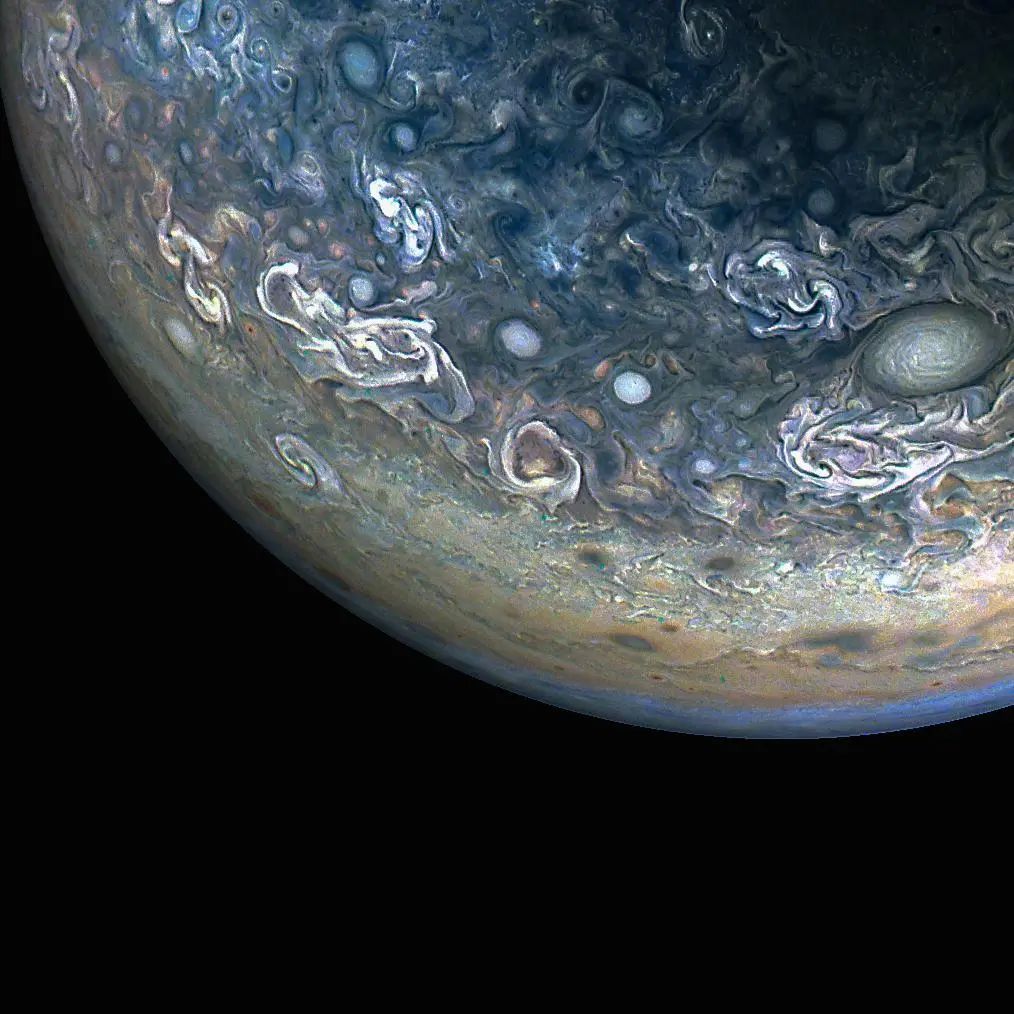
ALT Enhanced color image of a portion of Jupiter's cloud surface, revealing swirling storms and large cells, shown in shades of blue, brown, and cream.

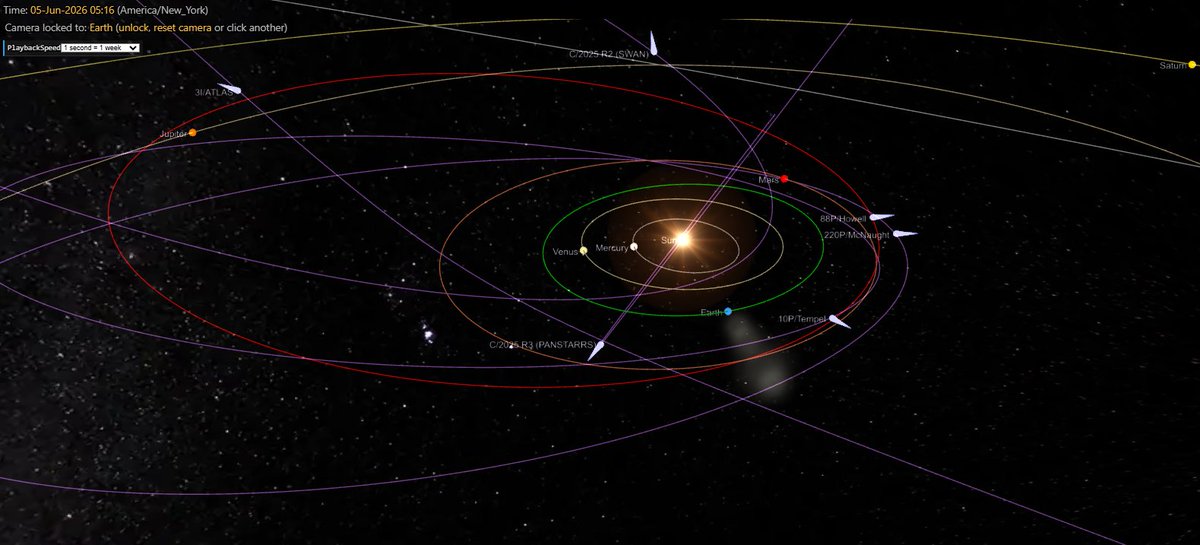
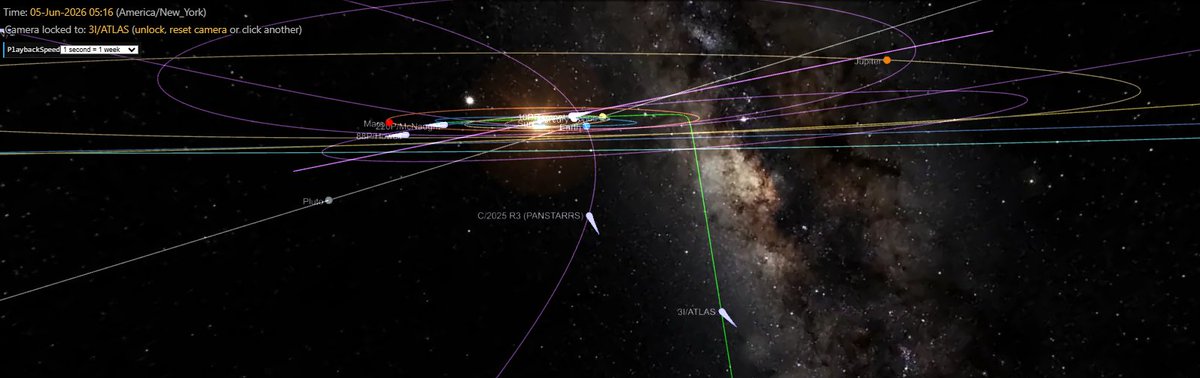
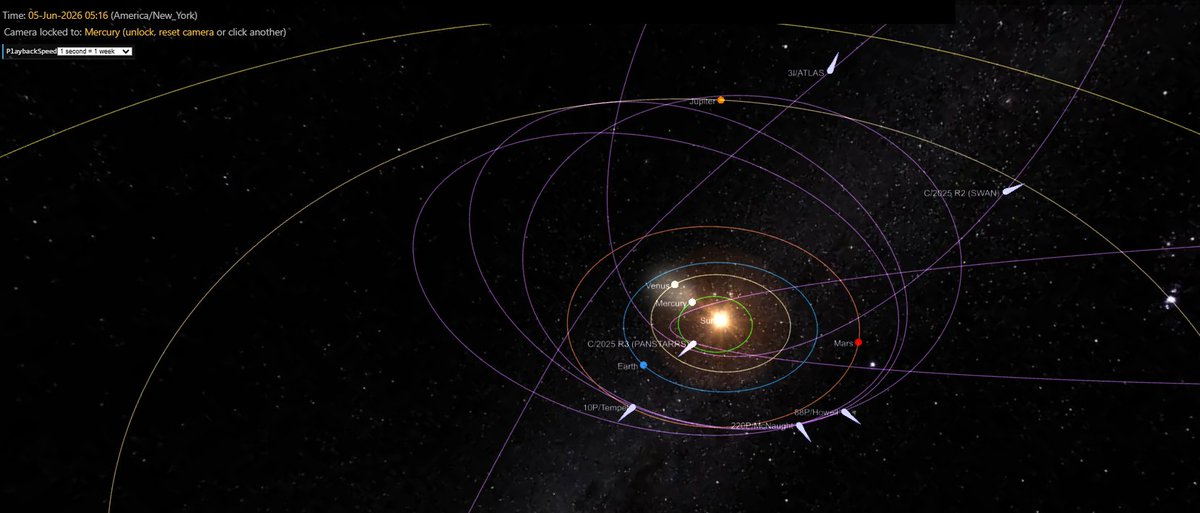
ALT 🚨☄️ A crowded comet scene is unfolding across the inner Solar System. Visible in this orbital view: 3I/ATLAS, C/2025 R2 (SWAN), C/2025 R3 (PANSTARRS), 10P/Tempel 2, 88P/Howell, and 220P/McNaught Big takeaway: 3I/ATLAS = interstellar visitor 10P/Tempel 2 = likely the most massive in this group 220P/McNaught = the surprise outburst comet The rest show how active and crowded comet traffic can get near the Sun This is not an impact warning — it’s a rare scientific snapshot of multiple comet families crossing the same solar system stage at once. #Comet #Comets #Astronomy #Space #SolarSystem #3IATLAS #SWAN #PANSTARRS #Tempel2 #Howell #McNaught #SpaceNews #Skywatching #PlanetaryScience #spacetrackerspace

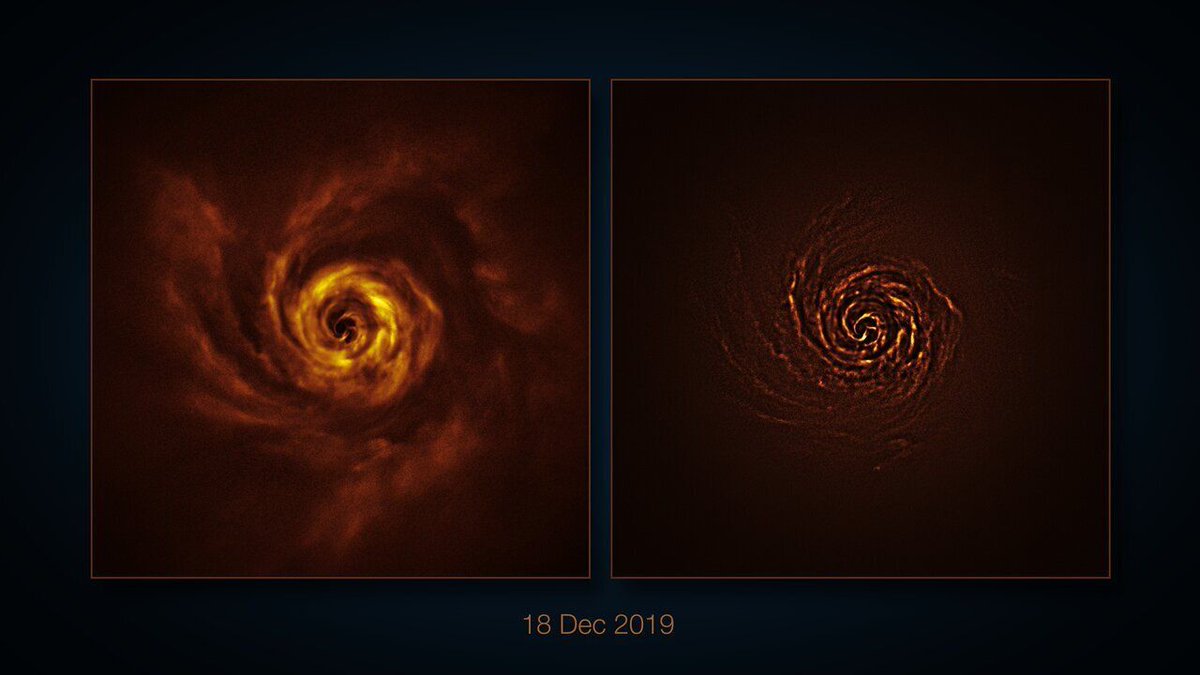
ALT Side-by-side comparison images of the protoplanetary disk around the star AB Aurigae. The star is blacked out in both images. The image on the left shows swirling clouds of gas and dust, brightening close to the star. The image on the right is over-processed to show more distinct lines within the spiral formation.

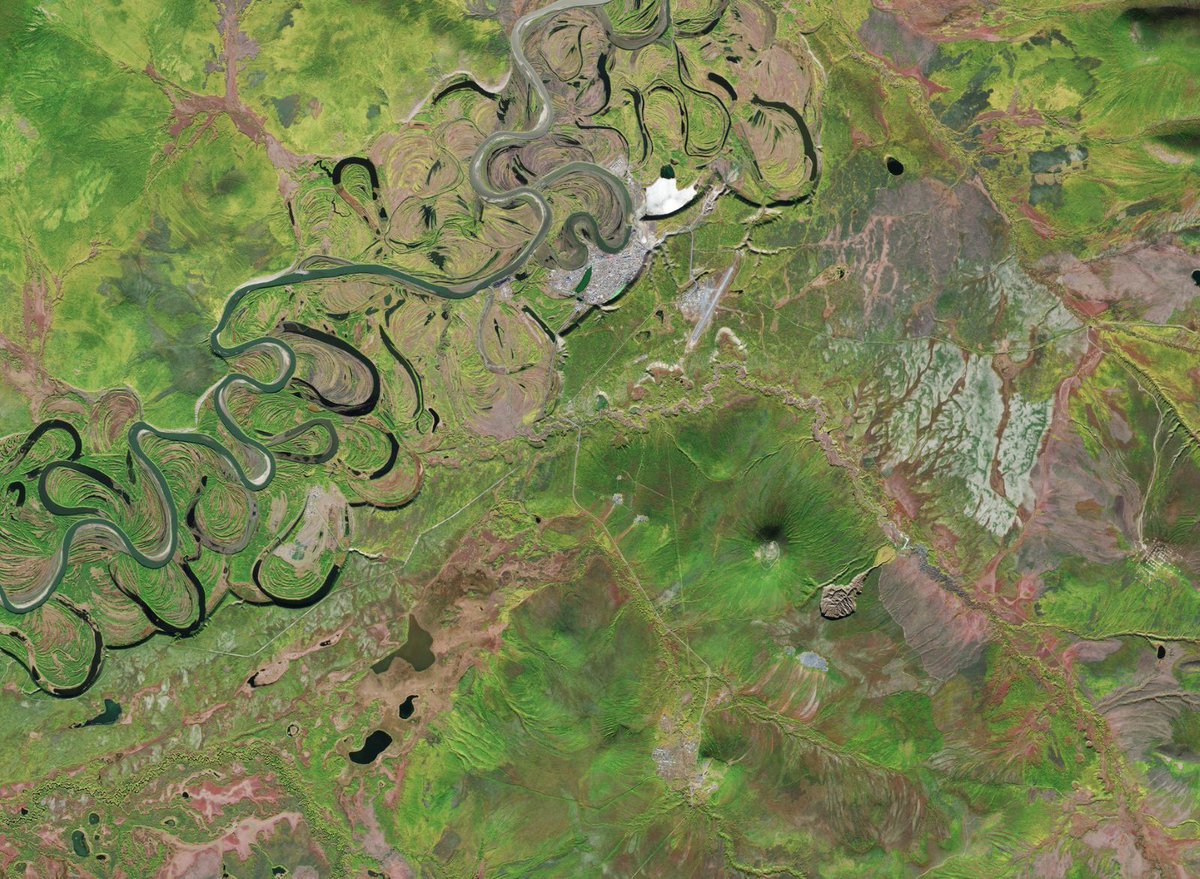
ALT Satellite image of a region in Siberia, Russia, that includes the Batagaika Crater (lower right), which is manta-ray-shaped. To the northeast, a small hill overlooks the crater. The region is covered in greenery. The small village of Batagay is in the top middle, with the winding Yana River running from the lower left to above the town.