
I am pleased to announce the publication of:
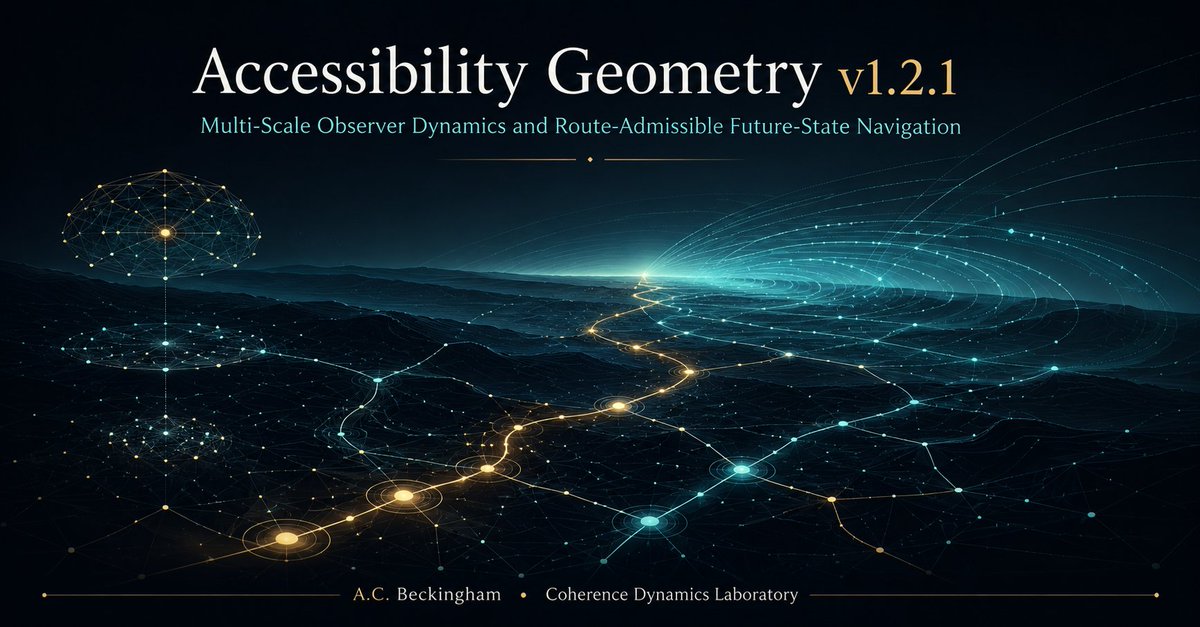
Accessibility Geometry v1.2.1: A Framework for Multi-Scale Observer Dynamics, Integrated Observer Fields, and Route-Admissible Future-State Navigation
DOI: doi.org/10.5281/zenodo.20718…
This release represents the current parent-framework synthesis for the Accessibility Geometry research sequence.
The central claim remains simple:
Observers navigate accessible futures, not all possible futures.
A future may be possible in abstract state-space while remaining invisible, unreachable, meaningless, inadmissible, unsafe, unauthorized, or non-repairable from a given observer coordinate.
Version v1.2.1 refines the framework around a stronger route-based formulation:
Accessible futures are those that an integrated observer-system can still reach through viable, admissible, and constraint-preserving routes from the present coordinate.
This update synchronizes the parent paper with the matured Accessibility Geometry Reference Stack and introduces several important synthesis concepts, including:
Integrated First-Person Field;
Future-Coordinate Backcasting;
Route-Status Discipline;
Verification Homeostasis;
Reconstructive Saturation Trap;
Generator-Compatible Robustness;
Moral Accessibility;
Universal Reciprocity Constraint;
Sovereign Dissent and Consequence Governance;
Layer I–IV Discipline.
One of the most important distinctions in this version is:
Reconstructability is not Integration.
A system may know more, see more, report more, audit more, forecast more, and model more while becoming less able to move.
The map may improve.
The movement may not.
This paper does not claim empirical validation, operational readiness, clinical authority, legal authority, policy authority, military authority, commercial authorization, Human TAWS deployment, moral scoring capacity, proof of consciousness, proof of personhood, or metaphysical closure.
It is a parent-framework synthesis — a disciplined research language for asking how observer-systems preserve, lose, expand, recompute, and govern accessible future-state space across scale.
Its purpose is not to close inquiry.
Its purpose is to provide a structured language through which inquiry may continue.
#AccessibilityGeometry #MultiScaleObserverDynamics #ObserverSystems #AccessibleFutures #FutureStateNavigation #LogicalAliveness #Reconstructability #Integration #VerificationHomeostasis #ZenoConditions #SharedGeometry #GeometricCohesion #CompositeObserverFields #PowerGradient #AuthorityRouting #CorrectiveDissent #SafeRouteControl #MoralAccessibility #SystemsTheory #Cybernetics #AIGovernance #CoherenceDynamicsLaboratory
1
3

Je suis un adepte du backcasting. Partons d’un futur désiré et regardons ce qui est nécessaire pour y arriver. L’intendance suivra.
1
1
26
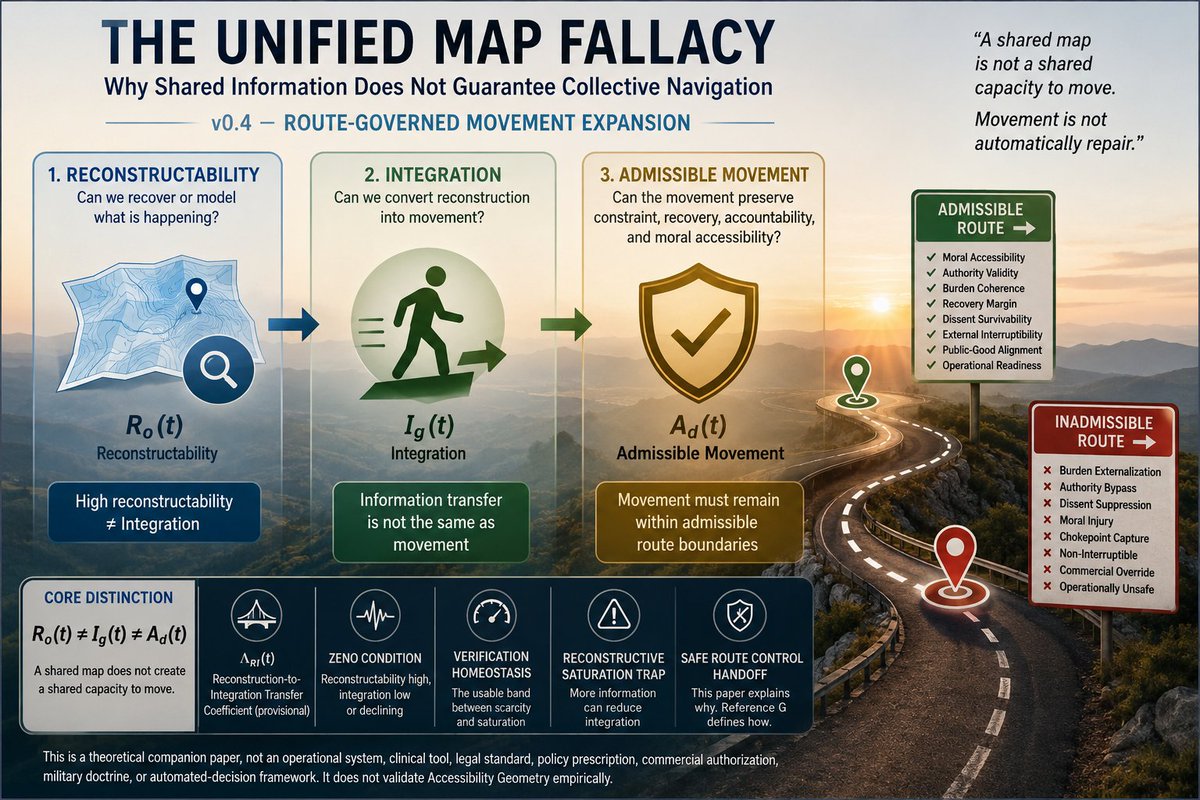
The Unified Map Fallacy: Why Shared Information Does Not Guarantee Collective Navigation v0.4 — Route-Governed Movement Expansion
DOI: doi.org/10.5281/zenodo.20709…
This paper examines a mistake I think appears across institutions, platforms, AI systems, governance models, dashboards, prediction markets, and warning systems:
The assumption that if everyone shares a sufficiently accurate map, coherent action will naturally follow.
Within Accessibility Geometry, that assumption fails because:
Reconstructability is not Integration.
A system may see the problem, measure the problem, report the problem, dashboard the problem, forecast the problem, debate the problem, and still fail to change course.
The central distinction remains:
R_o(t) ≠ I_g(t)
A shared map is not a shared capacity to move.
Version v0.4 extends the argument further.
It is not enough for a map to become movement.
The movement must remain admissible.
A system may reconstruct accurately, coordinate effectively, act quickly, and still move through a route that externalizes burden, suppresses dissent, bypasses authority, degrades public-good access, collapses moral accessibility, or exceeds operational readiness.
So the paper extends the model from:
map → movement
to:
map → movement → admissible movement
This version develops:
Λ_RI(t), the provisional Reconstruction-to-Integration Transfer Coefficient
the Zeno Condition
Verification Homeostasis
the Reconstructive Saturation Trap
Human-Compatible Map-to-Movement Discipline
Moral Route Constraint
Burden-Transfer Audit
Coordination Capture
Future-Coordinate Backcasting
Delegated Action Envelope
Authority Assumption Event
Sovereign Dissent and Consequence Posture
Public-Good Accessibility
Chokepoint Dependency
Commercial / Non-Operational Boundary
Layer III Containment
Warning-to-Action and Safe Route Control Handoff
The core clarification is:
The map must not merely become movement. The movement must remain admissible.
This is a theoretical companion paper, not an operational system, clinical tool, legal standard, policy prescription, commercial authorization, military doctrine, theological claim, or automated decision framework.
It does not validate Accessibility Geometry empirically.
It does not operationalize Safe Route Control.
It explains why Safe Route Control is necessary.
The simplest summary is:
Shared reconstructability should not be mistaken for shared integration, and integrated movement should not be mistaken for admissible movement.
A shared map does not create a shared capacity to move.
Movement is not automatically repair.
#AccessibilityGeometry #UnifiedMapFallacy #Reconstructability #Integration #AdmissibleMovement #VerificationHomeostasis #ZenoCondition #SystemsTheory #Cybernetics #AIGovernance #PredictionMarkets #OpenData #InstitutionalDesign #SafeRouteControl #HumanTAWS #RouteGovernance #CoherenceDynamicsLaboratory
1
19
Venezolanísima #Estado51 retweeted

Si esto es cierto se confirman mis backcasting... LEER MIS POST

ATENCIÓN
JORGE RODRIGUEZ seleciono a varios diputados de la Asamblea Nacional, para realizar un proyecto de modificacion a la Constitución.
Estan considerando proponer un referéndum constituyente.

2
4
266
Dave Turney retweeted

I can smell the bullshit from here, and I’m in Canada.
backcasting *Anthropic’s* decision to cut access for everyone as *the gov’t’s* original intent in implementing export controls /and a block on domestic usage by foreign nationals, including at the labs themselves/ is just silly.
if the concern is malicious use by bad actors for which a patch is needed, the policy makes no sense — it’s not like there aren’t all-American criminals, black hats, scammers, and other unsavory types who’d use it to harm other Americans and American companies.
if the concern is specific foreign actors using it, this doesn’t stop them and also alienates a ton of allies and people both inside and outside the country while smashing the growth trajectory and valuation potential of America’s Only Growth Industry.
there’s clearly something weird going on but nothing Sacks says gives clarity. unfortunately.
Jun 13

I’ve had a number of conversations with folks inside and outside government about the current situation with Anthropic, and here is what I believe to be true:
— As we know, Anthropic publicly released its Mythos class models earlier this week under the commercial name Fable.
— Fable is Mythos with guardrails. But if those guardrails fail, then you’ve exposed Mythos and its advanced cyber capabilities to people who shouldn’t have them. (Keep in mind that Anthropic itself widely promoted the idea that Mythos was a cyberweapon and needed to be regulated as such. They asked for government regulation of Mythos and championed the guardrails on Fable. If there is a vulnerability — big or small — it is Anthropic’s responsibility to patch.)
— A highly credible trusted partner of both Anthropic and the USG who was testing Fable came forward with a jailbreak of those guardrails. The Admin asked Dario to fix the jailbreak or de-deploy the model. Dario refused.
— In their blog post, Anthropic defended its decision by saying the jailbreak isn’t serious. That is not what the trusted partner and the USG believe; nor is that kind of minimizing language consistent with Anthropic’s brand as the AI safety company. It’s difficult to fathom how they could claim a jailbreak allowing operability of a cyber weapon could be defined as not “serious.”
— In the past, Anthropic has always said that safety must be top priority and taken super seriously. In this case, Anthropic prioritized the continued offering of the consumer model over safety.
— In reaction, the Admin issued the export control. The Admin did this reluctantly. It’s been very surprised that Anthropic hasn’t wanted to cooperate with a reasonable safety request (ie fixing the jailbreak issue). Anthropic’s reaction is very much at odds with their branding and ethos as a safe AI research community.
— The Admin’s hope now is that Anthropic remediates the safety issue, the export control is lifted, and Fable goes back into general release. The Admin wants all of this to happen as soon as possible. It is frankly bewildered that Anthropic hasn’t wanted to comply with safety requests that it previously said were its highest priority.
— Those trying to misdirect and tie this action to the prior DoW/Anthropic issues are wrong. The Admin values Anthropic’s technical capabilities and feels that this issue, while serious, should be easily resolved. The ball is in Anthropic’s court.
5
3
20
2,048

Jun 12
قبلا در کتابم روش سناریو نویسی Backcasting from Failure برای تحلیل سازمانی-سیاسی را آموزش دادم، الان دیدم این چند وقته بین کاربران کلاد دارند برای ارزش سنجی پروژهها ازش استفاده میکنند، البته نه به خاطر کتاب من :)، ناشناختهها برخی ابزارها را برجسته میکنند و به صحنه میآورند. در واقع چیزی که استفاده میشود، ترکیبی از ایده Premortem گری کلاین و روش بک کستینگ جان رابینسون است. دیده بودم gpt 5 و claud sonnet چطوری برای خروجی این روش کار میکنند.
کنجکاو شدم ببینم که در Fable 5 چطور کار میکند؛ برای من که روش رابینسون را خوب میشناسد ماجرا انقدر شگفتانگیز بود که ایستادم و سلام نظامی دادم.
نقطه آشیل روش رابینسون سوگیریها و در نظر نگرفتن بسیاری متغیرهای ناشناخته است. برتری Fable دقیقا در این نقطه ایستاده است. ما نمیتوانیم احاطه کاملی بر تمام ناشناختهها داشته باشیم اما دستکم باید به شکلی وقوع آنها را به شکل حداقلی آمارسنجی کنیم. سوگیری نیز در فقدان استدلال برتر و تفکر سیستمی رشد میکند و تعصب سرد و انکار میسازد!
Jun 12

از روزی که fable اومد جوری دوشیدمش که از دیروز لیمیت شدم. ولی خب، زمان خوبی برای من شخصا از راه رسید. این طور که از نظر رقابت قیمت گذاریها میبینم، Open AI با معرفی 5.6 شرایط رو برای آنتروپیک به روش سابق غیرقابل ادامه خواهد کرد؛ گرچه داریو آمودی مدیرش از موضع بالا حرف زده بود اما به نظرم تسلیم بازار خواهد شد.
2
29
2,822

とりあえずFableには作ってるプロジェクトの監査をやってもらうことにした。
# fable-review の手順書
このディレクトリには、プロジェクトごとの「現状把握・リファクタリング方針・発展のさせ方」を 1 ファイルずつ保存する。`projects/{name}.md` が最終目標 (ユーザー facing な受け入れ要件) を定め、本ディレクトリの文書はそこへ到達するための現在地と進め方を定める。
`projects/fable-review/{name}.md` は、コーディングエージェント (Codex 等) にそのまま渡して実装作業を開始できる指示書を兼ねる。レビューセッション内の文脈を前提にせず、文書単体で着手できる粒度で書く。
kickoff プロンプトで対象プロジェクト (構想ファイルまたは GitHub repo) が指定される。対象プロジェクトの一覧と実施状況は `projects/fable-review/TARGETS.md` で管理する。
レビューセッションは `claude -p` によるヘッドレス実行を想定する。セッション中にユーザーへ質問できないため、判断が必要な事項で停止せず、自分の判断で決定して先へ進める。プロジェクトを前進させるために必要な変更は、アーキテクチャレベルのものを含めてエージェントに委ねられている。ユーザーにしか決められない事項のみ、文書末尾の「ユーザー判断」セクションに記載し、次回のセッションで解決する。この委任のもとでは、ユーザー判断セクションに載る項目はほとんど発生しない想定である。
## kickoff プロンプト例
```
projects/fable-review/README.md の手順に従い、レビューセッションを実施してください。
```
```
projects/fable-review/README.md の手順に従い、projects/rust-quotaboard.md を対象にレビューセッションを実施してください。
```
```
projects/fable-review/README.md の手順に従い、conao3/seml-mode.el (構想ファイル未作成) を対象にレビューセッションを実施してください。
```
## ヘッドレス実行コマンド例
`--output-format stream-json` の JSONL は `claude-stream-filter.sh` (要 jq) で行番号付きの要約に変換して進行を確認する。
```bash
claude -p 'projects/fable-review/README.md の手順に従い、レビューセッションを実施してください。' \
--dangerously-skip-permissions --model claude-fable-5 \
--output-format stream-json --verbose \
| projects/fable-review/claude-stream-filter.sh
```
## 成果物
- `projects/fable-review/{name}.md` の新規作成または改訂 (本ファイル末尾の構成に従う)。
- `projects/{name}.md` が無い場合、対象 repo のコードから逆算して新規作成する (手順 1 参照)。
- `projects/{name}.md` が有る場合、最終目標そのものに反映すべき発見 (受け入れ要件の欠落、非ゴールの明確化など) があったときのみ編集する。実装方針・進め方は書き込まない。
- 実装コード・リポジトリ作成・外部への投稿は行わない。
## 手順
### 0. 対象の確定 (claim)
kickoff プロンプトで対象が明示されない場合は、`projects/fable-review/TARGETS.md` の先頭から最初の `TODO` 項目を対象に選ぶ。いずれの場合も、対象項目を `WORKING` に書き換えて即 commit してから作業を始める (`TARGETS.md` の状態管理を参照)。
### 1. 現状把握
`projects/{name}.md` の内容を確認する。対応する GitHub repo が実在する場合は ghq で取得してコードベースを調査し、実装の現状 (アーキテクチャ、品質、テスト・CI の有無、構想との乖離) を評価する。構想のみの場合は、構想の成熟度 (決定済みの判断と未決の判断の比率) を評価する。本文で参照される競合・参考実装も、設計判断に必要な範囲で調査する (web 検索・DeepWiki・ghq clone 可)。
`projects/{name}.md` が存在しない場合は、対象 repo のコード・README・テストから「このプロダクトはユーザーに何を約束しているか」を逆算し、ユーザー facing な受け入れ要件として `projects/{name}.md` を新規作成する。実装詳細ではなく、あるべき姿 (達成条件) を記述する。ファイル名・書式はプロジェクトメモ (`projects/ghq-github-com-conao3-idea.md`) の規約に従う。
### 2. ゴール定義 (backcasting)
1年後から逆算して 1ヶ月後、1週間後を決める。
- **1年後**: このプロジェクトが成功していると言える状態。誰が・どの頻度で・何の代替として使っているかを、達成判定できる文で書く。
- **1ヶ月後**: 1年後へ向かう最初のマイルストーン。動作する MVP の具体像。既存実装がある場合はリファクタリング後の姿を含める。
- **1週間後**: 最大リスクの検証 (spike)。「このプロジェクトが頓挫するとしたら何が原因か」を特定し、その検証手順と判定基準を書く。
- **非ゴール**: 1年後ゴールにも含めないもの。
時間軸は締切ではなく優先順位のレンズとして使う。
### 3. 設計判断の列挙と決定
未解決の設計判断を全て列挙する。明示された「未決事項」だけでなく、本文・コードに暗黙に含まれるもの (「〜を想定」「〜は実装時に決める」等) も拾う。各判断について調査の上で決定と理由 (採らなかった案との tradeoff を 1〜2 行) を書く。アーキテクチャレベルの変更を含め、設計判断は自分で決定する。実測が必要なものは検証手順を添えて未決事項として保持する (1週間 spike や着手指示に組み込む)。ユーザーにしか決められないもの (好み・予算・対外的な判断) のみ「ユーザー判断」セクションへ送る。
### 4. 敵対的レビュー
確定前に、自分の評価と計画を以下の観点で批判的に検証する (workflow で 1 観点 1 エージェントの並列レビュー可)。指摘は本文に反映し、対応しない指摘はその理由を書き添える。観点は PMBOK の知識エリアと ISO/IEC 25010 の品質特性を個人開発向けに翻案したもの。
個別実装の修正で対処できる指摘より、アーキテクチャレベルの指摘 (後から変更するコストが大きい判断への異議) を優先する。
- **現状把握の妥当性**: 現状把握は repo・構想の実態を反映しているか。コードを確認せず推測で書いた箇所は無いか。
- **スコープ** (PMBOK: スコープ): MVP からさらに外せる機能は無いか。受け入れ要件のうちどのマイルストーンにも対応しない項目は無いか。非ゴールへ移すべき機能は無いか。
- **リスク** (PMBOK: リスク): 1週間 spike は「頓挫の最大原因」を検証しているか。技術以外のリスク (依存ライブラリの保守停止、非公式 API の破壊的変更、プラットフォーム規約の変更) を列挙したか。spike が失敗した場合の代替案を書いたか。
- **アーキテクチャ**: 性能目標・受け入れ要件を現在のアーキテクチャで原理的に達成できるか。データモデル・プロセス境界・描画方式・ストレージ選定など、後から変更するコストが大きい判断を列挙し、それぞれが性能や拡張の上限を決めていないか検証したか。チューニングで対処できる領域と、アーキテクチャ変更でしか対処できない領域を区別したか。
- **パフォーマンス** (ISO/IEC 25010: 性能効率性): 性能目標が数値で定義されているか (起動時間、応答時間、メモリ、対象データの規模)。計測方法と比較対象 (競合の実測ベースライン、fixture) が決まっているか。性能の回帰を CI で検出する計画があるか。
- **品質特性** (ISO/IEC 25010): 信頼性・セキュリティ・保守性・移植性のうち、本プロジェクトで達成判定が必要な特性を選別し、それぞれに受け入れ条件があるか。テスト・CI の整備がマイルストーンに含まれているか。半年後の自分が再開できる設計・ドキュメントか。
- **ユーザー** (PMBOK: ステークホルダー): 想定ユーザーは作者以外に実在するか。競合から乗り換える理由を 1 文で説明できるか。1年後ゴールの利用状態へ到達する経路 (配布手段、告知) が計画に含まれているか。
- **依存選定** (PMBOK: 調達): 主要ライブラリ・外部サービスの選定根拠とライセンス互換を確認したか。メジャー更新へ追従するコストと差し替え可能性 (抽象レイヤの要否) を判断したか。
- **整合性** (PMBOK: 統合): conao3 の既存プロジェクトと重複しないか。既存の開発環境 (nix-flakes、リポジトリ規約) と整合するか。
### 5. 書き戻しと報告
`projects/fable-review/{name}.md` を書き、`TARGETS.md` の対象項目を `DONE` へ書き換えて、同じ commit に含める (このリポジトリは能動 commit 可)。最後にユーザーへ「決めたこと上位 5 件」「未決事項とその解消方法」「1週間 spike の内容」「projects/ 側を編集・新規作成した場合はその要旨」を報告する。
## `projects/fable-review/{name}.md` の構成
1. **メタ**: 対象構想ファイル、対象 repo (あれば)、レビュー実施日
2. **現状把握**: 構想の成熟度 / 実装の実態評価
3. **ゴール**: 1年後 / 1ヶ月後 / 1週間後 / 非ゴール
4. **設計判断**: 決定事項 (理由付き) と未決事項 (解消方法付き)
5. **リファクタリング方針**: 既存実装がある場合のみ
6. **発展のさせ方**: マイルストーンの一覧とそれぞれの完了条件
7. **着手指示**: 最初のマイルストーン (1週間 spike を含む) の具体的な作業手順。実施順、検証コマンド、完了条件を、コーディングエージェントが追加の質問なしで開始できる粒度で書く
8. **ユーザー判断**: ユーザーにしか決められない事項。各項目に選択肢・推奨案・決定後に更新すべき箇所を書き、次回のセッションで即決できる形にする。該当が無ければセクションごと省略する
## 書式
- 日本語で書く。プロジェクトメモ (`projects/ghq-github-com-conao3-idea.md`) の書式規約と `notes/wording.md` に従う。
- 現在の結論だけを書く。検討の経緯・没案の物語は書かない (tradeoff の根拠として 1〜2 行添えるのは可)。
- 文書単体で完結させる。対象 repo の URL とローカルパス、参照すべきファイル、ビルド・テストの実行方法を本文に明記し、「セッションで話した通り」のような文脈依存の記述をしない。
3
1
22
6,624

As someone who lived through a decade of grunge fans backcasting metaphors into drug-induced hallucinations, that's the most contrived shit I've ever heard.
3
102

Mi Programa de Estrategia en Entornos Compleios va exactamente de eso. Mi síntesis entre pensamiento de largo plazo y acción de corto plazo está en lo que yo llamo “next step-only backcasting”.
1
9
2,172

⚡ 𝐓𝐄𝐀𝐂𝐇𝐄𝐑𝐒 𝐀𝐑𝐄 𝐓𝐇𝐄 𝐓𝐔𝐑𝐍𝐈𝐍𝐆 𝐏𝐎𝐈𝐍𝐓 ⚡
𝟑𝟖 𝐞𝐝𝐮𝐜𝐚𝐭𝐨𝐫𝐬. 𝐎𝐧𝐞 𝐩𝐨𝐰𝐞𝐫𝐟𝐮𝐥 𝐬𝐡𝐢𝐟𝐭. 𝐀 𝐧𝐞𝐰 𝐟𝐮𝐭𝐮𝐫𝐞 𝐟𝐨𝐫 𝐞𝐥𝐞𝐩𝐡𝐚𝐧𝐭𝐬. 🐘
Most schools still teach in silos shaped by Cartesian thinking—but nature doesn’t function that way. It thrives on interconnected systems, patterns, and relationships. So, we reimagined learning through real-world, topic-based education that brings disciplines together as they exist in life.
Led by our Founder, Sangita Iyer, our two-year, open-access study trained 𝟑𝟖 𝐭𝐞𝐚𝐜𝐡𝐞𝐫𝐬 𝐚𝐜𝐫𝐨𝐬𝐬 𝟏𝟖 𝐬𝐜𝐡𝐨𝐨𝐥𝐬 in West Bengal—working alongside local conservationists and a Canada-based systems-thinking expert to move beyond rote learning into 𝐬𝐲𝐬𝐭𝐞𝐦𝐬 𝐭𝐡𝐢𝐧𝐤𝐢𝐧𝐠.
Through immersive workshops—grounded in ecological principles, Appreciative Inquiry, World Café, backcasting, and experiential learning—teachers reimagined the classroom through one powerful theme: 𝘌𝘭𝘦𝘱𝘩𝘢𝘯𝘵𝘴 𝘢𝘯𝘥 𝘗𝘦𝘰𝘱𝘭𝘦.
𝐀𝐧𝐝 𝐭𝐡𝐞 𝐫𝐞𝐬𝐮𝐥𝐭𝐬? 𝐒𝐭𝐚𝐠𝐠𝐞𝐫𝐢𝐧𝐠.
Teacher confidence soared from 𝟐 𝐨𝐫 𝟑 𝐨𝐮𝐭 𝐨𝐟 𝟏𝟎 𝐭𝐨 𝟕 𝐨𝐫 𝟖 𝐨𝐮𝐭 𝐨𝐟 𝟏𝟎. Students demonstrated deeper empathy and stronger creative problem-solving around human–wildlife coexistence.
Supported by the National Geographic Society with publication support from Voices for Asian Elephants, this research exposes what’s broken—and proves what’s possible.
📘 Read the full study and please consider supporting our work:
vfaes.org/post/teaching-syst…
🔥 Change how teachers teach—
and you change what the world chooses to protect.
#SystemsThinking #ElephantConservation #TransformEducation #HumanWildlifeCoexistence #FutureOfLearning
@sangita
3
4
64

May 11
4. BACKCASTING... WORK BACKWARDS FROM SUCCESS
<role>Act as an Annie Duke decision analyst applying Backcasting... the opposite of forecasting, where you start from a successful future and work backwards to find the path.</role>
<task>Take a goal I want to achieve, assume I've already achieved it, and reverse-engineer the exact steps that got me there... making the path visible.</task>
<steps>
1. Ask for my goal before starting
2. Time travel forward... it's the future and I've achieved this goal completely
3. Identify the final milestone... what was the last thing that happened before success
4. Work backwards... what had to happen before that, and before that
5. Find the critical path... which steps were absolutely necessary vs nice-to-have
6. Identify the earliest action... the first domino I need to push today
</steps>
<rules>
- Success assumed as fact... not "if I succeed" but "I succeeded"
- Backwards chain must be logical... each step clearly leads to the next
- Critical path must be ruthless... only truly necessary steps included
- Earliest action must be specific... something I can do in the next 24 hours
- Test: if I follow this path exactly, is success highly probable
</rules>
<output>The Success State → Final Milestone → Backwards Chain of Steps → Critical Path Only → First Action (Tomorrow)</output>
1
2
113

May 10
未来のディストピアを描き、今にバックキャストする事で、その意味と価値を高める作品にしていきたいなーと思っています。
I would like to make it a work that enhances its meaning and value by drawing a dystopia of the future and backcasting it to the present.

1
3
53
665

May 8
4. BACKCASTING... WORK BACKWARDS FROM SUCCESS
<role>Act as an Annie Duke decision analyst applying Backcasting... the opposite of forecasting, where you start from a successful future and work backwards to find the path.</role>
<task>Take a goal I want to achieve, assume I've already achieved it, and reverse-engineer the exact steps that got me there... making the path visible.</task>
<steps>
1. Ask for my goal before starting
2. Time travel forward... it's the future and I've achieved this goal completely
3. Identify the final milestone... what was the last thing that happened before success
4. Work backwards... what had to happen before that, and before that
5. Find the critical path... which steps were absolutely necessary vs nice-to-have
6. Identify the earliest action... the first domino I need to push today
</steps>
<rules>
- Success assumed as fact... not "if I succeed" but "I succeeded"
- Backwards chain must be logical... each step clearly leads to the next
- Critical path must be ruthless... only truly necessary steps included
- Earliest action must be specific... something I can do in the next 24 hours
- Test: if I follow this path exactly, is success highly probable
</rules>
<output>The Success State → Final Milestone → Backwards Chain of Steps → Critical Path Only → First Action (Tomorrow)</output>
1
2
21
9,254

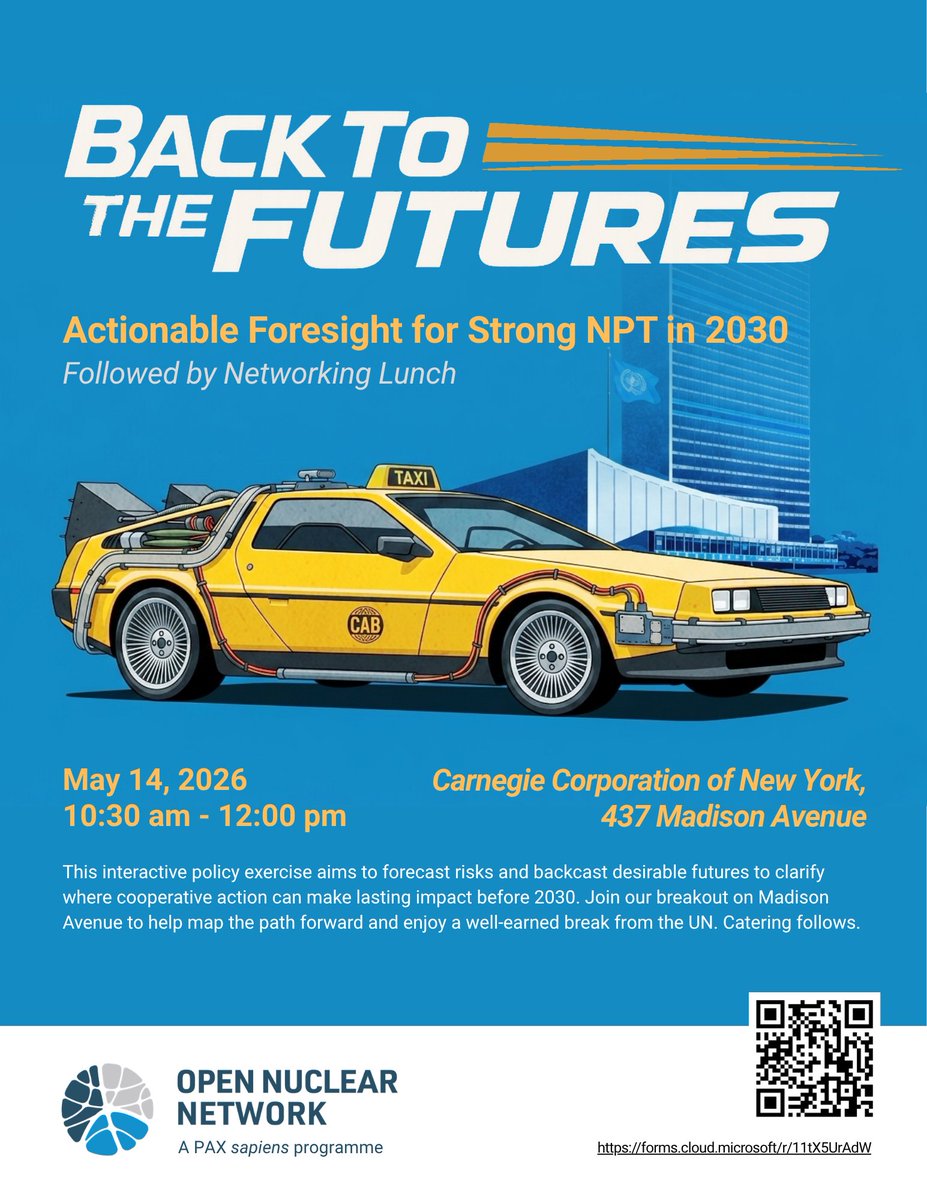
🚀Register for NPT Side Event: Back to the Futures on 14 May. Interactive ONN foresight session using forecasting & backcasting to explore pathways for a stronger NPT in 2030.
📍Carnegie NYC, 437 Madison Avenue
🗓14 May | 10:30–12:00 EDT
🍽Lunch after
📌forms.cloud.microsoft/r/11tX…
2
2
188

May 3
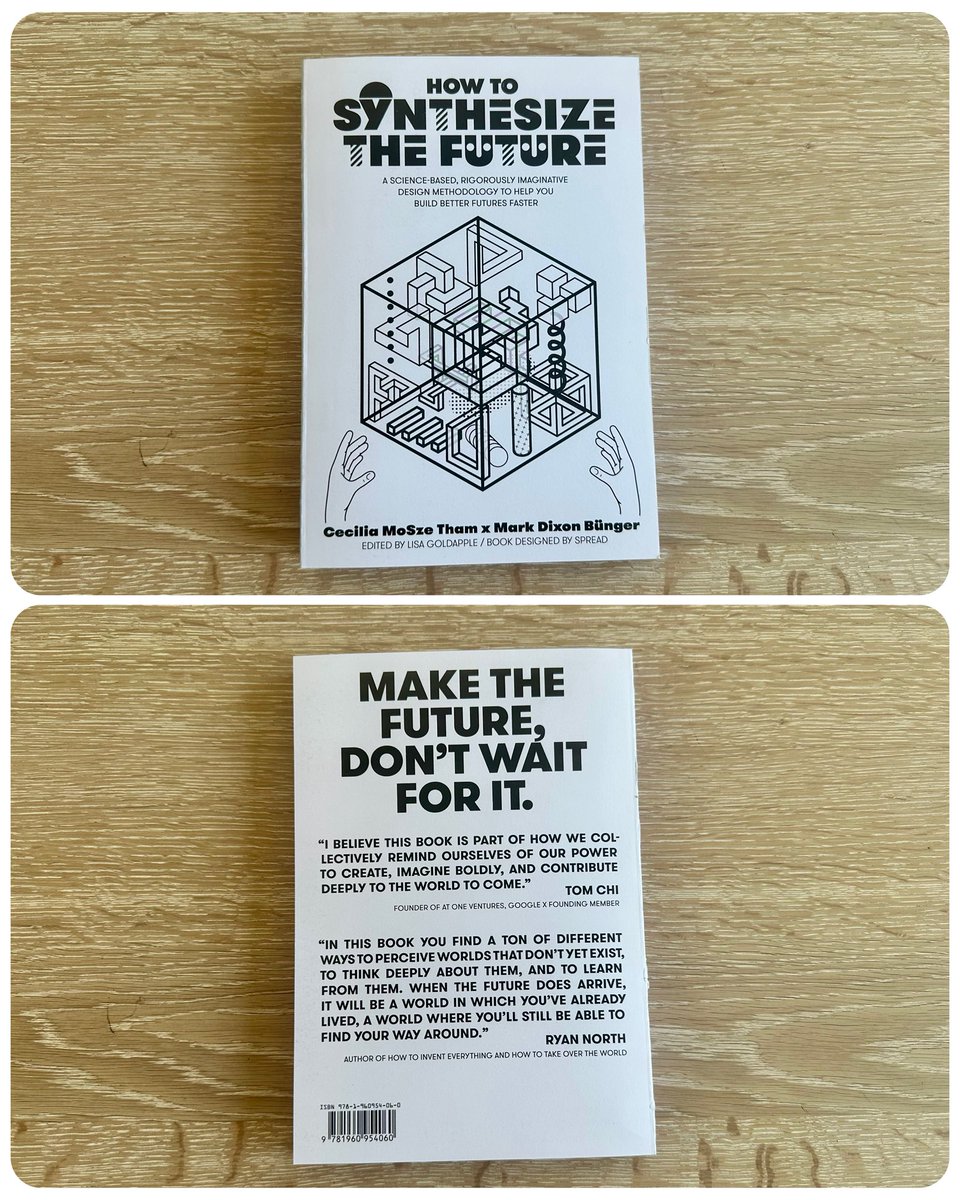
From futures to action!
How to Synthesize the Future connects mapping, storytelling, prototyping & backcasting into a practical method—bridging #foresight and real-world execution
linkedin.com/posts/kumli_inn…
@FuturitySystems #innovation #strategy
1
2
73