
17 Nov 2025
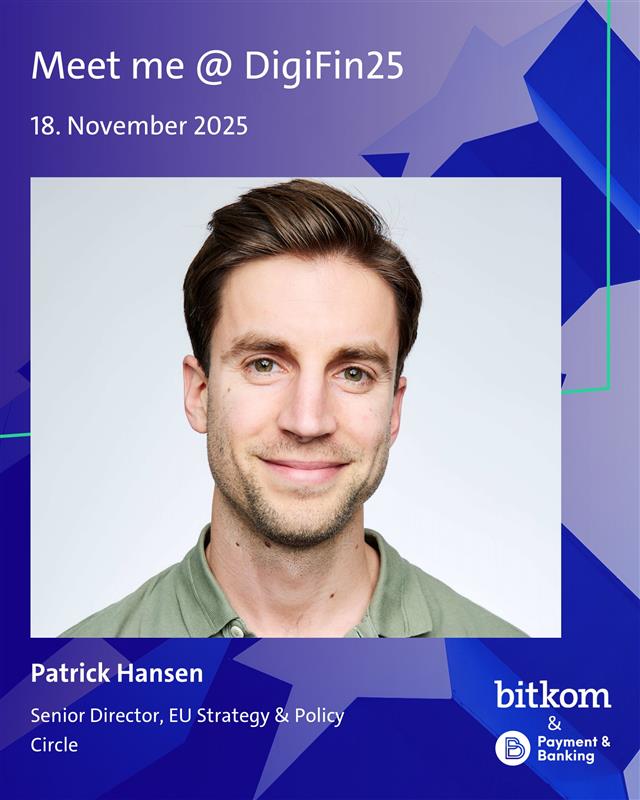
Meet me at the #digifin25 tomorrow in Berlin to chat about stablecoins, MiCA, and the euro onchain.
@Bitkom @Bitkom_Finance @bitkom_block @AnikaPatz @paymentbanking
10
2,009

26 Sep 2025
Artikel via @DS_Talk
Zu: #Datenschutz #DataPrivacy #Bitkom #DSGVO #Compliance #KUM #GDPR #Mittelstand
Die Bitkom auf TwitterX: @Bitkom_AI_Data @Bitkom_Europe @Bitkom_Privacy @Bitkom_Startup @bitkom_block @BitkomResearch @Bitkom_NewWork @Bitkom_Politik @Bitkom_Health
3
65

23 Dec 2023
So, what's next for Web3 infrastructure? 👀
In this year-end period, it is worthwhile to delve more deeply and learn from a panel discussion with our co-founder @jarotondi at the @EBlockchainCon
TLDR;
1. The Consumer-Facing Approach
2. Advances in Infrastructure
3. Decentralization and the Free Society
4. Challenges with Regulations
5. Tokenization and Real-World Assets
6. The Future of Web3 Infrastructure
We've compiled 6 key findings from Joe, although we recommend watching the entire video! 👇
—————————
1. The Consumer-Facing Approach 🌆
The current user base for blockchain applications like OpenSea and Uniswap is relatively small compared to the global population.
To expand this, creating Web3 applications that seamlessly integrate into users' lives, akin to the adoption of mainstream social media platforms like Facebook and TikTok, is vital.
This necessitates a focus on making apps consumer-friendly, offering tangible benefits to users.
—————————
2. Advances in Infrastructure ⚙️
Joe highlighted the limitations of existing blockchain systems like Bitcoin and Ethereum, which operate as one-lane highways.
Innovations such as sharding, par chains, or networks like Avalanche and Cosmos aim to introduce application-based chains, allowing blockchain evolution without the need for forks.
It's also about enabling seamless upgrades and avoiding divisive community decisions seen during the Ethereum fork and after the DAO hack.
—————————
3. Decentralization and the Free Society 🙌
While advocating for a decentralized approach, Joe envisions Web3 as a path toward building a free society.
He emphasizes the importance of transparency, decentralization, and security in building a framework where markets self-regulate, reducing fraud and fostering trust in the absence of heavy-handed government intervention.
—————————
4. Challenges with Regulations ⚖️
Joe discussed the struggle between centralized regulation and the inherently peer-to-peer nature of Web3.
He highlighted cases like Uber's challenge against taxi monopolies as an example of Web2 disruption.
However, Web3, operating in a decentralized manner, aims to challenge traditional regulatory structures, allowing power to be held more bottom-up, potentially impacting industries and societal structures.
—————————
5. Tokenization and Real-World Assets 💰
A significant shift noticed is the growing interest in tokenizing real-world assets.
While early discussions focused on digital assets like stocks or bonds, the real potential lies in tokenizing physical assets like real estate, collectibles, or commodities.
This bridging of digital assets with the real world could be the catalyst for mass crypto adoption by the general public.
—————————
6. The Future of Web3 Infrastructure 📖
Looking ahead, Joe envisions the emergence of non-geographic communities, akin to digital countries or communities where individuals unite based on shared interests rather than physical locations.
He sees this transition as a means to address inequality and create opportunities, ushering in the Network State concept described in Ballaji's book.
—————————
7. In conclusion, Joe's insights highlight 🧠
• Web3 applications must prioritize user-centric designs.
• Infrastructure improvements are vital for scalability and decentralization.
• The conflict between regulation and decentralization remains unresolved.
• There's substantial potential in tokenizing real-world assets.
• Digital communities will reshape societal structures in the future.
Thanks to Joe and all the panelists, including @BenediktFaupel from @bitkom_block, @GhanVashishtha from @0xZeeve, @patxi_ba from @Telefonica, @DemoSkalkotos from @expand_network, and Adnan Alisic from @biokript, for their dedication and many insightful conclusions!
We look forward to future conferences 🙌
3
3
16
894

11 Dec 2023
youtube.com/watch?v=GTcR2MPP…
Speakers:
🎤 @BenediktFaupel from @bitkom_block
🎤 @GhanVashishtha from @0xZeeve
🎤 @jarotondi from @theunitnetwork
🎤 @patxi_ba from @Telefonica
🎤 @DemoSkalkotos from @expand_network
🎤 Adnan Alisic from @biokript
2
9
621

29 Nov 2023
Unseren letzten Bitkom_Block zum digitalen Euro mit @larsr_h findet ihr ab sofort auf Youtube zum nachschauen📺
youtube.com/watch?v=_XZFLIi2…
2
160

25 Oct 2023
Speakers:
🎤 @BenediktFaupel from @bitkom_block
🎤 @GhanVashishtha representing @0xZeeve
🎤 @jarotondi of @theunitnetwork
🎤 @patxi_ba speaking for @Telefonica
🎤 @DemoSkalkotos CEO of @expand_network
🎤 Adnan Alisic head of @biokript
2
1
8
329

27 Sep 2023
.@bitkom_block #42 "Decentralized Business Models" had @roman_beck from European #Blockchain Center @ITUkbh as guest.
Personal key take-aways:
➡️#DLT may render services via its #network which standard markets cannot deliver - especially for public (or club) goods.
(1/n)
1
8
27
1,664
22 Aug 2023
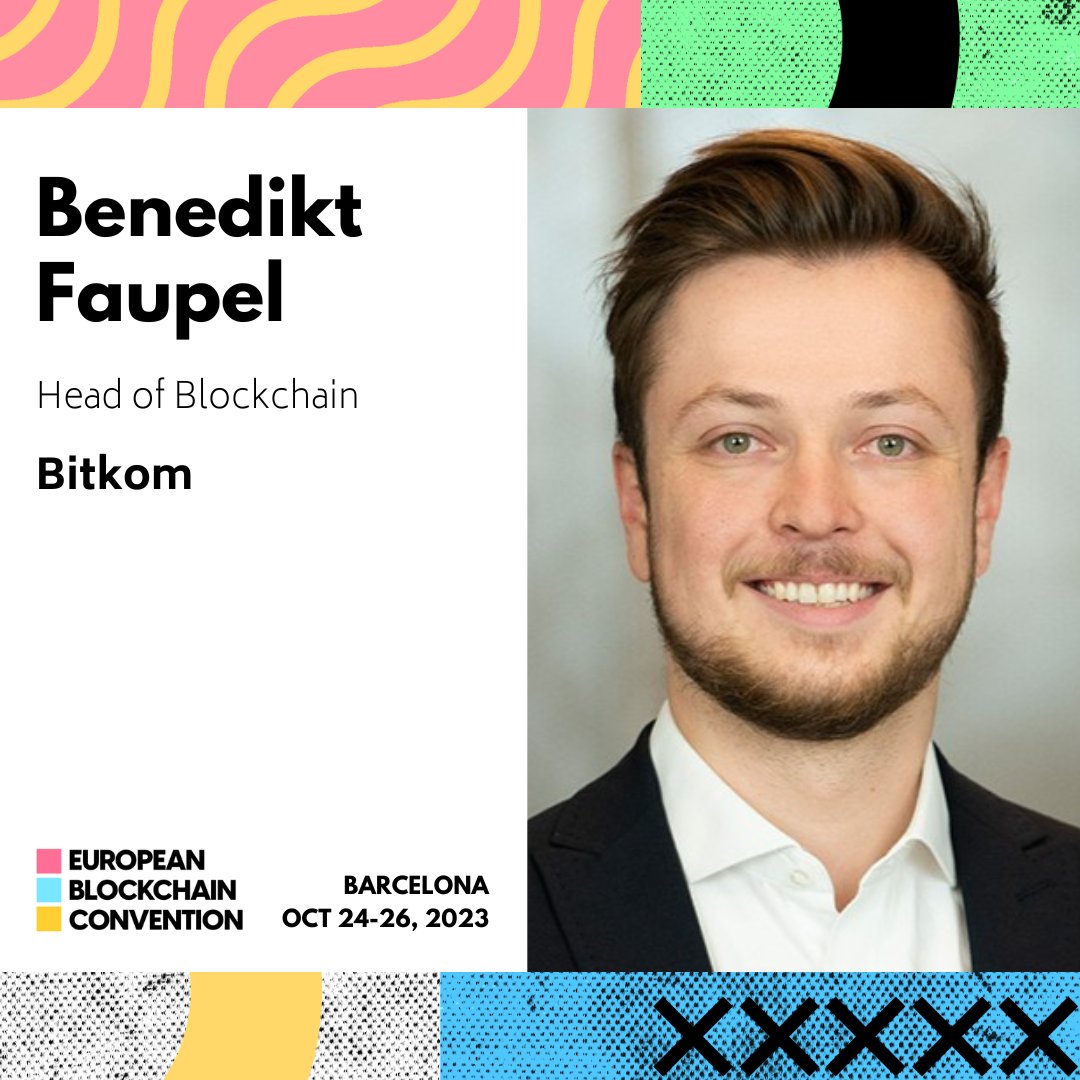
We are glad to announce that @BenediktFaupel will be speaking at the 9th edition of the @eblockchaincon 🎉
As Head of Blockchain at @bitkom_block, Benedikt is responsible for the Blockchain department where he acts as a spokesperson for the diverse blockchain industry and as a mediator with the government 🫱🏼🫲🏻
Thank you for joining us, Benedikt! 🚀🌕
7
1,203

7 Aug 2023
🎉 Introducing Curve Finance DAO Reward Distribution! 🏆 Earn While You HODL! Curve Finance is delighted to announce our new DAO reward distribution program! Visit us at twitter.com/CurveFinance/sta… to onboard more users and participate in the growth of the Curve Finance ecosystem. Hold your CURV tokens in our DAO and get rewarded! It's time to unlock the potential of your investments! Stay connected for updates on the reward distribution program; follow us on social media to stay informed and take full advantage of the benefits. Be part of this exciting opportunity and help us reshape the future of finance together! 🏆🎉 @PhmjHy97 @cesihai1 @Shlomibarshe @ycryptotrade @Arbi78933177 @hadlocna @Douglas66666669 @DenisL40411971 @MattThomas222 @Derry55420082 @therealmagism @Zeidanzeidan14 @Kaymon_dev @diegosimon55 @xu11ogun @wwpelectroniks @blogpasblog @HodlKitty @RodBrull @Acryptoscalper @AnthonyBClark4 @unidegen @zefes23 @snitchnetworks @overtheexit @Ricnes89 @HuyenTrangDo5 @ale98delcuore @Dragonlwz @CummingsLi65698 @kryptonite_1943 @bitkom_block @dxmirba @serpunketh @trungguide @AliceJones1986 @PratikT36255741 @Kiranami777 @OtagoCat @ricardomrn @ABMedia_Crypto @Salzamt_ @HighTechNature @ChillinValidtn @Ahmaadfreije @MastermindMick @XRCfinance @BajoBas @marcocoda @FridayMan485285
74

24 Jul 2023
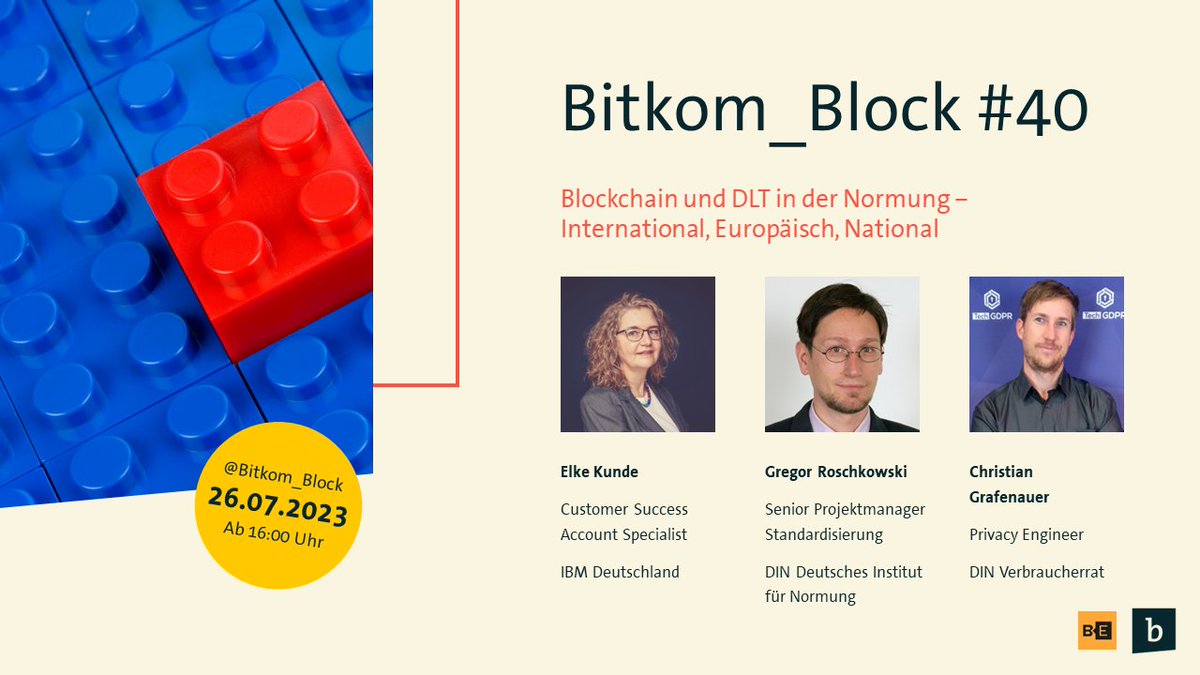
Am Mittwoch startet der nächste #Bitkom_Block
Mit @IBMDACH, @DIN_Norm und @verbraucherrat 💡
⏰Wann? Mi., 26. Juli, 16-17 Uhr
📷Wo? Anmeldung für Bitkom-Mitglieder: bitkom.org/Bitkom_Block
1
3
974


23 Jun 2023
@RubiDeFi @longbambo68 @MarinMilenkov @fo41937450 @AbdoulA11341255 @LaklachNikov @circumcisedeth @Vennootschap_ @homagz @johndutchak @Mirosla26333176 @JangidGurudutt @itZ_Me_ShakaraN @bitkom_block x.com/CircleUSD/status/16720…
15

14 Jun 2023
Heute gibt es wieder einen neuen #Bitkom_Block!
Mit @refive_io, @foxhappyblocks, @arvatosystems und @salesforce diskutieren wir über #NFTs im Retail
⏰Wann? Mi., 14. Juni, 16-17 Uhr
📺Wo? Im Livestream: youtube.com/watch?v=ji70ZBcc…
@Bitkom_Retail
1
3
122

14 Jun 2023
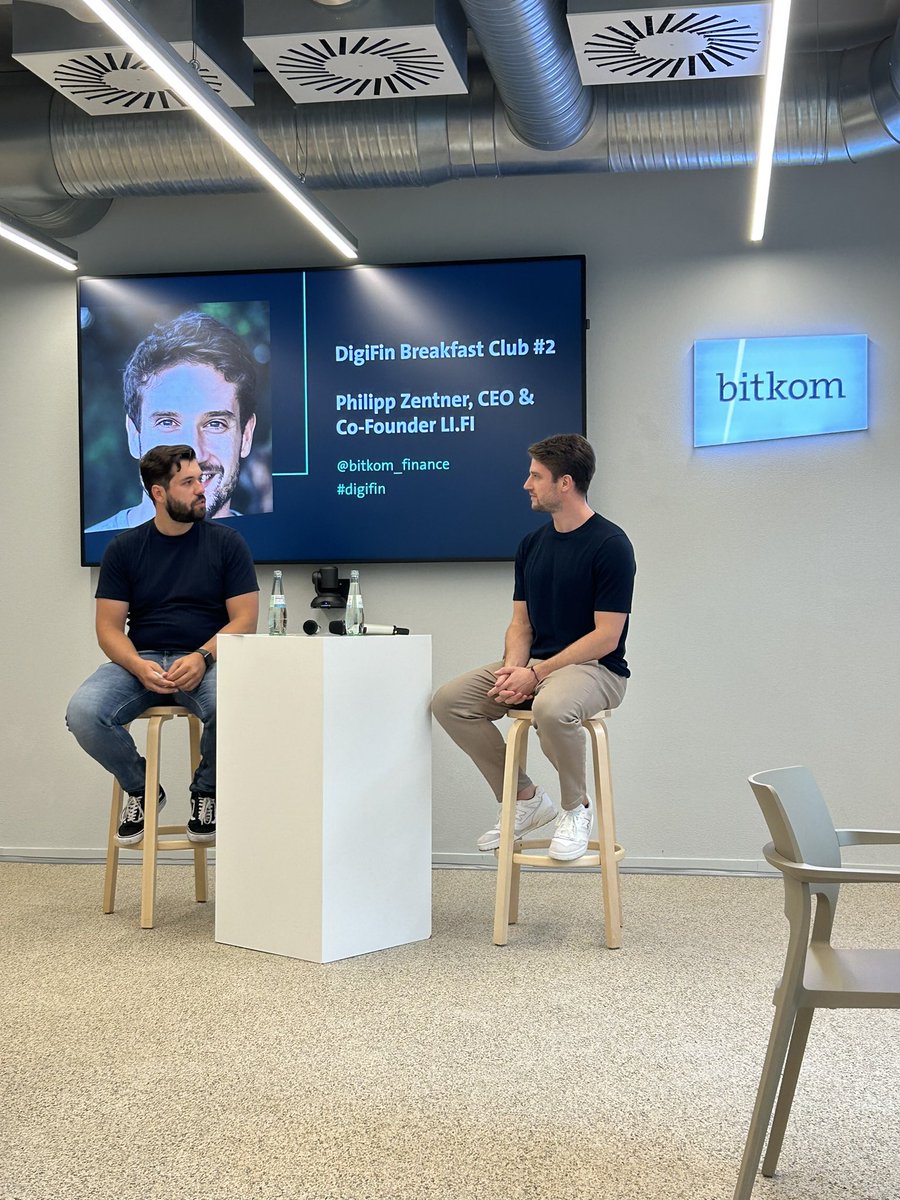
Für alle early-🐦 gibt es heute Morgen unseren #digifin breakfast club mit @PhilippZentner von LI.FI.
👉Wie funktioniert DeFi?
👉Wie sieht die Zukunft zwischen dezentralen & zentralen Akteuren aus?
👉Welche Schlüsse müssen daraus gezogen werden?
@bitkom_block
1
8
740

8 Jun 2023
@shuvo42221 @Blanche18259887 @bitkom_block @Saeed69143554 @Ilham12706806 @piano_santal @PenningtonJaret @IgnacioMet @XELXYA @roguecitizen6 @AlexBlick5 @Mariela92011974 @Bomberewph @KristenNh94 x.com/eth_ben_erc/status/166…
67
31 May 2023
Letzte Woche sind wir beim #Bitkom_Block tief in die Nutzung von NFTs eingetaucht. Schaut rein, wenn ihr das Meeting verpasst habt 📺
youtube.com/watch?v=ekwTC1Ac…
1
321
23 May 2023
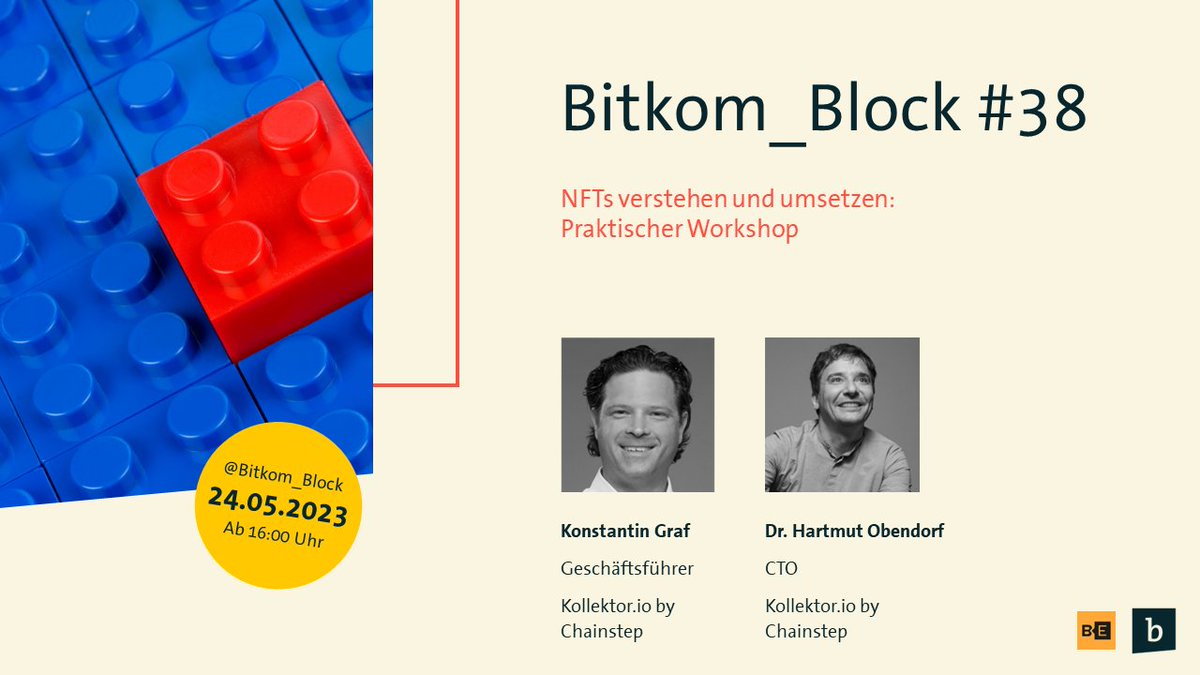
Morgen startet unser nächster #Bitkom_Block 🙌 Wir schauen uns mit @Graf2Konstantin und @_sikritganz die praktische Nutzung und Umsetzung von NFTs an.
🗓️Wann? Mi., 24. Mai, 16-17 Uhr
🎯Anmeldung für Bitkom Mitglieder hier 👇bitkom.org/Bitkom_Block
2
109