
Apr 2
surprised they dont just change the name to "Blockgraph" at this point. the shift in marketing to ETH Layer 2 is in full affect.
1
2
179

Jan 29
Rubix is the only blockchain built for Agentic commerce. Or shall we say #BlockGraph?
#DAG #ObjectDAG #AI #AIAgents #AgenticCommerce
1
8
2
185

4 Dec 2025
That’s a wrap on #IWantMyCTV 🎉 HUGE Thanks to our sponsors who we couldn’t do this without! @fastly, @itsfreetelly, @TheTradeDesk, @blockgraph, @SecureWithHUMAN, @ID5_io, @plex, @adops, and @philoTV!
1
3
116

3 Sep 2025
Why Irys Still Uses PoW in a PoS World
At first glance, Irys looks contrarian. Most modern blockchains have embraced Proof of Stake (PoS) for speed and efficiency, while Irys a next gen datachain still relies on Proof of Work (PoW). But in the context of permanent data storage, the choice makes sense.
PoS Isn’t Just Faster
PoS chains appear faster not because PoW is slow, but because PoS networks know who the next block producer is. That knowledge lets them prioritize block propagation with protocols like Solana’s Turbine. Irys borrows this advantage by requiring miners to stake and pledge storage partitions. This makes mining addresses costly and predictable, reducing propagation delay while keeping blocks secure.
Storage Is the Real Problem
For transaction chains, pruning old data is fine. For a datachain, it’s not. Storage proofs in a pure PoS model balloon as the network grows Filecoin solves this with a blockgraph, but at high complexity. Irys instead ties PoW directly to storage: producing a block is itself proof of storage. Hard to fake, trivial to verify, and scalable.
The Hybrid Edge
Staking and pledging turn PoW from brute-force randomness into a structured, economically grounded process:
•Disincentives grinding → cheap address spam doesn’t pay.
•Optimizes propagation → the network can anticipate block producers.
•Enables parallel validation → efficient packing with Matrix Packing.
Not Old, Just Specialized
Irys isn’t stuck in PoW it’s applying PoW where it fits best. For verifiable, permanent storage, PoW offers simplicity and scalability. Staking adds discipline and efficiency. Together, they form a hybrid model purpose built for data permanence.
Other chains prune. Filecoin floods with proofs.
Irys threads the middle anchoring permanence in PoW, optimization in staking, and speed in propagation.
That’s not outdated it’s specialized.
Stay Hirys
29 Aug 2025

2
4
184

8 Dec 2024
✨ Recently accepted by #GraphsandCombinatorics
Ameera Vaheeda Shanavas, Manoj Changat, Peter F. Stadler @UniLeipzig @mpiMathSci:
"On the Cut-Vertex and the Interval Transit Functions of Hypergraphs"
#Completegraph #Blockgraph
🔓 #OpenAccess 👉 link.springer.com/article/10…
2
3
339

Check it. Blockgraph Wants To Improve Pharma TV Advertising Without Being Creepy | AdExchanger adexchanger.com/tv/blockgrap… #tech #digital #data #privacy
1
4
3
221

We're honored to be on the 2024 Top 50 Programmatic Power Players list. Thank you to @adexchanger and congrats to the other Power Players: @AdalyticsHQ @adform @AdRoll @AppLovin @AttainData @Audigent @blockgraph @basisglobaltech @CadentTV @CoegiPartners @TeamCognitiv @criteo ...
2 May 2024

Introducing the 2024 Top 50 Programmatic Power Players! Meet the top agencies, tech providers, and strategic partners handpicked by the AdExchanger editorial team. View the list here: adexchanger.com/go/2024-powe…
2
4
428

13 Dec 2023
Madhive And Blockgraph Woo Advertisers With More Direct Access To TV Data bit.ly/3GFgjNp #Advertising
1
2
10

9 Jul 2023
I’ll just leave this here:
Ampersand (Comcast/Charter/Cox), Canoe (Charter/Cox), BlockGraph (Comcast/Charter/Paramount), D2 (Dish/DirecTV), New York Interconnect (Altice/Charter/Comcast).
1
1
4
358

28 Jun 2023
.@NBCUniversal integrates @blockgraph into its 'One Platform ad-tech stack mediapost.com/publications/a…
1
380
28 Jun 2023
.@NBCUniversal integrates @blockgraph into its 'One Platform ad-tech stack mediapost.com/publications/a… @mp_joemandese
364

28 Jun 2023
Exciting News! @blockgraph and @NBCUniversal have partnered to optimize and scale first-party data activation for the media and entertainment industry.
#DataDrivenTV #TVAdvertising #PrivacyFirst #BlockgraphThatData
Read more:
blockgraph.co/newsroom/block…
1
2
115

16 Jun 2023
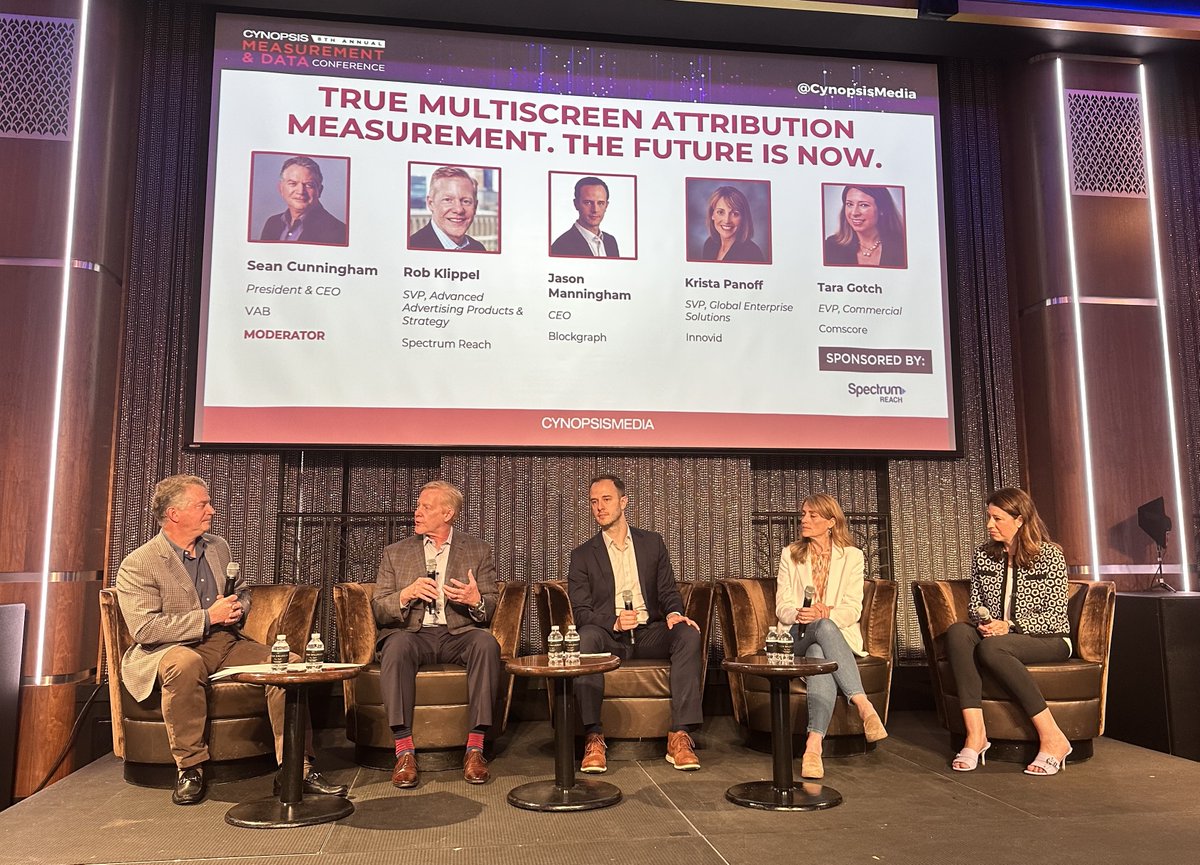
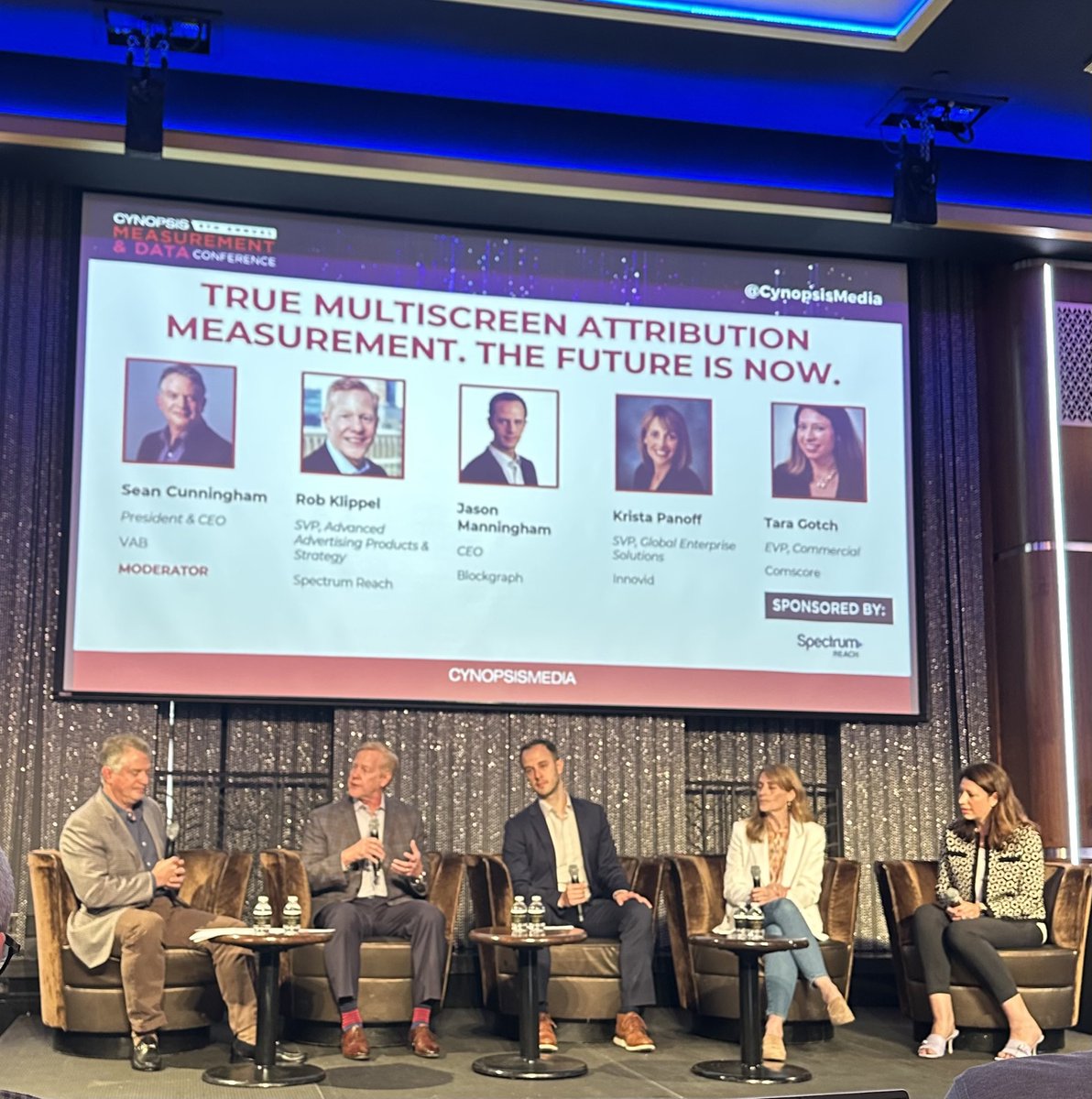
Rob Klippel, SVP, Advertising Product & Strategy, @SpectrumReach spoke on the panel “True Multiscreen Attribution Measurement. The Future is Now” at the Cynopsis Measurement & Data Conference among fellow experts from @blockgraph, @innovid, @Comscore & @VABintel
4
113

Another inspiring conversation with those leading the change in advanced measurement, identity, privacy and CTV, right here at the @CynopsisMedia Measurement & Data Conference.
👥 @SpectrumReach, @blockgraph, @innovid, and @Comscore
#CYNMeasure #CynopsisMeasure
2
4
280

Blockgraph, a corporate-backed ad-tech player in the data-driven TV ad space, has always focused on being privacy compliant. buff.ly/3J6BgCJ
5
5
2,151

Join Innovid's Krista Panoff @ @CynopsisMedia's Measurement & Data Conference to learn how Innovid, @SpectrumReach, @blockgraph & @Comscore are partnering to power true cross-platform measurement, today! Register below.
📆 Wednesday, June 14 at 10 am ET
🔗bit.ly/3NkvO1C
2
125

8 Jun 2023
Congratulations to everyone at @blockgraph 👏👏👏

Blockgraph's new GraphPort tool aims to harmonize multiple datasets into one usable stream, notably when brands or publishers are relying on other sources for first-party data.
Story by @michaelburgi. buff.ly/3oY1ksD
2
187

18 Apr 2023
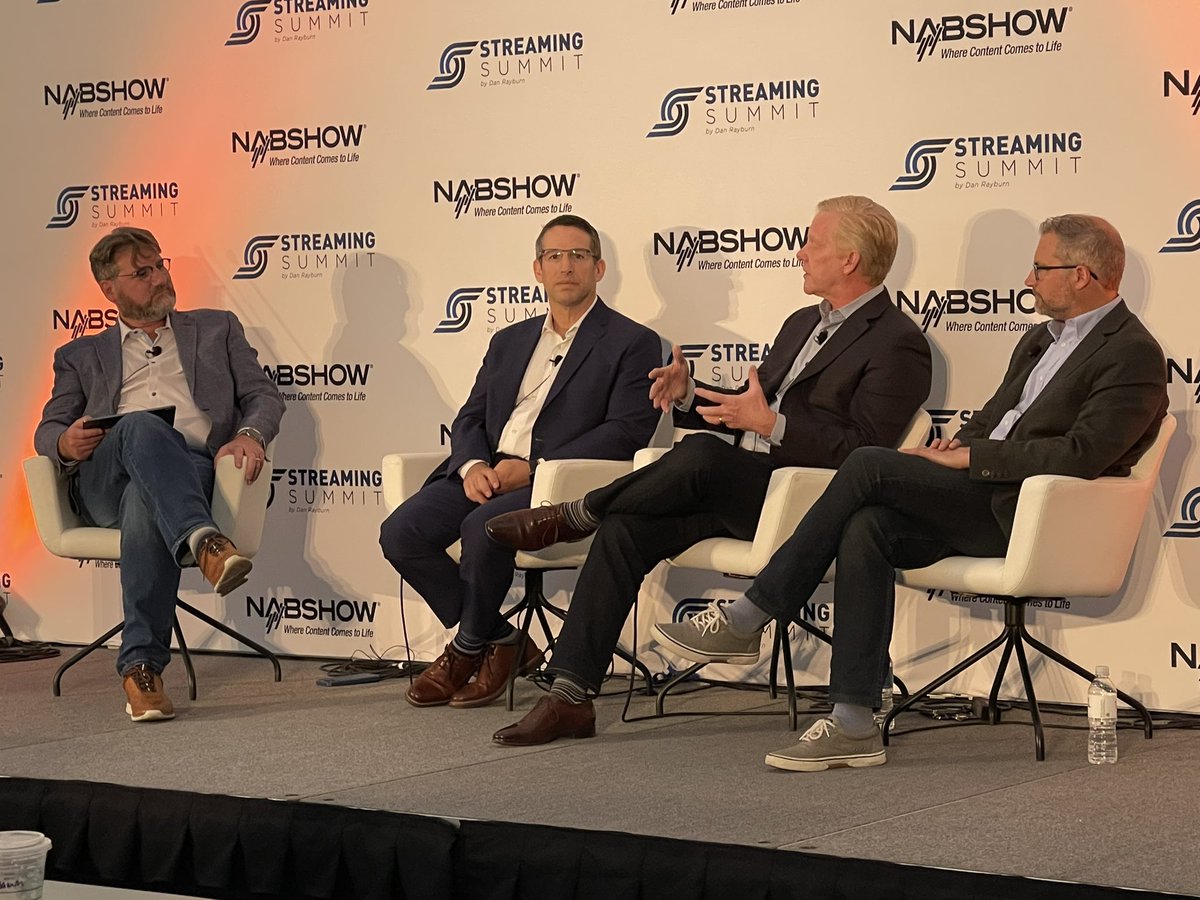
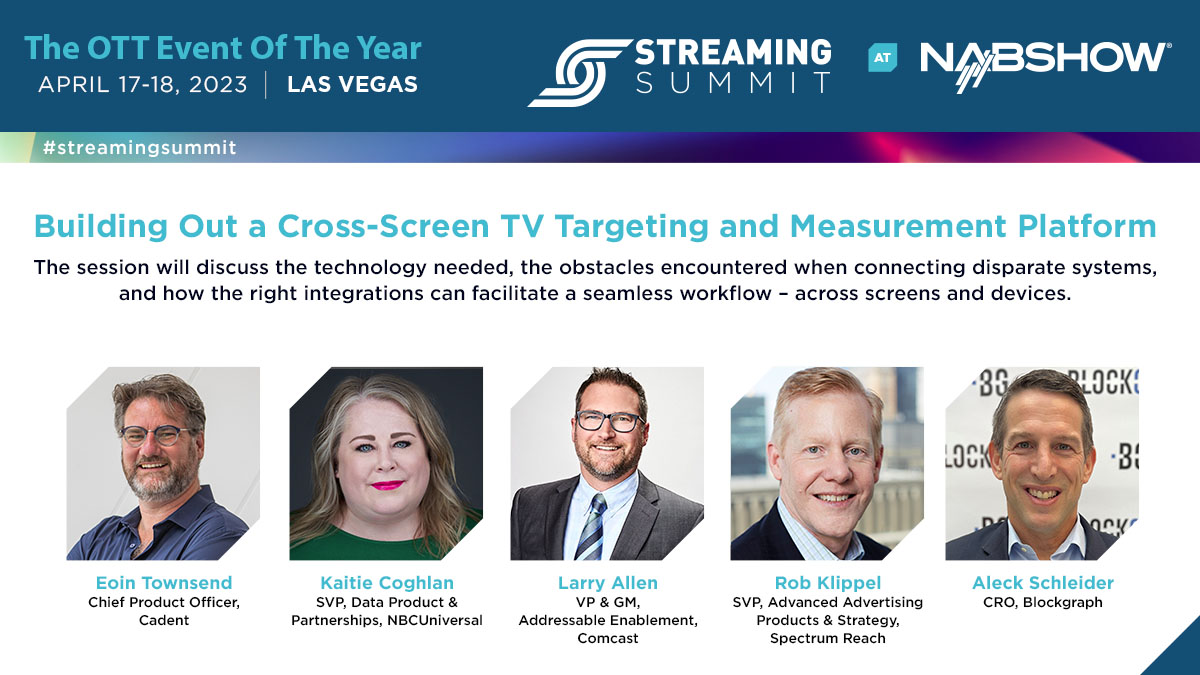
At the @NABShow Streaming Summit, Eoin Townsend /@cadent led the discussion on building a cross-screen tv targeting and measurement platform with Larry Allen / @comcast , Rob Klippel / @SpectrumReach and Aleck Schleider / @blockgraph #nabshow2023 #streamingmedia #streamingsummit
2
5
1,356

12 Apr 2023
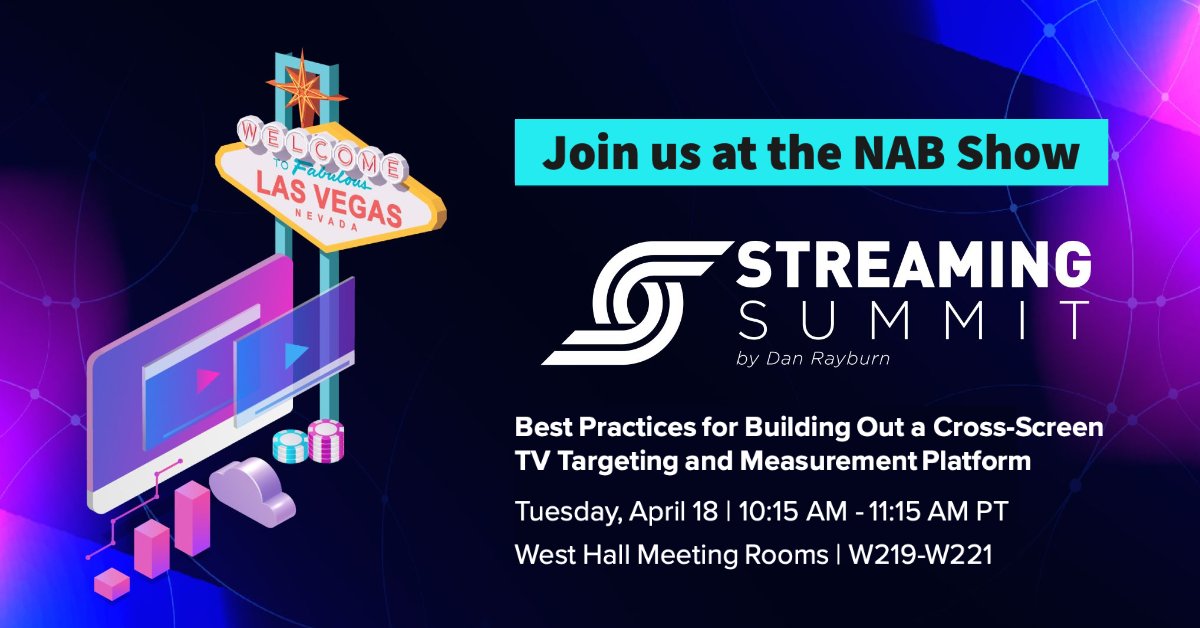
Headed to #NAB2023 next week? Join Cadent for "Best Practices for Building Out a Cross-Screen TV Targeting and Measurement Platform," with @comcast, @SpectrumReach, and @blockgraph! ow.ly/lTNx50NGper #NABShow #NABShow100
2
636
1 Apr 2023
At the @NABShow Streaming Summit, learn the "Best Practices for Building Out a Cross-Screen TV Targeting and Measurement Platform". With speakers from Cadent, NBCUniversal, Comcast, Spectrum Reach, Blockgraph. Session details: nab23.mapyourshow.com/8_0/se… - #streamingsummit #ctv
1
1
1,466