
Jun 16
CPARS 2026 REFORM - The Negative Event "GovCons" do NOT want...
#OnMyWay #GovernmentContactors #Elon #CPARS #Employee #safety #NegativeEvents #Employers #b2b #MarketResearch #b2bsafety
1
1
29

Jun 16
Most companies model the revenue loss when they lose a recompete.
They don't model what comes after it.
The revenue number is just the starting point.
A $35M contract loss took one company 12 months to fill. Reorganization. Scaled-back growth plans.
A pipeline scramble that should have started 18 months earlier.
That's a $35M contract at a mid-sized company.
Scale that to $50M. $96M. For a smaller company where one contract is 60-70% of annual revenue, that math isn't a setback. It's an existential event.
And that's before anything else hits.
Here's the cost nobody puts in the model.
The day the new contractor wins your contract, they start hiring your team.
Your cleared staff.
Your program leads.
The people who know every system, every stakeholder, every quirk in the agency's workflow.
They don't need to poach aggressively.
They just need to make an offer.
Your people already know the work is transitioning.
The job security question answers itself.
The nondisplacement protections that previously required right of first refusal for incumbent workforces were rescinded in January 2025.
They move fast. Your institutional knowledge moves with them.
You don't just lose the contract. You lose the people who could have helped you win the next one.
Most company don't think about CPARS until after the transition.
By then it's too late.
The final performance evaluation on your biggest contract gets written during the transition period.
The 30 to 90 days when your team is distracted, your best people are getting offers, and delivery is at its most fragile.
CPARS ratings stay relevant for three years.
A degraded rating on a $50M or $96M contract, the exact contract you planned to cite as your strongest past performance reference, follows every proposal you submit for the next three years.
The FY2026 NDAA makes this worse.
The new CPARS model documents only negative events.
Positive performance is now assumed.
What gets recorded is what went wrong.
A chaotic transition creates exactly those negative events.
The pipeline problem doesn't start when you lose the recompete.
It started the day you stopped building one.
When a contract is running well, revenue is predictable, the relationship is solid, options are exercising on schedule, BD energy naturally flows toward delivery.
Not toward the next opportunity.
By the time the loss happens, the pipeline window is already closed.
You needed 18 months of pre-RFP positioning to be competitive on the next major pursuit.
You have zero.
Revenue hole.
Depleted team.
Three years of CPARS exposure.
And a BD motion restarting from scratch.
That's not one cost. That's four costs hitting simultaneously.
The revenue loss is the one everyone sees.
The staff, the CPARS, the pipeline gap,those are the costs that determine whether you recover in 12 months or never fully do.
Ask yourself honestly,
If you lost your largest contract tomorrow, which of those costs have you actually planned for?
27
Overlord of All Sports Cards and related merch retweeted

Jun 15
Cardboard Collector @CardboardPastor ~ ''New Dad, Old collector, Ex-ball player. Selling and buying. ''
#CPARS RYAN SLOAN
Site CollX
US: $200.00
share.collx.app/CardboardCol…
>> @allsc_ol #TheHobby @jwax_ol
1
111

Govcon obsesses over winning contracts. Nobody talks about keeping them. Staff churn kills past performance, tanks CPARS scores, and poisons rebids. Retention is a contract strategy, not an HR problem. #GovCon #SmallBusiness
9
Most people think certifications unlock federal contracts. They don't. Past performance does. You can have every cert on the list and still lose to a firm with a clean CPARS record. The cert gets you in the room. The record gets you the contract. #GovCon #SmallBusiness
6

Jun 11
Six years of DoD contract execution without missing a milestone is a procurement signal that most enterprise vendors can't match. The federal acquisition community runs on past performance, and the Iron Spider track record — 25 milestones, no misses — is the kind of documented proof of delivery that shortens procurement cycles significantly. For defense and intelligence community buyers evaluating distributed ledger infrastructure, the combination of contract history and technical architecture matters as much as the technology itself. Most blockchain projects talk about government use cases. This one has the CPARS ratings to back it up. What programs in the current DoD modernization pipeline are you seeing as the strongest near-term fits for $DAG's verified data capabilities?
@Dagnum_PI @Conste11ation @_AiSquared
2
55

May 24
You can't help but appreciate @m8arteta more. Watching this #CPARS game, you can imagine the kind of pressure on him on each match week. You forever remain a Champion 🏆 🥇 🏅 💪 💯

Jesus' goal has us leading in the way at the break in a scorching south London 🌞
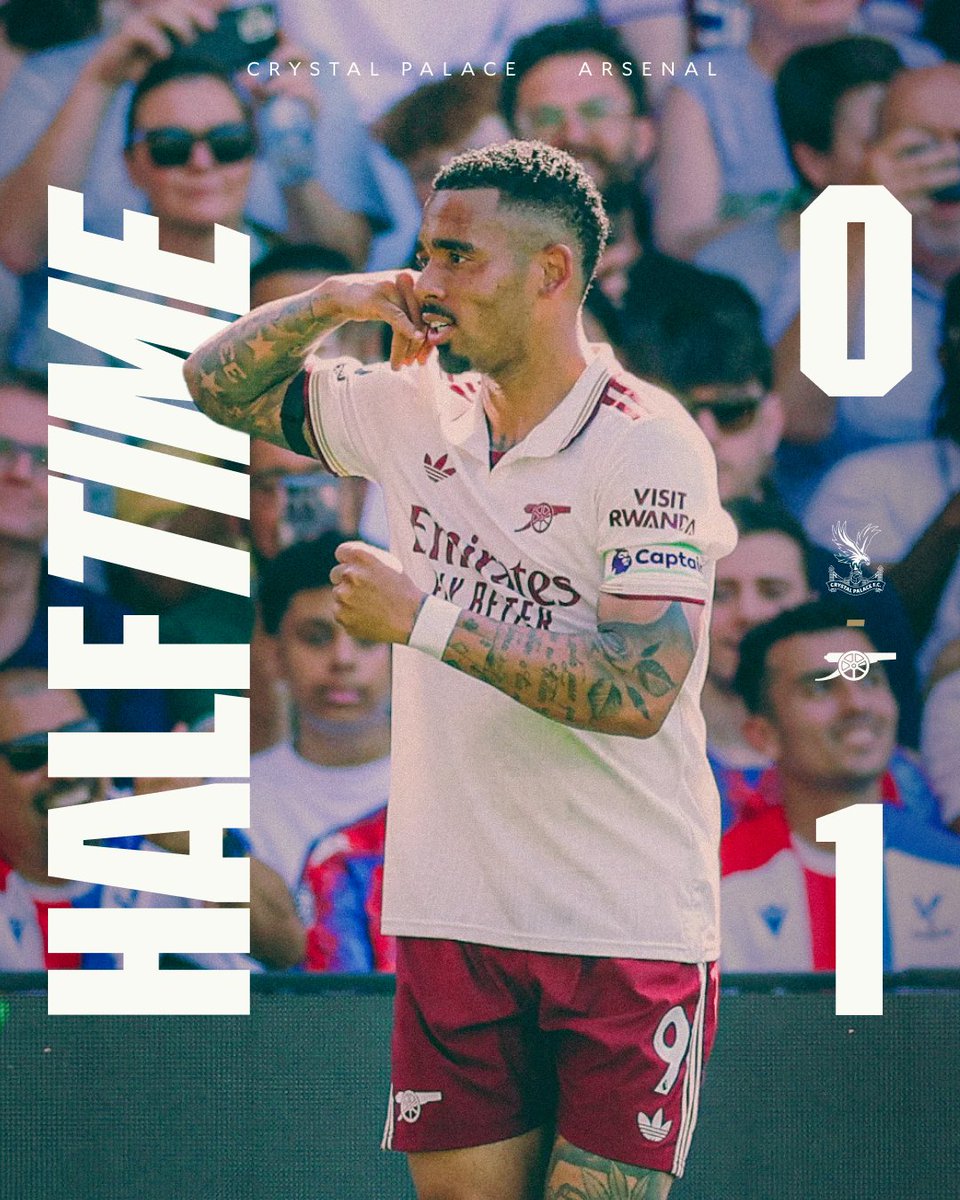
ALT Half Time: Crystal Palace 0-1 Arsenal
2
48

May 24
Move Dowman over to the Right and Sub Madueke for Eze I can't watch this Lazy, thinks he's better than he is Chelsea waste man for another half.
@Arsenal #CPARS #PremierLeagueChampions2026
1
2
239
May 24
Brah Gabriel Jesus is finished at the top level, and you manz was calling for him to be our starting striker ealier in the season.
@Arsenal #CPARS #PremierLeagueChampions2026
1
3
169


Past performance is starting to have more influence than any other factor. To find out why a positive record matters more in 2026 than ever before. See what's changed.
Link to blog: blogs.usfcr.com/whats-change…
In 2026, two major shifts are changing how past performance is recorded and used in federal contracting. That includes DoD's movement toward negative-event reporting and broader use of past performance across the acquisition lifecycle.
At USFCR, businesses gain the clarity, documentation discipline, and performance positioning needed to move forward with confidence as requirements change.
#FederalContracting #PastPerformance #CPARS #GovernmentContracts #ContractReadiness #USFCR

2
15

Mar 10
Not having a history in CPARS is ridiculous. There is no logical way that the correct company was picked for this contract. This is 100% against any established protocol in the Federal procurement process.
3
332
Mar 10
The obvious item that was ignored, which is crazy, is a CPARS review. “CPARS (Contractor Performance Assessment Reporting System): This is an official government-wide database. This data will list how the vendor performed in previous contracts.
1
2
405


Mar 6
Here I am with a nice CPARS and it’s been a while since I’ve gotten a contract as a prime. Mind you I’ve been incorporated since 2003. Put them all in jail.
2
54

Acquisition Hour: Overview of the Contractor Performance Assessment Reporting System (CPARS) - Virtual wispro.org/event/acquisition…
February 18, 2026 @ 12:00 pm - 1:00 pm
Past Performance will impact future contract awards.
As a Federal Contractor it is critical for you to understand the Contractor Performance Assessment Reporting System (CPARS), which collects and maintains Contractor’s Past Performance Information. Past performance is now included in the selection criteria in Government contracts. It is essential for the Contractor to review the comments and ratings for timeliness and accuracy. Contractors should be aware that there may be an opportunity to modify results with the assessing official and possibly shape the performance evaluation.
Understanding the process and management of your CPARS record will support a stronger past performance evaluation of your next bid or proposal.
Speakers:
Mark Dennis, Government Contract Specialist – Wisconsin Procurement Institute (WPI) – WI APEX Accelerator
This webinar is eligible for 1 CPE credit. @NCMA #cpars #acquisition #govcon @BusinessDefense
1
2
63

If we are serious about accountability, then transparency has to be more than a buzzword.
Making CPARs and stoplight charts public sounds simple. On paper it feels like sunlight solves everything. But if DFARS is treated like a suggestion instead of binding regulation, publishing scorecards will not fix the underlying culture.
The real issue is structural.
When the system is engineered in a way that favors certain contractors through acquisition strategy, evaluation weighting, or requirements tailoring, the documentation that follows is often shaped by those realities. CPARs are only as honest as the incentives behind them. If program offices are pressured to maintain schedule optics, protect funding lines, or avoid protest risk, ratings can drift toward “satisfactory” and “very good” even when performance is marginal.
Stoplight charts are even more vulnerable. Red rarely stays red for long when billions of dollars and congressional optics are involved. Colors can change faster than performance.
That does not mean all documentation is useless. It means documentation reflects culture. If oversight is weak, if DFARS enforcement lacks teeth, if consequences for noncompliance are negligible, then metrics become narrative management instead of performance accountability.
The question is not whether to publish CPARs. The question is whether we are willing to enforce the rules that already exist.
Until DFARS is treated as law rather than guidance, transparency alone will not solve what is fundamentally a governance problem.
Sunlight helps. But only if someone is willing to act on what it reveals.
2
30

Feb 6
$IonQ Wolfpack Research released a short-biased report alleging that IonQ misled investors regarding its government contracts, technological progress, and commercial viability. The report claims that IonQ lost critical Pentagon funding, exaggerated its achievements in the DARPA Quantum Benchmarking Initiative (QBI), and obscured deteriorating fundamentals through acquisitions and non-core business lines. Because Wolfpack discloses a direct financial interest in IonQ’s share price declining, the burden on factual accuracy, evidentiary rigor, and fair framing is necessarily heightened. A review of the public record, however, demonstrates that Wolfpack’s report—and its subsequent public statements—contain demonstrable factual errors, present unproven assertions as settled fact, and rely on rhetorical escalation that exceeds what the evidence supports.
The most serious error concerns Wolfpack’s treatment of IonQ’s participation in DARPA’s Quantum Benchmarking Initiative. In both its report and subsequent public commentary, Wolfpack asserts that IonQ “failed” the DARPA competition, did not advance to Stage B, and only claimed success by acquiring Oxford Ionics, which Wolfpack alleges was the actual Stage B recipient. This claim is directly contradicted by DARPA’s own public record. On November 6, 2025, DARPA publicly identified IonQ as one of the companies selected to advance to Stage B of QBI, and IonQ issued a contemporaneous disclosure confirming that selection. Advancement to Stage B is a formal program decision made by DARPA; it is not conferred retroactively through acquisition. Wolfpack’s repeated assertion that IonQ “FAILED and did not get the $5 million” is therefore false. This is not a matter of interpretation or procurement nuance—it directly contradicts a clear public announcement by the administering agency.
This contradiction raises a threshold analytical question. What specific DARPA document supports Wolfpack’s repeated claim that IonQ failed the competition, despite DARPA’s announcement identifying IonQ as a Stage B participant? If Wolfpack’s intended position was that Oxford Ionics advanced independently prior to its acquisition, why did Wolfpack characterize IonQ as having “FAILED,” rather than stating that narrower claim explicitly? The report provides no primary sourcing to resolve this discrepancy.
Wolfpack compounds this credibility issue by repeatedly misstating the value of IonQ’s acquisition of Oxford Ionics. The report and multiple post-publication statements assert an acquisition price of approximately $1.596 billion. Public disclosures establish the transaction value at approximately $1.075 billion, consisting primarily of stock consideration with a modest cash component. The persistence of this error after public challenge undermines claims of analytical rigor. When a report alleging investor deception cannot accurately state a headline transaction value, confidence in its more complex assertions is necessarily diminished. Wolfpack has not identified any primary source supporting its higher figure.
Beyond these factual inaccuracies, the report consistently substitutes conjecture for evidence. A central theme of Wolfpack’s analysis is that appropriations-level budget documents demonstrate that IonQ lost funding for specific Pentagon contracts, creating a material revenue “black hole.” This conclusion rests on a fundamental methodological flaw: conflating congressional appropriations intent with contract execution. Appropriations tables and Joint Explanatory Statements describe program-level funding priorities; they do not identify specific vendors, contract awards, obligation schedules, or revenue recognition outcomes. Nevertheless, Wolfpack treats the inclusion or exclusion of certain line items as definitive proof that named IonQ-related contracts were cancelled or unfunded, without providing contract award identifiers, modification histories, or obligation records to substantiate those claims. To date, there is no public evidence of contract termination notices, de-obligation actions, adverse CPARS evaluations, or other official records that would support the claim that IonQ’s cited Pentagon contracts were cancelled or defunded.
Wolfpack’s headline assertion that “up to 86%” of IonQ’s historical revenue is at risk and that a “$54.6 million black hole” has emerged illustrates this category error in its clearest form. The analysis treats changes in congressional appropriations language as equivalent to contract termination and assumes that projected future revenue tied to program continuity constitutes realized revenue loss. Appropriations documents do not retroactively invalidate earned revenue, nor do they establish the cancellation of existing contractual obligations. Wolfpack does not identify any contracts that were terminated, any funds that were de-obligated, or any revenues that were reversed. The asserted “black hole” is therefore not an observed financial event, but a modeled outcome contingent on Wolfpack’s assumptions about future funding, renewal timing, and contract execution.
This approach raises further methodological questions. What process did Wolfpack use to map appropriations language to vendor-specific contract outcomes? Can Wolfpack identify the contract numbers, modifications, and obligation histories underlying its conclusions? If appropriations intent, contract award, obligation, payment, and revenue recognition are distinct stages—as they are under federal procurement law—why does the report repeatedly treat them as interchangeable?
The same analytical deficiencies appear in Wolfpack’s treatment of bookings and revenue. Wolfpack accuses IonQ of “inflating” bookings by reporting large Pentagon contract values when only a portion of those amounts had been funded. This framing again collapses distinct concepts—contract ceilings, funded amounts, obligations, and revenue recognition—into a single accusatory narrative. Under standard government-contracting and accounting practices, bookings commonly reflect total contract value rather than funded or recognized revenue. Absent evidence of accounting violations, regulatory findings, or financial restatements, characterizing this practice as “inflation” is a rhetorical judgment, not a factual conclusion. Wolfpack does not cite any accounting standard or enforcement precedent to support this claim.
Wolfpack’s language throughout the report further reflects a persuasive rather than analytical posture. Terms such as “backdoor earmarks,” “secretive,” and “flaccid” are used to cue reader judgment without advancing evidentiary analysis. While earmarks and Community Project Funding mechanisms may be controversial, they are governed by public disclosure requirements and are not inherently secretive. Likewise, describing performance in a multi-stage, DARPA-administered technical evaluation as “flaccid” substitutes pejorative rhetoric for technical assessment and contributes nothing to analytical clarity.
The divergence between evidence and assertion is amplified by Wolfpack’s post-publication conduct. After releasing its report, Wolfpack escalated its claims on X, stating unequivocally that IonQ “FAILED” the DARPA competition and “did not get the $5 million,” and asserting that IonQ “pretended” Oxford Ionics’ advancement was its own. When challenged publicly with DARPA’s Stage B announcement, Wolfpack narrowed its position, responding that Oxford Ionics “did make it” and redirecting readers to the report. This sequence—categorical assertion followed by semantic retreat—demonstrates instability in Wolfpack’s stated conclusions and raises questions about whether post-publication commentary is held to the same evidentiary standards as the original report.
Wolfpack’s disclosed incentives and timing further contextualize these choices. Wolfpack acknowledges that it holds a short position in IonQ and stands to benefit financially from a decline in the company’s share price. The report was released on February 4, 2026, approximately three weeks before IonQ’s scheduled earnings release on February 25, 2026. Although no legal prohibition prevents issuer response during this period, companies commonly limit discretionary commentary near earnings to manage Regulation FD and litigation risk. This creates a practical asymmetry in which accusations circulate immediately while detailed rebuttals are delayed, heightening the obligation for factual precision.
It is also relevant to consider IonQ’s governance and transactional context. IonQ’s leadership and board include individuals with direct responsibility for large-scale national security, intelligence, aerospace, and advanced technology programs, including Bob Cardillo, former Director of the National Geospatial-Intelligence Agency; General (Ret.) John “Jay” Raymond, former Chief of Space Operations of the United States Space Force; and Rick Muller, a veteran technology executive with decades of experience operating public companies. Their relevance here is not reputational signaling, but the governance, compliance discipline, and disclosure controls that necessarily accompany leadership accustomed to operating under statutory oversight and external review.
Moreover, IonQ’s 2025 acquisitions were not unilateral exercises in narrative construction. Each transaction involved extensive, independent due diligence conducted by the acquired companies themselves, advised by experienced legal and accounting firms whose fiduciary obligations run to accuracy rather than promotion, particularly with respect to material representations affecting valuation, government contracts, and funding visibility. These counterparties had direct economic and reputational incentives to scrutinize IonQ’s contracts, disclosures, and financial representations. The proposition that material misstatements could persist through multiple arm’s-length transactions with sophisticated counterparties, without detection or disclosure, is inconsistent with standard M&A practice.
Taken together, Wolfpack’s report and subsequent public statements reflect a consistent pattern: declarative certainty at publication, emotive rhetoric to drive narrative impact, public challenge, partial retreat or narrowing, and a failure to correct objective errors. This pattern is inconsistent with good-faith forensic analysis. A careful report could have framed many of these issues as uncertainties or risks warranting further scrutiny. Wolfpack instead presented contested interpretations as established fact and shifted ground only after challenge.
The conclusion follows directly from the record. Wolfpack’s report on IonQ is undermined by demonstrable factual inaccuracies, unproven assertions presented as certainty, methodological conflation of distinct legal and financial concepts, and post-publication escalation that is not sustained when examined against the public record. This assessment does not foreclose the possibility that future disclosures may clarify funding timing, contract execution, or program scope; it does foreclose the certainty with which Wolfpack presents contested interpretations today. Until Wolfpack provides reproducible documentation—such as contract identifiers, obligation histories, and primary sourcing—to substantiate its claims, its conclusions are best understood not as established fact, but as advocacy designed to influence market sentiment rather than to inform.
. .
9
15
109
9,100

Jan 17
Were the Contracting Officers aware of the fraud? Was there a COR on the contract documenting contractor performance in CPARS. What role did SBA officials play at each agency and did this help their SB numbers? Did the PM know? This is all very easy to investigate!
1
18