
Jun 3
Build 2026 introduces Azure HorizonDB, an AI-optimized PostgreSQL database, and enhanced Fabric to streamline building agentic apps.
#clouddatabases #ai #microsoftfabric #azure
13
May 29
Databricks Lakebase boosts resilience for AI workloads. Its new architecture treats control plane ops as data, enabling instant, stateless recovery from cloud failures.
#databricks #lakebase #postgresql #clouddatabases
merge.news/post/bOkTdZChuEmI…
15

May 11
Big things are brewing for Azure Cosmos DB Serverless☕
We're deep in a significant upgrade and before it ships, we want to pressure test it on real production workloads.
We're opening up a small set of conversations with teams building or running production workloads. Your input goes directly into what we build next.
👉 Grab 30 mins with our product team:
msft.it/6010vPzTr
#AzureCosmosDB #Serverless #Azure #CloudDatabases

ALT Azure Cosmos DB planet-and-ring logo on a dark background with sparkle accents. Text reads: "Big things are brewing for Azure Cosmos DB Serverless! Grab 30 mins with our product team
2
270

May 7
Choosing a cloud database? It's like planning a multi-course meal: a spicy NoSQL appetizer, a reliable SQL main course, or a flexible data lake dessert? 🍽️ My culinary guide: nivelepsilon.com/2024/02/18/… #CloudDatabases
5

Apr 28
Check out the full update:
👉tessell.com/blogs/sql-server…
#SQLServer #DatabaseManagement #DataEngineering #DataOps #CloudDatabases
1
19

No more excuses: AI-powered assistants are in SSMS, VS Code, and Fabric
#AI #ArtificialIntelligence #VSCode #GitHHubCopilot #CloudDatabases
blog.fabric.microsoft.com/en…
16
Build AI Apps with Azure Database for PostgreSQL.e #Postgres #CloudDatabases #OpenSource #ArtificialIntelligence #AI learn.microsoft.com/en-us/tr…
21
@AzureDBPostgres Build AI Apps with Azure Database for PostgreSQL.
#Postgres #CloudDatabases #OpenSource #ArtificialIntelligence #AI
learn.microsoft.com/en-us/tr…
24

Mar 18
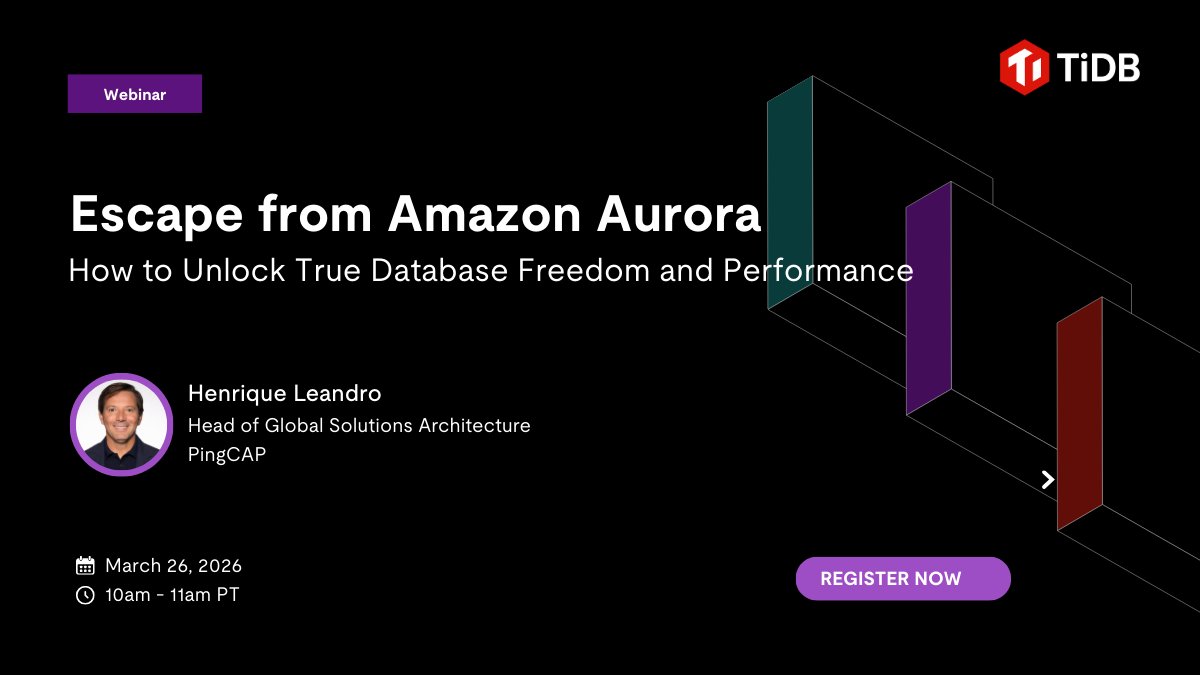
Planning life after Amazon Aurora?
Our Mar 26 webinar covers a practical migration framework: workload assessment, sync strategy, cutover, rollback, plus real stories of up to 10x better price-performance.
Register: ow.ly/UTIM50YvKQg
#TiDB #MySQL #CloudDatabases
2
3
174

Feb 15
NoSQL Databases Explained: Architecture, Models, CAP Theorem & Modern Use Cases
In this video, we break down everything you need to know about NoSQL databases — how they differ from traditional SQL systems, why they matter in modern architectures, and where each type excels. If you're working with large‑scale, unstructured, or real‑time data, this is your complete guide.
🔍 What You Will Learn
1. SQL vs NoSQL — The Core Differences
Understand why NoSQL databases emerged and how they enable:
Flexible, schema‑less data models
Distributed, horizontally scalable architectures
High performance for massive and rapidly changing datasets
2. Four Major NoSQL Data Models
We explore the strengths and ideal use cases for each:
Key–Value Stores — ultra‑fast lookups for caching & session data
Document Databases — flexible schemas for JSON‑like structures
Wide‑Column Stores — optimized for analytical workloads
Graph Databases — perfect for relationship‑heavy systems like social networks
3. CAP & PACELC Theorems Simplified
Get a clear explanation of the real‑world trade‑offs every distributed database must make between:
Consistency
Availability
Partition Tolerance
And how PACELC adds another layer (latency vs consistency) to guide architectural choices.
4. Modern Advancements in NoSQL
Discover how today’s NoSQL systems are evolving to support:
Vector databases for AI & embedding search
Time‑series engines for observability & IoT
Scalable storage engines for real‑time analytics
5. Popular NoSQL Platforms & Their Strengths
A practical overview of widely used systems, including:
MongoDB — document‑oriented, flexible schemas
Cassandra — high availability & linear scalability
DynamoDB — fully managed, low‑latency, serverless key‑value store
Learn how each platform balances performance, consistency guarantees, and operational complexity.
🎯 Who Should Watch?
Data Engineers
Backend Developers
Cloud Architects
AI/ML Engineers
Anyone building large‑scale distributed applications
#NoSQL #NoSQLDatabases #MongoDB #Cassandra #DynamoDB #KeyValueStore #DocumentDatabase
#GraphDatabase #WideColumnStore #CAPTheorem #PACELC #DistributedSystems
#BigData #ScalableArchitecture #DatabaseDesign #CloudDatabases #DataEngineering
#BackendDevelopment #AIDataStores #TimeSeriesDatabase #VectorDatabase
youtu.be/ahKTlmPSOS8?si=8dNR… via @YouTube

1
1
15
Feb 12
📽️ Explore what this could mean for your database estate: youtu.be/-t8bHvHNYwU?si=DnBi…
#CloudDatabases #EnterpriseData #DBaaS #DataGovernance #CloudStrategy
14

The key to real AI success isn't just the model — it's your data foundation. Learn how modern databases and Retrieval Augmented Generation can restore your momentum, unlock personalization, and simplify operations. hubs.ly/Q0422QKY0
#CloudDatabases #AIModernization
8

Feb 10
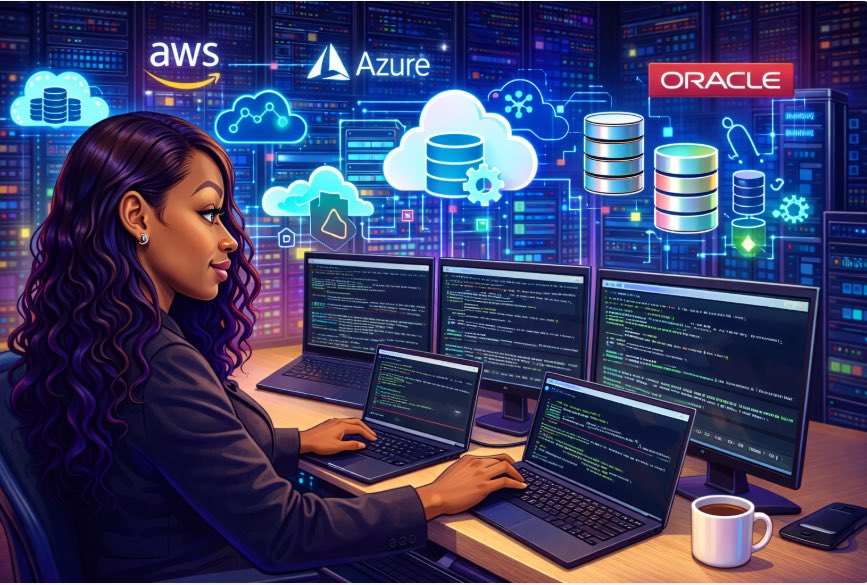
🚀 Senior Database Engineer & Administrator
I design, build, and maintain enterprise-grade databases that are secure, high-performing, and resilient. Oracle, MSSQL, MySQL, PostgreSQL, MongoDB, SAP HANA—I’ve handled them all.
💡 What I do:
High Availability & Disaster Recovery
Performance Tuning & Optimization
Cloud & On-Premise Platforms (AWS & Azure)
Scalable, secure, data-driven solutions
I combine engineering and administration: creating robust database architectures while ensuring systems run flawlessly. I thrive in cross-functional teams, translating strong operations into measurable business impact.
Looking for remote opportunities—immediate or strategic. If you need full-spectrum database expertise, let’s connect.
#DatabaseEngineer #DatabaseAdministrator #RemoteWork #CloudDatabases #EnterpriseDatabases #HighAvailability #PerformanceOptimization
4
9
27
12,733
Feb 9
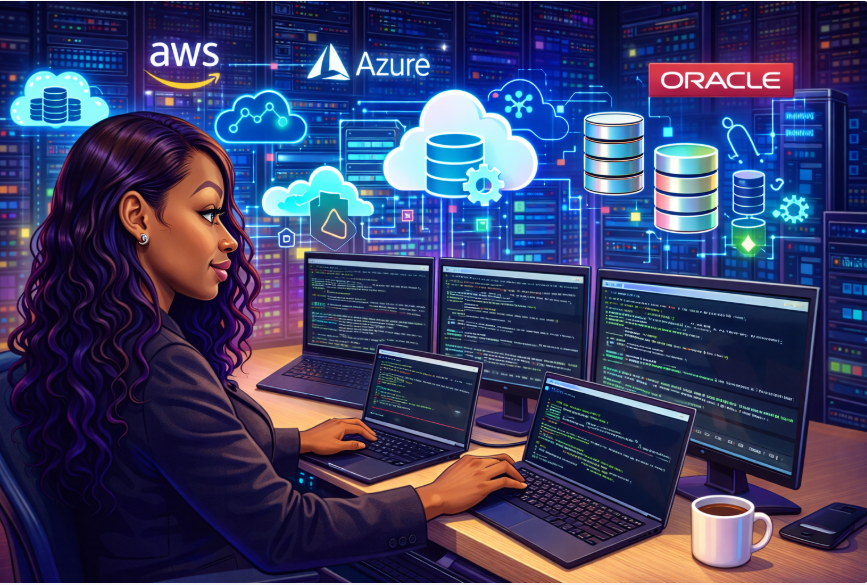
🚀 Senior Database Engineer & Administrator | Remote-Ready
I design, build, and maintain enterprise-grade databases that are secure, high-performing, and resilient. Oracle, MSSQL, MySQL, PostgreSQL, MongoDB, SAP HANA—I’ve handled them all.
💡 What I do:
High Availability & Disaster Recovery
Performance Tuning & Optimization
Cloud & On-Premise Platforms (AWS & Azure)
Scalable, secure, data-driven solutions
I combine engineering and administration: creating robust database architectures while ensuring systems run flawlessly. I thrive in cross-functional teams, translating strong operations into measurable business impact.
Looking for remote opportunities—immediate or strategic. If you need full-spectrum database expertise, let’s connect.
#DatabaseEngineer #DatabaseAdministrator #RemoteWork #CloudDatabases #EnterpriseDatabases #HighAvailability #PerformanceOptimization
2
3
294

Feb 5
The DBS-C01 AWS Certified Database – Specialty exam is built for professionals who design, migrate, and optimize real-world AWS database workloads at scale.
url: bitly.cx/X15Fw
#DBSC01 #AWSCertified #AWSDatabase #CloudDatabases #AWSCertification #DatabaseArchitect
12

Feb 5
Cloud Databases: Facing the Next Wave of Cyber Threats
#clouddatabases #databaseasaservice #DBaaS #databasesecurity #selfmanaged #databaseplatform #espincorp
e-spincorp.com/cloud-databas…

5

Optimize your cloud-native strategy with Azure SQL Database. Get scalability, built-in intelligence, and enterprise-grade security for mission-critical workloads. Explore how we help you manage and optimize: datavail.com/technologies/mi…
#AzureSQL #MicrosoftAzure #CloudDatabases
1
19
Stop over-engineering your data stack. 🛠️
Mid-market teams choose TiDB Cloud Essential to ship faster, not manage clusters.
✅ Fully managed, MySQL-compatible
✅ Built-in HA
✅ Cost-effective scaling
👉 ow.ly/HYLs50Y8Lah
#TiDB #MySQL #CloudDatabases #Startups
1
151

How We Helped a Client Save $500,000 on Amazon Aurora PostgreSQL Costs
#AmazonAurora #PostgreSQL #AWSCostOptimization #CloudDatabases #FinOps #DatabasePerformance
blog: bynatree.com/how-we-helped-a…
1
3
Jan 29
As teams add engines, clouds, and tools, reliability and consistency start to slip. The tradeoffs you choose early shape how far you can scale later. ☁️
💡Take a closer look at what changes as systems grow:👇
tessell.com/blogs/revolution…
#DBaaS #OpenSourceDatabases #CloudDatabases
12