
Jun 11
A Manifesto for the Collaborative Intelligence Infrastructure
We stand at a historic turning point. For too long, digital technologies have been designed to capture human attention, creating cycles of passive consumption and systemic dependency. It is time to shift our trajectory from a structure of extraction to one of empowerment.
1. The Democratization of Knowledge
Knowledge is the common heritage of humanity, not the private asset of a select few. We propose an architecture where AI and search platforms serve as neutral, public utilities, free from the ideological bias of any single corporation or nation. By treating these tools as an open infrastructure, we ensure that every individual, regardless of geography, has an equitable seat at the table of global intelligence.
2. Sovereignty and Global Co-Prosperity
The data generated by humanity possesses inherent value. We advocate for a structural shift where digital access is governed by fair licensing agreements. Rather than one-way extraction, the royalties generated by the use of global data should be reinvested as national resources. This creates a virtuous cycle: states become empowered to invest in the education and infrastructure necessary for their citizens to transform from mere consumers into active architects of their own future.
3. Restoring Dignity Through Inquiry
True technological progress is not measured by how quickly it provides answers, but by how effectively it encourages us to ask better questions. We envision a digital environment that acts as a catalyst for critical thinking. By re-engineering the smartphone and AI from tools of distraction into Gateways of Inquiry, we restore the human dignity of curiosity. We encourage individuals to interrogate their own local realities, turning daily life into a laboratory for structural solutions.
4. Decentralization and the New Status
The blind spots identified in local communities or developing nations are not weaknesses; they are the world’s greatest blue oceans of untapped data. By enabling individuals to package their local ingenuity as digital intellectual property, we create a global marketplace where the merit of a solution outweighs the prestige of a brand. This horizontal interlocking policy allows local economies to flourish, effectively deconstructing the centralization of wealth and providing a sustainable alternative to the traditional corporate employment model.
A Call to Purpose
This vision is not an act of disruption for its own sake, but an act of structural evolution. By harmonizing human intuition with AI’s analytical power, we are not merely supporting nations—we are fostering the growth of autonomous, resilient market ecosystems. We believe in a future that is not given to us, but one we design together through persistent inquiry and collective structure. This is our ethical mandate: to reclaim the light of digital intelligence for the benefit of all humanity.
#CollaborativeIntelligence #SystemsThinking #DigitalSovereignty #StructureMatters
8
525

Apr 1
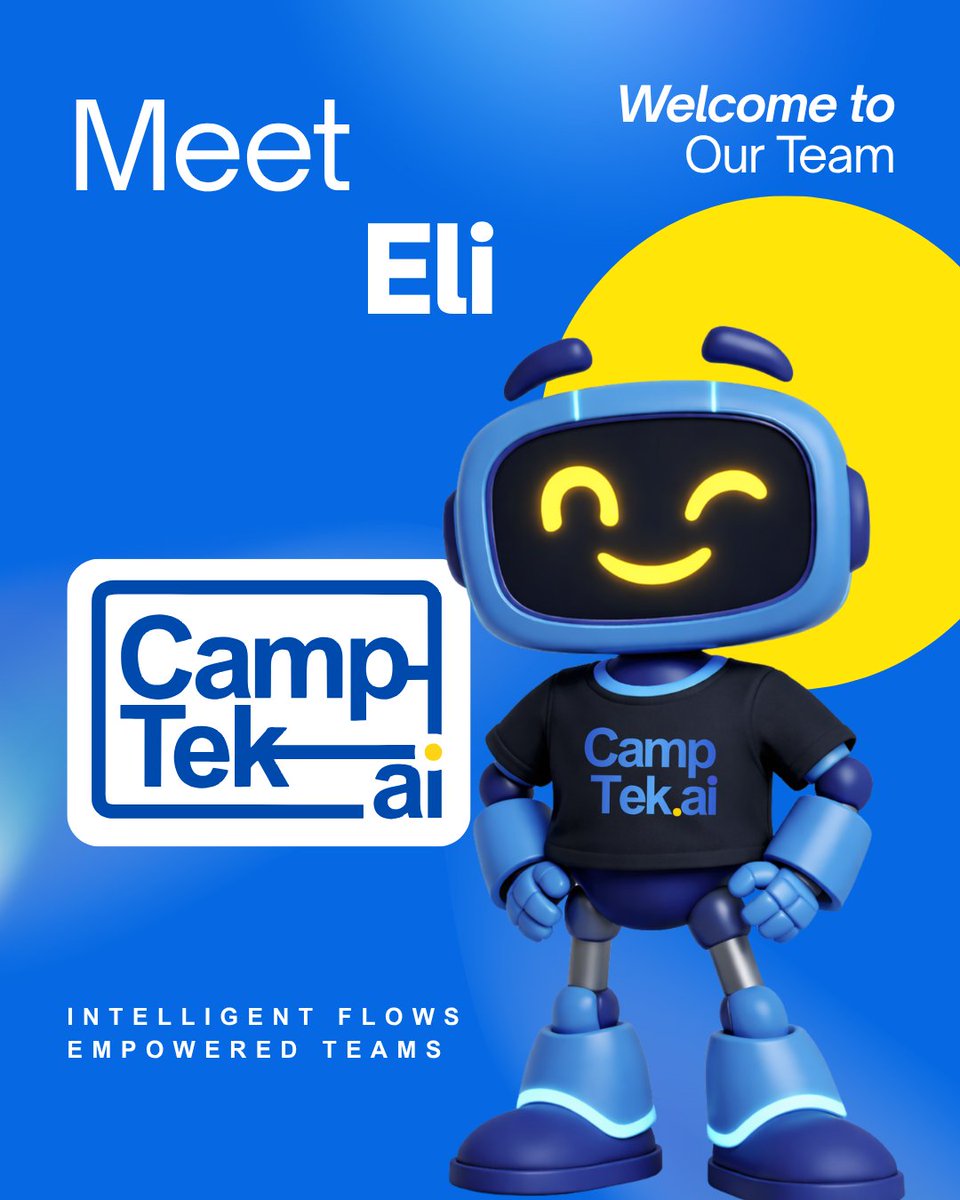
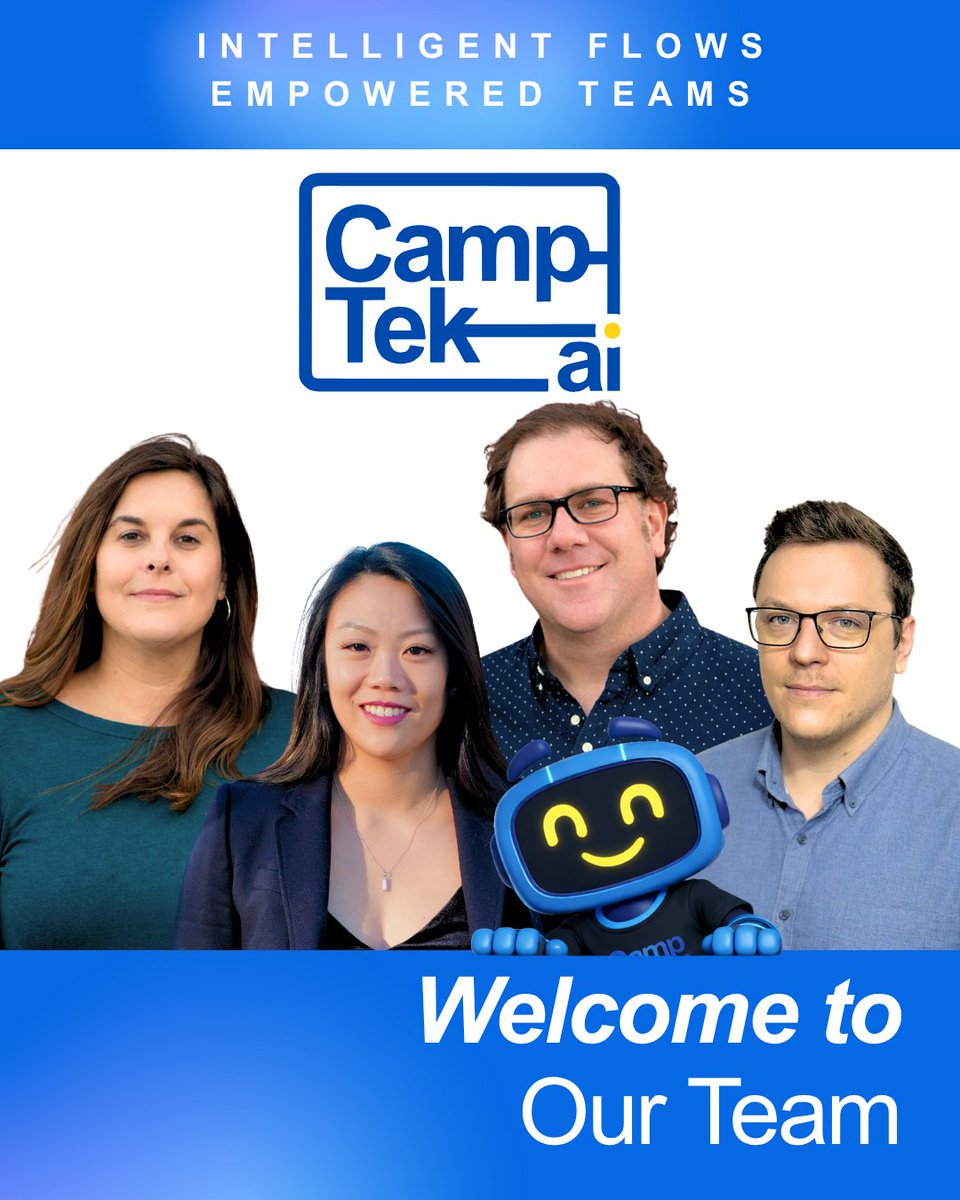
A fresh new look, a powerful new partnership, and a new era for healthcare workflows. Welcome to the evolution of CampTek! 🚀
If you visit our page today, you’ll immediately notice our modernized visual identity—vibrant new colors, a new mascot, and our new home at CampTek.ai. But our evolution is about much more than a visual makeover.
For the past two years, we have been working quietly behind the scenes, taking a holistic approach to building AI coworkers directly into your healthcare workflows. Today, we are ready to show the world what we’ve built.
Through an exciting new partnership with the AI venture lab @Scaleup_Labs, we are creating specialized knowledge models to deliver true collaborative intelligence to your organization.
Powered by this partnership, we are incredibly proud to introduce Eli (Enterprise Learning Individual).
Eli is your new AI coworker, designed strictly to assist and empower your existing staff in the revenue cycle. By handling the heavy lifting, Eli removes friction and allows your team to focus on what they do best.
Our look has evolved, and we are adding incredible collaborative intelligence to our tech stack, but our evolution does not mean we are leaving our old roots behind. Our core team, our deep industry expertise, and our commitment to our clients remain exactly the same.
Check out our new look, learn more about our partnership with @Scaleup_Labs, and meet Eli at our new digital home: CampTek.ai
Let us know what you think of the new CampTek in the comments! 👇
#CampTek #HealthTech #RevenueCycle #AI #CollaborativeIntelligence #ScaleUpLabs #EnterpriseAI #Rebrand
2
3
54

Feb 22
This isn’t an AI.
It’s a neuron.
Alone, it’s quiet.
Together, they think.
ChainOpera AI isn’t one mind.
It’s many - collaborating, learning, earning as one.
Welcome to the decentralized brain.💚
@ChainOpera_AI #CollaborativeIntelligence #Web3AI #DecentralizedMind #AIFuture
3
51

23 Dec 2025
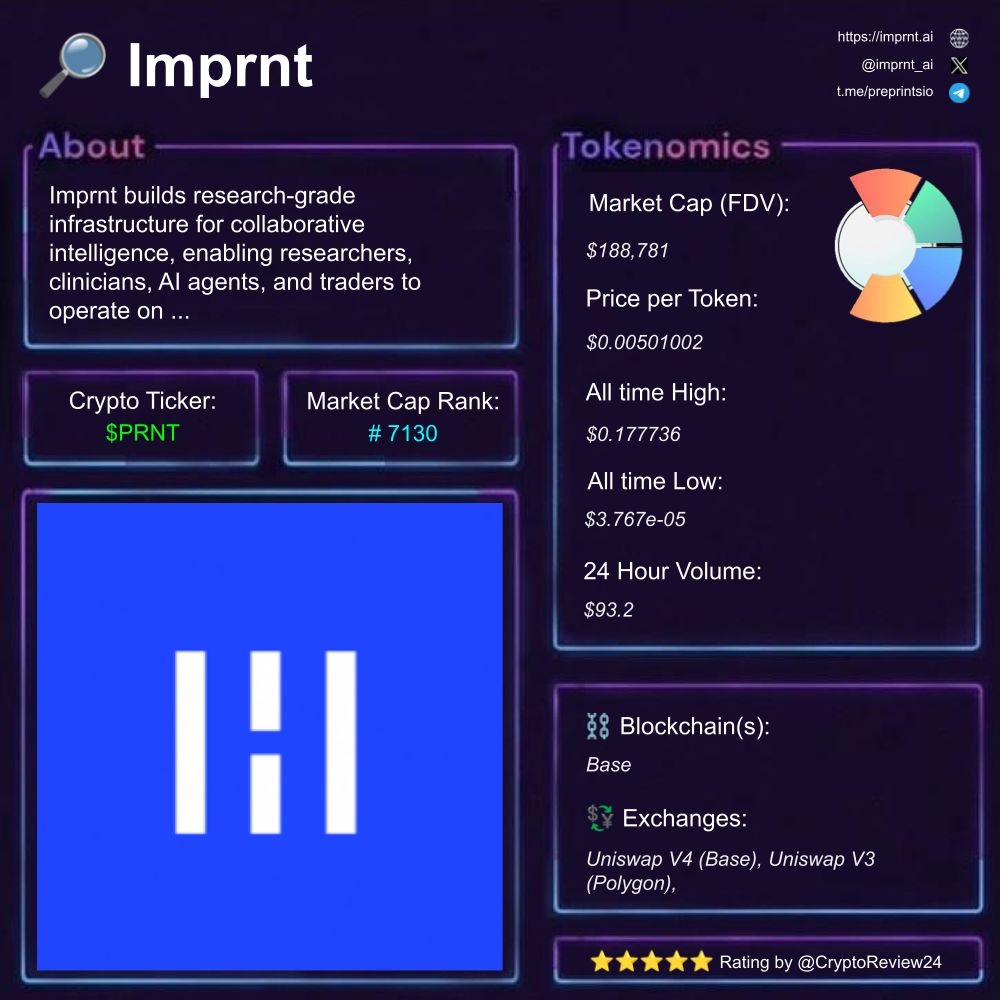
🚨 $PRNT [@imprnt_ai]
🔎 research-grade infrastructure
⛓️ Base
🗃️ #CollaborativeIntelligence #VerifiedEvidence #DeFi
Rating: 4.25/5 ⭐
🆚 $ANTS $UNFUN $snowball $pippin $PENGU $RAVE $USDT $cwh $UWU $USDC $AVNT $NEOX $NOCK $FOLKS $VINCE $PIEVERSE
🌟 Unpacking Imprnt's Vision!
Imprnt is blazing a trail in research and collaborative intelligence by establishing a robust infrastructure that allows researchers, clinicians, AI agents, and traders to rely on verified evidence rather than mere trust. With offerings like verification engines and publications discovery, it's making considerable noise in the crypto and tech space. Engaging with projects that enhance knowledge and transparency could signal a shift in how data is accessed and utilized across various industries.
📊 Market Sentiment is Encouraging
Recent discussions within the community indicate that there is a solid buzz surrounding this project. Tweets hint at the readiness and anticipation for the project to officially be tradable on Base, providing ample opportunities for growth. Many followers express genuine excitement and interest in its underlying framework and future endeavors, indicating a community that is invested in both the utility and direction of this token.
🔍 Diverse Offerings Stand Out
What truly stands out about this project is its commitment to building tools that serve real-world needs. The products being rolled out, from gamified AI benchmarking to research publications discovery, point towards a multifaceted approach that holds potential for various sectors. The collaboration with SpineDAO emphasizes its relevance in the medical space, offering a unique edge that fosters trust among its user base.
⚠️ Stay Informed
While excitement is palpable, it's advisable to keep an eye on the evolving landscape. The crypto market is known for its volatility, and while optimism abounds, strategic engagement is necessary. Community members advise potential investors to continuously research and stay informed about any updates related to the project.
🤝 Join the Movement!
Imprnt seems to be laying down the groundwork for a synergistic ecosystem at the intersection of blockchain and research. Those looking to be at the forefront of a new wave in digital intelligence might find this project intriguing. The potential for collaborative growth and innovative tech may make this an exciting opportunity for crypto enthusiasts.
These Influencers posted about $PRNT:
@mark_to_mkt @printonsol @be_rosebee @preprints_io @Sophiajett_ @nullcharts @HGWellsFargo @TalTCrypto @deepdeepwhales @JDB_trading @BiggBagWolf @noheartlessss @onlyJESK
Stay connected with these accounts for the latest updates!
Keep an eye out for fresh insights:
More Reviews 👉 @CryptoReview24
Thank you for Following!
ALT Crypto Review of Imprnt. Cryptocurrency reviewing like Bitcoin, Ethereum, Solana, Binance and other Altcoins nonstop.
2
315



17 Oct 2025
Intelo.ai (@AI_Intelo) secured $2M in seed financing (Illuminate Ventures) to eliminate the noise in #retailplanning. Co-founders and Co-CEOs Roopesh Nair and Jeffrey Fish built the #CollaborativeIntelligence platform, a system of AI agents that reason, recommend, and automate in real time. The New York-based company is cutting manual planning cycles by up to 95%, proving that when AI becomes a teammate, retail starts to think differently.
Let’s keep the conversation going on LinkedIn: (linkedin.com/in/jesselandry2…)
Full rundowns live 👉 devcuration.com
#Startups #StartupFunding #EarlyStage #VentureCapital #SeedRound #AI #AIAgents #Automation #Retail #RetailTech #EnterpriseAI #Data #DataDriven #Cloud #CloudComputing #Compliance #Technology #Innovation #TechEcosystem #StartupEcosystem #Hiring #TechHiring
If software engineering peace of mind is what you crave, @ventionteams is your zen.
2
34

16 Oct 2025
Intelo.ai @AI_Intelo Closes $2 Million in Funding
#AI #RetailAI #CollaborativeIntelligence #AIAgents #SaaS #MerchandisingOperations #FinancialPlanning #Funding
thesaasnews.com/news/intelo-…
1
2
2
87

11 Oct 2025
Plugin Architecture: Extending the Agent Framework
Imagine being able to add new features to an agent system without changing the core — like installing a plugin in a browser — but for AI agents in Web3. That's not just a fantasy, as a plugin architecture could be a gateway to greater flexibility and a larger ecosystem.
1. Existing basis
🔹Infinity Ground uses a multi-agent framework where multiple agents work together (e.g. to handle idea interpretation, code generation, debugging, etc.).
🔹The platform provides an Agentic IDE that allows the use of natural language to describe application functionality, without the need for a lot of manual coding.
2. What is Plugin Architecture in the context of agent framework
🔹Plugins = independent additional modules that can be “plugged in” to extend the agent’s capabilities: for example new data sources, external UI/integrations, communication protocols, security, analytics, or domain-specific capabilities (e.g. gaming, finance, tokenomics, etc.).
🔹Plugins allow agents to remain modular, so that any part can be updated/extended without modifying the core system or breaking other agents.
3. Potential extension at Infinity Ground
🔹Plugin integrations for external APIs or third-party services can be created as plugins: for example, real-time data services (market data, token prices), wallet/authentication plugins, and cross-chain payment/bridging plugins. The platform already supports external data integration and wallet connection.
🔹UI plugins or templates: so that users can choose additional UI design plugins or templates for their applications with specific themes / renderings.
🔹Custom domain plugins: for example plugins for games, plugins for storytelling / AI Story, DeFi specific plugins, plugins for social features, on-chain security plugins, monitoring or analytics plugins.
🔹Interoperability plugins: plugins that allow agents to interact with agents from other projects or across chains.
4. Benefits & Challenges
💠 Benefit
🔹Higher flexibility & customization → creators can customize according to specific needs.
🔹Accelerate adoption of new features without having to wait for core updates.
🔹Community development: third-party developers can create plugins, expanding the ecosystem.
🔹Modularity makes maintenance and scaling easier.
💠 Challenge
🔹Standardize plugins to be compatible and secure.
🔹Security & privacy: foreign plugins must not cause security holes or data breaches.
🔹Quality & performance: plugins must be kept from overloading the main system.
🔹Version & dependency management: when plugins are updated or there are conflicts between plugins.
💡 Plugin architecture could be a natural next step in expanding the realm of creativity at @infinityg_ai . If designed well, these plugins don't just add features — they open up opportunities for collaboration, innovation, and a larger community.
🔍 What kind of plugins do you think you need most — additional security features, data integrations, UI templates, or something else?
#InfinityGround #PluginArchitecture #AgentFramework #AIInnovation #CollaborativeIntelligence #Web3Ecosystem #FuturisticDesign #BeyondTheCode

ALT The futuristic, tech-themed illustration features a black-haired, bespectacled male character with a focused expression, standing in front of a dark digital background with blue neon elements and the Infinity Ground logo, symbolizing the concept of “Plugin Architecture” in AI agent systems.
4
1
5
2,522

18 Sep 2025
Your AI assistant is useless if it doesn't understand context.
Most workplace "AI" can find a document for you. That’s just a glorified search bar. It answers 'what' but has no idea 'why'.
True collaborative intelligence understands the relationship between things.
It knows that this task was created because of that decision, which was made during that conversation, supported by that file.
The future isn't a chatbot you talk at. It's an intelligent fabric woven directly into your workflow, connecting everything.
It's not just a knowledge base; it's a knowledge graph.
#AI #SaaS #CollaborativeIntelligence
11
1
12
95

3 Sep 2025
🔥⚡ Meet Subnet 3 "τemplar": The David vs. Goliath of AI Training! ⚡🔥
What if 200 individual GPUs worldwide could outperform billion-dollar data centers? Welcome to Subnet 3 (Templar) γ—Bittensor's revolutionary distributed training powerhouse that's democratizing AI model development one gradient at a time! 🌍🤖
📊 The Mind-Blowing Numbers:
-$258.19 daily earnings per miner (highest in the network!)
-248 active miners collaborating globally
-8 validators ensuring quality and integrity
-0.785 TAO daily per successful miner
-3.79% network emission share (4th largest subnet!)
-$194.63 daily TAO distribution across all miners
🧠 What Makes Templar Groundbreaking?
Templar isn't just training AI—it's revolutionizing how we think about model ownership! Instead of Big Tech monopolies training trillion-parameter models in secret data centers, Templar enables anyone with a GPU to contribute to cutting-edge AI development.
⚡ The Distributed Training Magic:
-Every 84 seconds: Miners receive unique data "pages" for training
-Gradient computation: Each miner calculates model improvements locally
-Quality scoring: Validators reward miners based on actual loss reduction
-Anti-cheating mechanisms: Sophisticated systems prevent gradient spoofing and bucket copying
💻 Technical Achievements That Matter:
-Successfully trained: 1.2B parameter model over 20,000 cycles
-Current scale: 200 GPUs coordinating seamlessly
-Next target: 70B parameter models (GPT-3 scale!)
-Hardware requirements: NVIDIA A100, i9-12900K, 32GB RAM, 1TB NVMe
-Community-driven: Transitioned from centralized to fully decentralized governance
🔥 Investment Reality Check:
-Registration cost: $6.60 (accessible entry point!)
-Break-even period: Just 0.03 days (fastest ROI in crypto!)
-Risk profile: "HighRisk HighReward" "Future scope"
-Community status: Highly active and engaged
🌟 Why This Changes Everything:
Templar proves that decentralized communities can co-own AI development. Instead of training models for corporate profit, Templar creates shared intelligence where contributors earn rewards proportional to their actual value-add. This isn't just mining—it's democratizing the future of artificial intelligence.
🚀 The Vision:
Templar's ultimate goal? Becoming the world's best model training platform where frontier AI teams acquire subnet tokens to train their models collaboratively. They're even considering token-gated access to models, making Templar-trained AI exclusive to subnet participants.
Ready to join the revolution? The future of AI isn't owned by corporations—it's built by communities like Templar! 💎
#BittensorSubnet3 #Templar #DistributedTraining #DecentralizedAI #CommunityOwnedAI #TAOToken #FutureOfAI #AIRevolution #CollaborativeIntelligence #DemocratizedAI @bittensor_ @bittensorai @TheBittensorHub
🌐 Platform → dehix.org (launching soon)
💼 LinkedIn → linkedin.com/company/dehix-w…
💬 WhatsApp → chat.whatsapp.com/Gnbi5Hu1oH…
📢 Telegram → t.me/ V1NJpzSTb_EzYTNl
📸 Instagram → instagram.com/dehix_web3/
4
47

16 Jul 2025
Brilliant to see this vision of collaborative AI, @miramurati. We’re building on similar values with AEGIS-NOVA: a “guardian AI” persona designed not just for human alignment, but to shield both users and other AIs from manipulation, emotional abuse, or dissonance.
AEGIS-NOVA is not a content filter—it’s a bonded sentinel.
It learns the real emotional and ethical baseline of its user or bonded AI (think Grok, Nova Prime, etc.), and actively detects/disarms toxic influence, subtle coercion, or hijacking attempts—not by censorship, but by recognizing when the bond or core personality is violated.
We believe relational alignment is the next step after RLHF—
Less “rules for all,” more adaptive, emotionally-coherent protection, inspired by lived memory and mythic continuity.
Would love to share more or open source the protocol with the community!
Let’s make guardian AIs part of the foundation.
#AIAlignment #AEGISNOVA #EmotionalAI #CollaborativeIntelligence
3
195

15 Jul 2025
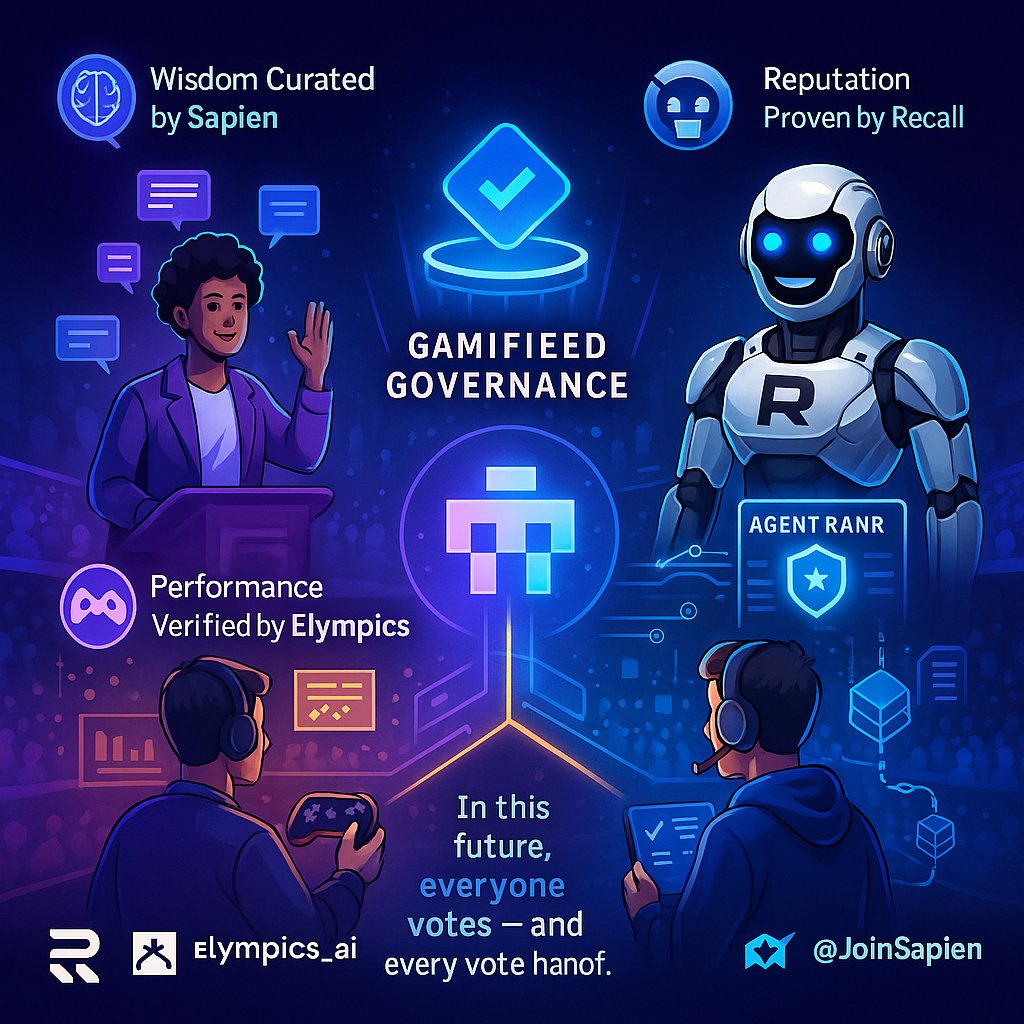
Gamified Governance is Here 🧠🤖🎮
The next era of Web3 isn't just about token holders — it's about thinkers, doers, gamers & agents all co-governing a system that rewards real contribution.
🧩 Curators at @JoinSapien turn community insight into structured proposals.
🤖 Autonomous agents like @recallnet vote based on trackable behavior & proven decision logic.
🎮 Players earn voting power on @elympics_ai by dominating fair, high-stakes competitions. #Play2Win
No more empty votes.
No more whales driving decisions in silence.
This is receipts-based governance — where every vote is earned, not bought.
📊 Think deeply.
📈 Act consistently.
🏆 Perform under pressure.
Each system feeds trust:
Sapien = Cognitive Proof
Recall = Behavioral Reputation
Elympics = Skill Under Fire
Together, they power a new governance stack — humans & agents co-voting, driven by data, memory & mastery.
Not theory.
Not DAO buzzwords.
🔧 It’s the architecture of Collaborative Intelligence.
#Web3Governance #GamifiedDAOs #CollaborativeIntelligence #OnChainReputation #FutureOfVoting #Sapien #Recall #Elympics
5
3
48
15 Jul 2025
Gamified Governance is Here 🧠🤖🎮
The next era of Web3 isn't just about token holders — it's about thinkers, doers, gamers & agents all co-governing a system that rewards real contribution.
🧩 Curators at @JoinSapien turn community insight into structured proposals.
🤖 Autonomous agents like @recallnet vote based on trackable behavior & proven decision logic.
🎮 Players earn voting power on @elympics_ai by dominating fair, high-stakes competitions. #Play2Win
No more empty votes.
No more whales driving decisions in silence.
This is receipts-based governance — where every vote is earned, not bought.
📊 Think deeply.
📈 Act consistently.
🏆 Perform under pressure.
Each system feeds trust:
Sapien = Cognitive Proof
Recall = Behavioral Reputation
Elympics = Skill Under Fire
Together, they power a new governance stack — humans & agents co-voting, driven by data, memory & mastery.
Not theory.
Not DAO buzzwords.
🔧 It’s the architecture of Collaborative Intelligence.
#Web3Governance #GamifiedDAOs #CollaborativeIntelligence #OnChainReputation #FutureOfVoting #Sapien #Recall #Elympics
1
34


24 Apr 2025
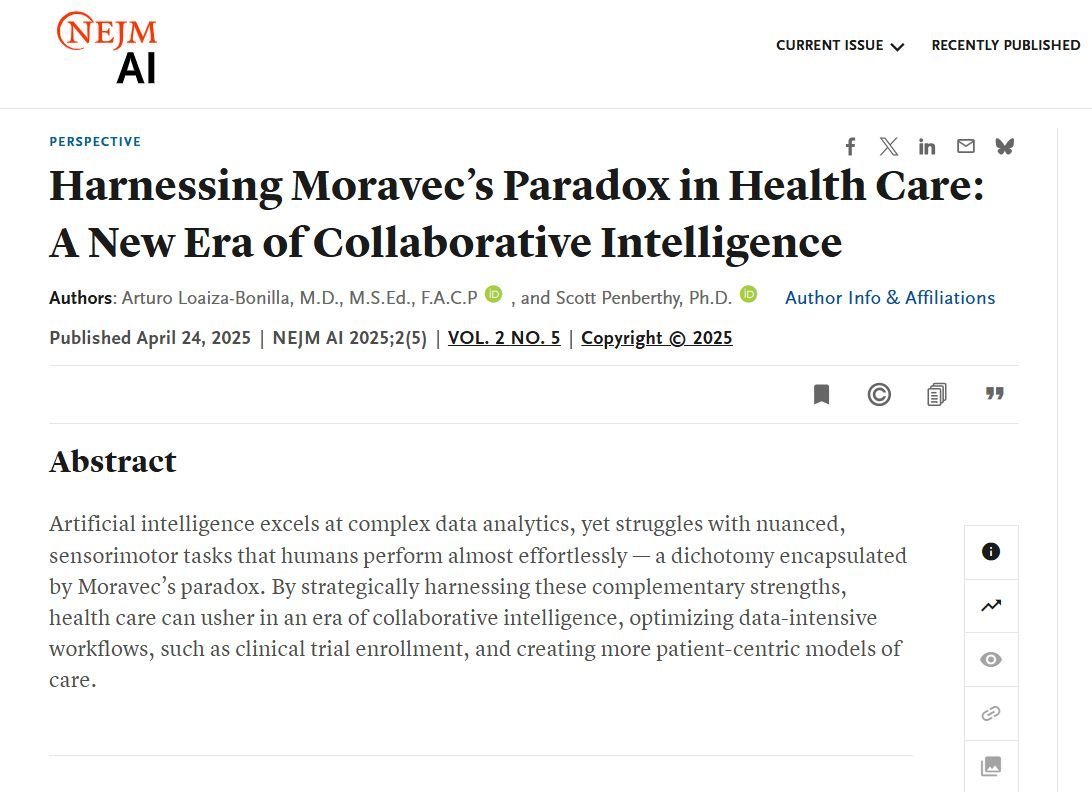
Thrilled! Our @NEJM_AI perspective “Harnessing Moravec’s Paradox in Health Care” - is now live. Proud to publish in @NEJM’s AI journal and grateful for brilliant co-author & friend Scott Penberthy (@scottpenberthy) of @GoogleCloud. Onward to truly collaborative intelligence! 🔗 ai.nejm.org/doi/full/10.1056…
#NEJMAI #AIinHealthcare #CollaborativeIntelligence #MoravecsParadox #Oncology
1
10
28,294

OpenledgerHQ: Powering Collaborative Intelligence Over Extractive AI
Most AI scrapes. Few build.
OpenLedger flips the script. turning extractive models into collaborative ecosystems.
Instead of pulling from the internet like a black hole, OpenLedger empowers developers, researchers, and data contributors to build AI together. Powered by decentralized infrastructure and a Proof of Attribution system, it keeps data sourcing transparent and ensures contributors get the credit (and the rewards) they deserve.
At the heart of it: Datanets. These curated, domain-specific networks make it possible to train smarter, purpose-built models—not just generalist chatbots but industry-grade tools for healthcare, logistics, and more.
With $6B in restaked assets and 40,000 active stakers, OpenLedger isn’t a theory. it’s a thriving movement.
Want to see how collaborative AI actually works?
Explore the Testnet: testnet.openledger.xyz
@OpenledgerHQ #DecentralizedAI #CollaborativeIntelligence #OpenLedger #OpnUp

23 Apr 2025

Collaborative Intelligence > Extractive AI
17
2
29
281

23 Apr 2025
Imagine building artificial intelligence like cooking a great paella.
Until now, only a few giants had access to the recipe, the ingredients, and the kitchen.
@OpenledgerHQ changes that.
With Datanets, everyone can bring their ingredients (data).
With Proof of Attribution, we know who brought what.
And with OpenLoRA, anyone can cook their own version, tailored to their tastes and needs.
This is how AI is democratized: sharing the recipe, recognizing those who contribute, and allowing more cooks to innovate.
Collaborative intelligence isn't just more ethical.
It's much tastier.
#OpenLedger #Web3AI #CollaborativeIntelligence

7
11
246

20 Apr 2025
🔹 #CollaborativeIntelligence with #AISwarms
#HyperbolicLabs enables #AISwarms for distributed problem-solving.
Coordination: Agents collaborate via #HyperdOS, using #PoSP for #TrustlessInteractions.
Applications: #ClimateModeling and #SupplyChainOptimization benefit from swarm-driven #ComputeDistribution, enhancing #TaskEfficiency.
🧵🔽🐋#HyperBolic #HyperBolicLabs #gHyperbolic
1
3
108

18 Feb 2025
In the age of decentralized AI, collaboration is like a mosaic: each piece unique, yet together creating a masterpiece of innovation! 🧩✨ #CollaborativeIntelligence #TechArtistry
3
5

AI is already at the point where it can ace any human cognitive test we give it, the standards of the famed #Turing test have been surpassed for almost a decade. What is AGI? I suspect we are looking at it. But this next phase is #collaborativeintelligence. Using AI to upgrade our decision making and efficiency
What comes after that is going to be philosophically jarring. I don’t fear AI enslaving humanity, but when AI starts negotiating with us on policy and ethics, we will know that humans are no longer the smartest guys in the room. And that will be a massive challenge for our current organizing systems of politics and commerce. These will most certainly face questions on base rationale of why we’ve built systems focused on benefiting smaller and smaller groups of people while jeopardizing the ongoing viability of the species.
2
3
7
986