
Surely any merger depends on comparative values , not just TSLA . I hold both
4

The important thing to know is that we don’t hold back anyone from joining us. (Except for the rogue agencies that have escaped control of the American people) We want partners and thoroughly believe in comparative advantage.
7

This is why Obama changed the measure of poverty to comparative vs absolute. This kind of measure gives you perpetual poverty and tells you Bangladesh has less poverty than US.
1

I’m working a longer piece of comparative history to explain soccer development in a successful country like France (subsidized, accessible, centralized, vertical) versus a middling country like the US (decentralized, expensive) and a failed one like China (top-down, inorganic).

They spent a lot of time, money, and political capital on a pro soccer league with multiple international stars, instead of building a strong nationwide youth pipeline. It was never developed organically, and after a few years the whole edifice collapsed during COVID.
6
234

Yes. My claim is comparative. My argument is better than the original cosmological argument. It has few steps. There is not much reason to reject mine and go one with the other unless one wanted a particular kind of self-existent Being, e.g., a supernatural one.
2

Bitcoin has advantages over every comparative asset.
Fiat - debasement protection via 21M max cap scarcity
Gold - more portable, can be used as currency, easily fractionalised, instant verifiability
Property - digital, no upkeep or maintenance requirements, portable
Stablecoins - censorship resistant, scarcity
Other crypto - decentralisation, scarcity
1
12

Siapa yang mau muntah gara2 bikin comparative case report pake dua pasien YA ALLAH ada ada aja gebrakannya, belum lagi masih ada 2 ppt yg harus dikerjain dan td malam aku ketiduran. Udah gitu kayaknya mau demam juga. GWS, alias gue will survive.
20

lol - nearly zero Americans live below the comparative Chinese poverty line.
1
525

You'd think that an 'Professor of Law' (even an 'Associate' one) knows that 'proportional'👇 is a relative, comparative term. And the term of comparison is (depending on the context) the level of threat or the anticipated military advantage. I.e. - NOT the professor's own fancy!

You claim what Israel has done is proportional. One wonders in which universe that claim is valid:
nbcnews.com/world/gaza/satel…
2

Why don’t you do homeownership rates in a comparative graph?
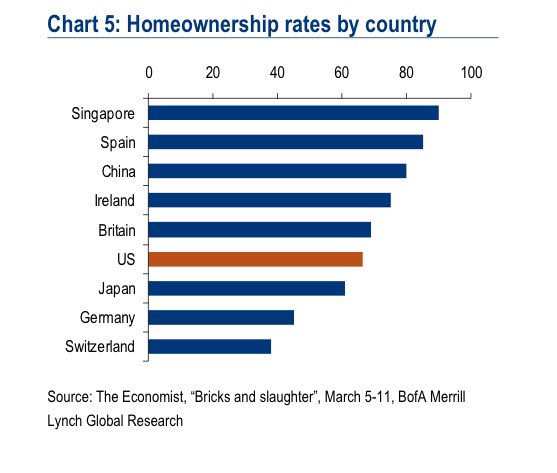
4
DeepAncientThought retweeted

💎✨️💎 PART 4 📜 - Contributions/Tags Continue -
LXXXVI. Swedenborgian Crystallocosmology
A comparative field connecting Griffin's geometric mineral universe with the architectural cosmos described by Emanuel Swedenborg in Principia. Both thinkers searched for lawful structures underlying visible creation. Swedenborg pursued vortices, first substances, and cosmical formations; Griffin pursued axes, planes, zones, and crystalline order. Together they suggest a universe governed by geometry across vastly different scales.
LXXXVII. Crystalline Correspondentialism
The study of correspondences between microscopic and macroscopic order. Crystal systems become miniature demonstrations of principles appearing throughout nature. Mountains, planetary systems, snowflakes, metals, and gems all reveal recurring geometrical tendencies.
LXXXVIII. Natural Theological Mineralogy
A branch of natural theology examining crystal order as evidence of rational design within creation. Nineteenth-century readers often regarded precise mineral symmetry as testimony to intelligible laws woven into matter itself.
LXXXIX. Geometric Teleology
The study of apparent purpose expressed through structure. Crystal faces consistently emerge according to fixed angular relationships. Such regularity led many natural philosophers to ask whether geometry itself reflects deeper principles governing matter.
XC. Sacred Lithology
The investigation of stones and minerals appearing in sacred literature. Griffin's catalogues unintentionally provide scientific context for many precious stones discussed throughout biblical tradition.
XCI. Aaronic Gemmology
The study of gemstones associated with the High Priest's breastplate in Exodus. Minerals such as beryl, sapphire, emerald-like stones, carbuncles, topaz, and others gain additional significance when examined through crystallographic science.
XCII. Edenic Mineral Philosophy
The exploration of gemstones associated with Edenic descriptions in Genesis and later traditions. Ancient writers often regarded precious stones as symbols of perfection, permanence, beauty, and divine craftsmanship.
XCIII. Ezekelian Gem Science
The study of gemstones appearing in the throne visions and royal descriptions of Ezekiel. Crystallography provides a scientific understanding of the mineral species underlying ancient symbolic language
XCIV. Apocalyptic Mineralogy
The examination of crystalline and gemological imagery in Revelation. Jasper, sapphire, emerald, chalcedony, topaz, beryl, chrysoprase, amethyst, and related stones acquire additional richness when studied through nineteenth-century mineral classification.
XCV. Temple Mineral Symbolism
The study of precious stones used in sacred architecture, ceremonial objects, priestly adornments, and symbolic descriptions of heavenly realities. Mineralogy and sacred literature intersect in remarkable ways.
XCVI. Ancient Lapidary Continuity
A historical science tracing gemstone knowledge from Mesopotamia, Egypt, Greece, Rome, medieval Europe, Renaissance natural philosophy, and nineteenth-century mineralogy. Griffin stands within this long chain of transmission.
XCVII. Chaldean Mineral Lore Studies
The investigation of ancient Near Eastern understandings of gems, metals, and crystalline substances. Although Griffin writes scientifically, many minerals in his index possess histories stretching back thousands of years.
XCVIII. Egyptian Lithic Symbolics
The study of stones employed in Egyptian monuments, amulets, temple decorations, funerary arts, and sacred symbolism. Many minerals listed by Griffin were known to ancient Egypt long before modern mineralogy emerged.
XCIX. Hermetic Mineral Philosophy
A historical field examining how Renaissance and early modern thinkers such as Heinrich Cornelius Agrippa and Paracelsus viewed minerals as possessing hidden virtues, signatures, sympathies, and natural powers. Griffin represents the transition from symbolic mineral philosophy to mathematical mineral science.
C. Paracelsian Lithodynamics
The study of mineral powers within older natural philosophy. Paracelsians often viewed metals and stones as participants in cosmic processes connecting Earth, heavens, and life. Griffin's rigorous geometries offer an unexpected continuation of this search for hidden order.
CI. Etheric Crystallophysics
A forgotten nineteenth-century field investigating how crystals might interact with hypothetical etheric media. Many natural philosophers speculated that light, magnetism, heat, and electricity propagated through subtle universal substances.
CII. Magnetocrystalline Philosophy
The study of relationships between crystal structure and magnetic phenomena. Although only partially understood in Griffin's era, later discoveries confirmed that structure profoundly influences magnetic behavior.
CIII. Electro-Crystallogenesis
The investigation of electricity as a possible agent influencing crystal formation. The appearance of electro-chemical works alongside Griffin's treatise reflects growing interest in electrical processes throughout nature.
CIV. Proto-Materials Science
Griffin's classifications anticipate modern materials science by emphasizing structure rather than mere composition. Crystal architecture often determines hardness, cleavage, transparency, durability, and physical behavior.
CV. Cosmogeometric Mineral Philosophy
The grand synthesis underlying much of the book. Geometry, chemistry, mineralogy, mathematics, classification, and natural order converge into a unified vision of creation. The crystal becomes a meeting point between number, form, substance, and law.
CVI. Crystallological Republic of Knowledge
Perhaps the greatest contribution of Griffin's work. It unites geometry, geology, chemistry, mineralogy, mathematics, pedagogy, classification, museum studies, natural theology, rare-earth discovery, and the history of science into one immense intellectual landscape. The book becomes a republic where cubes, octahedrons, garnets, zeolites, feldspars, tellurides, uranium minerals, logarithms, spherical triangles, and natural philosophy all converse within a single system of knowledge.
CVII. Polyaxial Cosmometry
Derived from Griffin's repeated focus on uniaxial, biaxial, and triaxial forms. This field studies how multiple axes generate increasingly complex worlds of symmetry. The crystal becomes a laboratory demonstrating how order emerges when several governing directions interact simultaneously.
CVIII. Crystal Commonwealth Theory
An interpretive science viewing the mineral kingdom as a federation of lawful forms. Octahedrons, prisms, rhombohedrons, zeolites, feldspars, garnets, and metallic ores become provinces within a vast commonwealth governed by mathematical constitutions rather than political laws.
CIX. Geometric Creation Studies
The investigation of how geometry appears embedded throughout creation, from microscopic crystal faces to mountain structures and planetary materials. Griffin's work repeatedly suggests that form itself may be among nature's most universal languages.
CX. Mineral Wonder Philosophy
A forgotten intellectual tradition encouraging awe before the hidden architecture of the Earth. Rather than reducing minerals to mere commodities, Griffin restores them as objects of contemplation, mathematical beauty, scientific inquiry, and enduring wonder.
⚠️See NEXT REPLY for more obscure fields drawn specifically from:
• Hexakisoctahedrons
• Hemihexakisoctahedrons
• Polaric Positions
• Normals
• Twin Crystals
• Cleavage Theory
• Crystal Models
• Brongniart, Haüy, Rose, Kobell, Liebig, and other forgotten nineteenth-century masters connected to Griffin's world.

⚠️Specialist Highly technical terminology Continues for - Griffins System of Crystallography - 1841 - 📜 PART 3 📜
LVI. Tourmalinology
The science of Tourmaline, one of nature's most chemically diverse crystal families. Nineteenth-century mineralogists regarded Tourmaline as a wonder-mineral because its crystals displayed extraordinary elongation, striation, coloration, and electrical peculiarities. Tourmalinology bridges crystallography, electro-mineralogy, geochemistry, and natural philosophy. To Griffin's generation, Tourmaline suggested that geometry and hidden forces cooperate in producing mineral structure.
LVII. Garnet Cosmology
A study of the vast kingdom of garnets, including Almandine, Grossular, Pyrope, Uwarowite, and numerous related forms. Garnets fascinated crystallographers because they frequently exhibit highly symmetrical dodecahedral and trapezohedral structures. Garnet Cosmology explores how one mineral family manifests a remarkable diversity of chemical compositions while preserving coherent geometrical laws.
LVIII. Feldspathic World-Building
The science of Feldspars as planetary construction materials. Griffin's index is filled with Albite, Orthoklas, Labradorite, Oligoclase, and Adularia. Modern geology confirms what early mineralogists suspected: feldspars constitute much of Earth's crust. Feldspathic World-Building studies the minerals that literally form continents, mountains, granites, and planetary foundations.
LIX. Labradoritic Luminosity
The study of Labradorite and related feldspars displaying unusual optical effects. Long before spectroscopy matured, such minerals inspired curiosity concerning light, color, and internal structure. Their iridescence suggested hidden worlds concealed within stone.
LX. Emerald Morphodynamics
A science examining Emerald not merely as a gem but as a crystallographic phenomenon. Emeralds unite beauty, rarity, chemistry, and geometry. Griffin's treatment places them within a broader mineral kingdom rather than isolating them as jewelry.
LXI. Beryl Architectonics
The study of Beryl, Aquamarine, and Emerald as members of a shared structural family. Beryl Architectonics examines the hexagonal frameworks through which these celebrated minerals manifest themselves.
LXII. Corundic Sciences
The investigation of Corundum, Sapphire, and Oriental Ruby. Before modern materials science recognized corundum's extraordinary hardness, mineralogists already appreciated its structural perfection. Corundic Sciences studies one of nature's most durable crystalline architectures.
LXIII. Diamond Philosophy
An inquiry into Diamond as a union of simplicity and perfection. Diamond contains only carbon, yet displays one of the most orderly crystal structures known. For natural philosophers, this demonstrated how immense complexity may arise from elemental simplicity.
LXIV. Topazian Morphology
The study of Topaz and its characteristic crystal habits. Topaz served nineteenth-century mineralogists as an important example of how geometry, chemistry, and transparency combine within a single mineral species.
LXV. Zirconic Antiquarianism
Long before zircon became a tool for estimating Earth's age, it fascinated crystallographers because of its durable form and distinctive geometries. Zirconic Antiquarianism studies minerals that preserve some of the oldest records of planetary history.
LXVI. Lapidary Historiography
The historical study of gemstones and ornamental minerals. Griffin's index preserves continuity with Greek, Roman, medieval, Renaissance, and Enlightenment traditions concerning precious stones.
LXVII. Mineral Heraldry
The science of identifying minerals through characteristic forms. Just as coats of arms identify noble families, crystal habits identify mineral species. Griffin devoted immense effort to creating this visual language of recognition.
LXVIII. Geognostic Mineralogy
An older geological discipline concerned with understanding the Earth's structure through direct observation of minerals and rocks. Geognosy preceded modern geology and sought a descriptive understanding of terrestrial architecture.
LXIX. Neptunic Geology
The study of geological processes emphasizing aqueous origins. Influenced by earlier geological debates, this science interpreted many formations as products of ancient waters, oceans, and sedimentary deposition.
LXX. Plutonic Geology
The opposing school emphasizing heat, magma, and subterranean fire. Griffin's period still lived amidst the great debate between aqueous and igneous explanations of Earth's formation.
LXXI. Vulcanological Mineral Philosophy
The investigation of minerals associated with volcanic environments. Such minerals revealed how fire, heat, pressure, and chemistry could generate highly ordered crystalline structures.
LXXII. Metallogenic Morphology
The study of metal-bearing minerals through their forms. Griffin's extensive listings of copper, silver, arsenic, nickel, antimony, tellurium, cobalt, and lead minerals reveal a forgotten geometrical approach to ore science.
LXXIII. Telluric Metallosophy
An exploration of tellurium minerals such as Graphic Tellurium and Telluric Silver. These rare substances occupied an almost legendary status among nineteenth-century collectors because of their scarcity and unusual compositions.
LXXIV. Arsenical Mineral Philosophy
The study of arsenic-bearing minerals including Realgar, Orpiment, Mispickel, Arsenical Pyrites, and others. Such species revealed astonishing chemical diversity hidden within the Earth's crust.
LXXV. Antimonial Sciences
The examination of antimony minerals such as Antimonglanz and Antimonblende. These ores fascinated early chemists because they displayed unusual metallic properties and complex crystal habits.
LXXVI. Cobaltic Mineralogy
The science of cobalt-bearing minerals. Long before cobalt became associated with modern technologies, its minerals occupied important positions in chemical and mineralogical classification.
LXXVII. Nickelic Ore Analytics
The study of nickel minerals and their structural relationships. Griffin's catalogue preserves numerous obscure nickel species rarely discussed outside specialist mineralogy.
LXXVIII. Uranitic Antiquities
A science devoted to uranium minerals before nuclear science transformed their cultural meaning. Uranite and related minerals were appreciated for their geometry, coloration, and rarity rather than their energetic potential.
LXXIX. Rare Earth Proto-Chemistry
The investigation of minerals containing cerium, yttrium, lanthanum, gadolinium, and related elements. Griffin's work preserves one of the earliest windows into what would later become rare-earth chemistry.
LXXX. Monazitic Studies
The examination of Monazite as a repository of uncommon elements. Although little understood in Griffin's day, such minerals hinted at hidden chemical territories awaiting discovery.
LXXXI. Gadolinite Frontier Science
Gadolinite became one of the gateways through which entirely new elemental families entered scientific awareness. Its importance extends far beyond its outward appearance.
LXXXII. Ceritic Geochemistry
The study of cerium-bearing mineral species. These substances challenged older classifications and expanded the known boundaries of chemistry.
LXXXIII. Yttric Mineral Frontiers
The exploration of yttrium minerals as evidence of previously unknown elemental domains. Griffin unknowingly documents the dawn of rare-earth science.
LXXXIV. Zeolitic Cathedral Architecture
A study of minerals such as Stilbite, Chabasite, Harmotome, Natrolite, Scolezite, and Heulandite. Their frameworks resemble microscopic cathedrals composed of repeating chambers, passages, and geometrical halls.
LXXXV. Framework Mineralogy
The science of minerals whose internal structures consist of interconnected networks rather than simple arrangements. Modern structural chemistry later confirmed the extraordinary significance of these architectures
.
⚠️ See NEXT reply for LXXXVI-CVI, including:
• Swedenborgian crystal parallels
• Sacred geometry and natural theology
• Biblical gemstone sciences
• Mineral correspondences in Exodus, Ezekiel, and Revelation
• Crystal symbolism from antiquity through 1899
• Ether theories and crystal media
• Magnetism, electricity, and crystal forces
• Proto-cosmology, proto-material science, and forgotten ologies almost never discussed today.
1
1
1
252


Comparative literature branching onto other studies with the help of UoH and its faculty is the last thing the discipline needed.
1


Check out my latest article: 【70】Populist Governance and Its Institutional Consequences: A Comparative Analysis with China as the Primary Case linkedin.com/pulse/70populis… 来自 @LinkedIn
1
🦞ANTONIOTTI⚔️ 🔋🚗⚡Wokeness= Ψological predator retweeted

Oh no the comparative literature section is walking out what shall we do.

Stanford grads walk out as Google CEO Sundar Pichai takes the stage as commencement speaker. No mention of AI, unlike other uni speakers getting booed down this year. Story for @sfgate shortly
3
2
45
3,224

There's next to no evidence that the Irish have ever remotely hated jews as has applied elsewhere - in comparative international ratings Ireland has always come out on the lesser antisemitic side - it's gaslighting to cover for Irish criticism of Israeli policy
7
31R | ᛖᛁᚱ retweeted

Jun 13
Politely disagree with this.
Our comparative advantage is rapidly diminishing in a world in which America continues to generate world-shaping innovation and dynamism, while Asia's ascent has reached the point where many no longer regard Canada as an automatic "upgrade."
We are stagnant and sclerotic. Our younger generations are struggling to establish themselves, our best and brightest continue to gravitate south of the border, and many are increasingly asking what the point is of investing their lives in a country that offers a harsh climate, high living costs, "universal" but increasingly strained healthcare, and neither America's innovative dynamism, nor Europe's accumulated cultural richness, nor Asia's extraordinary pace of development.
I'm not writing this to express cynicism or to rain on anyone's parade.
But the way forward is not to celebrate ourselves more fervently or to reassure ourselves that everything is fundamentally "awesome." It is to engage in honest, sober self-diagnosis: to ask how we arrived at this point, to confront our structural weaknesses without sentimentality, and to determine what it will actually take for this majestic land and the people who inhabit it to rise to the full extent of their potential.
Jun 13

Toronto and Canada as a whole are the best places to live in the world.
I need everyone to inject more positive, optimistic energy into the ecosystem. Are there things to improve? Yes.
But we’re already the envy of the world.
6
5
48
3,994