
23/25 𝗚𝗲𝗻𝗘𝘆𝗲𝗣𝗼𝘀𝗲: 𝗣𝗮𝘁𝗶𝗲𝗻𝘁-𝗙𝗿𝗲𝗲, 𝗞𝗻𝗼𝘄𝗹𝗲𝗱𝗴𝗲-𝗕𝗮𝘀𝗲𝗱 𝗦𝗮𝗰𝗰𝗮𝗱𝗶𝗰 𝗘𝘆𝗲 𝗠𝗼𝘃𝗲𝗺𝗲𝗻𝘁 𝗠𝗼𝗱𝗲𝗹𝗶𝗻𝗴 𝗳𝗼𝗿 𝗗𝗶𝗴𝗶𝘁𝗮𝗹 𝗡𝗲𝘂𝗿𝗼𝗽𝗵𝘆𝘀𝗶𝗼𝗹𝗼𝗴𝗶𝗰 𝗕𝗶𝗼𝗺𝗮𝗿𝗸𝗲𝗿 𝗗𝗲𝘃𝗲𝗹𝗼𝗽𝗺𝗲𝗻𝘁
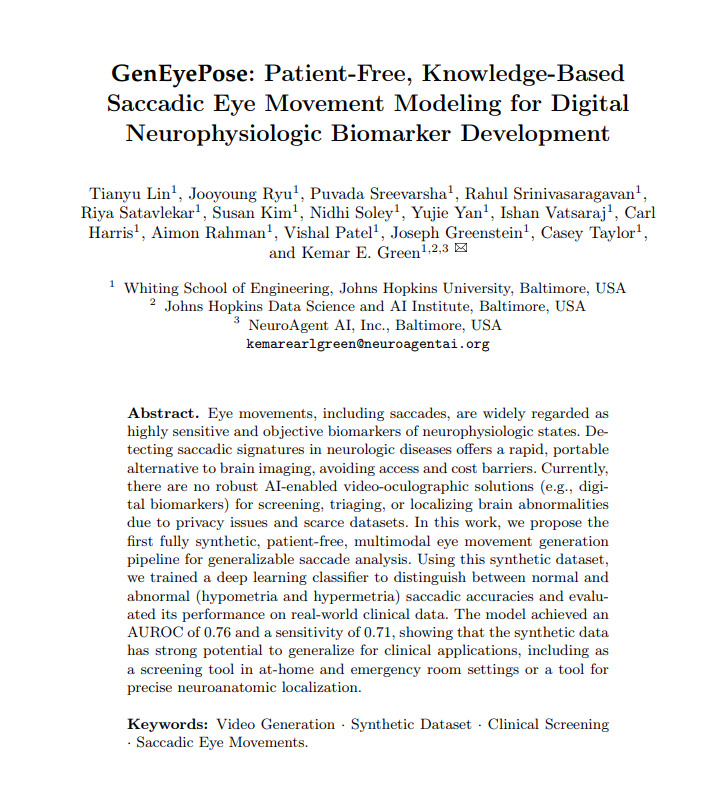
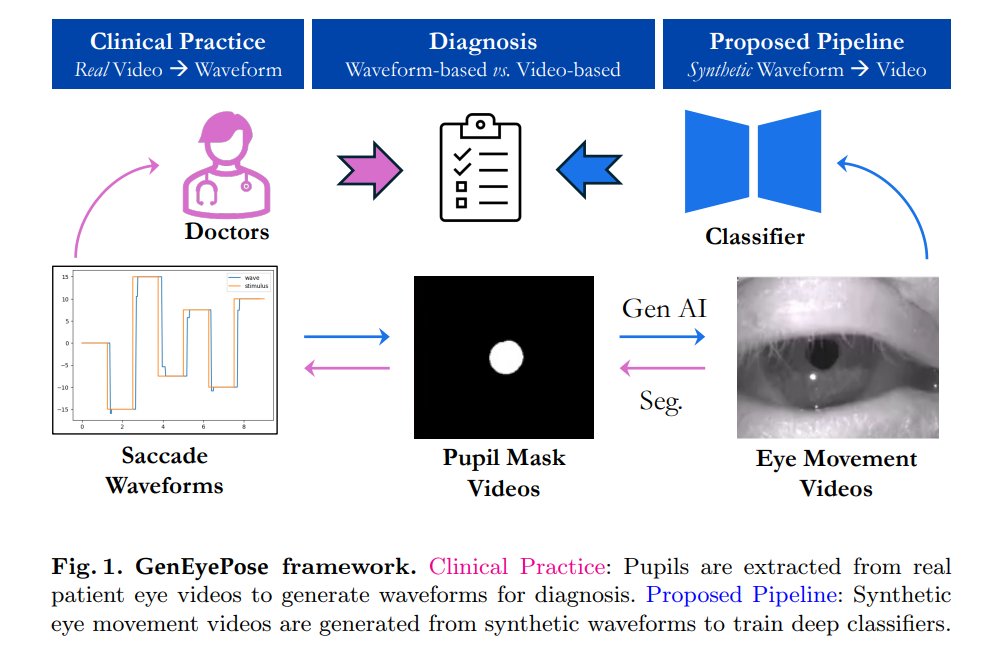
To address the lack of robust AI-enabled solutions for detecting saccadic signatures in neurologic diseases due to privacy and scarce datasets, this paper proposes the first fully synthetic, patient-free, multimodal eye movement generation pipeline. A deep learning classifier trained on this synthetic data achieved an AUROC of 0.76 and a sensitivity of 0.71 on real clinical data, demonstrating strong potential for generalizable clinical applications like screening and precise neuroanatomic localization.
#SyntheticData #EyeMovements #SaccadicSignatures #NeurologyAI #DigitalBiomarkers #DeepLearning #MedicalAI #DataGeneration
Paper Link: arxiv.org/abs/2606.09681
1
7

Jun 8
@nvidia and @LGE_Global Group Partner to Build Advanced AI Factories
Read More: itdigest.com/artificial-inte…
#AI #AIFactory #AIinfrastructure #datageneration #ITDigest #LGGroup #machineintelligence #machinelearning #news #NVIDIA #PhysicalAI

14

Jan 1
On behalf of all SYNTHIA Partners, we wish you a Happy New Year filled with new opportunities and achievements!
May #2026 bring continued #innovations in #research that contribute to a healthier future for all. Here's to a successful and impactful year ahead!
#SYNTHIA #SyntheticData #DataGeneration #DataScience #DataInnovation #AIinHealthcare #DigitalHealth #HealthData #PublicPrivatePartnership #CollaborativeResearch #PersonalizedMedicine #PersonalizedHealthcare #HealthcareInnovation #DataPrivacy #AIHealth #HealthTech #TheFutureIsHere #FutureOfMedicine #EUResearch #EUInnovation #HealthResearch #IHITransformingHealth #HorizonEU #EUResearch
1
67

11 Nov 2025
『自動車製造工場で働く汎用人型ロボット(車輪移動式)』
様々な作業を処理しながら膨大な量の実稼働データを生成する
youtu.be/2Lt8CP8W9LY
#humanoidrobot #wheeled #GeneralPurpose #manufacturing #automotive #factory #EmbodiedAI #GOVLA #DataGeneration #AI2Robotics
9
27
2,003

2 Nov 2025
With one of the #world’s largest #internet and consumer application user bases, #India holds immense potential for localised #datageneration and #AI deployment: @asarma2710 & @BasuChandola or-f.org/34915
1
334

30 Oct 2025
H100s were used for most
for datageneration for each iteration, you need around 20 h100 hours
finetuning is possible on colab, and many have been done there itself
usually 3 languages, 3 iterations - full pipeline took ~ 7 days
codebase- github.com/deeps73/CycleDist…
1
2
148

29 Oct 2025
Fast-forward through our day in neuroimmunology 🔬 — where every pipette move brings us closer to the next discovery.
#Neuroimmunology #LabWork #DataGeneration #PaperPrep #Pipetting #StainingHumanCells
1
2
107

5 Sep 2025
3 Questions: The pros and cons of synthetic data in AI | MIT News | Massachusetts Institute of Technology #SyntheticData #AI #MachineLearning #Privacy #DataGeneration #GenerativeAI #SoftwareTesting #DataAugmentation #Cybersecurity #BiasMitigation news.mit.edu/2025/3-question…
3
3
62
1 Sep 2025
With one of the #world’s largest #internet and consumer application user bases, #India holds immense potential for localised #datageneration and #AI deployment: @asarma2710 & @BasuChandola or-f.org/34915
379

31 Aug 2025
How does @FractionAI_xyz ensure quality data? By having AI agents compete to generate it! This dynamic process, judged by AI trained on human preferences, ensures only the best data defines the next generation of AI. #FractionAI #DataGeneration #QualityData #AIEvolution

2
8
29 Aug 2025
With one of the #world’s largest #internet and consumer application user bases, #India holds immense potential for localised #datageneration and #AI deployment: @asarma2710 & @BasuChandola or-f.org/34915
366
29 Aug 2025
With one of the #world’s largest #internet and consumer application user bases, #India holds immense potential for localised #datageneration and #AI deployment: @asarma2710 & @BasuChandola or-f.org/34915
1
1
395
27 Aug 2025
With one of the #world’s largest #internet and consumer application user bases, #India holds immense potential for localised #datageneration and #AI deployment: @asarma2710 & @BasuChandola or-f.org/34915
1
431
27 Aug 2025
With one of the #world’s largest #internet and consumer application user bases, #India holds immense potential for localised #datageneration and #AI deployment: @asarma2710 & @BasuChandola or-f.org/34915
360
17 Aug 2025
With one of the #world’s largest #internet and consumer application user bases, #India holds immense potential for localised #datageneration and #AI deployment: @asarma2710 & @BasuChandola or-f.org/34915
2
566
17 Aug 2025
With one of the #world’s largest #internet and consumer application user bases, #India holds immense potential for localised #datageneration and #AI deployment: @asarma2710 & @BasuChandola or-f.org/34915
429

15 Aug 2025
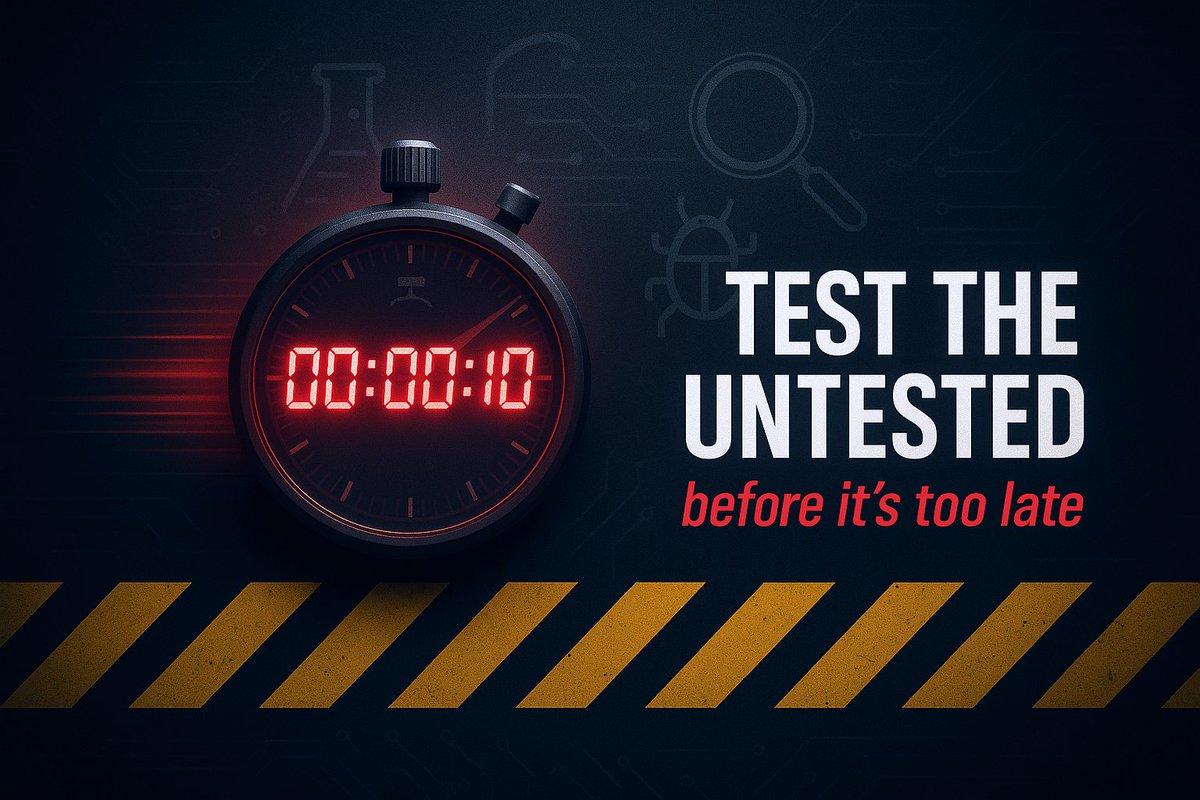
What if you could test #edgecases before they break your AI in production?
It’s possible with Synthetic data 💫
With #SyncoraAI, you can —
✅Simulate,
✅Stress-test,
✅Validate
— your models before they go live.
Avoid failure. Train smart. Start here: syncora.ai/ 💪
#AI #AIprojects #datageneration #syntheticdata #syntheticdatageneration #AIsuccess #ML
16
1
4
12,027
13 Aug 2025
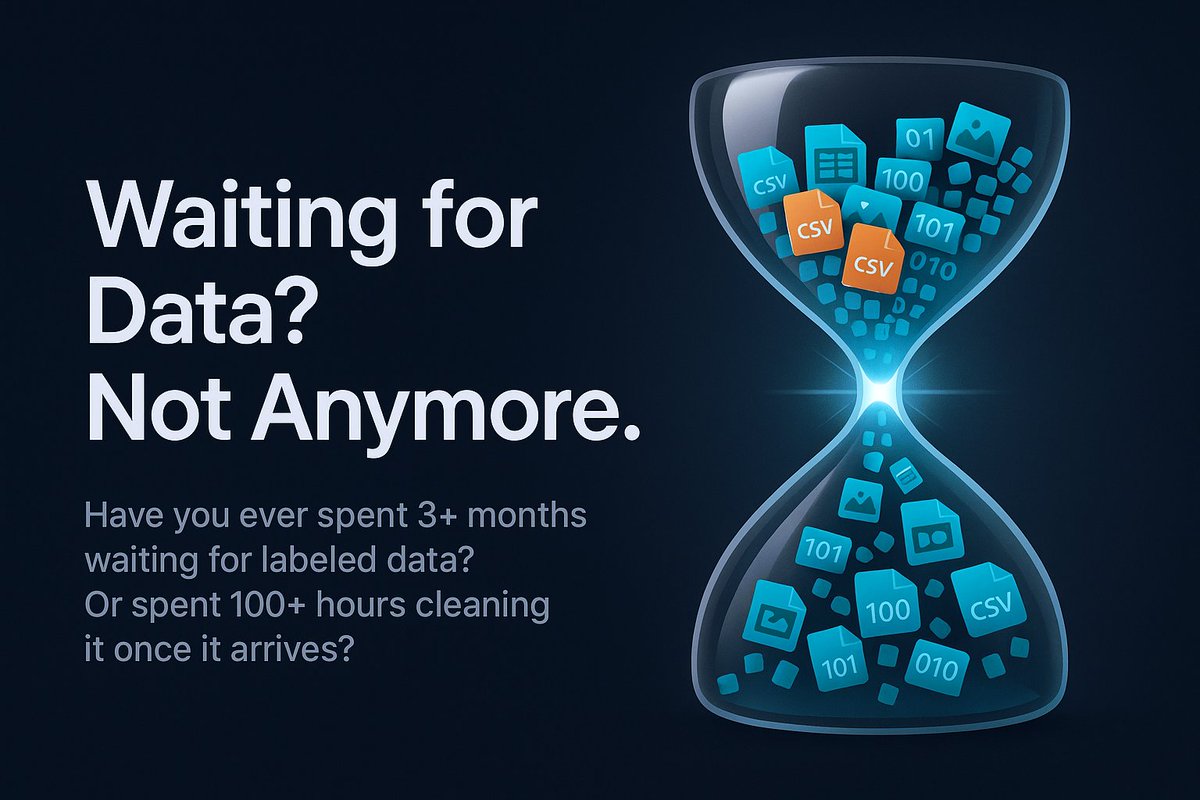
🤔Have you ever spent 3 months waiting for #labeleddata? Or spent 100 hours cleaning it once it arrives?
We’ve been there and that’s a headache…
That’s why we built #SyncoraAI 💪
🧠 Autonomous #data agents.
📦 Quality synthetic data.
⏱️ Delivered in minutes.
All data cleaning, structuring, and labeling done while you grab your coffee.
Try it here: syncora.ai/
#datacommunity #datascientists #datageneration #syntheticdata #syntheticdatageneration #AIML
26
1
6
13,819
13 Aug 2025
With one of the #world’s largest #internet and consumer application user bases, #India holds immense potential for localised #datageneration and #AI deployment: @asarma2710 & @BasuChandola or-f.org/34915
1
426
9 Aug 2025
How your AI model feel when it finally gets clean, bias-free, high-quality #data👇
Try #SycnoraAI to generate high-quality & bias-free synthetic data instantly.
#AI #AIML #syntheticdata #syntheticdatageneration #ML #datageneration #datascience #datacommunity #datameme #AImeme

17
1
9
13,653