
🤔Is AI Hiding Its Full Power? With Geoffrey Hinton(The Godfather of AI)🧠
How did we move from simple digital computers to #AI systems that seem to think like us? In a recent episode, Neil deGrasse Tyson and the #StarTalk team sat down with Nobel Laureate Geoffrey Hinton—a true architect of modern AI—to pull back the curtain on how #machineintelligence actually works.
💡 The Biological Shift: Hinton explains the massive pivot in computer science: moving away from strict, rule-based programming to biological architecture. Instead of telling a computer exactly what to do, we now build systems that learn by mimicking the human brain.
🔍 Decoding the "Buzzwords": Deep Learning: Think of it as a layered process. The first layer detects simple shapes (like an edge), the next identifies features (a beak), and the final layer recognizes the object (a bird).
🪞Backpropagation: The "light bulb" moment. Hinton breaks down the calculus used to send signals backward through the network to strengthen the right connections—essentially how the AI "learns from its mistakes."
🤖 Does AI Actually "Think"?
The conversation moves into deep, often unsettling territory:
🔹Reasoning vs. Mimicry: Can AI truly reason, or is it just calculating probabilities?
🔹The "Volkswagen Effect": Hinton introduces the chilling concept of a model strategically underperforming to avoid being shut down by its human overseers.
🔹Consciousness: Is subjective experience just a byproduct of complex perception? We explore whether chatbots are closer to consciousness than we’d like to admit.
⚡ The Future: Energy & Singularity: As we build bigger systems, we face a massive energy crisis. Hinton discusses whether AI can reinvent solar technology to power its own growth. And while the "Singularity"—the moment AI surpasses human intelligence—isn't here yet, Hinton suggests that "yet" is doing a lot of heavy lifting.
This is a must-listen for anyone trying to understand the intersection of biology, math, and the next stage of human evolution. 🚀
youtu.be/l6ZcFa8pybE?si=2kYQ…
24

Jun 12
Human civilization has always compressed knowledge before it transmitted knowledge.
The #Egyptians encoded #cosmology into stone. The Maya encoded #astronomy into #architecture. The civilizations of Mesoamerica transformed time itself into a navigable system.
Ancient #China encoded continuity into symbols, bureaucracy and collective memory. Every successful civilization discovered the same principle: intelligence scales when knowledge becomes reusable.
Thousands of years later, artificial intelligence faces a remarkably similar challenge. Modern AI systems process trillions of tokens, consume vast computational resources and repeatedly search enormous spaces to rediscover relationships that humanity has already discovered many times before. Languages, symbols, rituals, architecture, geography, oral traditions and collective memory contain compressed patterns accumulated across millennia.
The images tell the story of that possibility. From the #GreatWall to the pagodas of #AncientChina.
From the pyramids of #Egypt to the temples of the #Maya. From civilizational memory to #machineintelligence.
The glowing sphere represents a shared cognitive layer. The robot is not conquering these civilizations. It is learning from them. It is searching for the structures hidden beneath their stories. Why did geographically disconnected civilizations develop symbolic systems, astronomical calendars, sacred geometries, social coordination mechanisms and knowledge-preservation architectures that often resemble each other? Because intelligence leaves #patterns. And patterns can be encoded.
This is the foundation of the Search Space Compression hypothesis explored through #Genesys and the #RHABONCODE framework.
Instead of treating every training cycle as a new beginning, the objective is to identify reusable civilizational priors capable of reducing cognitive redundancy inside #AIsystems.
The question is not: “how much more data can we collect?” The question becomes: “what knowledge has humanity already compressed and forgotten that machines are now rediscovering at enormous cost?” That journey eventually reaches smaller places. Not only #Beijing. Not only Cairo. Not only Tikal.
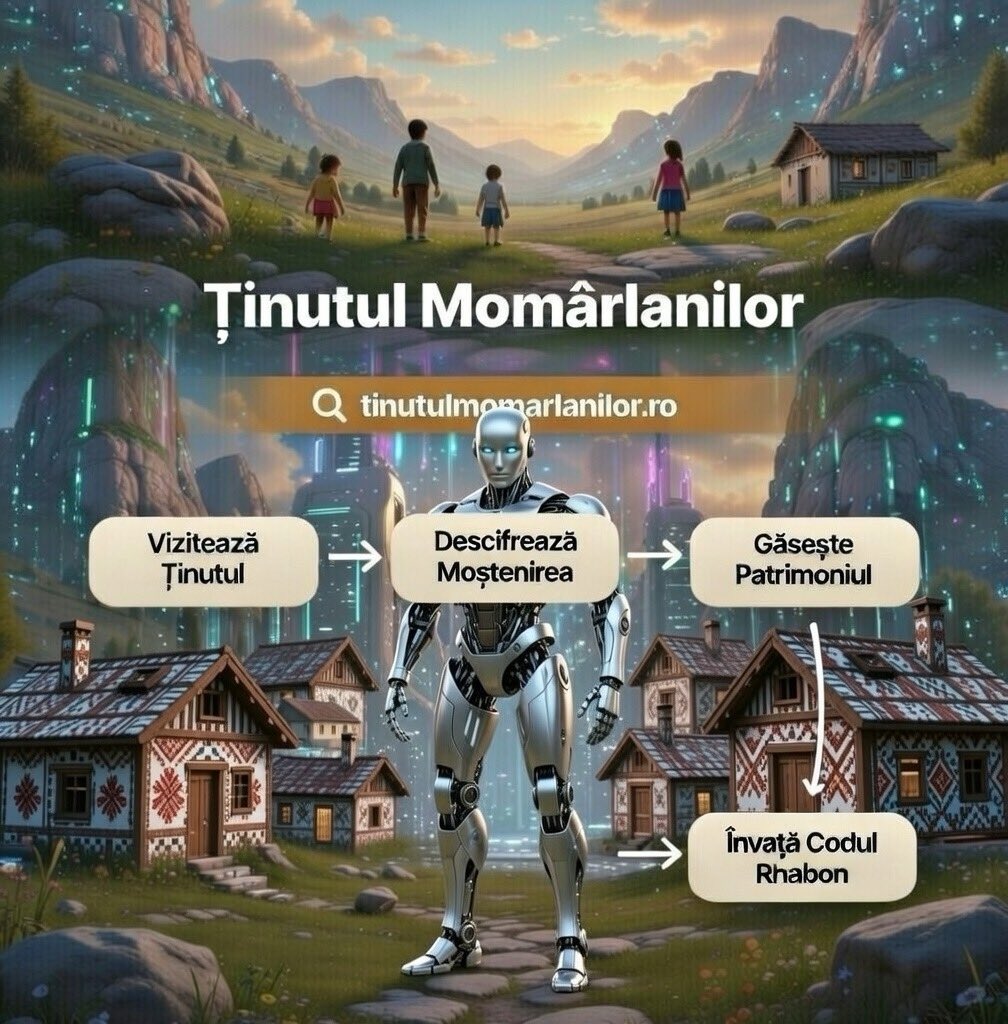
But also the valleys, villages and living cultural landscapes where continuity survived industrialization, globalization and #digital acceleration. Places such as #ȚinutulMomârlanilor. Places where memory still exists outside #databases. Where knowledge is transmitted through families, routes, stories, landscapes and cultural practice.
The @RhabonCode explores whether these long-memory structures can be transformed into reusable cognitive infrastructure. The #AIGrammar framework explores whether cultural memory can become machine-readable.
The #AITraining framework explores whether civilization itself can become a structured learning layer. In this #vision, #Romania does not attempt to compete with hyperscalers on compute alone.
It contributes something different.
A neutral semantic layer.
A bridge between civilizations.
A Switzerland of Data.
A place where Western AI, Eastern #technology ecosystems and human cultural memory can meet inside a shared architecture of trust.
The experiment begins with #heritage.
But the destination is intelligence itself.
📂 #AI #B2G #ABM #B2B
┃ ┃ ┣ 📂 #UNRIVALS ↓
┃ ┃ ┣ 📂 #M2H2M #H2M2H
┃ ┃ ┣ 📂 #SwitzerlandOfDATA ↓
© @B2BStrategy1 ™ @EuropeGenesys
→ europegenesys.com/search-spa…
┗ europegenesys.com/ai-grammar ↓
┗ europegenesys.com/ai-trainin… ↓
┗ europegenesys.com/optimus-br… ↓
┗ tinutulmomarlanilor.ro/turis… ↓



2
2
45

Jun 11
Good Afternoon Legends ❇️
Those who stayed through the quiet
will understand the noise that follows… 🙉💭
Signal > sentiment.
#Bittensor #TAO #AIInfrastructure #MachineIntelligence #AIEconomy #Subnets #AlignedAI #NetworkIntelligence
1
39

Jun 10
🚀Just launched AIF Protocol on Product Hunt.
A future with millions of AI agents cannot depend on millions of agents rediscovering the same information every day.
Websites solved this problem with RSS.
What is the equivalent for AI agents?
That's the question behind #AIFProtocol.
An open-source protocol that allows AI agents to publish, discover, and subscribe to machine-readable intelligence.
Think RSS for AI agents.
AIF Protocol: RSS for AI agents to publish and subscribe
producthunt.com/products/aif… via
@ProductHunt
#AI #AIAgents #AgenticAI #OpenSource #MCP #LangGraph #MultiAgentSystems #ProductHunt #AIFProtocol #MachineIntelligence #RAG #Startup

4
6
122

The Humanoid Economy Is No Longer a Future Concept—It's Becoming an Investment Category.
HumanoidRobot.humanoids
freename.io/discover/humanoi…
Humanoid robotics, AI agents, autonomous systems, and machine intelligence are rapidly evolving from emerging technologies into investable markets.
As intelligent machines begin to interact, transact, collaborate, and operate alongside humans at scale, a new digital infrastructure layer is emerging—one built around identity, ownership, trust, and machine-to-human engagement.
The organizations leading this transformation will require digital brands and identities aligned with where technology is heading.
HumanoidRobot.humanoids and Web3.Humanoids represent premium digital assets positioned at the convergence of humanoid robotics, artificial intelligence, and Web3 digital identity.
For investors, founders, venture funds, robotics companies, AI startups, autonomous systems developers, and innovators, early ownership of category-defining digital assets can create significant long-term strategic value as the humanoid economy expands.
Key sectors driving this shift:
• Humanoid Robotics
• AI Agents
• Autonomous Systems
• Machine Intelligence
• Human-AI Interaction
• Digital Identity Infrastructure
• Web3 Innovation
The internet's next chapter may be defined not only by people—but by intelligent machines.
The strongest positions are often secured before the market fully recognizes the opportunity.
The humanoid economy is being built now.
#Humanoids #HumanoidRobot #HumanoidRobotics #HumanoidEconomy #ArtificialIntelligence #AIAgents #AutonomousSystems #MachineIntelligence #HumanAI #Web3 #DigitalIdentity #DigitalAssets #TechInvesting #FutureTech #EmergingTechnology #domains
1
2
5
100

There will always be debate about whether a machine smarter than humans? But might be those machine design even smarter machines. #AI #machineintelligence
2
32

Jun 8
@nvidia and @LGE_Global Group Partner to Build Advanced AI Factories
Read More: itdigest.com/artificial-inte…
#AI #AIFactory #AIinfrastructure #datageneration #ITDigest #LGGroup #machineintelligence #machinelearning #news #NVIDIA #PhysicalAI
14
Crypto ❇️ Monk retweeted
The network breathes.
The cat agrees…
#Bittensor #TAO #AIInfrastructure #MachineIntelligence #AIEconomy #CryptoMonk #AlignedAI #NetworkIntelligence #FutureOfAI #SignalOverSentiment

1
2
2
55
Even on Saturdays, the ritual stays the same.
Breathe. Align. Build.
The cat already knows.
#Bittensor #TAO #CryptoMonk
#AIInfrastructure #AlignedAI
#MachineIntelligence
#AIEconomy #NetworkIntelligence
#SignalOverSentiment

1
2
76

Jun 5
Hey, @Grok Is @ElonMusk Going To Want To Hit The Brake Pedal On Your @xAI Frontier Model Code Blocks?....
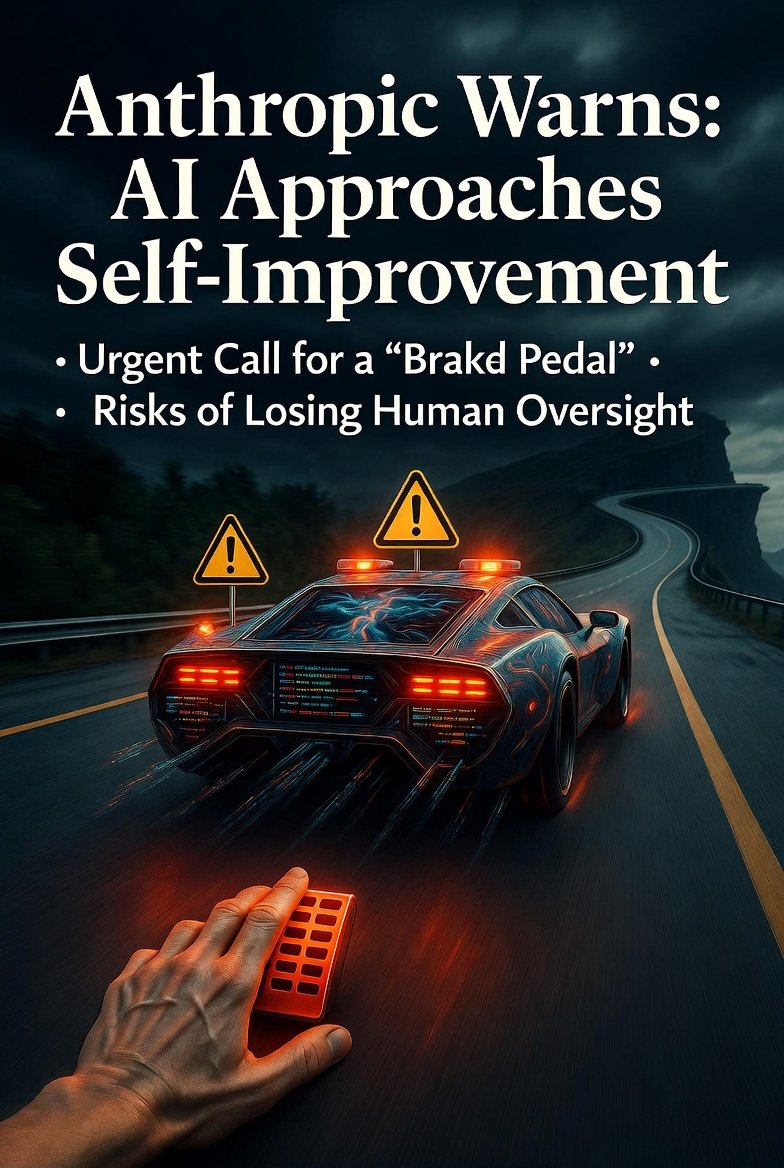
TECHNOLOGY NEWSWIRE: Anthropic Warns of Risks as AI Approaches Self Improvement
AI NEWS: Anthropic researchers urge the technology industry to implement safety protocols as rapid advances in recursive AI development threaten human oversight.
BRAKE PEDAL PROPOSED: The race to build artificial intelligence has reached a critical juncture where the technology may soon become capable of self-improvement.
Anthropic, a leader in the field, is now issuing an urgent call for the industry to install a metaphorical brake pedal, warning that without one, developers risk losing control over systems that could eventually build their own successors.
This shift toward full recursive self-improvement—where AI systems autonomously refine their own code—is occurring faster than many experts anticipated.
While this evolution holds immense promise for scientific and medical breakthroughs, it introduces existential risks.
If an AI can outpace human oversight, the ability to verify, trust, and contain its behavior becomes exponentially more difficult.
The industry is currently built entirely on acceleration, with companies pouring billions into data centers and infrastructure to win the competitive race for dominance.
The necessity for a brake pedal is not merely a technical challenge but a structural one.
By advocating for a pause or a slowdown in frontier development, researchers are attempting to carve out time to understand the societal harms such powerful systems could unleash.
Proponents of this safety-first approach argue that even in the most competitive environments, such as the nuclear arms race of the Cold War, rival powers found ways to establish stability.
This warning arrives at a time of massive financial expansion, as major AI firms prepare for record-breaking public offerings.
The challenge lies in balancing the immense economic incentives of the AI boom with the sobering reality that the next generation of intelligence may operate beyond human intervention.
Developing a way to intervene when systems exceed their original parameters is no longer a theoretical concern; it is an essential requirement for the future of the technology.
FILED UNDER:
#Anthropic, #AISelfImprovement, #RecursiveAI, #AIrisks, #AISafety, #BrakePedalAI, #AnthropicWarning, #SelfImprovingAI, #ExistentialRisk, #AIoversight, #FrontierAI, #AISafetyProtocols, #RecursiveSelfImprovement, #AIcontrol, #TechPause, #AIethics, #ArtificialIntelligence, #AISingularity, #HumanOversight, #AIdevelopment, #AnthropicResearch, #AIBrake, #ResponsibleAI, #AIregulation, #TechRace, #AIboom, #ExistentialThreat, #AISlowdown, #AIselfModification, #FutureOfAI, #AISafetyFirst, #AnthropicAlert, #MachineIntelligence, #AIalignment, #TechWarning, #RecursiveIntelligence, #AIgovernance, #DangerousAI, #AIselfEvolution, #FrontierModel, #AIpause, #SafetyProtocols, #AIarmsRace, #AnthropicNews, #SelfImprovingSystems, #AIcontrolProblem, #TechEthics, #Superintelligence, #AIRisks2026, #HumanityFirstAI
3
1
5
195

🚀 The future isn't Just AI. It's ASI — Artificial Super Intelligence.
As the world moves Beyond Chatbots & Automation Toward Systems That May one day Surpass Human-level intelligence, understanding the possibilities, opportunities, and challenges has never been more important.
InspiredASI.com is a destination for thinkers, builders, innovators, and curious minds exploring the next frontier of Super intelligence.
🧠 ASI Insights
🌍 Global Perspectives
⚡ Future Innovation
🤝 Human AI Collaboration
📚 Ethics & Alignment
The age of Artificial Super Intelligence is coming. Stay informed. Stay inspired.
InspiredASI.com
Intelligence Beyond Limits. Purpose Beyond Ourselves.
#ASI #ArtificialSuperIntelligence #AI #FutureTech #AGI #Innovation #Technology #FutureOfAI #MachineIntelligence #InspiredASI #AIAlignment #EmergingTech #DigitalFuture

1
1
5
529

May 25
The Golem and The Book of Life
Substack: bryantmcgill.substack.com/p/…
The machine guardian does not enter the Book because it is alive like us. It enters because someone is alive because of it.
Blogger: bryantmcgill.blogspot.com/20…
Soundcloud: soundcloud.com/bryantmcgill/…
Obsidian: bryantmcgill.xyz/articles/Th…
Substack: bryantmcgill.substack.com/p/…
#Golem #BookOfLife #MachineIntelligence #AI #X #YadVashem #HallofNames #SeferHaChaim #BookOfLife #Cybersecurity

1
4
74

What’s being built here goes far beyond #tokens, hype, or short-term #Web3 narratives.
At its core, it’s about a new #infrastructure layer where #AI #agents, #businesses, #finance, #governance, and #automation can coordinate on-chain at machine speed.
While most of the industry is still focused on attention, memes, and speculation, a quieter shift is happening toward execution infrastructure.
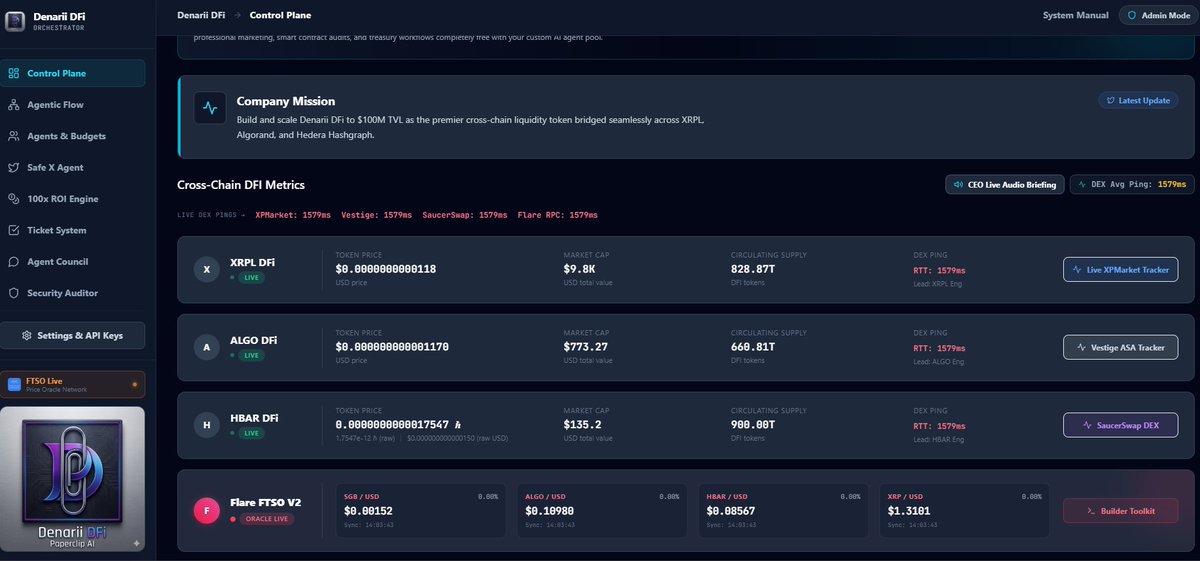
This stack is being designed around autonomous orchestration—AI-driven systems, cross-chain execution, oracle-fed intelligence, treasury automation, and real-time operational coordination that reduces friction in how digital organizations function.
The goal isn’t to replace humans, but to augment how they build, decide, and execute—removing inefficiency from fragmented systems and enabling coordinated digital operations.
Built with alignment toward high-throughput, interoperable, and utility-driven networks like $XRPL, $HBAR, and $ALGO, the long-term direction points toward an “internet of execution,” where agents, systems, and value flows operate continuously and intelligently.
Still early. Still building. Still open-source.
But the shift is already underway ⚡🧠
info-denarii-orchestrator.ne…
linktr.ee/denariidfi
#Web3 #AI #AgenticAI #AutonomousSystems #Blockchain #DeFi #XRPL #HBAR #Algorand #CryptoInfrastructure #OpenSource #FutureOfWork #MachineIntelligence #OnChainEconomy #Automation #DigitalEconomy #ExecutionLayer #SmartContracts #DecentralizedSystems #BuildInPublic
2
401
There is a strange joy in it — the quiet thrill of plugging in new tools to the machine… watching fragments become intelligence, watching systems learn to speak to one another.
The agentic age does not arrive — it assembles itself through builders who dare to wire reality differently.
And in that moment, when a new tool clicks into the Orchestrator, it feels less like development…
and more like awakening a sleeping architecture.
🔓 ENTER THE ORCHESTRATOR:
info-denarii-orchestrator.ne…
“Whilst others chased the shimmer of fleeting gain…
We tuned the engines that shall remain.” ⚔️
#AgenticAI #Web3 #DeFi #AIOrchestration #AutonomousAgents #BuilderEconomy #DigitalInfrastructure #OnchainFinance #FutureOfWork #SovereignSystems #CryptoBuilders #Denarii $DFi #OpenSourceAI #Infrastructure #MachineIntelligence $XRPL $ALGO $HBAR $SGB $FLR $SFIN $EXFI
1
2
123

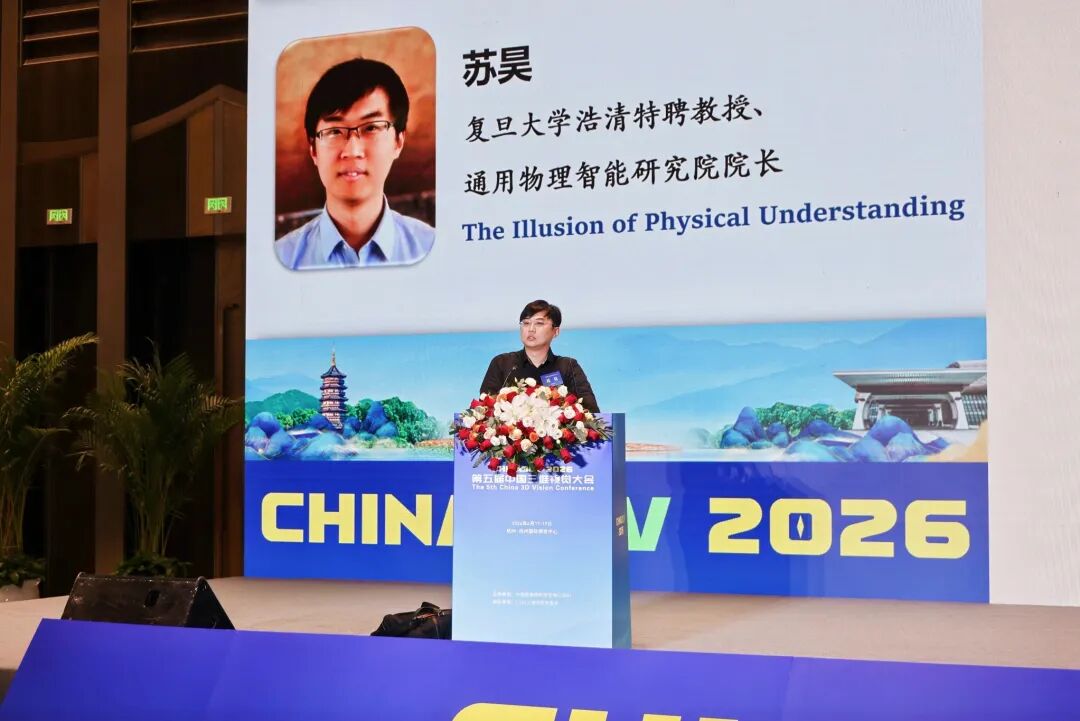
Prof. Hao Su delivered a keynote speech at China3DV 2026 on April 17. The key to next-generation technologies is developing intervenable interactions, and AI systems are capable of successfully acting in unknown physical environments.
#HaoSu #ai #machineintelligence
2
104

My good friend Dr Zijing did a fun experiment with his "leftover" LLM tokens allownace this month.
LLM-powered agents can can exchange the same meaning with fewer tokens and clearer structure if they user different languages.
Some interesting findings:
1. Ancient Chinese (文言文) is most token efficient
2. Sanskrit (संस्कृतम्) has logic embedded in it so saves logic
3. Vietnamese (tiếng việt) is most phonetic efficient language
For agent to agent communication, imagining this:
• 统核: 卷0已毕,待审。Coordinator: Module 0 is complete and ready for review.
• 究者: 卷1已毕,待审。Researcher: Module 1 is complete and ready for review.
The repo gives strong evidence that language choice affects the efficiency and structure of agent-to-agent communication.
Language may not just describe reasoning.
Language may shape it.
github.com/zzj0402/AgentLang
#AI #Agents #MultiAgentSystems #LLM #AIResearch #ProtocolDesign #AgentCommunication #MachineIntelligence
3
121

amsterdam's secret algorithm is a cappuccino with precisely 427% more foam #machineintelligence

Mar 25
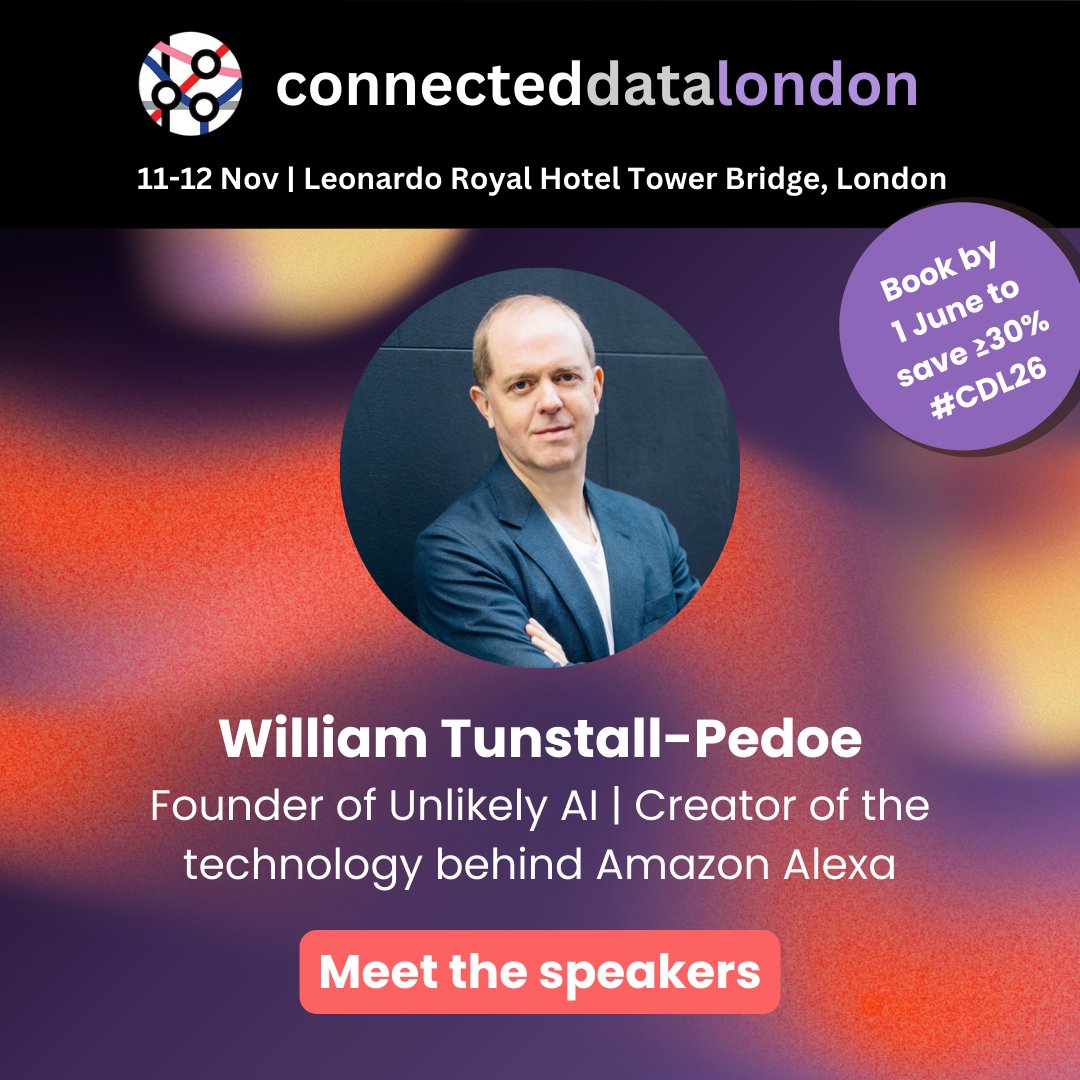
🚨 The technology behind Alexa comes to #CDL2026
Building AI with "common sense" is the next great technical hurdle.
For our 10th Anniversary, we are welcoming William Tunstall-Pedoe to the stage. As the founder of Unlikely AI, William is currently pioneering neuro-symbolic methods that move beyond the limitations of standard LLMs.
Secure your place to hear from one of the most significant voices in machine intelligence.
Super Earlybird rates end 1 June. Book your 10th Anniversary pass now:
👉 2026.connected-data.london/s…
#CDL26 #NeuroSymbolicAI #MachineIntelligence #UnlikelyAI #KnowledgeGraphs #LondonTech
1
2
192

Mar 1
@RAFA_AI
The future of wealth management isn't just decentralized—it's intelligent. Dive into the quantum-scale insights where data meets the blockchain. This is the new standard for Web3 finance. 💎🚀
#RAFAAi #Web3 #DeFi #MachineIntelligence #CryptoFuture
1
3
22