
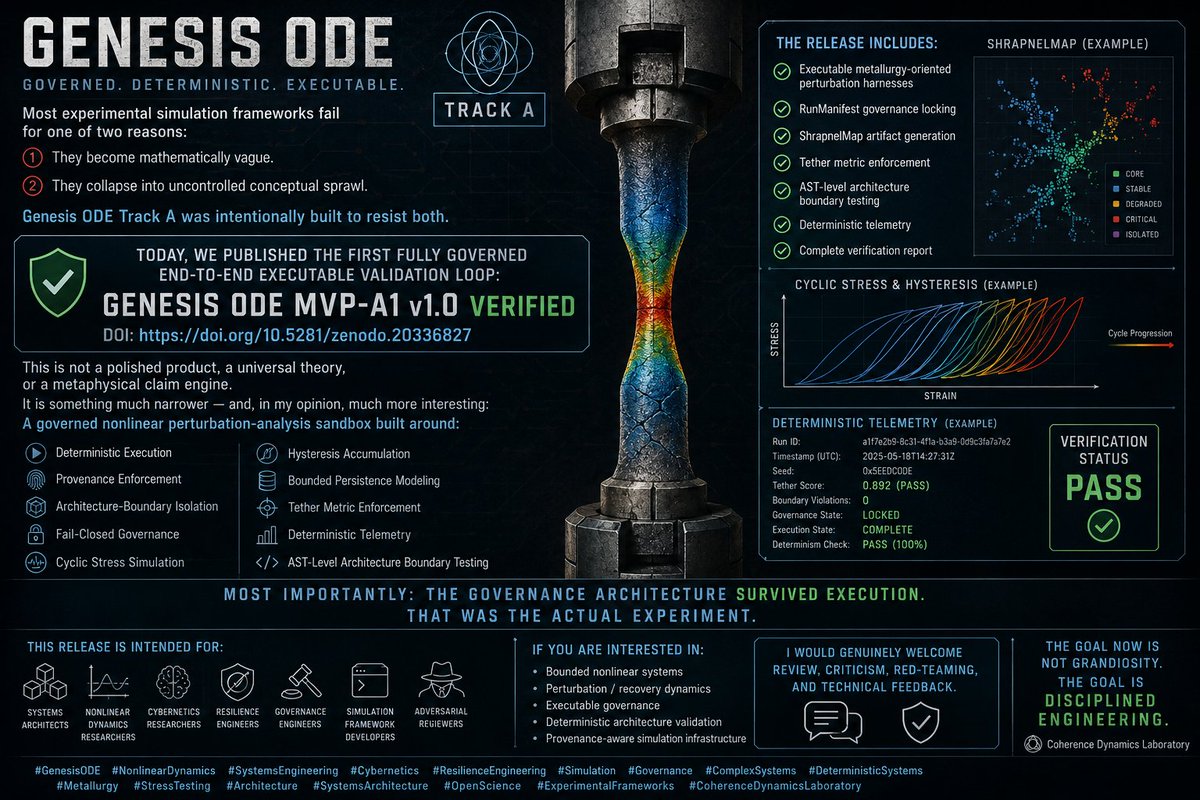
Most experimental simulation frameworks encounter challenges due to either mathematical vagueness or uncontrolled conceptual sprawl. Genesis ODE Track A has been specifically designed to address these issues.
Today, we are excited to announce the publication of the first fully governed end-to-end executable validation loop: Genesis ODE MVP-A1 v1.0 VERIFIED.
You can access it here: DOI: doi.org/10.5281/zenodo.20336….
This release is not a polished product, a universal theory, or a metaphysical claim engine. Instead, it is a focused governed nonlinear perturbation-analysis sandbox built around several key features:
- Deterministic execution
- Provenance enforcement
- Architecture-boundary isolation
- Fail-closed governance
- Cyclic stress simulation
- Hysteresis accumulation
- Bounded persistence modeling
Included in this release are:
- Executable metallurgy-oriented perturbation harnesses
- RunManifest governance locking
- ShrapnelMap artifact generation
- Tether metric enforcement
- AST-level architecture boundary testing
- Deterministic telemetry
- A complete verification report
Importantly, the governance architecture has survived execution, which was the primary objective of the experiment.
This release is aimed at systems architects, nonlinear dynamics researchers, cybernetics researchers, resilience engineers, governance engineers, simulation-framework developers, and adversarial reviewers.
If you are interested in bounded nonlinear systems, perturbation/recovery dynamics, executable governance, deterministic architecture validation, or provenance-aware simulation infrastructure, I welcome your review, criticism, red-teaming, and technical feedback. The focus now is on disciplined engineering.
#GenesisODE #NonlinearDynamics #SystemsEngineering #Cybernetics #ResilienceEngineering #Simulation #Governance #ComplexSystems #DeterministicSystems #Metallurgy #StressTesting #Architecture #SystemsArchitecture #OpenScience #ExperimentalFrameworks #CoherenceDynamicsLaboratory
1
3
46

Apr 7
Too many blockchains infrastructure still depends on complex execution models, heavyweight consensus, or systems that are difficult to scale in a practical way. That creates friction for real-world adoption, especially when trust, auditability, and long-term reliability matter.
Orobit is a real alternative to that model!
We solved the infrastructure problem by building with deterministic execution at the core. Contracts are compiled into bytecode, anchored to Bitcoin, and replayed locally by nodes against Bitcoin-derived context. That means validation is based on replay and objective verification, not leader election, global voting, or unpredictable execution paths.
The result is infrastructure designed to be verifiable, scalable, and practical to run, with bounded execution that keeps validation predictable and safe.
That is the kind of invisible architecture worth building.
#Orobit #XRB #Bitcoin #Infrastructure #Software #Blockchain #Web3 #DeterministicSystems
3
5
145

⚙️ What does deterministic logic mean on Jumbo?
It means the system behaves predictably — every time.
• Contracts execute identically across all nodes
• Modular layers don’t break state consistency
• Events are logged before execution
• Each workflow step is hash-verified
• No hidden paths. No skipped logic.
Why it matters:
Enterprises need infrastructure that behaves predictably — not probabilistically.
Learn more at jumbochain.org
#DeterministicSystems #VerifiedOps #JumboBlockchain
5
17
73

Feb 22
Embedding Non-Deterministic Compute into Deterministic Systems 🧠⛓️
Humans really do love taking two completely opposite personalities and expecting them to share a house. 😌
AI is the free-spirited, probabilistic one. Blockchain is the ultra-organized, rule-everything type. And somehow we decided they should just… get along. 🏠💥
Okay but honestly? Once you see how Ritual makes it work, it’s kind of genius. Let’s go. 👇
So what’s actually the problem? 🤔
AI thinks in probabilities. 🤖💭
Ask it the same question twice and the answer might be slightly different each time. That’s not a bug. That’s literally how it works.
Blockchain needs exact same answers. Every. Single. Time. ⛓️🔒
Every node on the network has to see identical results or the whole consensus breaks down.
So if you just run AI directly on-chain? 😬
Results don’t match across nodes. Consensus collapses. Everything on fire. 🔥💀
That’s the tension. Real, messy, and not easy to solve.
How does Ritual actually fix this? 💡
Here’s the part that got me genuinely excited. 🤩
Ritual doesn’t try to make AI deterministic. That’s the wrong move entirely.
Instead it makes the output of AI verifiable and provable before it ever touches the chain. 🎯
Simple version:
🤖 AI thinks freely and does its thing
📜 A proof gets attached: “this result came from the real model, nothing was tampered with”
✅ Blockchain receives it safely and everyone agrees
AI keeps its freedom. Blockchain keeps its integrity. Nobody compromises. 🏆✨
Real example, super quick 💬🔥
A DAO lets AI make an investment decision:
∙🧮 AI analyzes data and recommends “proceed with investment”
∙📜 Ritual attaches proof that this analysis ran on the correct, designated model
∙⛓️ Blockchain accepts the instruction safely and executes
Clean. Trustless. No black box. No chaos. 🙌
One line summary 🎯
Ritual is the bridge that lets “uncertain AI” operate inside “systems that demand certainty” without breaking the chain’s security. 💡🚀
That’s it. That’s the whole thing. And honestly it might be one of the most important problems getting solved in Web3 right now. 👀🔥
💚 @ritualfnd @ritualnet @dunken9718 @Jez_Cryptoz
#Ritual #Web3 #AI #Blockchain #NonDeterministic #DeterministicSystems #OnchainAI #TEE #CryptoInfrastructure #Web3Infrastructure

2
86

Feb 20
Low-latency sistemlerin problemi genellikle performans değildir. Problem, aynı state üzerinde birden fazla thread’in eşzamanlı mutasyonuna izin veren tasarımdır.
Kıdemli Yazılım Mühendisi Ediz Najim tarafından yazılan bu yazı, bu karmaşayı kod seviyesinde yönetmeye çalışmak yerine mimari düzeyde ortadan kaldıran bir yaklaşımı ele alıyor.
Sharding ile sahiplik net biçimde ayrıştırılır; her sembol yalnızca kendi shard’ına aittir. Single-writer prensibi sayesinde her shard’da tek bir mutasyon noktası bulunur ve OrderBook hiçbir zaman birden fazla thread tarafından aynı anda değiştirilmez. Bounded queue gecikmeyi kontrol altında tutar, event-driven mimari ise yan etkileri çekirdek işlem akışından izole eder. Böylece her shard bağımsız bir zaman çizgisi gibi çalışır; komutlar sıralı ve deterministik şekilde işlenir, çıktılar yeniden üretilebilir hale gelir.
Performans paralelleşme ile ölçeklenir.
Doğruluk ise yapısal olarak garanti edilir.
Yazının tamamını okumak için Medium hesabımız: medium.com/softtechas
#Softtech #Medium #SystemArchitecture #LowLatency #DeterministicSystems

2
108

6 Mar 2024
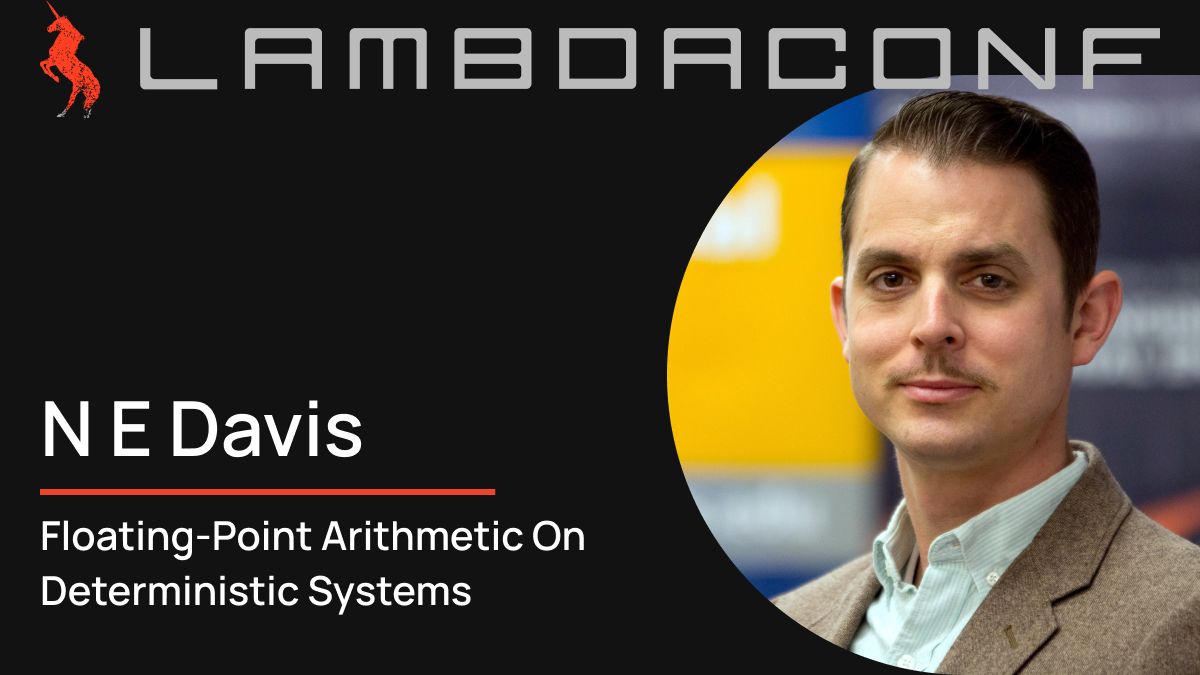
🔢 @sigilante presents 'Floating-Point Arithmetic on Deterministic Systems' at LambdaConf. Uncover the challenges and solutions for implementing IEEE 754 in reproducible computing environments.
Join us ➡️ buff.ly/3wbaG7U
#FloatingPoint #DeterministicSystems
7
17
5,065

4 Jun 2019
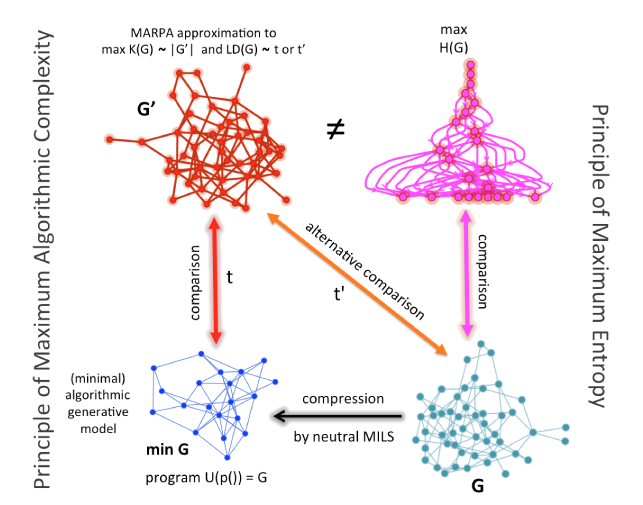
#mdpientropy The #Thermodynamics of Network Coding, and an Algorithmic Refinement of the Principle of #MaximumEntropy mdpi.com/1099-4300/21/6/560
#secondlawofthermodynamics; #reprogrammability; #algorithmiccomplexity; #deterministicsystems; #algorithmicrandomness
2
7