
Jun 12
A generic AI assistant can summarize a support ticket, but that is not enough for production IT work.
IT teams need structured support: ticket category, affected system, severity, missing information, likely issue type, recommended next action, confidence, and escalation recommendation. That structure matters because real IT work happens inside queues, S L As, audit trails, user communication, defect tracking, and security review.
The practical starting point is not automatic action. It is decision support. Let the AI summarize, classify, recommend, and draft. Let the human review and decide. That approach builds trust, captures feedback, and helps the organization learn which parts of the workflow are stable enough for deeper automation.
This is where domain-specific AI assistant capabilities become more useful than generic chatbots. The model may be the same, but the surrounding workflow, rules, structure, and ownership create the business value.
The production workflow behind this video was built using the same methodology I apply for enterprise clients — I identified a real production bottleneck, evaluated AI options, and built a .NET-integrated workflow using AI tools to deliver it faster, better, and at lower cost. The thinking that improved my own workflow is the same thinking I bring to yours.
Explore more practical, applied enterprise AI insights at AInDotNet.com.
#EnterpriseAI
#ITSupport
#AIAssistants
#DomainSpecificAI
#MicrosoftAI
#DotNet
#AzureOpenAI
#AIArchitecture
#ProductionAI
#AIGovernance
#WorkflowAutomation
#BusinessAutomation
#HelpDesk
#IncidentManagement
#KnowledgeBase
#SLA
#ITOperations
#Microsoft365
#PowerPlatform
#AInDotNet
1
1
21
Jun 9
Generic AI assistants can summarize, classify, extract, and draft. Those are useful building blocks, but they are not enough for real enterprise AI value.
The business value appears when AI capabilities are shaped around the department, workflow, rules, documents, permissions, and decisions involved. IT, HR, finance, and operations do not need the same kind of AI output. They have different vocabulary, risks, approval boundaries, authoritative documents, and success criteria.
That is why domain context matters. A Microsoft-centric organization should not think only in terms of one giant generic chatbot. A better architecture uses shared capability libraries for common functions and domain-specific libraries for specialized business work.
The blunt takeaway: generic AI gives generic value. Domain-specific AI creates business value.
The production workflow behind this video was built using the same methodology I apply for enterprise clients — I identified a real production bottleneck, evaluated AI options, and built a .NET-integrated workflow using AI tools to deliver it faster, better, and at lower cost. The thinking that improved my own workflow is the same thinking I bring to yours.
Explore more practical, applied enterprise AI insights at AInDotNet.com.
#EnterpriseAI
#AIAssistants
#DomainSpecificAI
#MicrosoftAI
#DotNet
#AzureOpenAI
#AIArchitecture
#ProductionAI
#AIGovernance
#BusinessAutomation
#WorkflowAutomation
#ITSupport
#HumanResources
#FinanceAutomation
#OperationsManagement
#PowerPlatform
#SQLServer
#SharePoint
#Microsoft365
#AInDotNet
1
1
16

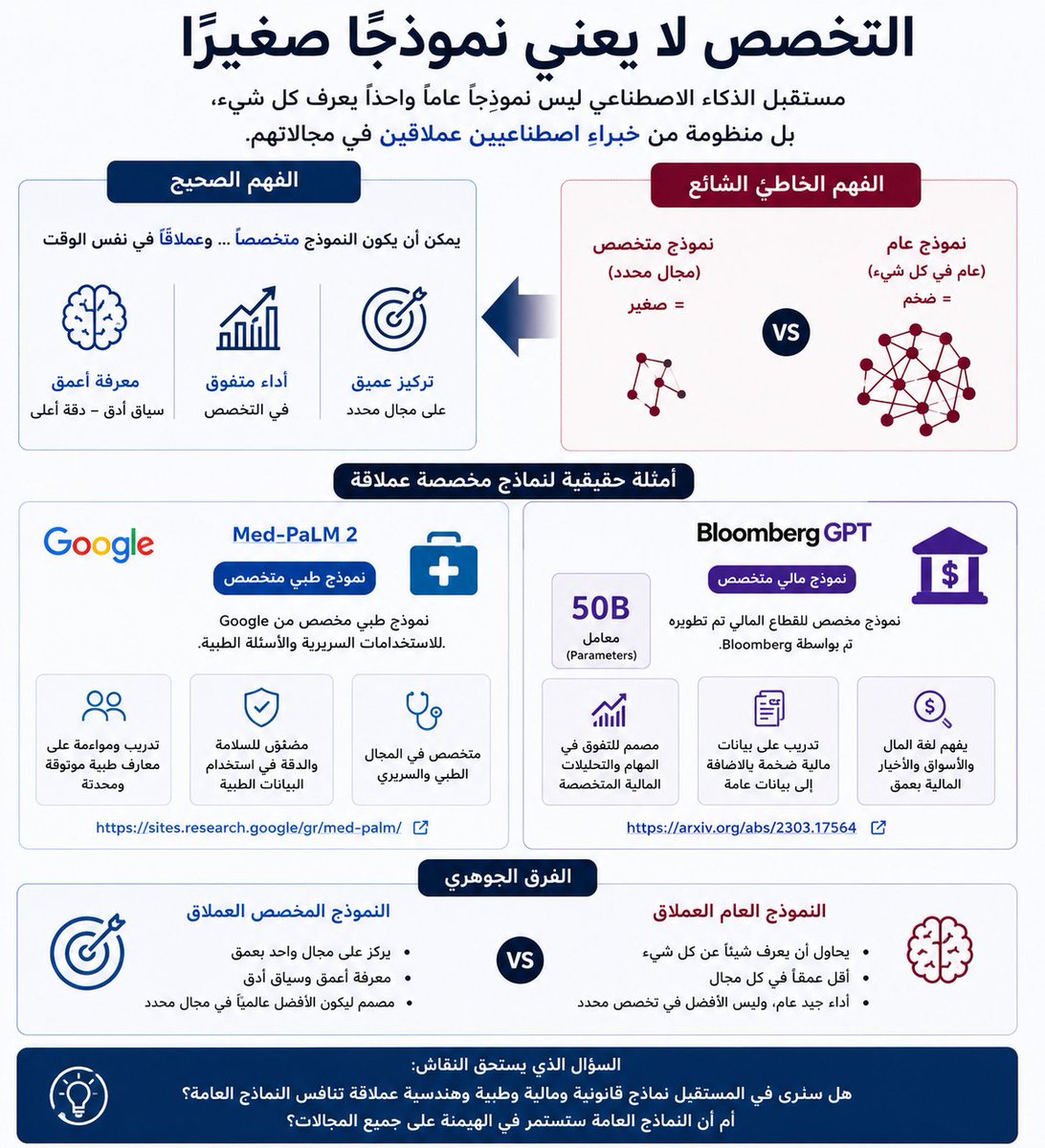
احد اكثر المفاهيم الخاطئة في الذكاء الاصطناعي هو ان النموذج المتخصص يجب ان يكون صغيرا
التخصص لا يعني الصغر بل قد يعني بناء نموذج عملاق بخبرة عميقة في مجال واحد
#AI #LLM #GenerativeAI #AgenticAI #ArtificialIntelligence #MachineLearning #EnterpriseAI #DomainSpecificAI
15

What happens when AI moves beyond “general purpose” and starts truly understanding the industries it serves? 🏭
In his latest @Forbes Technology Council article, our CTO and co-founder @SamMugel explores why domain-specific AI is becoming a strategic priority for enterprises. Organizations are realizing that generic AI models often fall short in environments where accuracy, compliance, context, and efficiency matter most⚡️
At @MultiverseCompu we believe the future of enterprise AI lies in smaller, more specialized, and more efficient models tailored to real operational needs while reducing compute costs and energy consumption.
As enterprises scale AI adoption, the winning strategy will not just be bigger models. It will be smarter, domain-aware AI that delivers measurable business value 📈
Read Sam’s full article here 👇
forbes.com/councils/forbeste…
#AI #EnterpriseAI #GenerativeAI #DomainSpecificAI #EfficientAI #CompactifAI #MultiverseComputing
1
5
187

Mar 4
BUSINESS
India adopting pragmatic approach to regulate AI: IAIRO
Click- dailypioneer.com/news/india-…
#IndiaAI #ArtificialIntelligence #AIRegulation #IAIRO #AmitSheth #SovereignAI #TrustedAI #AIInnovation #DomainSpecificAI #HealthcareAI #AgriTechAI #FinanceAI #GovTech #AIStartups #IndigenousAI #AIInfrastructure #FrugalAI #TaskSpecificModels #TechnologySovereignty #AIResearchIndia
3
36

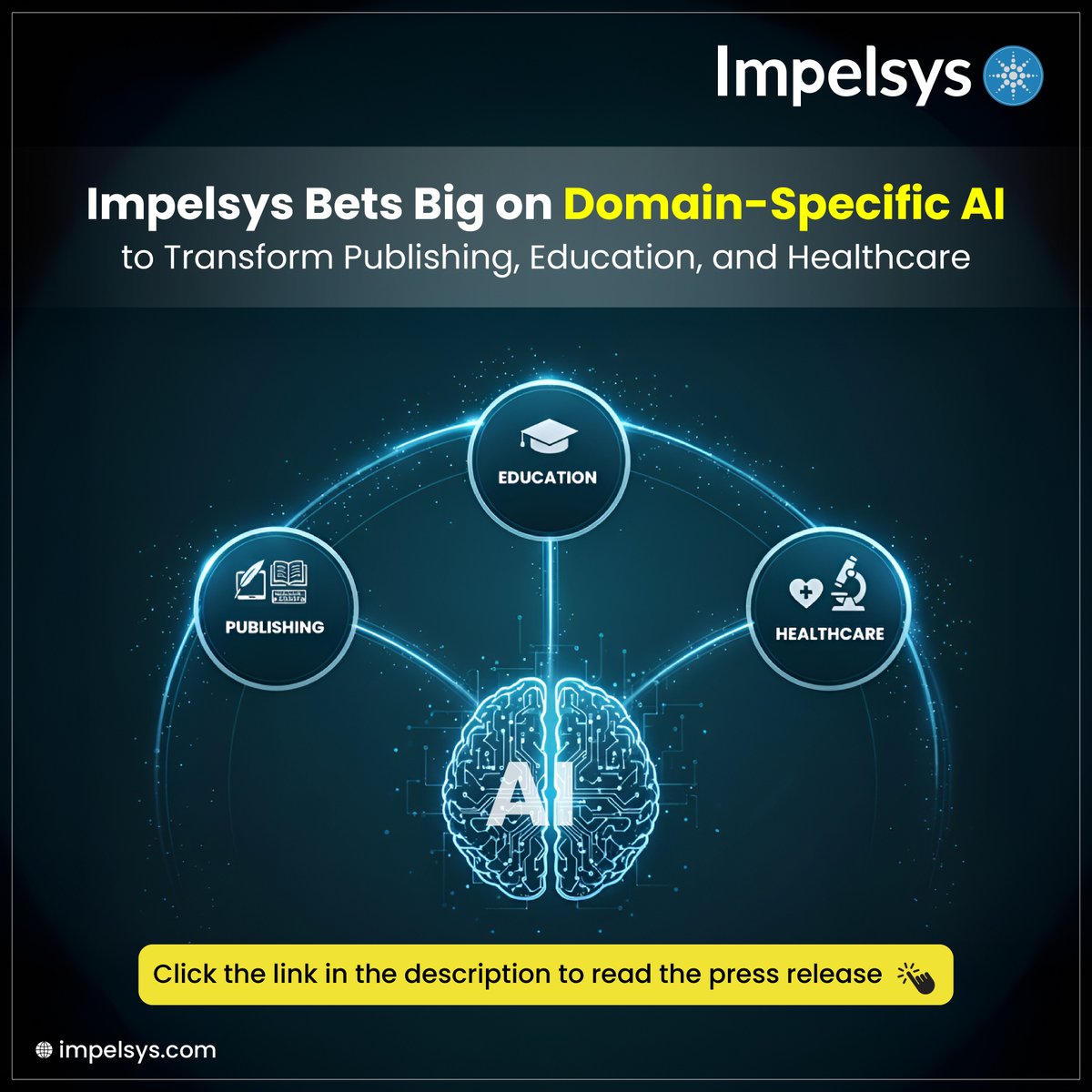
Impelsys is taking AI to the next level!
Our domain-specific language models are designed to understand the unique needs of publishing, education, and healthcare professionals.
🔗 Click here to read the full press release - impelsys.com/news/impelsys-b…
#Impelsys #AI #DomainSpecificAI
1
2
24

9 Dec 2024
Latest OpenAI Announcement Showcases How Reinforcement Fine-Tuning Makes Quick Work Of Turning Generative AI Into Domain-Specific Wizards 🧙♂️
buff.ly/3Vxlffk
#OpenAI #GenerativeAI #ReinforcementLearning #DomainSpecificAI #MachineLearning
@EvanKirstel @Shi4Tech @FrRonconi @Nicochan33 @jblefevre60 @mvollmer1 @fogle_shane @Fabriziobustama @enilev @TanyaSinha_

ALT A hyper-realistic depiction of a futuristic workspace featuring a sleek desk with a glowing holographic display. The hologram elegantly forms the text 'OpenAI' within its design, showcasing dynamic visuals of interconnected neural networks, charts, and industry-specific data streams. The setting is a minimalistic, high-tech office illuminated by soft blue and purple neon lights, embodying an atmosphere of technological innovation.
2
16
21
732

28 Jun 2024
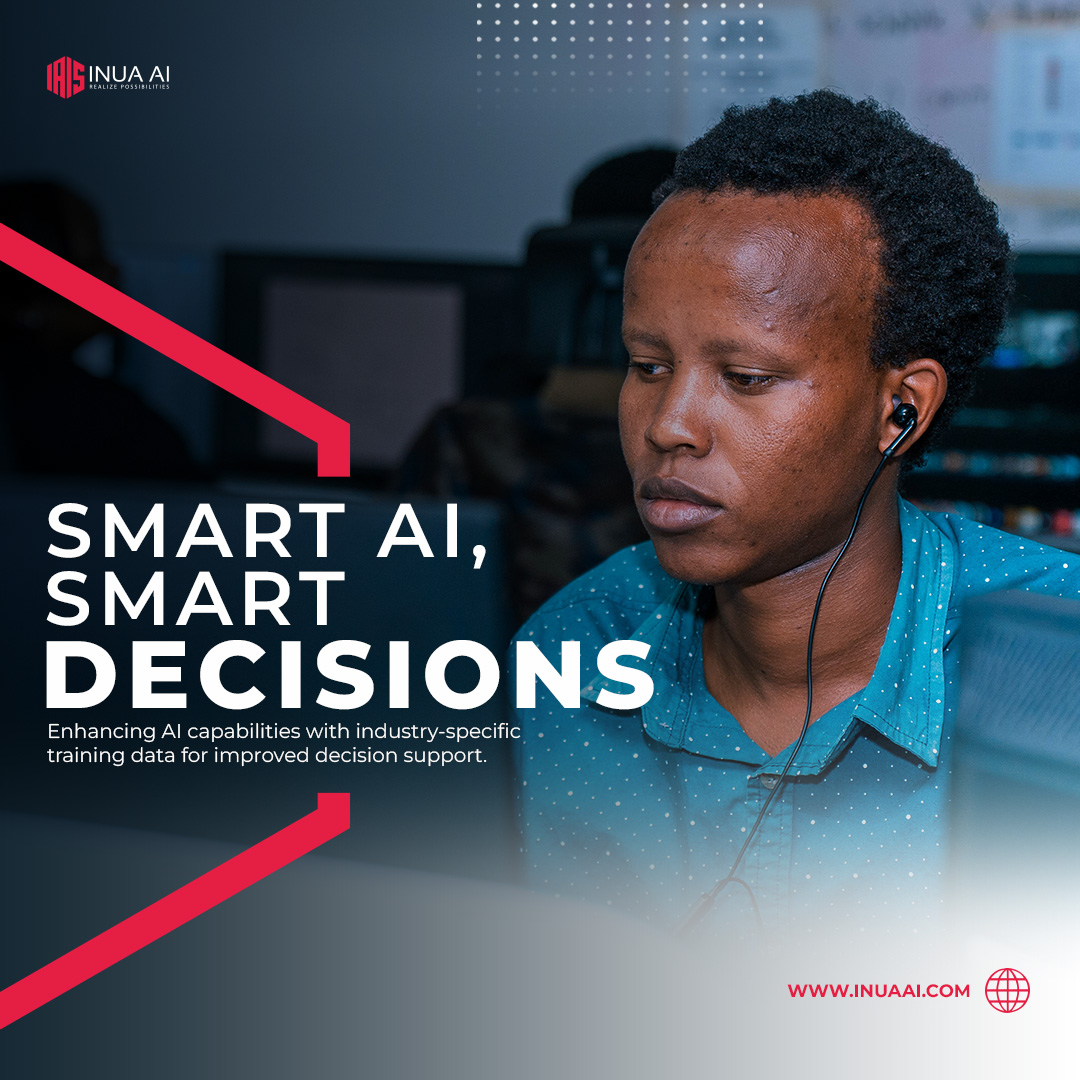
Domain knowledge AI = Unbeatable insights! 🧠💡 @INUA_AI's services infuse industry-specific expertise into training data, creating AI that truly understands your field. Elevate your specialized AI solutions now!
#DomainSpecificAI #IndustryExpertAI #SpecializedData #AIInnovation #RealizePossibilities #INUAAI
1
3
6
67

8 Nov 2023
Landmark Achievement: AI Independently Negotiates Contract Without Human Intervention
#AI #AInegotiation #artificialintelligence #autopilot #ChatGPT #contractanalysis #contractnegotiationautomation #domainspecificAI #HitachiVantara #KochIndustries
multiplatform.ai/landmark-ac…
ALT AI News
2
55