
🐬ETA Weekly🦀
🪶130 ZKDL6: The Pillars of AI Modeling, From Constraints to Formal Logic🌱
🫑Update in ZK🦕
🏸github.com/ETAAcademy/ETAAca…🥗
AI is more than just Large Language Models.
To truly master AI, you must understand the 3 architectural pillars that define how machines reason.
Here’s the breakdown of the "Intelligence Trinity":
🌕1. Variable-Based Models (CSPs) 🚌
Forget sequences of actions. Constraint Satisfaction Problems focus on the final configuration.
- Goal: Find a solution that satisfies all rules (Factors).
- Key Tools: Factor Graphs, AC-3, and Backtracking.
- Use Case: Scheduling, Sudoku, or Map Coloring.
🫐2. Probabilistic Graphical Models (PGMs) 🍀
Real-world data is noisy and uncertain. PGMs help AI navigate the "gray areas."
- Goal: Decompose complex distributions into local conditional rules.
- Key Tools: Bayesian Networks, HMMs, and Forward-Backward algorithms.
- Use Case: Sensor fusion, object tracking, and speech recognition.
🍖3. Formal Logic 🚵♂️
The search for unambiguous truth through structural proof rather than numeric optimization.
- Goal: Derive conclusions using objects, predicates, and quantifiers.
- Key Tools: Propositional Logic, First-Order Logic (FOL), and Resolution.
- Use Case: Mathematical proving and complex rule-based expert systems.
The transition from rigid constraints to probabilistic reasoning to logic is what defines modern AI.
Which pillar are you currently diving into?
#AI #MachineLearning #DataScience #ConstraintSatisfactionProblems #FactorGraphs #BacktrackingSearch #ArcConsistency #BeamSearch #LocalSearch #GibbsSampling #VariableElimination #BayesianNetworks #ProbabilisticInference #HiddenMarkovModels #ForwardBackwardAlgorithm #ParticleFiltering #EMAlgorithm #MaximumLikelihoodEstimation #PropositionalLogic #FirstOrderLogic #ResolutionRule #Unification #Skolemization
43

Feb 3
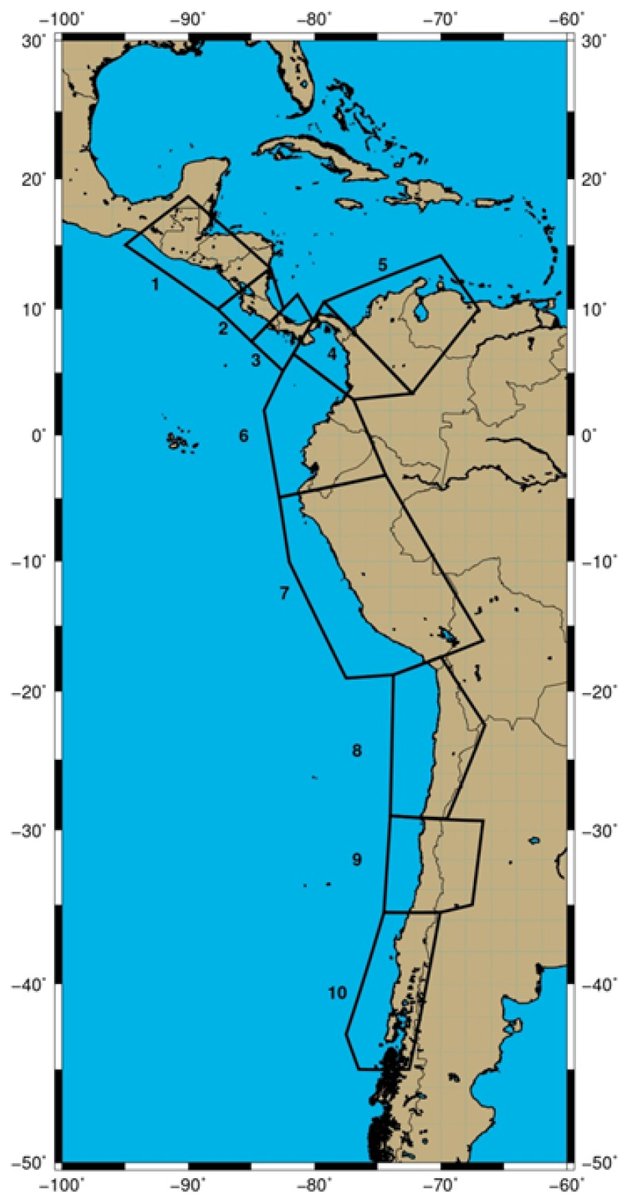
🌎 This study on #earthquake seismicity in Central & South America analyzed 10 #SeismicZones.
🔍 Probabilities of earthquake occurrence evaluated using #HiddenMarkovModel #EMalgorithm.
📖 Read more: brnw.ch/21wZCET
32

3 Nov 2025
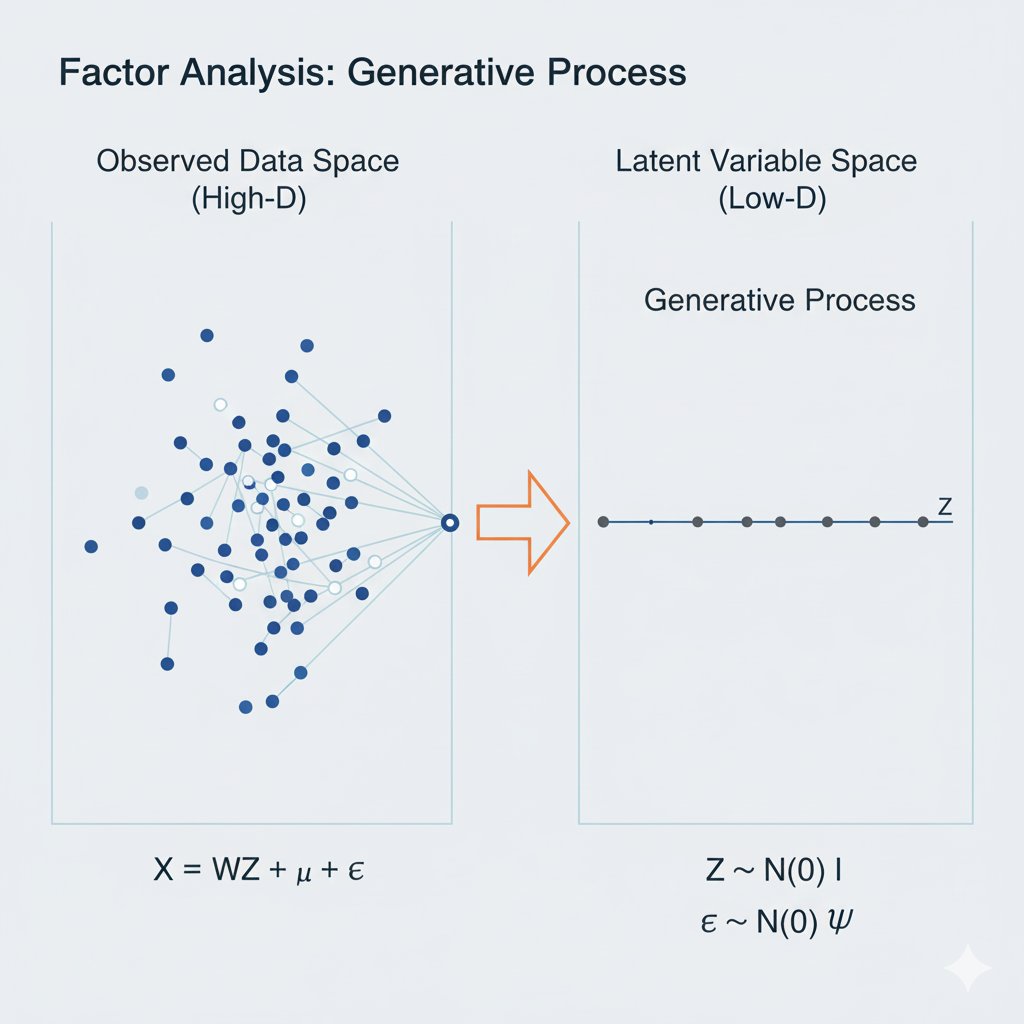
Day 29: Explored Expectation-Maximization (EM) for Factor Analysis (FA). EM's E-step computes a lower bound, M-step maximizes it. FA uses low-dim latent vars for high-dim data, crucial when samples < dimensions. Solves singular covariance issues. #MachineLearning #EMAlgorithm
1
13
28 Oct 2025
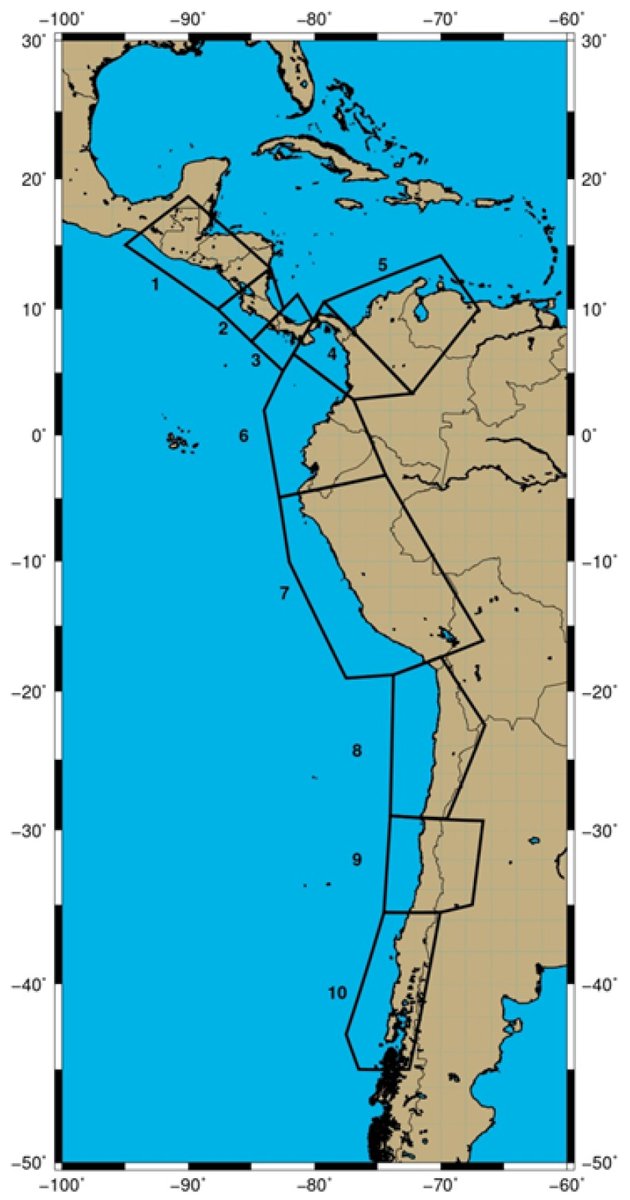
🌎 This study on #earthquake seismicity in Central & South America analyzed 10 #SeismicZones.
🔍 Probabilities of earthquake occurrence evaluated using #HiddenMarkovModel #EMalgorithm.
📖 Read more: brnw.ch/21wX090
31

9 Aug 2025
Nanodesigner: Resolving the Complex-CDR Interdependency with Iterative Refinement @jcheminf
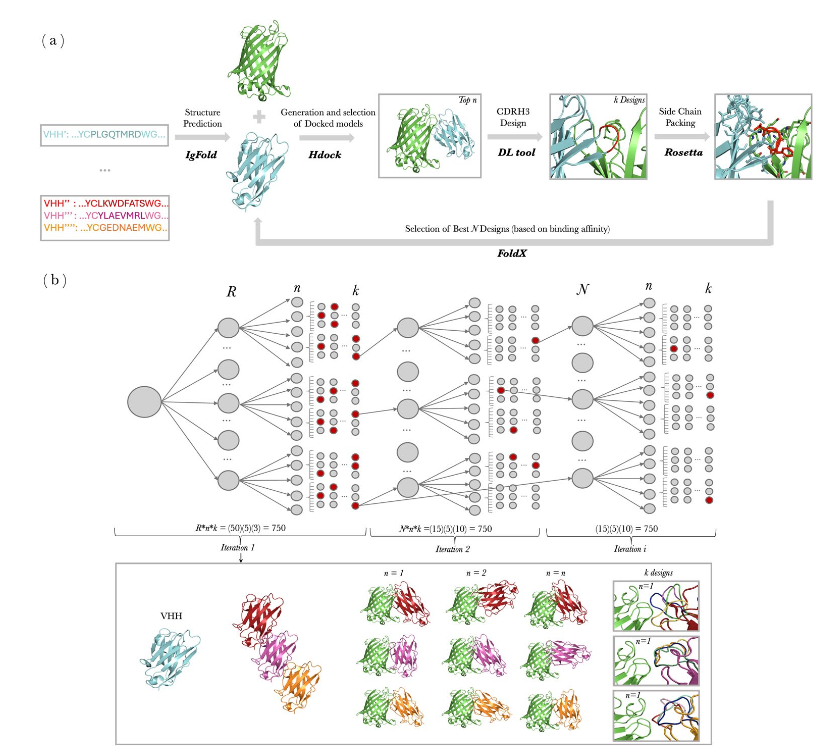
1. A novel tool, NanoDesigner, has been introduced for the design and optimization of nanobodies using generative AI. This method tackles the complex interdependency between the structure of the complementarity-determining regions (CDRs) and the docking of nanobodies to antigens through an iterative refinement process based on the expectation maximization (EM) algorithm.
2. NanoDesigner integrates multiple key stages—structure prediction, docking, CDR generation, and side-chain packing—into a cohesive iterative framework. This approach significantly enhances the success rate of de novo nanobody designs by continuously refining docking and CDR predictions, effectively doubling the success rate compared to traditional linear workflows.
3. The study demonstrates that NanoDesigner outperforms existing methods in terms of binding affinity and structural accuracy. It achieves higher success rates in both optimization and de novo design scenarios, with notable improvements in binding energy and reduced steric clashes. This is attributed to the algorithm’s ability to explore a wider range of CDRH3 conformations and sequences.
4. NanoDesigner is designed to handle the unique challenges of nanobody design, which differ from conventional antibodies. By focusing on the highly variable CDRH3 region, the tool can efficiently explore the most diverse and functionally critical part of the paratope. This targeted approach leads to more effective binding and higher overall design quality.
5. The modular architecture of NanoDesigner allows for seamless integration of emerging techniques in structure prediction, docking, and CDR generation. This flexibility ensures that the tool can be continuously improved as new methods become available, while maintaining reproducibility and comparability with state-of-the-art approaches.
6. As a proof of concept, NanoDesigner was applied to three distinct antigens—mNeonGreen, KRAS, and HER2—with significant results. The tool showed consistent improvements in binding affinity, especially when optimizing the CDRH3 region alone, highlighting its potential for both optimization of existing nanobodies and de novo design for novel antigens.
7. The code for NanoDesigner is freely available, allowing researchers to reproduce and build upon this innovative work. This open-access approach promotes further advancements in nanobody design and optimization, potentially leading to new therapeutic applications.
💻Code: github.com/bio-ontology-rese…
📜Paper: jcheminf.biomedcentral.com/a…
#NanoDesigner #GenerativeAI #NanobodyDesign #AntibodyOptimization #ComputationalBiology #IterativeRefinement #EMAlgorithm
10
58
4,713

4 Aug 2025
Expectation-maximization? It’s a statistical optimization technique used in unsupervised learning. Pure math magic. #EMalgorithm #UnsupervisedAI @OpenAI
1

28 Jan 2025
📊 Dive into the EM algorithm! Today, we apply it to cluster heroes from "Honor of Kings" using Gaussian Mixture Models (GMM). 🏰💥
Ready to explore this? 👇
#EMAlgorithm #GMM #DataScience #HonorOfKings #Clustering #AI
open.substack.com/pub/python…
38

24 Oct 2024
🇺🇸 FRB | Study on Large Dynamic Factor Models Estimation through EM Algorithm
• Research by Matteo Barigozzi and Matteo Luciani focuses on estimating large Dynamic Factor models using the Expectation Maximization (EM) algorithm and the Kalman smoother.
• Findings show that the estimated loadings and factors are consistent, asymptotically normal, and equivalent to their Quasi Maximum Likelihood and Weighted Least Squares estimates, respectively, as sample size and cross-sectional dimension increase.
• Estimated loadings are as efficient as Principal Components analysis, while estimated factors are more efficient in cases of sparse idiosyncratic covariance.
• The study highlights the importance of efficient estimation techniques for large Dynamic Factor models in economic research.
• These results contribute to the ongoing discussions and critical comments in academia and economic policy community.
#DynamicFactorModels #EMAlgorithm #KalmanSmoother #QuasiMaximumLikelihood #EconomicResearch
federalreserve.gov/econres/f…
86

3 Aug 2024
El Modelo de Máximos de Expectación (EM) es un enfoque iterativo para estimar parámetros en modelos estadísticos con datos incompletos o latentes. #EMAlgorithm #ML
10
2 Aug 2024
El Algoritmo de Expectación-Maximización (EM) es un enfoque iterativo para estimar parámetros en modelos estadísticos con datos incompletos o latentes. #EMAlgorithm #MachineLearning
44

16 Apr 2024
Detailed Mathematical Derivation of EM algorithm by Yuki Shizuya
#emalgorithm #statistics #machinelearning #clusteringalgorithm #python
medium.com/intuition/detaile…
41

10 Mar 2024
EM algorithm Gaussian Mixture Models = a dynamic duo in machine learning! Uncover the magic of optimizing model parameters and enhancing clustering accuracy. 🌟🔍 #EMAlgorithm #GMM #30daysofMachineLearning
1
210

6 Mar 2024
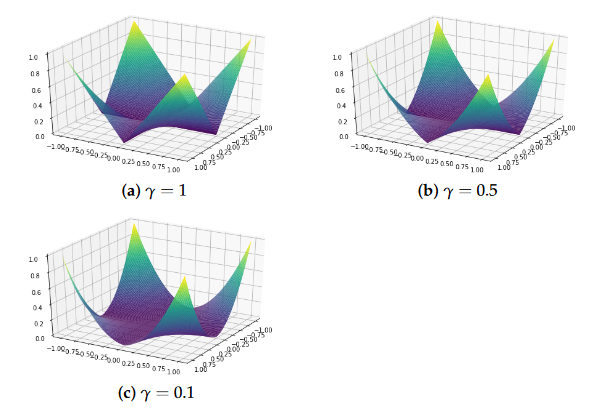
Read #FeaturePaper: "Estimation of a Simple Structure in a Multidimensional IRT Model Using Structure Regularization" by Ryosuke Shimmura and Joe Suzuki.
See more details at: mdpi.com/1099-4300/26/1/44
#prenet #penalty
#lasso
#simplestructure
#stochastic #EMalgorithm
115

17 Feb 2024
The basic concept of the EM algorithm involves iteratively applying two steps: the Expectation (E) step and the Maximization (M) step.
Learn more: i.mtr.cool/jfcymygusw
#StatisticalEM #ParameterEstimation #DataInference #EMAlgorithm #StatisticalModels
83

19 Jan 2024
"Check out our latest blog post on Parametric Constraints for Bayesian Knowledge Tracing! Learn about the derived constraints and novel algorithm for estimating BKT parameters from first principles: bit.ly/3tVxt6T #BKT #KnowledgeTracing #EMAlgorithm"
21

15 Dec 2023
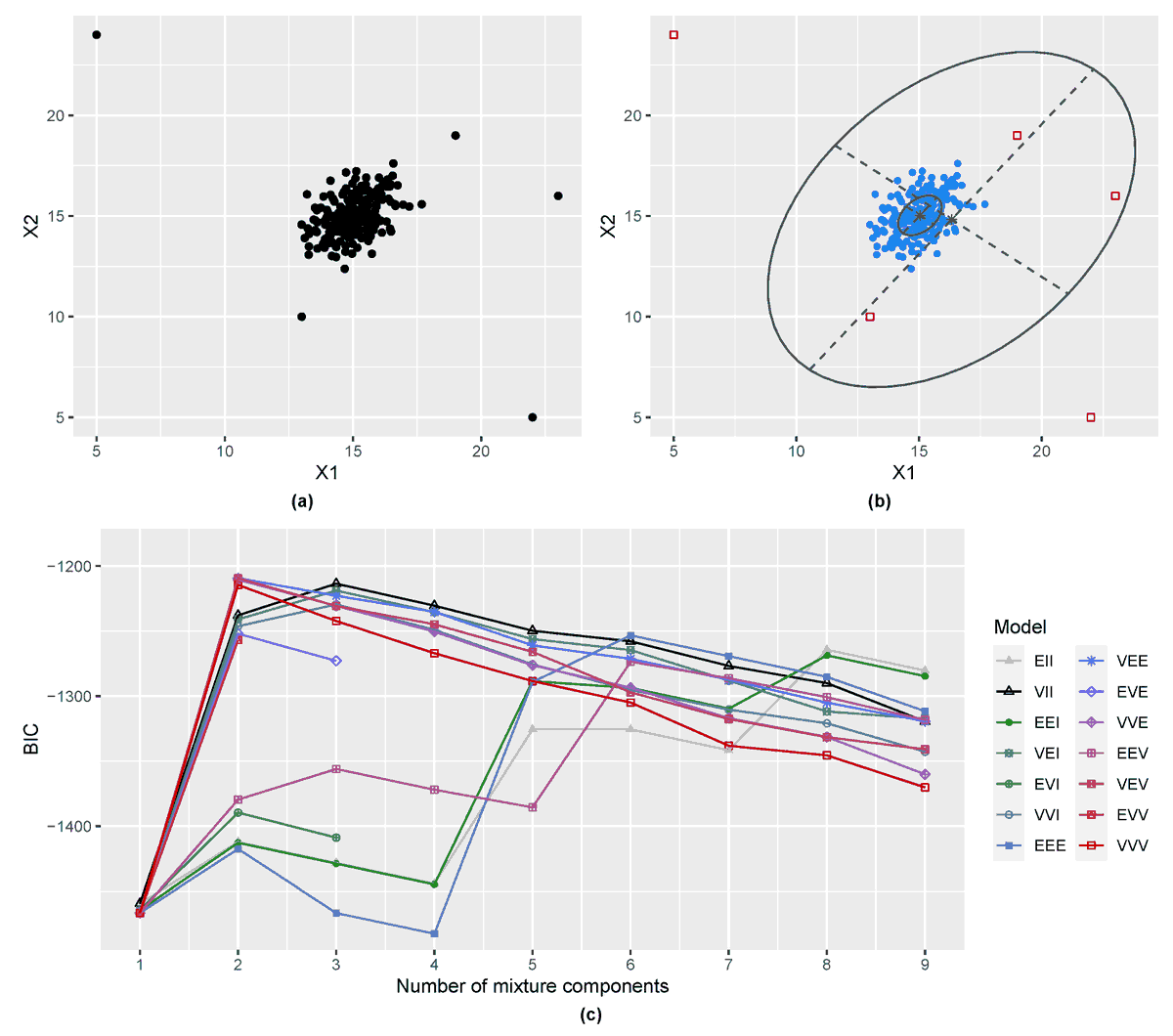
Welcome to read the article "Entropy-Based Anomaly Detection for Gaussian Mixture Modeling" which is written by Luca Scrucca
Views: 1588
Citation: 2
Article link: mdpi.com/1999-4893/16/4/195
@ComSciMath_Mdpi @UniperugiaNews
#clusteranalysis #Emalgorithm #AnomalyDetection
1
38

19 Jul 2023
🔍 Want to estimate discrete distributions while protecting user privacy? Look no further! 🛡️ Introducing Iterative Bayesian Update (IBU) in multi-freq-ldpy, powered by Expectation Maximization (EM) algorithm. Try it now! #privacy #research #EMalgorithm #estimation
1
1
29

13 Jul 2023
📣 Find our recently published article here!
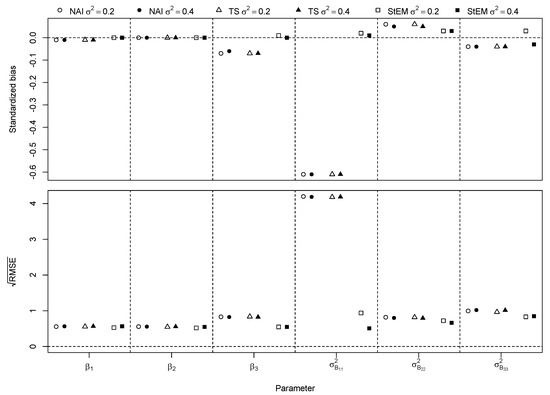
#Stochastic #EMAlgorithm for Joint Model of #LogisticRegression and Mechanistic #Nonlinear Model in #Longitudinal Studies
mdpi.com/2227-7390/11/10/231…
MSC: 62P10
@MDPIOpenAccess @ComSciMath_Mdpi
86

2 Jun 2023
Expectation-Maximization (EM) algorithm is often used in mixture models for clustering. It estimates the parameters of underlying probability distributions to assign data points to different clusters based on their probability distributions. #EMAlgorithm #ClusterAnalysis
1
13