
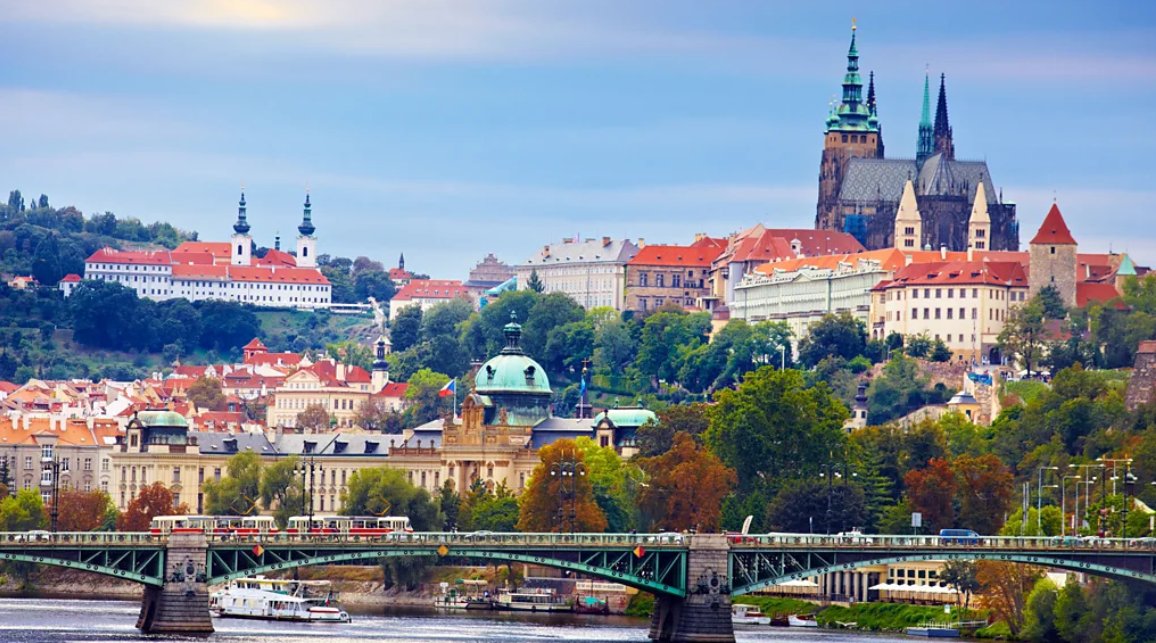
Advance your quantitative modeling skills this summer in Prague.
The EcoMod, Global Economic Modeling Network, will bring together economists, researchers, and policy professionals for an intensive week of applied training in economic modeling and data science.
Participants will engage in practical, hands-on courses focused on quantitative methods, economic modeling, and policy-oriented analytical tools.
🔗 Learn more and register: ecomod.net/node/11930
#Economics #DataScience #EconomicModeling #Research #Policy #EcoMod
1
3
9
1,126

Feb 8
𝗥𝗲𝗺𝗲𝗺𝗯𝗲𝗿 𝘀𝗽𝗲𝗻𝗱𝗶𝗻𝗴 𝘄𝗲𝗲𝗸𝘀 𝗳𝗶𝗴𝘂𝗿𝗶𝗻𝗴 𝗼𝘂𝘁 𝗵𝗼𝘄 𝘁𝗼 𝘀𝘁𝗿𝘂𝗰𝘁𝘂𝗿𝗲 𝘆𝗼𝘂𝗿 𝗳𝗶𝗿𝘀𝘁 𝗠𝗮𝗿𝗸𝗼𝘃 𝗺𝗼𝗱𝗲𝗹?
That struggle doesn't have to exist anymore!
I reached out to Raymond Henderson, who along with Chris Sampson, Xavier G.L.V. Pouwels, Stephanie Harvard, Ron Handels, Talitha Feenstra, Ramesh Bhandari, Aryana Sepassi, and Renée Arnold, published an excellent systematic review identifying 182 open-source health economic models.
With Raymond's support, I've turned their research into a searchable database with 200 models you can download and learn from.
It's great to come across researchers who share the same goal: make health economic modelling more transparent and accessible. I remember how hard it was to learn this stuff, and neither of us want others to face the same barriers.
Filter by 🔍
🔹 Disease area (oncology, infectious disease, cardiovascular, etc.)
🔹 Model type (Markov, partitioned survival, decision trees, DES)
🔹 Software (Excel, R, Python, and more)
Download a model, open it up, and see exactly how it's structured.
The database is free on my Discord community server, "𝗧𝗵𝗲 𝗣𝗵𝗮𝗿𝗺𝗮 𝗣𝗲𝗿𝘀𝗽𝗲𝗰𝘁𝗶𝘃𝗲".
I've also created a video walking through the entire collection.
What modelling resource do you wish had existed when you were starting out?
#OpenSource #HEOR #HealthEconomics #CostEffectiveness #HealthTechnologyAssessment #EconomicModeling #ISPOR
♻️ If you found this useful, consider sharing it so others in your network can benefit too.
👉Follow @vonHeinMirko for more posts and videos about health economics, market access, cost-effectiveness modelling, global health and consulting in the pharmaceutical industry.
200 Free Health Economic Models You Can Download Right Now youtu.be/_cGkw7ab7IA?si=_gIO… via @YouTube
2
3
99

Jan 29
The consensus of economists isn't always what they say it is.
In July 2007, Ben Bernanke told Congress the economy would grow 2.5-2.75% in 2008. The actual rate was minus 2.5%. Three weeks later, the global financial crisis began.
Now, nearly 20 years later, neoclassical economists are teaching the same equilibrium methods that gave them zero warning.
Here's what makes this especially absurd: Irving Fischer and John Hicks—the founders of equilibrium theory—both abandoned it after realizing it couldn't predict crises.
Fischer said after losing everything in the Great Depression: "It is as absurd to assume that the variables in the economic organization will stay put in perfect equilibrium as to assume that the Atlantic Ocean can never be without a wave."
Hicks wrote in the 1970s that equilibrium only works if expectations are never disappointed—which we know isn't reality.
Meanwhile, scientists discovered 60 years ago that real-world systems operate far from equilibrium. Edward Lorenz proved with simple nonlinear equations that systems exhibit chaotic behavior—they don't converge to stability.
I built a model in 1992 using system dynamics and private debt. It predicted the 2008 crisis because it abandons equilibrium completely. The model starts from four incontestable definitions: wage share, employment rate, debt-to-GDP ratio, and government deficit.
What emerges isn't stability. It's cycles, booms, busts, and without government intervention, complete collapse.
That's reality. Not equilibrium fantasy.
P.S. If you're wondering why nobody explained economics like this at university, watch my full breakdown where I walk through the math and show you the models that actually work: youtu.be/Fdr-QGEdfr8?si=jWtg…
#Economics #EconomicModeling #FinancialCrisis #Macroeconomics #DebtCrisis

6
28
82
5,130
Jan 29
Neoclassical economists missed the 2008 crisis. Now they're teaching the same failed methods again.
In July 2007, Ben Bernanke told Congress to expect 2.5-2.75% growth in 2008. The actual rate? Minus 2.5%.
3 weeks later, the global financial crisis began.
The problem isn't complexity. It's equilibrium thinking—an approach that Irving Fischer and John Hicks themselves abandoned after realizing it couldn't predict real-world crises.
I've built models that work without equilibrium. They predicted 2008. And they show why private debt—not government spending—causes economic collapse.
Watch the full breakdown: youtube.com/watch?v=Fdr-QGEd…
#Economics #EconomicModeling #PostKeynesian #FinancialInstability
5
37
96
7,835
Jan 11
Almost 20 years after missing the 2008 crisis, neoclassical economists are back promoting the same equilibrium models that failed.
Even the creator of modern equilibrium theory rejected it after it destroyed him.
Irving Fischer lost everything in the 1929 crash. In 1933, he wrote that assuming economies reach perfect equilibrium is "as absurd as assuming the Atlantic Ocean can ever be without a wave."
He explicitly said: stop using equilibrium models.
Economists ignored him and rebuilt the framework he rejected. Universities still teach it today, despite mounting evidence it doesn't work.
I've released my complete Rebel Economist course overview to counter this failed thinking.
The evidence against neoclassical methods is overwhelming. When economists met businessmen in the 1930s, they discovered the upward-sloping supply curve doesn't match real firms.
Mathematical economists in the 1950s proved market demand curves can't be properly derived.
In the 1910s, mathematicians accidentally proved Walras's process of reaching equilibrium doesn't converge. Since the 1980s, we've had system dynamics software that eliminates any need for equilibrium modeling.
Yet universities keep teaching the failed framework.
My course covers 7 topics: Why economics never reforms itself. The fallacies of supply and demand. How the macroeconomy actually works. Understanding money through proper modeling. Why economists are wrong about government and private debt. And financial instability.
I predicted the 2008 crisis using post-Keynesian debt analysis. Mainstream economists using equilibrium models completely missed it—just like they missed the Great Depression.
We need economics that works, not methods that fail every major crisis.
My Ravel software models economies as they actually behave—dynamic and evolutionary, not frozen in equilibrium. It does for monetary economics what Galileo's telescope did for astronomy.
We finally have the tools to see reality instead of forcing it into failed frameworks.
This 2-hour overview lecture explains why mainstream economics fails repeatedly and what realistic economic modeling requires. Universities dominated by neoclassical thinking won't teach this.
So I'm making it public.
P.S. Ready to learn why economists keep getting major crises wrong and what we should use instead? Watch the full Rebel Economist course overview here: youtube.com/watch?v=sDsFmokf…
#Economics #FinancialCrisis #PostKeynesian #EconomicModeling #MacroTheory
6
34
80
6,692
20 years after missing the biggest financial crisis since the Great Depression, neoclassical economists are back promoting their failed methods.
Even Irving Fischer rejected equilibrium thinking after it destroyed him in 1929. He wrote that assuming economies reach perfect equilibrium is as absurd as assuming the Atlantic Ocean can be without waves.
Economists ignored him and rebuilt the same framework.
I've released my complete Rebel Economist course overview. 2 hours examining why mainstream economics fails and what we should use instead.
7 topics universities won't properly teach:
- Why economics never reforms itself
- The fallacies of supply and demand
- How the macroeconomy actually works
- Understanding money through proper modeling
- Why economists are wrong about debt
- Financial instability and crisis prediction
We haven't needed equilibrium models since the 1980s when system dynamics software emerged. My Ravel program lets us model economies as they actually behave—dynamic and evolutionary, not frozen in equilibrium.
Real firms don't follow upward-sloping supply curves. Market demand curves can't be mathematically derived as theory requires. Walras's equilibrium process doesn't converge. These aren't opinions—they're proven facts economists ignore.
I predicted the 2008 crisis using post-Keynesian debt analysis. Mainstream economists using equilibrium models completely missed it.
We need realistic economics built on proper monetary modeling and system dynamics. Universities dominated by neoclassical thinking won't provide this, so I'm making it public.
P.S. Ready to learn economics that actually explains financial crises instead of ignoring them? Watch the full overview in the comments
#EconomicTheory #FinancialCrisis #Macroeconomics #MonetaryPolicy #DebtCycles #SystemDynamics #EconomicModeling #PostKeynesian

8
42
114
6,070
29 Nov 2025
After 50 years of challenging neoclassical orthodoxy, I've learned that the economics taught in most universities is fundamentally disconnected from how modern monetary economies actually function.
The failure to predict the 2008 crisis wasn't an outlier. It was the predictable result of models that exclude banks, ignore private debt dynamics, and assume markets automatically equilibrate.
I created the Seven-Week Rebel Economist Challenge to provide what I believe every economics student should learn first: reality-grounded economics that incorporates double-entry bookkeeping, endogenous money creation, and financial instability.
The curriculum covers:
Modern monetary mechanics and how banks actually create purchasing power
The role of private debt in driving economic cycles and asset bubbles
Dynamic modeling using Ravel, the software I developed for analyzing multidimensional economic data
Why energy and thermodynamics matter for economic modeling
How to build models that can actually anticipate financial crises
This week only, we're offering our annual Black Friday promotion. Accepted students receive exclusive bonuses, including full Ravel access, which I use in my own research and teaching.
The program includes twice-weekly live sessions where I share my latest research and answer questions directly. You'll join a community of over 800 professionals, researchers, and students committed to understanding economics from first principles rather than ideological assumptions.
If you're frustrated with mainstream economics and want to understand the operational mechanics of modern economies, this is your opportunity.
Offer ends Friday, November 28th: cyber.stevekeen.com/
#Economics #Finance #BlackFriday #ProfessionalDevelopment #EconomicModeling
8
46
146
34,860
20 Nov 2025
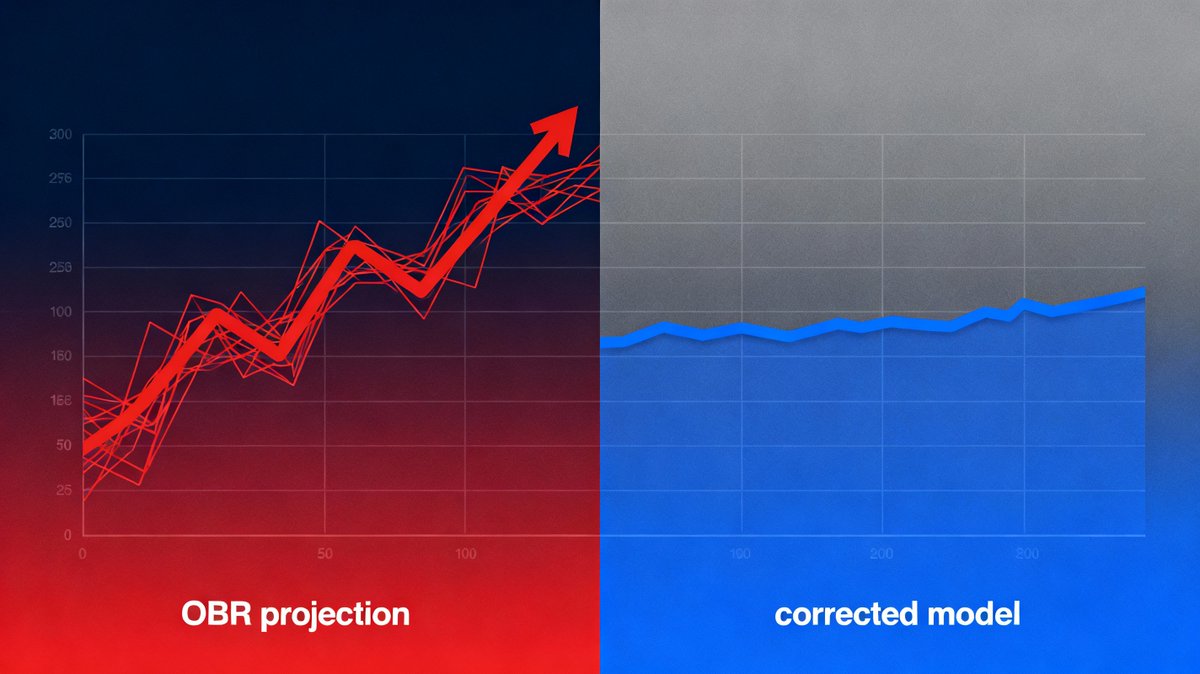
The OBR projects UK national debt will reach 274% of GDP by the 2070s. Under weaker productivity scenarios, 640%.
These are the numbers driving fiscal policy decisions affecting healthcare, pensions, and public services.
They're also based on a model the Bank of England said was false 11 years ago.
I recently spoke with Sky's Ed Conway about why official debt projections rest on flawed foundations. The mainstream model treats banks as intermediaries. In this framework, savers lend to borrowers through banks, and credit has no aggregate demand effects.
The Bank of England's 2014 paper on money creation contradicted this directly. Banks create deposits when they lend. This means credit affects GDP, and government deficits create net financial assets rather than simply redistributing existing money.
When you model this correctly using double-entry bookkeeping, the debt crisis projections collapse. I demonstrated this to Ed using Ravel, showing how debt-to-GDP ratios stabilize rather than spiral when banking mechanics are accurate.
The empirical record supports this. From 1948 to 2007, private credit never went negative. Then it swung from 15% to -5% of GDP, and unemployment spiked. The correlation over a century is 74%.
Private debt drives economic cycles. Government debt typically rises in response to crises, stabilizing the economy. Yet policy focuses almost exclusively on the reactive variable while ignoring the causal one.
There are practical implications:
→ Private debt should be a policy target, ideally kept below 100% of GDP
→ Credit guidance can direct lending toward productive uses rather than asset speculation
→ Secondary bond market restrictions can preserve money creation from deficits
→ QT effects on bond prices and bank balance sheets need explicit modeling
The full technical walkthrough is here: youtu.be/wxjgvGUU29E?si=niS3…
#Macroeconomics #FiscalPolicy #BankingSystem #EconomicModeling #UKEconomy #MonetaryTheory #PrivateDebt
12
35
83
6,722

20 Oct 2025
Amazed by the power of data! 🤩 From 2014-2020, China's OpenStreetMap (OSM) data quality had a roller - coaster ride, first up, then down, and finally stabilizing. This study constructed a unified measure for OSM data quality and explored its use in economic modeling! 📊Four machine-learning models were used to simulate grid-scale GDP, with CatBoost being the most accurate. #OpenStreetMap #DataQuality #EconomicModeling #MachineLearning #China Link[doi.org/10.1080/10095020.202…]
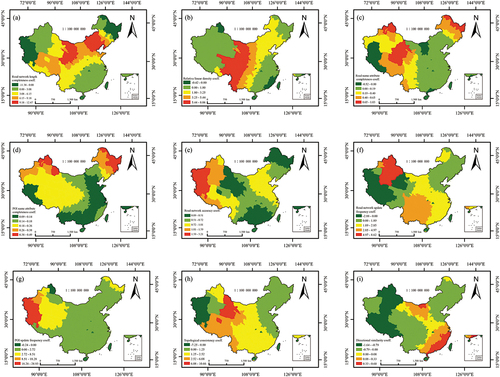
ALT Figure 17. Spatial distribution of regression coefficients for the GTWR model at the municipal scale.
1
7
44
1,709

12 Feb 2025
Check out our original analysis and try updating the model yourself: analytica.com/blog/impact-of…
#TradePolicy #Tariffs #DecisionAnalytics #USTrade #EconomicModeling #DecisionAnalysis #DecsionModeling
2
14

7 Nov 2024
🏆 Congratulations to Christian Diem! 🎉
Today, Christian Diem received the Stephan Koren Award from @wu_vienna, honoring his outstanding #dissertation.
His research focuses on systemic risks and the ripple effects of economic shocks in #supply and #financialnetworks. Through a combination of economics, network science, and agent-based simulations, he’s shedding light on how disruptions in firm-level production networks spread—and how these insights can improve economic modeling.
After starting his career in the @CSHVienna's Supply Chain Science group and at the @wu_vienna, Christian Diem is now a Marie Skłodowska-Curie Actions (#MSCA) Postdoctoral Fellow at @INET_Complexity Oxford and the Smith School for Enterprise and the Environment, where he continues his research.
But that’s not the end of our story – we’re thrilled that he remains part of the #CSH community as an Associate Faculty member.
#StephanKorenAward #ComplexityScience #SupplyChainScience #EconomicModeling #MSCA #ResearchExcellence

1
7
956

5 Aug 2024
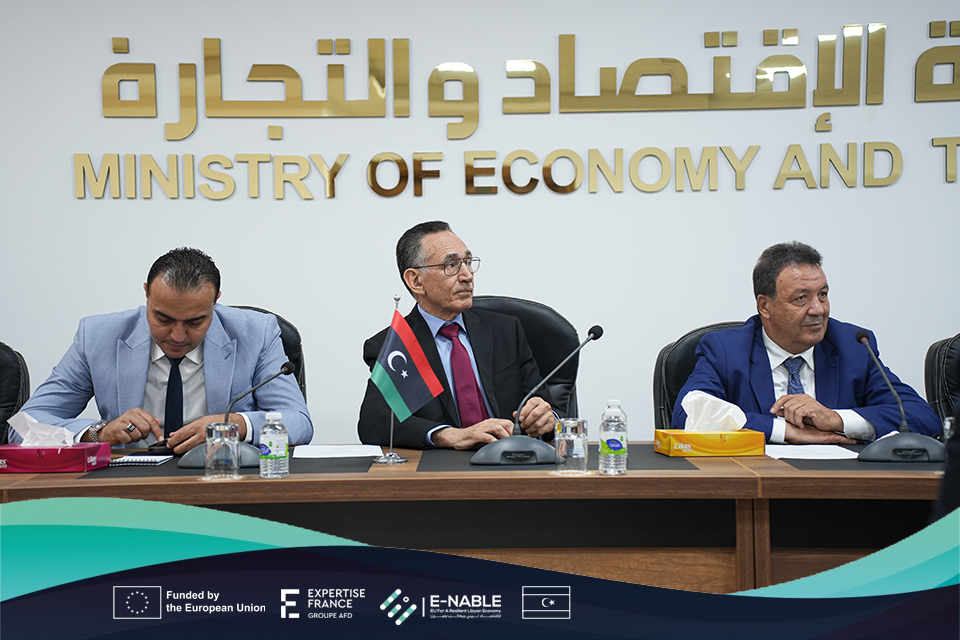
Delighted to celebrate the successful completion of two "Economic Modeling & Policy Design" training programs. The graduates are now equipped to drive Libya's economic growth.
E-nable project is funded by @EUinLibya &implemented by @ExpertiseFrance.
#economicmodeling #Libya



1
4
309

30 May 2024
Staff Blog: @HortMarine (of @MSUExtService) describes an upcoming online course that will equip people with essential tools/info to develop economic models for damage assessment. Details: bit.ly/3KlQsvZ
#MarineEconomics #DisasterAssessment #EconomicModeling

1
4
120

25 May 2024
Consolidated Health Economic Evaluation Reporting Standards for Interventions that use Artificial Intelligence (CHEERS-AI)
Because of Character Limitation on X, read elaboration on LinkedIn
linkedin.com/feed/update/urn…
#HEOR #AI #HealthEconomics #EconomicEvaluation #EconomicModeling
5
11
594

3 Apr 2024
📢We are happy to announce the launch of our latest website section, showcasing #DataLab, a dedicated hub at #CCA, at the forefront of #dataanalysis and #economicmodeling.
Discover the Lab in this video👇and at carloalberto.org/research/da…
youtu.be/qTB5pz7vR5E
1
3
549

25 Jan 2024
📕 Curious to learn about #economicmodeling for green #aquaticfoods systems? Read 👉tinyurl.com/WFPub2401p
✍️ Authors: Quyen Cao Le Quyen, @le2huong, & @ChinYeeChan1
#FoodSystems #FoodPolicy #ForesightModelling #EconomicSecurity #KnowledgeExchange #SharedProsperity @CGIAR

4
5
446

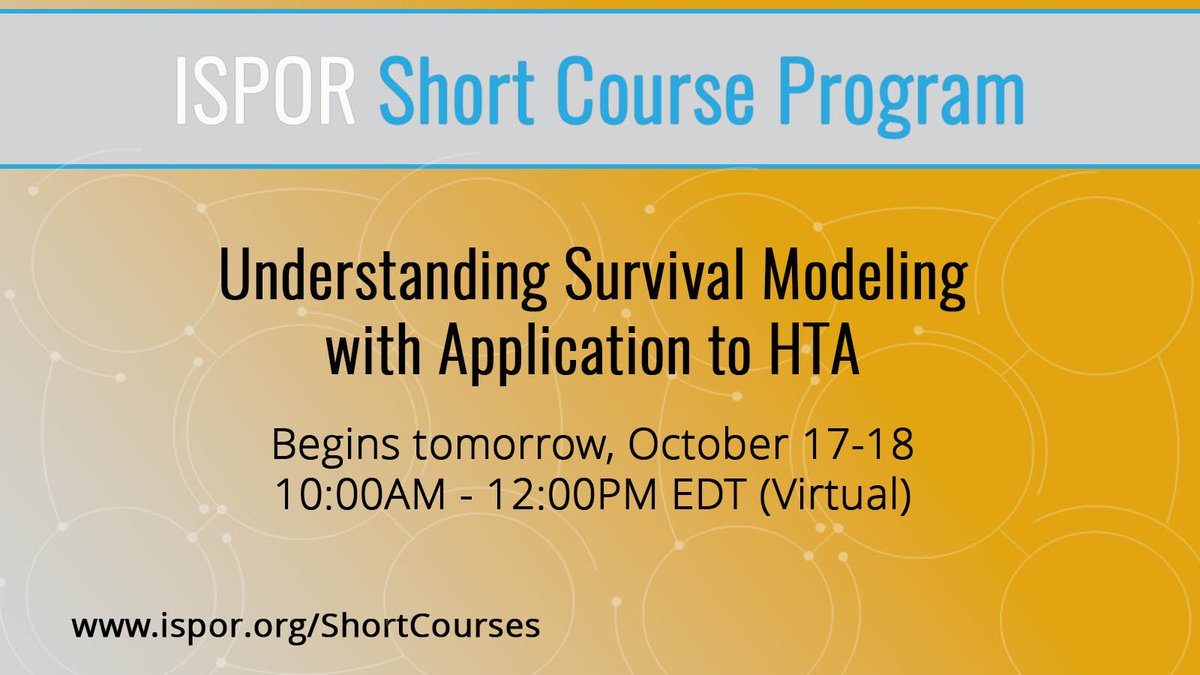
Are you ready to gain an understanding of the relationships between key time-to-event functions and their use in #economicmodeling? Join us tomorrow, October 17, and October 18, for a session on this topic. #HTA #SurvivalAnalysis #HEOR More here>> ow.ly/JfVF50PUE04
3
4
702

12 May 2023
📢 2023 @AGRODEP Membership Call for Applications! Join the network of economic modelers & make an impact in Africa. Female scientists, let's see your skills!
Apply by May 15: bit.ly/3VHykBn
#EconomicModeling

2
4
239

7 Apr 2023
#WaterInnovation means #BusinessInnovation, too.
The 3rd #Water2050 "Think Tank" covered #EconomicModeling, #ProjectFinance, #CircularEconomy, #AffordableWater, finding #StrategicPartners & much more!
READ THE REPORT: news.awwa.org/42xQfxv
#FutureOfWater #WaterUtilities
3
546

23 Mar 2023
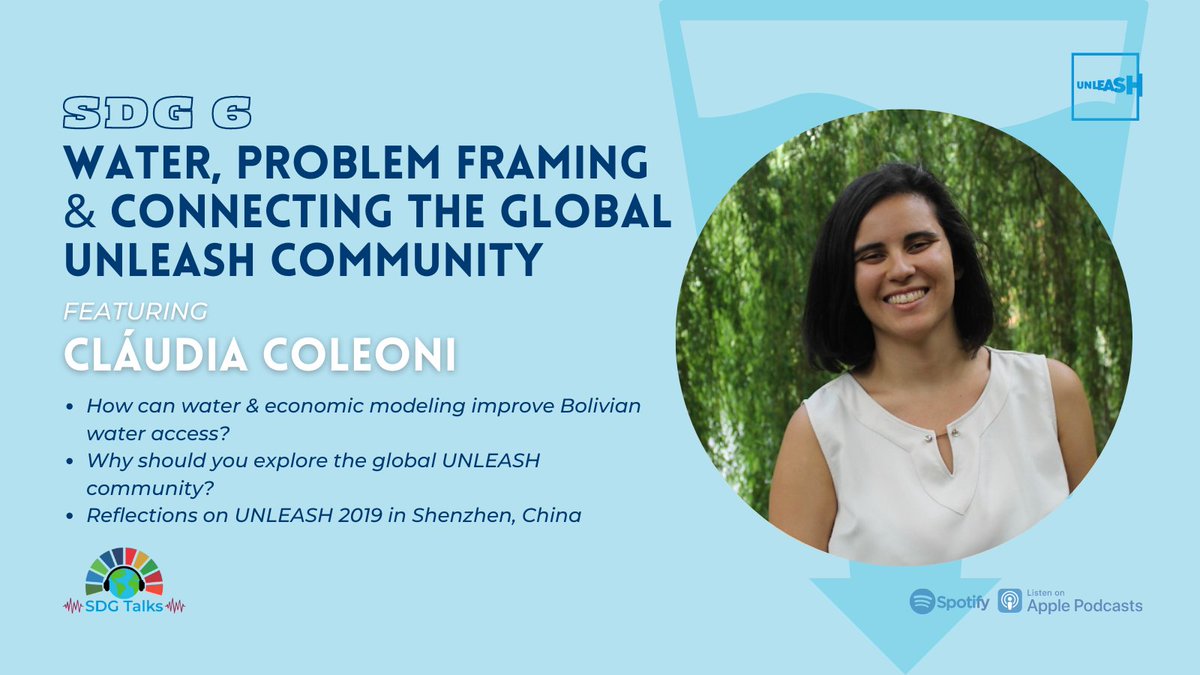
In this ep. of #SDGTalks, an @UNLEASHlab '19 Talent & @SEIresearch Research Associate talks about
-Water & #economicmodeling for Bolivian #wateraccess
-UNLEASH's #globalcommunity
-Reflections on UNLEASH '19
Apple Podcasts podcasts.apple.com/us/podcas…
Spotify open.spotify.com/episode/7y3…
1
7
251