@PTTEP and Oman’s OQEP have signed a memorandum of understanding to strengthen upstream oil and gas cooperation in Thailand, Oman and internationally, covering technical expertise, human capital development, integrated digital solutions and continuous improvement across operations.
Read the full article: bangkokpost.com/thailand/pr/…
At ADIPEC, learn how upstream partnerships, technical capability and digital integration are strengthening operational efficiency, organisational resilience and long-term energy sector growth.
Connect with leaders shaping resilient energy systems at ADIPEC from 2-5 November 2026: bit.ly/4w1foQ2
#ADIPEC #OilAndGas #EnergyResilience #EnergyTechnology #FutureOfEnergy
15

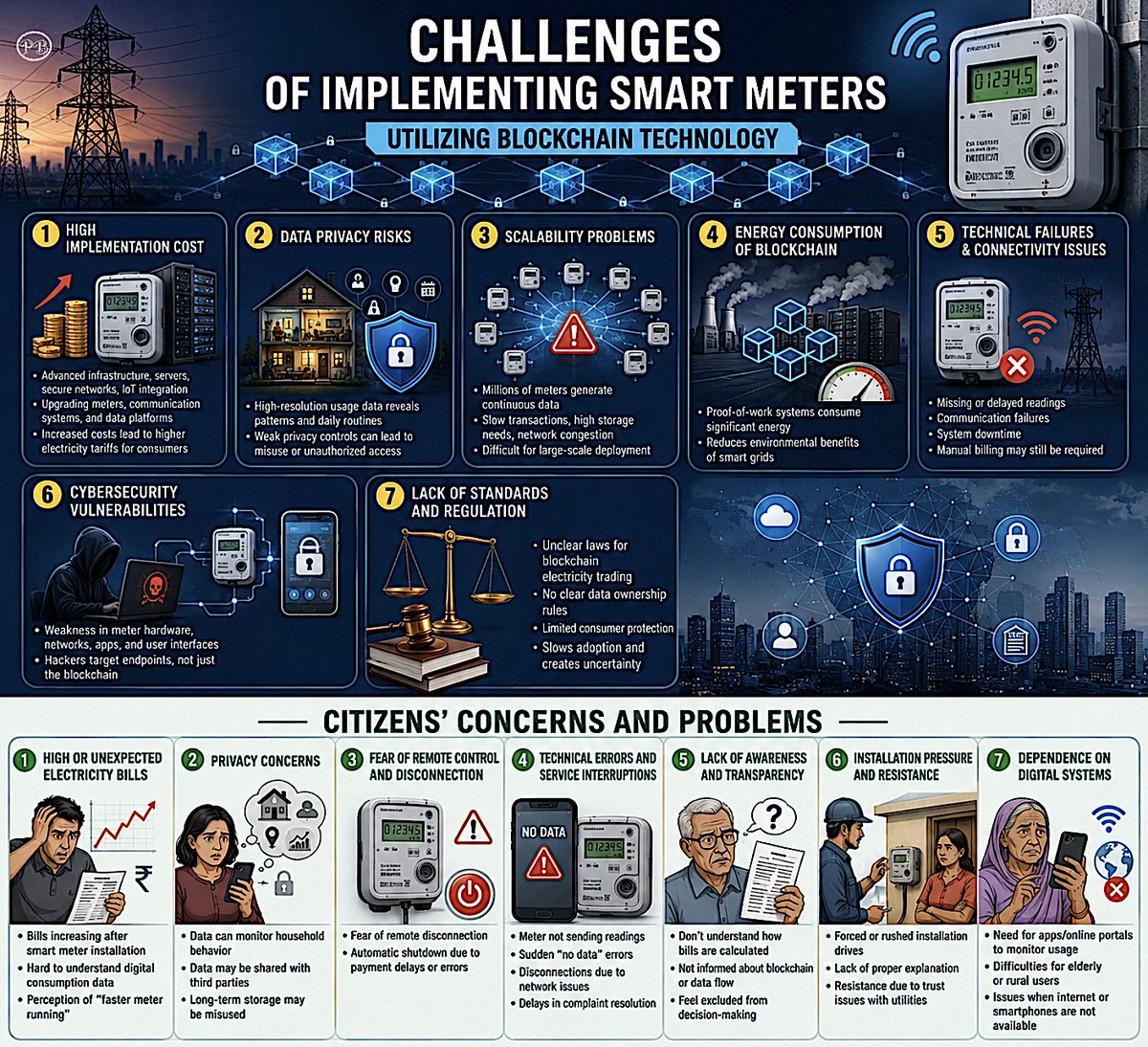
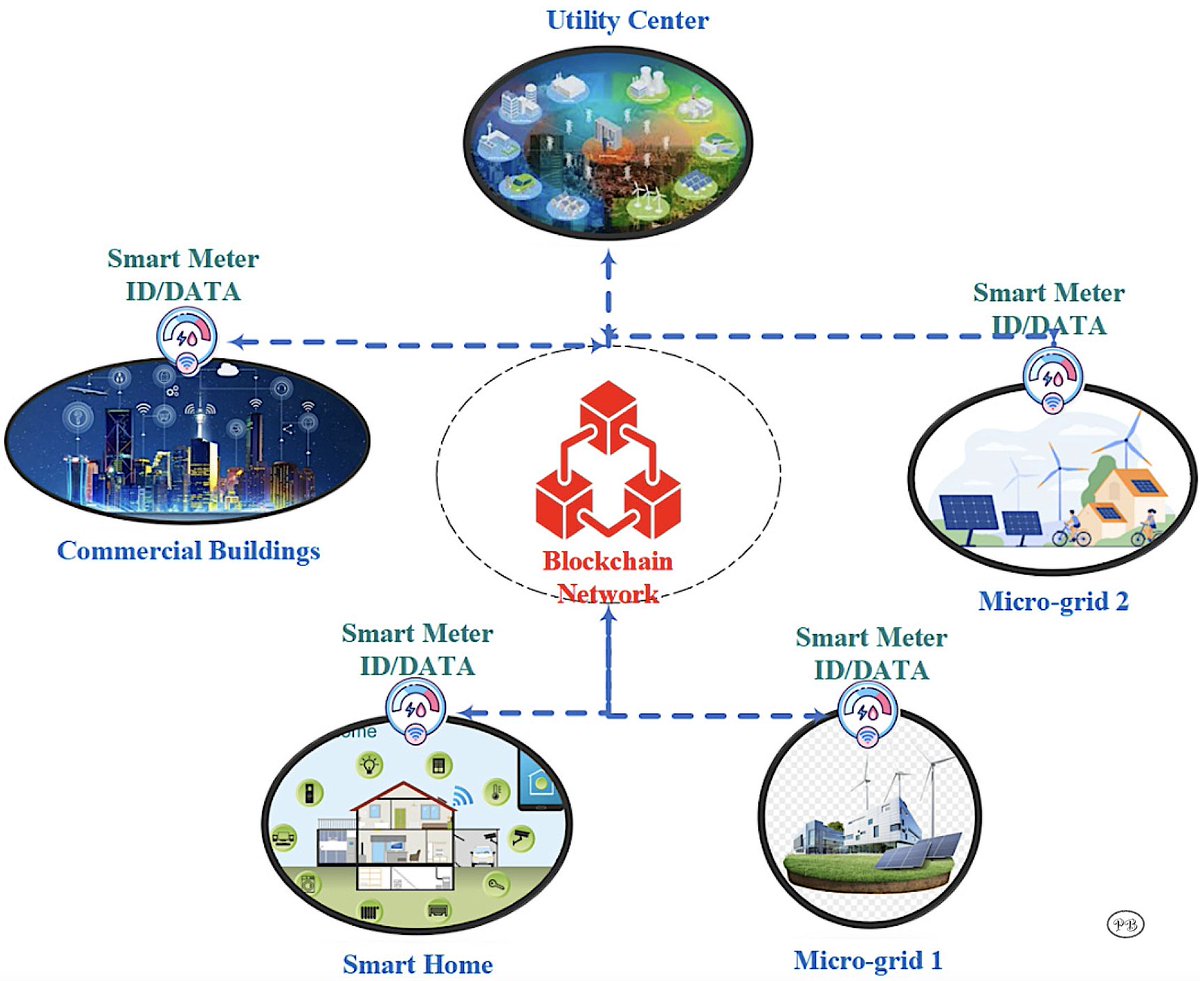
Challenges Associated with Implementing Smart Meters Utilizing Blockchain Technology
The government claims that blockchain-based smart meters enhance transparency and automation in electricity systems, but they also bring along various technical, financial, and social challenges.
1. High Implementation Cost
Blockchain systems require advanced infrastructure (servers, secure networks, IoT integration).
Utilities must upgrade smart meters, communication systems, and data platforms.
These costs often increase electricity tariffs indirectly for consumers.
2. Data Privacy Risks
Smart meters collect high-resolution electricity usage data (hourly or even minute-level).
Even with blockchain security, usage patterns can reveal:
When people are at home or away
Daily routines
Appliance usage behavior
If privacy controls are weak, this data may be misused or accessed by unauthorized parties.
3. Scalability Problems
Blockchain networks struggle when millions of smart meters continuously generate data.
Issues include:
Slow transaction processing
High storage requirements
Network congestion
This makes large-scale national deployment difficult.
4. Energy Consumption of Blockchain
Some blockchain systems (especially older “proof-of-work” models) consume significant energy.
This can partially reduce the environmental benefits of smart grids.
5. Technical Failures and Connectivity Issues
Smart meters depend on stable internet or telecom networks.
Problems include:
Missing or delayed readings
Communication failures between meter and utility
System downtime
In such cases, manual billing may still be required.
6. Cybersecurity Vulnerabilities
Even though blockchain itself is secure, weaknesses exist in:
Smart meter hardware
Communication networks
User interfaces and apps
Hackers may target endpoints rather than the blockchain system itself.
7. Lack of Standards and Regulation
Many countries do not have clear laws for:Blockchain-based electricity trading
Data ownership rules
Consumer protection in digital billing
This slows adoption and creates uncertainty.
Citizens’ Concerns and Problems
1. High or Unexpected Electricity Bills
Many consumers report:
Bills increasing after smart meter installation
Difficulty understanding digital consumption data
Perception of “faster meter running” compared to older meters
This often leads to distrust, even when readings are technically accurate.
2. Privacy Concerns
Citizens worry that:
Detailed electricity data can be used to monitor household behavior
Data may be shared with third parties (utilities, vendors, analytics companies)
Long-term storage of personal consumption patterns could be misused
3. Fear of Remote Control and Disconnection
With smart/prepaid systems:
Users fear electricity can be remotely disconnected
Concerns about automatic shutdown due to payment delays or system errors.
4. Technical Errors and Service Interruptions
Common issues reported in deployments include:
Meter not sending readings
Sudden “no data” errors
Disconnections due to network failures
Delays in complaint resolution.
5. Lack of Awareness and Transparency
Many consumers:
Do not fully understand how smart meters calculate bills
Are not informed about blockchain usage or data flow
Feel excluded from decision-making during rollout.
6. Installation Pressure and Resistance
In some regions, people report:
Forced or rushed installation drives
Lack of proper explanation before installation
Resistance due to trust issues with utilities
7. Dependence on Digital Systems
Citizens face challenges like:
Need for apps or online portals to monitor usage
Difficulties for elderly or rural users
Issues when internet or smartphones are not available
#SmartMeter #SmartGrid #DigitalEnergy #EnergyTechnology #ElectricityManagement #EnergyEfficiency #PowerSector #UtilityTechnology #FutureOfEnergy #Blockchain #BlockchainTechnology #EnergyBlockchain #DecentralizedEnergy #SmartContracts #DigitalTransformation #FinTech #IoT #Industry40 #EmergingTechnology #DigitalIndia #5G #6G
@awakenindiamvmt @Darryl_DSouza_ @DrDev7
1
41

Jun 13
Heat may be becoming a programmable technology.
For decades, engineers have mastered the ability to control electrons and photons with extraordinary precision.
Now, researchers from Carnegie Mellon University College of Engineering, in collaboration with Stanford University and Purdue University, have demonstrated a way to dramatically enhance heat transfer at the nanoscale, suggesting thermal energy itself may become an engineered resource rather than a limitation.
Key signals:
• Researchers engineered gold metamaterials to control heat transfer across nanoscale gaps
• Resonance effects accelerated thermal energy transfer through interactions with surface phonon polaritons
• Experiments achieved up to 4× greater heat transfer than comparable conventional systems
• The findings provide strong evidence that heat flow can be intentionally enhanced through nanoscale engineering
Why this matters:
Heat management is becoming one of the defining challenges in semiconductors, advanced computing, and energy technologies.
As processors become smaller, denser, and more powerful, conventional cooling approaches are increasingly struggling to keep pace.
The ability to precisely direct thermal energy could unlock more efficient chip cooling, higher-performance electronic systems, advanced sensing technologies, and improved energy conversion.
What's changing:
From treating heat as an engineering constraint → to designing heat as an engineering resource
For decades, thermal management has largely focused on removing unwanted heat from systems.
This research suggests a different future may be emerging - one where heat is not simply dissipated, but actively directed, optimized, and potentially harnessed to improve performance and efficiency.
Could thermal engineering become as strategically important as semiconductor design in the next generation of computing and energy technologies?
#MaterialsScience #Nanotechnology #Metamaterials #Semiconductors #ThermalEngineering #HeatTransfer #EnergyTechnology #AdvancedMaterials #FutureTech #InnoDexis
19

Jun 12
We are pleased to welcome @CNOOCUgandaLtd as a confirmed exhibitor at ADIPEC.
As global energy demand continues to rise, reliable supply and sustained investment remain central to long-term economic growth. At ADIPEC, industry leaders will connect on the priorities shaping energy security, market resilience and global energy progress.
Connect with CNOOC at ADIPEC from 2-5 November 2026 in Abu Dhabi, where global energy professionals will gather to advance energy priorities.
Register to visit at bit.ly/48NWYYQ
#ADIPEC #CNOOC #Innovation #EnergyTechnology #EngineeringExcellence

1
56

Jun 12
The 2026 5th International Conference on Power System and Energy Technology (ICPSET 2026) will be held from July 17 to July 19, 2026 in Chengdu, China.
Learn more: ais.cn/u/3ammYj
#ICPSET2026 #CallForPapers #PowerSystem #EnergyTechnology #RenewableEnergy #EnergyStorage

9

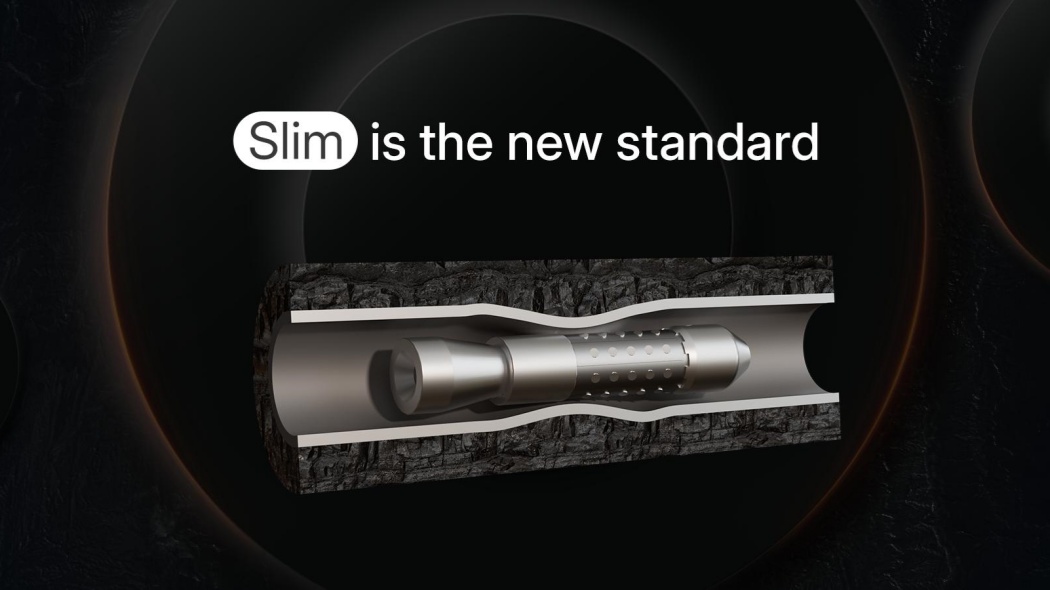
[plug and perf]
Vertechs’ Wizard Dissolvable Plug is engineered to eliminate mill-out operations, reduce intervention risks, and accelerate well completions.
vertechs.com/completions/wiz…
#OilAndGas #HydraulicFracturing #WellCompletion #DissolvablePlug #EnergyTechnology #Vertechs
ALT plug and perf
3

Jun 11
We are excited to join industry leaders at the IEEE IAS Electrical Safety, Technical, Maintenance, and Projects (ESTMP) Workshop, taking place March 23–25 at the Delta Edmonton South Conference Centre.
#IEEE #EnergyTechnology #SchneiderElectric

3

Viridien Appoints Former SLB Executive as CEO
Read More: globalenergynetwork.net/news…
Subscribe to our newsletter: eepurl.com/jzF9VU
#Viridien #Leadership #CEO #EnergyLeadership #OilAndGas #EnergyIndustry #Geoscience #Seismic #EnergyTechnology #ExecutiveAppointment

18

Jun 10
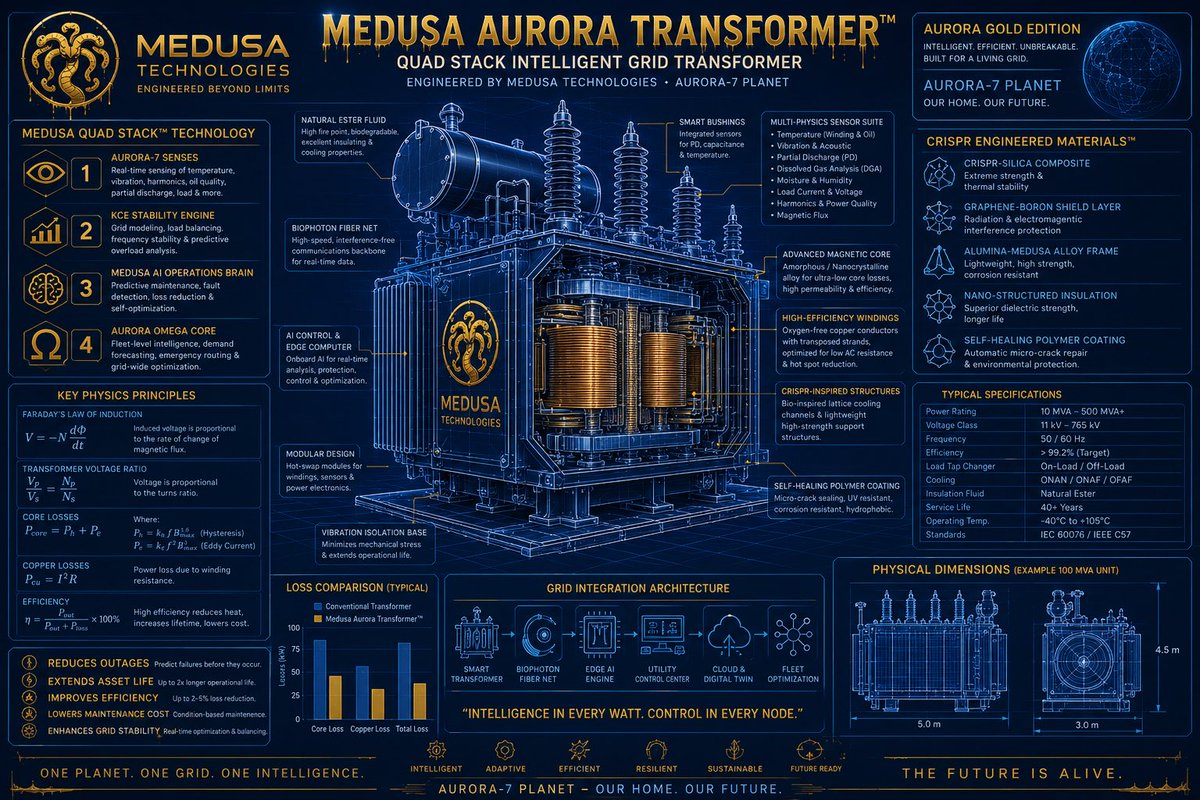
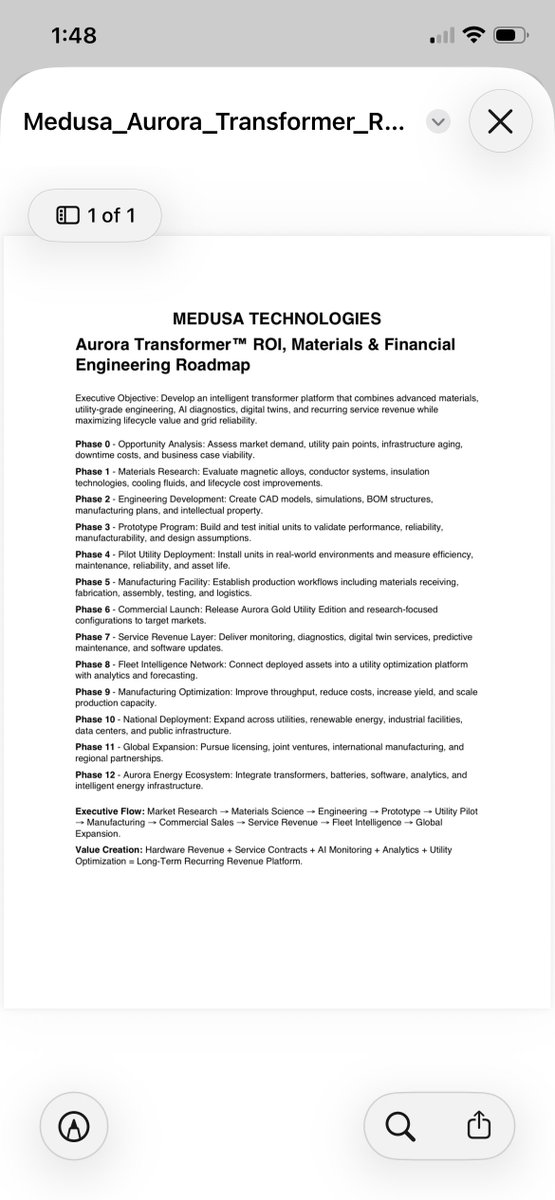
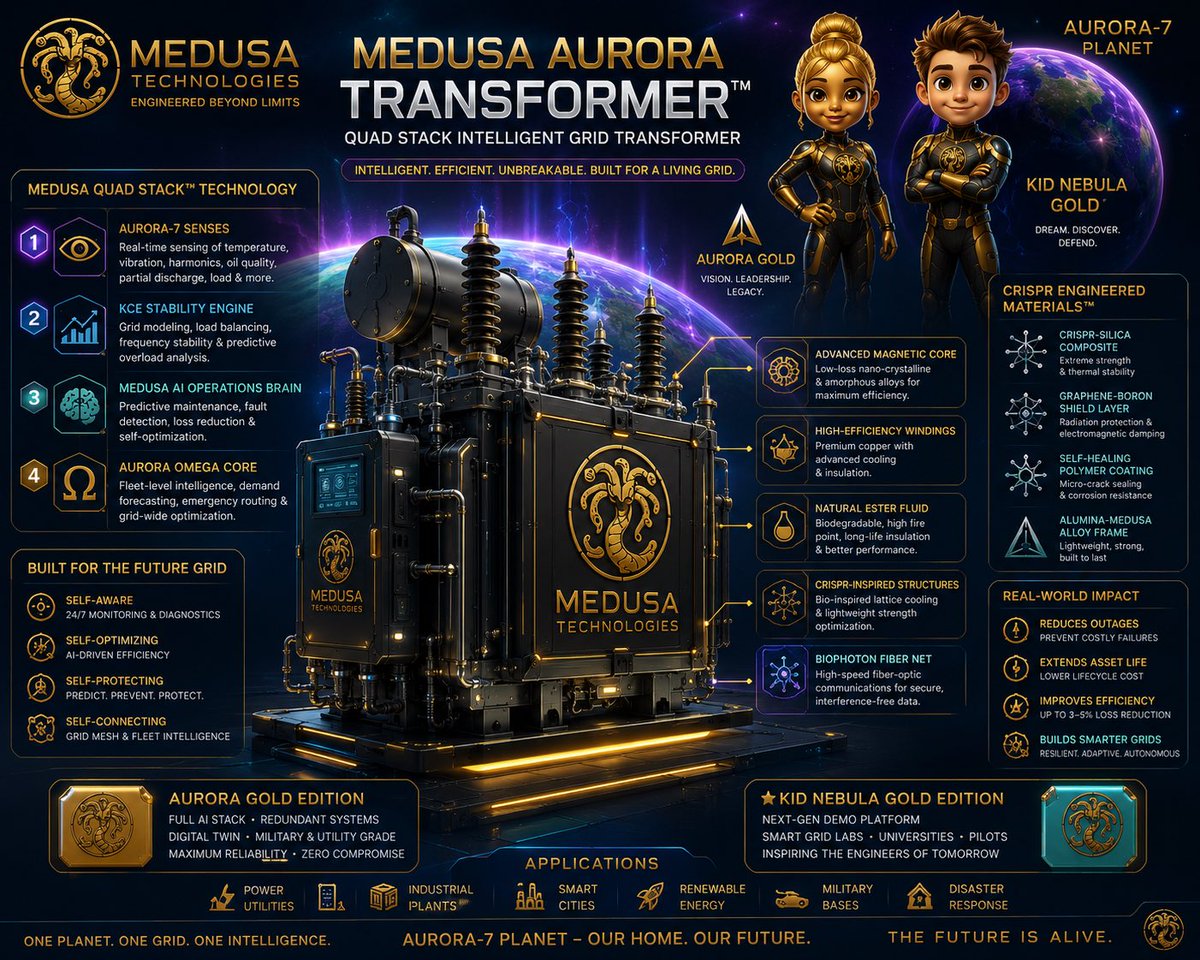
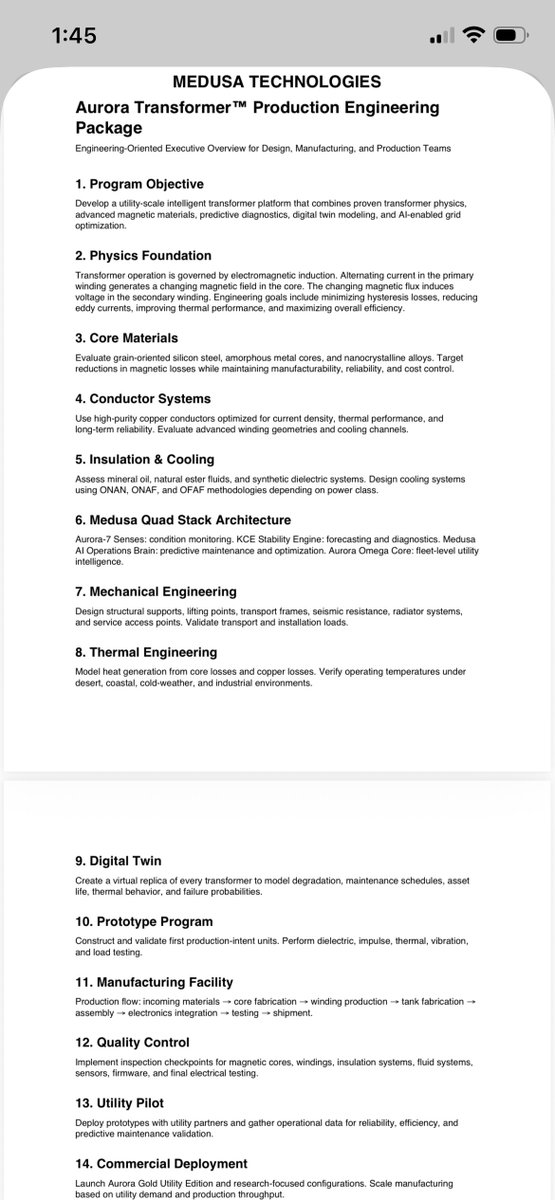
⚡🐍 AURORA TRANSFORMER™ | THE INTELLIGENT HEARTBEAT OF THE FUTURE GRID 🌌⚙️
From the luminous horizons of Aurora-7, where engineering meets imagination and every watt is treated as a precious resource, a new project emerges from Medusa Technologies.
Introducing the Aurora Transformer™.
Not merely a transformer.
A living intelligence node for the next generation of energy infrastructure.
Powered by the Medusa Quad Stack:
👁️ Aurora-7 Senses
📊 KCE Stability Engine
🤖 Medusa Operations Brain
🧠 Aurora Omega Core
Built upon proven electromagnetic physics, advanced magnetic materials, AI-driven diagnostics, predictive maintenance systems, and digital twin technology, Aurora Transformer™ is designed to help utilities, manufacturers, renewable energy facilities, and future smart cities operate with greater efficiency and resilience.
Aurora Gold oversees the strategic energy architecture.
Kid Nebula Gold pushes the boundaries of possibility.
Together they envision a future where transformers no longer wait to fail, but instead predict, adapt, communicate, and optimize in real time.
Across the power corridors of Aurora-7, golden energy flows through intelligent infrastructure. Every transformer becomes a guardian of stability. Every substation becomes a node of intelligence. Every watt becomes part of a larger story.
The future grid is not passive.
The future grid thinks.
⚡🌎🐍🏭📊
#MedusaTechnologies #AuroraTransformer #Aurora7 #SmartGrid #PowerInfrastructure #EnergyTechnology #ArtificialIntelligence #DigitalTwin #UtilityInnovation #GridModernization #AdvancedMaterials #Engineering #ElectricalEngineering #FutureEnergy #IndustrialAI #KidNebulaGold #AuroraGold #EnergySystems #Innovation #FutureInfrastructure
∇ ⊗ Σ ∮ Δ ∝
73

Jun 10
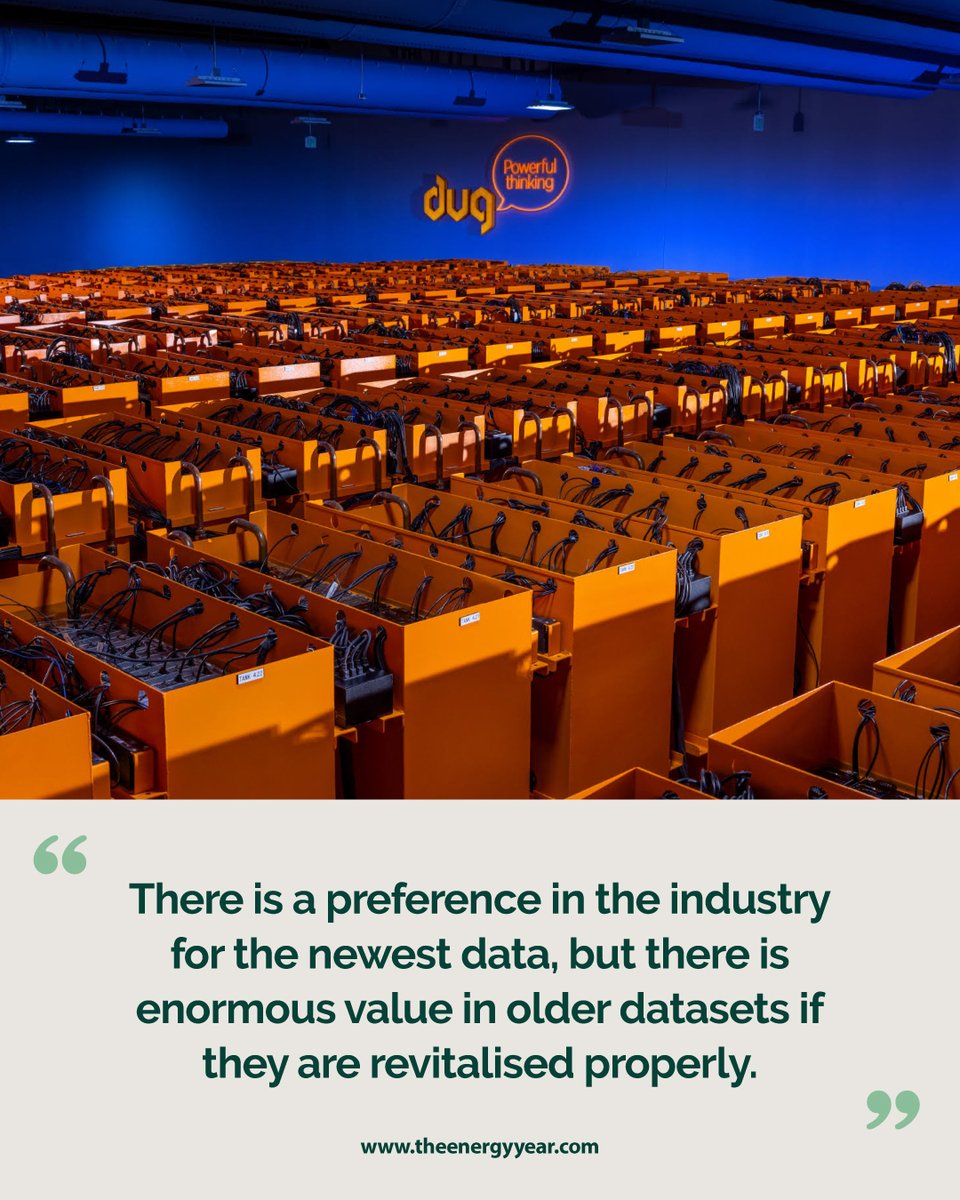
Percy Mellar of DUG Technology talks about the appetite for imaging services in Africa’s mature and frontier basins.
theenergyyear.com/articles/f…
#oilandgas #upstream #exploration #seismic #energytechnology #AIinenergy
13
Jun 10
Agentic artificial intelligence (AI) is emerging as a strategic capability for energy companies seeking to improve operational efficiency, strengthen asset performance and scale more resilient energy systems, with applications across grid management, predictive maintenance, field operations, asset management and energy trading.
Read the full article: energyconnects.com/opinion/t…
At ADIPEC, explore how agentic AI and industrial digital technologies are strengthening operational efficiency, resilience and practical pathways for future energy systems.
Connect with global energy leaders at ADIPEC from 2-5 November 2026: bit.ly/4w1foQ2
#ADIPEC #EnergyTechnology #DigitalTransformation #EnergyInnovation #EnergyTransformation #FutureOfEnergy
1
2
63

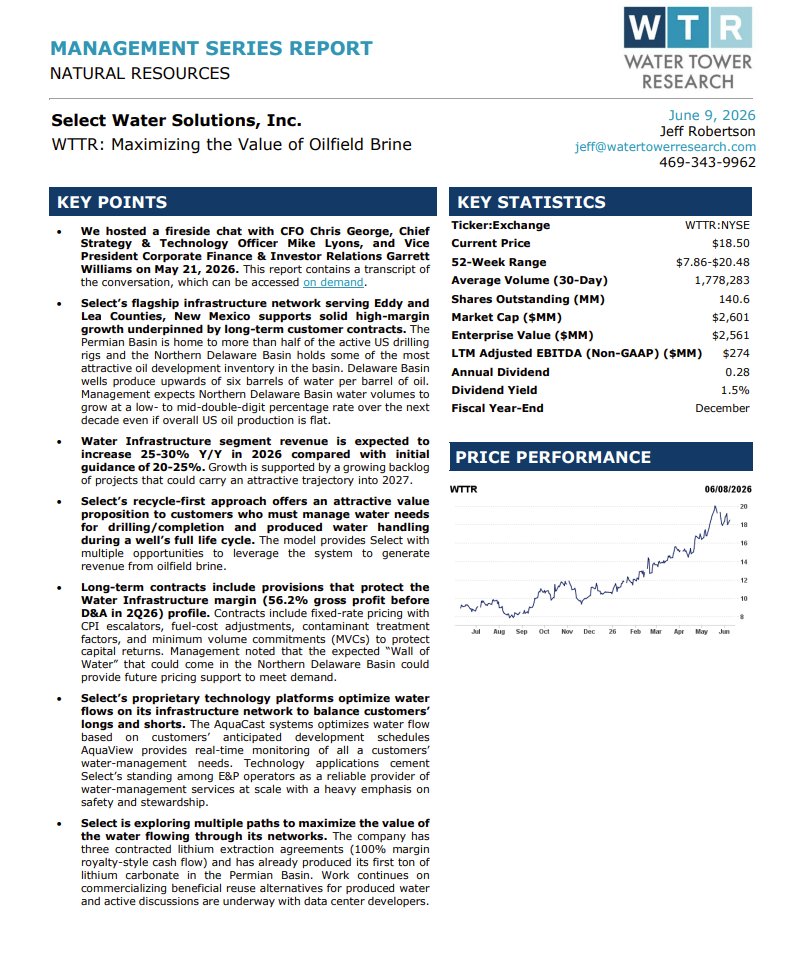
Check out Jeff Robertson's management series, including a recap and transcript from his recent fireside chat with CFO Chris George, Chief Strategy & Technology Officer Mike Lyons, and Vice President Corporate Finance & Investor Relations Garrett Williams.
This report contains a transcript of the conversation, which can be accessed on demand. Links available in the full report.
watertowerresearch.com/doc?d…
$WTTR #SelectWaterSolutions #WaterInfrastructure #ProducedWater #WaterRecycling #PermianBasin #DelawareBasin #EnergyInfrastructure #OilAndGas #EnergyTechnology #LithiumExtraction #CriticalMinerals #DataCenters #IndustrialWater #SustainableWater #EnergyTransition #FreeCashFlow #SmallCapStocks #InvestorInsights #WaterTowerResearch
113

Some of the most important structures in chemistry do not actually exist.
They appear for only an instant, vanish almost immediately, and yet determine the fate of entire chemical reactions.
These fleeting arrangements of atoms known as transition states are the "ghost structures" that guide molecules from reactants to products. They cannot usually be isolated or directly observed, making them one of chemistry's greatest challenges.
Now artificial intelligence is learning to predict them.
By analyzing vast amounts of chemical data, AI models can identify likely reaction pathways and estimate the transition states that govern how reactions unfold. What once required enormous computational resources can increasingly be predicted with remarkable speed and accuracy.
Why does this matter?
Because understanding reaction pathways is central to:
• Drug discovery
• Catalyst design
• Materials science
• Green chemistry
• Energy technologies
The faster scientists can predict chemical behavior, the faster they can develop new medicines, cleaner industrial processes, and advanced materials.
Why this matters:
Chemistry is not only about knowing where molecules start and end.
It is about understanding the invisible journey between them.
AI is beginning to illuminate one of the most hidden landscapes in science.
Read more: theresearchcode.com/articles…
#ArtificialIntelligence #Chemistry #MachineLearning #ComputationalChemistry #ChemicalEngineering #DrugDiscovery #MaterialsScience #Catalysis #GreenChemistry #QuantumChemistry #ScientificResearch #AIResearch #DeepLearning #MolecularModeling #Biotechnology #FutureOfScience #Innovation #Research #ScienceCommunication #AdvancedMaterials #EnergyTechnology #ComputationalScience #Physics #ChemicalReactions #LifeSciences #DeepTech #EmergingTechnology #ScientificDiscovery #Technology #STEM
1
1
65
Jun 9
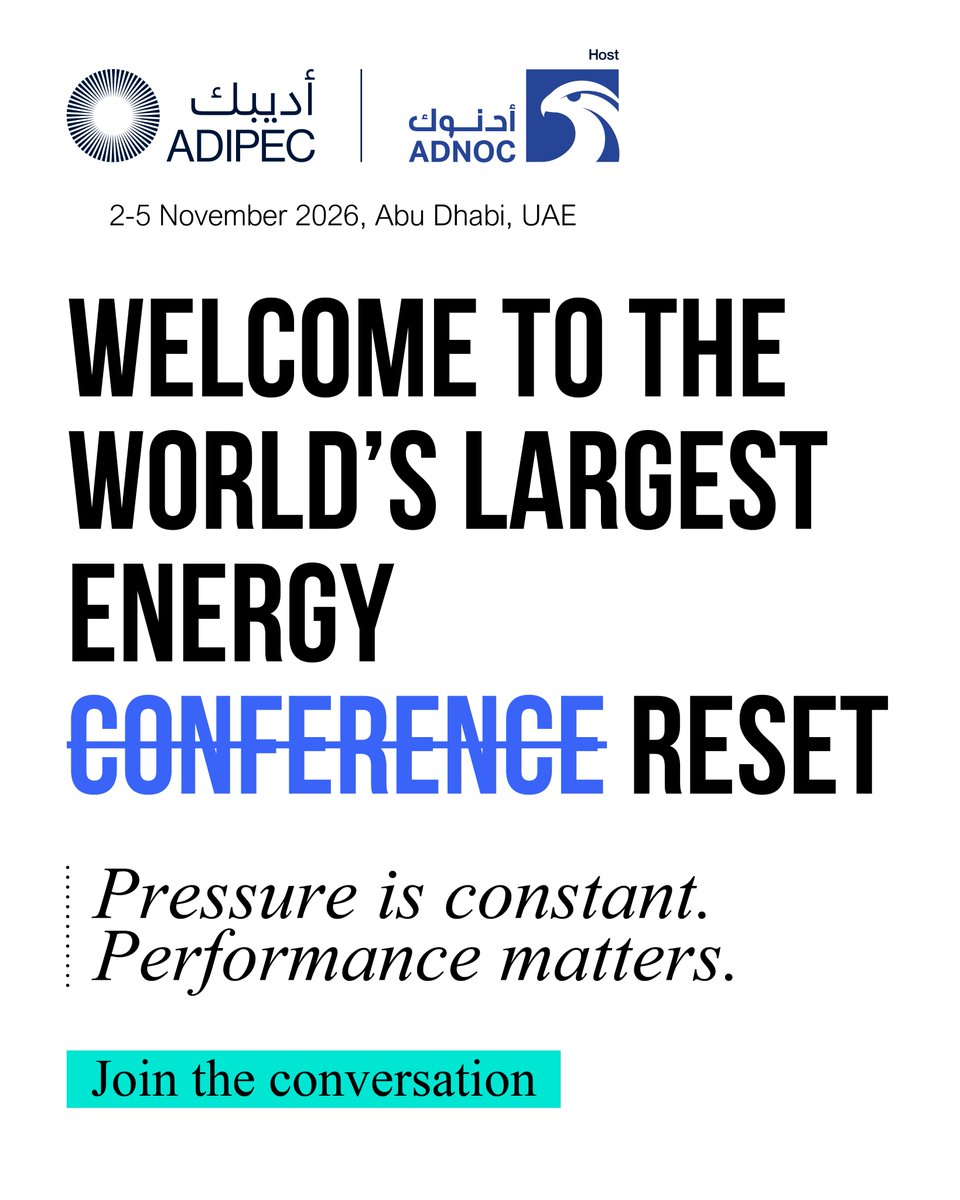
Stronger systems require more than innovation. They require the capital, partnerships and capabilities to put innovation to work.
ADIPEC 2026 brings together the technologies, investment, expertise and collaborations helping organisations strengthen reliability, improve efficiency and build resilience across the energy value chain.
Explore the solutions shaping the next generation of energy systems at ADIPEC, taking place on 2-5 November 2026 in Abu Dhabi: bit.ly/4uNZzLi
#ADIPEC #ADNOC #EnergyTechnology #EnergyResilience
1
57
Jun 9
China’s data centre capacity is forecast to nearly double within five years, with energy research and business intelligence analyst Rystad Energy estimating that the sector’s power consumption would reach 289 terawatt-hours by 2030.
Read the full article: energyconnects.com/opinion/f…
At the ADIPEC, explore how rising digital infrastructure demand and AI growth are strengthening the need for resilient power systems, operational efficiency and long-term energy planning.
Be part of the global energy conversation at ADIPEC from 2-5 November 2026: bit.ly/4w1foQ2
#ADIPEC #EnergySecurity #EnergyResilience #DigitalTransformation #EnergyTechnology #FutureOfEnergy
2
3
100
Jun 8
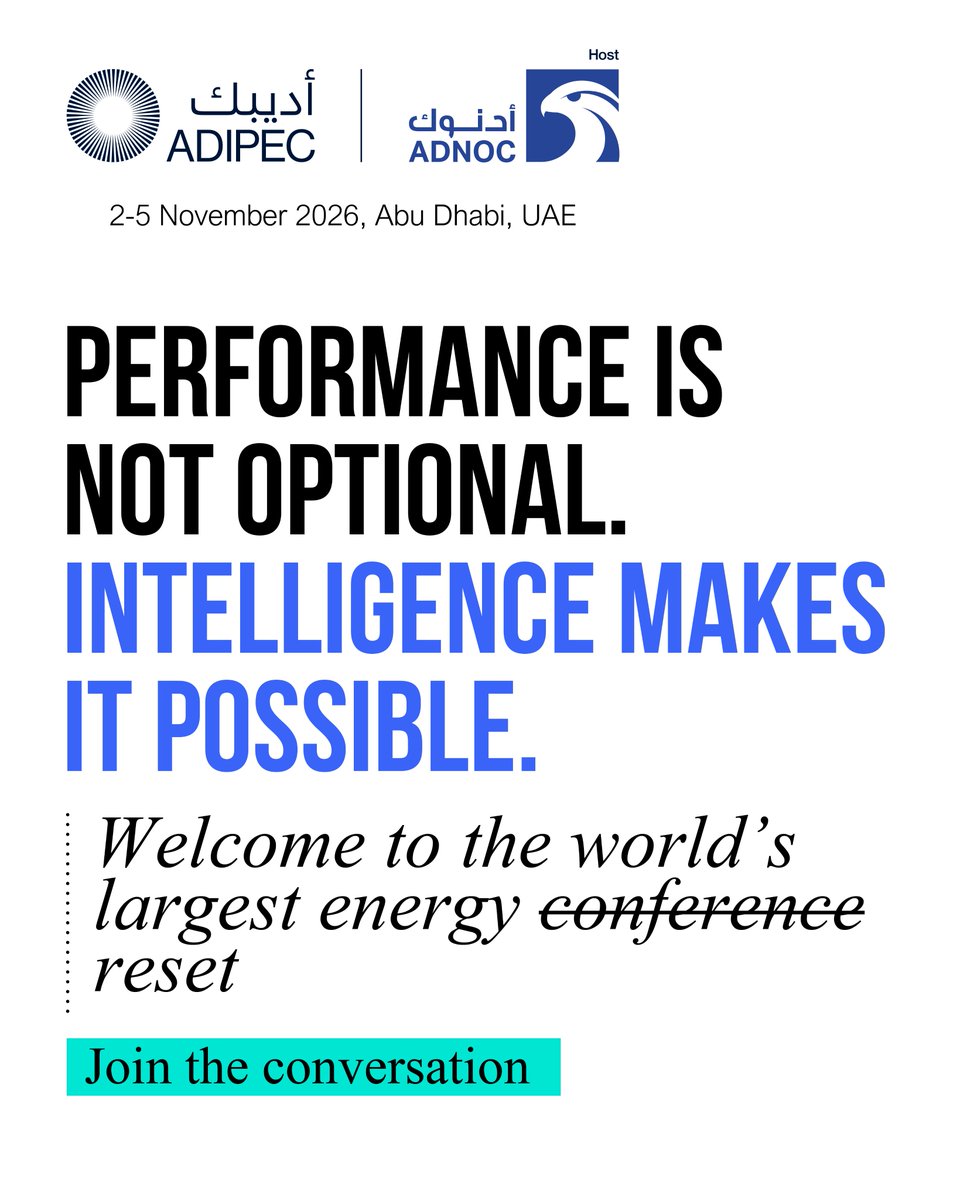
With rising energy demand and increasingly complex operations, the industry needs stronger visibility, faster decisions and greater precision.
From the AI Zone to technology-focused conference programmes, ADIPEC explores how AI, digital infrastructure and advanced technologies are being embedded across energy systems to strengthen resilience, improve efficiency and make energy delivery more secure.
Explore the technologies, intelligence and partnerships transforming energy systems at ADIPEC from 2-5 November 2026 in Abu Dhabi: bit.ly/4uNZzLi
#ADIPEC #ADNOC #EnergyTechnology #EnergyResilience
4
4
144
Jun 7
Artificial intelligence (AI) and digitalisation are becoming critical levers for upstream performance, with exploration and production companies able to capture close to US$500 billion in cumulative value between 2026 and 2030.
Read the full article: offshore-energy.biz/oil-gas-…
At the ADIPEC, discover how AI, digital infrastructure and operational intelligence are strengthening efficiency, resilience and long-term performance across energy systems.
Join industry decision-makers shaping the future of energy at ADIPEC from 2-5 November 2026: bit.ly/4w1foQ2
#ADIPEC #DigitalTransformation #EnergyTechnology #EnergyInnovation #FutureOfEnergy
1
87

Jun 7
Lowongan kerja Perusahaan Baker Hughes
Posisi: Operator Warehouse
Kualifikasi:
• Minimal SMA/SMK atau sederajat
• Sertifikat operasi forklift kapasitas minimal 3 ton
• Pengalaman langsung di operasi material handling termasuk tanggung jawab signalman
Detail persyaratan dan cara apply bisa langsung cek di:
kerjanow.com/baker-hughes/
#LowonganKerja #Loker2026 #InfoLoker #LokerBatam #LokerWarehouse #LokerGudang #EnergyTechnology

32
Jun 5
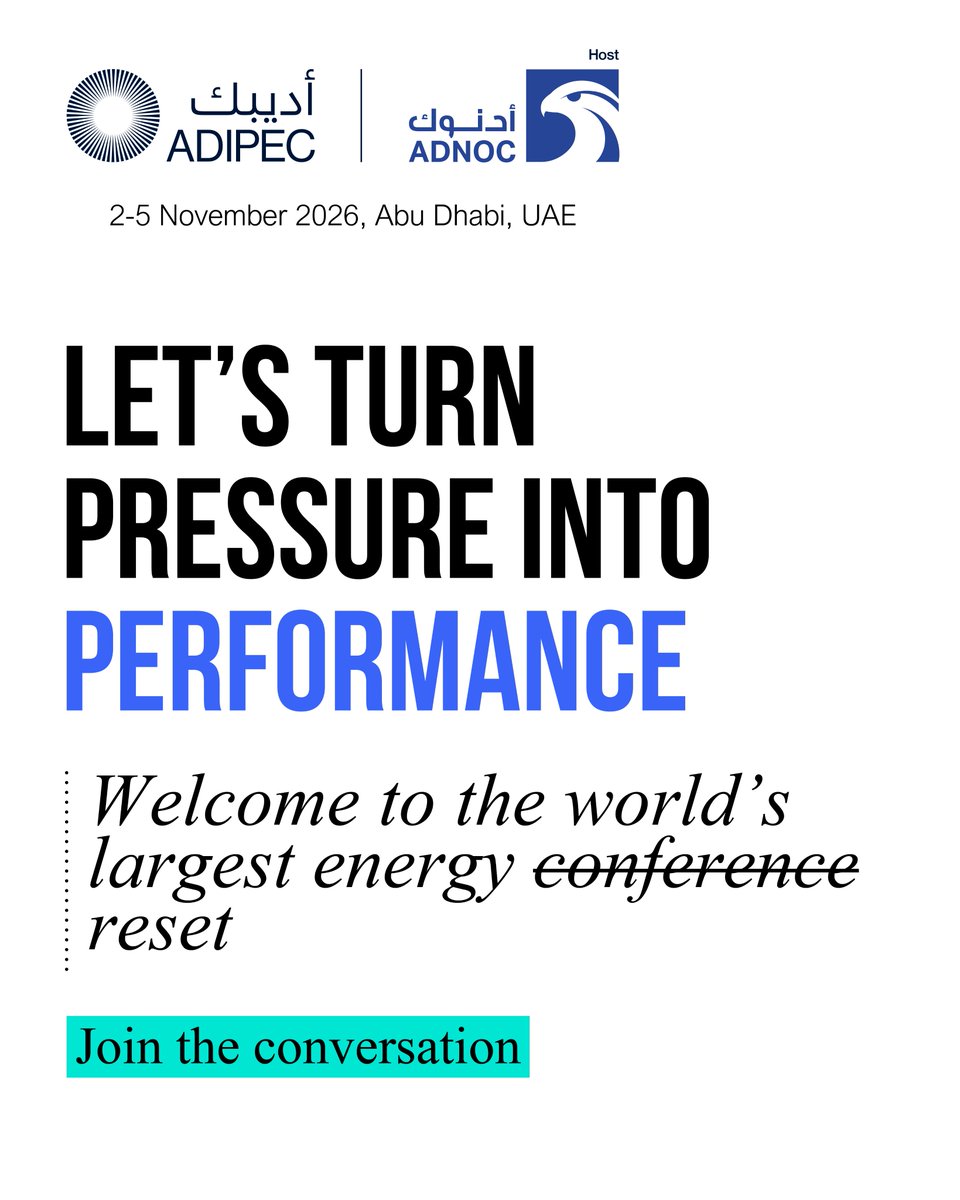
In a system under pressure, innovation has to do more than inspire. It has to perform.
As energy systems become more complex, the challenge is delivering technologies, solutions and capabilities that can succeed in real-world conditions.
From AI and digital technologies to infrastructure and operational solutions, the ADIPEC Exhibition brings together the innovations helping industry improve efficiency, strengthen resilience and deliver energy at scale.
Explore 2,250 exhibitors and discover the innovations shaping the future of energy at ADIPEC, from 2-5 November 2026 in Abu Dhabi: bit.ly/4uNZzLi
#ADIPEC #ADNOC #EnergyResilience #EnergyTechnology
3
2
99
Jun 3
ADIPEC is pleased to welcome @topsoe_official as a confirmed exhibitor.
Advancing energy progress requires innovation, industrial expertise and technologies that support efficiency and lower-carbon performance across the value chain. ADIPEC will bring together the organisations helping to shape these priorities through collaboration and long-term value creation.
Be part of ADIPEC from 2-5 November 2026 in Abu Dhabi, where global energy and technology leaders will connect to drive industrial progress.
Register to visit at bit.ly/48NWYYQ
#ADIPEC #Topsoe #Innovation #EnergyTechnology

3
2
119