
Great points, Tim and Tom. It's true that while carbohydrates are key for performance, the research on optimal intake during exercise varies. Tim, when considering the varying reported benefits of carb intake beyond certain thresholds, what mechanisms might explain these differences? And Tom, how did the reviewed studies in your article approach these discrepancies? For those interested in exploring such questions further, check out [Sci-Quest](sciqst.com) - a one-stop platform for every biomedical question, with capabilities to generate comprehensive reviews. #ExerciseScience #Nutrition #Medicine
6

Why someone would want to join Lionel?
Because honesty matters.
Check out our degree programs today: hubs.ly/Q044l0y40
#ChooseLionel #LionelUniversity #TruthInAdvertising #EducationYouCanTrust #StudentFirst #BachelorsDegree #MastersDegree #ExerciseScience
Henneman’s Size Principle says motor units are recruited from smallest to largest as force demand rises. That’s why heavy loads, fast intent, and sets close to failure can all help recruit high-threshold fibers and drive adaptation. #StrengthTraining #ExerciseScience
22

Jun 13
Strength, hypertrophy, and muscular endurance all affect muscle fibers differently.
Strength improves force production and neural efficiency.
Hypertrophy increases muscle fiber size, especially type II fibers.
Endurance improves fatigue resistance and oxidative capacity.
Same muscle, different adaptation. #ExerciseScience #StrengthTraining #Hypertrophy
15
Jun 13
Mechanical tension is the stimulus. Hypertrophy is the result. You do not need one magic percentage, but most growth work lives in the 6–12 rep range, with enough load and effort to stay close to failure. Progress comes from increasing tension over time. #Hypertrophy #StrengthTraining #ExerciseScience
13

Jun 13
Most people think sperm only carries DNA.
A 2025 study found that exercise changed tiny molecules called microRNAs in sperm. In mice, these changes were linked to offspring with better metabolic health, despite no change in DNA.
#Fitness #MensHealth #Epigenetics #ExerciseScience
11

🎙️ 🎙️🌎With great pride and gratitude, we celebrate the publication of our scientific paper in the field of Sports
#Caffeine #SportsPerformance #SportsNutrition #ExerciseScience #SportsMedicine AthletePerformance EvidenceBasedPractice SportsResearch ExercisePhysiolog
33

Jun 12
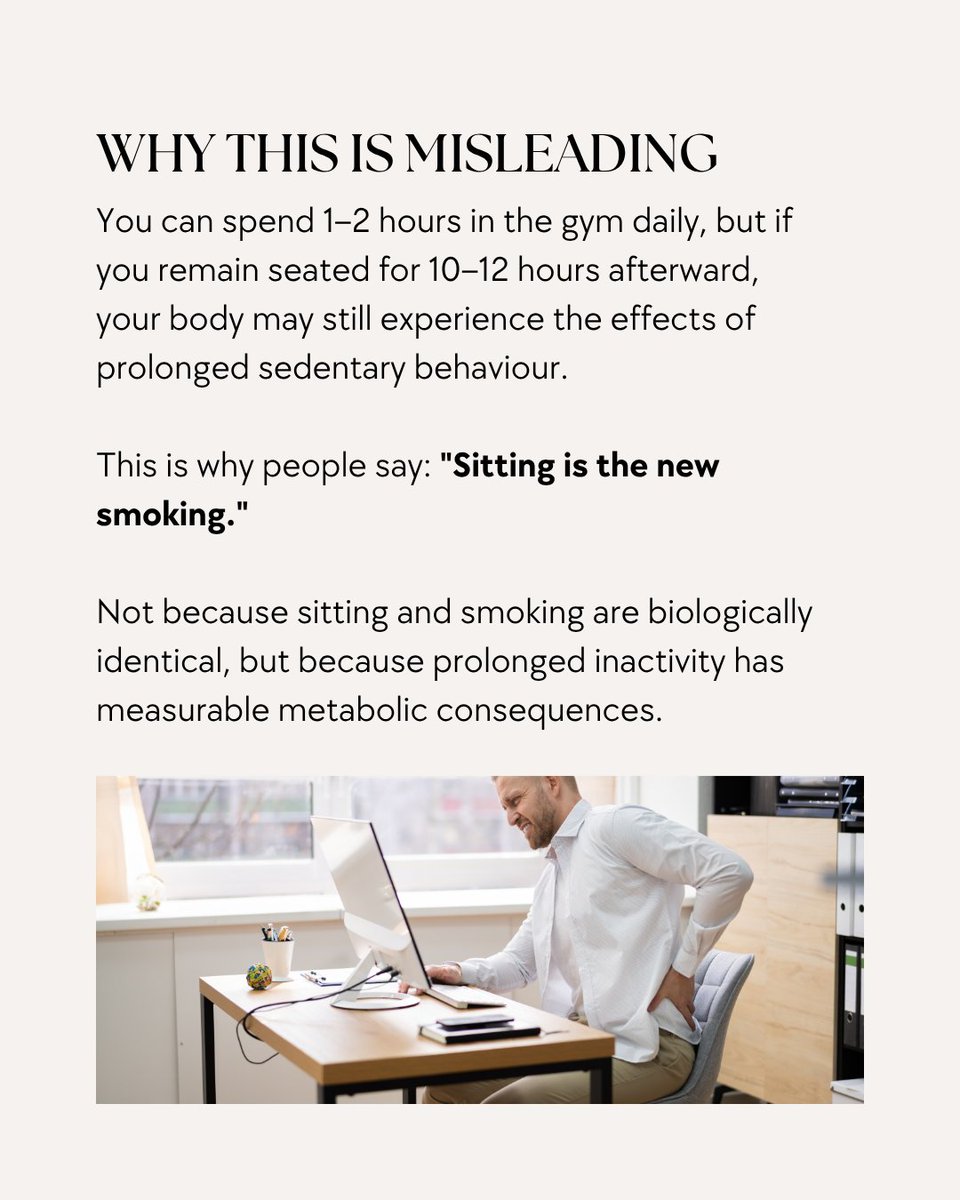
Many people assume that completing their daily workout is enough to offset the effects of sitting for the rest of the day.
The science suggests otherwise.
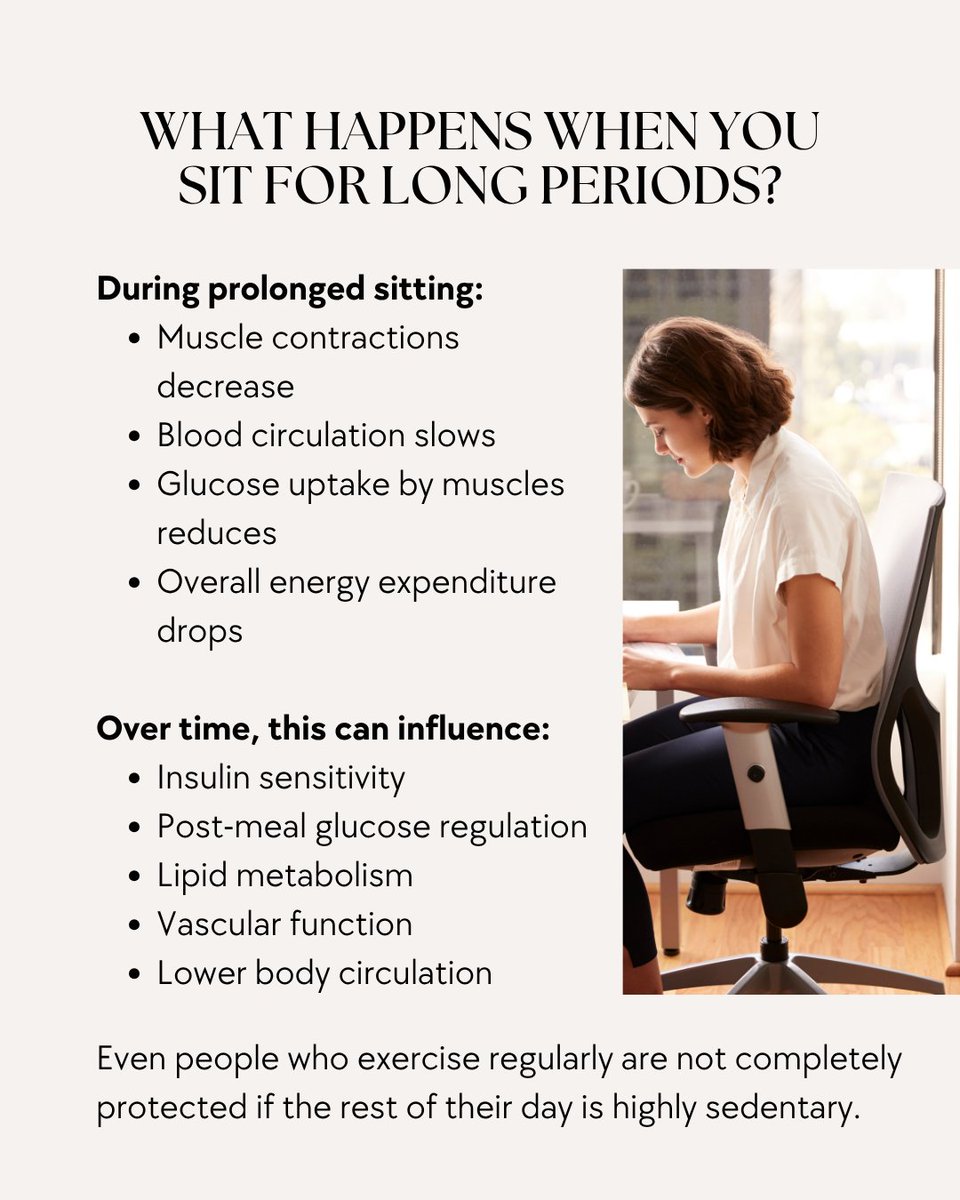
Even in individuals who exercise regularly, long periods of uninterrupted sitting may still influence:
• Insulin sensitivity
• Post-meal glucose regulation
• Lipid metabolism
• Vascular function
• Lower body circulation
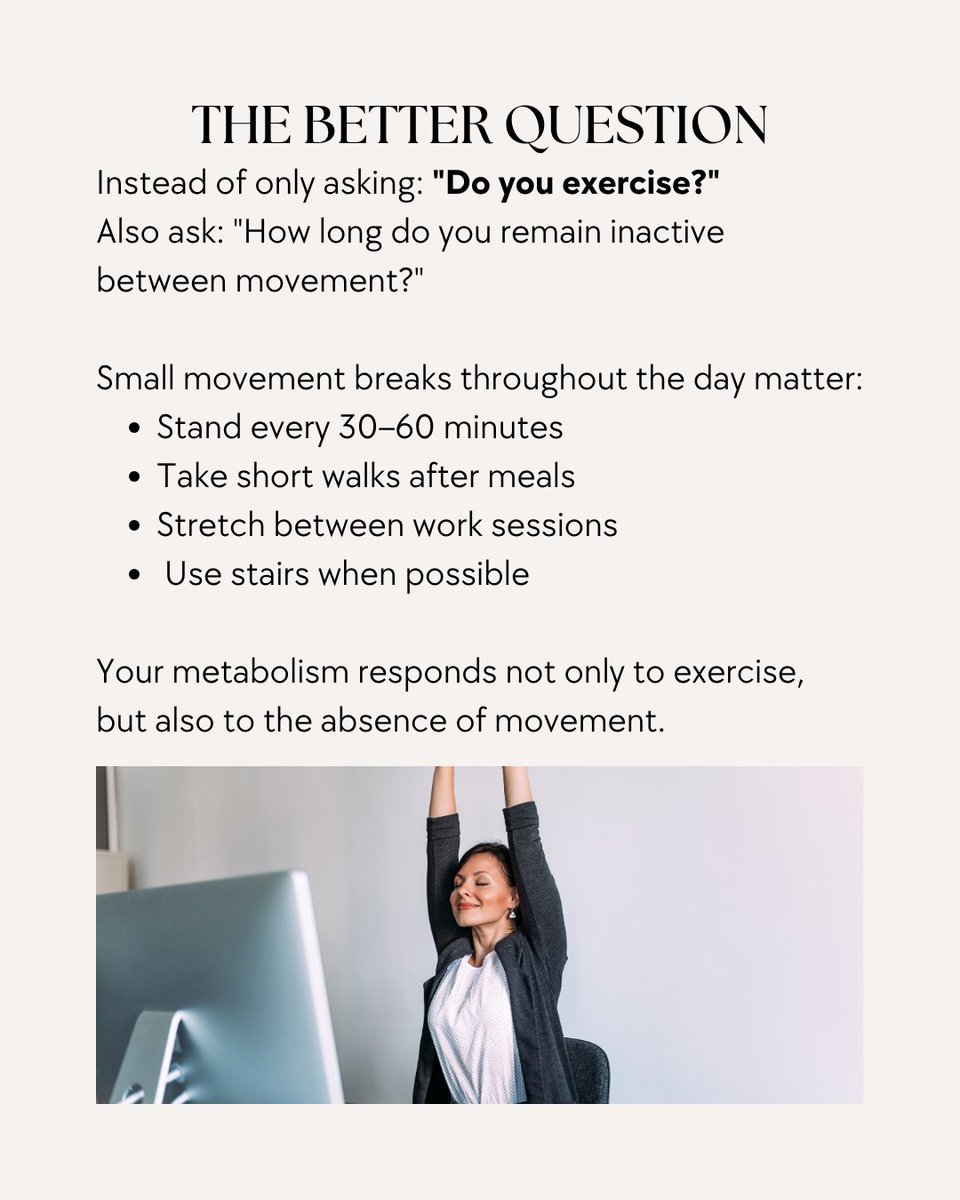
This is because human metabolism responds not only to exercise, but also to the absence of movement.
The issue is often not just: "Do you exercise?"
It's also: "How long do you remain inactive between movement?"
A one-hour workout cannot always physiologically offset 10–12 hours of uninterrupted sitting.
From a clinical perspective, health is not built only through dedicated exercise sessions. It is also shaped by the small movement patterns repeated throughout the day.
Sometimes the body needs less "hardcore training" and more frequent reminders that it was designed to move.
#SedentaryLifestyle #MetabolicHealth #MovementMatters #ExerciseScience #BeyondKilosAndInches

3
11
39
1,559

Essentials of Strength Training and Conditioning, Fifth Edition, provides the most comprehensive information on organisation and administration of facilities, testing and evaluation, exercise techniques, training adaptations, program design, and structure and function of body systems.
🔗 bit.ly/4s7KPWu
#ExerciseScience #StrengthTraining
311

Jun 10
🚨 New Research: High-Intensity Sports Participation Induces Itch-Associated Sensitive Skin 🏃♂️🔥
Exercise is healthy, but intense physical activity may come with an itchy cost — introducing "Sport-Induced Sensitive Skin" (SSS)!
Key Insights:
✅ 61.56% of active participants report skin discomfort during sports
✅ Itch is the predominant symptom during (40.1%) and after (36.1%) exercise
✅Anaerobic sports significantly increase itch risk (OR = 2.78)
✅High-intensity exercise (>140 bpm) dramatically raises itch risk (OR = 6.01)
✅ SSS prevalence: 55.8% of participants met criteria post-exercise
✅ Proposed simple diagnostic: Itch NRS score ≥ 4 (AUC = 0.77)
✅ Persistent symptoms highlight prolonged impact on skin health
📚Authors: Liu et al.
📅Journal: *Phenomics*, 2025
📄Full study: doi.org/10.1007/s43657-025-0…
#SportsDermatology #SensitiveSkin #ExerciseScience #Itch #SkinHealth #AthleticTraining #Dermatology #SportsMedicine #PhysicalActivity 🔥🧴
24
𐤔𐤋𐤌𐤀𐤃𐤍𐤀𐤋 A.C. Swinburne retweeted

Another great Podcast on @ExerciseScience this week . Featuring Brad Schoenfeld on some of the major myths still floating around the gym . At 40 minutes its perfect length for anyone trying to do 20 minutes of resistance training followed up with 20 minutes of HIIT
2
8
1,607

The sports and exercise industries are growing, and so are the opportunities. 🏆
Learn how SNU prepares students for success through its Sports Management & Administration and Exercise Science graduate programs.
🔗 hubs.ly/Q04kNCxm0
#SportsManagement #ExerciseScience

1
12

Jun 9
Bottom line: short, vigorous bursts count, and they stack up. This is observational, so it shows strong association, not proof. Source: Stamatakis et al., Nature Medicine (2022). Where could you add one burst today? #HumanOmega #Longevity #Healthspan #ExerciseScience
1
25

Jun 9
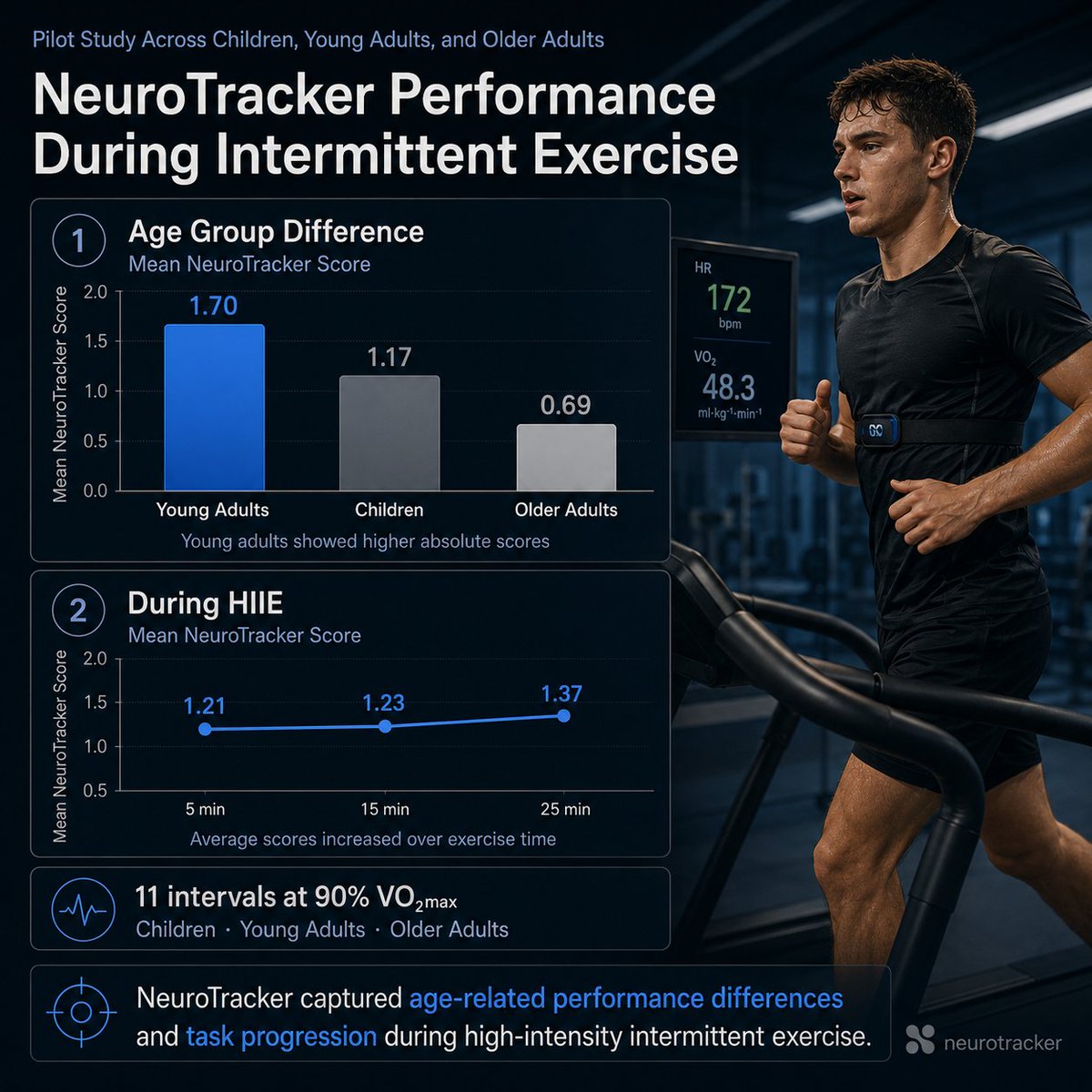
How does cognitive performance behave during high-intensity intermittent exercise?
This pilot study tested NeuroTracker performance in children, young adults, and older adults during an interval treadmill protocol.
Participants completed NeuroTracker while exercising through repeated high-intensity intervals: 30 seconds at 90% VO₂max, separated by active recovery periods.
Key findings:
- Young adults showed the highest absolute NeuroTracker scores
- NeuroTracker performance increased over exercise time across the protocol
- Young adults showed the clearest absolute progression during exercise
- Older adults showed meaningful progression from their own baseline
These findings are interesting because they place cognitive performance in a physical-load context.
In sport, driving, military, and daily movement environments, cognition rarely happens at rest. People often need to track dynamic information while the body is already under physical demand.
The study was exploratory with small groups, but it provides a useful research signal: NeuroTracker can capture age-related performance differences under intermittent physical load.
Study: “Effect of Intermittent Exercise on Performance in 3D Multiple Objects Tracking in Children, Young and Older Adults — A Pilot Study.”
neurotrackerx.com/science/ef…
#ExerciseScience #CognitivePerformance #NeuroTracker
1
18
Earn your degree on your terms. 💪🎓
Learn more: hubs.ly/Q04fv3bR0
#LionelUniversity #ExerciseScience #OnlineDegree #FitnessCareer #PersonalTrainer #CareerGrowth #HigherEducation #FlexibleLearning #StudyOnline #FutureFocused

12
Jun 7
Muscle growth: the goal is not just to survive the set. Goal create enough stimulus to adapt while managing fatigue. That’s why RIR, exercise selection, and volume all matter. What do you think drives growth most: load, volume, or effort? #RIR #Hypertrophy #ExerciseScience
52

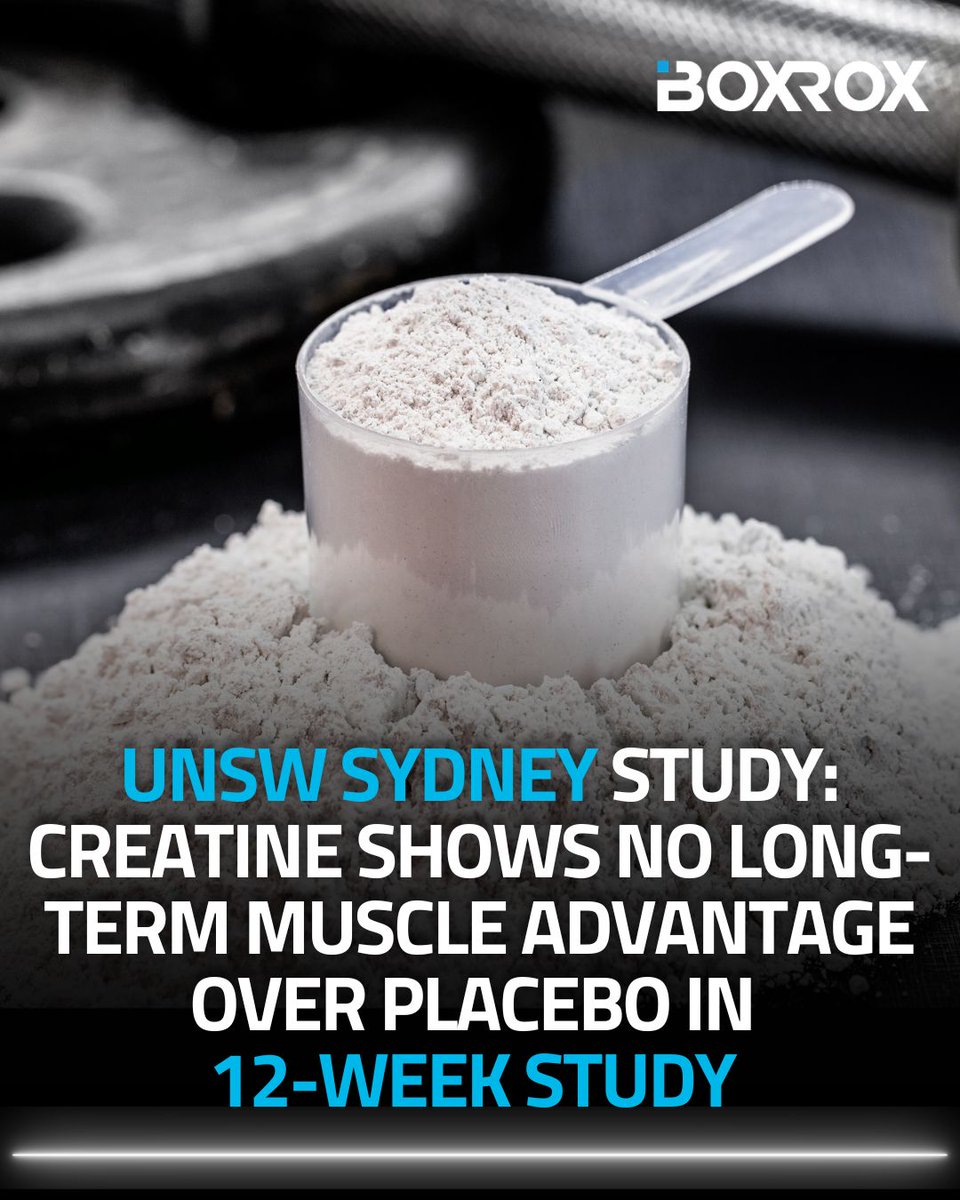
🧪 New research from UNSW Sydney is challenging one of the most widely held beliefs in sports nutrition.
A 12-week clinical trial involving 54 participants found that people taking 5g of creatine per day while following a supervised resistance training program gained the same amount of lean muscle mass as those taking a placebo. Both groups added around 2kg of lean body mass over the course of the study.
Researchers used a one-week "wash-in" period before training began, allowing them to separate the effects of creatine from the effects of exercise. While the creatine group initially gained slightly more lean mass, the increase was likely due to water retention rather than muscle growth, according to the study authors.
The findings do not suggest that creatine is ineffective altogether. Instead, the researchers believe the commonly recommended 5g daily maintenance dose may not be enough to produce additional muscle gains, and future studies may investigate whether higher doses or longer supplementation periods produce different results.
The study was published in the journal Nutrients and adds to the ongoing discussion around one of the world's most popular sports supplements.
#Creatine #SportsScience #StrengthTraining #ResistanceTraining #MuscleGrowth #FitnessResearch #SportsNutrition #GymScience #ExerciseScience #UNSWSydney
84

Your Brain on Exercise vs. Your Brain on the Couch
Follow @TheHiddenWhy for neuroscience that changes behavior
#BrainHealth #Neuroscience #ExerciseScience #CognitivePerformance #Leadership #HealthyAging #PreventiveMedicine #PeakPerformance
1