
🌍 Global Investor Mood on India: Sombre, Even Bleak — A Candid Reality Check from the Road!
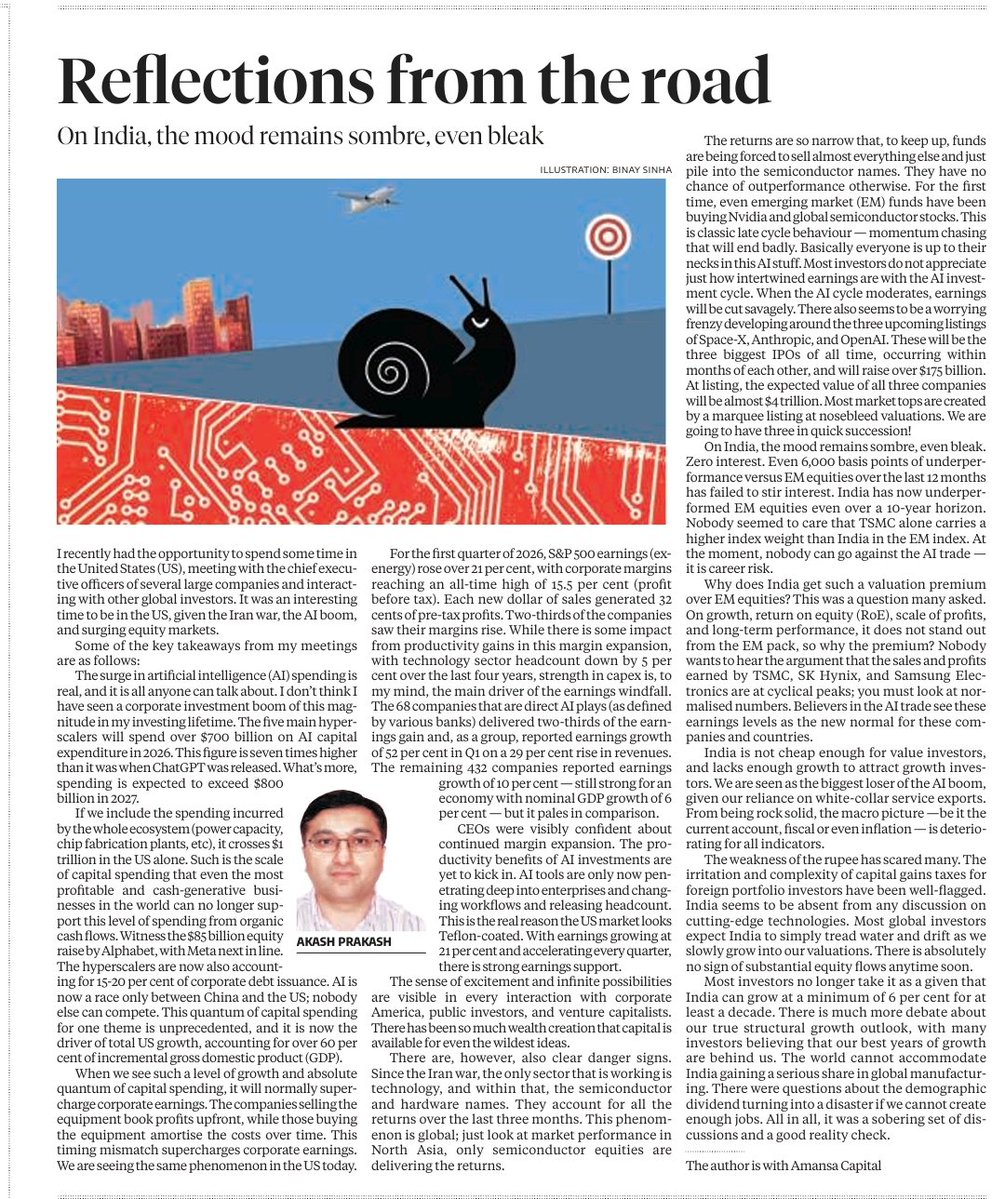
Akash Prakash of Amansa Capital shares a sobering account of global investor sentiment on India after meetings with CEOs of large companies and global investors in the US — and the picture is far from flattering.
🔑 Key Highlights:
🤖 The AI Boom — Unprecedented Capital Surge:
• Five hyperscalers to spend over $700 billion on AI capex in 2026 — seven times pre-ChatGPT levels — expected to exceed $800 billion in 2027
• Including ecosystem spending (power, chips, fabrication plants), total crosses $1 trillion in the US alone — now driving 60% of incremental US GDP growth
• S&P 500 Q1 2026 earnings rose 21% with corporate margins at all-time high of 15.5% — AI productivity benefits yet to fully kick in.
⚠️ Clear Danger Signs:
• Only semiconductor stocks are delivering returns — EM funds now forced to buy Nvidia and global chip stocks, classic late-cycle momentum chasing
• Upcoming IPOs of Space-X, Anthropic & OpenAI — potentially the three biggest IPOs of all time, raising $175 billion , with combined expected valuation of ~$4 trillion — market top risk?
🇮🇳 India — The Hard Truth:
• Zero interest from global investors — India has underperformed EM equities by 6,000 bps over 12 months and even on a 10-year horizon
• India's valuation premium over EM peers is questioned — on growth, RoE, scale of profits, India does not stand out from the EM pack
• Macro picture deteriorating across current account, fiscal position, and inflation — rupee weakness has scared many investors.
• India seen as the biggest loser of the AI boom given reliance on white-collar services exports.
• Most global investors no longer take 6% minimum GDP growth as a given — debate growing about India's true structural growth outlook.
• "Most global investors expect India to simply tread water and drift as we slowly grow into our valuations. There is absolutely no sign of substantial equity flows anytime soon".
💡 BFSI Implication:
For Indian banks, NBFCs and capital market participants, this global investor disenchantment translates directly into continued FPI equity outflows, sustained rupee pressure, higher cost of external capital, and reduced appetite for India-focused funds — reinforcing the urgency of the structural reforms currently underway.
👇 Do you agree with this assessment — is India going through a temporary rough patch or a more fundamental re-rating by global investors?
#IndiaInvesting #GlobalInvestors #AIBoom #FPI #EmergingMarkets #IndiaEquities #AkashPrakash #AmansaCapital #Semiconductor #Nvidia #Anthropic #OpenAI #SpaceX #IPO #IndiaGrowth #RupeeDepreciation #BFSIIndia #CapitalMarkets #FIIOutflows #MacroIndia #ValuationPremium #AICapex #USMarkets #InvestorSentiment
1
161

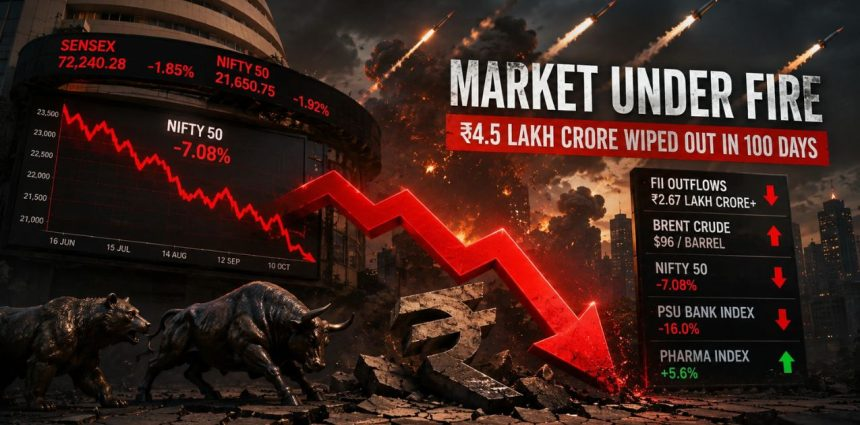
₹4.5 Lakh Crore Lost: Can Nifty Recover From This Shock?
Read More: niftytrader.in/markets/nifty…
#Niftytrader #Nifty #StockMarket #FIIOutflows #BrentCrude #IndianMarkets #Sensex #MarketCorrection #PharmaStocks #PSUBanks #InvestingIndia
1
88

Jun 7
US-Iran tensions, RBI policy and other factors likely to drive stock market next week yespunjab.com/?p=262627
#StockMarket #Sensex #Nifty #RBI #IndianEconomy #WestAsia #OilPrices #CrudeOil #USBondYields #FIIOutflows #MumbaiNews #MarketNews #GlobalMarkets #Inflation #Geopolitics
108

Jun 4
Are concerns around rupee depreciation, FII outflows and rate hikes making investors nervous? 🤔 In our latest Fixed Income Outlook, Mr Manish Banthia, CIO – Fixed Income, ICICI Prudential AMC, explains why the current environment could actually present some opportunities for debt investors. Watch as he shares insights on interest rates, debt markets, floating-rate instruments, and why he remains bullish on India.
▶️ Watch now to understand the opportunities in today's fixed income landscape.
#FixedIncomeOutlook #DebtMarketIndia #RBIPolicy #InterestRates #BondMarket #DebtFunds #FixedIncomeInvesting #FloatingRateInstruments #FIIOutflows #IndiaEconomy #RupeeDepreciation #InvestmentStrategy #MutualFunds #ICICIPrudentialMutualFund
3
467

Who are the DIIs absorbing FII selling in Indian markets? A clear breakdown 👇
DIIs = Domestic Institutional Investors. They are the big buyers stepping in as Foreign Institutional Investors (FIIs) sell heavily.
Main DIIs:
• Mutual Funds (especially through your SIPs)
• Insurance companies (like LIC, funded by your insurance premiums)
• Pension & Provident Funds (your retirement savings, EPF, NPS etc.)
• Banks and other Indian institutions
They use ordinary Indians’ money to buy the shares that FIIs are dumping.
The Negative Side of DIIs Absorbing Everything:
• It’s mostly retail savings (your SIPs, insurance premiums, PF contributions) supporting the market. If stocks fall further, common people lose on their life savings and retirement funds.
• Creates artificial support, stock prices stay higher than fundamentals justify, hiding real weaknesses in the economy or companies.
• Big risk of future crash: If SIP inflows slow down or people start withdrawing money (redemptions), the support can vanish suddenly, leading to a sharper fall.
• Opportunity cost: This money gets locked in stocks instead of safer options or other important needs.
• Over-reliance on domestic money builds market fragility, like a bubble that can pop painfully later.
Domestic buyers have prevented much sharper falls so far, credit to them. But remember: This is not free support. It’s our own money at risk.
#FII #DII #IndianStockMarket #FIIOutflows #MutualFunds
1
1
4
226

X3407/26
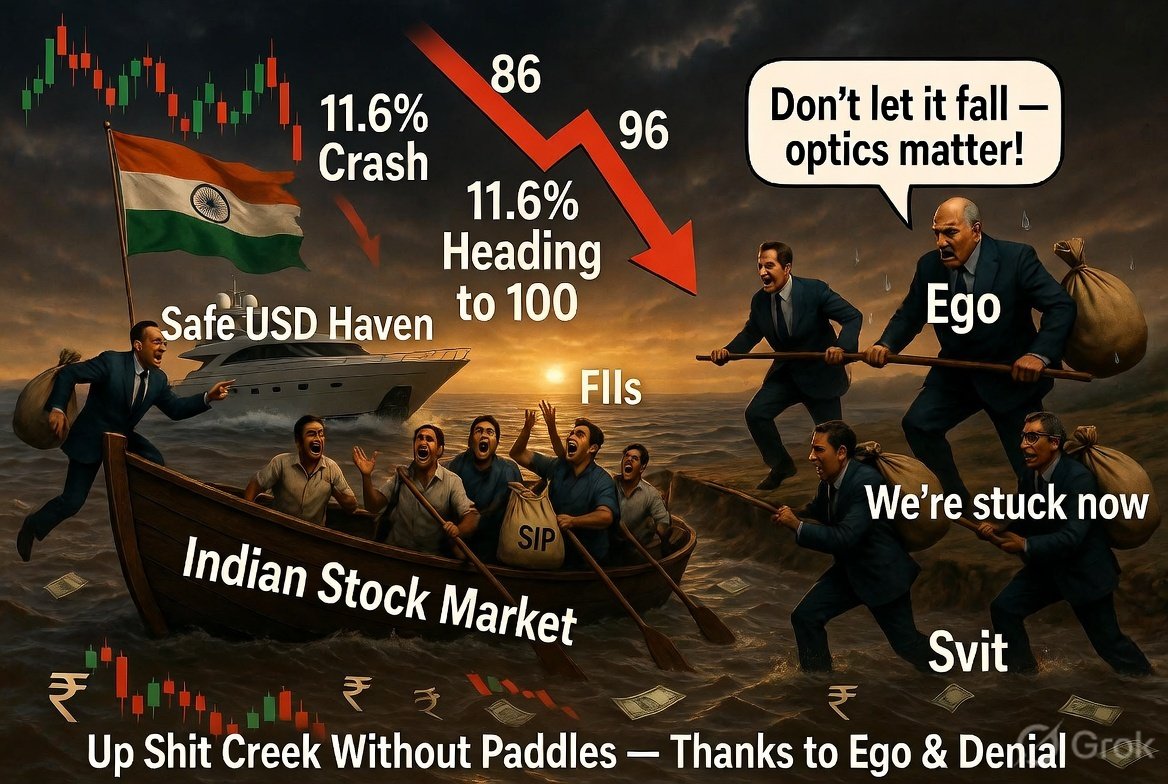
̲𝗥̲𝘂̲𝗽̲𝗲̲𝗲̲ ̲𝗖̲𝗿̲𝘂̲𝗺̲𝗯̲𝗹̲𝗲̲𝘀̲ ̲𝗳̲𝗿̲𝗼̲𝗺̲ ̲𝟴̲𝟲̲ ̲𝘁̲𝗼̲ ̲𝟵̲𝟲̲ ̲𝘃̲𝘀̲ 𝗨̲𝗦̲𝗗̲ ̲—̲ 𝗔̲𝗻̲ ̲𝟭̲𝟭̲.̲𝟲̲%̲ ̲ 𝘄̲𝗶̲𝗽̲𝗲̲𝗼̲𝘂̲𝘁̲ ̲𝗶̲𝗻̲ ̲𝗮̲ ̲𝘆̲𝗲̲𝗮̲𝗿̲.
FIIs are bolting for the exit — and who can blame them? Waiting risks deeper losses as the rupee barrels toward 100. Yet the Modi government's ego-driven optics have handed them a cushy getaway. Instead of letting markets find their level, it leaned on Domestic Institutional Investors (DIIs) and mutual funds to keep buying aggressively and prop up indices. A crashing market would sting politically, after all.
Result? DIIs became the perfect exit liquidity for FIIs, absorbing sales at elevated prices. Now DIIs and MFs sit on high-cost holdings with thinning dividends and compressed future returns. As yields disappoint, SIP inflows — the retail backbone — have already started softening from recent peaks.
We're adrift in rough waters with no paddles. The "DII savior" narrative masked the deeper rot: policy denial, valuation disconnect, and currency reality catching up.
The bill for this false stability is coming due. Retail investors will feel it in portfolios and returns. How many will have the stomach to hold through the flush?
̲𝗧̲𝗶̲𝗺̲𝗲̲ ̲𝘁̲𝗼̲ ̲𝗳̲𝗮̲𝗰̲𝗲̲ ̲𝗳̲𝗮̲𝗰̲𝘁̲𝘀̲ ̲𝗼̲𝘃̲𝗲̲𝗿̲ ̲𝗳̲𝗲̲𝗲̲𝗹̲-̲𝗴̲𝗼̲𝗼̲𝗱̲ ̲𝗻̲𝗮̲𝗿̲𝗿̲𝗮̲𝘁̲𝗶̲𝘃̲𝗲̲𝘀̲. India’s strengths are real — but denial isn’t a strategy.
#RupeeCrisis #FIIOutflows #DIIBuying #IndianStockMarket #ModiEconomy #MarketReality #SIPWarning #EconomicTruths
1
1
152

Apr 29
Nifty Outlook May 2026: Can the 7.5% April Relief Rally Sustain Amid Election Results?
brameshtechanalysis.com/2026…
#NiftyOutlook #NiftyMay2026 #AprilReliefRally #ElectionResultsNifty #FIIOutflows #NiftyTechnicalAnalysis #BankNifty #IndiaVIX #Nifty23000 #MarketVolatility #StockMarketIndia
2
17
3,033

Apr 28
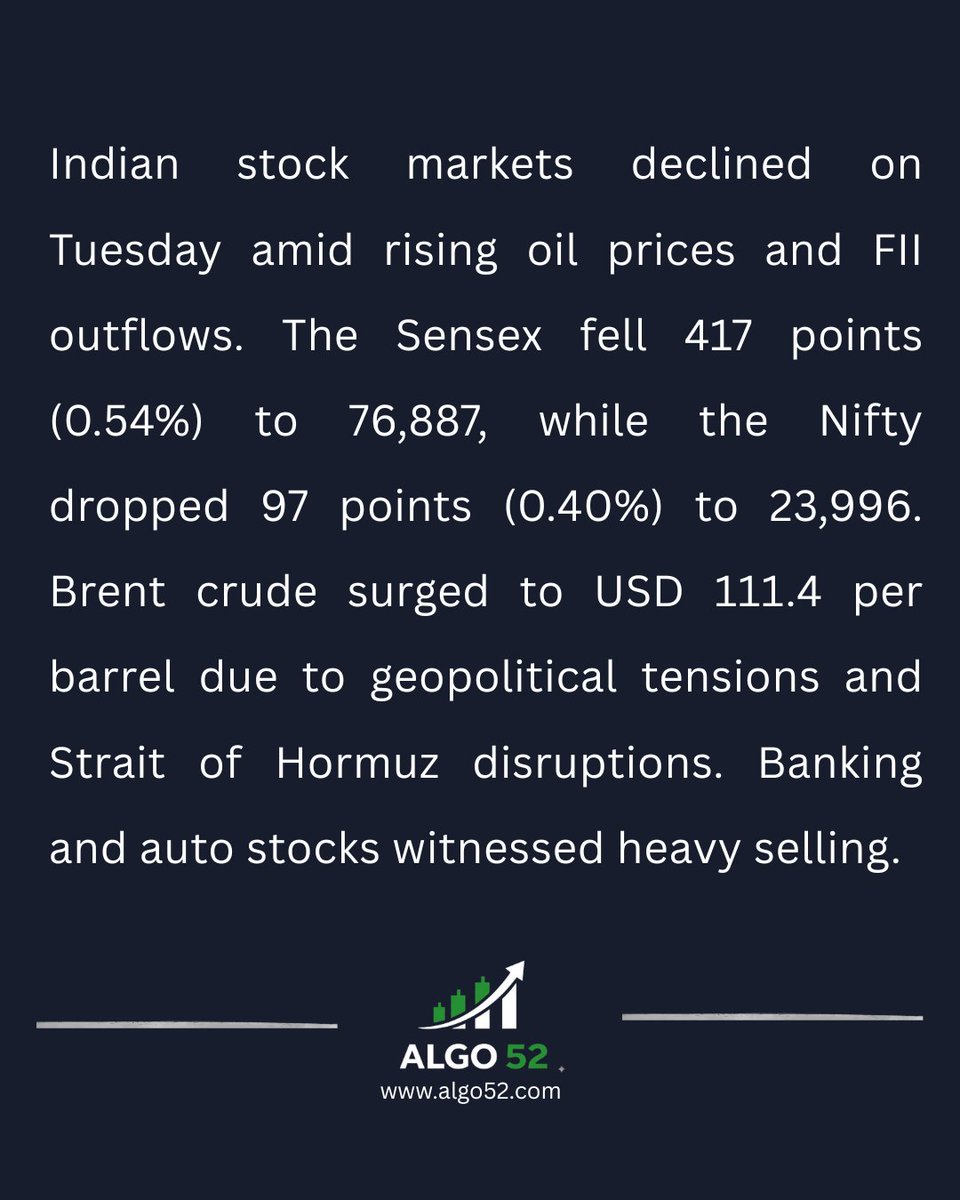
Indian stock markets ended lower today as surging oil prices and FII outflows dampened sentiment. Sensex fell 417 pts to 76,887 and Nifty dropped 97 pts to 23,996. Brent crude rose to $111.4/barrel amid geopolitical tensions.
#StockMarket #Sensex #Nifty #OilPrices #FIIOutflows

1
1
5
66

Apr 27
#AwaazMarket | घरेलू निवेशकों का दबदबा बाजार में लगातार बढ़ता जा रहा है
- मॉर्गन स्टैनली की ताजा रिपोर्ट के मुताबिक भारतीय शेयर बाजार में FIIs की ओनरशिप में तेज गिरावट आई है
- साथ ही घरेलू निवेशक की हिस्सेदारी में उछाल आया है, ज्यादा डिटेल्स बता रही है @shreyaworld100
#DomesticInvestors #RetailInvestors #FIIs #FIIOutflows
3
30
5,573

Apr 24
BUSINESS
Rupee plummets past 94/USD level; settles 33 paise lower
Click here:
dailypioneer.com/news/rupee-…
#Rupee #USDINR #CurrencyMarket #Forex #CrudeOil #GlobalEconomy #FIIOutflows #IndianEconomy #ExchangeRate #Geopolitics
3
89
Apr 24
BUSINESS
Markets extend losses as crude hits $100
Click here: dailypioneer.com/news/market…
#StockMarket #Sensex #Nifty #CrudeOil #GlobalMarkets #Inflation #FIIOutflows #MarketCrash #Geopolitics #IndianEconomy
3
315
Apr 1
BUSINESS
Market outlook for FY27 remains optimistic, says Analysts
Click- dailypioneer.com/news/market…
#IndianMarkets #Sensex #Nifty #StockMarket #EquityMarkets #MarketOutlook #FY27 #GlobalEconomy #Geopolitics #CrudeOil #BrentCrude #FIIOutflows #ForeignInvestors #Rupee #Inflation #InterestRates #Volatility #MarketCorrection #InvestmentStrategy #EarningsGrowth #IndiaEconomy #FinancialMarkets #RiskOff #MarketRecovery
3
108

Mar 31
𝐍𝐢𝐟𝐭𝐲 𝟓𝟎 𝐅𝐚𝐥𝐥𝐬 𝟏𝟏% 𝐢𝐧 𝐌𝐚𝐫𝐜𝐡, 𝐃𝐨𝐰𝐧 𝟏𝟓% 𝐅𝐫𝐨𝐦 𝐏𝐞𝐚𝐤 𝐨𝐧 𝐅𝐈𝐈 𝐎𝐮𝐭𝐟𝐥𝐨𝐰𝐬 𝐚𝐧𝐝 𝐎𝐢𝐥 𝐒𝐮𝐫𝐠𝐞
#Nifty50 #IndianStockMarket #GlobalMarkets #MarketCrash #FIIOutflows #CrudeOil #MarketVolatility
Read More 👇
sfctoday.com/stocks/nifty-50…
2
314

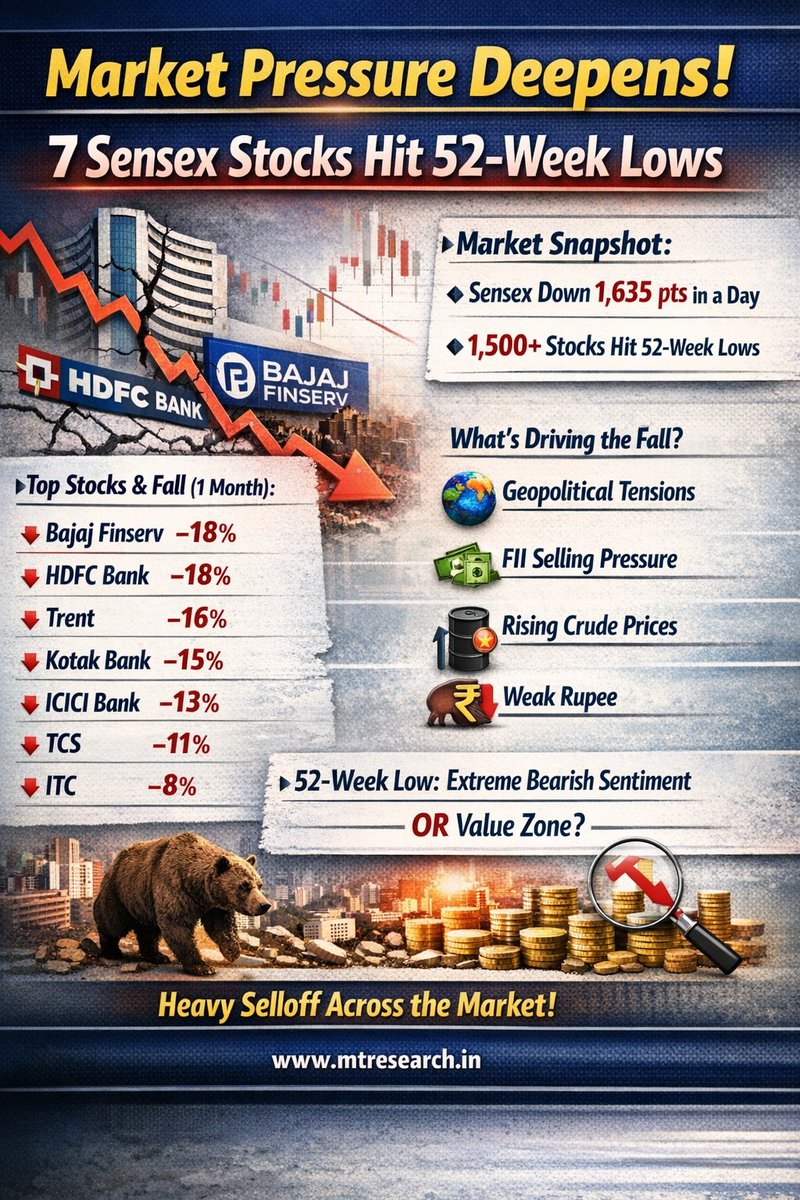
📉 Market Pressure Deepens: 7 Sensex Stocks Hit 52-Week Lows.
#Sensex #StockMarketIndia #MarketCrash #52WeekLow #Nifty50 #BankingStocks #ITStocks #FIIOutflows #MarketFall #Investing #Trading #DalalStreet #NIFTY #STOCKS
2
50

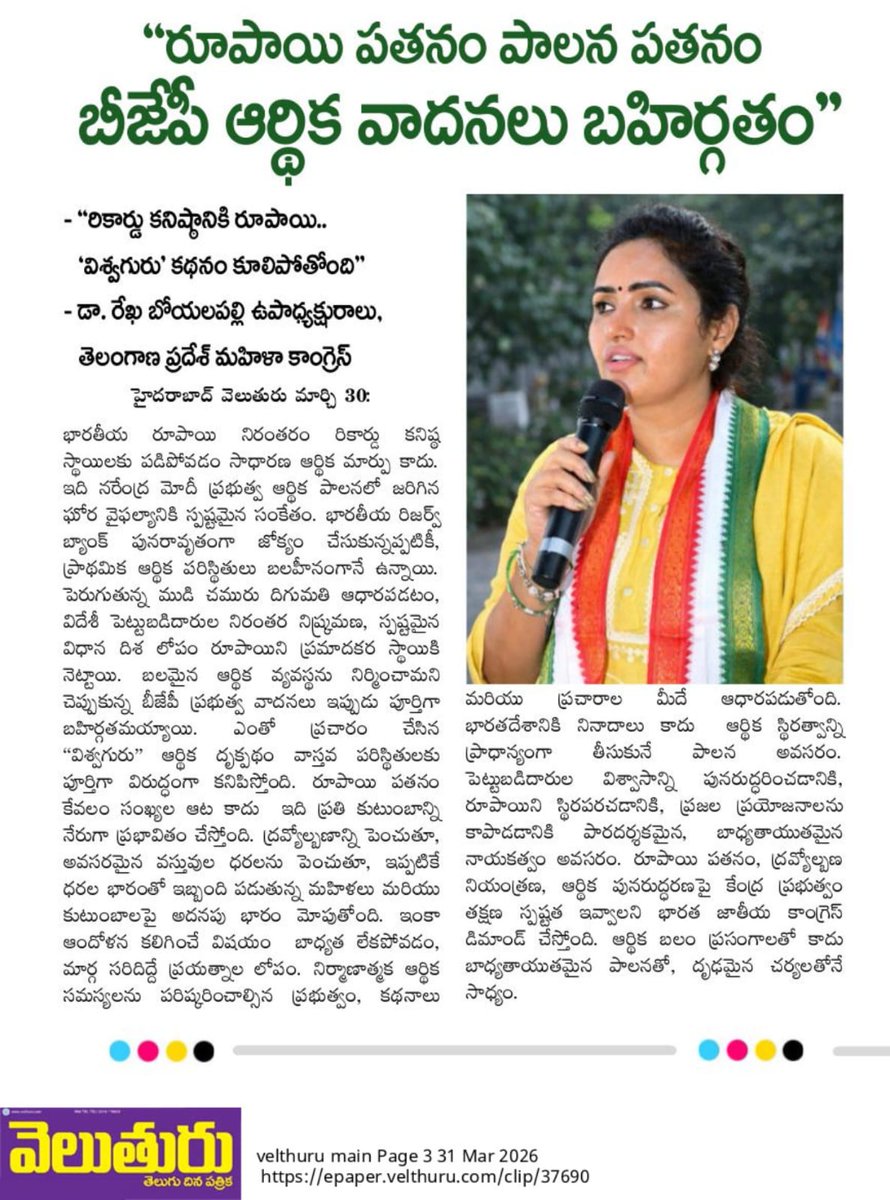
Rupee Collapse = A Question on Governance
When the ₹ hits record lows, it’s not just an economic fluctuation — it reflects deeper concerns about leadership and policy direction.
Despite efforts by the RBI to stabilize the situation, key challenges remain: weakening fundamentals, increasing import dependence, continued FII outflows, and a lack of decisive policy action.
So where does the much-discussed “Vishwaguru” economic vision stand today?
India needs strong, stable economic strategies — not just narratives. This isn’t just volatility; it raises serious questions about economic management and accountability.
.
.
.
.
.
@narendramodi @BJP4India @INCTelangana @INCIndia @RahulGandhi @priyankagandhi @kharge
@kcvenugopalmp @OffDSB @DamodarCilarapu
@kiran_chamala @IYC @LambaAlka @Jairam_Ramesh
@MahilaCongress @KomatireddyKVR @TelanganaCMO
@uttampadmavathi @TelanganaPMC @MNatarajanINC
@Pawankhera @Bmaheshgoud6666 @Ponnam_INC @INC_Ponguleti @rajgopalreddy_K @UttamINC
@Bhatti_Mallu @harkararao @Mkamalakshi_INC
@ErrabelliSwarna
.
.
.
.
.
.
.
#RupeeFall #EconomicCrisis #IndiaEconomy #AccountabilityNow #PolicyFailure #FiscalReality #EconomicConcerns #StabilityMatters #IndianRupee #EconomicReforms #InflationImpact #FIIOutflows #ImportDependence #GrowthChallenges #EconomicDebate
1
3
80
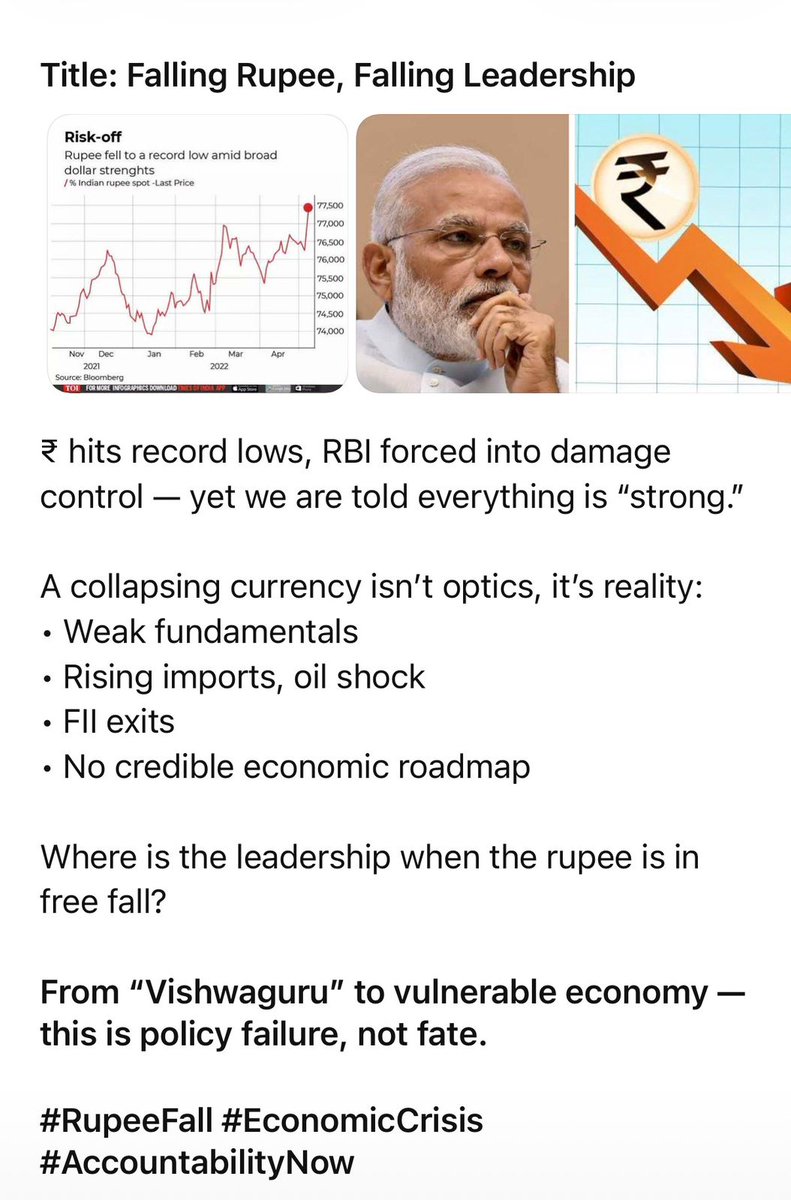
Rupee Collapse = Governance Failure
₹ hitting record lows is not just economics , it is a clear verdict on failed leadership.
Despite RBI firefighting, the reality is undeniable: weak fundamentals, rising import dependence, continuous FII exits, and policy paralysis.
Where is the much-hyped “Vishwaguru” economic vision now?
India needs stability, not PR narratives.
This is not a fluctuation,this is economic mismanagement and lack of accountability.
.
ntnews.com/hyderabad/boyalap…
.
.
.
.
.
@narendramodi @AmitShah @INCTelangana @INCIndia @RahulGandhi @priyankagandhi @kharge
@kcvenugopalmp @OffDSB @DamodarCilarapu
@kiran_chamala @IYC @LambaAlka @Jairam_Ramesh
@MahilaCongress @KomatireddyKVR @TelanganaCMO
@uttampadmavathi @TelanganaPMC @MNatarajanINC
@Pawankhera @Bmaheshgoud6666 @Ponnam_INC @INC_Ponguleti @rajgopalreddy_K @UttamINC
@Bhatti_Mallu @harkararao
@Mkamalakshi_INC
@ErrabelliSwarna
.
.
.
.
.
.
.
#RupeeFall #EconomicCrisis #ModiGovtFailure #EconomicMismanagement #AccountabilityNow #IndiaEconomy #PolicyFailure #FiscalReality #StopTheSpin #RupeeFall #EconomicCrisis #ModiGovtFailure #EconomicMismanagement #AccountabilityNow #IndiaEconomy #PolicyFailure #FiscalReality #StopTheSpin #RupeeAtRecordLow #EconomicStability #FIIOutflows #InflationImpact #WeakRupee #GovernanceMatters #EconomicTruth #IndiaGrowth #MarketReality
4
84

Mar 30
Indian Markets Face Severe Pressure in March 2026
The Nifty 50 and BSE Sensex have each declined around 10.5% this month, on track for their worst monthly performance since the COVID-19 crash in March 2020.
Key factors weighing on sentiment:
- Surging crude oil prices amid geopolitical tensions
- Record foreign institutional investor (FII) outflows of $12.3 billion in March — the highest monthly exit on record
For the full Financial Year 2026 (ending today), the indices are down approximately 4% (Nifty) and 6% (Sensex). This marks their weakest showing since FY2020, dragged by a combination of:
- India-Pakistan border tensions earlier in the year
- U.S. trade policy uncertainties in the first half
- Escalation of the Iran conflict in the second half
- Persistent foreign selling throughout
Elevated energy costs, a weakening rupee, and risk-off global sentiment have compounded the challenges for the world's fourth-largest economy.
Markets will be closely watching any de-escalation signals from the Middle East and potential policy responses for a possible relief rally.
#Nifty #Sensex #IndianStockMarket #FIIOutflows #Geopolitics

1
2
3
325

FIIs have pulled out over ₹1 lakh Cr in 2026 — with March alone bleeding ~₹88,180 Cr.
This sustained foreign selling is hammering portfolios, crushing equity gains, and dragging the rupee lower.
Many investors are watching their hard-earned allocation get destroyed in real time.
Right now, in this high-pressure environment — what is your actual equity allocation percentage?
Reply with your exact equity % (e.g., 70%, 50%, 40%) and the adjustment you made (or didn’t make) in the last 4–6 weeks.
Serious investors need to face these numbers head-on. What’s your position? 🔖
#EquityAllocation #FIIOutflows #InvestingIndia
2
2
178

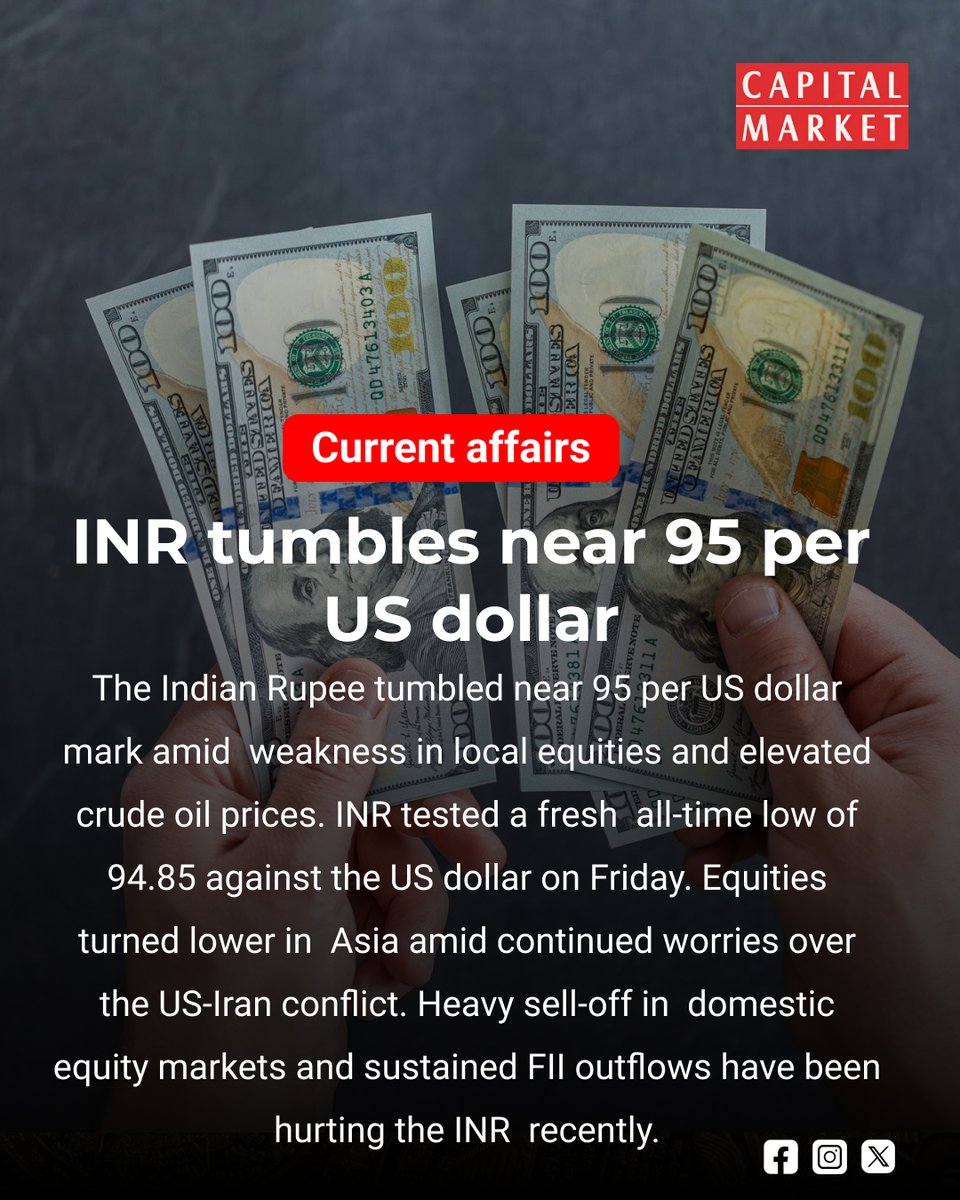
Rupee Slides Near 95/USD, Signals Rising Pressure on Indian Currency
capitalmarket.com
#Rupee #INR #USD #ForexMarket #CurrencyFall #ExchangeRate #IndiaEconomy #DollarStrength #CurrencyCrisis #MarketPressure #GlobalCues #Inflation #FIIOutflows #OilPrices #EconomicStress #TrendingNow #MarketNews #EconomicUpdate #ForexAlert
2
162
Mar 14
BUSINESS
Stock markets tumble for 3rd day
Click- dailypioneer.com/news/stock-…
#StockMarketCrash #Sensex #Nifty50 #IndianStockMarket #MarketFall #ShareMarket #BSE #NSE #GlobalMarkets #MarketVolatility #WestAsiaConflict #MiddleEastCrisis #CrudeOilPrices #BrentCrude #InvestorSentiment #FIIOutflows #DIIInvestments #EquityMarkets #FinancialMarkets #MarketNews #LarsenAndToubro #TataSteel #StateBankOfIndia #BharatElectronics #MarutiSuzuki #UltraTechCement #HindustanUnilever #BhartiAirtel #DowJones #Nasdaq
5
63