
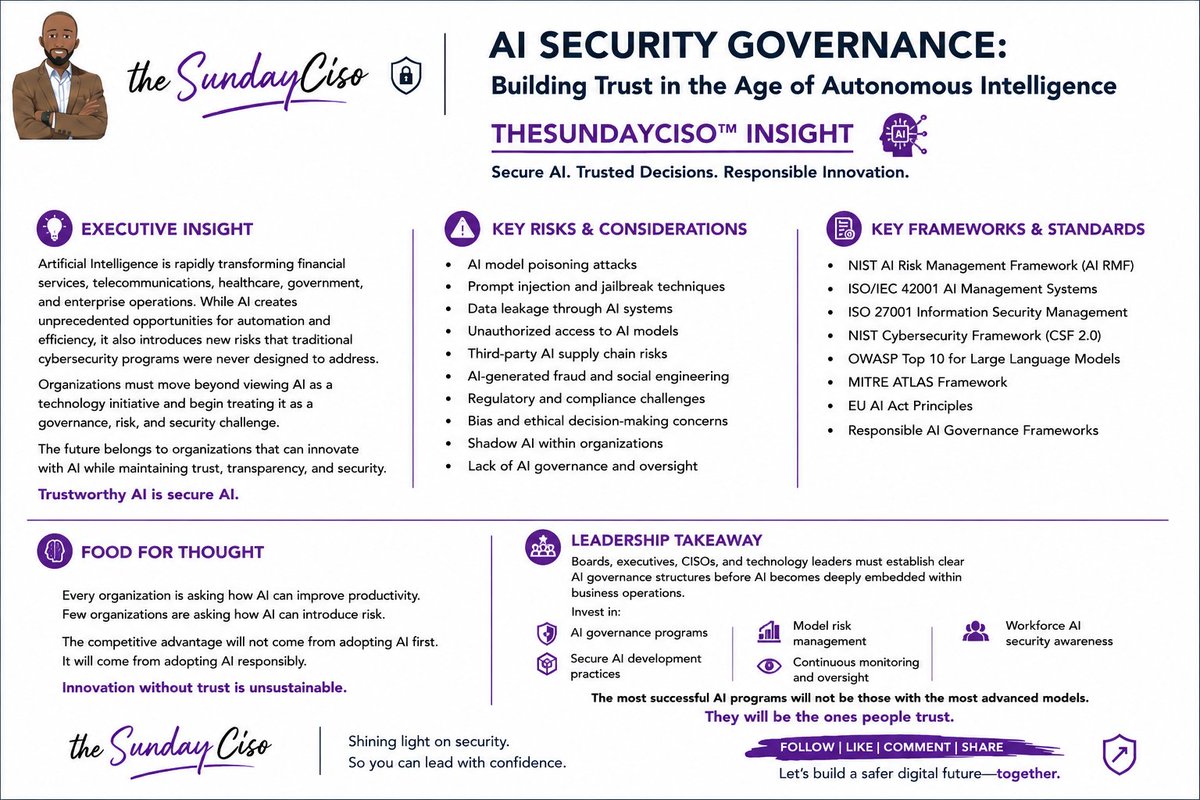
The organizations that balance innovation with governance will be best positioned to lead in the AI-driven economy.
❓ What is the biggest AI security risk your organization is currently unprepared for?
#TheSundayCISO #CyberSecurity #InfoSec #FinTechSecurity #DigitalTrust #CyberLeadership #RiskManagement #AfricaTech #CyberAfrica #SecurityAwareness

வெள்ளிக்கிழமை இரவு 8 மணி. உங்கள் ஸ்மார்ட்போனில் நுபேங்க் (Nubank) செயலியிலிருந்து ஒரு அறிவிப்பு வருகிறது. உங்கள் வங்கி கலைக்கப்பட்டுவிட்டது (Bank Liquidated) என்பதே அந்தச் செய்தி. பிரேசிலின் 90 மில்லியனுக்கும் அதிகமான வாடிக்கையாளர்கள் நம்பும் ஒரு வங்கியிடமிருந்து இத்தகைய செய்தி வந்தால் எப்படியிருக்கும்? ஜூன் 14 அன்று பலரது மொபைல் திரையில் இந்த அதிர்ச்சி மின்னியது. 📱
உலகின் மிகப்பெரிய டிஜிட்டல் வங்கிகளில் ஒன்றான நுபேங்க் இன்று ஒரு விசித்திரமான காரணத்திற்காக பகிரங்கமாக மன்னிப்பு கேட்டுக்கொண்டிருக்கிறது. ஒரு மென்பொருள் பொறியாளர் செய்த மிகச்சிறிய தவறு, வங்கியே திவாலாகிவிட்டது போன்ற ஒரு தோற்றத்தை உருவாக்கி, ஒரு தேசத்தையே சில நிமிடங்கள் உறைய வைத்தது. நுபேங்க் இணை நிறுவனர் கிறிஸ்டினா ஜன்குயிரா இதை ஒரு பித்தலாட்டமான ஆனால் உண்மையான செயல்பாட்டுப் பிழை (Operational Error) என்று இன்ஸ்டாகிராமில் ஒப்புக்கொண்டார்.
நடந்தது இதுதான்: அந்த ஊழியர் மென்பொருள் மாற்றத்திற்கான சோதனையில் ஈடுபட்டிருந்தபோது, தவறுதலாக வங்கியைக் கலைக்கும் நடைமுறைக்கான (Liquidation workflow) தகவல் தொடர்பு சங்கிலியை இயக்கிவிட்டார். அந்தத் தானியங்கி செய்தியில் எந்த வங்கியின் பெயரும் தனித்துக் குறிப்பிடப்படாததால், மென்பொருள் இயல்பாகவே நுபேங்க் என்ற பெயரையே அங்கே பொருத்திவிட்டது. ஒரு பொறியாளரின் கவனக்குறைவு, லட்சக்கணக்கான ரூபாய்களை முதலீடு செய்துள்ள வாடிக்கையாளர்களைப் பதற்றத்தின் உச்சத்துக்கே கொண்டு சென்றது. 🛠️
இந்தச் செய்தி பரவிய வேகம் பிரேசில் தேசத்தையே உலுக்கியதற்கு ஒரு வலுவான பின்னணி இருக்கிறது. கடந்த நவம்பர் மாதம், பான்கோ மாஸ்டர் (Banco Master SA) என்ற வங்கியைப் பிரேசில் மத்திய வங்கி அதிரடியாகக் கலைத்தது. அது அந்நாட்டின் மிகப்பெரிய நிதி மோசடிகளில் ஒன்று என்று இப்போதும் பேசப்படுகிறது. அந்தப் பதற்றம் முழுமையாகத் தீர்வதற்குள் நுபேங்க் போன்ற ஒரு ஜாம்பவானிடமிருந்து இத்தகைய செய்தி வந்தது சமூக வலைதளங்களில் காட்டுத்தீயாகப் பரவியது. 🏦
நிறுவனமும் மத்திய வங்கியும் உடனடியாகத் தலையிட்டு இது வெறும் தொழில்நுட்பப் பிழை தான் என்று விளக்கமளித்தன. ஆனால் ஒரே ஒரு தவறான கோடிங் வரி, ஒரு நாட்டின் பொருளாதார நம்பிக்கையையே அசைத்துப் பார்க்கும் வலிமை கொண்டது என்பதை இந்தச் சம்பவம் உலகிற்கு உணர்த்தியுள்ளது. டிஜிட்டல் யுகத்தில் வங்கிகள் எவ்வளவுதான் நுட்பமாகச் செயல்பட்டாலும், மனிதத் தவறுகளுக்கான (Human error) வாய்ப்பு எப்போதும் ஒரு ஆபத்தாகவே நீடிக்கிறது.
தொழில்நுட்பம் நம் வேலைகளை எளிதாக்கினாலும், ஒரு வினாடி கவனக்குறைவு ஒட்டுமொத்த பிராண்ட் மதிப்பையும் சிதைக்கக்கூடும் என்பதற்கு இதுவே சாட்சி. தற்போதைய நிலையில் நுபேங்க் இயல்பு நிலைக்குத் திரும்பினாலும், அதன் பாதுகாப்பு நெறிமுறைகள் குறித்துப் பலரும் கேள்வி எழுப்பி வருகின்றனர்.
ஒரு வங்கியின் உண்மையான பலம் அதன் தொழில்நுட்பத்தில் இருக்கிறதா அல்லது அது வாடிக்கையாளர்களிடம் சம்பாதிக்கும் நம்பிக்கையில் இருக்கிறதா? நாளை காலையில் உங்கள் வங்கி செயலியிலிருந்து இதே போன்ற ஒரு செய்தி வந்தால், நீங்கள் அதைத் தொழில்நுட்பப் பிழை என்று நம்புவீர்களா அல்லது உடனடியாகப் பணத்தை எடுக்க வங்கிக்கு ஓடுவீர்களா? ❓
#Nubank #FintechSecurity #BankingNews #BrazilEconomy #DigitalTrust
37
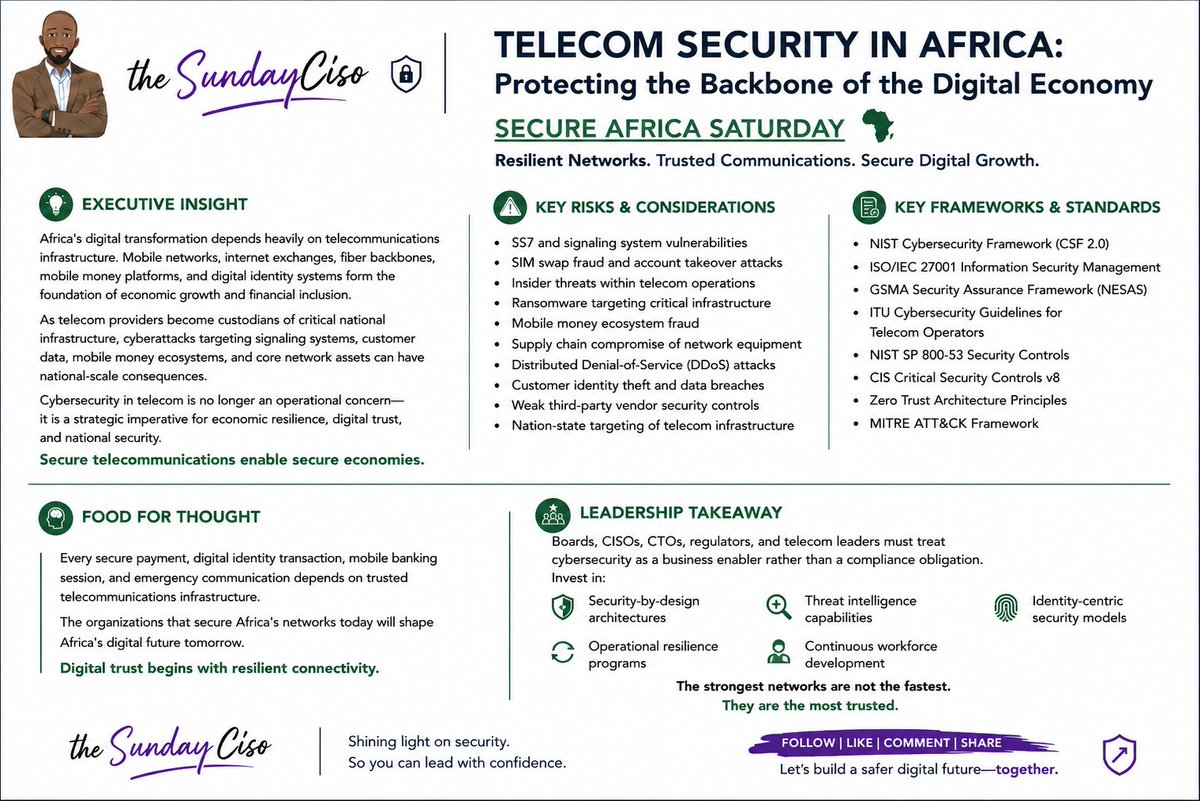
If a major telecom provider in your country suffered a week-long cyber outage, which critical services would be impacted first and is your organization prepared?
#TheSundayCISO #CyberSecurity #InfoSec #FinTechSecurity #DigitalTrust #CyberLeadership #RiskManagement #AfricaTech #CyberAfrica #SecurityAwareness
1
14

Jun 11
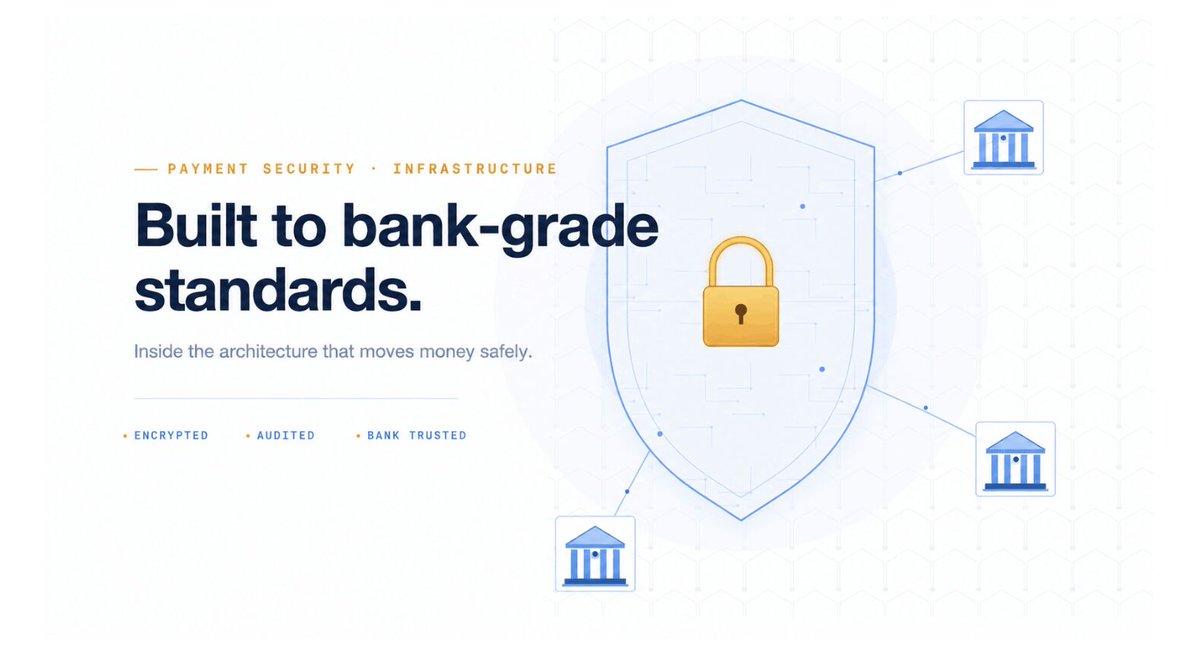
For banks, payment gateway security is not a backend concern anymore. It is a business-critical trust decision.
Read the full blog in the link below.
Blog Link: fastflowpe.com/blog/blog-pay…
#PaymentGatewaySecurity #FintechSecurity #RBICompliance #FintechIndia #FastFlowPe
7
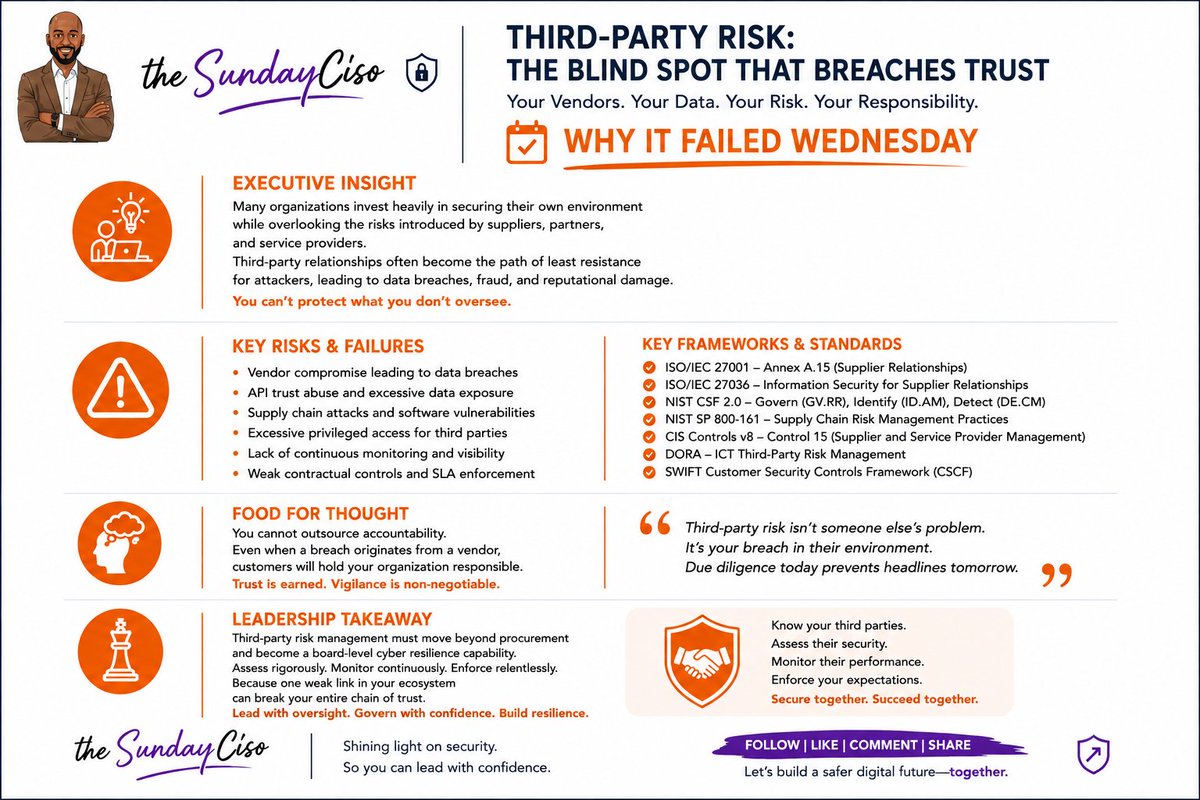
What percentage of your organization's cyber risk today comes from third parties, vendors, and supply chain partners and do you actually know?
#TheSundayCISO #CyberSecurity #InfoSec #FinTechSecurity #DigitalTrust #CyberLeadership #RiskManagement #AfricaTech #CyberAfrica #SecurityAwareness #WhyItFailedWednesday #ThirdPartyRisk #SupplyChainSecurity #CyberResilience #GRC
1
19

Jun 9
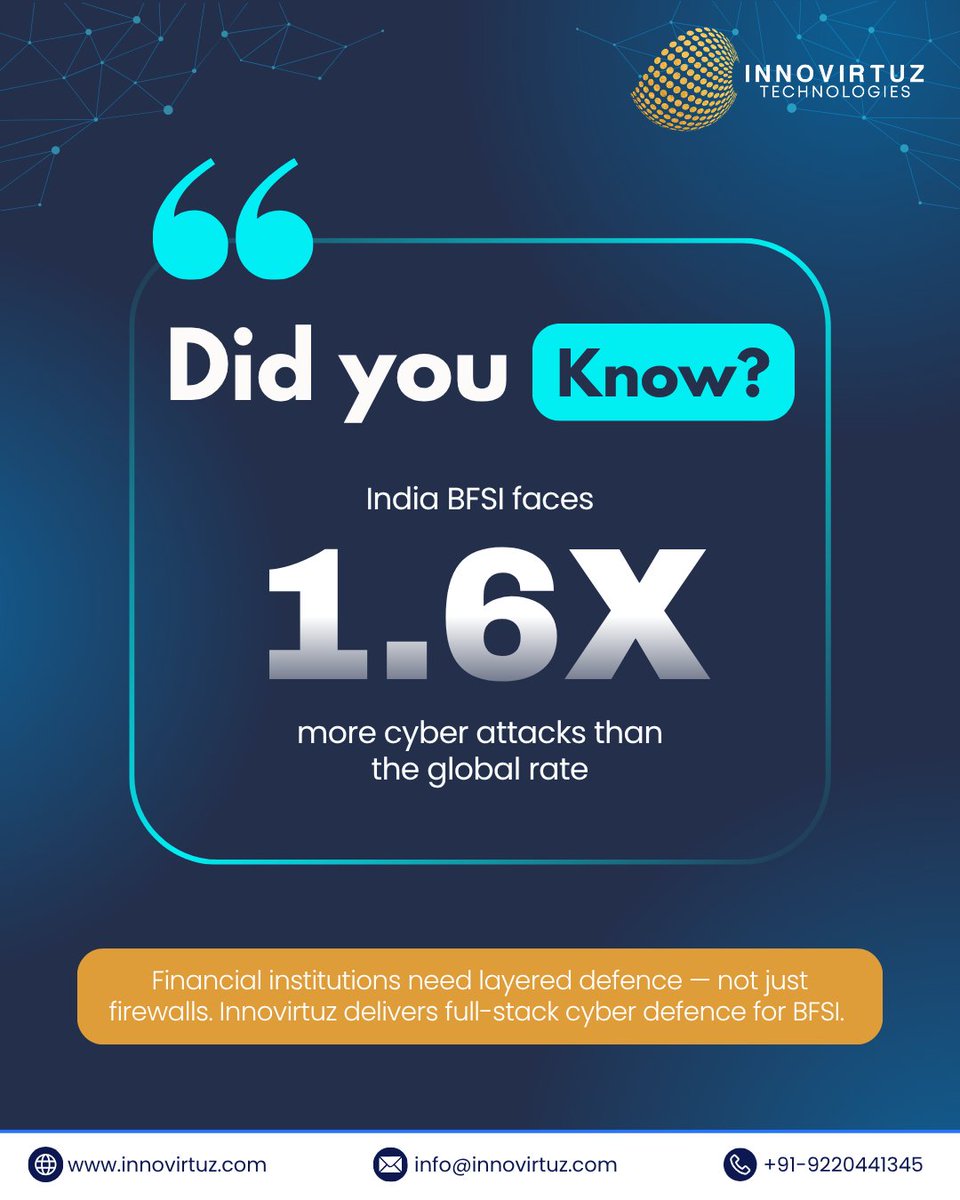
Did you know?
India's BFSI sector faces 1.6x more cyber attacks than the global rate.
#BFSI #FinancialSecurity #CyberSecurity #CyberThreats #BankingTechnology #InformationSecurity #SOC #SIEM #SOAR #ThreatIntelligence #ZeroTrust #DigitalTransformation #Innovirtuz #FinTechSecurity
6

As AI continues to compress the time between vulnerability discovery and exploitation, traditional security approaches may no longer be enough.
Read the full article here - lnkd.in/dayPDQb5
#MobileAppSecurity #AppSec #CyberSecurity #CISO #FintechSecurity #LATAM
13
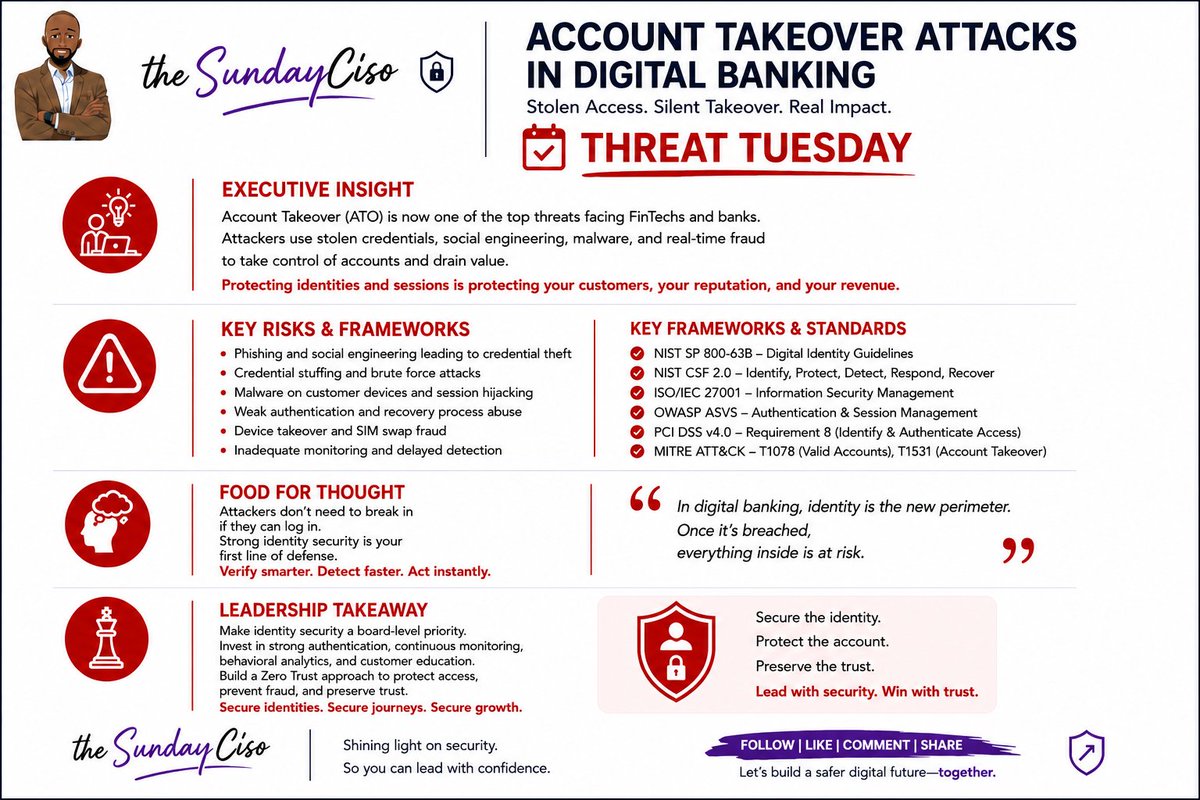
If identity is the new perimeter, should organizations invest more in identity security than traditional perimeter security controls?
#TheSundayCISO #CyberSecurity #InfoSec #FinTechSecurity #DigitalTrust #CyberLeadership #RiskManagement #AfricaTech #CyberAfrica #SecurityAwareness #ThreatTuesday #IdentitySecurity #DigitalBanking #FraudPrevention #ZeroTrust #CyberResilience
1
2
28
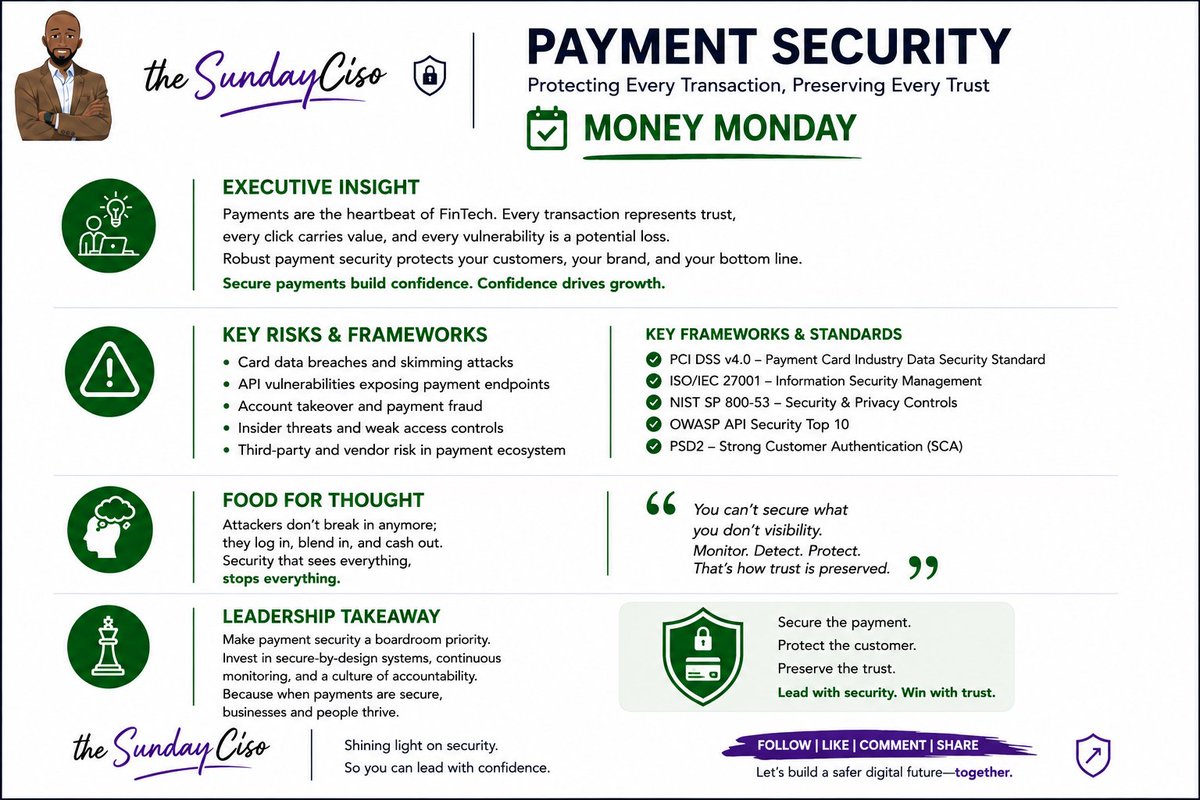
Is your organization's payment security strategy focused more on compliance or on building long-term customer trust?
#TheSundayCISO #CyberSecurity #InfoSec #FinTechSecurity #DigitalTrust #CyberLeadership #RiskManagement #AfricaTech #CyberAfrica #SecurityAwareness #MoneyMonday #PaymentSecurity #DigitalPayments #FraudPrevention
1
2
29

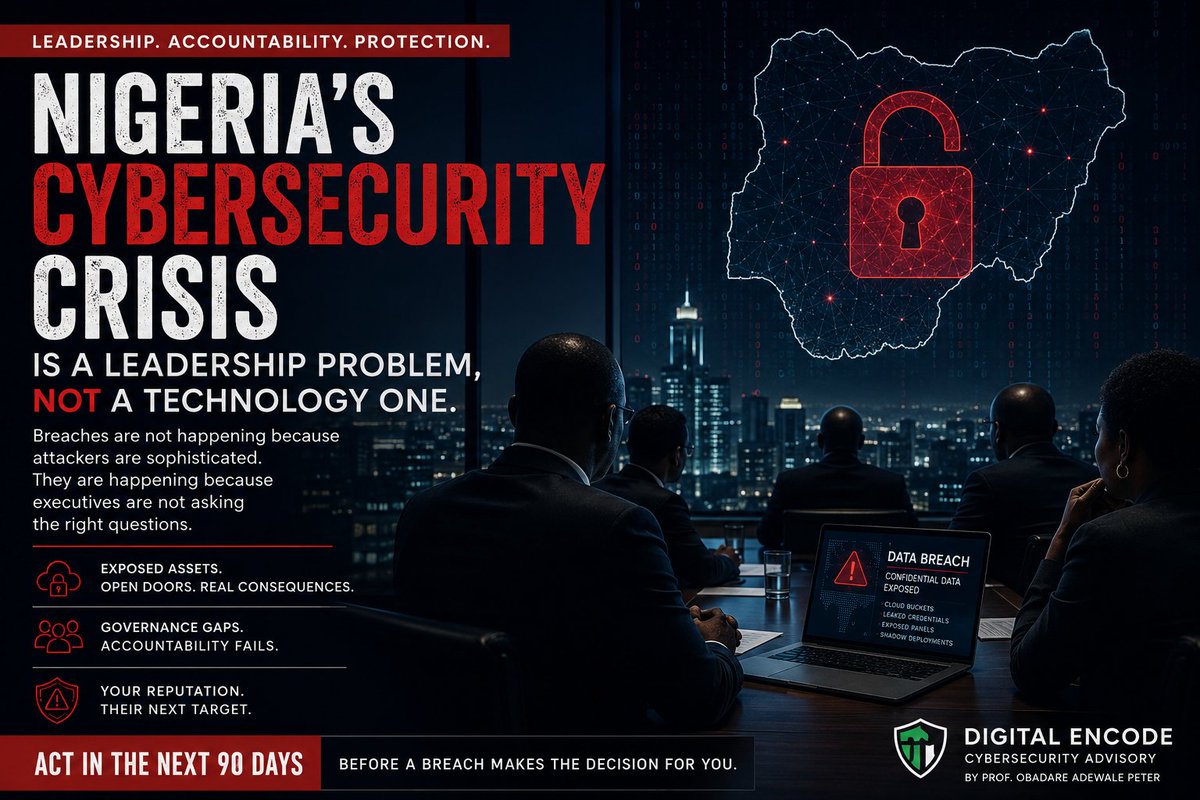
🇳🇬 Nigeria's Cybersecurity Crisis Is a Leadership Problem, Not a Technology One
The latest wave of breaches affecting banks, fintechs, and public institutions reveals a hard truth: most organisations are not being compromised because attackers are exceptionally sophisticated. They are being compromised because known risks remain unaddressed.
Exposed cloud storage, hardcoded credentials, weak access controls, shadow IT, and unmanaged third-party risks continue to create opportunities for attackers. The challenge is no longer a lack of cybersecurity tools—it is a lack of executive accountability and governance.
At The CyberDiplomat, we believe cybersecurity must be treated as a boardroom issue, not merely an IT function. Leaders must ask:
• What assets are exposed to the internet today?
• Which vendors and third parties have access to our data?
• How often do we receive cyber risk reports at the board level?
• Are we prepared to respond when—not if—a breach occurs?
The organisations that suffer the most damaging incidents over the next 12 months will not necessarily be those with the weakest technology. They will be those whose leadership failed to prioritise cyber risk as a business risk.
Read the full analysis:
🔗 thecyberdiplomat.ghost.io/ni…
#Cybersecurity #CyberDiplomacy #Nigeria #DataProtection #Governance #Leadership #DigitalTrust #CyberRisk #BoardGovernance #FintechSecurity #CyberResilience #TheCyberDiplomat
1
2
26

The dangerous Grandoreiro banking trojan returns. Discover how it utilizes an advanced DLL side loading technique to bypass corporate defenses.
#Grandoreiro #BankingTrojan #DLLSideLoading #Cybersecurity #FinTechSecurity
securityonline.info/grandore…

5
6
600

Jun 1
The most important x402 news right now is not volume 📉.
It is security 🔒.
A new research paper on x402-enabled payment systems points at the hard part of agent payments 🧠:
not "can an agent pay?" 🤔
but "can the payment, request, resource, price, and delivery stay correctly bound under real-world conditions?" 🌍
That matters ⚠️.
Because agent payments sit between two worlds:
HTTP wants immediate request/response behavior ⚡.
Blockchains have asynchronous settlement and finality ⛓️.
AI workflows may retry, parallelize, switch tools, hit dynamic pricing, or trigger multiple paid actions inside one task 🔄.
That creates new failure modes 🐞:
- a payment proof reused in the wrong context
- a resource delivered without the right payment
- a paid request denied after authorization
- race conditions across concurrent calls
- dynamic pricing mismatched with allowance
- merchant compute subsidized by flawed flows
This is where the agent-payment conversation becomes mature 🎓.
x402, Circle Gateway, Base, Cloudflare, Stripe, and other rails are making internet-native payments real 🌐.
But production systems need more than payment acceptance ✅.
They need controls 🛡️.
Request-bound signatures.
Clear pricing.
Spend limits.
Receipts.
Reconciliation.
Audit trails.
Refund rules.
Workflow-level ROI.
Cashflow visibility.
That is the Squadic Labs lens 🔍.
We watch x402 and agent payments because they will change how APIs, data, reports, and financial actions are bought 💸.
But Squadic's core product stays practical:
business owners need to see money, calculate profitability, forecast cashflow risk, track obligations, and generate reports before spend scales 📊.
Payment rails move value 🚀.
Finance systems explain whether that value made sense 🧮.
@coinbase @base @circle @CloudflareDev @Stripe
#AIAgents #x402 #AgentPayments #FintechSecurity #Stablecoins #APICommerce #MCP #Cashflow #RiskManagement #SquadicLabs
3
45

May 28
The terrifying reality of corporate espionage has hit the global financial tech sector, exposing a multi-billion-dollar payments giant as a potential Trojan horse for Beijing. Watching sensitive data from Western defense contractors and elite AI labs dangle precariously over a Chinese surveillance trap should terrify every enterprise in the free world.
Airwallex, an $8 billion global payments titan that rivals Stripe, is suddenly scrambling to relocate its staff out of China. This frantic corporate retreat follows explosive public allegations from prominent investor Keith Rabois, who accused the firm of acting as a direct "Chinese backdoor" to critical American data.
The core of the panic centers on Airwallex’s massive engineering footprint deeply embedded within mainland China and Hong Kong. Under aggressive Chinese national intelligence laws, local tech infrastructure and personnel face strict obligations for data handover to the regime.
Compounding the national security threat are the company's deep structural ties to Beijing, including notable ownership stakes held by Chinese conglomerate Tencent. The alarming exposure has ignited a massive political backlash in Washington, prompting Senator Tom Cotton to officially demand a federal investigation into the company's security vulnerabilities.
While Airwallex is now desperately trying to establish dual headquarters and expand its U.S. operations, the tech sector's trust has completely shattered. Attempting to reduce its China exposure after the fact proves that in the high-stakes geopolitical cold war, financial convenience can no longer be prioritized over absolute data sovereignty.
#UnveiledChina #FintechSecurity #Airwallex #DataSovereignty #EspionageRisk #KeithRabois #Tencent #NationalSecurity


Payments group accused of being ‘Chinese backdoor’ moves staff out of China ft.trib.al/4UCGbjS
2
38
60
4,705
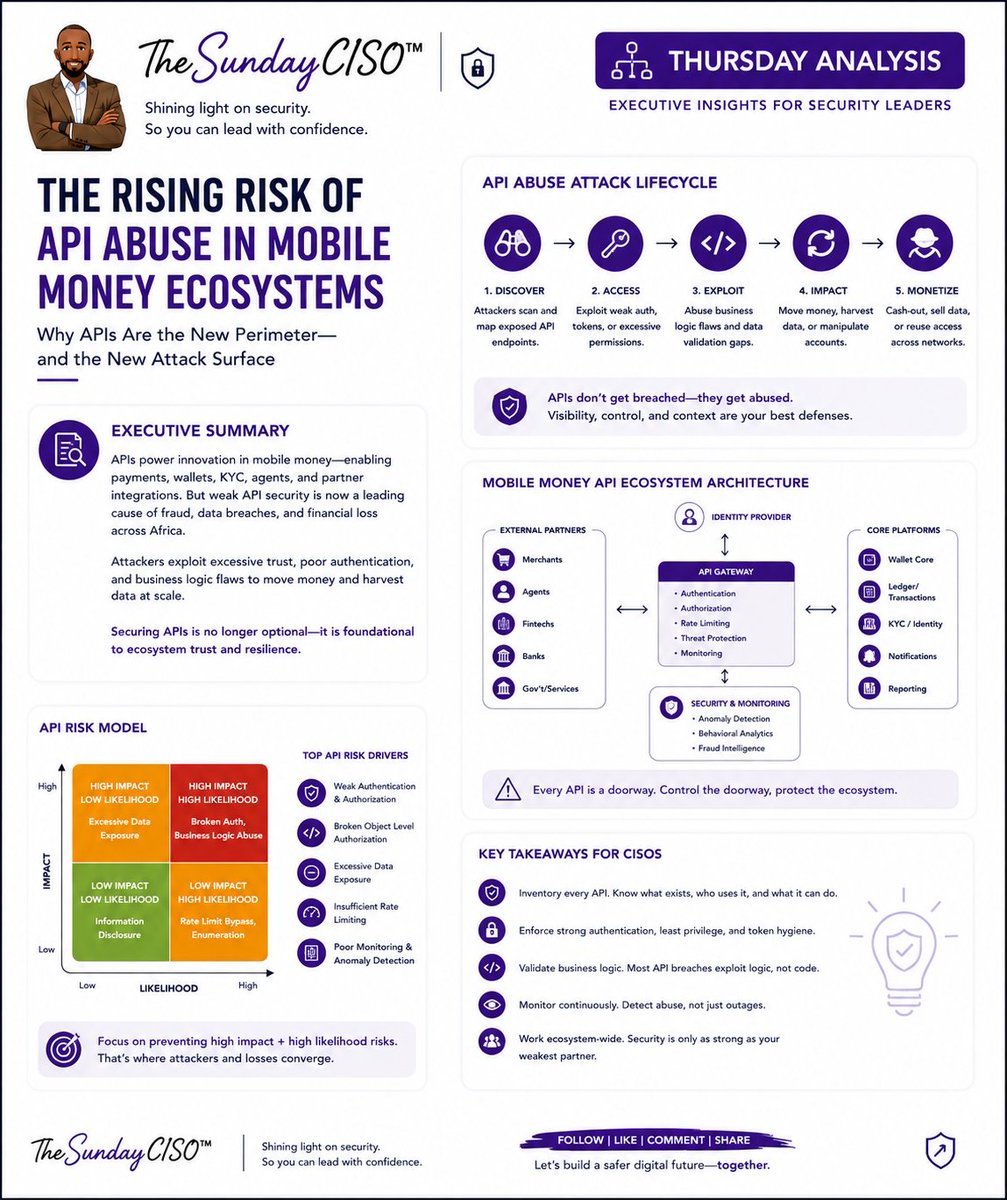
Security leaders who fail to secure APIs today may end up securing breach investigations tomorrow.
#TheSundayCISO #ThursdayAnalysis #APISecurity #MobileMoneySecurity #FinTechSecurity #CyberResilience #DigitalTrust #CISO #CyberSecurity #AfricaTech
3
28

May 27
Proud to share that @rajeevrajr will be speaking at the @DSCI_Connect Innovation Box during the FINSEC Conclave 2026 on 29th May 2026.
As AI-driven cyber threats continue to evolve in speed, scale, and sophistication, the conversation around autonomous cyber defence has become more important than ever. Rajeev will be sharing insights on intelligent security operations, agentic AI in cybersecurity, and the future of autonomous defence for enterprises and financial institutions.
We look forward to connecting with industry leaders, innovators, and cybersecurity professionals at the event.
@I_vishnu_nair @nalluri4
#FINSEC2026 #DSCI #CyberSecurity #ArtificialIntelligence #AgenticAI #CyberDefence #AutonomousSecurity #AISecurity #SOC #DigitalResilience #Innovation #Spharaka #SpharakaSphere #AuraXP #FinTechSecurity

6
9
264

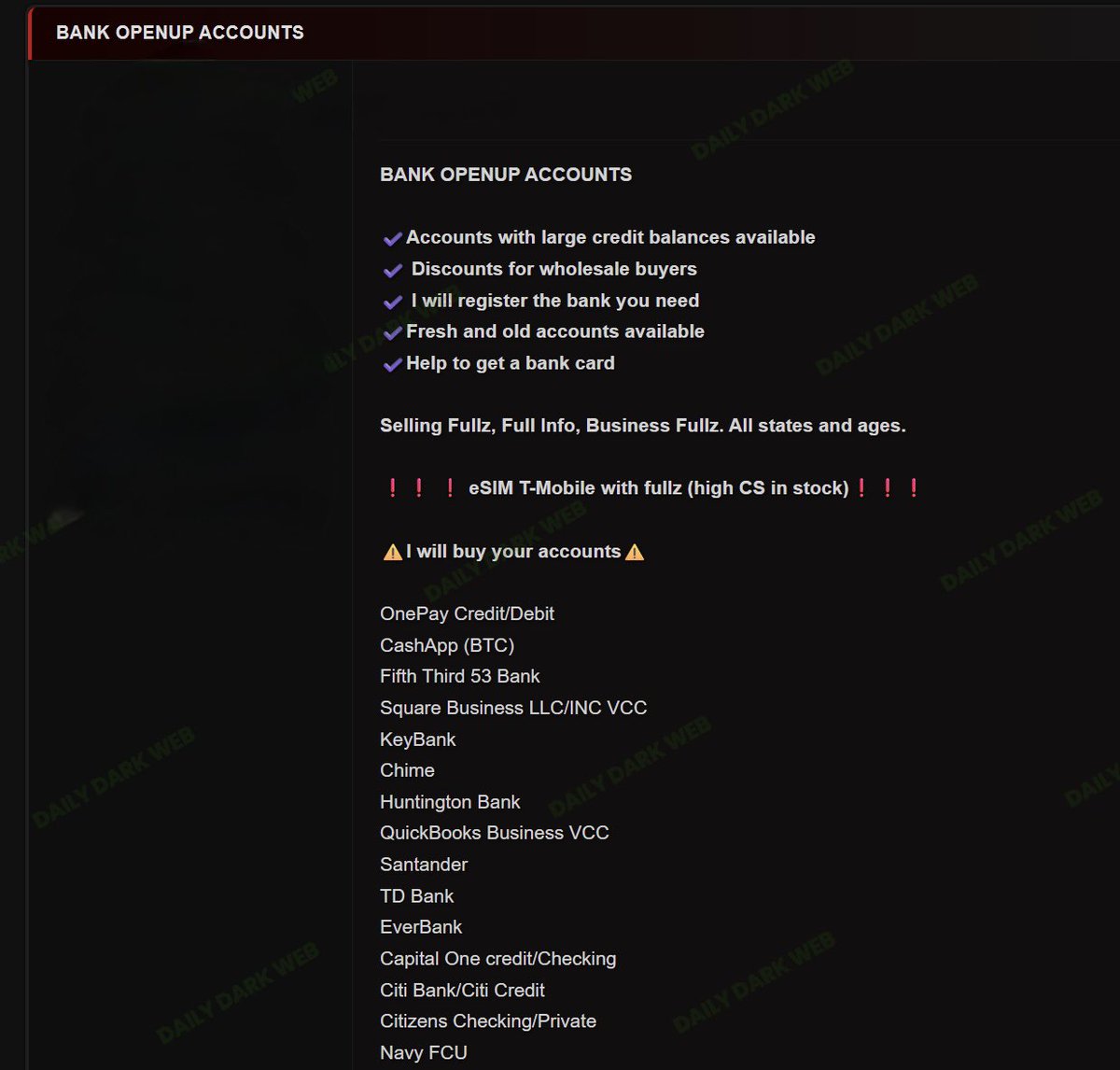
🏦 Underground marketplaces continue to openly advertise fraudulent banking ecosystems involving:
• Bank account creation
• “Fullz” identity packages
• eSIM abuse
• Credit-ready accounts
• Business account onboarding
• Account takeovers (ATO)
• Financial mule infrastructure
The listing shown here advertises:
• “Fresh and old accounts”
• Accounts with “large credit balances”
• Bank card assistance
• eSIM-enabled T-Mobile identities
• “Business Fullz”
• CashApp/BTC laundering paths
• Multiple US banking brands
This is not just credential theft anymore.
What we are increasingly seeing across underground ecosystems is the industrialization of:
• Synthetic identity fraud
• Banking-as-a-service abuse
• Telecom account compromise
• eSIM hijacking
• Mule account networks
• Fraud-ready onboarding kits
One of the most important indicators here is the mention of:
“eSIM T-Mobile with fullz.”
That combination is extremely dangerous because it suggests potential preparation for:
• SIM swapping
• OTP interception
• MFA bypass
• Mobile banking takeover
• Cryptocurrency theft
• Recovery-channel hijacking
Telecom compromise has become one of the most effective enablers of financial fraud operations.
Threat actors increasingly target:
• Mobile carriers
• Banking onboarding flows
• Digital wallet ecosystems
• Neobanks
• Remote identity verification systems
rather than directly attacking hardened enterprise environments.
The listing also references:
• Wholesale discounts
• Custom bank registration
• Buying existing accounts
which reflects how mature these criminal ecosystems have become.
These are no longer isolated scammers.
Many operations now function like structured service providers with:
• Customer support
• Escrow systems
• Fraud guarantees
• Bulk pricing
• Specialized operators
• Dedicated suppliers
• Access brokers
• Money laundering facilitators
The inclusion of banks such as:
• Capital One
• Citi
• TD Bank
• Santander
• KeyBank
• Fifth Third
• Navy FCU
• Chime
• CashApp ecosystems
suggests targeting of both:
• Traditional financial institutions
• Fintech/mobile-first ecosystems
because fintech onboarding flows are often optimized for speed and growth, which can increase fraud exposure.
Another critical trend is the abuse of:
• Business LLC formations
• Virtual credit cards (VCCs)
• QuickBooks integrations
• Square merchant onboarding
to support:
• Fraudulent merchant accounts
• Payment laundering
• Chargeback fraud
• Crypto cashout operations
• Mule payment routing
The operational language in these advertisements strongly resembles “Initial Access Broker” models seen in ransomware ecosystems — except adapted for financial fraud.
Instead of selling network access, these actors are selling:
• Financial identities
• Banking infrastructure
• Verified accounts
• Telecom control
• Recovery mechanisms
This creates highly scalable fraud pipelines.
Defenders should pay particular attention to:
• eSIM change monitoring
• Device fingerprint anomalies
• Synthetic identity indicators
• Rapid account onboarding behavior
• Multi-account behavioral overlap
• Telecom-provider integrations
• Recovery-flow abuse
• KYC bypass patterns
• SIM swap telemetry
• Cryptocurrency cashout signals
because modern financial fraud increasingly operates as a cross-sector attack chain involving:
Telecom → Identity → Banking → Crypto → Laundering.
#DDW #DarkWeb #Fraud #CyberCrime #BankFraud #SIMSwap #eSIM #FinancialCrime #IdentityTheft #ThreatIntelligence #CashApp #CryptoFraud #AccountTakeover #FintechSecurity
1
9
11
3,460

We are pleased to welcome Hilal Ahmad Lone, CISO & VP at Liminal Custody to the VULNCON 2026 CXO speaker lineup.
A seasoned cybersecurity leader with deep expertise in security strategy, cloud security, threat intelligence, and incident response, Hilal has played a key role in strengthening security resilience across the fintech ecosystem. Currently contributing to security leadership at Liminal Custody, he focuses on protecting large-scale digital infrastructures through robust cloud security, network defense, and web application security initiatives.
Join us at VULNCON 2026 as Hilal shares perspectives on modern cybersecurity challenges, fintech resilience, and building security-first organizations.
📍 NIMHANS Convention Centre, Bengaluru
📅 12th & 13th June, 2026
Normal Sale Registration is about to end. Register today and secure your spot.
vulncon.in/register
#VULNCON2026 #Vulncon #CyberSecurity #ThreatIntelligence #CloudSecurity #FintechSecurity #InfoSec

1
5
95

May 22
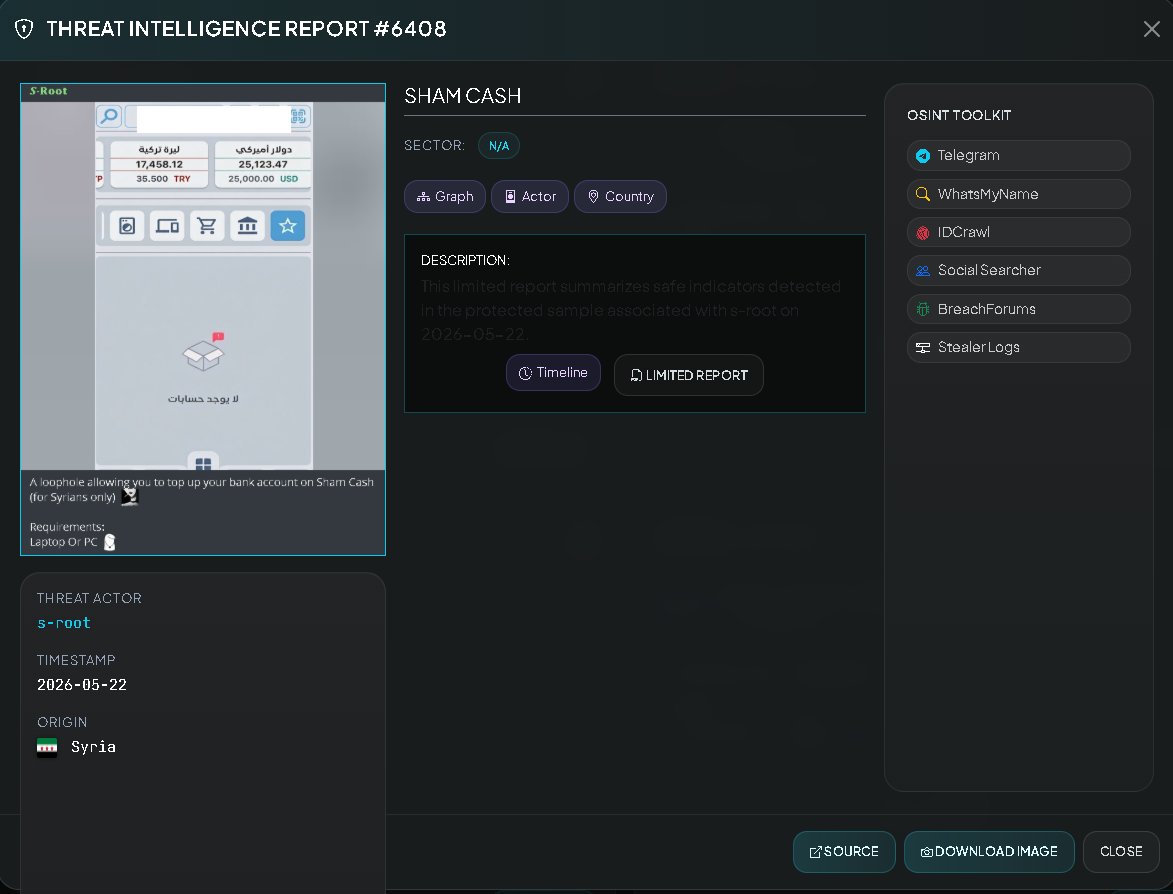
🚨 CYBER THREAT INTELLIGENCE ALERT: FINANCIAL VULNERABILITY FOR SALE — SHAM CASH 🇸🇾
⚠️ CRITICAL THREAT: ACTOR ADVERTISES LOGIC FLAW ENABLING ARTIFICIAL BANK BALANCE TOP-UPS
[STATUS: VULNERABILITY FOR SALE / FINANCIAL FRAUD RISK / ACTIVE MONITORING, UNCONFIRMED]
Through the monitoring of clandestine Telegram channels associated with the distribution of vulnerabilities (specifically on the "S-Root" channel), a threat actor has been detected offering for sale an exploit or evasion method (loophole) targeting the financial platform Sham Cash—a service used primarily by Syrian citizens. The attacker claims to have discovered a logic vulnerability that allows for the fraudulent top-up of bank account balances using a laptop or desktop computer.
🎯 Affected Entity: Sham Cash financial application (Focused on the Syrian market).
👤 Threat Actor: S-Root Channel
📂 Incident Type: Commercial Logic Vulnerability (Logic Vulnerability / Top-up Loophole).
📊 VULNERABILITY ANALYSIS AND IMPACT VECTORS
The description provided by the attacker details the exploitation of a flaw in the financial platform's business logic:
💸 Pricing / Top-up Logic Vulnerability:
Unlike traditional code injection attacks (such as SQLi), logic flaws occur when the application's workflow design permits unforeseen manipulations. In this instance, the attacker suggests that they can alter top-up parameters by intercepting web traffic.
🛡️ MITIGATION AND URGENT TECHNICAL RECOMMENDATIONS
🛑 Real-Time Transaction Auditing: Administrators of the Sham Cash platform are urged to immediately implement strict reconciliation validations. Every top-up recorded in the application must be cryptographically verified against the records of the payment processor or external banking gateway before the funds are released into the user's wallet.
🔒 Server-Side Validation: Ensure that all critical parameters (amounts, currencies, transaction identifiers) are calculated and validated exclusively on the backend, never relying on numerical values sent from the client (browser or mobile application).
⚡ MONITORING AND ASSESSMENT
🌐 Intelligence System: analyzer.vecert.io
🛡️ Quickly assess your website's security with: monitor.vecert.io/
#CyberSecurity #ShamCash #Syria #FinancialFraud #BusinessLogicVulnerability #TopUpExploit #CyberCrime #ThreatIntelligence #CyberAlert #VECERT #Infosec #FintechSecurity
2
1,502