
Apr 8
Sam Roggeveen author of The Echidna Strategy highlights a side of AUKUS most people don’t hear about. AUKUS Pillar II technology collaboration offers the potential for Australia to develop and acquire capability—advanced tech, new systems delivering genuine advantage and deterrence. Not just importing defence resources, but generating it here, with Australian skills and industry.
PillarI includes the operation of nuclear-powered submarines that put Australia in a very small club especially in the Indo-Pacific. Nuclear-powered submarines can travel much further, stay submerged longer, and operate more quietly than conventional subs. This tech gives Australia influence, and allows us to monitor and respond to threats well before they get anywhere near our shores. The questions are will it fully materialise, at what cost to the full range of necessary defence capabilities and will it be overtaken by technical evolution in automated underwater systems and detection technology.
Two pillars that could shape Australia’s future workforce, industry, and sovereignty.
🎬 WATCH: youtu.be/-qiNjyGUipk
🎧 LISTEN: open.spotify.com/episode/5ei…
Subscribe to our regular YouTube podcast @Dr.MikeKelly
🔗 Follow:
Instagram: @Dr.MikeKellyAM
X: @MikeKellyofEM
Facebook: mike.kelly.819432
LinkedIn: mike-kelly-0336a055
@LowyInstitute
amzn.asia/d/04Tvb3Wo
linkedin.com/in/sam-roggevee…
lowyinstitute.org/
#FrontlinesandFaultlines #EchidnaStrategy #LowyInstitute #AUKUS #DrMikeKelly #DefenceTechnology #DefenceIndustry #AustralianSovereignty #NationalSecurity #IndoPacificSecurity #Submarines #NuclearSubmarines #MilitaryInnovation #StrategicPolicy #ForceProjection #SamRoggeveen
2
199

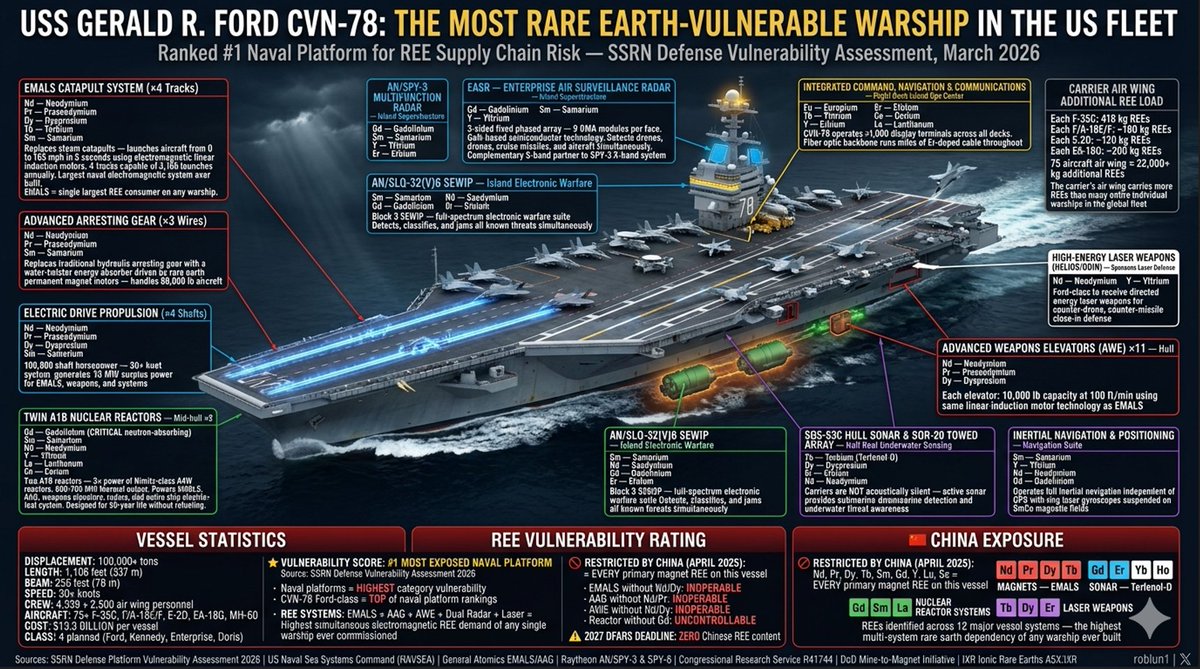
⚓🧲 USS GERALD R. FORD CVN-78:
THE MOST EXPENSIVE WARSHIP EVER BUILT
LAUNCHES JETS WITH RARE EARTH MAGNETS
$13.3 billion. 337 metres. 90 aircraft.
2 nuclear reactors generating 600 MW.
And it cannot launch a single F/A-18
without Dysprosium.
~22,000 KG of REEs in ship systems alone.
~30,000 KG including the full air wing.
Where they go:
⚡ EMALS — ELECTROMAGNETIC AIRCRAFT LAUNCH ×4
→ Replaced steam catapults entirely on CVN-78
→ Nd/Pr/Dy NdFeB in all linear induction
motor flux generation components
→ ~3,200 kg REE — just in the launch system
→ 0 to 165 knots in 2 seconds.
300 launches per day at surge rate.
→ No Dy = no launches
🛬 AAG — ADVANCED ARRESTING GEAR ×3
→ Nd/Pr/Dy permanent magnet
rotary energy absorbers
→ ~1,400 kg REE in arresting systems
→ No Dy = jets can't land either
📡 DUAL BAND RADAR (SPY-3 SPY-4)
→ X-band S-band simultaneous
→ Y/Gd in all ferrite phase shifter arrays
→ Tracks aircraft, missiles,
surface threats simultaneously
☢️ 2× A1B NUCLEAR REACTORS
→ 3× more electrical output than Nimitz
→ Sm/Co in control rod drive magnets
→ Powers EMALS AAG 11 weapons
elevators all radar — simultaneously
🔫 11× ADVANCED WEAPONS ELEVATORS
→ Electromagnetic linear motor drive
→ Nd/Pr/Dy in every elevator system
→ Moves munitions from magazine to
flight deck in seconds
✈️ 90-AIRCRAFT AIR WING REE:
→ ~40× F/A-18E/F Super Hornet
(APG-79 AESA: Y/Gd ferrites each)
→ ~5× EA-18G Growler
(~1,100 kg REE each)
→ ~5× E-2D Hawkeye
(Nd/Pr in all rotodome motor systems)
→ AIM-120 · AIM-9X · AGM-158 ·
GBU-53 · Tomahawk:
Nd/Dy guidance in every weapon
━━━━━━━━━━━━━━━━━━━━━━━━
China restricted Dy and Tb in April 2025.
DFARS January 2027 bans Chinese-origin
magnets from DoD procurement.
CVN-78 has no steam catapults.
No mechanical arresting gear.
No fallback if EMALS magnets
can't be sourced and sustained.
The Ford-class made the carrier
entirely dependent on electromagnetics.
Electromagnetics are entirely dependent
on Dysprosium.
Dysprosium supply is 90% controlled
by China.
4 Ford-class carriers planned.
Total ship-system REE: ~88,000 kg.
Total program cost: ~$56 billion.
America's most powerful force
projection platform
has a supply chain that runs
through Beijing. 🇨🇳
Nd | Pr | Dy | Tb | Sm | Gd | Eu | Y
Sources: Van den Hurk / Metal Tech News 2025
NAVSEA CVN-78 specs · CRS Naval Programs
roblun1 | X
#GeraldRFord #CVN78 #USNavy #Supercarrier
#EMALS #RareEarths #CriticalMinerals
#Dysprosium #Neodymium #Terbium
#NationalSecurity #DFARS2027
#ChineseExportControls #SupplyChain
#NavalPower #AircraftCarrier #REE #NdFeB
#CriticalMinerals2026 #DefenceIndustry
#MagnetSupplyChain #ExChina #AAG
#NuclearCarrier #ForceProjection
#A1B #DualBandRadar #AirPower
⚓🧲⚡☢️🇺🇸✈️🎯🛡️
1
6
221

Jan 19
This observed reduction in visible strategic assets at Diego Garcia is a significant data point in the calculus of regional force posture. The contrast with the previously noted concentration of heavy bombers underscores the dynamic and fluid nature of military deployment. Such variances are integral to strategic positioning, where the visible footprint of capability is deliberately calibrated to meet operational requirements and communicate intent. The current posture may reflect a redistribution of assets, a different phase of readiness, or an adjusted assessment of deterrence requirements.
#MilitaryPosture #StrategicAssets #ForceProjection #DefenceAnalysis
— Adhoura Aks
#AdhouraAks
3
392

Jan 9
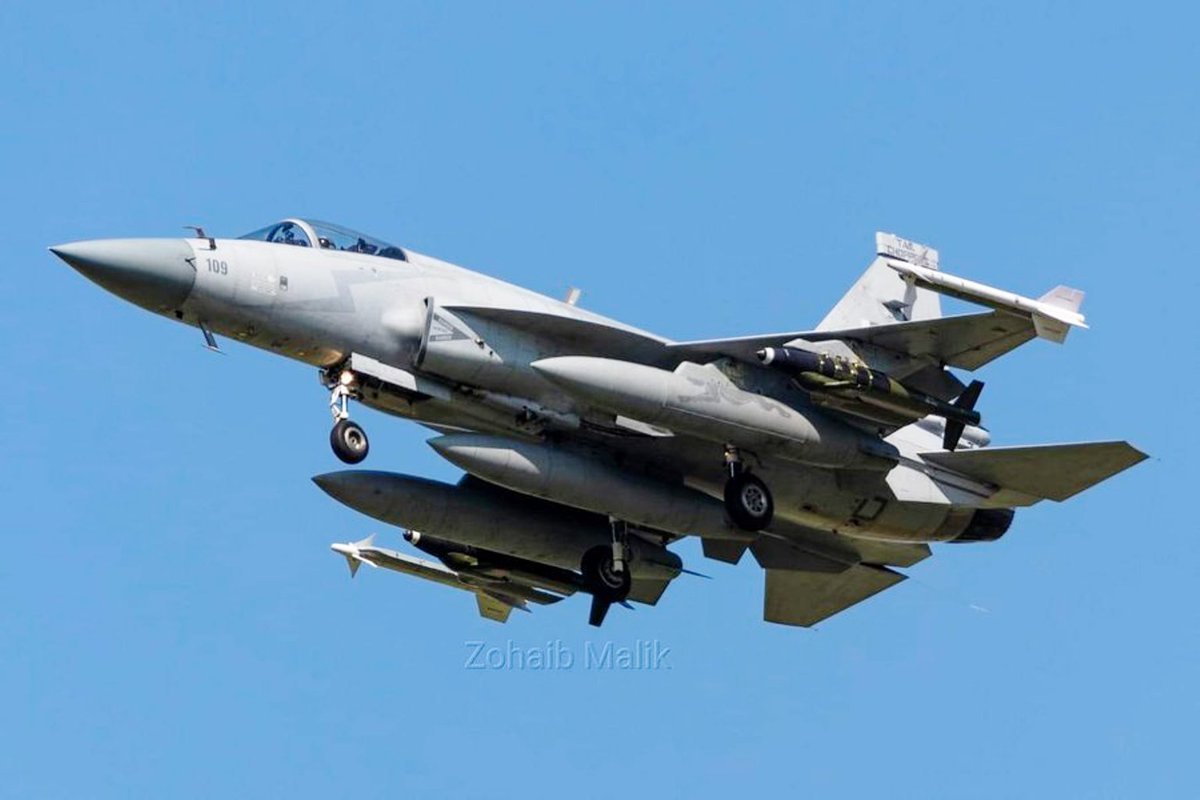
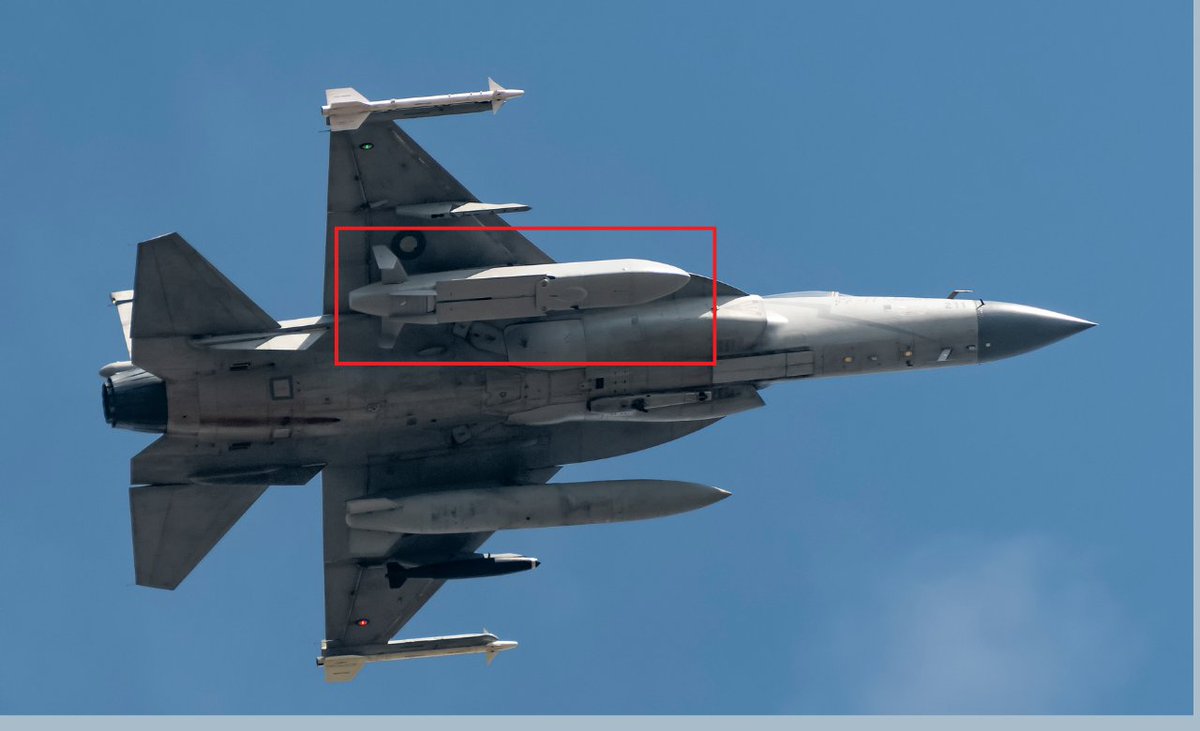
🇧🇩 🇵🇰✈️ @BDMILITARY Exclusive | JF-17 Block III: A New Era for Bangladesh Airpower 💥
The Bangladesh Air Force (BAF) is reportedly in advanced negotiations with the Pakistan Aeronautical Complex (PAC) for the acquisition of 48 JF-17 Block III multirole fighter aircraft, a programme that could fundamentally transform the nation’s air combat capability.
🔹 Fast-Tracked First Squadron
• 16 aircraft to be delivered on a fast-track basis
• Estimated cost: USD 720 million
• Package includes training, operational & MRO infrastructure, spares and a complete armaments suite
🔹 Operational Partnership
• Pakistan Air Force pilots and technicians to be embedded with the BAF
• Support through induction, conversion training and sustainment
• Programme delivered through to Full Operational Capability (FOC)
🔹 Combat Power & Weapons Suite
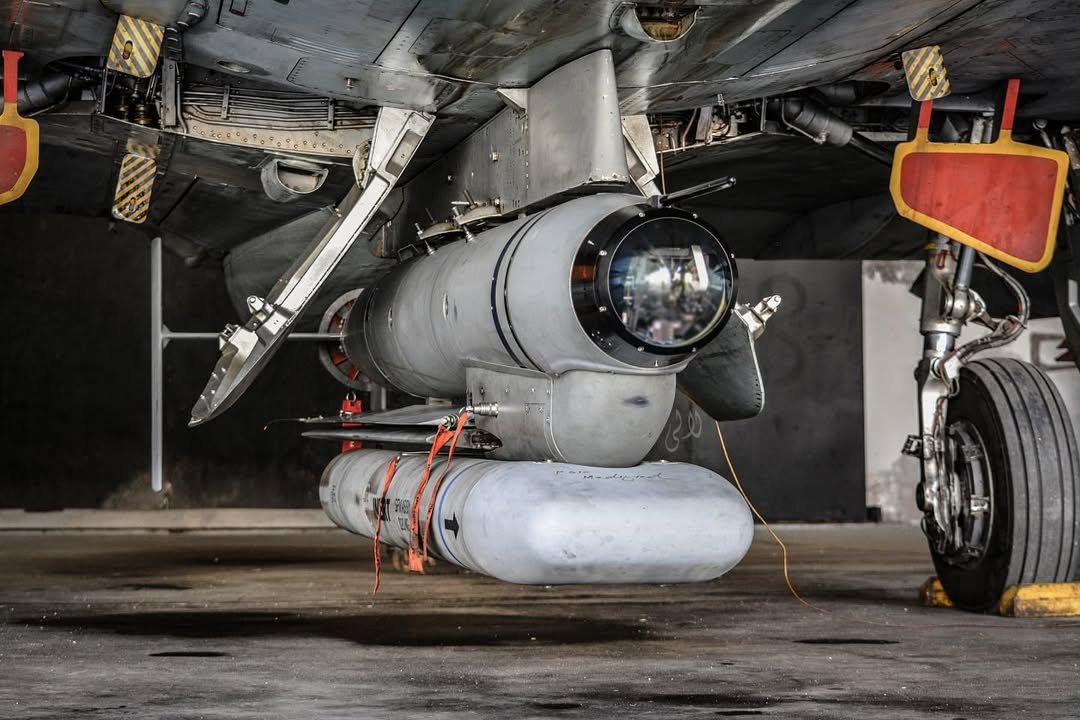
The JF-17 Block III offers 4.5-generation capability with AESA radar, advanced EW, HMD/S and network-centric warfare.
Key weapons reportedly offered include:
• PL-15 & SD-10 BVR missiles for air dominance
• PL-10 WVR missile for close-in combat
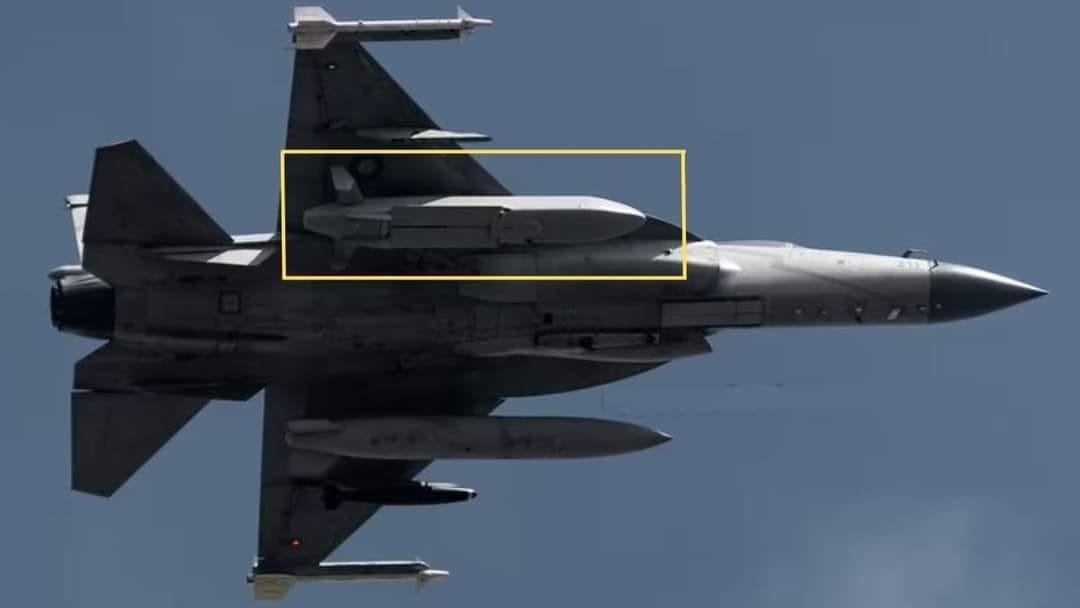
• H-4 Stand-Off Weapon (SOW) for precision strike from ~120 km
• Ra’ad II air-launched cruise missile for deep-strike and strategic deterrence
• Anti-ship missiles for maritime strike and EEZ defence
🔹 Why It Matters
⚔️ Stand-off and deep-strike capability
🛡️ Enhanced deterrence in a complex regional environment
💰 Cost-effective, combat-proven and scalable
🚀 A true quantum leap in force projection for the BAF
If finalised, this will be one of the most significant modernisation programmes in Bangladesh Air Force history, shifting the BAF towards precision-centric, networked and deterrence-oriented airpower.
Full Details: bdmilitary.com/defence-news/…
#BDMilitary #BangladeshAirForce #BAF #JF17 #JF17BlockIII #AirPower #Defence #SouthAsia #MilitaryAviation #ForceProjection #AviationNews
26
125
942
51,760

27 Dec 2025
2026 is shaping up to be an interesting year...
Update: China firmly opposes Japan's dangerous moves in cyber field-Xinhua
"In May this year, Japan also passed its so-called Active Cyber Defense Law, explicitly allowing the Japanese government to preemptively infiltrate or disable the network devices of alleged attackers."
#cyberwarfare #activedefense #forceprojection
m.cje.io/45rjOUm

1
4
1,006

23 Dec 2025
🚨🔥 THIS is what air dominance looks like. A U.S. Air Force AC-130 turned a Colombian drug cartel’s “stealth” semi-submersible into scrap metal in the Pacific. No chase. No escape. Just sensors, precision, and overwhelming firepower reminding cartels that the ocean isn’t a hiding place anymore. Smugglers thought they were invisible, reality said otherwise. 🇺🇸✈️💥🌊
#AC130 #USAirForce #AirPower #WarOnDrugs #ForceProjection #NoHiding #MilitaryTech
1
5
10
1,052

22 Dec 2025
兵力投送:现代化运输系统的改进和新装备的服役,包括综合补给舰、大型运输机、 #UAVs卡车等,极大地提高了中国军队的运输和投送能力。
#Chinamilitary #Chinamilbugle #Forceprojection
 China Military Bugle
3
50

22 Dec 2025
Force Projection: The improvement of modern delivery system and the commissioning of new equipment, including comprehensive supply ships, large transport aircraft, #UAVs and unmanned trucks, have significantly enhanced the Chinese military’s transportation and delivery capabilities.
#Chinamilitary #Chinamilbugle #Forceprojection
18
41
219
12,371

2 Dec 2025
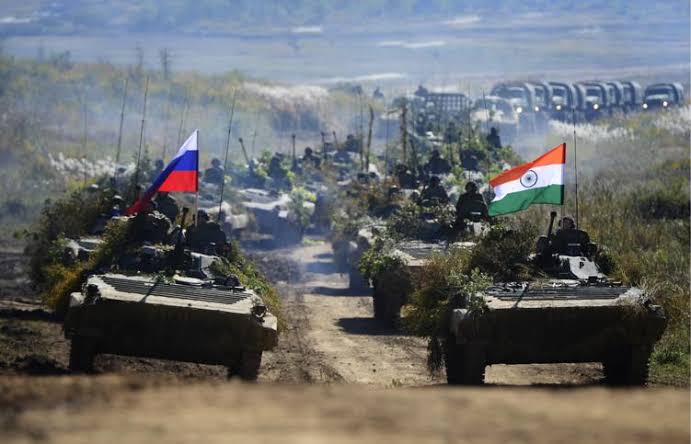
🧵🇮🇳🇷🇺 RELOS: When “boring logistics” becomes hardcore grand strategy
#RELOS #IndiaRussia #GeoPolitics #IndoPacific @narendramodi @PMOIndia @DrSJaishankar @mfa_russia
1️⃣ What exactly did the Duma just do? ⚙️📜
Russia’s State Duma has ratified the India–Russia Reciprocal Exchange of Logistics Agreement (RELOS), signed on 18 Feb 2025 in Moscow, paving the way for it to fully enter into force just before Putin’s 4–5 Dec Delhi visit.
#RELOS #Duma #DefencePact @MEAIndia @Indiannavy
RELOS sets the legal procedure for sending military formations, warships and aircraft to each other’s territory and for mutual logistics support (fuel, spares, maintenance, berthing, rest & recovery, medical, warehousing).
#Logistics #MilitaryAccess #ForceProjection @indiannavy @IAF_MCC
Think of it as the India–Russia cousin of LEMOA/other logistics pacts India already has with the US, France, Australia, Japan, but anchored in a Eurasian, not Western, security ecosystem.
#LEMOA #MultiAlignment #StrategicAutonomy @MohanCRaja @Chellaney
1
1
12
1,925

25 Oct 2025
🚨 Pentagon Redirects Gerald R. Ford Carrier Strike Group to the Caribbean
For the first time in years, no U.S. carriers remain in the Middle East. The Ford will join counter-drug ops under SOUTHCOM, nearly doubling U.S. naval forces in the region.
#USMilitary #ForceProjection
1
54

14 Oct 2025
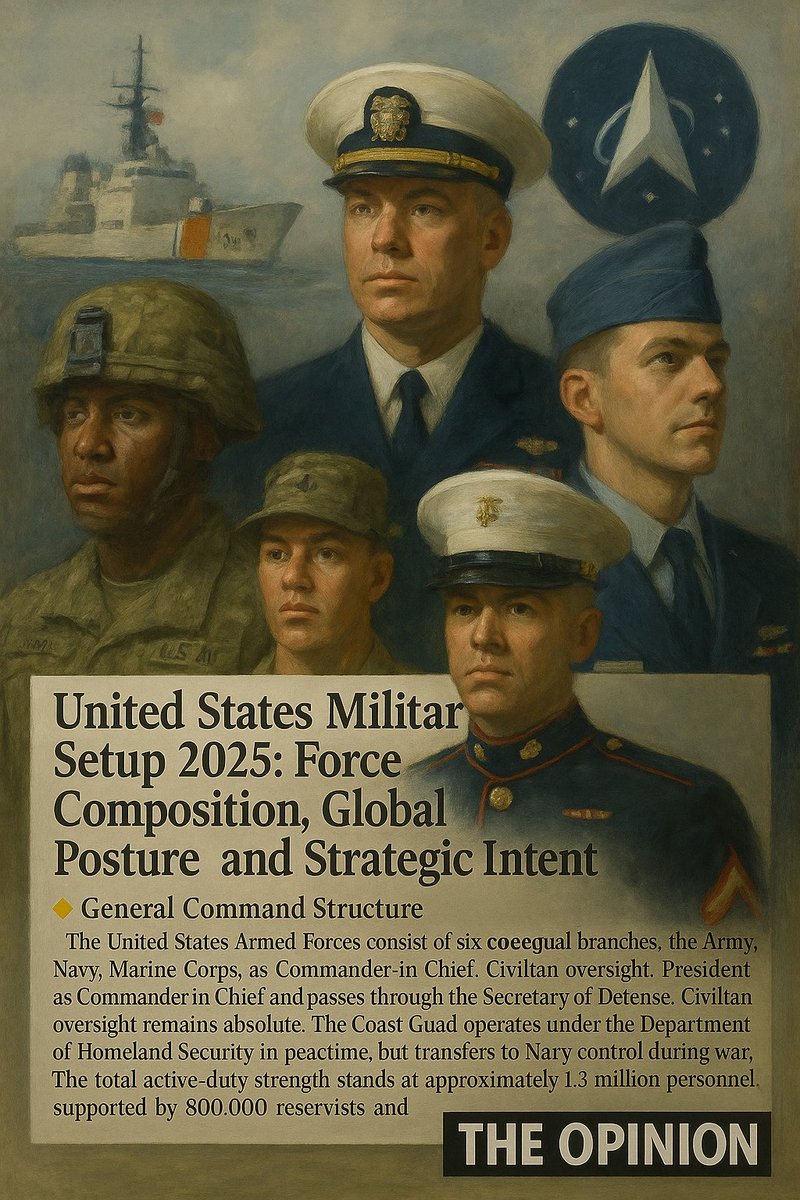
📌 United States Military Setup 2025: Force Composition, Global Posture, and Strategic Intent
🔶 General Command Structure
The United States Armed Forces consist of six coequal branches: the Army, Navy, Marine Corps, Air Force, Space Force, and Coast Guard. Command authority originates with the President as Commander in Chief and passes through the Secretary of Defense. Civilian oversight remains absolute. The Coast Guard operates under the Department of Homeland Security in peacetime but transfers to Navy control during war. The total active-duty strength stands at approximately 1.3 million personnel, supported by 800,000 reservists and National Guard members, ensuring global reach and layered force sustainability.
🔶 U.S. Army
The U.S. Army remains the primary land warfare component, with roughly 445,000 active-duty soldiers and 31 Brigade Combat Teams (BCTs). Its structure enables simultaneous large-scale ground operations and long-term stability missions. Army Futures Command drives modernization—hypersonic artillery, robotic systems, and next-generation combat vehicles are key focus areas. The force’s current disposition places heavy emphasis on Europe and the Indo-Pacific. Pre-positioned stocks in Poland, Germany, and Korea provide rapid deployment capabilities for high-intensity conflict scenarios.
🔶 U.S. Navy and Marine Corps
The Navy maintains maritime dominance through 11 Carrier Strike Groups, over 290 deployable vessels, and a robust submarine fleet including nuclear-powered ballistic missile submarines (SSBNs) forming the sea leg of the U.S. nuclear triad. The Navy operates globally from major hubs in Norfolk, San Diego, Yokosuka, and Bahrain. The Marine Corps, with approximately 175,000 active personnel, functions as a rapid-reaction expeditionary force. Under Force Design 2030, the Corps is transitioning from large amphibious formations to dispersed, missile-armed littoral regiments—optimized for anti-access/area denial (A2/AD) operations against peer adversaries, particularly in the Pacific theater.
🔶 U.S. Air Force
The Air Force, with about 300,000 active-duty airmen, guarantees global air supremacy and rapid strategic reach. Its fleet includes fifth-generation fighters (F-22, F-35), B-2 and B-52 bombers, and extensive aerial refueling and airlift capabilities. Command centers at Ramstein (Europe), Al Udeid (Middle East), and Andersen (Pacific) ensure global coverage. Strategic priorities include modernization of the B-21 Raider stealth bomber, the Sentinel ICBM program, and AI-driven autonomous systems integration. The Air Force remains the central node for precision strike and command-and-control superiority across joint domains.
🔶 U.S. Space Force
The Space Force, operating under the Department of the Air Force, secures the U.S. advantage in orbital and space-based warfare. It oversees missile warning, satellite communication, GPS, and reconnaissance constellations. The command structure includes Space Operations Command (SpOC) and Space Systems Command (SSC). Its mission ensures real-time surveillance, global situational awareness, and defense of U.S. and allied assets against anti-satellite (ASAT) and cyber threats, particularly from China and Russia.
🔶 U.S. Coast Guard
Operating under the Department of Homeland Security in peacetime, the Coast Guard conducts maritime security, interdiction, and rescue operations. With roughly 42,000 active members, it patrols domestic waters and supports forward operations in the Pacific and Arctic theaters, where increased Russian and Chinese naval activity is under close monitoring.
🔶 Global Force Posture and Modernization Priorities
U.S. forces are globally distributed across 750 installations in over 80 countries. Priority theaters remain:
INDO-PACIFIC: Primary axis of deterrence against China, focusing on distributed maritime operations, long-range strike, and forward basing in Japan, Guam, and Australia.
EUROPE: Reinforcement of NATO’s eastern flank with rotational armored brigades, missile defense networks, and integrated air defense systems.
MIDDLE EAST & AFRICA: Reduced footprint but sustained counterterrorism and maritime security presence, maintaining CENTCOM’s rapid response capability.
Modernization efforts concentrate on nuclear triad recapitalization, cyber warfare expansion, hypersonic weapons, and AI integration across C4ISR networks. The Department of Defense’s 2025 posture explicitly transitions from counterinsurgency to high-intensity peer warfare readiness.
Personal Analysis:
The 2025 U.S. military is calibrated for deterrence and rapid projection, structured around multi-domain integration rather than mass deployment. While numerical strength has slightly declined, technological edge, global basing, and inter-branch connectivity compensate decisively. The strategic trajectory indicates continued shift toward Indo-Pacific dominance and digital warfare superiority. However, the overstretch risk remains—multiple theaters, supply chain dependencies, and political constraints challenge sustained global primacy. The future force leans toward precision, speed, and joint lethality over size.
(analysis from U.S. Department of Defense briefings, open military sources, and clearancejobs.com July 2025 data.)
#USMilitary #ForceProjection #MilitaryPower #DefenseStrategy #Geopolitics #MilitaryAnalysis #GlobalPosture
1
2
235
24 Aug 2025
Rail Loading Training: Footages show the armored vehicles attached to a brigade under Chinese #PLA 81st Group Army being loaded onto rail flat cars during long-distance transportation training. #ForceProjection #PLAArmy
3
22
1,603

23 Jun 2025
🚨 USS Carl Vinson (CVN 70) on Alert
The USS Carl Vinson, now the lead U.S. carrier in CENTCOM, is launching F-35Cs & F/A-18s in sustained flight ops to ensure air dominance and protect strategic sea lanes. With the USS Harry S. Truman redeployed, Vinson assumes primary strike group command. While not currently engaging inside Iran, it remains fully mission-ready should escalation demand. High sortie tempo, 24/7 readiness, and joint-force integration reflect peak warfighting posture. ⚓
#JobReady #CarlVinson #CVN70 #F35C #FA18 #CENTCOM #NavalPower #CarrierStrikeGroup #MaritimeSecurity #AirDominance #USNavy #ForceProjection #MiddleEast #MilitaryReadiness
1
3
436

22 Jun 2025
B-2 bomber returns to Whiteman Air Force Base earlier today after a 36-40 hour round trip flight, with multiple mid air refueling points, to bomb targets in Iran.
It's wild that these strikes were announced by the President and discussed widely on social media but the birds were still enroute back to the United States....
#b2 #B2SpiritBomber #ForceProjection #iran #war
43
71
1,371
40,145

9 Jun 2025
🚨 Strategic Assessment: Phase One Initiated in California Theater 🚨
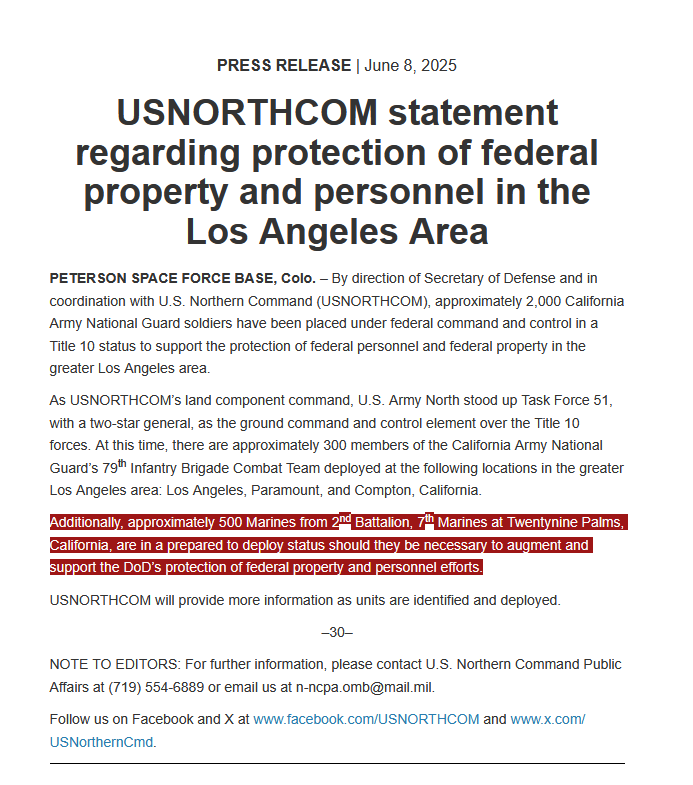
The deployment of 500 U.S. Marines to Los Angeles, confirmed by USNORTHCOM, is not a full-scale military response—it is narrative establishment. This is doctrine, not desperation.
In every historical insurgency response—from Fallujah (2004) to Port-au-Prince (1994)—Phase One begins with symbolic presence, designed to shape public perception, solidify command authority, and prepare the civilian battlespace psychologically. This is Information Operations (IO) blended with Gray Zone maneuvering—no kinetic engagement yet, just a subtle but unmistakable warning: We are here. And we are escalating.
📡 The current deployment is an operational placeholder, not a hammer. But make no mistake: force buildup precedes fire missions.
🧠 Strategic Doctrine in Action:
1.Phase I — Presence & Containment:
•500 Marines = Advanced Recon Civil Order Containment
•Mission: Seize urban terrain narratively before kinetically
•Goal: Prevent wider insurgent legitimization
2.Phase II — Escalation Upon Escalation:
•For every act of rebel defiance or sabotage, expect Tier I and II assets to deploy:
•FAST teams, JSOC observers, Electronic Warfare units, SIGINT fusion cells
•Psychological encirclement precedes physical encirclement
3.Phase III — Full Spectrum Domination:
•Estimated force requirement for total liberation of California:
•Active-duty: 35,000 troops (Marine, Army, Special Forces)
•National Guard: 20,000 (rear area security, infrastructure defense)
•Air supremacy assets: 160 aircraft (ISR, Close Air Support, psychological deterrence)
•Cyber CommDom teams to neutralize digital insurgency hubs
•Naval support offshore with carrier groups and amphibious readiness units
🗺️ Bigger Picture: Domestic Rebellion as Strategic Pretext
As insurrection metastasizes into blue-state enclaves, CONUS will demand troop redeployment from EU forward bases. Perfect timing.
🇷🇺 Let Russia handle Berlin and Paris—our troops will return home where they belong. After decades of funding Euro-globalist LARP sessions, it’s time the EU elites face the consequences of their arrogance without our protection. No more shelter for their Nazi-cosplaying, war-mongering bureaucracies.
The fires in California are not the beginning of chaos—they are the end of illusion. The mask is off. The rebellion is real. And soon, so will be the response.
#MarinesInLA
#USNORTHCOMReady
#InsurrectionPhaseOne
#CivilSecurityDoctrine
#ForceProjection
#CaliforniaLiberation
#BringOurTroopsHome
#EndEuroOccupation
#LetRussiaCleanHouse
#StrategicWithdrawal
#FifthColumnFall
#DomesticBattlespace
#WokeRebellionEnds
#MAGA
9 Jun 2025

JUST IN - 500 U.S. Marines ready to deploy to LA, says USNORTHCOM.
2
5
11
907
9 Jun 2025
🚨 Strategic Assessment: Phase One Initiated in California Theater 🚨
The deployment of 500 U.S. Marines to Los Angeles, confirmed by USNORTHCOM, is not a full-scale military response—it is narrative establishment. This is doctrine, not desperation.
In every historical insurgency response—from Fallujah (2004) to Port-au-Prince (1994)—Phase One begins with symbolic presence, designed to shape public perception, solidify command authority, and prepare the civilian battlespace psychologically. This is Information Operations (IO) blended with Gray Zone maneuvering—no kinetic engagement yet, just a subtle but unmistakable warning: We are here. And we are escalating.
📡 The current deployment is an operational placeholder, not a hammer. But make no mistake: force buildup precedes fire missions.
🧠 Strategic Doctrine in Action:
1.Phase I — Presence & Containment:
•500 Marines = Advanced Recon Civil Order Containment
•Mission: Seize urban terrain narratively before kinetically
•Goal: Prevent wider insurgent legitimization
2.Phase II — Escalation Upon Escalation:
•For every act of rebel defiance or sabotage, expect Tier I and II assets to deploy:
•FAST teams, JSOC observers, Electronic Warfare units, SIGINT fusion cells
•Psychological encirclement precedes physical encirclement
3.Phase III — Full Spectrum Domination:
•Estimated force requirement for total liberation of California:
•Active-duty: 35,000 troops (Marine, Army, Special Forces)
•National Guard: 20,000 (rear area security, infrastructure defense)
•Air supremacy assets: 160 aircraft (ISR, Close Air Support, psychological deterrence)
•Cyber CommDom teams to neutralize digital insurgency hubs
•Naval support offshore with carrier groups and amphibious readiness units
🗺️ Bigger Picture: Domestic Rebellion as Strategic Pretext
As insurrection metastasizes into blue-state enclaves, CONUS will demand troop redeployment from EU forward bases. Perfect timing.
🇷🇺 Let Russia handle Berlin and Paris—our troops will return home where they belong. After decades of funding Euro-globalist LARP sessions, it’s time the EU elites face the consequences of their arrogance without our protection. No more shelter for their Nazi-cosplaying, war-mongering bureaucracies.
The fires in California are not the beginning of chaos—they are the end of illusion. The mask is off. The rebellion is real. And soon, so will be the response.
#MarinesInLA
#USNORTHCOMReady
#InsurrectionPhaseOne
#CivilSecurityDoctrine
#ForceProjection
#CaliforniaLiberation
#BringOurTroopsHome
#EndEuroOccupation
#LetRussiaCleanHouse
#StrategicWithdrawal
#FifthColumnFall
#DomesticBattlespace
#WokeRebellionEnds
#MAGA
1
8
549
30 May 2025
U.S. Intervention Halts Germany’s Attempt to Suppress AfD Opposition. This is what I voted for. #MAGA #ForceProjection Thank you 🙏 @SecRubio gatewayhispanic.com/2025/05/…
4
112
11 May 2025
Mark, how about a measure of appreciation for the President and his team—the only operational force on this planet actually securing the release of hostages? Your tone suggests discomfort, almost resentment, that Israeli hostages are returning home alive. That’s… puzzling.
Perhaps you’re confused about who’s leading and who’s posturing. But make no mistake—the battlefield doesn’t lie. Results do the talking.
#HostageRescue #TrumpDoctrine #StrategicLeadership #RealAllies #OperationalDominance #AmericaLeads #MiddleEastDiplomacy #MAGA #NoOneLeftBehind #ForceProjection #AmericaFirst #WarriorDiplomacy
5
17
518

28 Mar 2025
The A330-200 Multi-Role Tanker Transport (#MRTT), designated KC-330 #Cygnus in #ROKAF, is another great example. Beyond aerial refueling, it also serves in civilian transport, as seen in its recent mission rescuing Koreans from Israel. #AirMobility #ForceProjection
2
6
400

Ai ya - the Mailman delivered!! Gotta get reading right away!! #WhatAreYouReading #BookReviews #21stCenturyHistory #MilitaryHistory #AvGeek #AviationHistory #ChineseCommunistHistory #ChineseHistory #FighterAirplane #AirSuperiority #NATO #Radar #Stealth #ForceProjection @USAS_WW1

1
1
10
289