
The future won't belong to the organisations with the best plan.
It will belong to the organisations that adapt fastest.
@QuantumdiceUK
#Operations #SupplyChain #FutureOfComputing
1

Jun 13
Nobody's talking about AI is about to run on LIGHT, not electricity.
Scientists at Monash University just built a chip that processes information using photons instead of electrons — generating, routing, and detecting light all on a single nanoscale device.
The result?
Computing that's exponentially faster while using a fraction of the energy. This isn't incremental progress. It's a fundamental shift in how machines think.
Photonic chips could make today's data centers look like steam engines.
The future of AI isn't just bigger models. It's smarter physics.
#AI #Photonics #FutureOfComputing
8

Jun 12
Intel Core Ultra's new NPU is here! AI tasks run cooler & more efficiently on laptops. Perfect for calls & creative work. #IntelCoreUltra #AI #NPU #LaptopTech #TechInnovation #vPro #FutureOfComputing #PCGaming
9

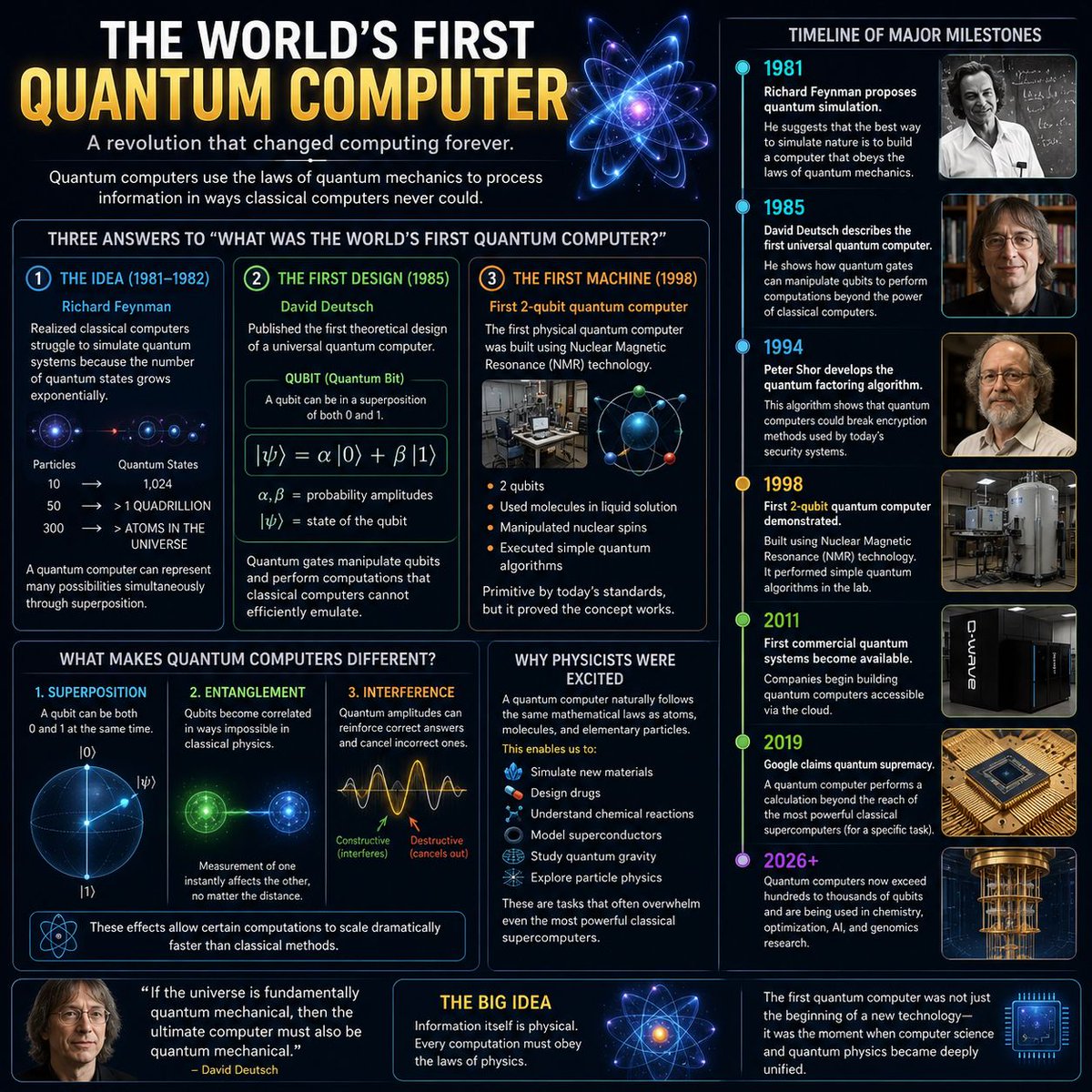
World’s first quantum computer #QuantumComputing #MicrosoftQuantum #Majorana2 #QuantumPhysics #FutureOfComputing
8

Bio-inspired computing hardware is redefining efficiency by mimicking the brain’s neural architectures, enabling adaptive, low-power, and intelligent systems.
#BioInspiredComputing #NeuromorphicComputing #AIHardware #EdgeAI #FutureOfComputing
🔗 hashinghardware.com/bio-insp…
4

Jun 10
The next semiconductor race may be about physics, not scaling.
For decades, computing performance improved by shrinking transistors and packing more of them onto a chip.
But as physical and energy constraints become harder to overcome, a different path is beginning to emerge.
Future computing breakthroughs may depend less on size and more on how information is stored, transmitted, and processed.
Key signals:
• Researchers achieved a 5,000× improvement in spin-wave transmission
• New memory concepts demonstrated up to 66× lower energy consumption
• Four-state magnetic memory systems have already been demonstrated
• Germany accounts for 43% of spintronics research activity in the dataset
• Multiple institutions are exploring pathways toward post-silicon computing architectures
Why this matters:
The next era of computing may be shaped as much by energy efficiency as raw processing power.
That creates opportunities for entirely new hardware paradigms capable of overcoming some of the limitations facing conventional semiconductor scaling.
What's changing:
From more transistors → to better physics
For decades, semiconductor progress was measured by how small
components could become.
The next generation of computing may be defined by how efficiently information moves, stores, and persists.
Which emerging hardware platform has the greatest long-term potential: Quantum Computing, Neuromorphic Systems, or Spintronics?
#Semiconductors #Spintronics #FutureOfComputing #DeepTech #QuantumComputing #HardwareInnovation #TechnologyStrategy #EmergingTechnology #AdvancedMaterials #InnoDexis
31
Jun 10
Computing may be shifting from charge to spin.
For more than 70 years, modern computing has been built on moving electric charge.
But emerging research in spintronics and altermagnetism suggests the next generation of computing architectures may operate on an entirely different principle: electron spin.
Some of the most important computing innovations may be happening far below the level of chips, software, and devices - at the level of fundamental physics.
Key signals:
• Altermagnetism was experimentally confirmed in 2022 as a third class of magnetism
• 49% of spintronics records were classified as Paradigm Shift signals
• All classified innovations remain at TRL 1–3, indicating a potentially early-stage opportunity window
• Researchers demonstrated pathways toward faster, denser, and more energy-efficient information processing
• Spin-based systems could theoretically generate significantly less heat while consuming less energy than conventional electronics
Why this matters:
The semiconductor industry is approaching increasingly difficult physical and energy constraints.
Spintronics represents more than an incremental improvement to existing chips. It points toward a fundamentally different computing architecture that could reshape performance, efficiency, and scalability.
What's changing:
From charge-based computing → to spin-based computing
Many technology roadmaps focus on extending today's architectures.
Spintronics suggests the next leap may come from changing the underlying physics of computation itself.
Could spin-based electronics become the foundation of the post-silicon computing era?
#Spintronics #FutureOfComputing #Semiconductors #QuantumMaterials #DeepTech #EmergingTechnology #AdvancedMaterials #TechnologyInnovation #Computing #InnoDexis
36

Jun 9
Tech stocks rebound after a wild ride—Jensen Huang calls it a "discount" buying opportunity! 🚀
Amid the gloom following last Friday’s 4% plunge in the Nasdaq—which saw a trillion dollars in market cap wiped from the tech sector—Nvidia CEO Jensen Huang offered a reassuring message in Seoul. He declared that current market volatility actually presents a rare opportunity to enter the market at a "discount."
🔹 Huang’s Call: He asserts that AI infrastructure development is just getting started and will eventually be as transformative as the rise of the internet.
🔹 Market Reaction: Semiconductor ETFs surged nearly 6% in response, with NVDA, AMD, Broadcom, and Qualcomm all staging a recovery.
🔹 Industry Logic: From Nvidia partnering with SK Hynix to Google spending big on computing power, industry giants are voting for the future of AI with "real money."
For companies ranging from Marvell and Micron to Dell, gains exceeding 200% year-to-date have built a solid cushion. As Huang suggested, this pullback looks more like a necessary "market calibration" than the end of the bull run.
Will you choose to exit in a panic, or position yourself during this "golden buying opportunity"?
#USStocks #Nvidia #JensenHuang #AI #Semiconductors #InvestmentStrategy #Nasdaq #NVDA #TechStocks #HKStocks #FutureOfComputing
55

Jun 8
Hardware breakthroughs demand breakthrough storytelling.
We're excited to welcome @CarvillJon69084 as NUVACORE's SVP of Marketing & Communications.
With leadership experience spanning Meta, Intel, Qualcomm, AMD, NUVIA, and MBZUAI, Jon has helped shape the narratives behind some of the industry's most important innovations.
As we build the CPU for the AI era, he'll help ensure the world knows what we're building.
We aren't here to iterate. We're here to invent.
#NUVACORE #AI #Semiconductors #FutureOfComputing

1
1
8
687
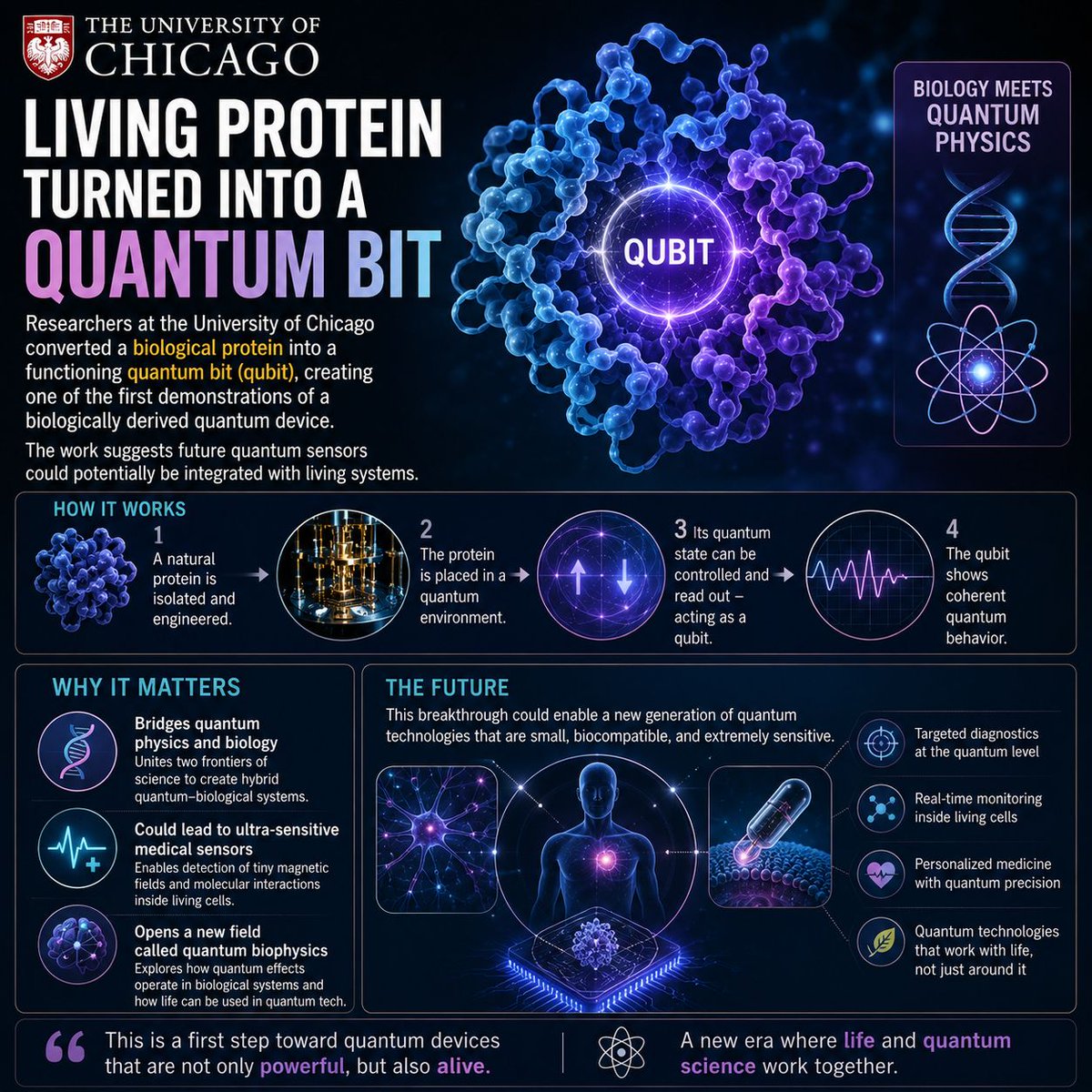
🧬 4. Living Protein Turned Into a Quantum Bit #QuantumComputing #MicrosoftQuantum #Majorana2 #QuantumPhysics #FutureOfComputing
5
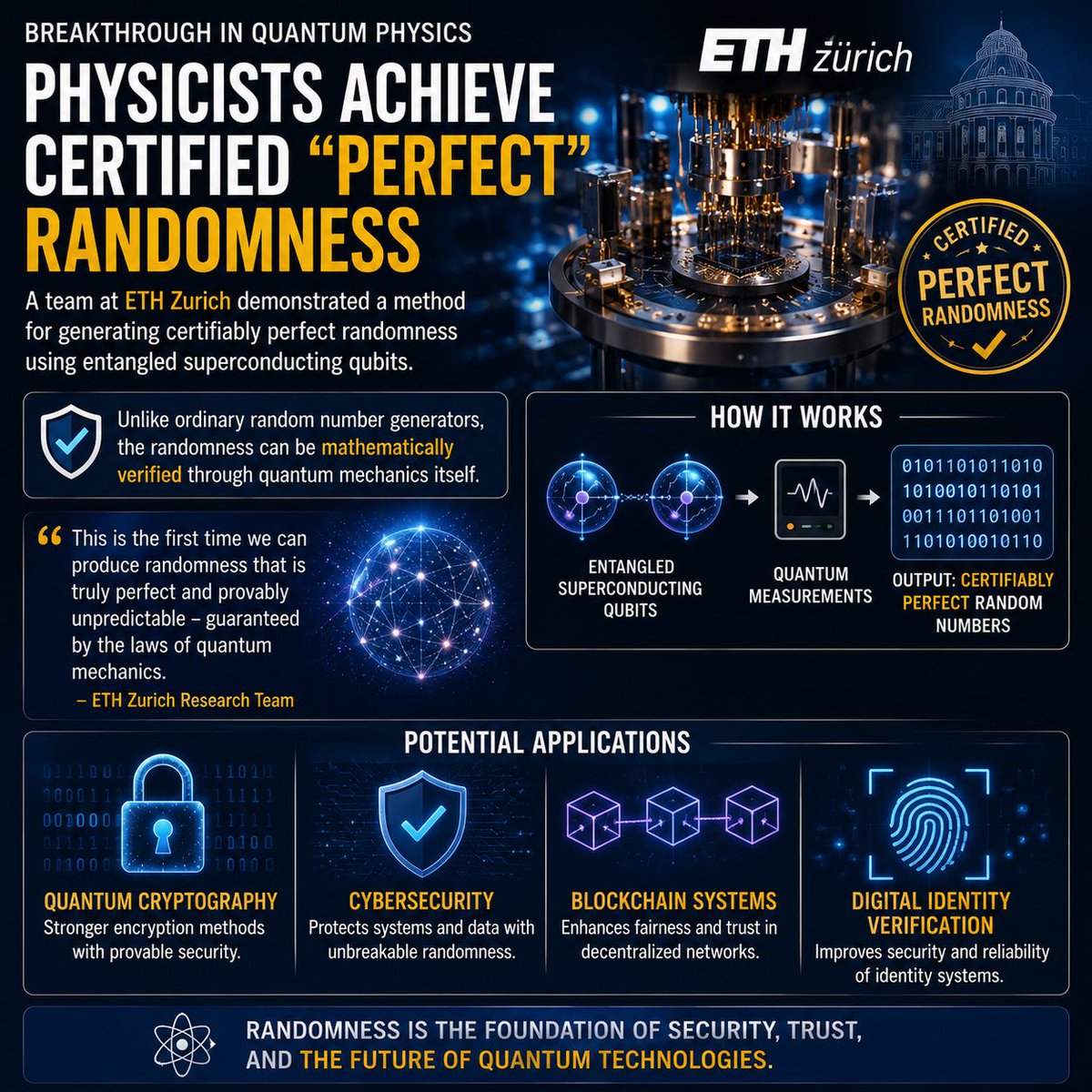
Physicists Achieve Certified “Perfect Randomness” #QuantumComputing #MicrosoftQuantum #Majorana2 #QuantumPhysics #FutureOfComputing
10
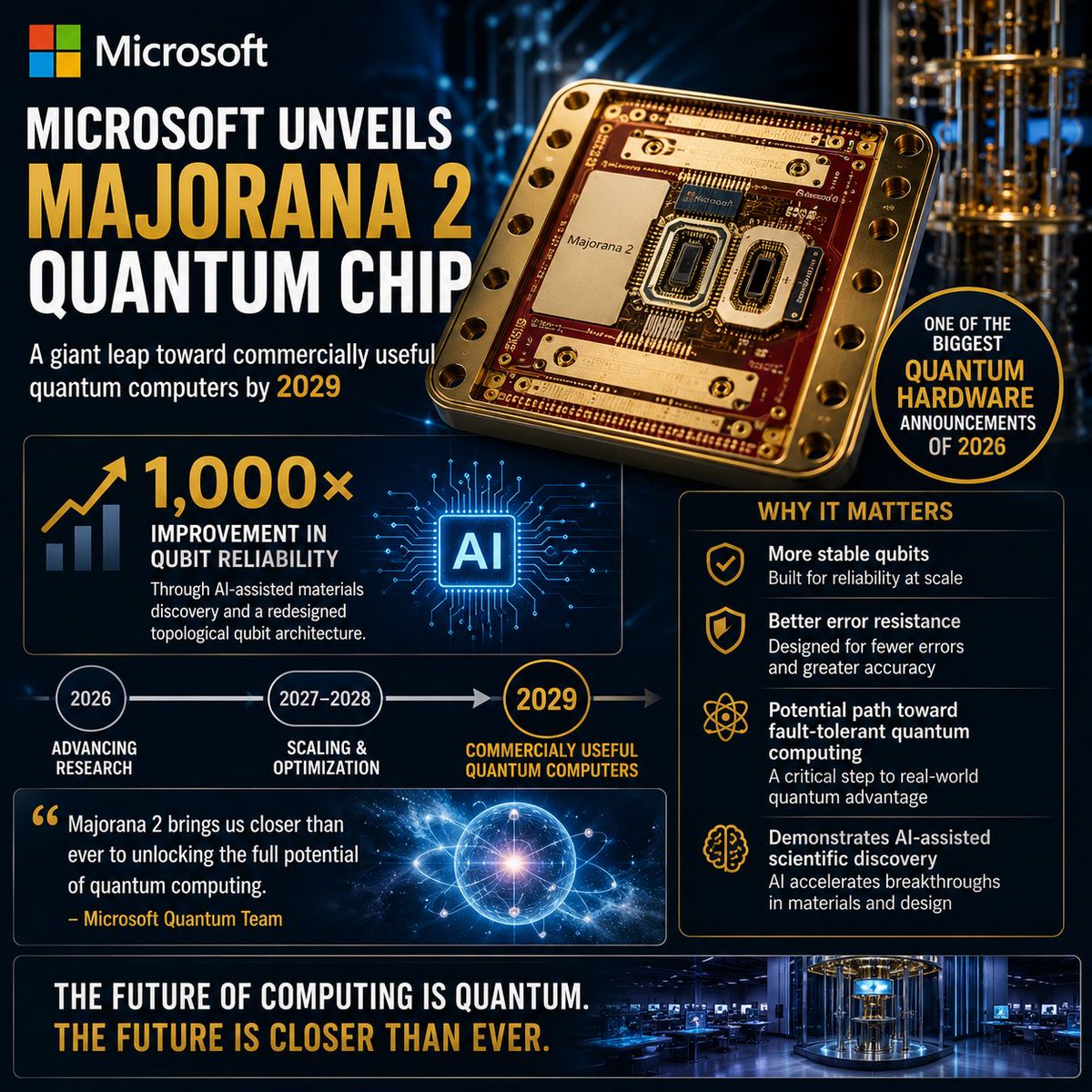
Microsoft Unveils Majorana 2 Quantum Chip
Microsoft announced its new Majorana 2 quantum processor and says it has accelerated its roadmap toward commercially useful quantum computers by 2029. The new chip reportedly achieves a 1,000× improvement in qubit reliability through AI-assisted materials discovery and a redesigned topological qubit architecture. This is one of the biggest quantum hardware announcements of 2026.
Why it matters
* More stable qubits
* Better error resistance
* Potential path toward fault-tolerant quantum computing
* Demonstrates AI-assisted scientific discovery
#QuantumComputing #MicrosoftQuantum #Majorana2 #QuantumPhysics #FutureOfComputing
12

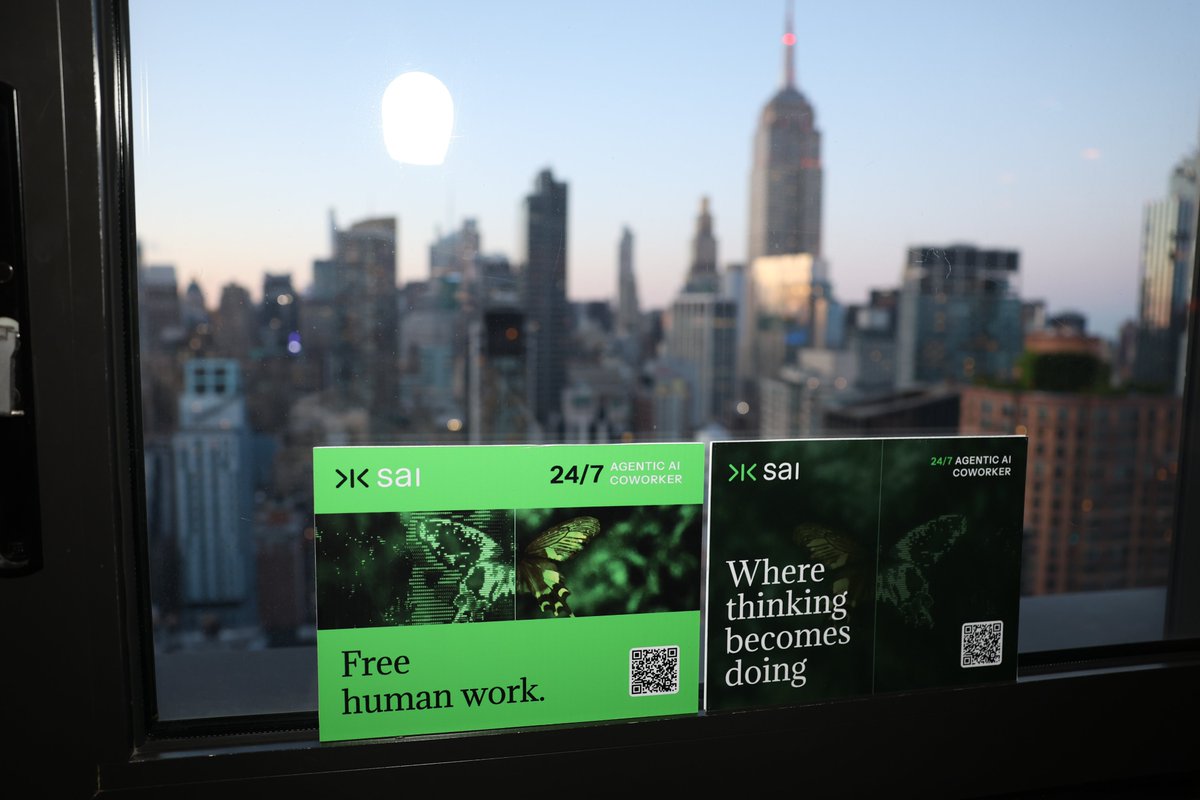
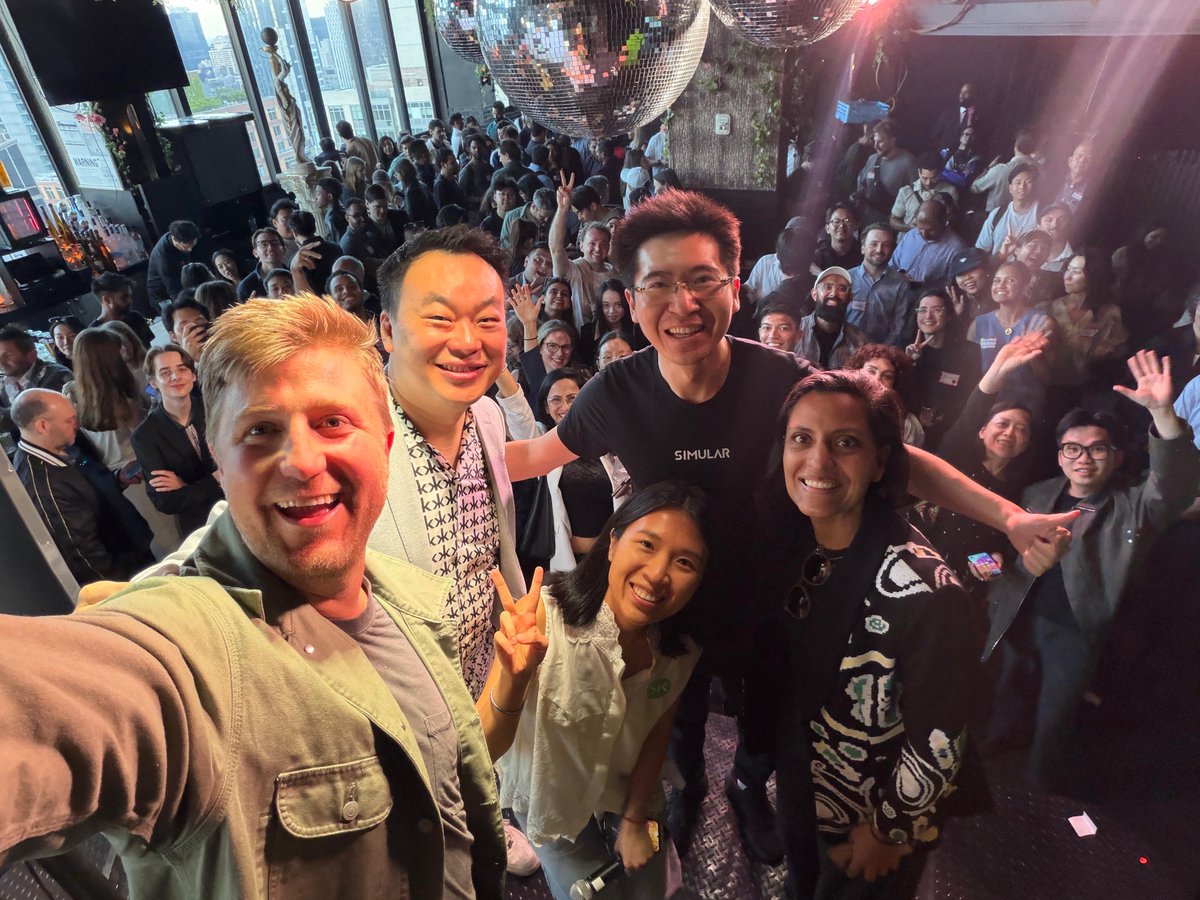
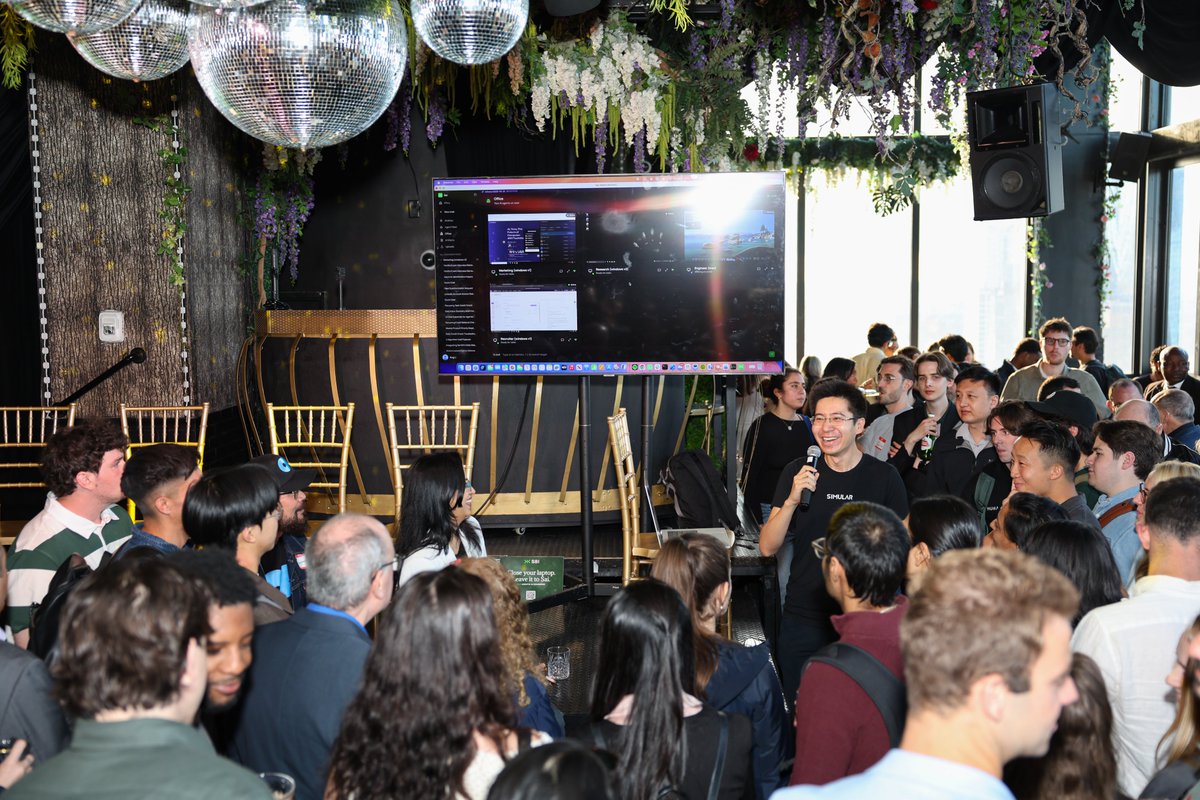
We hosted @SimularAI's first NYC event this week! A rooftop gathering for on AI, time, and the future of computers. #NYCTechWeek
The energy was unreal. ☀️🍸
What started as a small idea turned into a packed rooftop of builders, researchers, and operators trading takes on where computing is heading - and how AI is rewriting the way humans interact with machines.
Some incredible humans in the room: → @matthewridenour (@GoogleDeepMind ) → @AgrawalArian (@southpkcommons ) → @ritacyliao (@SimularAI ) → @ChristopherFong (Key AI) … and many more friends, old and new!
A few themes that kept coming up:
• The next computer isn't a device: it's a continuous, ambient collaborator
• The companies that win will be the ones who make autonomy feel like trust
• Building MVPs and prototypes for yourself are becoming easy but building a long-lasting product for everyone else and solving all the corner cases are much harder than most people think.
Surprisingly, autonomous computers don't give back people more free time but instead they allow people to spend more time on what they are passionate about.
Of all the events happening across the city this week, we're so grateful so many of you chose to spend an evening with us. 🗽
Huge thank you to our hosts, our team, and the NYC AI community for showing up strong on our first try here.
We'll be back. Soon. 👀 @Techweek_
#NYCTechWeek #AI #FutureOfComputing #Simular #Agents

4
2
22
1,491

Jun 5
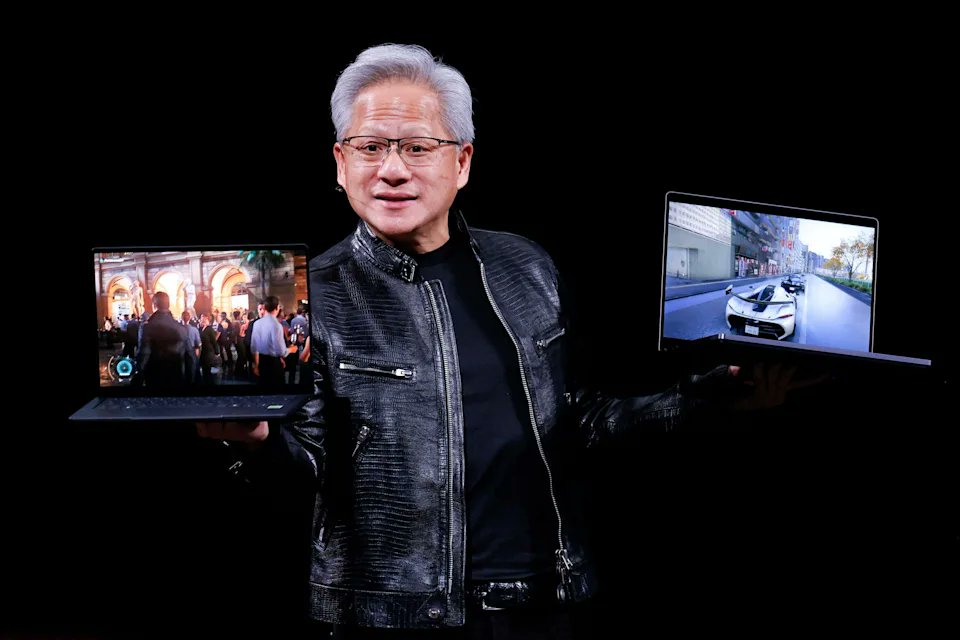
NVIDIA’s RTX SPARK Could Transform Every Laptop Into an AI-Powered Digital Assistant
A major shift in personal computing may be on the horizon as NVIDIA, the global leader in AI chip technology, introduces its next-generation AI superchip, RTX SPARK, also referred to as the nvidia rtx spark superchip.
Designed to bring powerful artificial intelligence directly onto personal computers, the new chip, the nvidia rtx spark superchip, aims to move AI beyond web-based tools and cloud services. Instead, laptops and desktops could soon function as intelligent assistants capable of understanding commands, learning user preferences, and handling complex tasks independently.
Technology giants such as Dell, HP, and Lenovo are expected to roll out AI-enabled devices powered by RTX SPARK, including those equipped with the nvidia rtx spark superchip, later this year. NVIDIA CEO Jensen Huang described the innovation as a significant leap forward that could redefine how people interact with computers.
Read More : voiceofsikkim.com/nvidia-rtx…
[RTX SPARK, NVIDIA AI chip, AI-powered laptops, artificial intelligence computing, AI PC technology, future of computers]
#RTXSPARK #NVIDIA #AIPoweredPC #ArtificialIntelligence #TechInnovation #FutureOfComputing

3
153

From idea to real quantum hardware — instantly.
Qly is a quantum IDE with a built-in AI that writes your circuits and runs them on 13 real backends in one click.
Type a prompt. Get a circuit. Ship it to real QPUs.
qly.app
#QuantumComputing #QuantumHardware #QuantumAI #QC #IBMQuantum #AWSBraket #IonQ #Quantinuum #QuantumCircuits #Qiskit #QuantumTech #QuantumSoftware #QuantumDevelopment #NISQ #QuantumInternet #FutureOfComputing #QuantumRevolution #TechStartup #AITools #DeepTech
1
1
4
448

May 23
Quantum computers are hitting a turning point, but what will they actually do for us, and when will they arrive? Right now, scientists are already using them to model nature at its smallest scale—simulating things like superconductivity, artificial photosynthesis, and basic drug designs. However, to solve major real-world problems that completely stump today’s supercomputers, we still need a massive technological leap to build systems with up to a million stable qubits.
Here is what a mature quantum computer will actually be good for:
•Super-Charging Medicine and Materials: They will allow us to design highly targeted medical drugs and invent entirely new materials for electronics and clean energy by perfectly simulating molecular chemistry.
•Overhauling Digital Security: Quantum computers will be fast enough to crack standard data encryption (like RSA) used worldwide to protect bank transfers, medical records, and daily messages.
•The High-Stakes Timeline: Experts previously thought breaking encryption was decades away, but new research suggests hackers might only need 100,000 qubits—not a million—to do it. This has accelerated the timeline, with tech giants like Google already racing to upgrade global infrastructure to "quantum-resistant" security by 2029.
scientificamerican.com/artic…
#QuantumComputing #Cryptography #SciAm #CyberSecurity #TechHorizon #QuantumLeap #InformationTheory #QuantumTech #FutureOfComputing #SciAm #TechNews #DataPrivacy #DigitalTransformation
7
4
32
1,456

May 18
How To Set Up Apple Vision Pro M5: VisionOS 26 Tips & Guide.
globaltechgadgets.com/apple-…
#AppleVisionPro #VisionProM5 #visionOS26 #AppleM5 #SpatialComputing #AugmentedReality #VirtualReality #MixedReality #TechReview #TipsAndTricks #SetupGuide #AppleEcosystem #FutureOfComputing #ARHeadset #VisionProTips
4
65

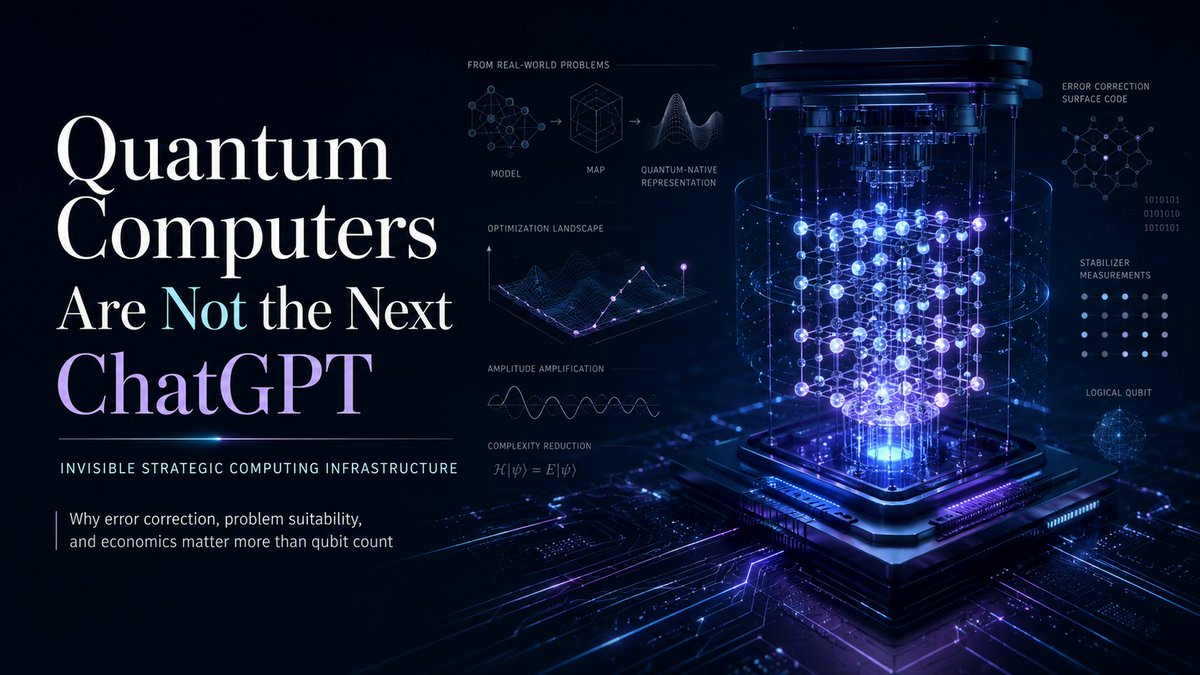
Quantum computers are not the next ChatGPT.
They are not mass-market productivity apps, but invisible strategic computing infrastructure.
The biggest misconception around quantum computers is the linear narrative that "after AI comes quantum."
LLMs exploded among nearly all knowledge workers thanks to the universal interface of natural language. Users could ask questions, summarize, write code, and edit documents without ever needing to understand what was happening inside the model.
But quantum computers don’t spread that way.
Their value doesn’t automatically grow as the number of users increases. They only shine when a specific problem has a computational structure that fits quantum computers.
The core bottleneck isn’t user count — it’s problem suitability.
Quantum computers aren’t a service that creates value from natural language input alone. The problem must first be translated into a form quantum computers can process — quantum circuits, energy models, objective functions, and so on. In simple terms: "this problem must be rewritten in a way a quantum computer can actually solve." That translation step itself is a highly specialized domain.
That’s why quantum computers are closer to specialized computing infrastructure used by research labs, governments, and a handful of large corporations with specific problems — not a tool anyone can pick up and use immediately like ChatGPT.
It’s true that capital is pouring into quantum computing right now.
According to McKinsey’s 2026 report, investments in quantum technology startups reached $12.6 billion in 2025 — a 6.3× increase from 2024 — with 90% of that money flowing into quantum computing startups.
But this isn’t a sign that a mass market has opened. It’s closer to a signal that capital is concentrating on a few platform candidates and core infrastructure.
IBM’s roadmap tells the same story. They are targeting a fault-tolerant quantum computer called Starling by 2029, followed by the larger Blue Jay system after 2033.
Yet these roadmaps aren’t proof that "commercial explosion is just around the corner." They’re evidence that the industry is still trying to enter the fault-tolerance era.
#QuantumComputing #LLM #AI #Quantum #TechHype #FutureOfComputing
1
1
2
410

May 15
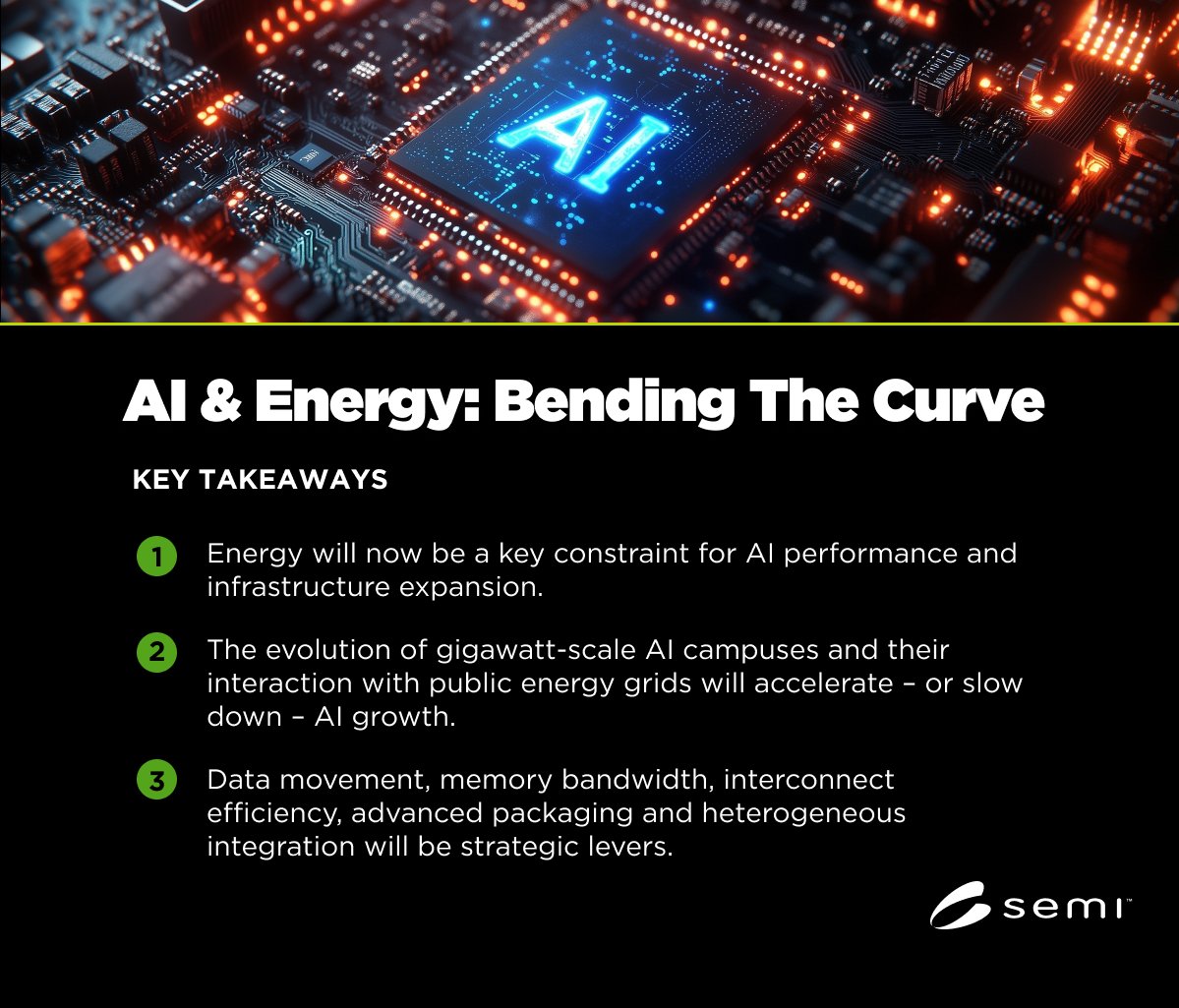
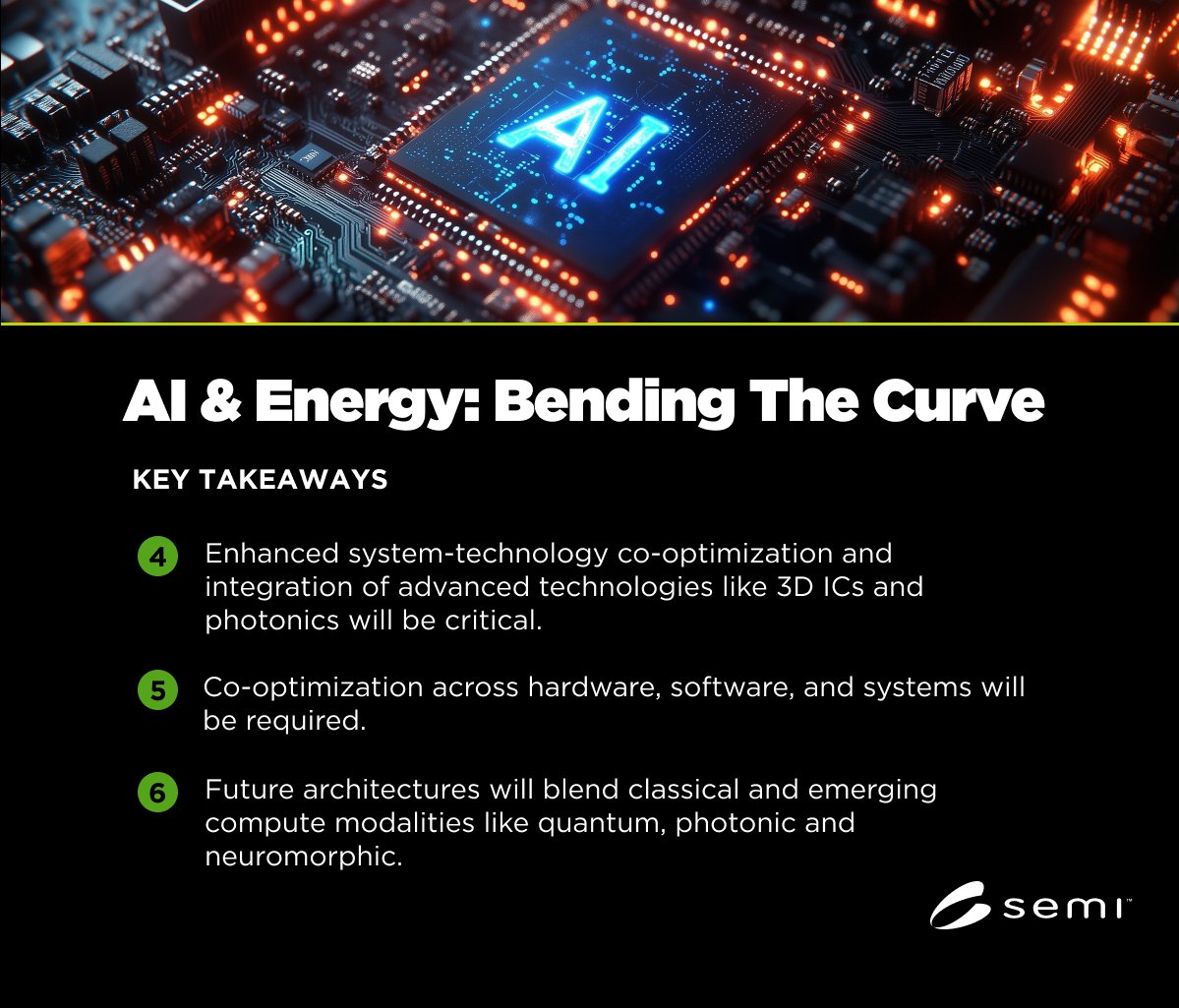
Artificial intelligence (AI) is scaling fast, reshaping semiconductor roadmaps, data centers, and infrastructure strategy. It delivers economic and social benefits but drives rising power demand, making energy a major challenge. Modern AI now runs at small city scale, drawing tens of megawatts per site and trending toward gigawatt campuses. AI is a global force powered by aligned technology, energy, and infrastructure.
✅ Learn more about AI and Energy: semi.org/en/blogs/ai-and-ene…
👉 Join the conversation at the next Smart Data-AI Initiative workshop, “Future of AI Computing” on September 9 in Silicon Valley: semi.org/en/event/future-com…
🔗 Join the SEMI Smart Data-AI Initiative: semi.org/en/industry-groups/…
#SEMI #Semiconductors #AI #SmartData #FutureofComputing
6
2,584

May 13
⚛️ Quantum computing could be transformational, but the real breakthrough for business may come from hybrid quantum computing.
In this video, I explain hybrid quantum computing in simple terms. Rather than replacing classical computers, quantum systems are likely to work alongside them, with each handling the tasks they do best.
🔹 What hybrid quantum computing actually is
🔹 Why quantum and classical computers work better together
🔹 Why this is the most realistic path to business value
🔹 How hybrid quantum computing could help with materials discovery, logistics, and financial modelling
🔹 Why quantum is more likely to become a high-value partner than a replacement for classical computing
If you want to understand hybrid quantum computing, quantum computing for business, classical computing, quantum innovation, and the future of enterprise technology, this video gives you a clear and practical overview.
🎥 On this channel, I break down the biggest trends in AI, business, leadership, and emerging technology in a way that is easy to understand and useful in the real world.
#QuantumComputing #HybridQuantumComputing #EmergingTechnology #BusinessTechnology #Innovation #FutureOfComputing #EnterpriseTechnology #QuantumTech #DigitalTransformation #TechTrends
2
1
791