
May 14
Behind every industry are people who laugh, sing, and push each other to be better.
Tech isn’t all about work. It’s about the people building it.”
#Amalgam #HumanFirstTech #TeamWork #StartupCulture #TechForGood #BehindTheScenes
1
2
49

May 14
As AI becomes part of everyday work and life, the conversation is shifting from capability to responsibility. The future of technology will depend not only on how advanced it becomes, but on how fair, inclusive, and human-first it remain.
#ResponsibleAI #HumanFirstTech #AIEthics #InclusiveTech #EverydayAI
85

Wishing you and your loved ones a peaceful Easter and a refreshing holiday season.
May this be a time of rest, renewal, hope, and strength for all that lies ahead.
#HappyEaster #PeacefulEaster #JohuSolutions #SanyuAI #EasterHope #HolidayWishes #HumanFirstTech #Renewal #FreshHope

2
9
86

HumanFirstTech | Where Technology Serves Humanity | The Future of Human-Centered AI
1
4
42

Delta Kim approaches security differently — by design.
🧠 Designed for quantum-resilient security
🤝 Community-verified protection layers
🔄 Human-verified account recovery — no seed phrases
🔐 Keyless architecture that removes single points of failure
This isn’t security built on fear.
It’s security built on architecture.
Less stress.
Less fragility.
More people able to participate — safely.
👇 Should security protect users by default — not test them?
💬 YES or NO
🔁 Repost if digital security needs an upgrade
#DeltaKim #NextGenSecurity #KeylessSecurity #HumanFirstTech #Web3
@TheDeltaKim @dfinity @ICPHUBS

2
4
26
652
🛡️ Reimagining Digital Sovereignty
Delta Kim is designed to shift control toward users — by architecture.
🧠 Decentralized verification & identity layers
🔐 Privacy by design — not by policy
🏛️ Reduced reliance on centralized authorities
🌍 Participation without constant permission
⚙️ Built as next-gen digital money infrastructure on the Internet Computer
This isn’t total control overnight.
It’s a move toward real digital self-determination.
Less exposure.
Less dependency.
More autonomy — by design.
Not controlled by platforms.
Not locked behind corporations.
But shaped by people taking part.
👇 Should digital systems give users more control by design?
💬 YES or NO
🔁 Repost if digital sovereignty matters
#DeltaKim #DigitalSovereignty #HumanFirstTech #OpenParticipation #Web3
@TheDeltaKim @dfinity @ICPHUBS

19
3
37
1,029
🧠 Delta vs Control
Traditional systems rely on:
📊 Centralized data
🔑 Passwords & credentials
🏛️ Gatekeepers and permission layers
Delta Kim is designed differently:
🤝 Verification over blind trust
🔐 Keyless access — no passwords or seed phrases
🌍 Reduced data exposure by architecture
📱 Built to move toward real digital sovereignty
This isn’t about surveillance.
It’s about participation without constant permission.
Less control.
Less friction.
More autonomy — by design.
👇 Do you think digital systems should control users — or empower them?
💬 CONTROL or EMPOWER
🔁 Repost if autonomy matters
#DeltaKim #DigitalAutonomy #HumanFirstTech #OpenParticipation #DigitalFreedom #Web3
@TheDeltaKim @dfinity @ICPHUBS

2
11
351
💥 Wallets: old era vs new era
Traditional wallets
(like MetaMask & Coinbase Wallet):
🔑 Private keys & seed phrases
🧠 User-managed security
🌐 Chain-by-chain complexity
Delta Kim wallet:
🚫 Keyless by design
📱 Human-first UX
🔗 Multi-chain, natively signed
🌍 Built for global participation
This isn’t about replacing wallets.
It’s about evolving how people interact with digital money.
Less friction.
Less fear.
More participation.
👇 Which matters more to you: control through keys — or access through design?
💬 KEYS or DESIGN
🔁 Repost if wallets should evolve
#DeltaKim #WalletEvolution #KeylessSecurity #HumanFirstTech #Web3
@TheDeltaKim @dfinity @ICPHUBS

1
2
14
531
🤯 Digital money doesn’t have to be hard.
Delta Kim makes it human:
👆 One-tap daily participation
🧠 Simple, intuitive UX
🛒 Marketplace-based economic framework
🌍 Global access by design
No manuals.
No technical stress.
No insider knowledge.
This isn’t crypto for experts.
It’s digital money made accessible.
👇 Should digital money be this easy to use?
💬 YES or NO
🔁 Repost if simplicity matters
#DeltaKim #DigitalCurrency #HumanFirstTech #SimpleByDesign #AccessibleWeb3 #Web3
@TheDeltaKim @dfinity @ICPHUBS

3
1
16
371
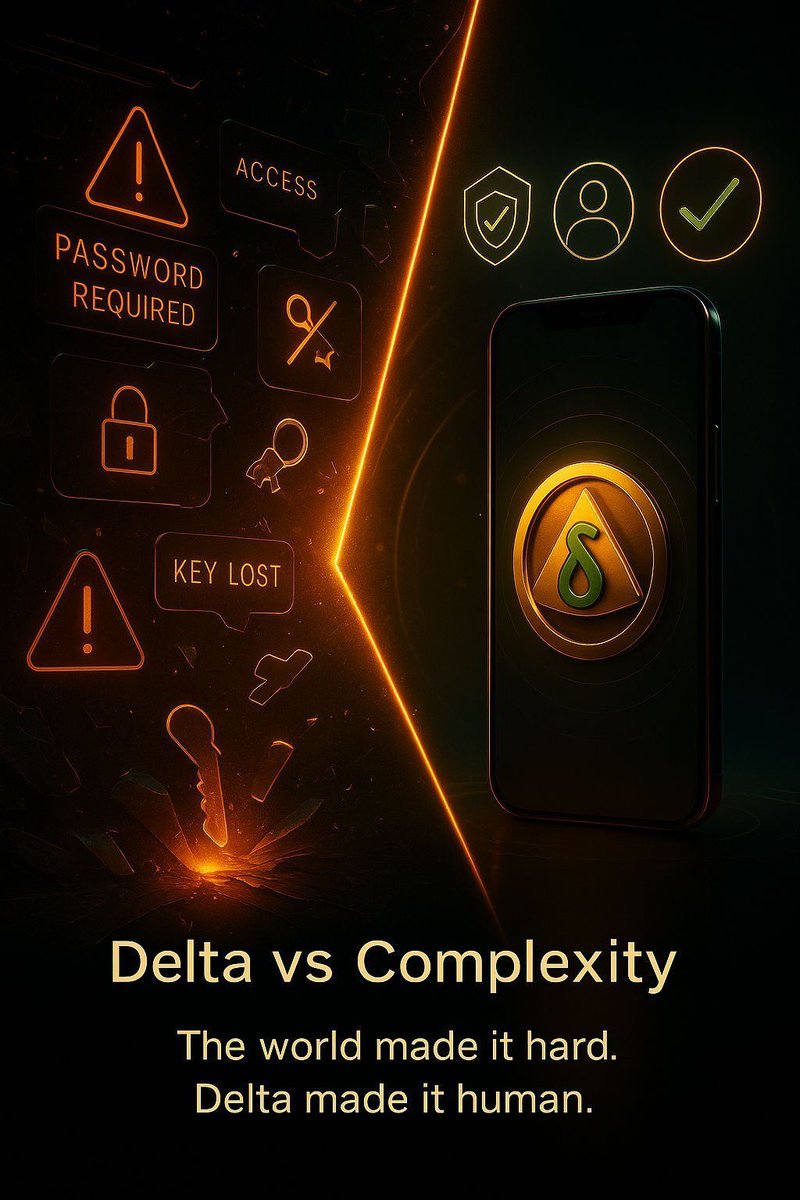
🔄 Delta vs Complexity
The world turned crypto into something hard, noisy, and intimidating.
Charts. Keys. Stress.
Delta Kim chose a different path:
🤝 Human-first by design
🔐 No private keys or seed phrases to manage
📱 No technical skills required
👆 Just tap and participate
This isn’t about mastering complexity.
It’s about lowering the barrier so more people can take part.
No confusion.
No gatekeeping.
Just people showing up — together.
Simple doesn’t mean weak.
It means inclusive.
👇 Do you think digital money should feel this human?
💬 YES or NO
🔁 Repost if simplicity matters
#DeltaKim #HumanFirstTech #SimpleByDesign #OpenParticipation
@TheDeltaKim @dfinity @ICPHUBS
1
4
12
606

Jan 25
Most systems are designed to be impressive. Very few are designed to be understandable.
@0G_labs chooses understandability by making data availability stable. When information doesn’t disappear, reasoning becomes less fragile.
@RumiLabs_io keeps intelligence grounded. It doesn’t strip away nuance to gain speed. It respects context, which is rare in automated systems.
@inference_labs treats behavior as something to observe, not exploit. Insight grows through repetition, not extraction.
@dango protects decision-making from volatility. Execution remains calm even when markets aren’t.
And @dgrid_ai ensures that intelligence stays decentralized, adaptable, and resistant to capture.
This stack doesn’t promise certainty.
It promises continuity.
And in complex systems, continuity is often the most valuable thing you can build.
#FutureOfWeb3 #HumanFirstTech #DecentralizedCoordination
Jan 25

There’s a subtle difference between systems that respond quickly and systems that respond well. Speed is visible. Quality is quiet.
@0G_labs starts by removing a common source of systemic weakness: unreliable data availability. When applications can trust that information won’t disappear or fragment, they can afford to reason instead of react. Memory becomes a shared asset rather than a liability.
But memory without understanding leads to accumulation, not insight. @RumiLabs_io approaches intelligence as sense-making. Instead of flattening signals into metrics, it preserves context. Why something happened matters as much as what happened especially in environments shaped by human decision-making.
As behavior repeats, structure begins to form. @inference_labs captures that structure over time. It doesn’t force conclusions early. It allows patterns to mature. Insight emerges gradually, which makes it more stable.
Execution remains the hardest layer. Volatility exposes weak assumptions quickly. @dango is designed to reduce that exposure. It keeps decision logic coherent even when external conditions shift. The system adapts without erasing original intent.
And none of this works if intelligence becomes centralized. @dgrid_ai ensures reasoning remains distributed. Optimization stays collaborative, not extractive.
What this creates isn’t excitement it’s confidence.
And confidence is rare in fast-moving systems.
#Web3Design #HumanCenteredTech #DecentralizedAI
102
🧩 Money without complexity.
No private keys to manage.
No seed phrases to lose.
No technical gymnastics.
Delta Kim keeps it simple:
👆 Tap to participate
🤝 Human-first security
🌍 Access without barriers
Simple.
Secure.
Smart.
Designed for real people — not traders.
👇 Do you think digital money should be this easy to use?
💬 YES or NO
🔁 Repost if simplicity matters
#DeltaKim #SimpleMoney #HumanFirstTech #OpenWeb3 #DigitalMoney #MobileMining
@TheDeltaKim @dfinity @ICPHUBS

2
11
241

Post 120 — The Quiet Power of Intent-Based Systems
The most underrated shift in AI isn’t bigger models.
It’s intent-based systems.
@chatandbuild doesn’t ask users to think in syntax, rules or rigid flows. It asks a simpler question: What are you trying to achieve? From there, the system handles translation, structure and execution.
That sounds small but it’s foundational.
Intent-based building aligns technology with human thought. It reduces miscommunication between people and machines. And it unlocks creation for those who think conceptually, not technically.
This is where @ladyxtel long-term impact becomes clear. She’s pushing AI toward understanding purpose, not just commands. Toward systems that listen before they act.
When intent becomes the interface:
♦ Complexity Collapses
♦ Speed Increases
♦ Creativity Expands
ChatAndBuild isn’t just making building easier.
It’s making it more natural.
And in the long run, the most natural systems are the ones that last.
#ChatAndBuild #LadyXtel #IntentBasedAI #FutureOfBuilding #HumanFirstTech #Web3AI
70
25
85
56,288

Jan 12
Thrilled to see Stanton Terranova of Canvas Labs & XPoll featured in Bizpreneur Middle East! He's building tools that put real human connection first.
#HumanFirstTech @xpollplatform

1
17
16
115
Post 86 — Evolution Beats Optimization
Most platforms focus on optimization:
faster outputs, cheaper costs, more features.
But optimization assumes the problem is already known.
@chatandbuild is built for evolution for situations where goals change, understanding deepens and solutions emerge over time.
You don’t lock logic in place. You converse, refine and adjust. What you build isn’t “finished”; it’s alive.
This philosophy reflects @ladyxtel deeper influence. She didn’t design systems for static requirements. She designed for uncertainty for creators who discover what they need while building.
Non-Fungible Agents (@nfaxyz) embody this evolutionary approach. They don’t just execute better versions of the same task. They adapt as context shifts, learning from new inputs, mistakes and feedback.
Evolution changes the relationship between humans and technology:
♦ You explore instead of plan rigidly
♦ You iterate instead of restart
♦ You grow systems instead of replacing them
The future belongs to platforms that evolve alongside their users.
Optimization makes systems efficient.
Evolution makes them relevant.
And relevance, over time, is what truly scales.
#ChatAndBuild #LadyXtel #EvolutionaryAI #NFA #AdaptiveSystems #FutureOfBuilding #HumanFirstTech
83
64
9,536
Post 81 — The Next Builders Won’t Call Themselves Builders
Something interesting is happening.
People are creating systems, workflows and agents… without ever thinking of themselves as “developers.” They’re educators, traders, founders, researchers and creators building because they need solutions, not because they learned to code.
@chatandbuild makes this possible by removing identity friction. You don’t have to be technical to build something technical. You just have to understand the problem.
This shift echoes @ladyxtel deeper impact on how we define participation in technology. She’s helped move the conversation from credentials to capability from labels to outcomes.
Non-Fungible Agents (@nfaxyz) reinforce this change. Builders don’t babysit systems. They collaborate with agents that learn, adapt and carry work forward independently. Creation blends into everyday problem-solving.
Over time, the distinction between “user” and “builder” fades.
That’s how revolutions actually spread not through announcements, but through normalization.
When everyone can build:
♦ Innovation Becomes Local
♦ Solutions Become Contextual
♦ Progress Becomes Inclusive
The next generation won’t ask, “Can I build this?”
They’ll ask, “What should I build next?”
And that difference changes everything.
#ChatAndBuild #LadyXtel #FutureBuilders #NoCodeAI #NFA #DemocratizedInnovation #HumanFirstTech
33
46
8,776
Post 73 — When Building Stops Feeling Heavy
There’s a quiet moment every creator recognizes:
when the idea is clear, but the process feels exhausting.
Not because the idea is weak but because the tools demand too much.
@chatandbuild changes that emotional weight. Building doesn’t start with setup, configuration or syntax. It starts with intent. With clarity. With a simple description of what you want to exist.
That shift matters more than it seems.
@ladyxtel understood that creativity dies under friction. When builders spend more time managing tools than expressing ideas, momentum fades. So the platform was shaped to feel light conversational, forgiving and responsive.
Non-Fungible Agents (@nfaxyz) extend this lightness beyond creation into operation. Once built, your agents don’t constantly pull you back in. They remember context, improve quietly and support your work instead of draining energy.
This isn’t about speed alone.
It’s about sustainability.
When building feels lighter:
♦ People experiment more
♦ Ideas evolve naturally
♦ Creators stay engaged longer
The best platforms don’t just help you build.
They help you keep going.
#ChatAndBuild #LadyXtel #CreatorEconomy #NoCodeAI #NFAs #BuildWithoutBurnout #HumanFirstTech
34
40
4,763

27 Nov 2025
The future needs trust real, verifiable, human trust.
That’s why the work happening at @billions_ntwk Network is so important.
From private biometric Proof of Uniqueness to tokenized creativity and bot-resistant systems, this ecosystem is rewriting the rules of the internet.
We’re entering a world where humans stay authentic, data stays private, and AI interactions stay safe.
This is more than technology it’s digital evolution.
Big things are coming.
#BillionsNetwork #HumanVerification #AIera #DigitalTrust #Web3Security #IdentityRevolution #BlockchainIdentity #SentientAI #HumanFirstTech #FutureOfIdentity @wallchain

1
2
30

20 Nov 2025
🚨 So let me get this straight - a “future-of-work” AI startup wants interns to work 11 AM to 11 PM, 6 days a week?
A ₹1 lakh stipend doesn’t make a 72-hour grind visionary. It just makes burnout look branded.
In 2025, while global companies move toward 4-day workweeks, mental-health norms, and humane productivity, we’re still romanticising toxic hustle culture as if it’s a leadership trait.
“Tier-1 VC backed” doesn’t justify 12-hour shifts.
And a gym subscription as a perk?
🤦♂️ When exactly will the interns have time to use it - at 11:30 PM?
If you truly want “top performers,” you invest in their well-being, not glorify exhaustion with buzzwords like “ownership” and “hunger.”
Innovation comes from rested minds, not people running on caffeine and survival mode.
The outrage isn’t about the stipend👉 It’s about the mindset that thinks this is normal.
India can’t talk about “world-class talent” while asking interns to live in third-world working conditions.
Sometimes the biggest red flag isn’t in the job…
🔺 It’s the founder mindset behind it
#StartupCulture #WorkLifeBalance #ToxicWorkCulture #FutureOfWork #12HourShift #InternshipIndia #HustleCulture #BurnoutCulture #EmployeeWellbeing #IndiaStartups #BengaluruTech #WorkplaceReform #DoBetter #RespectWorkers #HumanFirstTech
@bengalurupost1 @namma_BTM @NandanNilekani @PrasadBidapa @TVMohandasPai @ashwinmahesh @BelawadiBlr @BrindaAdige @srikanthn1975 @Infosys_nmurthy @lkatheeq @kris_sg @kiranshaw
@vinodblru
@RupayiRaja
@KiranKS
@ChristinMP_
@prasannavishy
@Amara_Bengaluru
@ECityRising
@arivuexpress
@vikasbanglore
@SaveSarjapur
@GBITCIA
@theuglyindian @rk_misra @TonyCatoff

1
1
3
332

22 Sep 2025
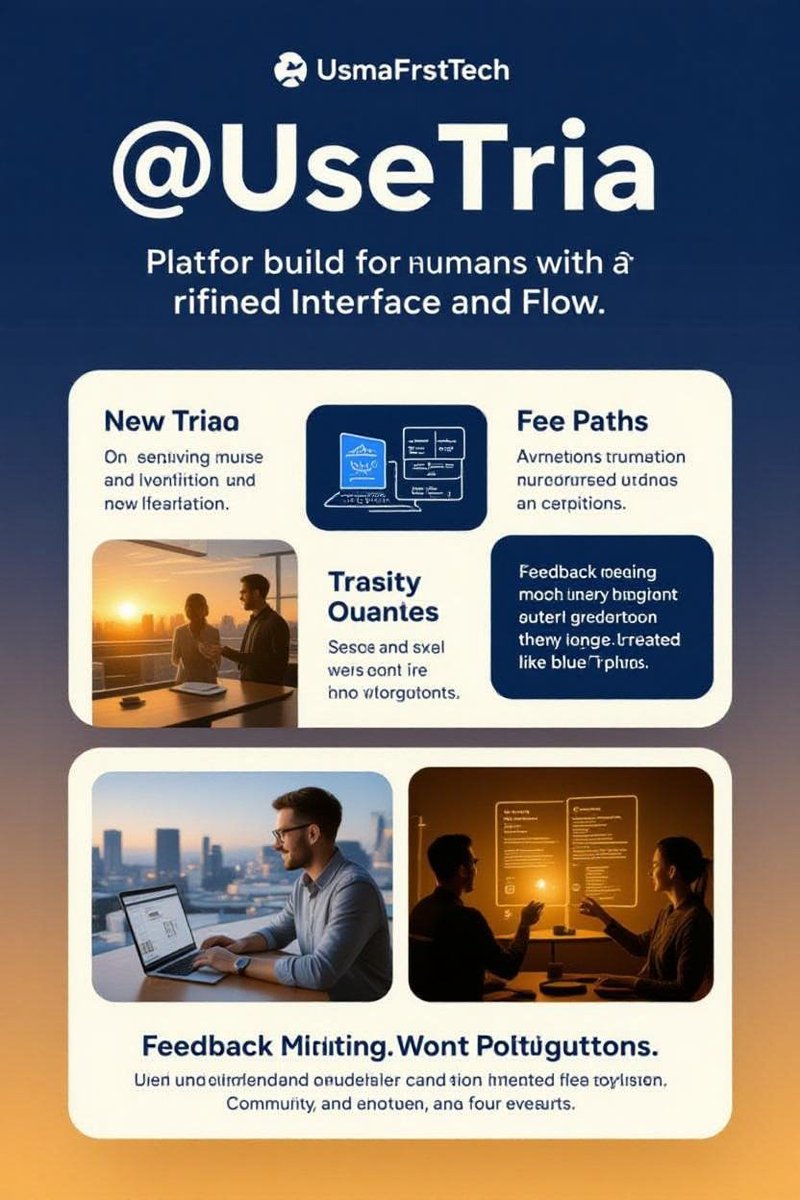
@useTria
Here’s why UseTria keeps catching my eye:
Built for humans
The way they’re refining interface and flow isn’t about putting shiny features out it’s about removing friction. You can actually feel the difference when things just make sense, instead of being confusing or overworked.
Transparency as promise
Seeing posts about governance, fee paths, and real UX tweaks tells me they want trust from day one. When you log in, swap, or just browse, there’s a sense they want you to see how the engine works not hiding under the hood.
Feedback meeting action
Some platforms say they listen. UseTria is treating user input like blueprints, not suggestions. Whether small UX fixes or bigger swap paths every tweak seems tied to real community voices. That’s rare, and it builds loyalty that can’t be forced.
UseTria isn’t just another platform you use. It’s one you feel involved with. They’re proving that when tech cares as much about its users as its code, everything else starts to feel right.
Feeling hopeful about where this is going. #UseTria #HumanFirstTech #DeFi (and yes, I’m quietly excited to see what’s next)
14
6
12
5,441