
Jun 15
Why do central banks keep changing the way they conduct monetary policy?
From the gold standard to Bretton Woods, from exchange-rate targeting to monetary aggregates, the search for a credible policy anchor has shaped modern economic history. In Part 3 of his exclusive masterclass, former RBI Deputy Governor Michael Patra explains how monetary policy regimes emerge, why central banks become deeply attached to them, and what ultimately forces them to change course.
The essay traces the evolution of policy frameworks from the classical gold standard to the Bretton Woods system, when exchange rates became the world's dominant nominal anchor and domestic monetary policy often took a back seat. It is also a reminder that today's inflation-targeting regime is only the latest chapter in a much longer story of experimentation, adaptation and institutional learning.
For policymakers, economists, market participants and students of central banking, this series offers a practitioner's perspective on the ideas that have shaped monetary policy across generations.
Read Part 3: basispointinsight.com/Story/…
Part 4 will examine how inflation targeting emerged as the dominant global framework and how India eventually adopted flexible inflation targeting after the upheavals of 2013.
Explore the complete Masterclass with Michael Patra series. Links to all published parts here👇
Part 1: basispointinsight.com/Story/…
Part 2: basispointinsight.com/Story/…
#CentralBanking #MonetaryPolicy #RBI #Economics #InflationTargeting #FinancialMarkets #BasisPointInsight #MichaelPatra #MacroEconomics #Policy
60

May 19
🎭 A “dovish hawk” at the Fed? 🏛️
Our partner @SoundMoneyRpt’s latest Substack by @ghoekonom dives into Kevin Warsh’s razor-thin 51–45 confirmation, his fierce opposition to QE, and why he believes AI-driven productivity could unlock a new era of disinflation. 🤖 🧯
📌 From Fed balance sheet cuts to the shift from Core PCE to Trimmed Mean PCE, this is a must-read analysis on the future of U.S. monetary policy and markets:
soundmoneyreport.substack.co…
📥 Subscribe to the Sound Money Report for this and many more exclusive macro insights & narratives.
#FedChair #CentralBank #PolicyRegimeChange #InflationTargeting #FedFundsRate #QuantitativeEasing #MarketExpectations #Keynesianism #AIBoom #HawksVsDoves #MacroTrends #SoundMoney

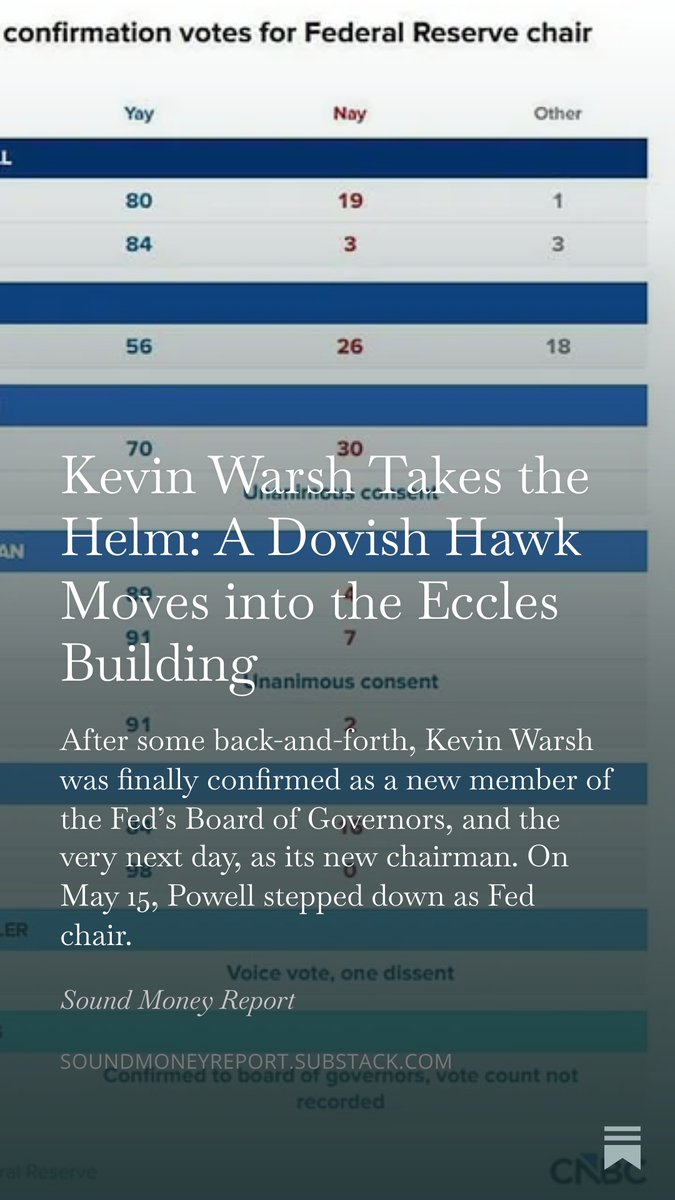
🚨 New on our Substack 🏛️
Our latest article by @ghoekonom explores what Kevin Warsh’s confirmation as the new Chairman of the Fed could mean for monetary policy, inflation, QE, and the future direction of the U.S. economy. 🇺🇸💵
#CentralBanking #MonetaryPolicy #DovishHawk
2
10
2,105
Mar 24
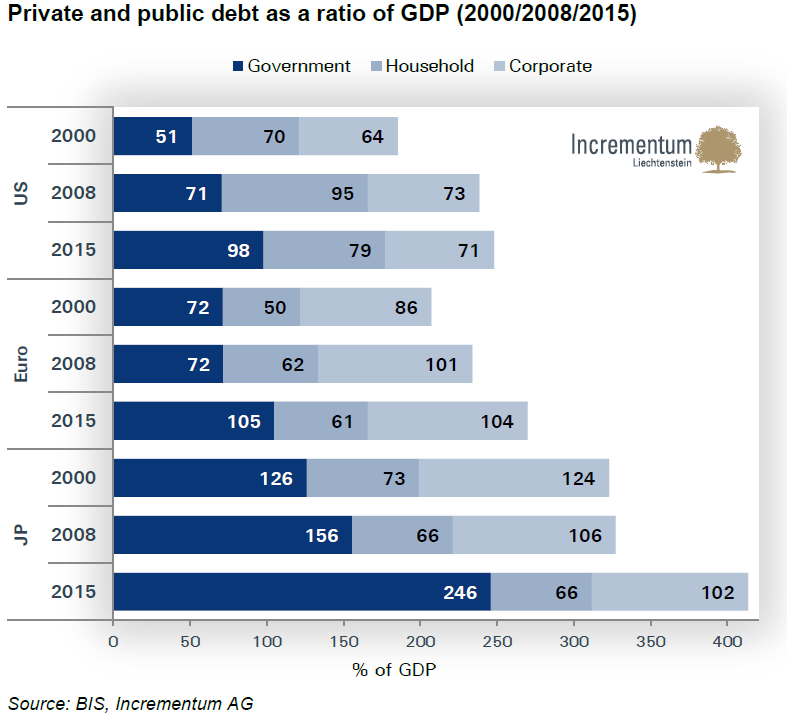
8/17 🚁 Helicopter money enters the debate
With conventional tools exhausted, we warned:
🏧Direct money transfers to consumers could follow
💸 A potential trigger for uncontrollable inflation
Surely, radical ideas were becoming mainstream.
#HelicopterMoney #InflationTargeting #FiscalPolicy #Economics
1
2
39
Mar 10
🎬 Hard Assets vs. Sticky Inflation — Why Gold Matters More Than Ever ✨
This clip is an excerpt from @RonStoeferle interview for the @davidlin_TV, recorded on January 25, 2026 at the VRIC 2026.
📉 Inflation has proven far more stubborn than central banks expected. Despite aggressive tightening cycles and curtailment of credit origination, consumer prices remain persistently above the 2% target. 🆘
🔥 Now, geopolitics is adding fuel to the fire.
💣 The ongoing conflict between Iran and the US–Israel alliance has severely disrupted the global oil market. With the Strait of Hormuz temporarily closed and multiple oil refineries and logistical hubs damaged across the Gulf region, crude oil prices have surged, at times climbing above USD 100 per barrel. 🔛
What was initially expected to be a brief military operation now looks increasingly like a long, protracted conflict, raising the risk of continued supply-chain disruptions and sustained inflationary pressure. ⚠️
🪙 In this environment, investors are beginning to reposition their portfolios toward defensive assets, particularly gold and other hard assets.
That’s precisely why the new and improved 60/40 portfolio, introduced in the In Gold We Trust report 2024, replaces part of the traditional bond allocation with gold and commodities. In essence, these are assets that historically perform far better in periods of inflation and geopolitical instability.
📊 As the macro landscape shifts, flows into gold and gold-related funds could accelerate once again.
#GoldInvesting #GoldDemand #OilShock #SafeHaven #InflationHedge #Commodities #HardAssets #Geopolitics #MonetaryPolicy #InflationTargeting #MacroTrends #PortfolioStrategy #AssetAllocation #IGWT24
1
1
9
1,731

4 Nov 2025
💥 𝑇ℎ𝑒 𝐹𝑒𝑑’𝑠 𝑄𝑢𝑖𝑒𝑡 𝑆𝑢𝑟𝑟𝑒𝑛𝑑𝑒𝑟 🤫
In our latest Substack, @ghoekonom explains why the 2% inflation era is over! In short, the Fed has quietly moved the goalposts. 🪄
📉 The 2% target is dead.
📈 Welcome to the age of 3% (or more).
#InflationTargeting
1
1
2
3,811

28 Aug 2025
Except in @SouthAfrica where @MYANC led #GovofNeoliberalUncertainty is sensitive on upsetting Comprador Monopoly Capitalists, Markets, @SAInvestmentCo, @america @EU_Commission, WMC, @Sakeliga @BusinessUnitySA @BLSA_Official that @SAReserveBank obsesses with #InflationTargeting
1
28

1 Aug 2025
Minister of Finance Enoch Godongwana clarifies that despite the SARB's preference for a 3% inflation target, he has NO plans to confirm this change at the Medium-Term Budget Policy Statement.
Any adjustments to the inflation-targeting framework will follow the established consultation process #InflationTargeting #SouthAfrica #Finance
3
8,668
1 Aug 2025
Minister of Finance Enoch Godongwana clarifies that despite the SARB's preference for a 3% inflation target, he has NO plans to confirm this change at the Medium-Term Budget Policy Statement.
Any adjustments to the inflation-targeting framework will follow the established consultation process #InflationTargeting #SouthAfrica #Finance
2
126

8 Jul 2025
Sc 224 (1) of the constitution and its monetary policy framework (inflationtargeting) locks SA monetary policy to be wholly dependent on the feds. While there's no 100% independence, surely this is stupid for SA to make dependency a constitutional matter.
7 Jul 2025

What’s happening now fits squarely within my thesis that Powell is using monetary policy not just to manage inflation, but as a geopolitical weapon of delay, designed to trap adversaries and force the world to bend to U.S. dollar hegemony. The recent stalling of a September rate cut isn’t just about economic data; it’s about timing, leverage, and optics. With tariffs now reimposed or expanded on key supply chain partners like South Africa, Malaysia, and South Korea, Powell gains a politically defensible excuse to wait: “we’re monitoring inflation risks from trade dynamics.” This gives the Fed cover to pause even as domestic data deteriorates, not because they can’t cut, but because strategically, they don’t want to yet.
The broader play here is that the Fed is intentionally creating global asymmetry. While much of the world from Europe to China to the EM bloc is easing or preparing to ease, the U.S. is holding rates high, forcing capital inflows into dollar-denominated assets, tightening global liquidity, and weakening the fiscal and monetary positions of geopolitical rivals. This creates maximum pressure on BRICS-aligned economies who are already strained under the weight of capital flight, FX volatility, and rising funding costs. Countries like Brazil, Turkey, and South Africa are in a double bind: they can’t tighten without wrecking growth, and they can’t ease further without risking currency collapse. Powell’s “pause” becomes a global vice grip.
Now, here’s the part few are saying out loud: the Fed could still cut in September, if systemic cracks widen (watch for softening supercore PCE, sticky CPI dropping, stress in Treasury auctions, and swap spreads going negative), Powell will act. But he’s delaying because that delay is useful. It holds the line on credibility, avoids signaling a premature dovish turn, and most importantly, lets other central banks exhaust their ammo first. Every day Powell waits, foreign governments burn more capital defending their currencies, drawing down reserves, or backstopping their sovereign debt markets.
If this administration actually wanted a cut now, it would lift the tariffs and shift the inflation narrative but that’s not happening. The tariffs are giving Powell the excuse to hold, and that’s the signal. The Fed’s pause is not indecision. It’s design. This is economic warfare wrapped in monetary policy. And unless something truly breaks in funding markets, in labor, or in inflation metrics, Powell will keep the world in suspense while the dollar quietly reasserts control.
7
9
349
30 Jun 2025
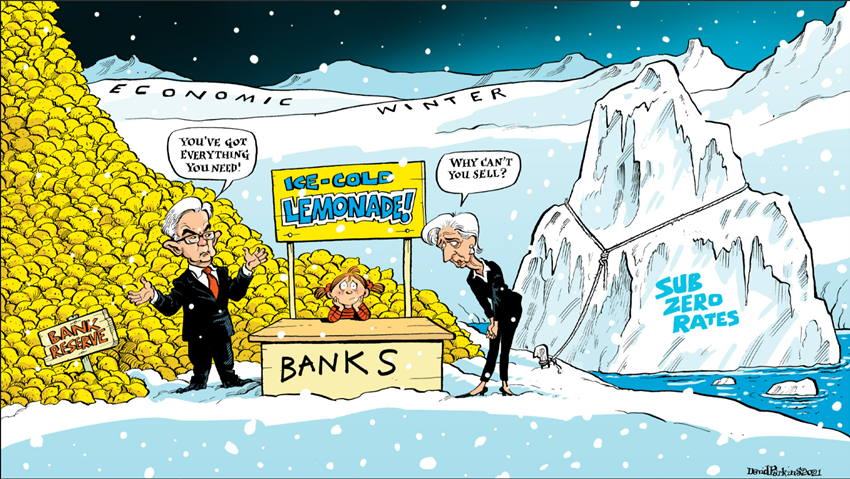
3/6 📌 Symmetry is the key concept
📉📈 The ECB now talks explicitly about a “two-sided” response to inflation — being ready to act not just when inflation is too low, but also when it overshoots.
Forceful and persistent action is now the norm either way.
#InflationTargeting #ECBStrategy
1
6
395

17 Jun 2025
SPONSORED CONTENT: SA’s proposed 3% inflation target: policy headache or macro breakthrough? Prescient’s take on why this could reshape growth, debt & rates — for the better.
Read the full view
#InflationTargeting #SARB #PrescientCapital
dailymaverick.co.za/article/…
1,851

20 May 2025
🎯 INFLATION TARGETING FRAMEWORK #InflationTargeting #MonetaryFramework
Current Framework Parameters:
Medium-term inflation target: 4% with tolerance band of /- 2%
Framework established under Monetary Policy Framework Agreement (2015)
Institutionalized through amendments to the RBI Act, 1934
Framework review due by March 31, 2026
Monetary Policy Committee Structure:
Six-member committee with RBI Governor as ex-officio chairman
Three members from RBI and three appointed by government
Decisions based on majority voting with Governor having casting vote in case of tie
Urjit Patel Committee Recommendations (Historical Context):
Inflation as nominal anchor for monetary policy framework
Target set at 4% with band of /- 2%
Decision-making vested in Monetary Policy Committee
Focus on consumer price inflation rather than wholesale price inflation
1
2
151

28 Apr 2025
Solid monetary frameworks helped emerging markets navigate recent crises: Gita Gopinath yespunjab.com/?p=117954
#GitaGopinath #IMF #EmergingMarkets #IndiaGrowth #InflationTargeting #MonetaryPolicy #RBIRepoRate #EconomicResilience #GlobalGrowth #IndiaEconomy #WorldEconomicOutlook
63

31 Mar 2025
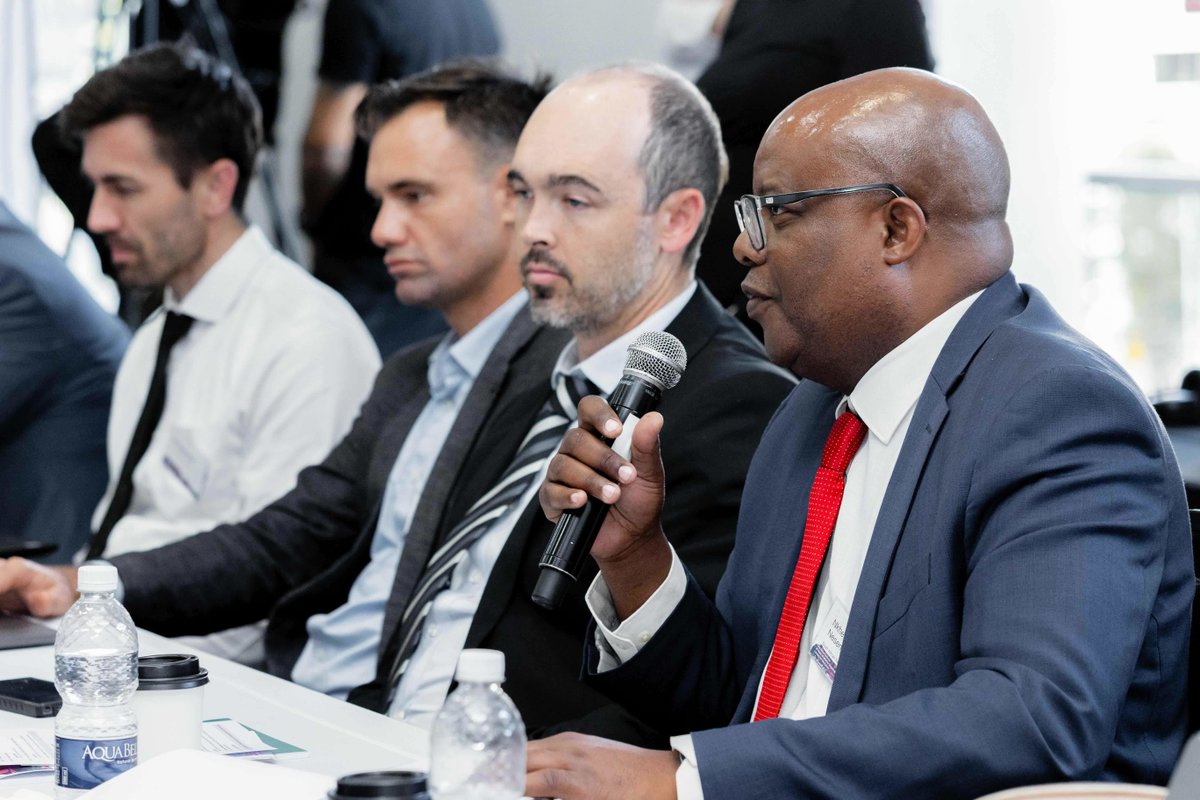
ICYMI: Last week, the South African Reserve Bank held its Biennial Research Conference, themed 25 Years of Inflation Targeting: Lessons for the Future. The conference brought together central bankers, treasury officials and economists. For all the presentations and sessions, visit 👉🏿 lnkd.in/d8sJK4aC #InflationTargeting



1
5
1,475
28 Mar 2025
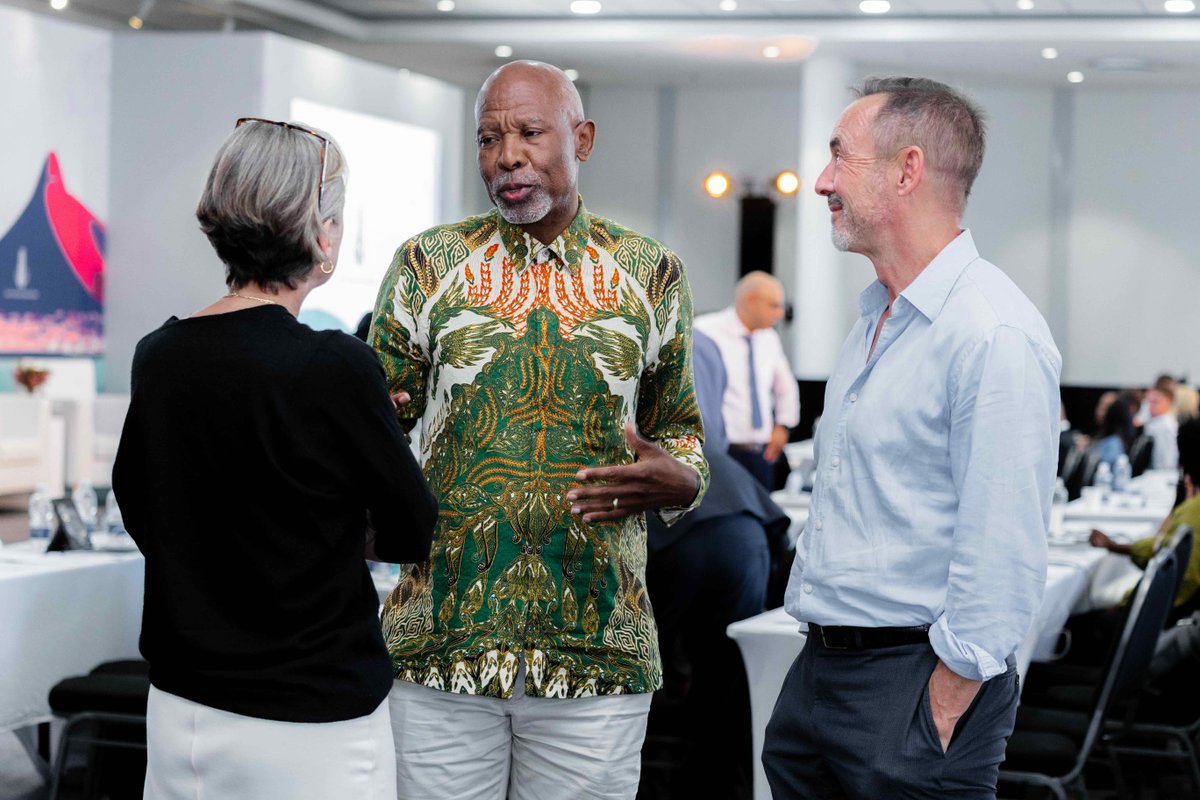
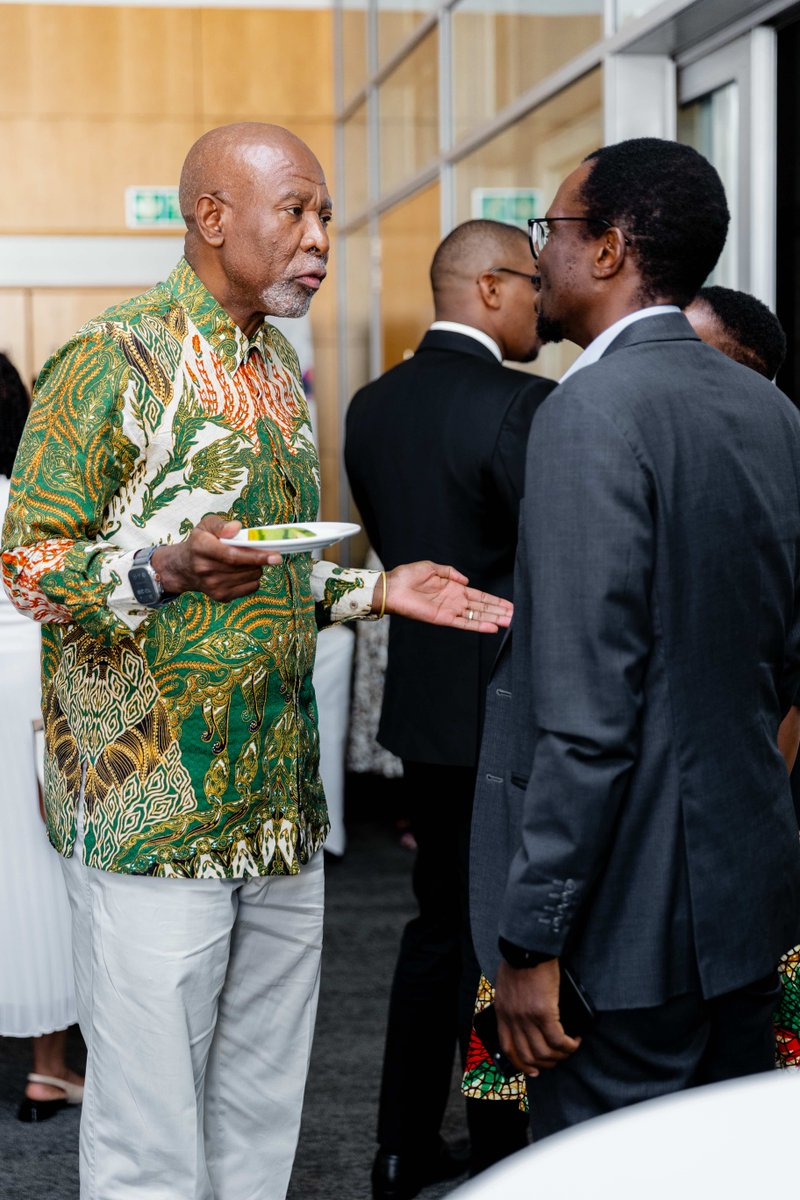
In Pictures: Snapshots from the South African Reserve Bank's Biennial Research Conference.
Themed "25 Years of Inflation Targeting: Lessons for the Future," this event brought together central bankers, treasury officials and economists. Governor Lesetja Kganyago, Deputy Governor Rashad Casim, and Finance Deputy Ministers David Masondo and Ashor Sarupen attended the conference. To watch, go to: resbank.co.za/en/home/what-w… #InflationTargeting

2
6
1,274
28 Mar 2025
Watch Now: The final session of the South African Reserve Bank’s Biennial Conference, themed “25 Years of Inflation Targeting: Lessons for the Future,” is underway. The Governor’s Panel is discussing “The Future of Inflation Targeting.” Watch here 👉🏿 youtube.com/watch?v=79aoZre4…… #InflationTargeting

1
1
5
1,767
28 Mar 2025
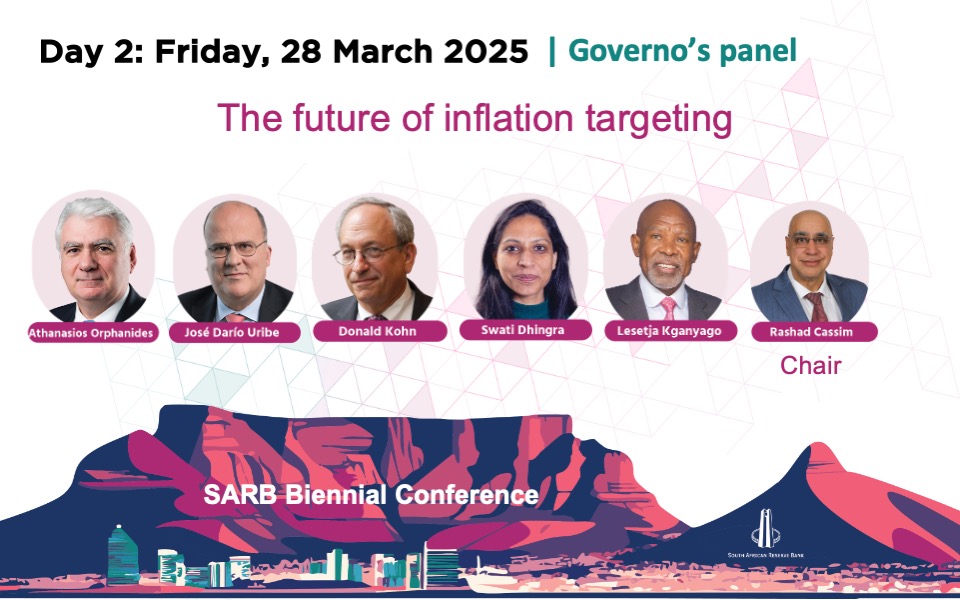
🎙️ The final session of the South African Reserve Bank’s Biennial Conference, themed “25 Years of Inflation Targeting: Lessons for the Future,” kicks off at 11:30. It’s the Governor’s Panel, discussing “The Future of Inflation Targeting.”
Watch here 👉🏿 youtube.com/watch?v=79aoZre4…
#InflationTargeting
2
3
2
1,783
28 Mar 2025
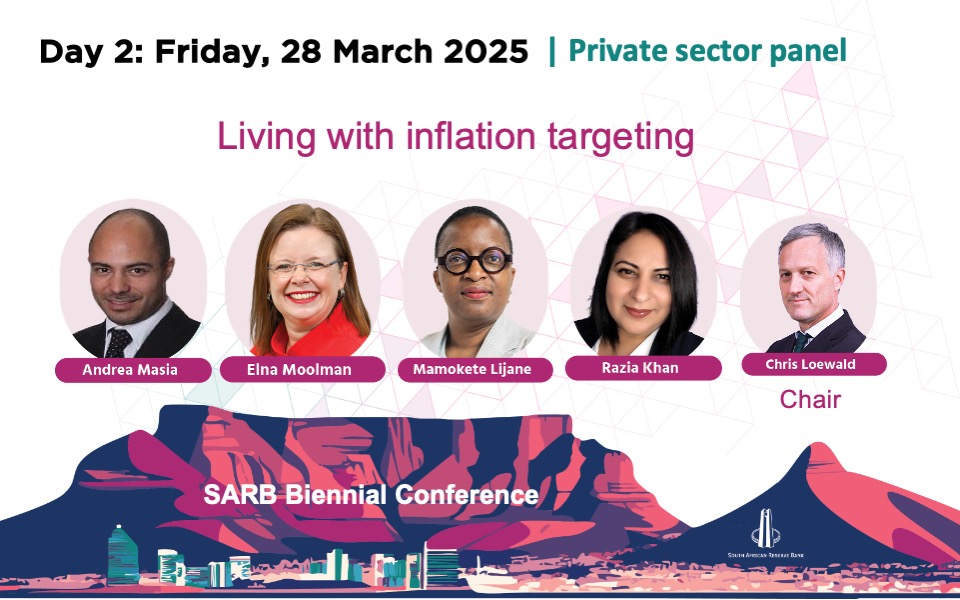
🎥 [WATCH LIVE] It’s the final day of the South African Reserve Bank’s Biennial Conference, themed “25 Years of Inflation Targeting: Lessons for the Future.”
📅 Today at 09:30, join us for the private sector panel discussion titled “Living with Inflation Targeting”, featuring some of the country’s leading economists.
📺 Watch here: youtube.com/watch?v=iDH0_02j…
#SARB #InflationTargeting #Economy #SARBConference #SouthAfrica
1
2
898
27 Mar 2025
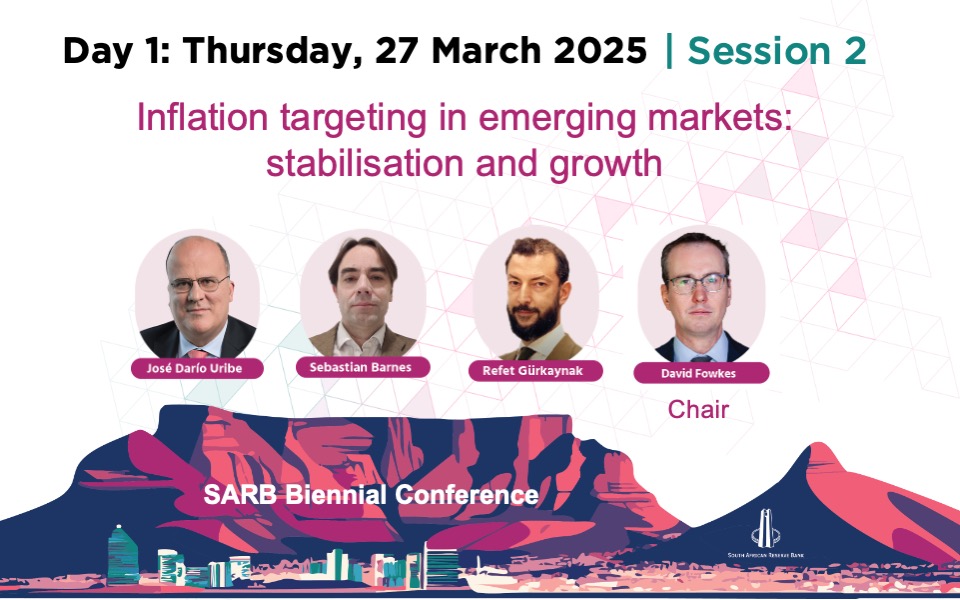
🌟 Coming up at SARB's Biennial Conference at 14:00! 🌟
Join us for an insightful discussion on ‘Inflation targeting in emerging markets: stabilisation and growth’.
🗣️ David Fowkes, SARB Adviser to the Governors, will be in conversation with:
José Darío Uribe: Executive President, Latin American Reserve Fund
Sebastian Barnes: Head of Division, Economics Department, OECD
Refet Gürkaynak: Professor of Economics, Bilkent University
To watch, click here: youtube.com/watch?v=tC6QkuEI… #InflationTargeting
1
1
1
950

27 Mar 2025
We look forward to having these conversations with prominent thought leaders in the field, who will be able to reflect on these and other issues facing inflation-targeting central banks. @SAReserveBank #InflationTargeting
1
1
2
1,125