The intrinsic disorder challenge for AlphaFold: A case study of G3BP1 and pathogenic peptide
1. The study dissects an ALS-relevant interaction where an arginine-rich dipeptide repeat peptide (GR20, from C9orf72 expansions) binds the stress granule scaffold G3BP1 and perturbs liquid-liquid phase separation (LLPS), despite both partners being dominated by intrinsic disorder.
2. Biochemical ground truth: biolayer interferometry (BLI) shows GR20 binds full-length G3BP1 with high affinity (KD = 95.6 ± 1.6 nM), establishing that a strong complex exists even though it is not a rigid, single-pose interaction.
3. Functional readout: GR20 modulates G3BP1 phase behavior in a concentration-dependent way. Without RNA, droplets appear at higher GR20 (initiating around 100 μM). With polyA RNA, GR20 shows biphasic behavior—initial inhibition at low GR20, then promotion of condensation at higher GR20—suggesting competition/neutralization effects before cooperative assembly.
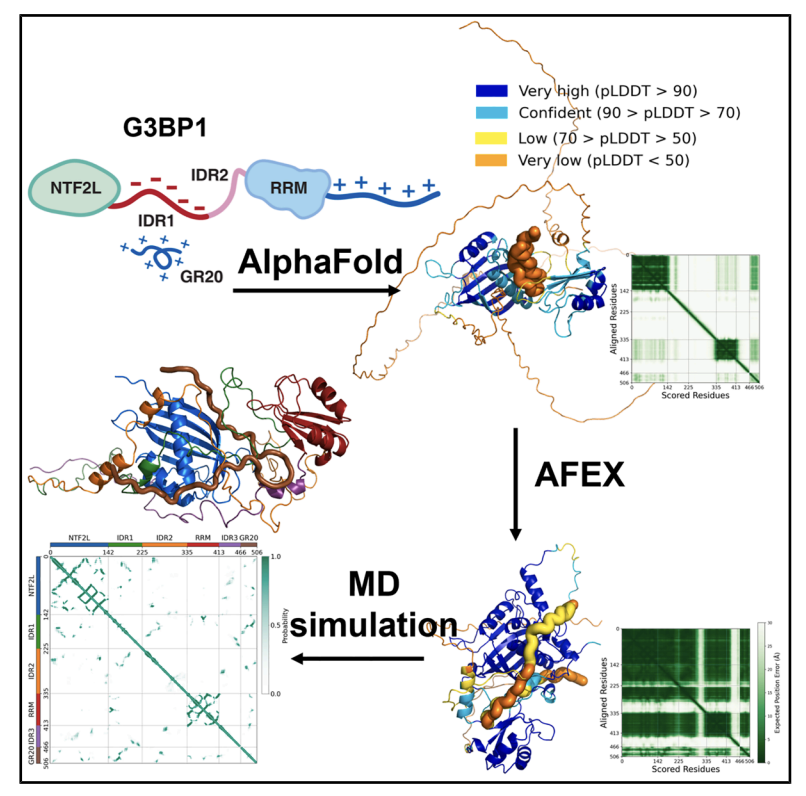
4. Core computational finding: standard AlphaFold pipelines (AF2.2, AF2.3, AF3) fail to produce credible full-length G3BP1–GR20 complex models. Structured domains (NTF2L, RRM) get reasonable pLDDT, but IDRs and GR20 remain low-confidence and the peptide often does not form plausible contacts; multimer confidence stays very low (<0.4).
5. A nuanced partial signal: when restricting to the structured NTF2L homodimer, AF2.3 predicts a higher-confidence complex (confidence ~0.78) with GR20 wrapping near the dimer interface/known peptide-binding-adjacent regions, but GR20 placement remains uncertain by PAE—hinting at interaction propensity without resolving the full-context mechanism.
6. Experiments validate the “partial signal” but also show it is incomplete: isolated NTF2L binds GR20 only mildly (KD = 336 ± 3 nM), with faster saturation/dissociation consistent with less specific, less stable binding than in full-length G3BP1.
7. Mutational/deletion tests argue NTF2L is not the primary driver: quadruple acidic-to-Ala mutations in NTF2L (E14A/D28A/D88A/E117A) barely change NTF2L–GR20 KD, but weaken full-length G3BP1 binding (to ~269 nM). Deleting NTF2L in full-length G3BP1 yields similar KD (~263 nM), supporting a contextual/allosteric contribution rather than a dominant binding pocket.
8. Methodological innovation: the authors apply AFEX (a constraint-based extension of AF-Multimer) that injects biochemical knowledge via collective-variable (CV) restraints (attraction between acidic IDR1 and basic GR20; additional IDR1–IDR3 constraints; repulsion to prevent peptide self-aggregation), balancing these against AF confidence regularization.
9. AFEX produces a more plausible, testable full-length complex: confidence rises to ~0.87 with average pLDDT ~80.6, improved inter-domain organization (lower PAE for parts of IDR1/IDR2), and a model where GR20 engages extensively with IDR1 at an interface between structured domains—consistent with prior biology implicating IDR1 charge interactions in DPR-driven dysregulation.
10. Physics-based follow-up: MD simulations (3 × 400 ns at 298 K) show large fluctuations expected for IDR systems, yet persistent electrostatic Arg(GR20)–Asp/Glu(G3BP1, mainly IDR1) contacts and stable short helices in IDR1/IDR2 that pack against NTF2L. Contact maps highlight multivalent, redundant interaction networks absent from standard AF outputs, reinforcing the need for integrative modeling for the “invisible proteome” of condensates.
💻Code: github.com/JingHuangLab/AFEX…
📜Paper: doi.org/10.1016/j.isci.2026.…
#AlphaFold #IntrinsicallyDisorderedProteins #IDR #LLPS #StressGranules #ALS #C9orf72 #StructuralBiology #IntegrativeModeling #MolecularDynamics
21
111
9,090

Mar 25
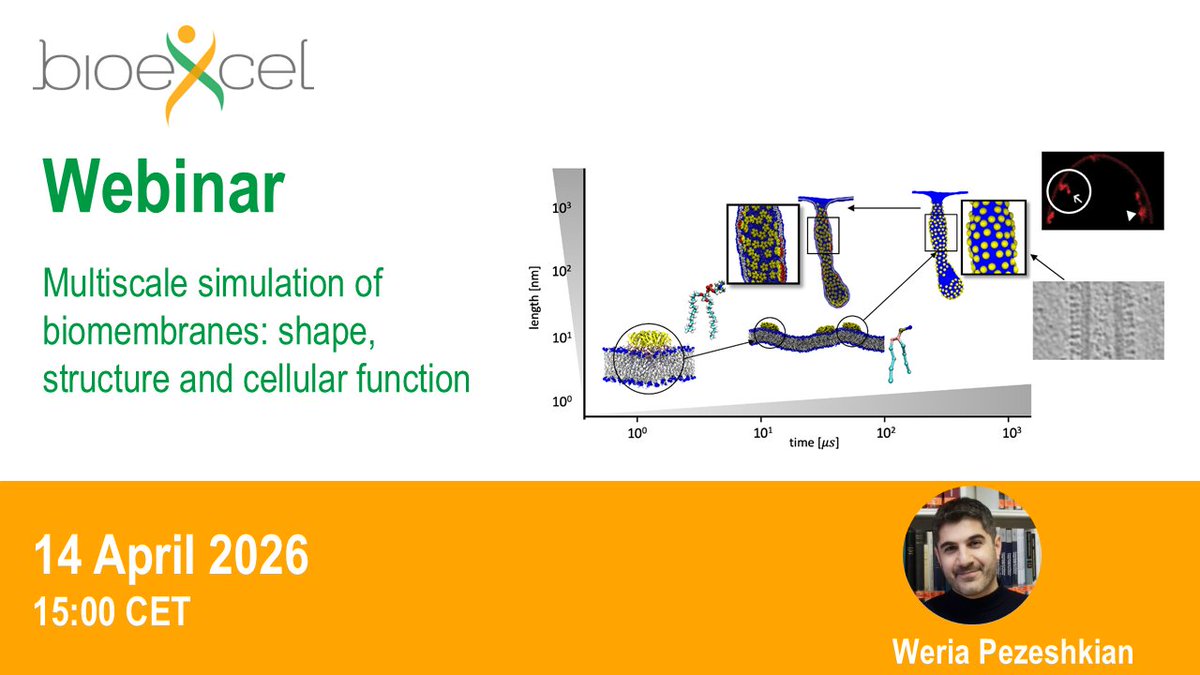
Interested in #integrativemodeling of #biomembranes?
Join us to hear Weria Pezeshkian talk about his recent work enabling the modelling of biological membranes across scales
🗓️ 14 April 2026, 15:00 CET
✍️ bioexcel.eu/y50u
#ComputerSimulation #moleculardynamics
5
9
577

7 May 2025
HADDOCK3: A modular and versatile platform for integrative modelling of biomolecular complexes
1. HADDOCK3 is a major redesign of the HADDOCK integrative modeling suite, introducing a modular, customizable architecture that allows researchers to build flexible workflows for docking, refinement, scoring, and analysis of biomolecular complexes.
2. Unlike its predecessor, HADDOCK2.X, which used a rigid pipeline, HADDOCK3 breaks the process into interchangeable modules—each dedicated to specific tasks like topology generation, rigid-body sampling, molecular dynamics refinement, or scoring.
3. This modularity enables tailored workflows for diverse scenarios: protein-protein, protein-ligand, protein-glycan, and even ambiguous interface modeling—highlighting its strength in handling complex integrative structural biology tasks.
4. The software incorporates five module categories—topology, sampling, refinement, scoring, and analysis—each with multiple plug-ins, allowing seamless workflow reconfiguration and improved scalability across platforms and systems.
5. HADDOCK3 supports local, batch, and MPI execution modes, ensuring efficient performance from personal workstations to high-performance computing clusters.
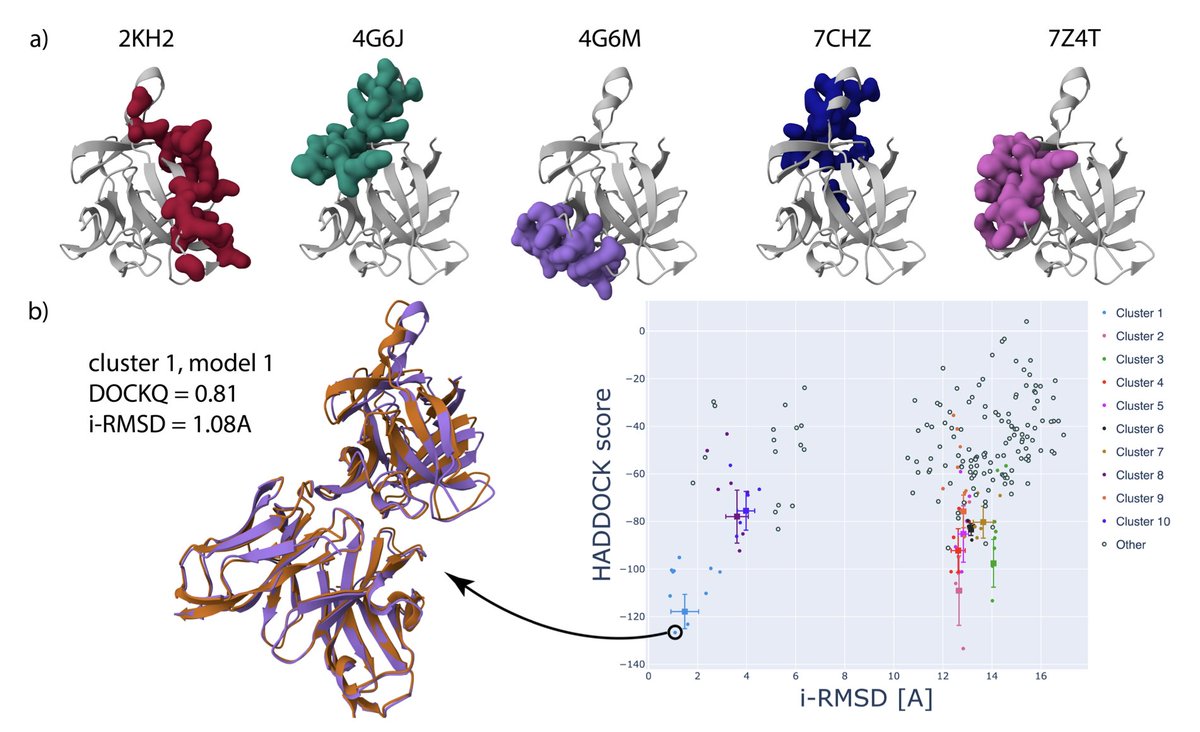
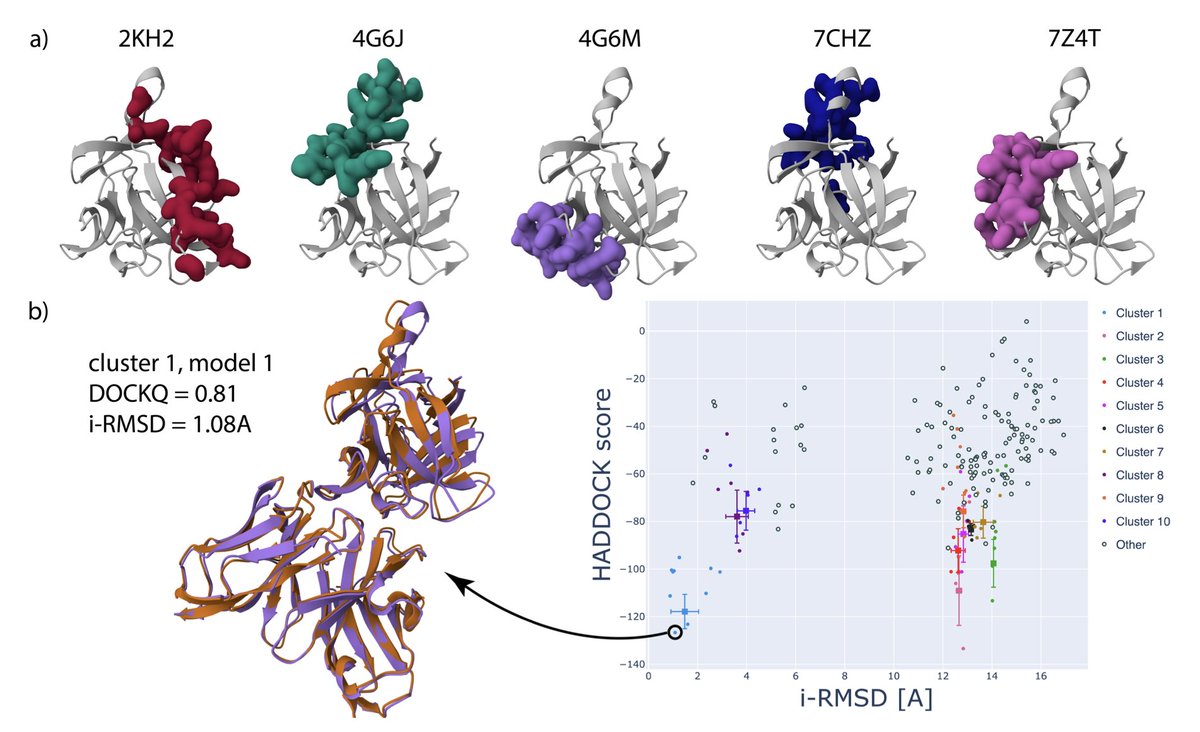
6. New capabilities include multi-interface targeting within a single workflow, as demonstrated in antibody-antigen modeling, and insertion of intermediate clustering steps that improve prediction accuracy in flexible systems like protein-glycan complexes.
7. The scoring system is highly extensible: consensus scoring workflows combining HADDOCK energies with methods like VoroIF-jury have been validated in CAPRI benchmarks, improving model ranking and selection.
8. Advanced analysis modules include interactive contact map visualization and the alascan tool for interface hotspot detection via in silico alanine scanning, with demonstrated correlation to experimental ΔΔG data from SKEMPI.
9. The software facilitates transparency and traceability with built-in support for tracking restraints, model progression, and scoring history through configuration and output directories.
10. HADDOCK3 is open-source, written in Python, and accessible via PyPI, GitHub, and a comprehensive manual. It is supported by community feedback, tutorials, and online resources to foster reproducible and collaborative modeling.
💻Code: github.com/haddocking/haddoc…
📜Paper: biorxiv.org/content/10.1101/…
#IntegrativeModeling #MolecularDocking #ProteinInteractions #HADDOCK3 #StructuralBiology #ModularDesign #ComputationalBiology #CAPRI #Bioinformatics #ProteinComplexes
1
38
132
11,292
7 May 2025
HADDOCK3: A modular and versatile platform for integrative modelling of biomolecular complexes
1. HADDOCK3 is a major redesign of the HADDOCK integrative modeling suite, introducing a modular, customizable architecture that allows researchers to build flexible workflows for docking, refinement, scoring, and analysis of biomolecular complexes.
2. Unlike its predecessor, HADDOCK2.X, which used a rigid pipeline, HADDOCK3 breaks the process into interchangeable modules—each dedicated to specific tasks like topology generation, rigid-body sampling, molecular dynamics refinement, or scoring.
3. This modularity enables tailored workflows for diverse scenarios: protein-protein, protein-ligand, protein-glycan, and even ambiguous interface modeling—highlighting its strength in handling complex integrative structural biology tasks.
4. The software incorporates five module categories—topology, sampling, refinement, scoring, and analysis—each with multiple plug-ins, allowing seamless workflow reconfiguration and improved scalability across platforms and systems.
5. HADDOCK3 supports local, batch, and MPI execution modes, ensuring efficient performance from personal workstations to high-performance computing clusters.
6. New capabilities include multi-interface targeting within a single workflow, as demonstrated in antibody-antigen modeling, and insertion of intermediate clustering steps that improve prediction accuracy in flexible systems like protein-glycan complexes.
7. The scoring system is highly extensible: consensus scoring workflows combining HADDOCK energies with methods like VoroIF-jury have been validated in CAPRI benchmarks, improving model ranking and selection.
8. Advanced analysis modules include interactive contact map visualization and the alascan tool for interface hotspot detection via in silico alanine scanning, with demonstrated correlation to experimental ΔΔG data from SKEMPI.
9. The software facilitates transparency and traceability with built-in support for tracking restraints, model progression, and scoring history through configuration and output directories.
10. HADDOCK3 is open-source, written in Python, and accessible via PyPI, GitHub, and a comprehensive manual. It is supported by community feedback, tutorials, and online resources to foster reproducible and collaborative modeling.
💻Code: github.com/haddocking/haddoc…
📜Paper: biorxiv.org/content/10.1101/…
#IntegrativeModeling #MolecularDocking #ProteinInteractions #HADDOCK3 #StructuralBiology #ModularDesign #ComputationalBiology #CAPRI #Bioinformatics #ProteinComplexes
1
8
24
2,645

12 Aug 2024
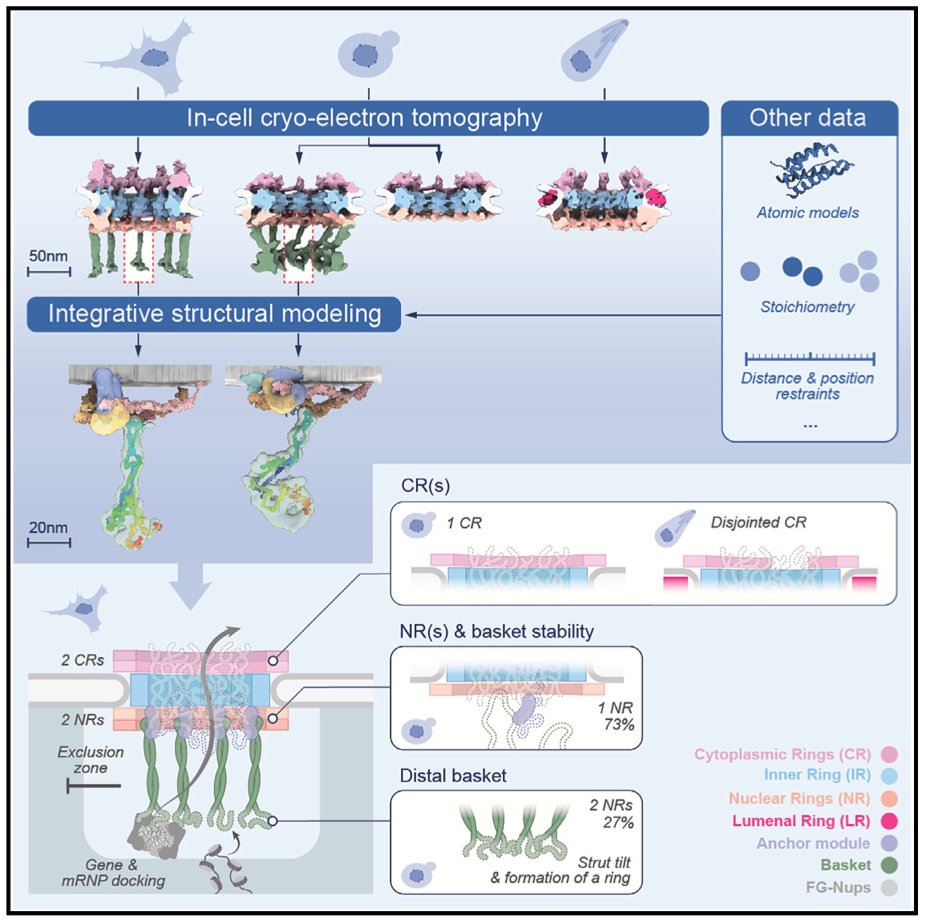
Don't miss a short tweetorial on our NPC basket study, published in @CellCellPress! doi.org/10.1016/j.cell.2024.… #NPC #NuclearBasket #integrativemodeling
12 Aug 2024

Our work on the architecture and model of the #NuclearBasket is now out @CellCellPress. cell.com/cell/pdf/S0092-8674…. @HHMINews, @IntActOme #NPC #teamtomo
A short tweetorial follows
2
2
16
547

12 Aug 2024
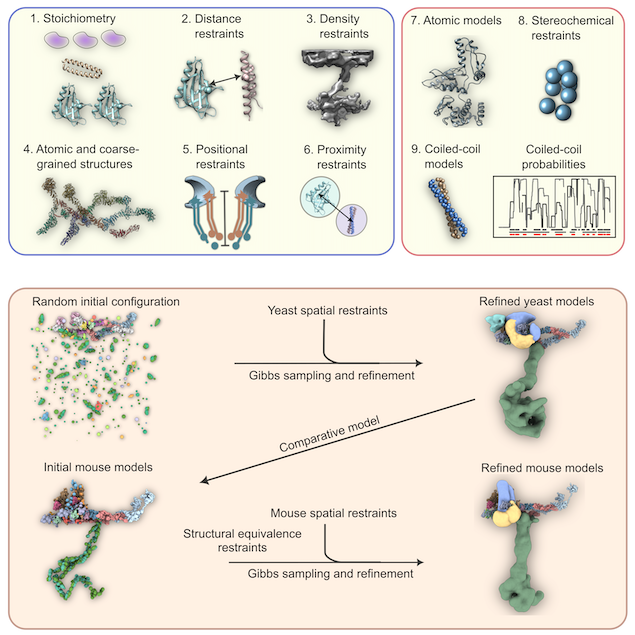
Data about the #basket and #NPC from various techniques—#mass-spectrometry, #cryoEM, immuno-EM, our maps, etc.—were incorporated (as restraints) into a modeling framework that generates conformations satisfying these data, culminating in a final model. #IntegrativeModeling
1
4
470

8 Jul 2024
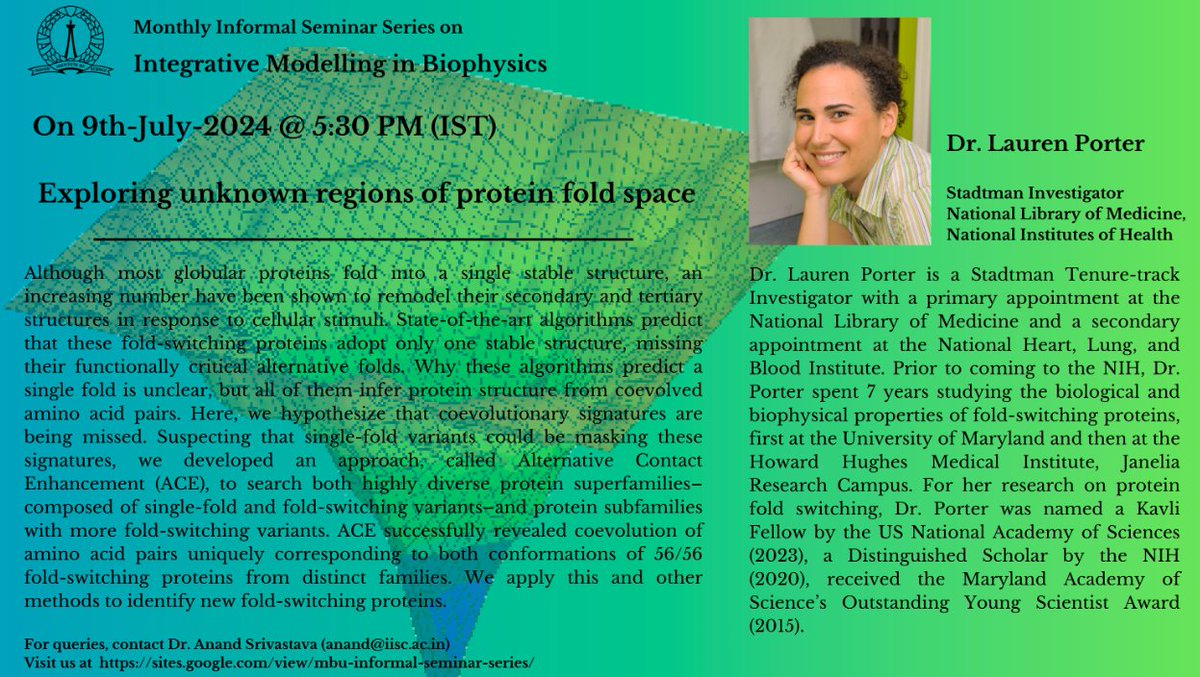
Tomorrow July 09, 5:30 PM IST (2:00 CEST, 8:00 AM USET). Looking forward to the seminar by @Lauren_L_Porter on the most fascinating shape shifting metamorphic proteins. #integrativemodeling
5
5
47
13,586

25 Jun 2024
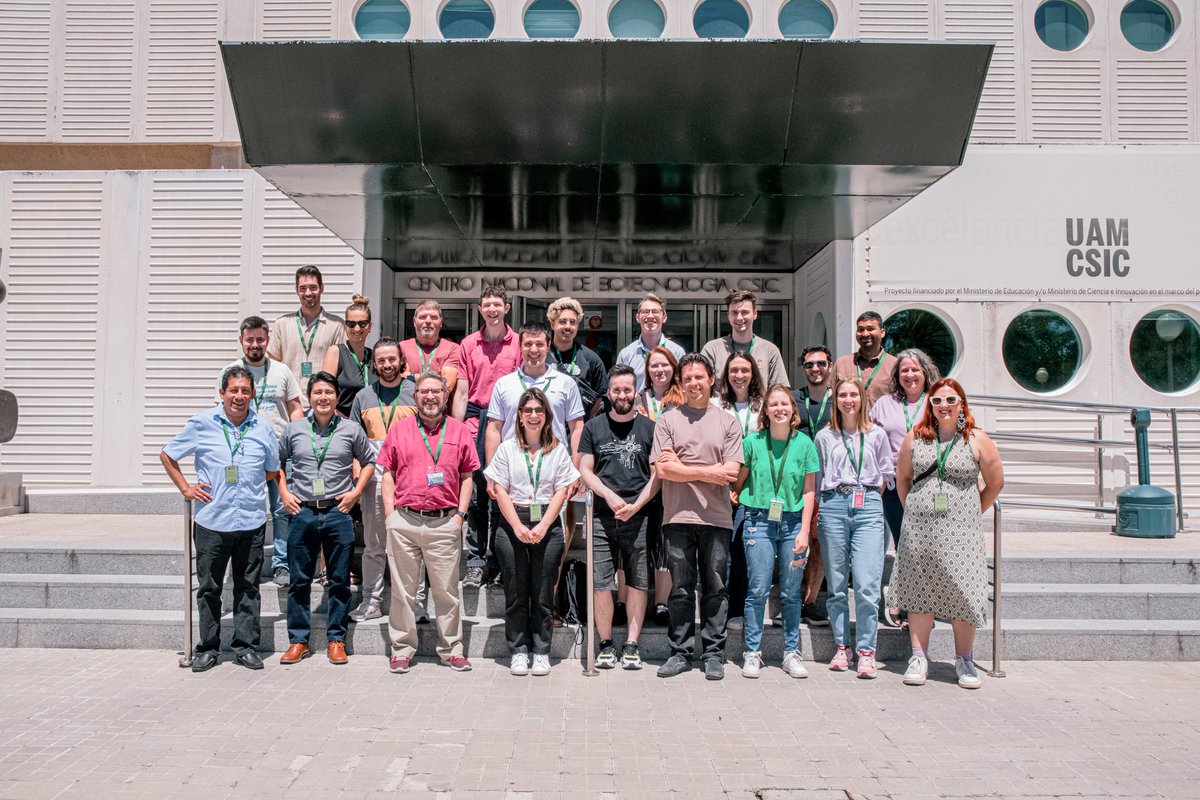
I had an amazing experience learning from the fantastic team behind #Scipion! Last week's course on #FlexibilityAnalysis and #IntegrativeModeling was both transformative and intense 💥🚀 A huge thank you to the instructors and organizers for such an incredible week!
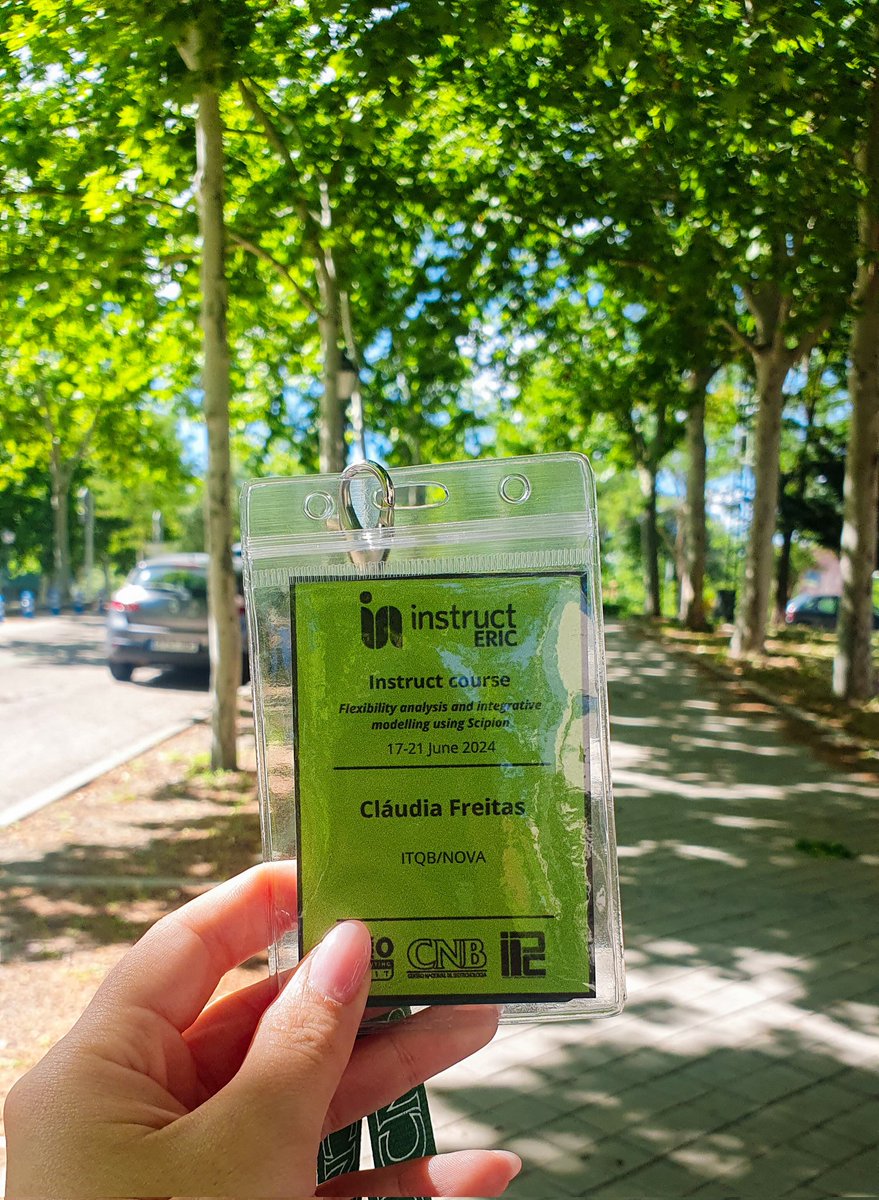
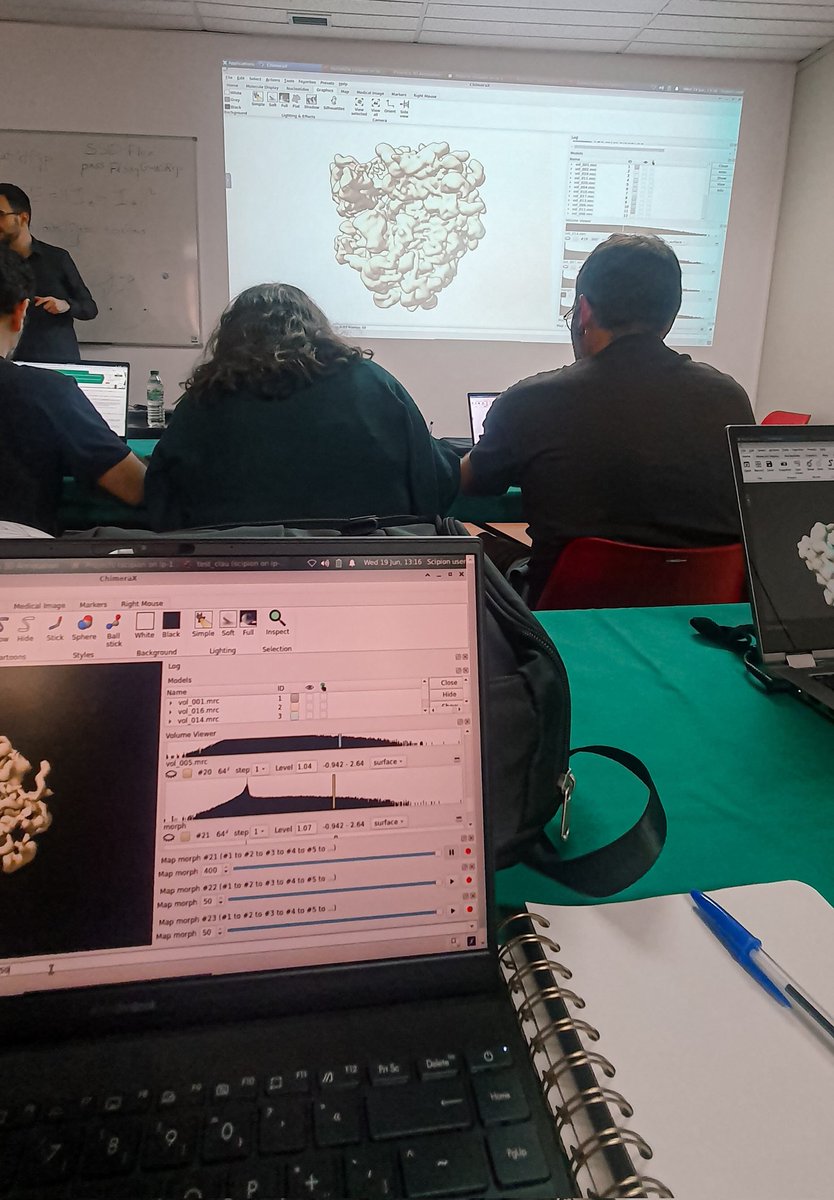
4
86

21 May 2024
Have you registered for the Instruct course on flexibility analysis and integrative modelling using Scipion? Taking place in Madrid, June 17 – 21, 2024. Register now - instruct-eric.org/events/ins… #flexibilityAnalysis #integrativemodeling
2
3
628

📢📢Registration is NOW OPEN!
Dive into the world of #flexibilityAnalysis & #integrativemodeling with Scipion! Join us in Madrid from June 17-21 for an immersive Instruct course. Sign up today!
i2pc.es/instruct-course-on-f…
8
7
2,071

28 Mar 2024
It cannot be done, they said.. It's too flexible, they said.. 😁
biorxiv.org/content/10.1101/… #NPC #teamtomo #integrativemodeling by @dgvjayS @neeleshsoni03 @JoshHutchings94 @ig_ech et al. Great collaboration w/ Qiang Guo, Brian Chait, Javi Fernandez-Mtnz, @RoutLab_RU @salilab_ucsf
25
116
550
87,689

19 Dec 2023
Such an enormous achievement! Can't even imagine how much in vivo data we will get soon for the #integrativemodeling!
18 Dec 2023

The paper is now online in its revised form @naturemethods: nature.com/articles/s41592-0… . Many thanks to the anonymous reviewers and @rita_strack for the nice review experience. And shoutout to twitterless Oda, JP, and @CJOKaiser! It has been a fun journey. 🥳🥳🥳🥳🎉
2
251

15 Dec 2023
Diverse multiresolution data & an ensemble of heterogeneous models, can you imagine a better setup for the #IntegrativeModeling?) Great collaboration led by @DrMartyTaylor & Donna Romero @rome_tx, @macro_momo, @RoutLab_RU, @bengrbm, Eddy Arnold, Matthias Götte & @KathleenHBurns
14 Dec 2023

So excited to share our story revealing structures, functions and adaptations of the human LINE-1 retrotransposon, an ancient genetic parasite that has written 1/3 of the human genome and is implicated in cancer, aging, & autoimmunity. Now out in @Nature nature.com/articles/s41586-0…
3
15
1,111
5 Aug 2023
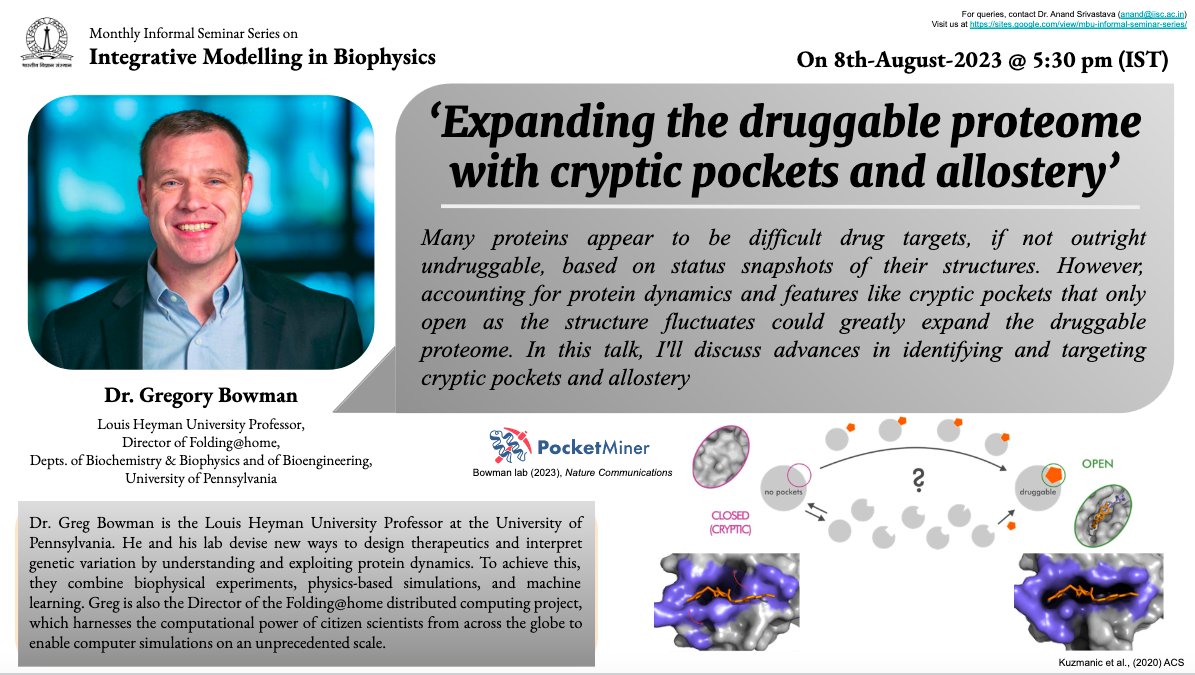
Jagannath and I are very excited to have Greg Bowman as our next speaker in the #integrativemodeling e-series!!
Tues, August 8 (8:00 AM, 2:00 PM CEST, 5:30 PM IST)
If not on our mailing list, please register using our page sites.google.com/view/mbu-in… for the link to the meeting.
14
81
10,475
9 Jul 2023
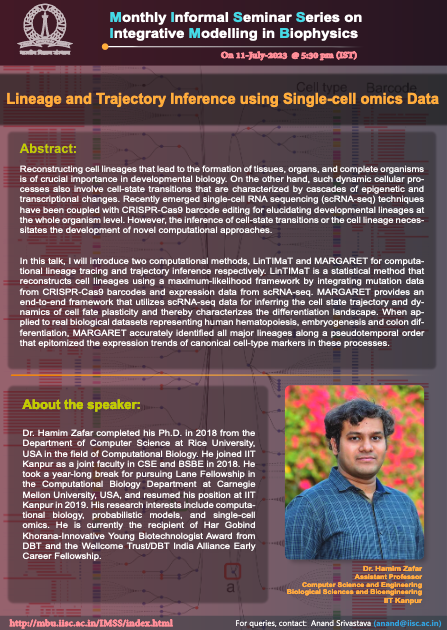
For our #integrativemodeling series for July 2023, we have Hamim Zafar (@Quasarzafar) from @IITKanpur who will talk on "Lineage and Trajectory Inference using Single-cell omics Data"! Tuesday 5:30 IST (2 PM CEST, 8 AM EST).
Btw, check out our new page, tinyurl.com/mbuimss2021
1
13
1,772
5 Jun 2023
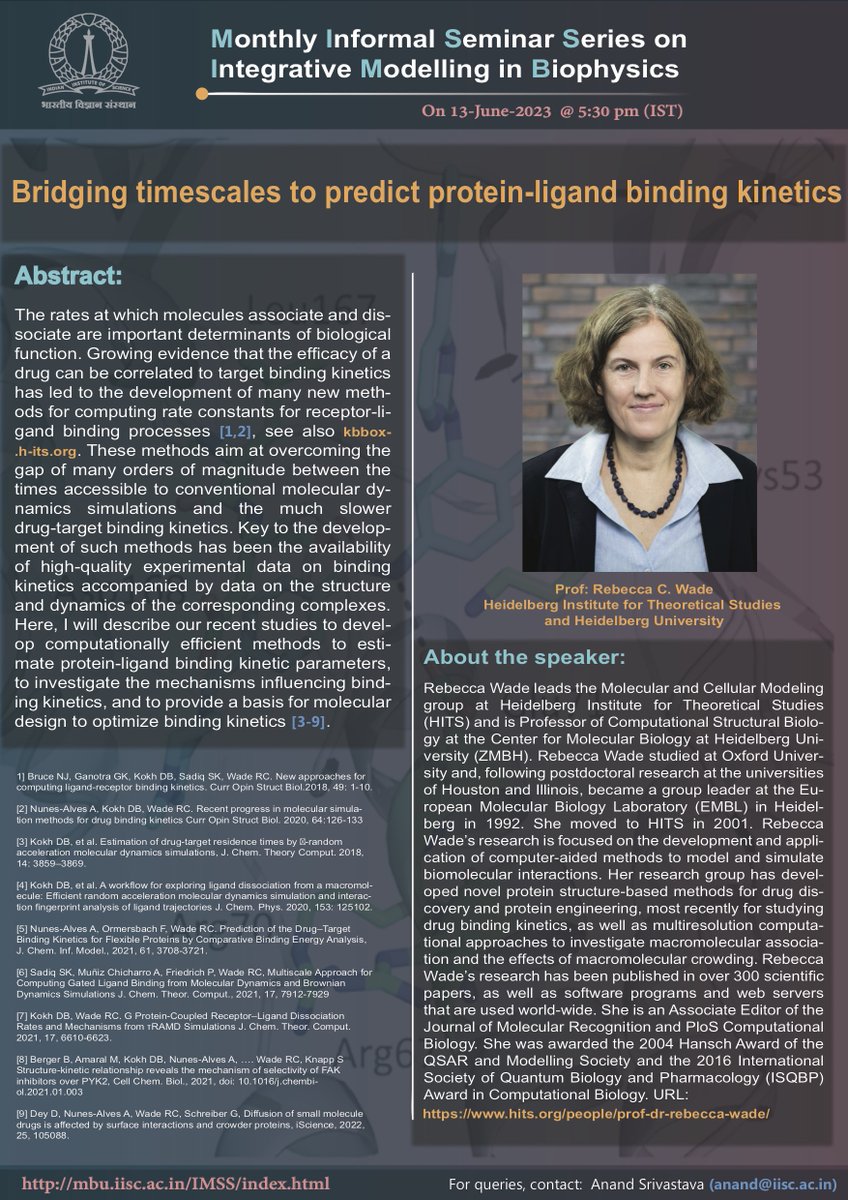
This month, for our #integrativemodeling e-series, we will have @Rebecca_Wade_C from Heidelberg talking about "Bridging timescales to predict protein-ligand binding kinetics". With @Jmondal_tifrh
June 13, Tues 5:30 PM IST (2:00 PM CEST, 8:00 AM ET)
mbu.iisc.ac.in/IMSS/index.ht…
5 May 2023

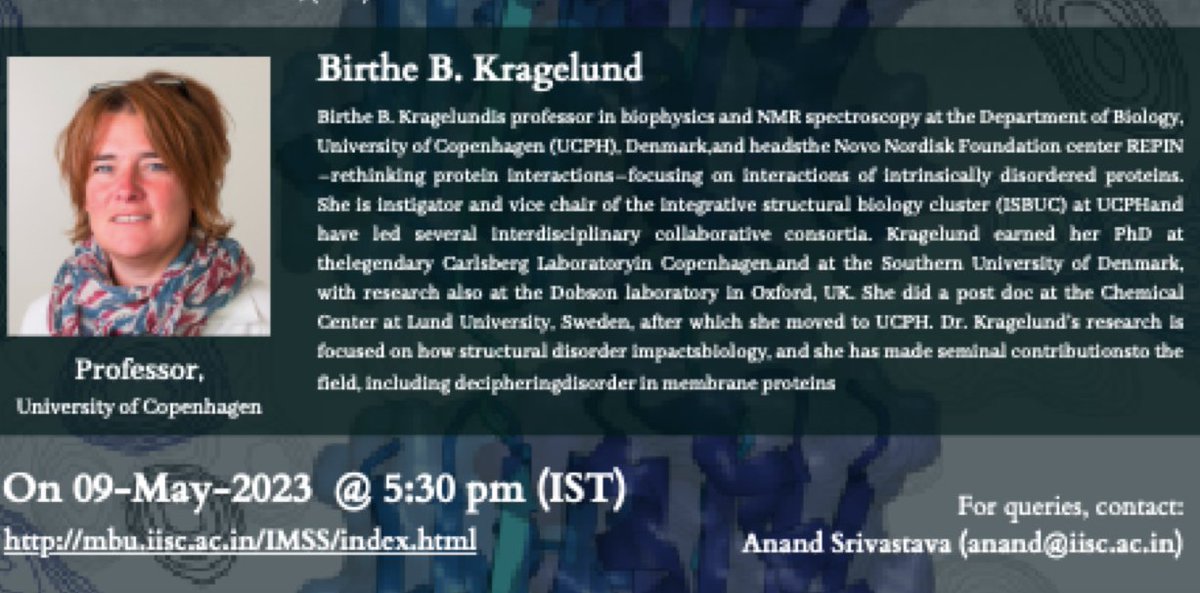
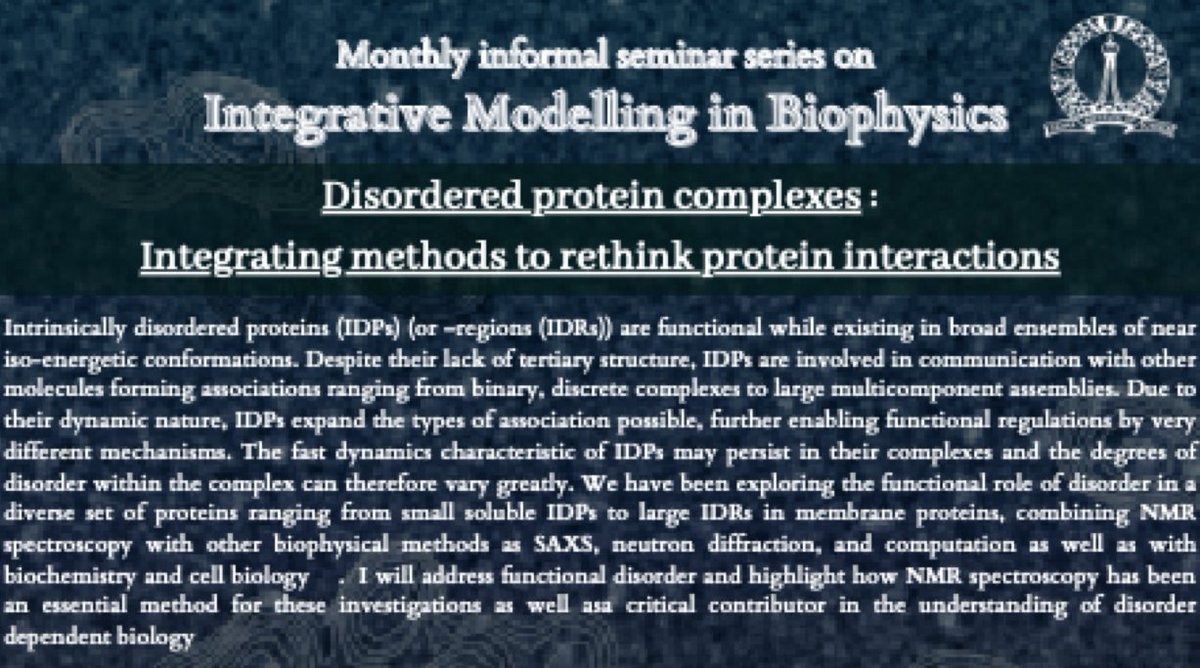
After an awesome talk by @RommieAmaro last month, we have Prof. Kragelund (@BBKrage) e-visiting next week (Tues May 9, 5:30 PM IST). Birthe is one of those rare experimentalist who truly appreciates/harnesses the power of simulation-assisted integrative modeling. Can't wait!!
11
35
7,177
9 May 2023
In about 3 hours from now, Birthe will give a seminar on her multi-experiments pronged approach to solve problems related to structural biophysics of IDPs. Duly assisted by simulation via the Integrative Modeling framework. #integrativemodeling
5 May 2023
After an awesome talk by @RommieAmaro last month, we have Prof. Kragelund (@BBKrage) e-visiting next week (Tues May 9, 5:30 PM IST). Birthe is one of those rare experimentalist who truly appreciates/harnesses the power of simulation-assisted integrative modeling. Can't wait!!
4
822
12 Mar 2023
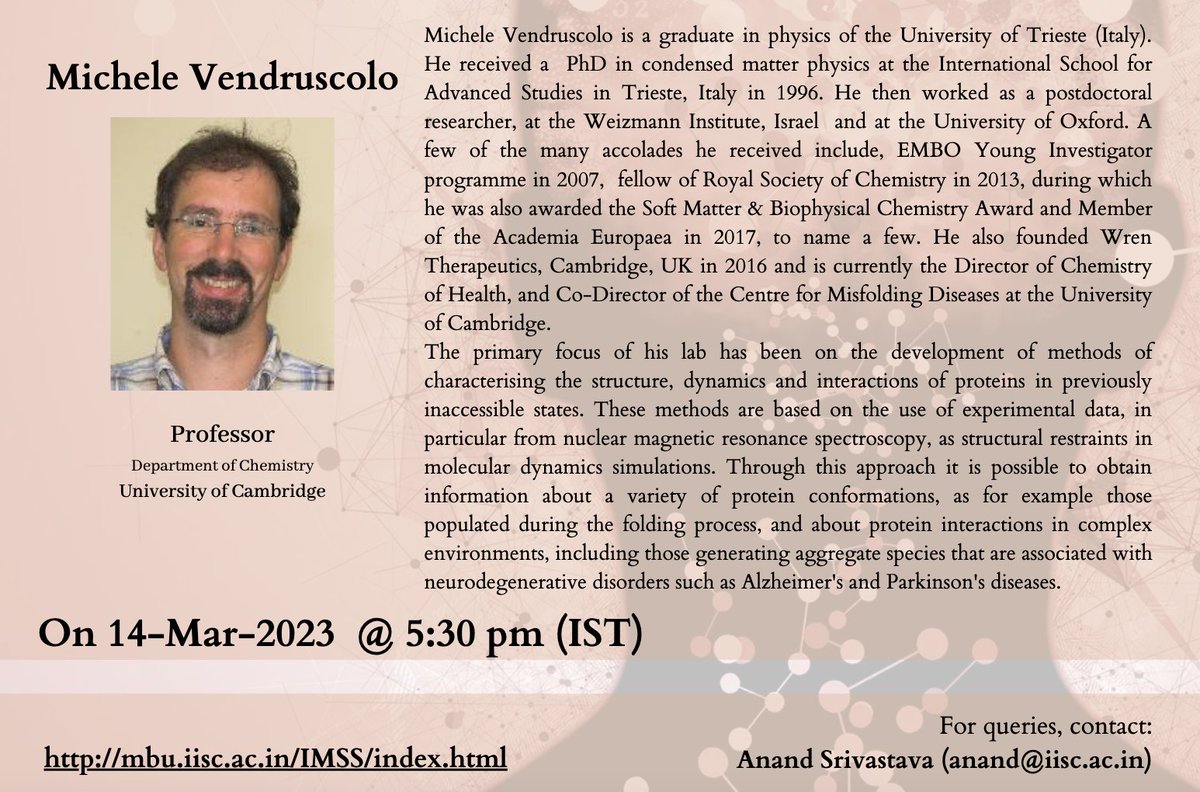
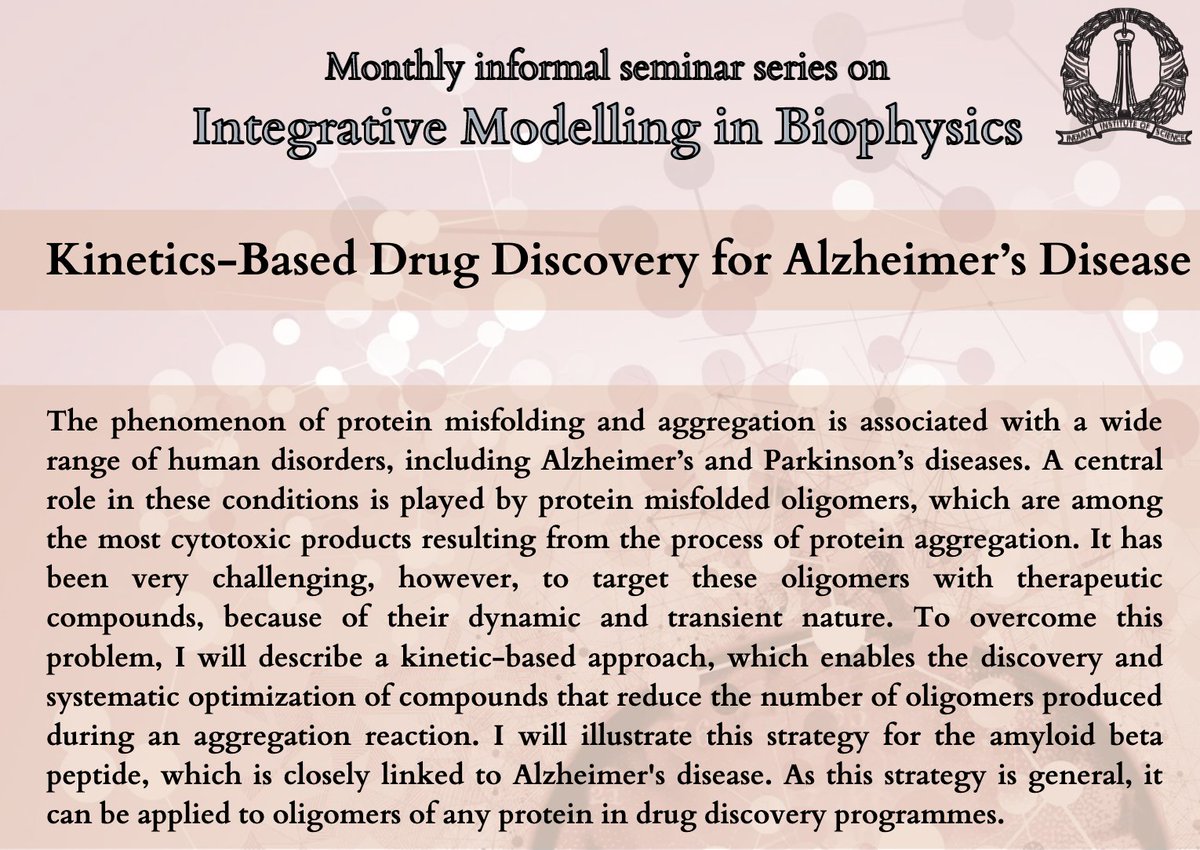
@mvendruscolo14 will visit us this Tues Mar 14 (7 AM ET, 2 PM CEST, 530 PM IST). Looking fwd to it as I have closely followed his work over years and learned much from his papers.
Michele will talk about kinetics-based drug discovery for Alzheimer’s Disease #integrativemodeling
2 Jan 2023
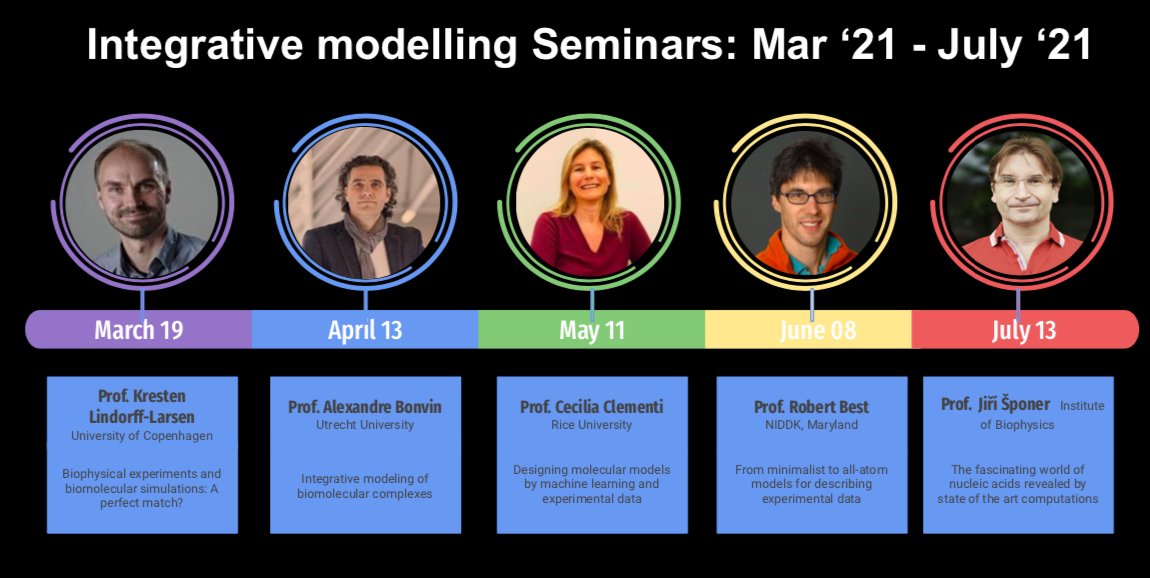
Thanks @Jmondal_tifrh Looking forward to these. It has been a great learning experience for us since we started in March 2021 (see the previous speakers). Can't wait for the next set of talks!! @jchodera @VendruscoloLab @mvendruscolo14 @RommieAmaro @Rebecca_Wade_C @BBKrage
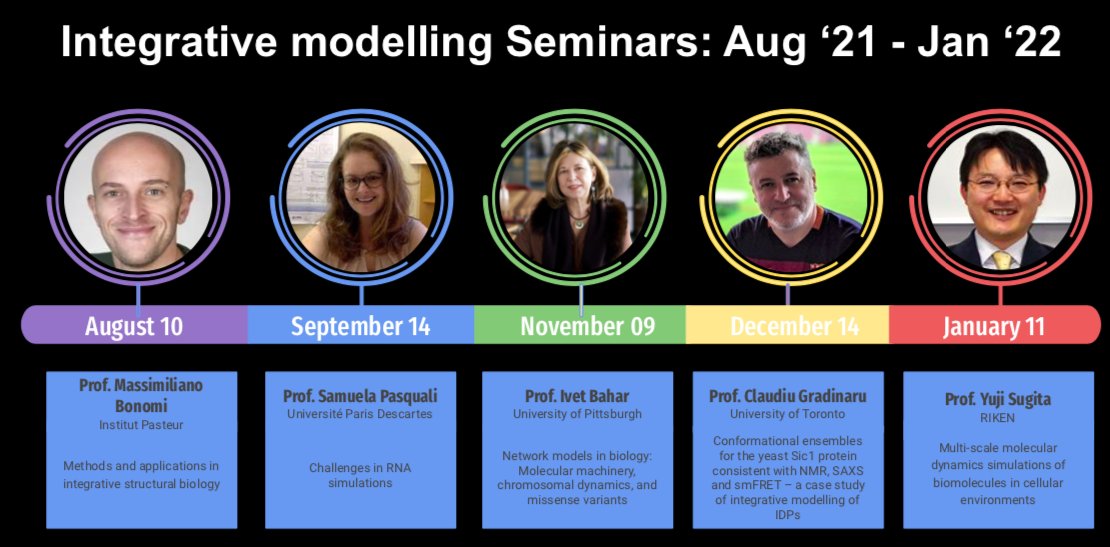
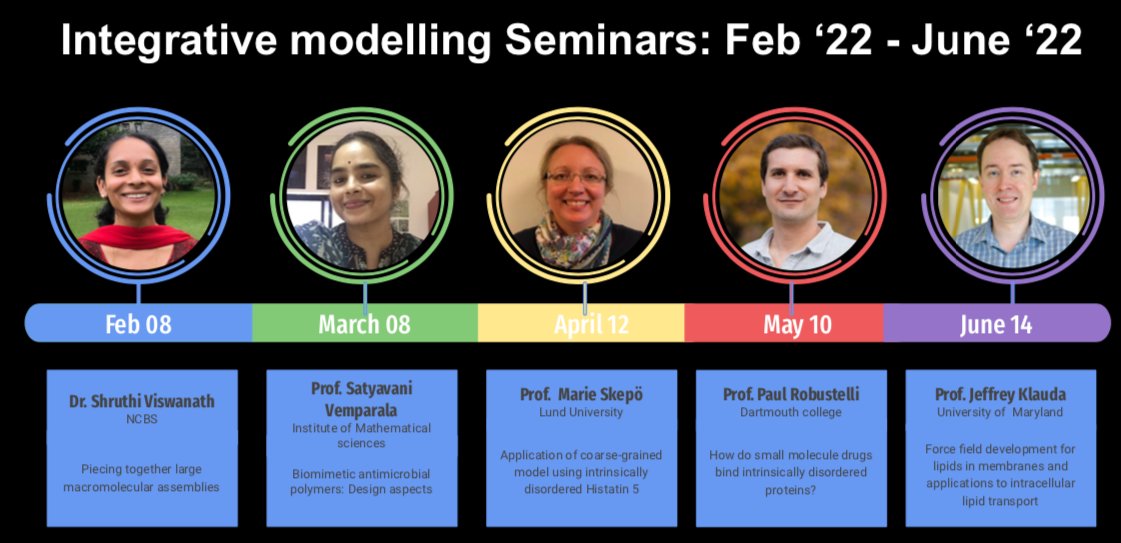
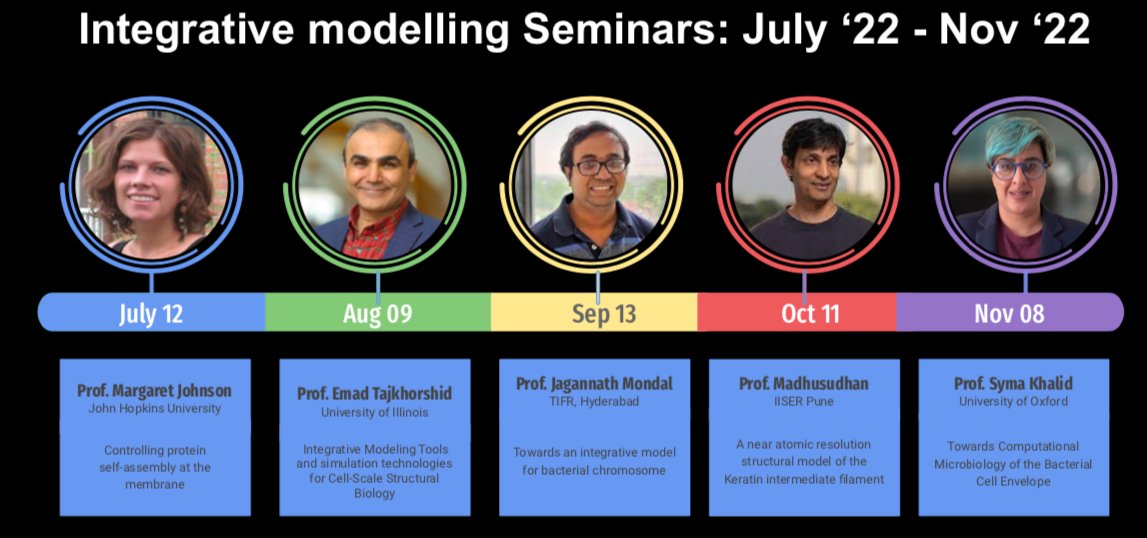
3
8
2,527
9 Mar 2023
This is such a good example of #integrativemodeling for us. So happy to see this work out now! @KrishnaKanthbio & I thoroughly enjoyed working with y'all.
Would like to acknowledge the NSM computing resource from @IndiaDST and support from @DBTIndia @iiscbangalore @MBU_IISc.
9 Mar 2023

@TPucadyil What an absolutely fantastic experience this has been - combining biochemical, cellular, structural and computational approaches with @mbuanand, to curate this work!
5
2
31
3,683
8 Dec 2022
#IntegrativeModeling seminar series is taking a break this month. We have an exciting list of monthly speakers in the 1st half of 2023. We will post the details on our webpage (and here) once we have the speakers' dates sorted out. @Jmondal_tifrh Thanks.
mbu.iisc.ac.in/IMSS/index.ht…
9