#InverseDesign
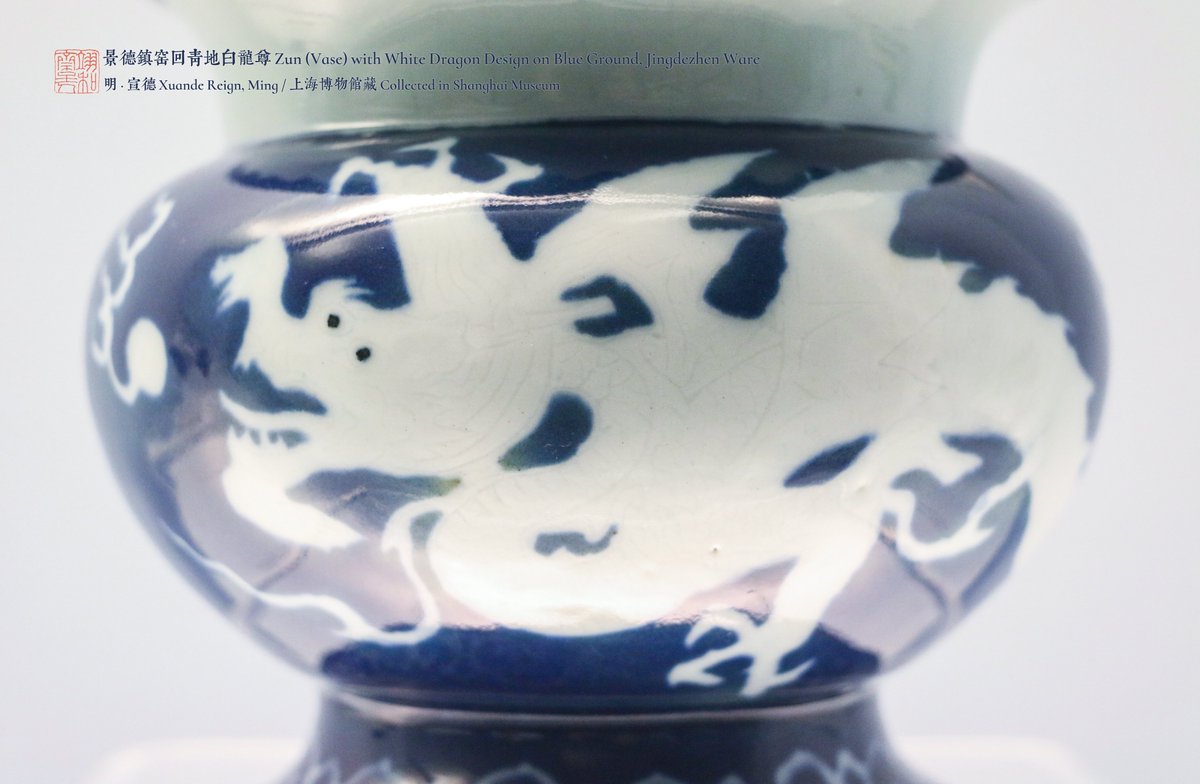
Zun (Vase) with white dragon design on blue ground, Jingdezhen Ware
Xuande reign, Ming
Collected in Shanghai Museum
回青地白龙尊/明宣德/上海博物馆藏

1
1
35

Closing the Prior-Posterior Loop: Self-Reflective Molecular Design with Analysis-Driven LLM Iteration
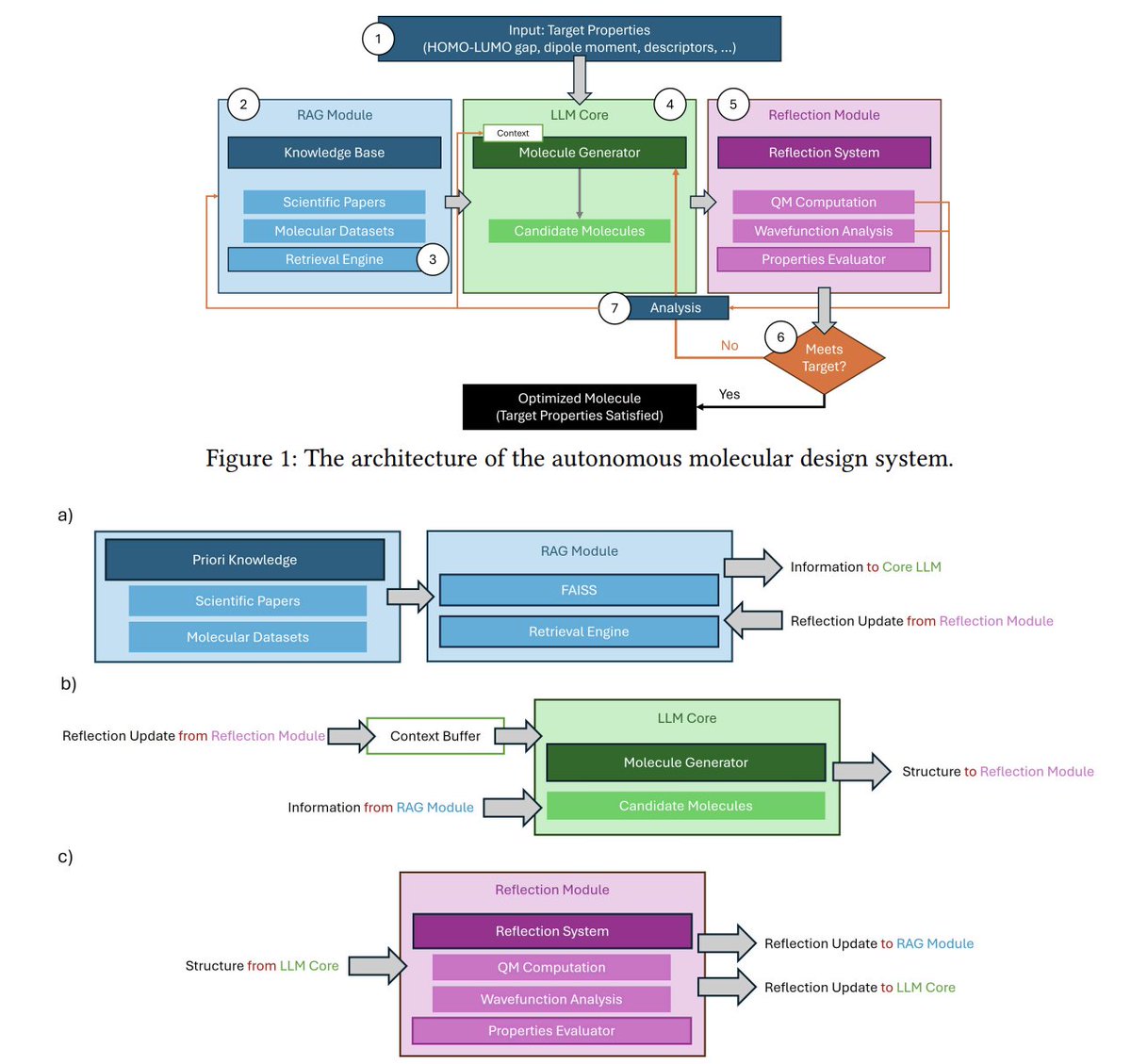
1. The paper proposes an alternative to “Generate → Score → Regenerate” in LLM molecular design: “Generate → Analyze → Reflect → Refine”, where the model is fed mechanism-level quantum-chemistry evidence (e.g., orbital energies, charges, electron density) instead of a single scalar score.
2. Core claim: providing full physicochemical rationale from first-principles calculations can shift an LLM’s behavior from stochastic sampling toward more causal, structure-property reasoning—because the model learns not only that a candidate misses the target, but why.
3. System architecture has three coupled parts: (i) a retrieval-augmented generation (RAG) module for prior knowledge, (ii) an LLM core that proposes candidates, and (iii) a reflection module that runs quantum calculations and converts raw outputs into actionable design edits.
4. The RAG database is built from QM9 (about 130k small organic molecules, <9 heavy atoms) using a FAISS vector index; retrieval is conditioned on the requested target property (e.g., HOMO-LUMO gap).
5. The reflection module explicitly avoids treating computation as a black-box scorer. It preserves rich outputs such as HOMO/LUMO energies, Mulliken charges, total electronic energies, dipole moments, and (conceptually) wavefunction/electron-density information.
6. For efficiency, evaluation is staged: GFN2-xTB is used for geometry optimization and fast pre-screening, then pySCF performs higher-accuracy DFT on top candidates (default batch: x=20 candidates screened, y=5 sent to DFT).
7. The self-reflection procedure is described as a 3-step pipeline: (1) extract key parameters from DFT output, (2) perform causal reasoning linking structure to the target property, (3) plan concrete structural modifications for the next iteration; reflection insights are also written back into the RAG context.
8. On targeted HOMO-LUMO gap design across 5 targets (5.0, 4.0, 3.0, 2.0, 1.0 eV), SPR reflection (mechanism-level feedback) RAG is consistently the most stable configuration; for the 3.0 eV task it reports deviation down to 0.0003 eV, and for the 2.0 eV task it is the only configuration reaching 100% success rate (within the authors’ success definition).
9. The paper highlights a failure mode of scalar-only feedback: on the hardest 1.0 eV gap target, Scalar RAG fails (0/3 successes), while SPR RAG yields at least one close solution (0.0164 eV deviation), suggesting that “far from target” numbers alone may not provide an actionable gradient for difficult design regimes.
10. Additional findings: (i) convergence is not monotonic—extra iterations can cause “overthinking” and oscillations; (ii) batch reflection can outperform per-molecule reflection (BFS-like vs DFS-like exploration); (iii) the framework generalizes beyond gaps to dipole-moment targeting (example target 2.5 D, best deviation ~0.016 D), and appears robust across five LLM backbones (DeepSeek-V4Pro/Flash, MiniMax-M3, Qwen-3.7Max, GLM5.1).
📜Paper: arxiv.org/abs/2606.09520
#ComputationalChemistry #MolecularDesign #LLM #RAG #QuantumChemistry #DFT #InverseDesign #AIforScience #Cheminformatics
2
6
1,087
CrOH⚡️ retweeted

Jun 10
#InverseDesign
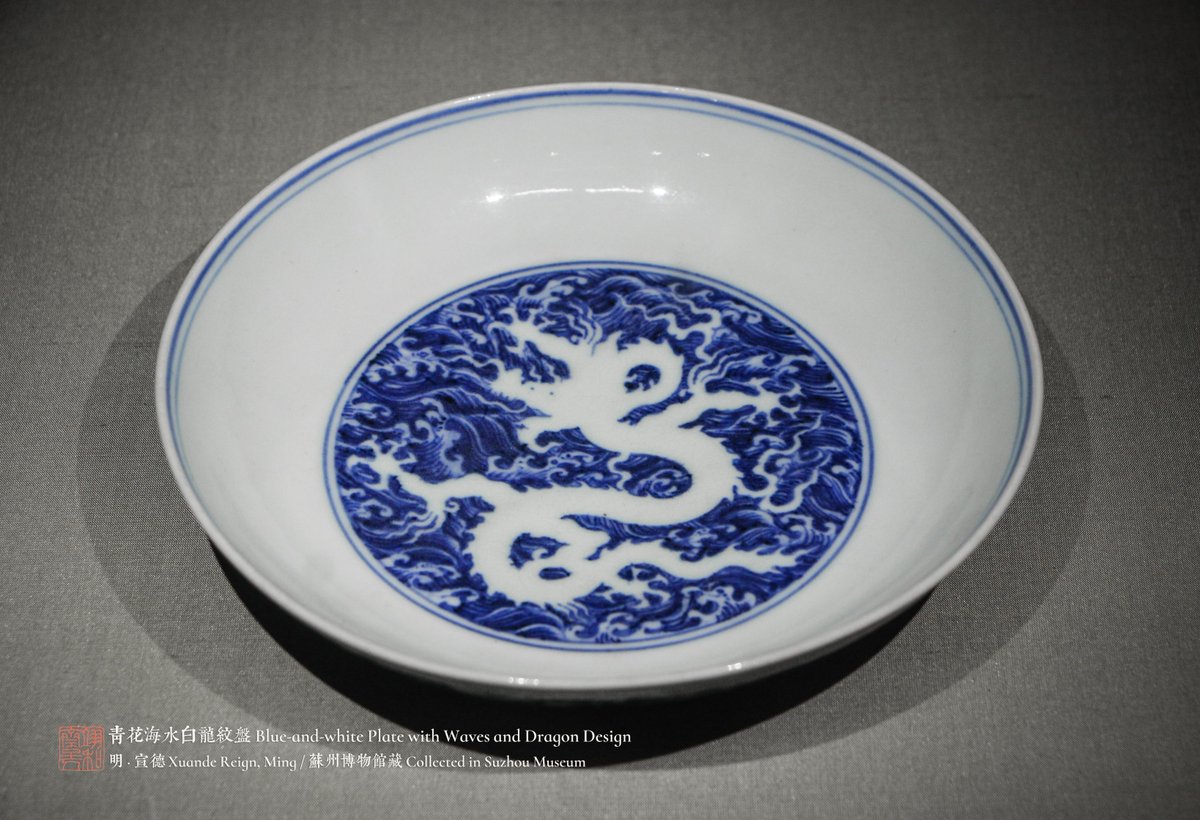
Blue-and-white plate with waves and dragon design
Xuande reign, Ming
Collected in Suzhou Museum
青花海水白龙纹盘/明宣德/苏州博物馆藏
Ps: 盘中心有一条暗花五趾白龙,外壁上有两条小龙做追逐戏耍的姿态。龙是中国最大的神物,古人认为它是最高的祥瑞。

2
4
219

🧬 "The Integration of Generative AI and Multimodal Models for Diagnosis and Customized Design of Biomaterials" is open for submissions!
🕑 Deadline: 31 March 2027
🎉 Submit your research now!
🔗 brnw.ch/21x34IO
#PhysicsInformedModeling #InverseDesign #Biofabrication

3
2
34
De novo design of DNA origami with a generative diffusion model
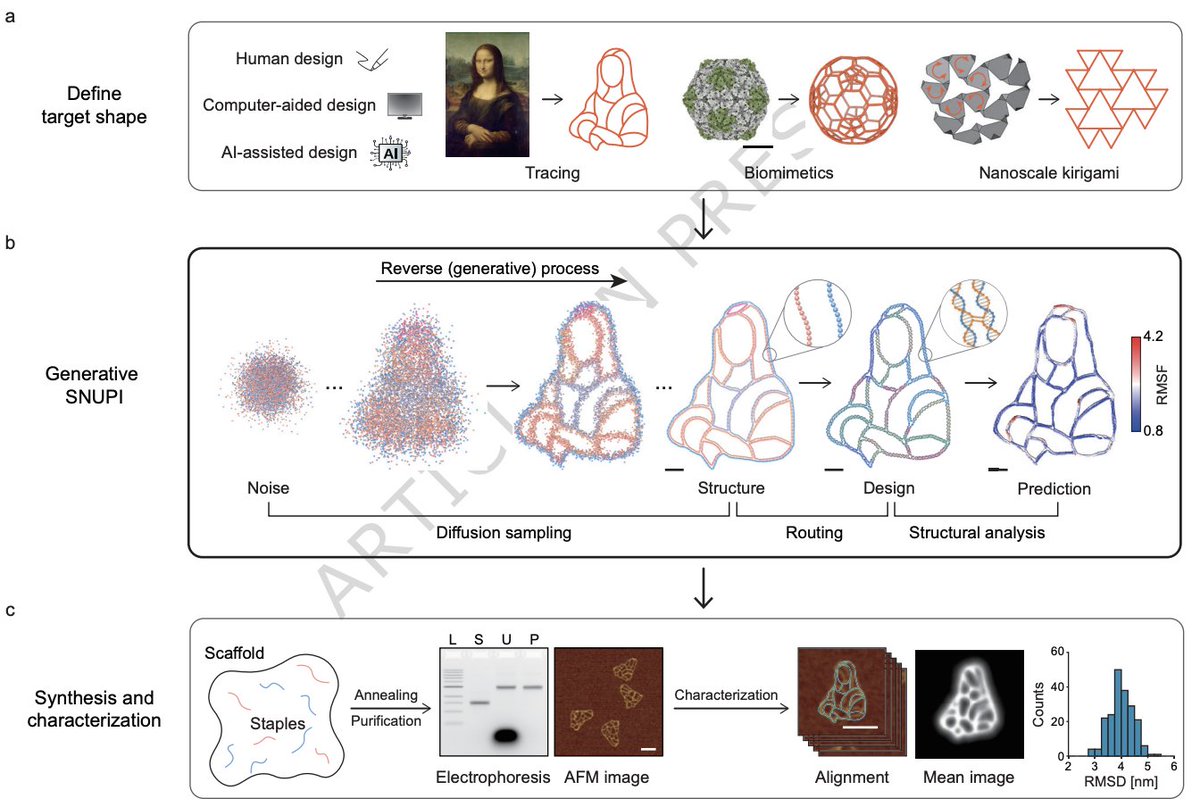
1 Generative SNUPI introduces diffusion-model-based inverse design for DNA origami: given a user-defined line-based target geometry, it generates base-pair-level 3D structures that are physically plausible, then automatically produces scaffold routing and staple sequences for experimental fabrication.
2 A key bottleneck in generative DNA origami—lack of large standardized structural datasets—is addressed by training on simulated equilibrium conformations: 450 wireframe 2HB designs (216 2D, 234 3D) whose base-pair coordinates were generated with the SNUPI multiscale model.
3 The generative core is a denoising diffusion probabilistic model operating on base-pair coordinates as a point-cloud-like representation, implemented with a scalable graph Transformer using random graph construction and SE(3)-aware geometric handling to avoid alignment during training.
4 To follow a target shape, the model uses conditional guidance based on optimal transport: classifier-style gradients derived from Wasserstein Distance (WD) bias diffusion sampling so generated structures converge toward the provided geometry, improving shape fidelity and routing success.
5 Across 100 diverse conditional generations (hundreds to ~15,000 base pairs), the WD to the target drops from widely varying initial values (192.69–2178.54 nm) to a low final average of 2.21 ± 1.32 nm, indicating consistent convergence to the intended geometry across sizes and complexities.
6 The pipeline goes beyond shape generation by integrating a deterministic routing program: generated geometries are converted into loop representations, spanning trees, scaffold routes, and staple sets (20–60 nt), with bond-length regularization (0.34 ± 0.05 nm), and export to atomic models via CNDO → oxDNA → PDB post-processing.
7 Generative SNUPI also embeds fast, in-workflow physics evaluation using SNUPI-based simulation to predict equilibrium shapes and flexibility (RMSD, RMSF) without heavy molecular dynamics; for 100 designs, many cluster around RMSD 2.49 ± 1.29 nm and average RMSF 1.72 ± 0.15 nm, enabling pre-experimental screening.
8 Experimental validation shows the simulation-guided design loop is actionable: a “Face 1” dog design predicted to have locally high RMSF folds with high monomer yield yet shows AFM distortion; adding edges to stiffen flexible regions (“Face 2”) improves AFM agreement and reduces RMSD (4.07 ± 0.48 nm to 3.45 ± 0.35 nm).
9 The framework supports functional free-form mechanics and assembly: auxetic metastructures (rotating triangle, re-entrant) are designed and experimentally transformed open→closed using junction gaps plus site-specific connectors, achieving mean enclosed-area reductions of 34.9% and 47.3%; modular dog face/body components with matched curved interfaces assemble into dimers with >65% yield across combinations.
💻Code: github.com/SSDL-SNU/Generati…
📜Paper: doi.org/10.1038/s41467-026-7…
#DNANanotechnology #DNAOrigami #GenerativeAI #DiffusionModels #InverseDesign #ComputationalBiology #Biophysics #Nanorobotics #StructuralBiology #MachineLearning
17
66
13,320
May 17
#InverseDesign
This is a perfect example showing the comparision of 'design' and 'inverse design'.🤭

1
6
196
May 17
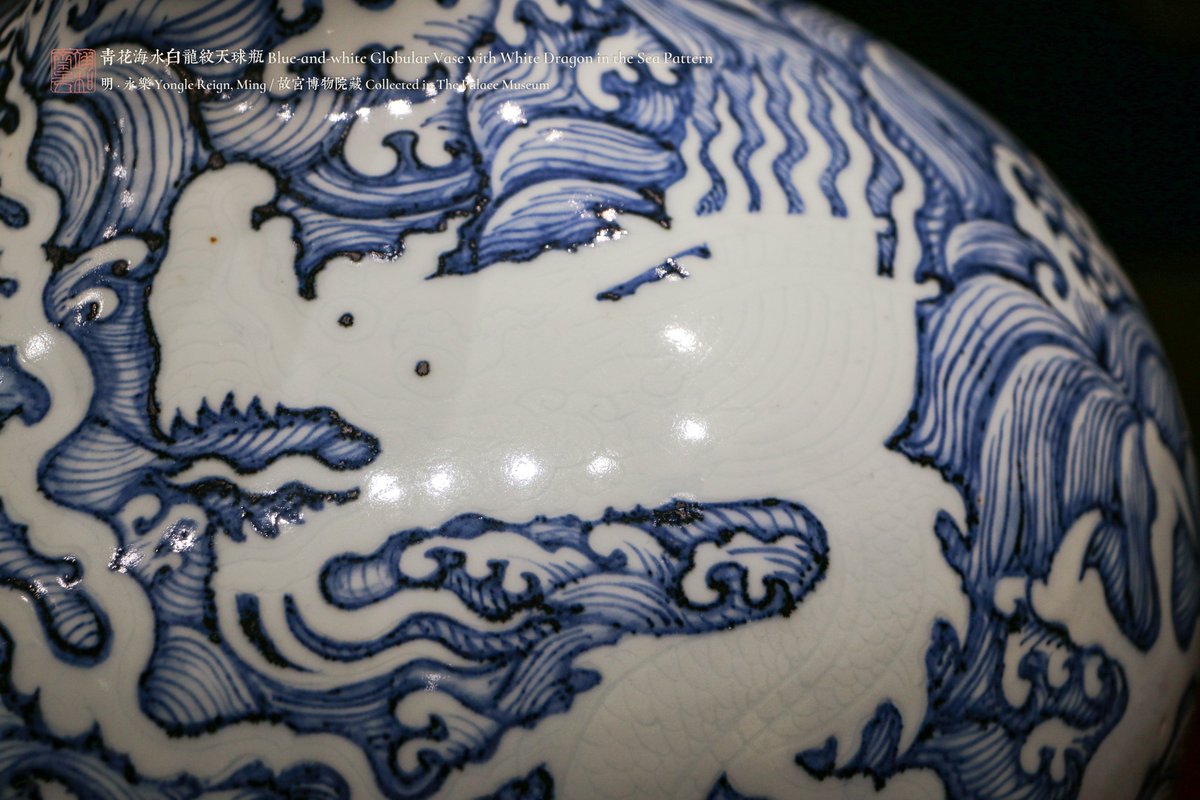
#InverseDesign
Blue-and-white globular vase with white dragon on the sea pattern
Yongle reign, Ming
Collected in The Palace Museum
青花海水白龙纹天球瓶/明永乐/故宫博物院藏



1
6
21
931

May 13
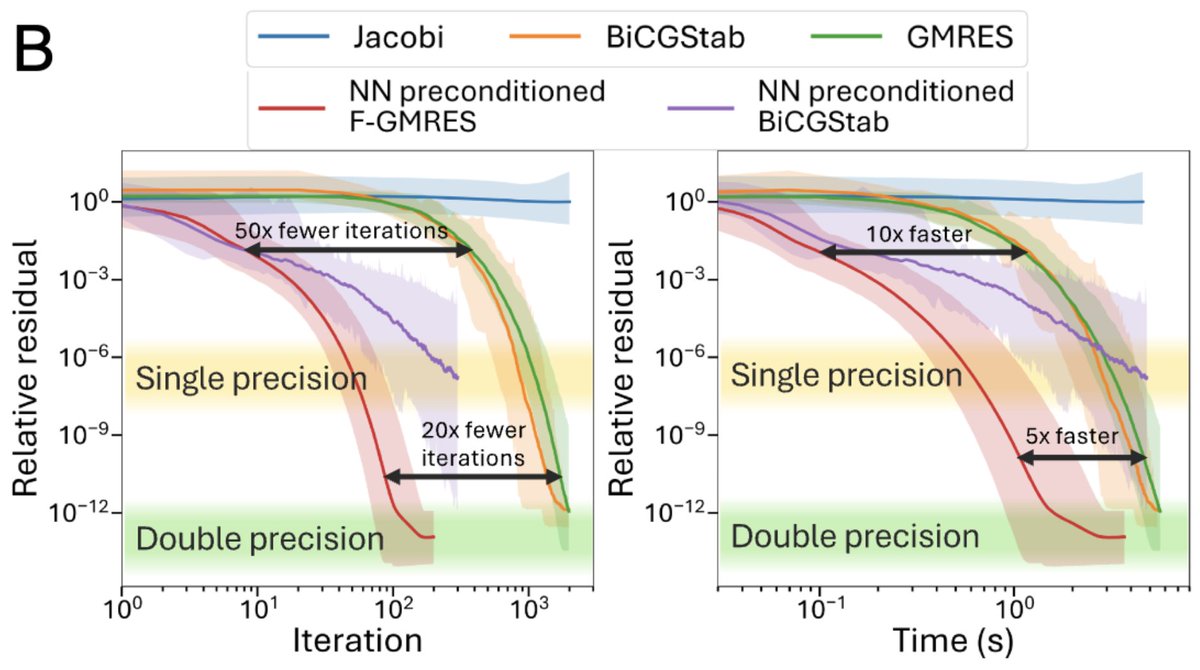
Excited to share that our work on "Accurate and scalable deep Maxwell solvers" is published on PNAS.
Neural network surrogate solvers for Partial Differential Equations (PDE) are fast, but they often lack accuracy and scalability, which are crucial in real applications including photonics and circuits design.
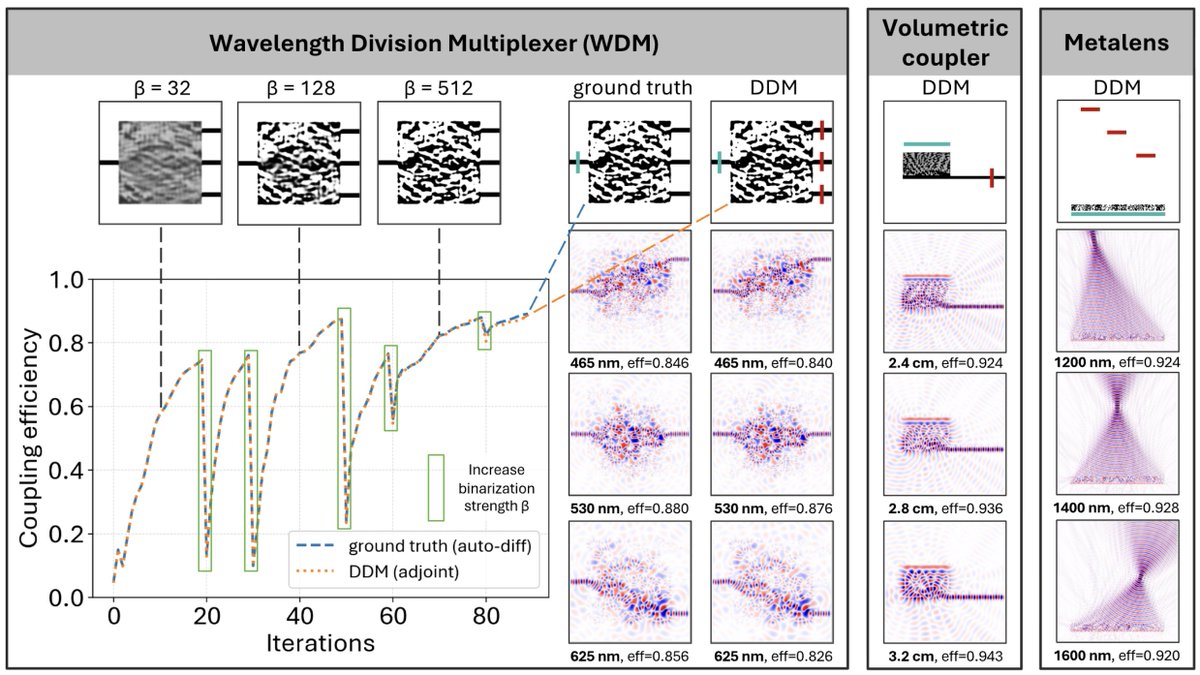
We build a model-agnostic system to enable accurate PDE solving (down to double precision) for problems with arbitrary sizes and parameters. The key is to train networks as preconditioners, which can accelerate conventional Iterative algorithms including GMRES and Two-level Domain Decomposition with proven convergence and scaling properties.
We demonstrate the framework on Maxwell equations and show its use for multi-wavelength nanophotonic inverse design with problem sizes up to 200 wavelengths.
More broadly, I believe an important direction for AI4Science is not replacing numerical methods with neural networks, but building hybrid systems that combine the strengths of both.
Paper: pnas.org/doi/10.1073/pnas.25…
Code: github.com/ChenkaiMao97/Deep…
#AI4Science #ScientificComputing #SciML #Photonics #ComputationalPhysics #InverseDesign
2
15
Apr 23
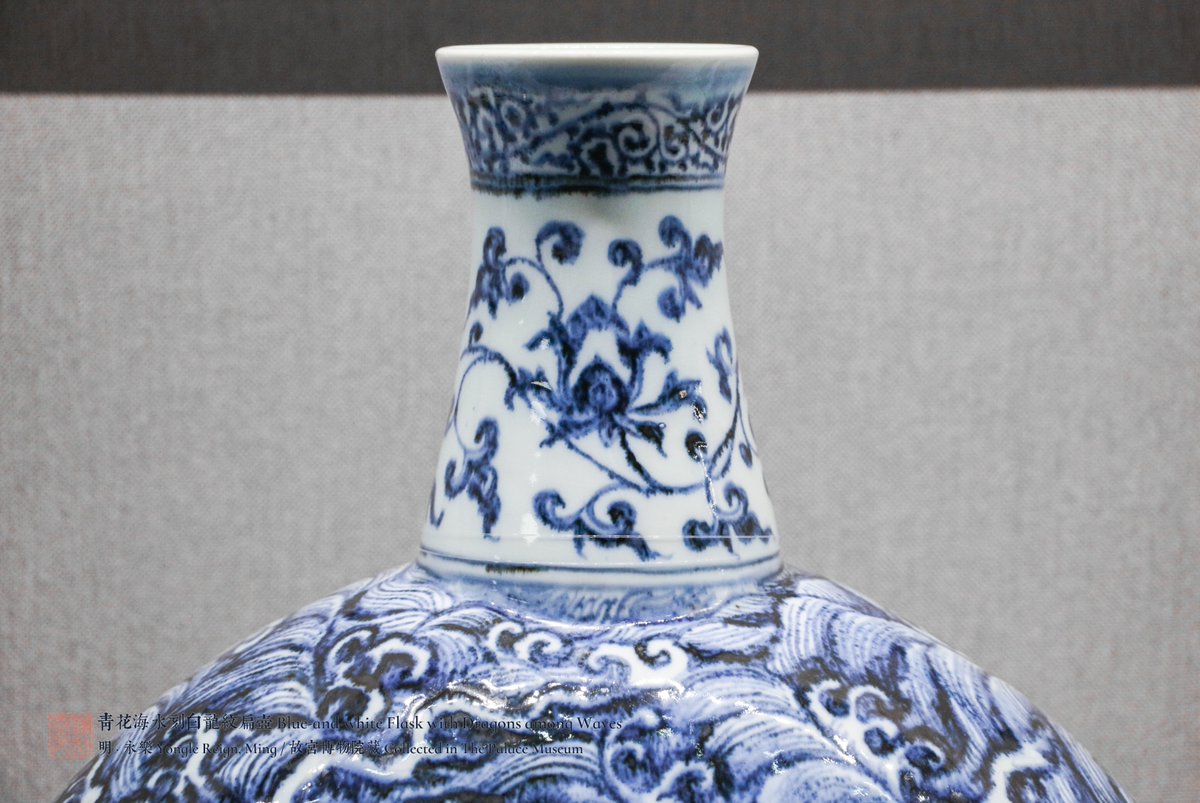
#InverseDesign
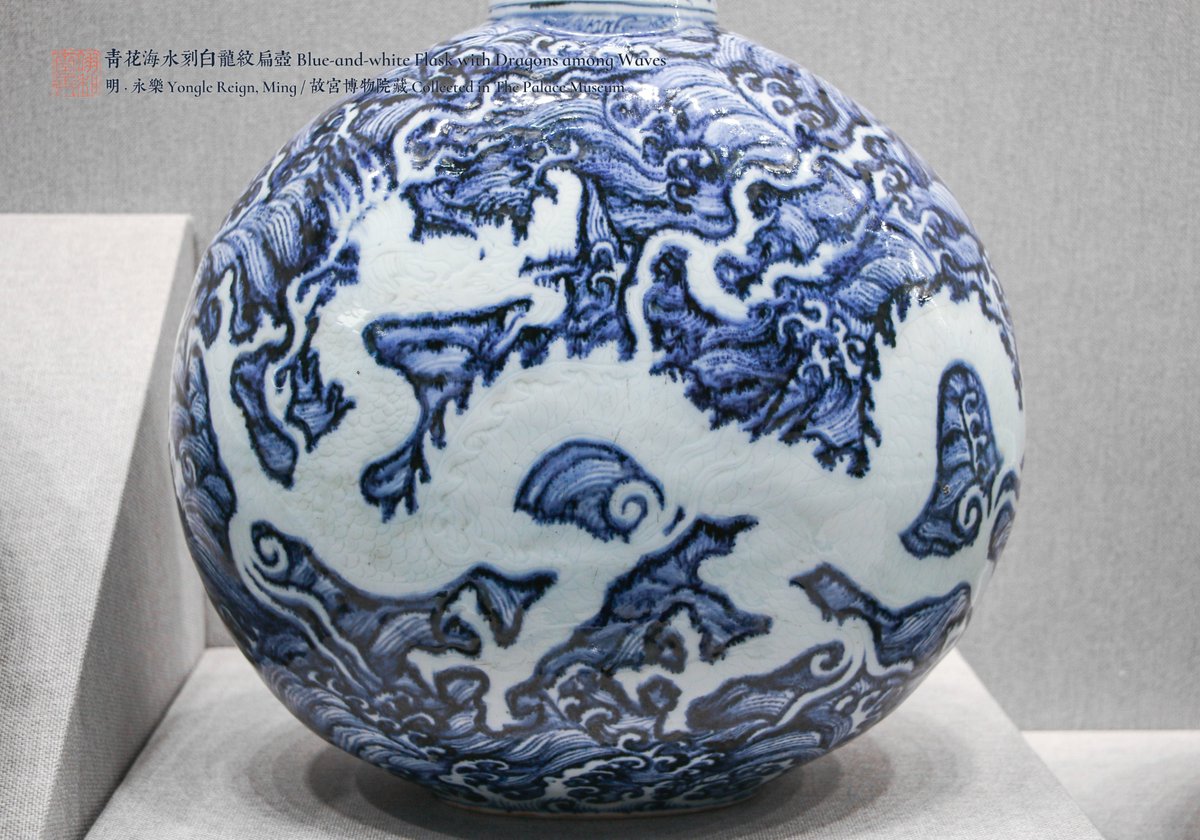
Blue-and-white flask with dragons among waves
Yongle reign, Ming
Collected in The Palace Museum
青花海水刻白龙纹扁壶/明永乐/故宫博物院藏
Ps: 外壁青花装饰,口部绘卷草纹,颈部绘缠枝莲纹,腹部绘青花地海水留白龙纹。

1
2
3
167
Apr 10
#InverseDesign
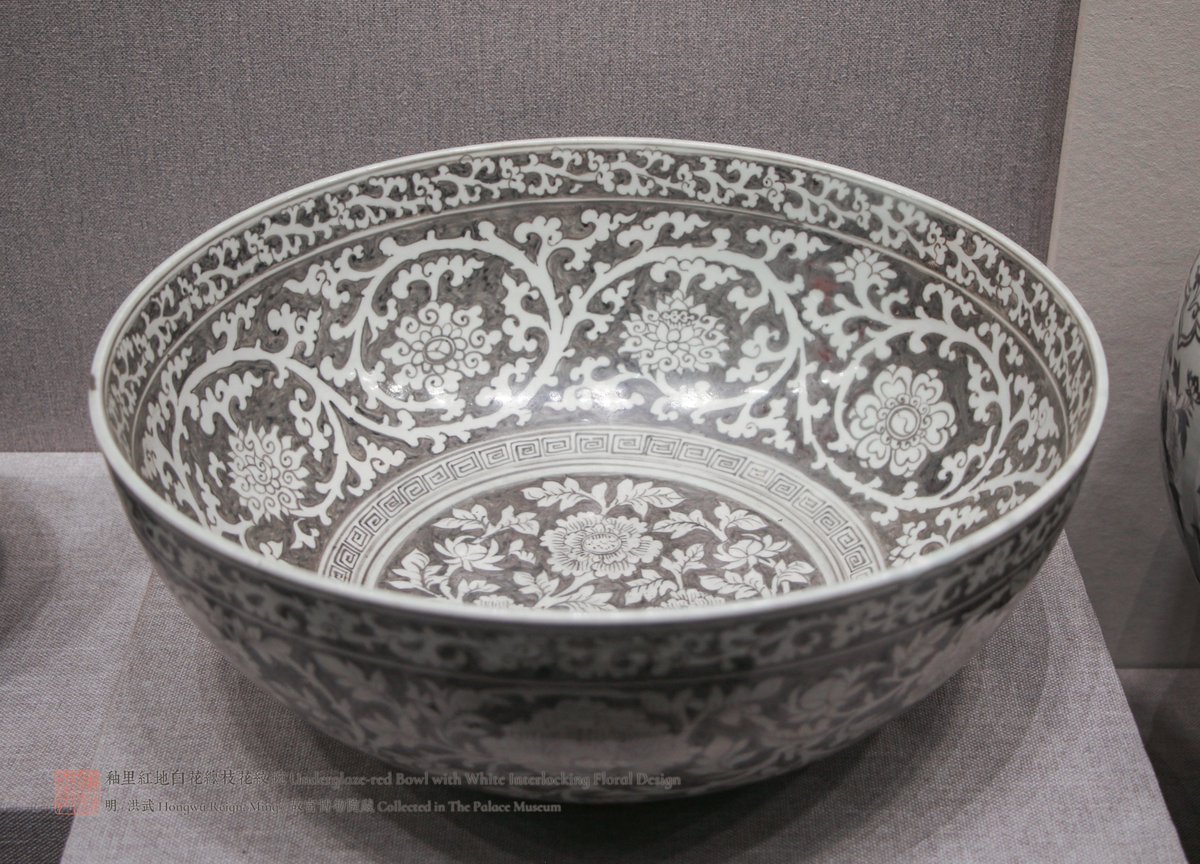
Underglaze-red bowl with white interlocking floral design
Hongwu reign, Ming
Collected in The Palace Museum
釉里红地白花缠枝花纹碗/明洪武/故宫博物院藏
Ps: 此碗敞口、深弧腹、圈足。碗内外施白釉,外底和足端无釉露胎,呈火石红色内、外釉里红地白花装饰,俗称“釉里红拔白”。


2
3
3
219

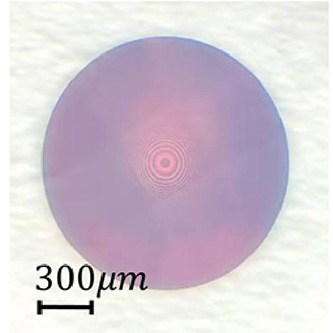
An Editors' Pick via #OPG_OL: A multifunctional metalens based on inverse design for nuclear magnetic resonance co-magnetometers bit.ly/4sKbA3D #Metasurface #InverseDesign @Beihang1952
6
272
Apr 2
#InverseDesign
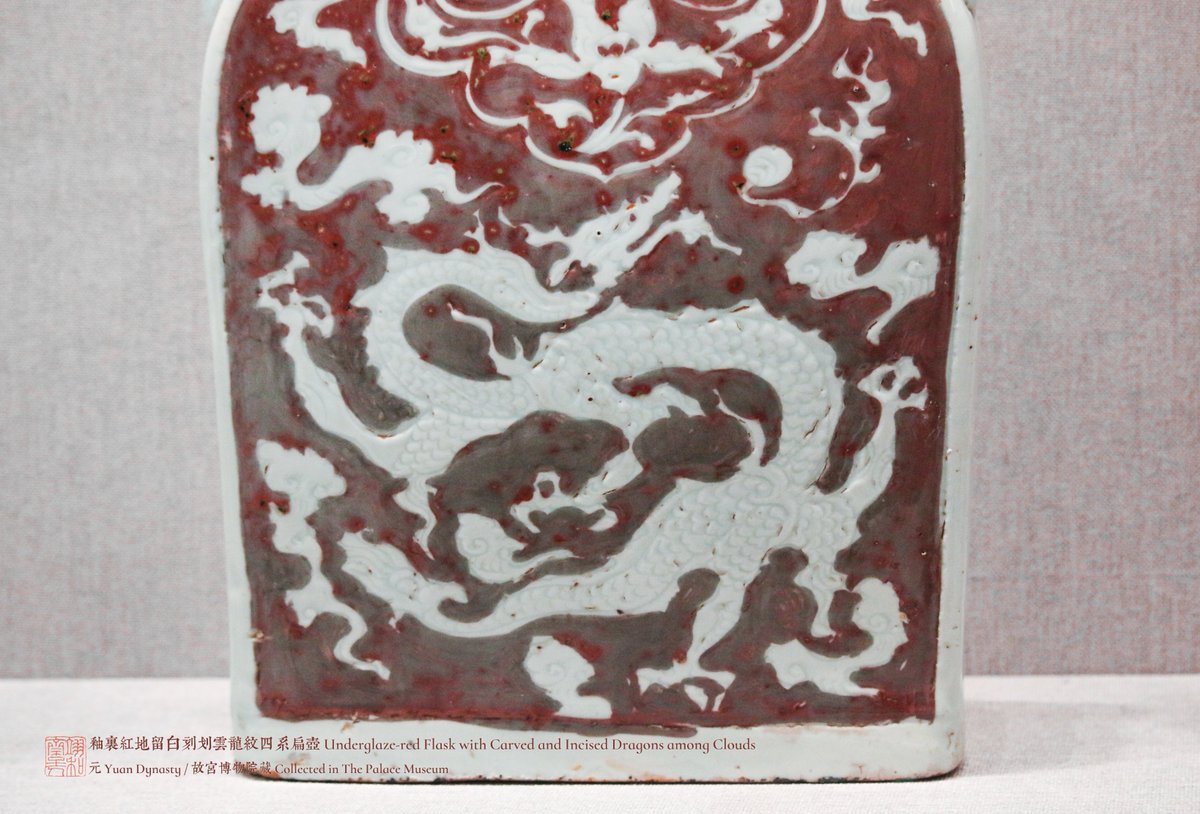
Underglaze-red flask with carved and incised dragon among clouds
Yuan Dynasty
Collected in The Palace Museum
釉里红地留白刻划云龙纹四系扁壶/元/故宫博物院藏

2
3
7
278
Mar 20
#InverseDesign
Underglaze-red vase with carved and incised interlocking lotus
Yuan Dynasty
Collected in The Palace Museum
釉里红地留白刻划缠枝莲纹玉壶春瓶/元/故宫博物院藏
Ps: 外壁上腹部刻划缠枝莲纹,纹饰外的隙地涂抹釉里红,形成红地白花装饰。

2
3
139
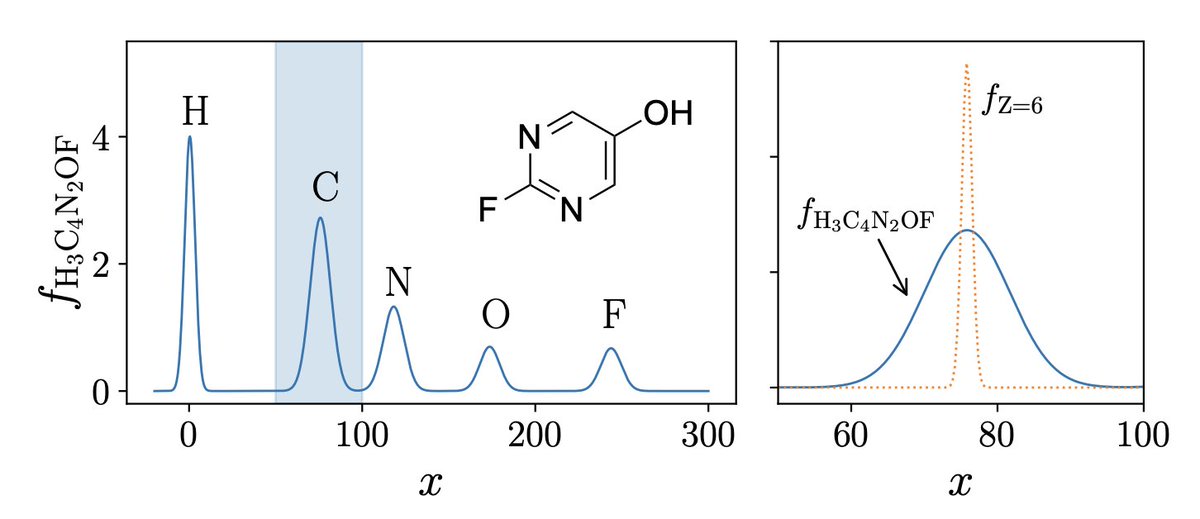
Bayesian Optimization in Chemical Compound Sub-spaces Using Low-dimensional Molecular Descriptors
1) This work presents a data-efficient Bayesian optimization framework that can identify optimal molecular structures with fewer than 2,000 training points in a chemical sub-space containing over 133,000 molecules.
2) The key innovation is a reliable inverse mapping scheme that translates optimized points in descriptor space back into chemically valid molecular structures, bridging the gap between continuous optimization and discrete molecular design.
3) The framework employs low-dimensional, physics-informed molecular descriptors that enable accurate Gaussian Process Regression even with limited training data, addressing the curse of dimensionality that plagues traditional molecular optimization.
4) For entropy optimization, the approach achieves a 100% success rate while requiring fewer than 1,000 molecular evaluations in more than 80% of test cases on the QM9 benchmark dataset.
5) For zero-point vibrational energy (ZPVE), the success rate exceeds 80% for molecules containing more than two heavy atoms, demonstrating robust performance across different molecular properties.
6) The inverse mapping algorithm predicts chemical formulas from descriptor vectors by matching predicted stoichiometry and shape characteristics against molecular databases, with a fallback penalty for chemically implausible suggestions.
7) The method outperforms conventional generative approaches that typically require large datasets, making it particularly suitable for data-scarce settings in molecular discovery.
8) The descriptors combine Coulomb matrix eigenvalues with inner products of atomic reference probability densities, capturing both global molecular shape and local atomic environment information.
📜Paper: arxiv.org/abs/2603.02605
#BayesianOptimization #MolecularDesign #InverseDesign #GaussianProcess #QM9 #ChemicalSpace #LowDimensionalDescriptors #MolecularOptimization #ComputationalChemistry #MachineLearning
2
12
1,309

Feb 14
What is a Metasurface?
In high school we learn the basic laws of optics, like reflection off a surface. Descartes’ law says the angle of reflection equals the angle of incidence. Snell’s law tells you how light bends when it crosses from one medium to another.
Those rules have been around since the 16th century, but nanotechnology forces a fun rethink. What happens if the interface between two media is patterned with structures, metallic or otherwise, spaced closer than a wavelength?
In that regime the incoming light can’t really resolve the fine detail. It effectively sees one engineered surface, because the spacing is so tiny compared to λ. That engineered interface is what people call a metasurface.
And once you can design those nano structures, you can effectively extend the laws of reflection and refraction. Light can come in at one angle and leave at another. It can refract into a direction that standard Snell’s law wouldn’t predict for a smooth boundary.
Does this mean Snell’s law and Descartes’ law are being violated?
Interestingly, no. Those laws are really special-case consequences of something deeper: Fermat’s principle, Pierre de Fermat’s statement that light takes the quickest path between two points.
Metasurfaces still obey Fermat’s principle. What changes is what counts as the quickest path, because the surface isn’t passive anymore. By structuring the interface you introduce tiny resonators or antennas. They momentarily store and re-emit the light, and that introduces a controlled time delay. In the math, the new ingredient is a spatially varying phase delay Φ(x) written onto the interface. The generalized Snell’s law is the statement that the tangential momentum of the wavefront changes by the phase gradient:
n₂ sin(θ₂) − n₁ sin(θ₁) = (1/k₀) dΦ/dx
and for reflection:
sin(θᵣ) − sin(θᵢ) = (1/(n₁ k₀)) dΦ/dx
where k₀ = 2π/λ is the vacuum wavenumber.
So what can we do with metasurfaces?
One big example is flat optics. Traditional curved lenses tend to suffer aberrations and imperfect focusing because of their spherical curvature. A metasurface lens can be designed to erase spherical aberration by directly writing the correct phase profile across a flat surface. The ideal flat-lens target is a focusing phase profile,
Φ(r) = −k₀ n_eff ( √(r² f²) − f )
which is the phase delay needed to make all rays arrive in phase at a focal point.
#FlatOptics #Metasurfaces #GeneralizedSnellsLaw #SnellsLaw #FermatsPrinciple #WaveOptics #Nanophotonics #Optics #Physics #Mathematics #PhotonicEngineering #MetaMaterials #InverseDesign #VortexBeams #FlatLens
5
27
140
5,984
Jan 5
#InverseDesign
White-glazed vase with incised and cut-glazed floral design, Dangyangyu Ware
Northern Song
Collected in The Palace Museum
当阳峪窑白釉剔划化妆土花草纹瓶/北宋/故宫博物院藏

1
2
65
Jan 4
What is a Metasurface?
In high school, we study basic fundamental laws of optics such as the reflection of light off a surface. Among these principles are Descartes’ law, which postulates that light reflects off a surface at the same angle of incidence, and Snell’s law, which elucidates how light deviates when crossing the boundary between two media.
These laws, well established since the 16th century, have recently been re-evaluated in light of advancements in nanotechnology, and a fascinating question arises: what transpires when the interface between two media is patterned with structures...be they metallic or otherwise...separated by a distance shorter than a wavelength?
In such a situation the light striking this interface perceives it as a unique surface due to the minuscule spacing. This innovatively defined surface is referred to as a Metasurface.
By modifying the design of these nano structures we can extend the laws of reflection and refraction, meaning that light enters at one angle and reflects at another, diverging from the usual behavior exhibited when light hits a conventional surface, and entering a medium at an angle that deviates from what Snell’s law would predict.
Does this imply a violation of Snell’s law and Descartes’ law?
Interestingly, it does not. These laws are extrapolations from a more comprehensive law known as Fermat’s theorem, uncovered by Pierre de Fermat, which posits that light follows the quickest path between two points.
When studied, these metasurfaces adhere to Fermat’s theorem despite their novel laws. Essentially, by structuring a surface, aptly minuscule entities known as resonators or antennas are introduced...these tiny objects momentarily store and subsequently re-emit light, and this process induces a time delay which, when factored into the propagation of light, produces these generalized laws. In the mathematics, the new ingredient is a spatially varying phase delay Φ(x) written onto the interface, and the generalized Snell’s law is the statement that the tangential momentum of the wavefront changes by the phase gradient:
n₂ sin(θ₂) − n₁ sin(θ₁) = (1/k₀) dΦ/dx
and for reflection:
sin(θᵣ) − sin(θᵢ) = (1/(n₁ k₀)) dΦ/dx
where k₀ = 2π/λ is the vacuum wavenumber.
So, what can we do with these Metasurfaces?
Contrary to traditional curved lenses, which inherently exhibit aberration and imprecise focusing due to their spherical curvature, this lens eradicates spherical aberration entirely due to its unique nano structured design. The ideal flat lens target is a focusing phase profile across the surface,
Φ(r) = −k₀ n_eff ( √(r² f²) − f )
which is the phase delay needed to make all rays arrive in phase at a focal point.
#FlatOptics #Metasurfaces #GeneralizedSnellsLaw #SnellsLaw #FermatsPrinciple #WaveOptics #Nanophotonics #Optics #Physics #Mathematics #PhotonicEngineering #MetaMaterials #InverseDesign #VortexBeams #FlatLens
6
32
165
9,226

3 Dec 2025
今年のうちの翼型はDAEをベースに強めの制約条件下でGA→InverseDesignでピーキーな特性を抑える
って工程を踏んだ
形状的にも性能的にもいい塩梅の翼型が作れたと思う
1
12
427