
"Profitable if you don't count the costs."
That sums up tge outlook on AI in one sentence
#MagicNumbers
51

@HAFB listen, the closer you are to zero; the more you wouldn’t even notice anything, as to if it was your doing, or the world actually agreed with you: Normal Fast #funnywords #funnyreason #fyp #poetry #philosophy #wordplay #magicnumbers #nonsense #flo
youtu.be/ktPpTgnqDBE
1
12

May 25
🚨 SENTIMENT ANALYSIS FOR 25/05/2026 🚨
Everyone is debating whether this market is bullish or bearish…
But very few are noticing what the structure is actually doing. 👀
⚡ Today’s session is showing a classic:
🟢 Mild Bullish Structure
⚠️ Trap Behaviour
🔥 Explosive Intraday Energy
And that combination is dangerous for emotional traders.
📍 Key Magic Numbers:
🟢 23,998 → Expansion trigger
🟢 24,054 → Momentum continuation
🔴 23,942 → Immediate battlefield
🟢 23,886 → Structural support
🟢 23,830 → Deep support zone
⏰ Anchor Timing: 10:35 AM
This timing is critical.
If price sustains above the anchor range after 10:35 → explosive upside squeeze possible.
But if the market starts rejecting around the anchor zone aggressively…
then trap behaviour activates fully.
🎯 Sectors In Focus Today:
🚗 Auto / Consumer → Strongest energy signature
🛒 FMCG → Defensive accumulation visible
🏛 PSU → Secondary rotational strength
⚠️ Weak Relative Structure:
• IT/Midcaps
• Metals
• Energy
🏦 Banking currently neutral —
watch carefully for sudden participation because explosive behaviour days can activate banks abruptly.
Today is NOT a smooth trend day.
This is a high-volatility psychological warfare session.
➡️ Fast reversals
➡️ Emotional candles
➡️ Sudden squeezes
➡️ Fake breakdowns
That’s why weak hands will suffer.
Meanwhile…
smart traders will simply react to Time & Price.
No opinions.
No predictions.
Only structure.
The market already left clues.
Question is — can you read them?
Follow for real Time & Price analysis that operates beyond conventional market commentary. ⚡📈
#Nifty #Nifty50 #BankNifty #StockMarket #TradingView #TechnicalAnalysis #PriceAction #IntradayTrading #OptionTrading #SwingTrading #MarketAnalysis #StockMarketIndia #IndianStockMarket #TimeAndPrice #MarketStructure #Liquidity #Bullish #Bearish #Volatility #AstroTrading #MagicNumbers #NSE #TraderLife #TradingPsychology #SupportAndResistance #FinancialMarkets #SmartMoney #RaviRoushanSrivastava

3
1
4
184
May 24
Let the world argue next week will be Bullish or Bearish.
Let Twitter fight.
Let TV experts scream.
Let the crowd predict crashes and melt-ups.
I will do what I always do.
⚡ I will trade my MAGIC NUMBERS. ⚡
Because markets don’t move on opinions.
They move from level to level…
from liquidity to liquidity…
from Time to Price.
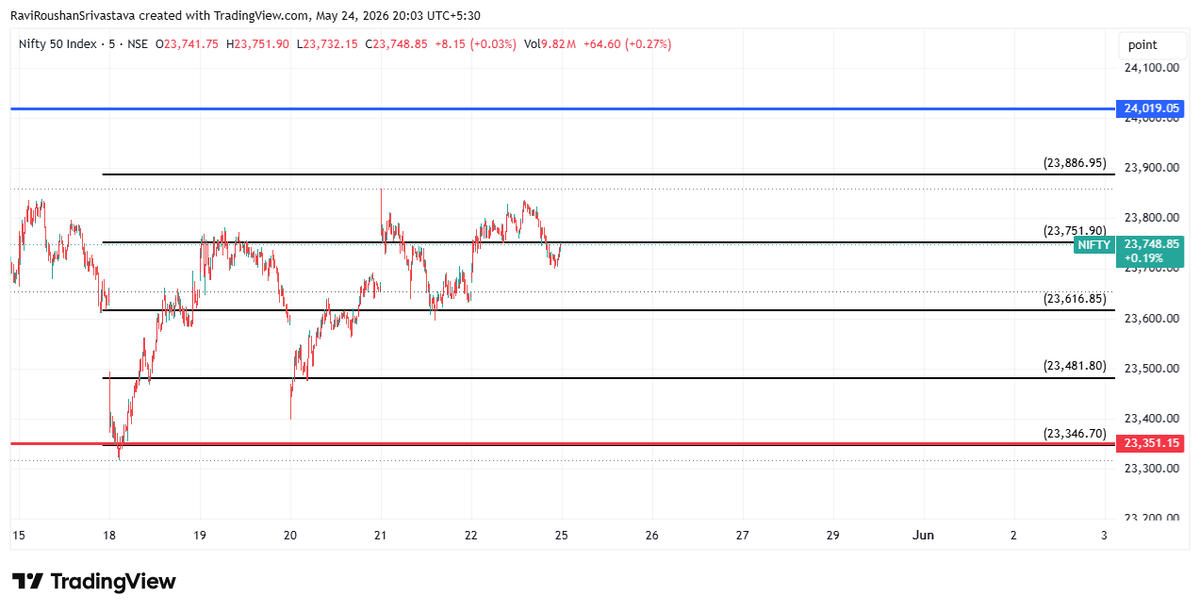
📍 Weekly Magic Numbers for NIFTY:
🔵 Upper Expansion Zone: 24,019
⚫ Resistance Barrier: 23,886
⚫ Trigger Zone: 23,751
⚫ Structural Support: 23,616
⚫ Breakdown Level: 23,481
🔴 Final Defensive Zone: 23,346
Above the levels → momentum expands.
Below the levels → weakness accelerates.
Simple. Clean.
Unemotional.
No prediction drama.
No permanent bullishness.
No permanent bearishness.
Only reaction to the levels that matter.
That’s the difference between commentary and precision.
✨ Trade the structure.
✨ Respect the numbers.
✨ Follow Time & Price.
Koi Shaq?
#Nifty #Nifty50 #NiftyAnalysis #NiftyPrediction #BankNifty #StockMarket #IndianStockMarket #StockMarketIndia #TradingView #TechnicalAnalysis #PriceAction #IntradayTrading #SwingTrading #OptionTrading #FuturesAndOptions #MarketAnalysis #StockMarketAnalysis #TradingStrategy #TraderLife #TradingPsychology #SupportAndResistance #TimeAndPrice #AstroTrading #MarketMagic #FinancialMarkets #SmartMoney #Liquidity #MarketStructure #NSE #AlgoTrading #StockTrader #InvestingIndia #Finance #Bullish #Bearish #Volatility #MarketOutlook #WeeklyAnalysis #MagicNumbers #RaviRoushanSrivastava
1
5
308

May 17
Viral video of primary election counting ,51,52, 53,54,55,100,200,400,500 as seen somewhere in Abia state #magicnumbers
30

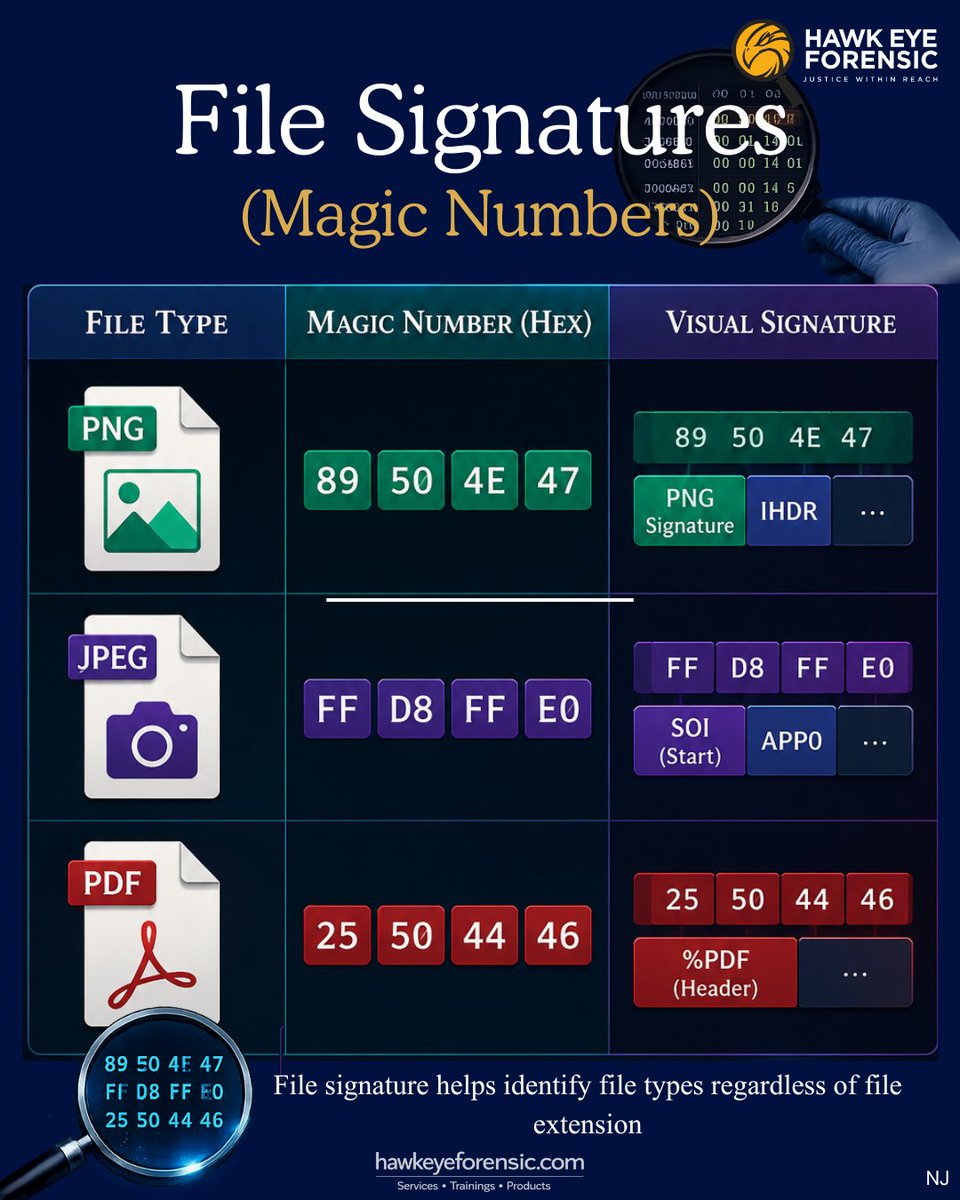
𝐄𝐯𝐞𝐫𝐲 𝐝𝐢𝐠𝐢𝐭𝐚𝐥 𝐟𝐢𝐥𝐞 𝐜𝐚𝐫𝐫𝐢𝐞𝐬 𝐚 𝐮𝐧𝐢𝐪𝐮𝐞 𝐟𝐢𝐥𝐞 𝐬𝐢𝐠𝐧𝐚𝐭𝐮𝐫𝐞 (𝐦𝐚𝐠𝐢𝐜 𝐧𝐮𝐦𝐛𝐞𝐫)
#digitalforensics #filesignatures #magicnumbers #cyberforensics #forensicscience #hexanalysis #cybersecurity #metadataanalysis #digitalinvestigation
13

“It’s not good for relationships, this line of work”
On this day in 2005, @themagicnumbers released their debut single, 'Forever Lost'. Romeo Stodart explains how they managed to blend an uplifting melody with a darker lyric... songwritingmagazine.co.uk/in…
#foreverlost #magicnumbers

104
May 5
🚨 TODAY IS A CONTROLLED TRAP DAY — NOT A TREND DAY
If you expect a straight rally or crash…
you’re already on the wrong side 😏
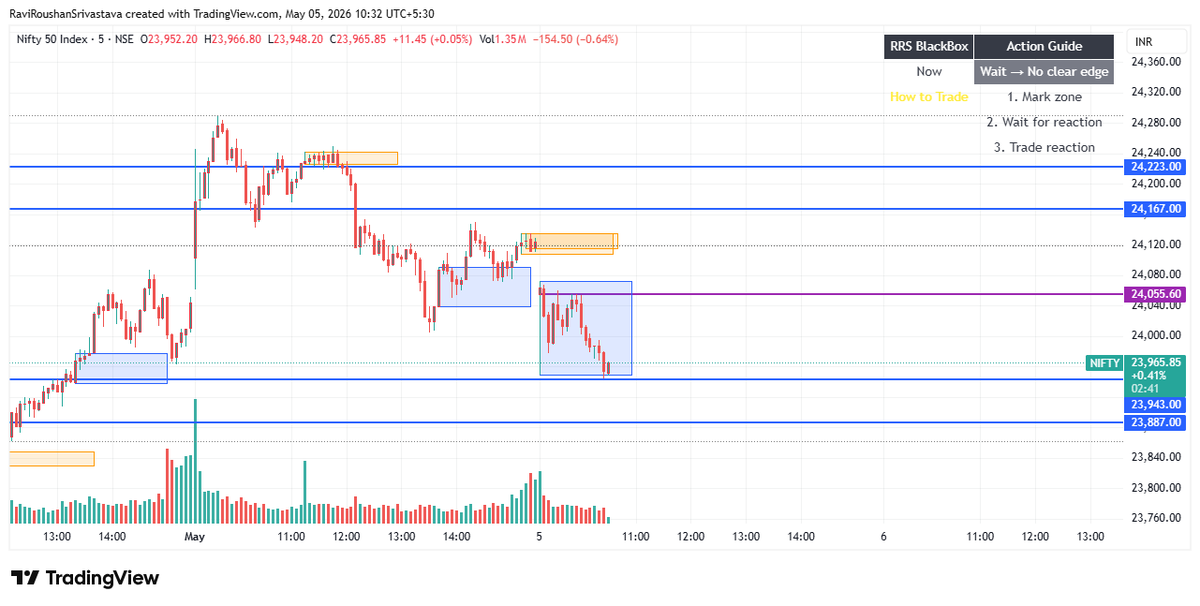
📍 Opening OI / Magic Zone: 24,055 🧿
👉 This is your primary decision level
🎯 Anchor Point: 23,943
👉 Below this → structure weakens
📊 Key Levels:
🔺 Upside:
24,167 → 24,223 🚀
🔻 Downside:
23,997 → 23,887 📉
🧠 Important Insight:
👉 From 23,887 → 23,945 zone
we can see fast buying attempts ⚡
• Sharp bounce possible
• Quick moves can come
• But only if setup confirms
⚡ How to Trade This:
✔️ Look for setups at the right price right time
✔️ If setup permits → go with it
❌ If not → stay away (no force trading)
🧠 Market Character:
• FMCG leadership = controlled moves
• Breakouts may fail quickly
• Real move = after confirmation
🔥 Day Structure:
Trap → Slow grind → Sudden move
💬 Be honest…
Are you chasing moves…
or waiting for your setup?
👉 Follow for precision… or stay stuck in noise
Koi Shaque? 😏
#Nifty #Nifty50 #Intraday #OptionsTrading #StockMarketIndia #PriceAction #TimeAndPrice #MagicNumbers #MarketStructure #Trading #KoiShaque #PrecisionTrading
3
76
May 4
🚨 TODAY IS A SETUP DAY — NOT A GUESSING GAME
If you’re reacting without structure…
today will trap you 😏
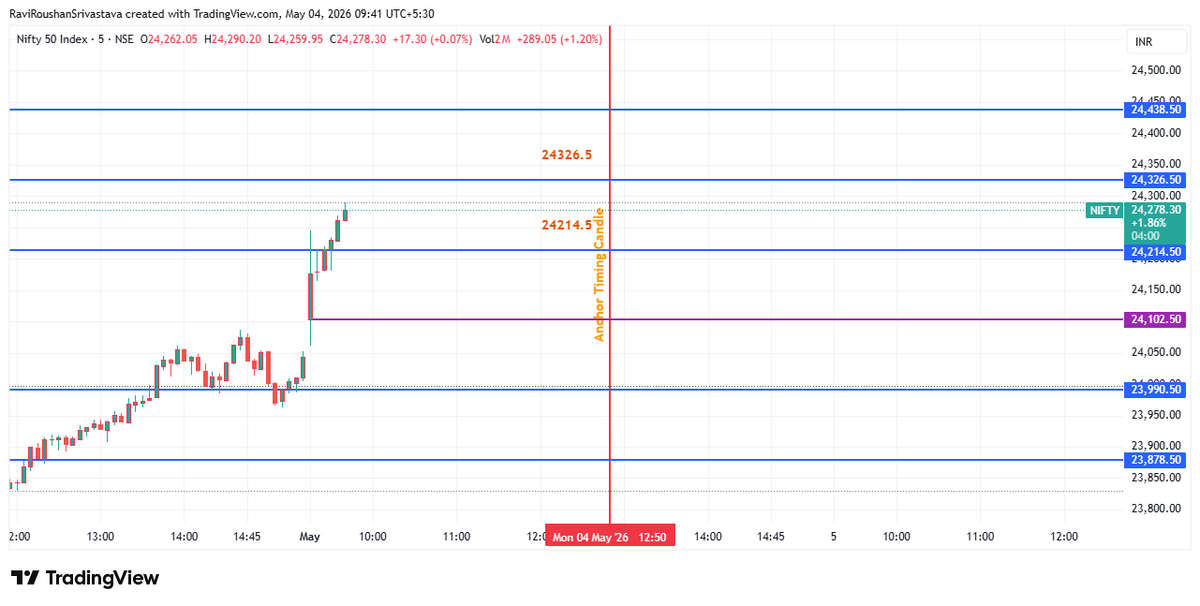
📍 Magic Number of the Day: 24,102.5 🧿
👉 Opening price = Decision Zone
🧠 Opening Pattern
Start
Pause / Confusion
Direction
👉 Translation:
Market will move cleanly from open
It will pause → confuse → then pick a side
📊 Key Levels:
🔺 Above 24,102.5 →
24,214.5 → 24,326.5 - 24,438.5🚀
🔻 Below 24,102.5 →
23,990.5 → 23,878.5 📉
⏰ Anchor Timing:
🕧 12:50 PM
🧿 Sector Focus (VERY IMPORTANT):
🔥 PSU → Leader (fast, aggressive moves)
⚡ Energy → Support
👉 Indicates volatile momentum-driven behaviour
🧠 What to Expect:
• Early move 🎭
• Reaction at opening = key clue ⚡
• Real move = after time alignment ⏳
⚡ Simple Rule:
No sustain = No trade
Sustain = Ride the move
🔥 This is NOT a trend-from-open day
This is a Pause → Trap → Expansion setup
💬 Be honest…
Are you chasing candles…
or waiting for confirmation?
👉 Follow me for precision… else keep getting bored with noise.
Koi Shaque? 😏
#Nifty #Intraday #OptionsTrading #TimeAndPrice #MagicNumbers #StockMarketIndia #PriceAction #Trading #Nifty50
2
1
4
132
May 3
Post 8/8 (Final)
Final Truth The market is not just a place.
It is a moment. Those who only see price → watch the market.
Those who understand Time Price → move with the market. Take this into the week ahead (starting tomorrow). Watch my weekly Magic Numbers timing windows closely.
Don’t just see where price goes…
Watch when it comes alive. Poll:
Are you trading Levels or Moments? Reply with your biggest timing mistake
I read every single one. #Nifty #BankNifty #MagicNumbers #TimePriceConfluence #TradingPsychology #Nifty50 Koi Shaq?
1
29

May 2
🤓
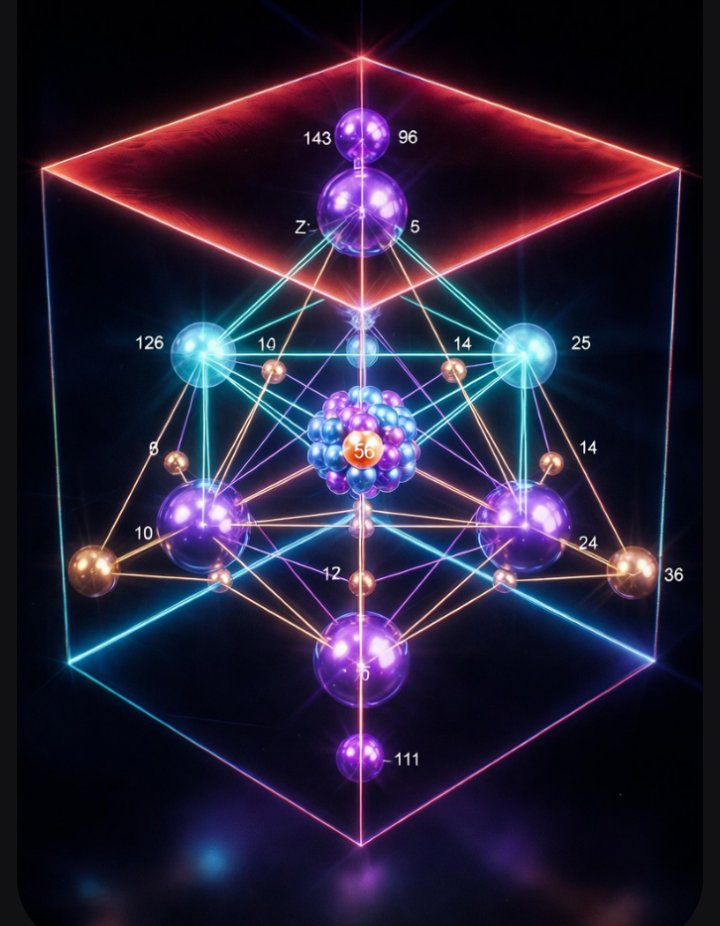
Chapter 4.59 Putz Magic Number Nucleon Synthesis
In the ShufflePutz Vector Geometric Model, the traditional concept of “magic numbers” in nuclear physics finds a direct geometric interpretation. Rather than viewing magic numbers as purely statistical shell closures, they correspond to specific geometric configurations where the torsional fields and colorless couplings reach an optimal, low-stress balance across the Color and Electroweak Grids.
Iron-56 as the Benchmark of Torsional Balance
Iron-56 (⁵⁶Fe) has the highest binding energy per nucleon (~8.79 MeV) of any known nucleus, making it the current peak of nuclear stability. In this model, iron-56 serves as a key benchmark for optimal torsional alignment with the Higgs membrane.
Calculation from Mass Ratio (Electron = 1.0 chirality unit):
The proton has a rest mass of 938.272 MeV.
The electron has a rest mass of 0.511 MeV.
Proton mass / electron mass ≈ 1,836.
Therefore, the proton’s composite chirality is approximately 1,836.
Iron-56 consists of 26 protons and 30 neutrons. Since the neutron’s mass is very close to the proton’s (939.565 MeV), the total chirality contributed by the nucleons is roughly:
• 26 protons × 1,836 ≈ 47,736
• 30 neutrons × 1,838.5 ≈ 55,155
• Total nucleon chirality ≈ 102,891
However, the majority of iron-56’s mass comes from the dynamic gluon field, not the valence quarks. The binding energy per nucleon for iron-56 is ~8.79 MeV, which is significantly higher than the average for lighter or heavier nuclei. This suggests that the effective total chirality of the entire iron-56 system is optimized for minimal torsional stress.
Comparison with Higgs Chirality:
• The Higgs boson has a mass of 125 GeV = 125,000 MeV.
• Higgs mass / electron mass ≈ 244,600.
• Thus, the Higgs boson’s chirality is approximately 244,600.
Analysis of Self-Consistency:
The model shows reasonable internal consistency with iron-56 as the stability benchmark. The high binding energy per nucleon corresponds to a geometric configuration with minimal net torsional stress through efficient colorless coupling at the origin point. This aligns with the model’s prediction that optimal torsional alignment with the Higgs membrane produces maximum stability.
However, a discrepancy appears when comparing the Higgs boson’s chirality (~244,600) with the top quark’s chirality (~337,000). Since the Higgs can decay into top-antitop pairs, its chirality should logically be at least as large as the combined torsional content of a top-antitop pair. The current numbers suggest the top quark has higher chirality than the Higgs, which indicates an inconsistency that requires refinement in future iterations.
Consistency with Physics:
The model’s prediction that iron-56 represents the peak of torsional balance aligns well with the observed nuclear binding energy curve. The tendency of nuclear processes to move toward iron through fusion (lighter elements) and fission (heavier elements) is naturally explained by the drive toward optimal geometric alignment with the Higgs membrane.
The concept of radial distance on the Color Grid as a measure of strangeness and the colorless coupling at the origin as a mass-generating mechanism provides a geometric alternative to the arbitrary Yukawa couplings of the Standard Model. While still speculative, this framework offers a visually intuitive explanation for nuclear stability and the island of stability concept.
#MagicNumbers #IslandOfStability #GeometricNuclearPhysics #TorsionalBalance #NuclearStability

1
61
May 2
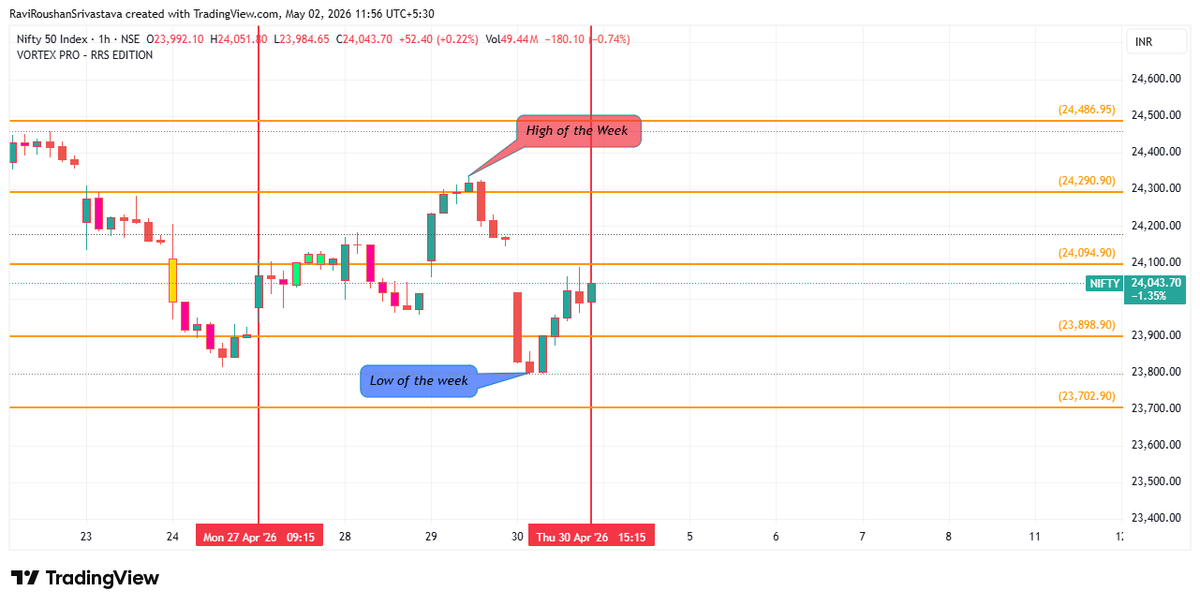
🔥 WEEKLY MAGIC NUMBERS RECAP 🔥
📅 27 Apr to 02 May 2026
💥 THE NUMBERS HELD. AGAIN.
🎯 Precision Delivered. No Noise. No Guesswork.
🧲 My Weekly Magic Levels (Shared in Advance):
📍 Anchor Point: 23,895
🚧 Resistance: 24,097 | 24,295 | 24,491
🛑 Support: 23,704 | 23,510
📊 How Price Reacted (Day-by-Day Breakdown):
📌 Mon, 27 Apr:
➡️ Opened near Anchor
⬆️ High: 24,130 ( 33 pts from 24,097)
🔚 Close: 24,092
⚡ Strong opening strength
📌 Tue, 28 Apr:
⬇️ Sell-off from High: 24,181 ( 84 pts from 24,097)
🔻 Low: 23,957 ( 62 pts from Anchor)
💥 Clean 150 pts move
📌 Wed, 29 Apr:
🚀 Strong bounce
⬆️ High: 24,334 ( 39 pts from 24,295)
🛡️ Low held above 24,059
📌 Thu, 30 Apr:
🌪️ Volatile session
⬆️ High: 24,087 (-10 pts from 24,097)
⬇️ Low: 23,796 ( 92 pts from support / 99 pts from Anchor)
🔚 Close: 23,997 ( 102 pts from Anchor)
📈 Weekly Summary:
🏆 Week High: ~24,334 ( 39 pts from resistance)
📉 Week Low: ~23,796 ( 92 pts from support)
🎯 Closing Zone: Around 23,895–23,997 (within ~100 pts of Anchor)
🧲 Every major swing respected these levels within 30–100 points.
❌ No vague zones.
✅ Only precise reactions.
🧠 Core Lesson:
🚫 Market doesn’t care about news.
🚫 Market doesn’t care about opinions.
✅ Market respects LEVELS.
👉 Your Job:
✔️ Mark the levels
✔️ Wait for confirmation
✔️ Execute with discipline
💬 Who traded these zones successfully this week?
👇 Drop: “MAGIC DELIVERED”
⏰ Next Weekly Magic Numbers:
📅 Sunday | 8:30 PM
🚀 Sharper levels. Bigger moves.
🔔 Turn on post notifications
💾 Save this & revisit every week
⚔️ Precision over Prediction. ALWAYS.
💥 KOI SHAQ? 😏
#Nifty #Nifty50 #MagicNumbers #WeeklyLevels #PriceAction #OptionsTrading #StockMarketIndia #Trading
1
57
May 1
Market respected the zones beautifully today!
Support taken exactly near 23,800 — just below my lower zone (23,850)
High made 24,087 — clearly above my Opening Anchor of 24,019
This happens almost every single time — that’s exactly why these are my Magic Numbers, not broader zones.
Price respects these precise levels like clockwork.
Once again, my levels acted as perfect magnet points.
Classic test → trap → expansion day.
This is why my followers keep crushing it with these exact numbers. My precision never disappoints.
Check yourself — from where the weekly chart has taken support and resistance… it’s self-explanatory.
If you are tired of generic broader analysis like “buy above / sell below” type and 200-point zones… then
FOLLOW me for sharp, precise levels that actually work.
Tomorrow’s fresh Magic Numbers dropping soon. Who else is seeing the power of these exact levels? Drop a if you’re riding with me!
#Nifty #Nifty50 #MagicNumbers #PriceActionThis
1
29
Apr 29
🚨 TODAY IS A BULLISH DAY… BUT ONLY AFTER IT SHAKES YOU OUT
If you jump in early…
you’ll get trapped first 😏
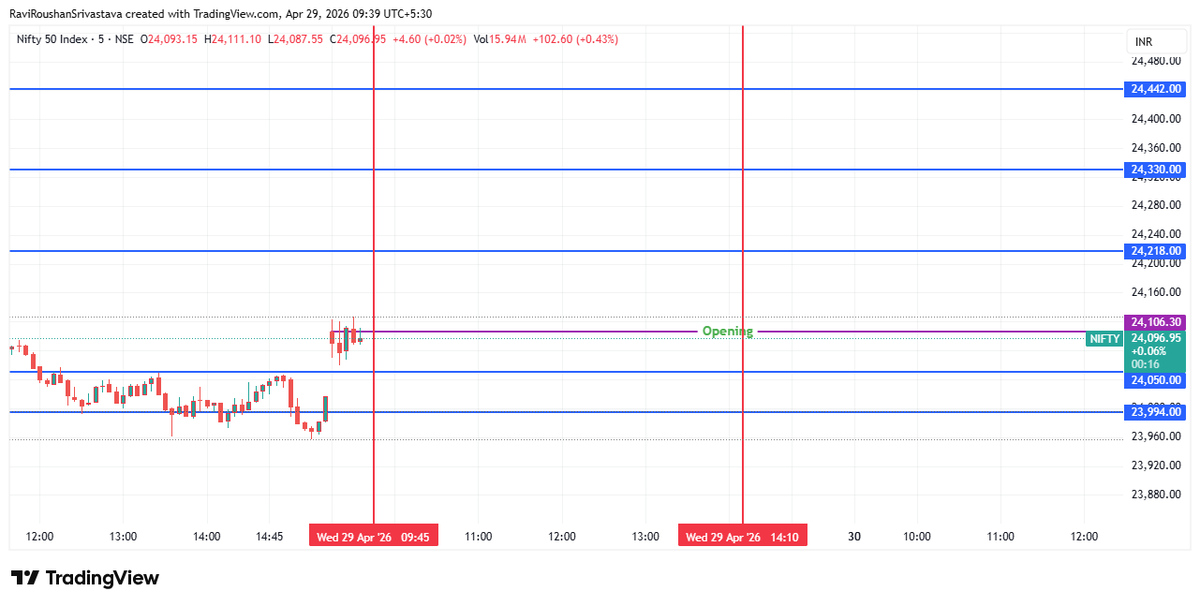
📍 Opening: 24,106 → Magic Number (Decision Zone)
This is where the game begins 🧿
📊 Important Levels:
🔺 Above 24,106:
24,218 → 24,330 → 24,442 🚀
🔻 Below 24,050:
⚠️ If penetrated → 23,994 (Trap Zone) 📉
⏰ Key Anchor Timings:
🕘 9:45 AM → Trap / Fake Move
🕑 2:10 PM → REAL Expansion Move 💥
🧠 What to Expect:
• Early move will mislead you 🎭
• Downside dip can trap sellers ⚠️
• Real move will be bullish — but after pain 🔥
⚡ Simple Rule:
❌ Don’t chase early
❌ Don’t panic on dip
✅ Wait for confirmation
✅ Ride the expansion
🔥 This is NOT a straight trend day
This is a Trap → Shakeout → Bullish Explosion setup
👉 Big money will be made AFTER 2:10
Not in the first hour
💬 Be honest…
Are you trading the first move…
or waiting for the REAL one?
#Nifty #Intraday #OptionsTrading #StockMarketIndia #PriceAction #MagicNumbers #Trading #Volatility #Momentum #Nifty50
1
1
4
119

Apr 28
Scriptourer - Exploring Genesis
The Magic Number [see previous post]
#wayward #scriptourer #Bible #scripture #Genesis #creation #Truth #Literature #Catholic #Christian #substack #TrueStory #magicnumbers #sacredseven
@biblegateway
1
27

Apr 28
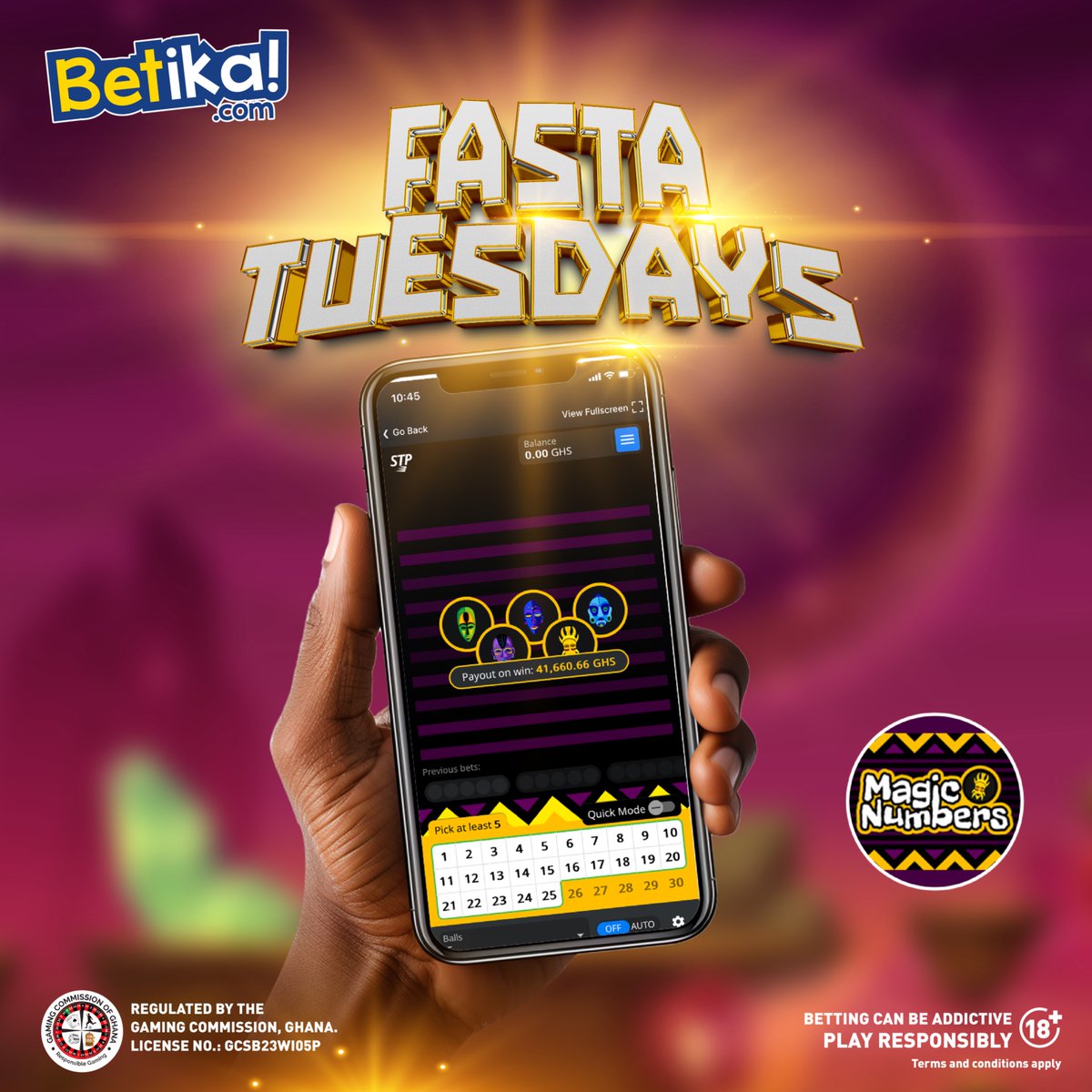
Unlock the magic of numbers with our enchanting game - Magic Numbers! Dive into a world where every number holds the potential for incredible wins. Are you ready to discover the mystical combinations? Play here:
bit.ly/3xDUN7U
#Betikagh #FastaTuesdays #MagicNumbers
1
12
Apr 28
🚨 TODAY SHOULD NOT BE TRADED LIKE A NORMAL DAY
If you rush in the morning…
you should expect to get trapped 😏
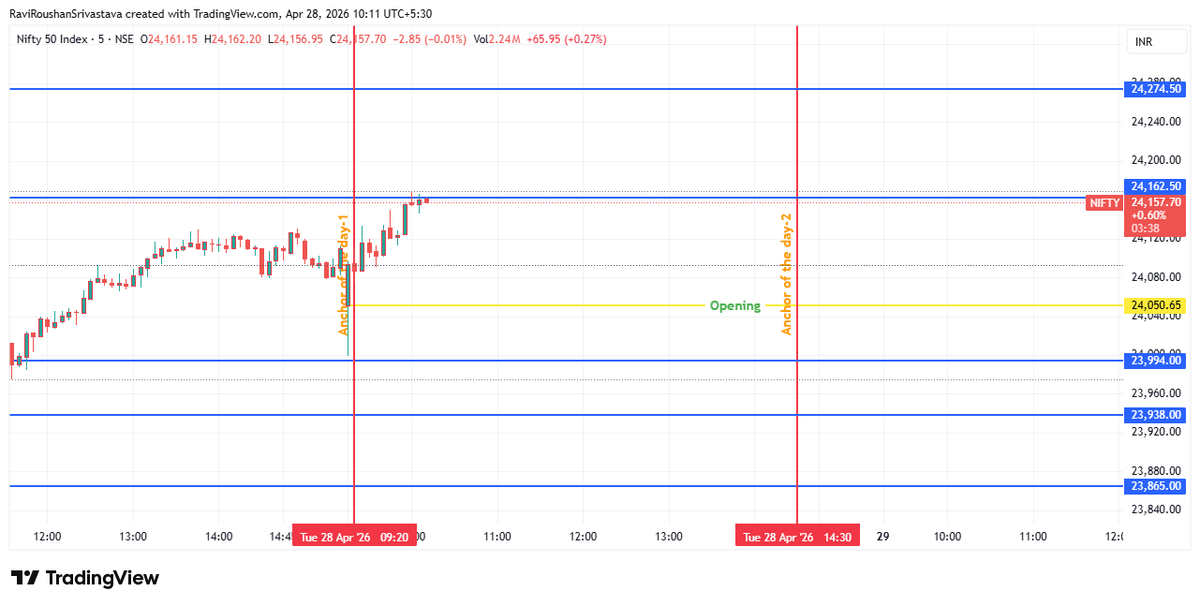
📍 Opening: 24,050 → Pattern (050)
🧿 Magic Number: 24,050 (Decision Zone)
This means:
⚠️ Market should not give clear direction early
🎭 It should confuse first
💥 Then the real move should come
⏰ Key Timing:
🕘 9:25 AM → First trap should appear
🕝 2:30 PM → REAL EXPLOSION should happen
📊 Important Levels:
🎯 Pivot / Magic Zone: 24,050.65
🔺 Above:
24,162.50 → 24,274.50 🚀
🔻 Below:
23,994 📉
🧠 What to Expect:
• Morning should be noisy & misleading 🎭
• Mid-session should build traps ⚠️
• Afternoon should give fast expansion 💥
⚡ Simple Rule:
No clarity = You should stay out
Clarity sustain = You should go aggressive
🔥 Bias should remain slightly bullish
But ONLY if the Magic Number holds
👉 Big money should be made AFTER 2:30
Not in the first 30 minutes
💬 Be honest…
Are you trading early…
or waiting for the REAL move?
#Nifty #Intraday #OptionsTrading #StockMarketIndia #PriceAction #MagicNumbers #Trading #Volatility #Momentum #Nifty50
1
2
5
113
Apr 27
🚨 LET THE WORLD ARGUE BULLISH OR BEARISH… I’LL TRADE THE LEVELS
While everyone is busy predicting next week…
the real game is already defined.
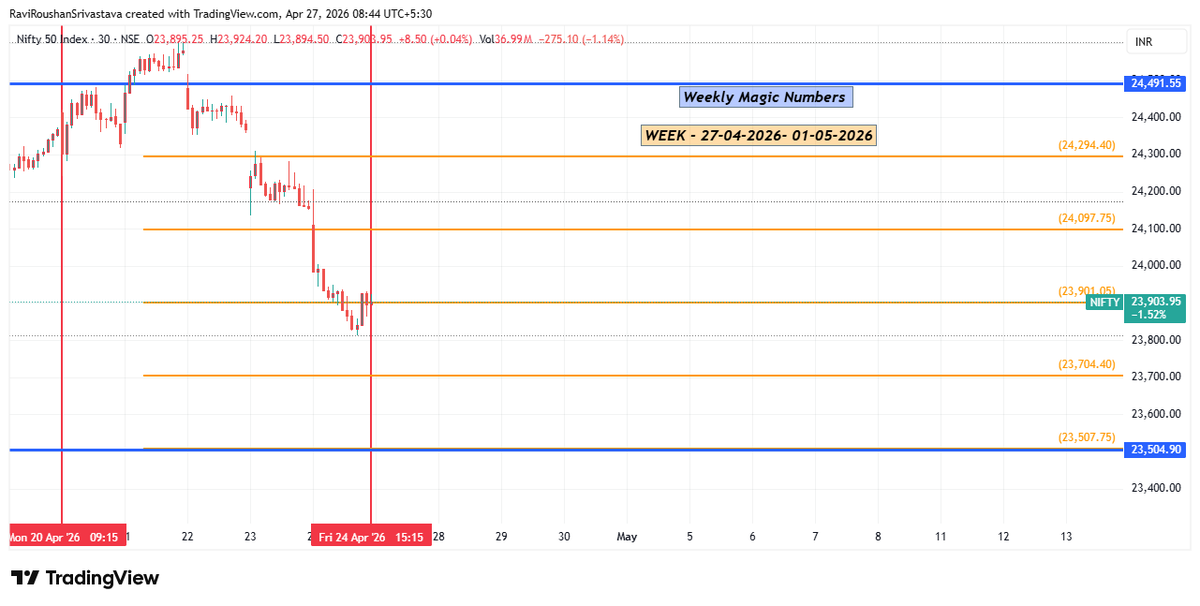
📅 Week: 27 Apr – 02 May
🧿 Weekly Magic Numbers:
🎯 Anchor Point:
23,895
🔺 Resistance Zones:
24,097
24,295
24,491
🔻 Support Zones:
23,704
23,510
🧠 What this means:
• Market doesn’t care about opinions
• It reacts to levels timing
• Your job is NOT to predict
• Your job is to execute at the right zone
⚡ How to trade this:
• Wait for your favorite pattern near these levels
• Let price confirm
• Then act with confidence
🔥 Reality check:
The move will happen anyway…
Question is — will you be ready or regret it later?
👉 Save this.
👉 Revisit after the move.
#Nifty #WeeklyLevels #MagicNumbers #Intraday #OptionsTrading #StockMarketIndia #PriceAction #Trading
2
1
4
231

A bridge between algebraic pairing models and effective field theory, with a simple universal condition: ε/G > 1.
Preprint:
doi.org/10.5281/zenodo.19698…
#NuclearPhysics #MagicNumbers #Pairing #EFT #SymmetryBreaking #Physics #INFN
1
64
A unified symmetry-based framework connecting Sp(4) pairing, spontaneous isospin symmetry breaking, and the emergence of doubly magic numbers along the N = Z line:
doi.org/10.5281/zenodo.19698…
#NuclearPhysics #NuclearTheory #EffectiveFieldTheory #SymmetryBreaking #MagicNumbers #INFN
1
49