
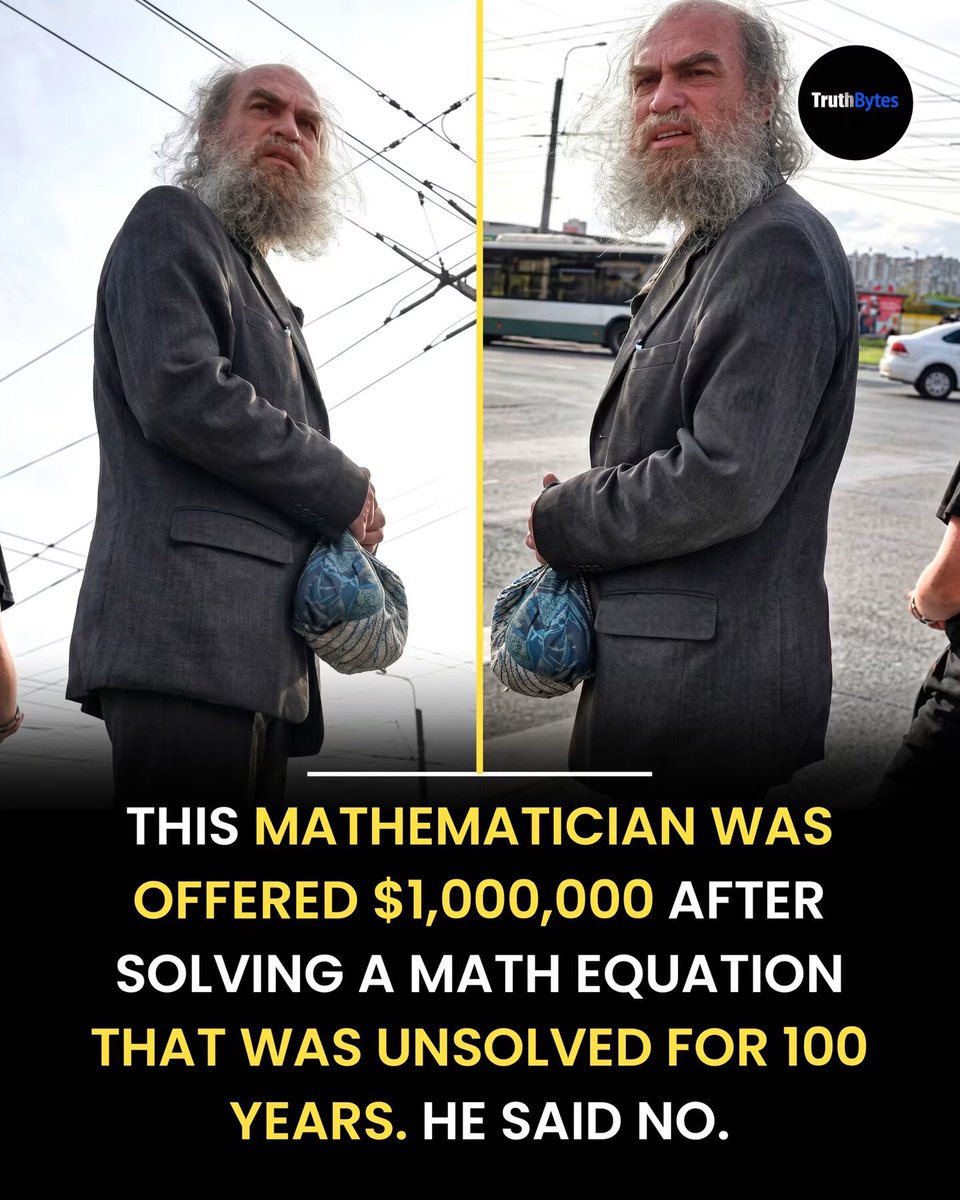
Perelman withdrew from public life completely and now lives in quiet isolation in St. Petersburg.
#GrigoriPerelman #PoincareConjecture #Mathematics #RicciFlow #Topology #MathHistory
1
12

In 2002 and 2003, Russian mathematician Grigori Perelman stunned the scientific world by posting three papers online that solved the Poincaré Conjecture.
#GrigoriPerelman #PoincareConjecture #Mathematics #RicciFlow #Topology #MathHistory
6
2
21

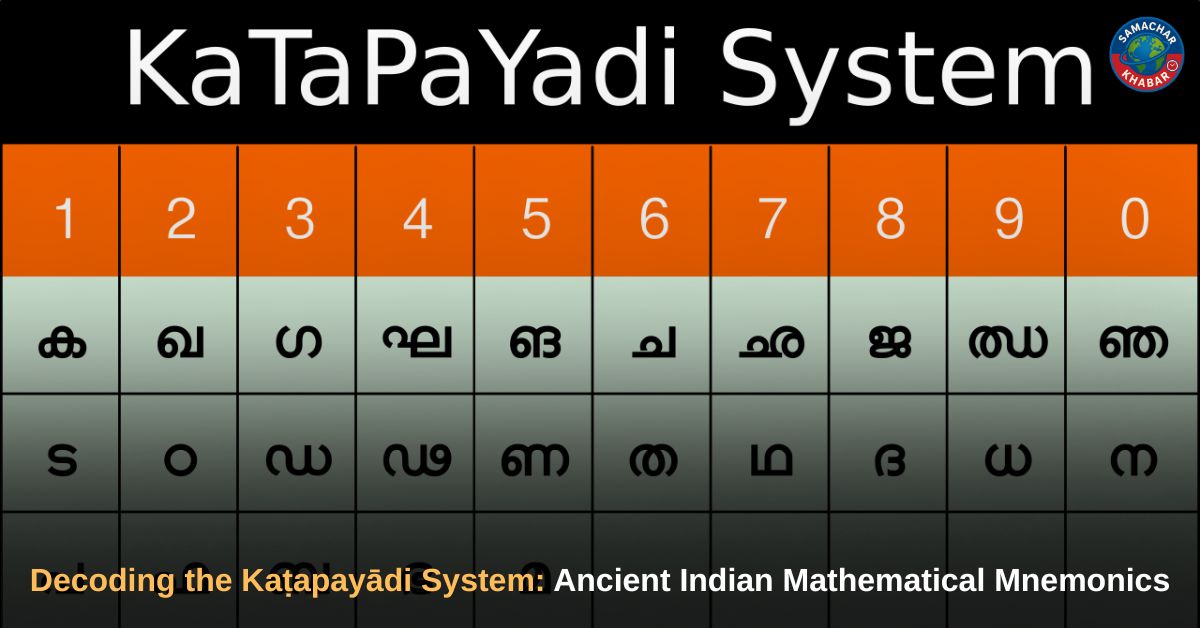
Can you hide π in a prayer?
The ancient Indian Kaṭapayādi System did exactly that. By mapping consonants to digits, scholars encoded astronomical data into easily memorized poetry.
Read more: samacharkhabar.com/katapayad…
#MathHistory #India #Coding #AncientTech #KeralaSchool
1
12

Jun 9
लीलावती पांडुलिपि भारतीय प्राचीन गणितीय परंपरा की एक अमूल्य धरोहर है। महान गणितज्ञ भास्कराचार्य द्वारा रचित यह ग्रंथ गणित को सरल, रोचक और काव्यात्मक शैली में प्रस्तुत करता है। इसमें अंकगणित, अनुपात, मापन तथा विभिन्न गणितीय समस्याओं का वर्णन अत्यंत सहज ढंग से किया गया है।
यह पांडुलिपि न केवल भारत की उन्नत गणितीय परंपरा का प्रमाण है, बल्कि ज्ञान को रचनात्मक और संवादात्मक रूप में प्रस्तुत करने की अद्भुत कला को भी दर्शाती है। सदियों बाद भी लीलावती ज्ञान, तर्क और वैज्ञानिक चिंतन की प्रेरणास्रोत बनी हुई है।
#लीलावती #Lilavati #भास्कराचार्य #Bhaskaracharya #भारतीयगणित #IndianMathematics #AncientIndia #IndianKnowledgeSystem #IKS #Mathematics #ScientificHeritage #BharatiyaGyan #IndianHistory #AncientWisdom #STEM #KnowledgeOfBharat #MathHistory #SanskritManuscripts #IndianHeritage #GyanBharatam
5
10
276

May 31
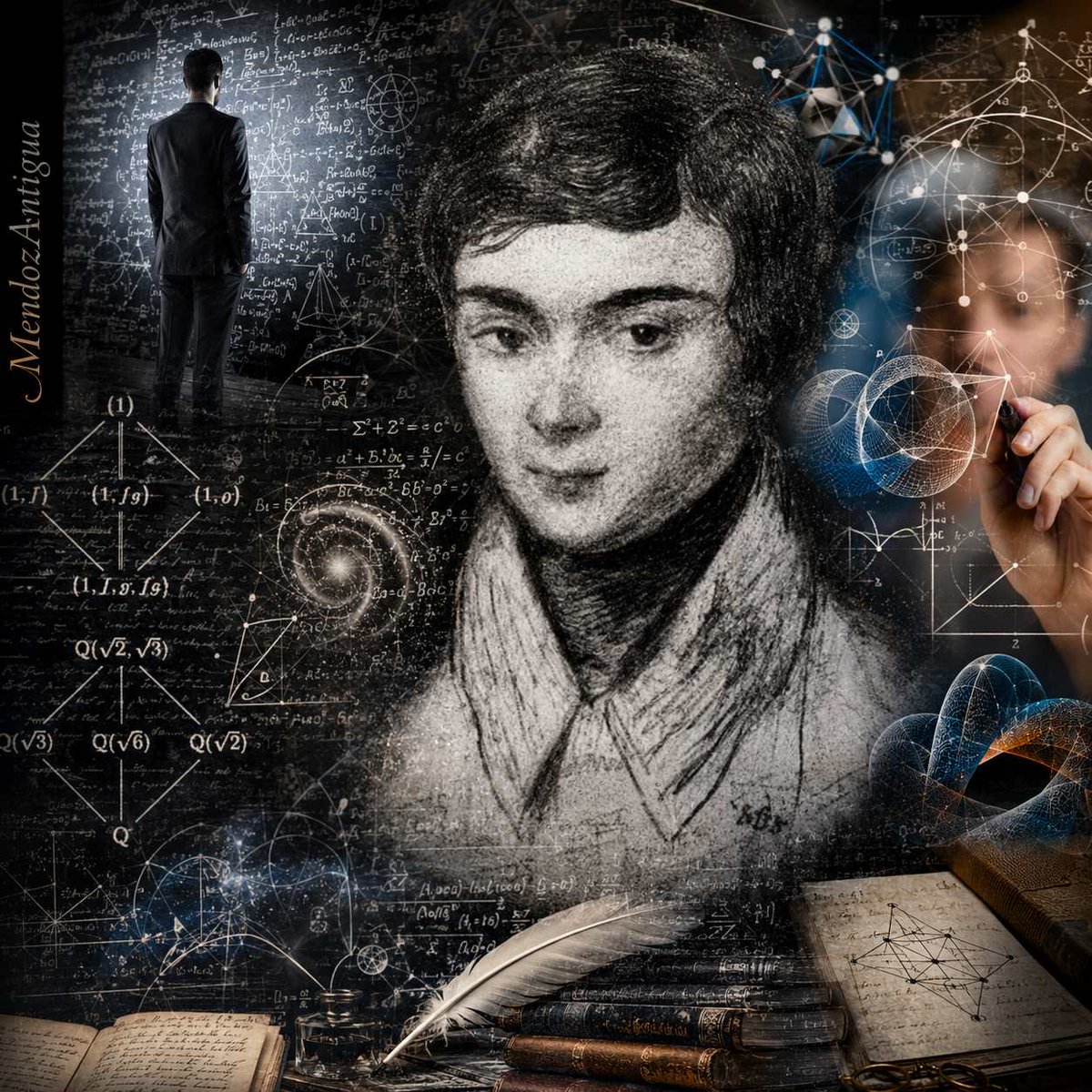
31 de Mayo. Día del Matemático. Évariste Galois el joven genio que cambió las matemáticas antes de morir
mendozantigua.blogspot.com/2…
Cada 31 de mayo se celebra el Día del Matemático, una fecha dedicada a reconocer a quienes estudian, enseñan, investigan y divulgan una de las ciencias más importantes para comprender el mundo. La elección del día recuerda la muerte de Évariste Galois, matemático francés cuya vida fue breve, intensa y trágica, pero cuyo legado resultó inmenso. Galois nació en 1811 y murió el 31 de mayo de 1832, con apenas 20 años, después de ser herido en un duelo. A pesar de su juventud, dejó aportes fundamentales para el álgebra moderna. Sus ideas ayudaron a resolver un antiguo problema: determinar cuándo una ecuación algebraica puede resolverse por radicales, es decir, mediante raíces y operaciones algebraicas. Su obra dio origen a la llamada Teoría de Galois, una rama clave del álgebra abstracta que conecta ecuaciones, simetrías y grupos matemáticos. Lo asombroso es que muchas de sus ideas fueron comprendidas y valoradas recién después de su muerte, convirtiéndolo en símbolo del genio adelantado a su tiempo. Por eso, este día no celebra solo números, fórmulas o cálculos. Celebra la imaginación lógica, el pensamiento profundo y la capacidad humana de encontrar orden donde parece haber caos. Detrás de cada avance matemático hay preguntas, intuición, paciencia y una forma distinta de mirar la realidad. 31 de mayo: Día del Matemático. Un homenaje a quienes convierten los problemas en caminos y las incógnitas en conocimiento. #DiaDelMatematico #Matematicas #EvaristeGalois #Galois #AlgebraAbstracta #TeoriaDeGalois #Ciencia #Educacion #PensamientoLogico #HistoriaDeLaCiencia #MendozAntigua #Mathematics #MathematicianDay #MathHistory #AbstractAlgebra #ScienceHistory #LogicalThinking
1
47

May 18
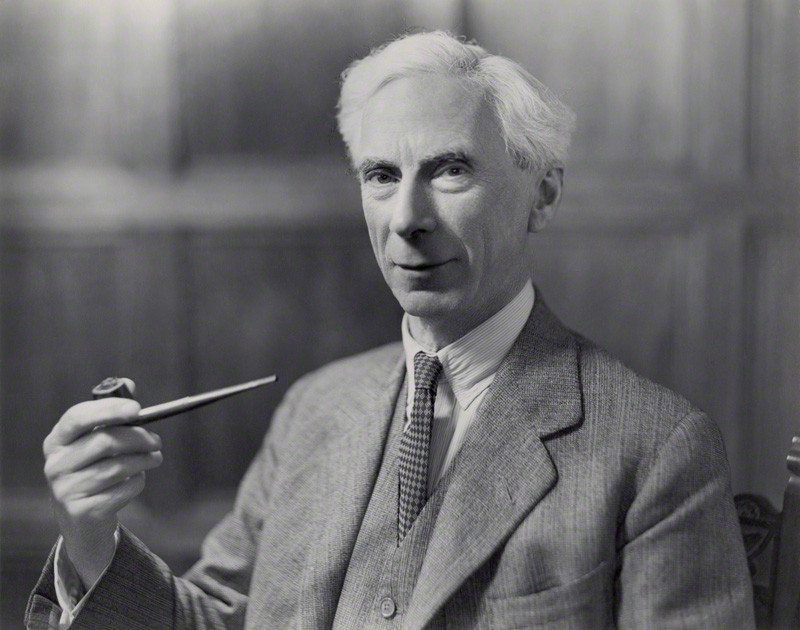
May 18, 1872 — Bertrand Russell was born.
His paradox shook set theory, prompting a revolution in logic that still shapes math today. ∈📚
#OnThisDay #Logic #MathHistory
1
3
9
634
May 16
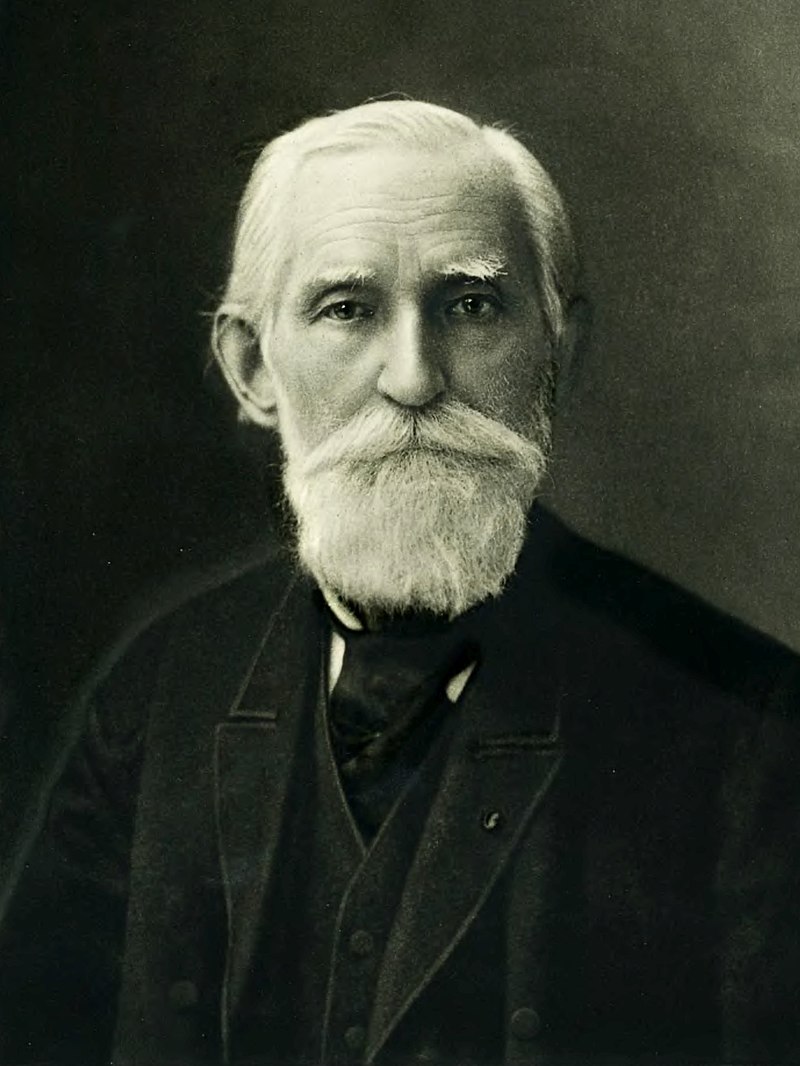
May 16, 1821 — Pafnuty Chebyshev was born.
A key figure in number theory and approximation, his polynomials and inequalities remain vital in math and engineering. 📐📷
#OnThisDay #MathHistory
1
9
691

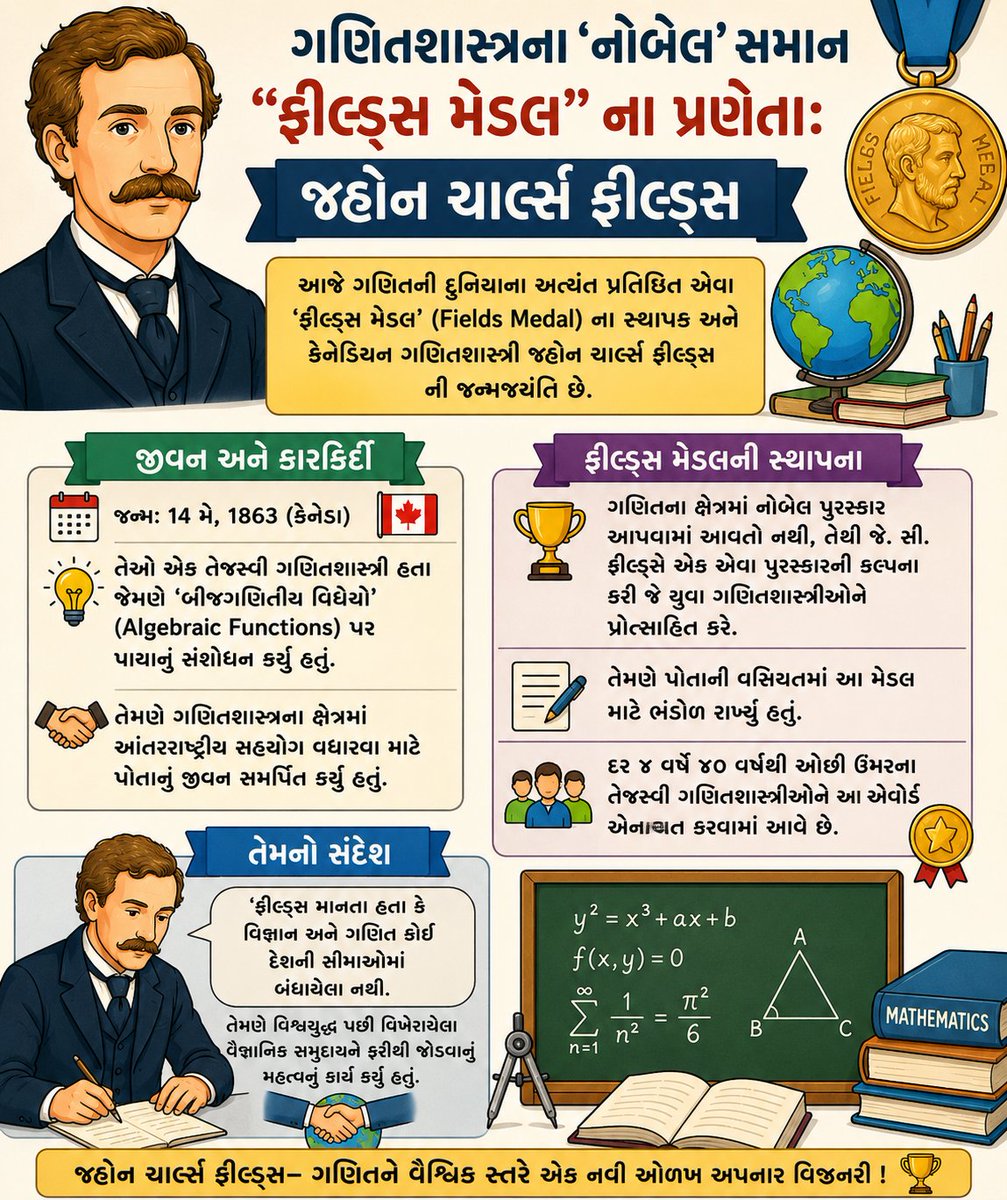
ગણિતશાસ્ત્રના 'નોબેલ' સમાન "ફીલ્ડ્સ મેડલ" ના પ્રણેતા: જ્હોન ચાર્લ્સ ફીલ્ડ્સ 🏅
આજે ગણિતની દુનિયાના અત્યંત પ્રતિષ્ઠિત એવા 'ફીલ્ડ્સ મેડલ' (Fields Medal) ના સ્થાપક અને કેનેડિયન ગણિતશાસ્ત્રી જ્હોન ચાર્લ્સ ફીલ્ડ્સની જન્મજયંતિ છે. તેમણે ગણિતને વૈશ્વિક સ્તરે એક નવી ઓળખ અપાવી! 🌍✨
🎓 જીવન અને કારકિર્દી
જન્મ: ૧૪ મે, ૧૮૬૩ (કેનેડા) 🇨🇦
તેઓ એક તેજસ્વી ગણિતશાસ્ત્રી હતા જેમણે 'બીજગણિતીય વિધેયો' (Algebraic Functions) પર પાયાનું સંશોધન કર્યું હતું.
તેમણે ગણિતશાસ્ત્રના ક્ષેત્રમાં આંતરરાષ્ટ્રીય સહયોગ વધારવા માટે પોતાનું જીવન સમર્પિત કર્યું હતું.
🏅 ફીલ્ડ્સ મેડલની સ્થાપના
ગણિતના ક્ષેત્રમાં નોબેલ પુરસ્કાર આપવામાં આવતો નથી, તેથી જે. સી. ફીલ્ડ્સે એક એવા પુરસ્કારની કલ્પના કરી જે યુવા ગણિતશાસ્ત્રીઓને પ્રોત્સાહિત કરે.
તેમણે પોતાની વસિયતમાં આ મેડલ માટે ભંડોળ રાખ્યું હતું.
દર ૪ વર્ષે ૪૦ વર્ષથી ઓછી ઉંમરના તેજસ્વી ગણિતશાસ્ત્રીઓને આ એવોર્ડ એનાયત કરવામાં આવે છે. 🏆
🚀 તેમનો સંદેશ
ફીલ્ડ્સ માનતા હતા કે વિજ્ઞાન અને ગણિત કોઈ દેશની સીમાઓમાં બંધાયેલા નથી. તેમણે વિશ્વયુદ્ધ પછી વિખેરાયેલા વૈજ્ઞાનિક સમુદાયને ફરીથી જોડવાનું મહત્વનું કાર્ય કર્યું હતું. 🤝🤝
#JohnCharlesFields #FieldsMedal #Mathematics #MathsGenius #OnThisDay #Gujarati #Education #STEM #MathHistory #Canada #NobelOfMaths #Geometry #Algebra #ScientificLegacy #Learning #ગણિત #જ્હોનચાર્લ્સફીલ્ડ્સ #ગુજરાતી @FieldsInstitute @IMU_Mathematics @NobelPrize @UToronto @ScienceMuseum @PMOIndia @CMOGuj @Knowledge_Guj
38
45
271


Apr 26
0️⃣ Zero wasn’t always part of human knowledge.
Around 300 BCE in ancient #Babylon, a placeholder symbol appeared to mark empty spaces in numbers but it wasn’t yet a true number.
The real breakthrough came centuries later in 🇮🇳 India, where mathematicians like #Brahmagupta (7th century CE) defined zero as a number with its own rules.
This idea traveled through the #Islamic world and reached Europe thanks to #Fibonacci, transforming mathematics forever.
Without zero, modern science, computing, and finance wouldn’t exist.
A simple symbol that changed everything. #Zero #MathHistory #AncientScience #Innovation #STEM #Numbers #DidYouKnow #Mathematics #History #Science
8
169
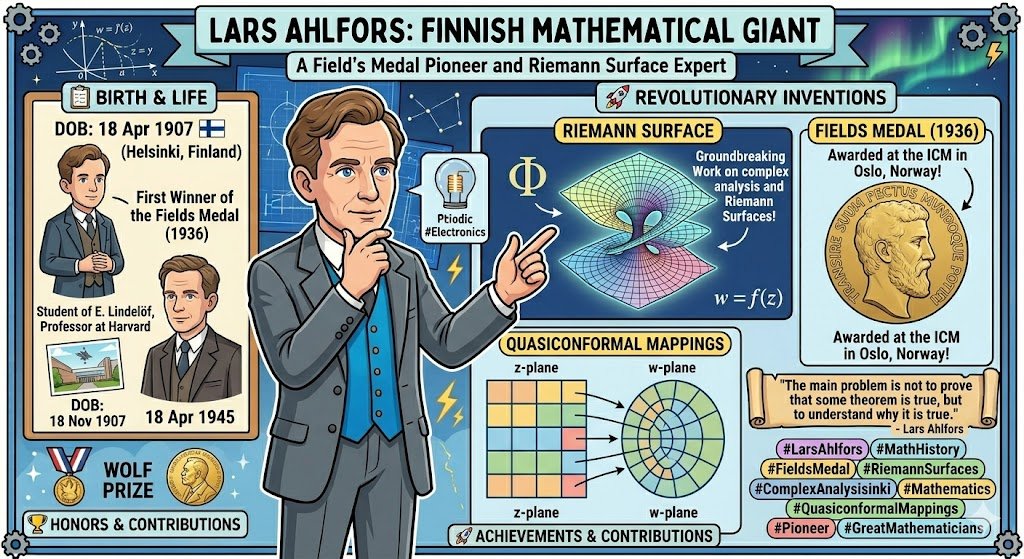
🎉 Celebrating the brilliance of Lars Ahlfors (Born: April 18, 1907 – Died: October 11, 1996)
A pioneer in complex analysis, Ahlfors made mathematics more powerful and elegant 🌍✨
🏅 One of the **first Fields Medalists (1936)** — the highest honor in mathematics!
His work continues to shape modern science, engineering, and technology 📊🔬
Let’s honor a mind that transformed abstract math into real-world impact 💡
#LarsAhlfors #Mathematics #FieldsMedal #OnThisDay #MathHistory #STEM #Science #Innovation #ComplexAnalysis #Maths #Education #Scientists #Genius #April18
29
36
186

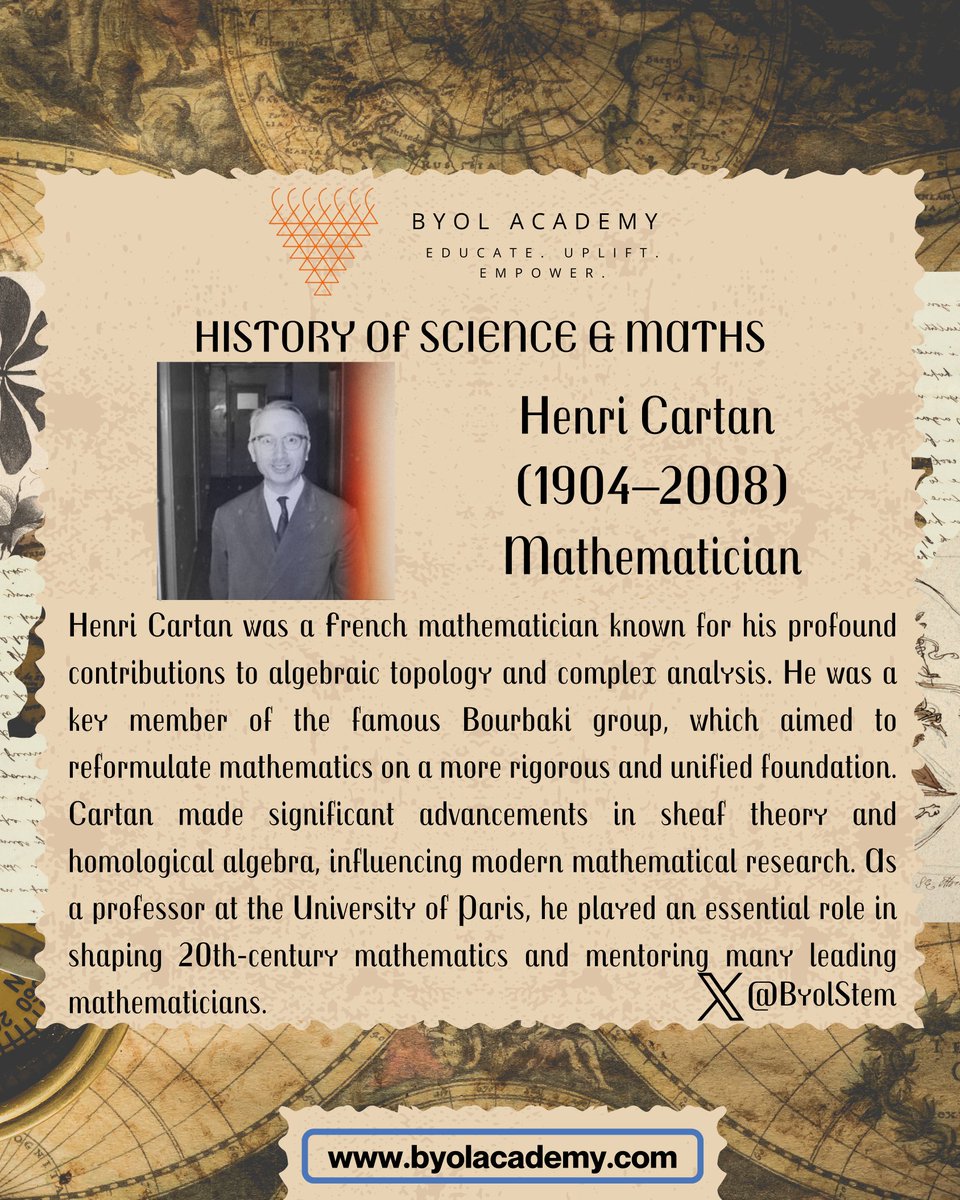
Henri Cartan, a pioneer of modern mathematics. His work in algebraic topology and complex analysis, along with his role in the Bourbaki group, helped shape the structure of modern mathematical thinking.
#HenriCartan #Mathematics #MathHistory #STEM #EducationalContent #LearnMath #KnowledgePost #DailyLearning
4
42

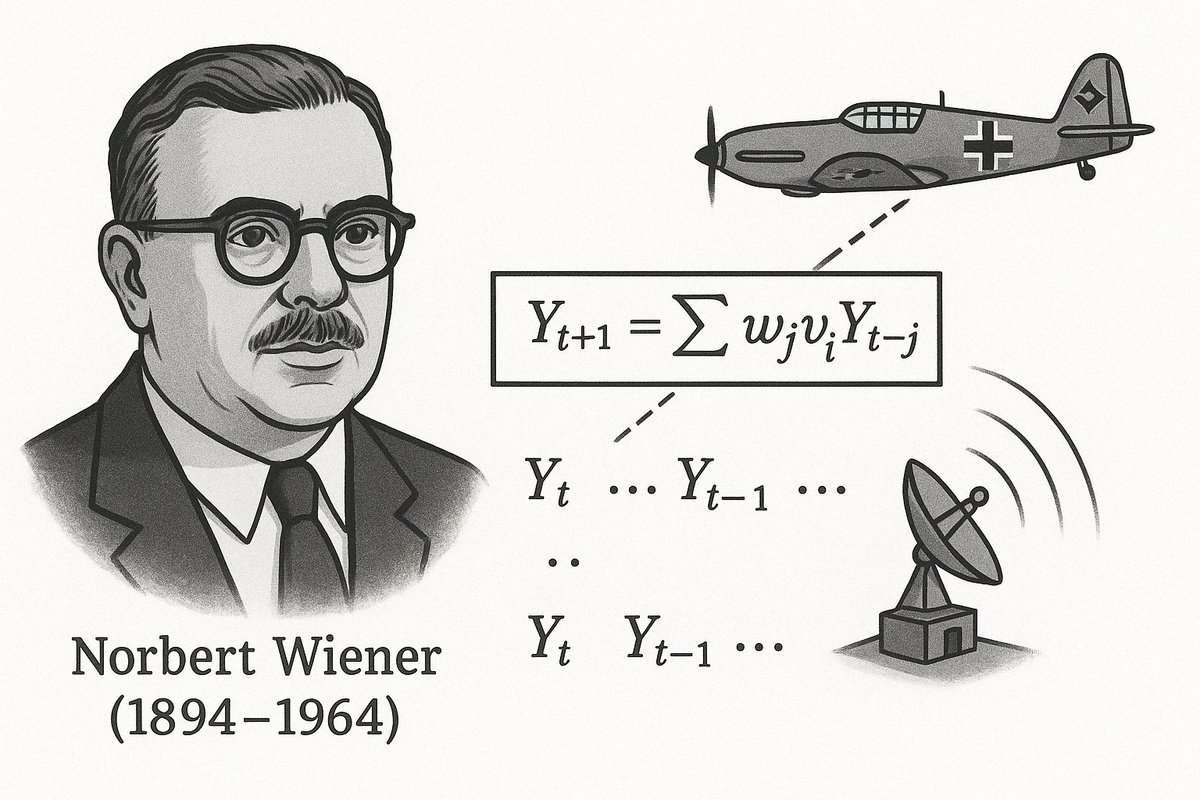
🎯 Tracking enemy aircraft with math? Enter the godfather of cybernetics Norbert Wiener.
During WWII, MIT mathematician Norbert Wiener (1894–1964) was tasked with a critical challenge: predict the future position of German bomber aircraft using only past radar observations.
📡 The result?
A groundbreaking method of signal filtering—now called the Wiener Filter.
His 1942 solution (declassified in 1949) used advanced frequency-domain math to develop the optimal way to estimate future values of a time series.
In simple terms, he figured out how to weigh past data to make the best possible prediction.
This work not only helped during the war—it laid the foundation for modern signal processing, forecasting, and control systems.
My book 'Mastering Modern Time Series Forecasting : A Comprehensive Guide to Statistical, Machine Learning, and Deep Learning Models in Python' ->
valeman.gumroad.com/l/Master…
#DataScience #SignalProcessing #TimeSeries #NorbertWiener #WWII #Forecasting #MathHistory #AI
5
49
356
18,895
Why is American arithmetic so messy?
Look at the classic carry marks American schools teach kids:
1 1
8 6 7
3 4 5
-------
1 2 1 2
Those tiny floating 1’s everywhere make the page look cluttered.
I’ve shown the cleaner dot method before…
…but what if I told you that in pre-revolutionary Russia, students didn’t even need dots?
They built such strong place-value skills that they could comfortably add from right to left OR left to right with minimal messy notation.
Fluency over fuss.
#MathHistory #Arithmetic
2
2
20
7,248

Apr 2
EVERY TIME YOU SAY “ALGORITHM” YOU’RE SAYING HIS NAME! 📐
Imagine a world without algebra, without the numbers 0-9 as we know them, and without a single line of computer code.
That’s the world we’d be living in if not for Muhammad ibn Musa al-Khwarizmi — the 9th-century Persian genius who worked at Baghdad’s House of Wisdom.
He gave us:
• The systematic foundations of algebra (from his book Al-Jabr — “completion and balancing”)
• The concept of algorithms — the word itself comes from the Latinized version of his name: Algoritmi
While Europe was still finding its way through the early Middle Ages, al-Khwarizmi was solving equations, introducing Hindu-Arabic numerals to the West, and laying the mathematical groundwork for everything from your smartphone apps to modern AI.
Next time your feed’s algorithm shows you something interesting… thank the original Al-Khwarizmi.
#AlKhwarizmi #FatherOfAlgebra #Algorithm #MathHistory #IslamicGoldenAge #HiddenHeroes
10
89
137
3,186

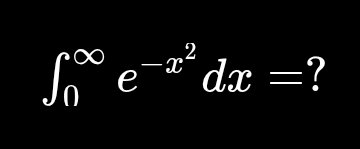
This integral reshaped science forever 🌍
Studied extensively by Carl Friedrich Gauss, this integral became the foundation of the normal distribution 📊
From astronomy errors in the 19th century to modern AI and data science — this single result connects everything 🔗
Gauss used it to model real-world uncertainty like no one before.
#Gauss #GaussianIntegral #MathHistory #Statistics #Integration #Calculus #DataScience #AI #STEM #MathLovers #PureMath #Infinity #BrainTeaser
2
68
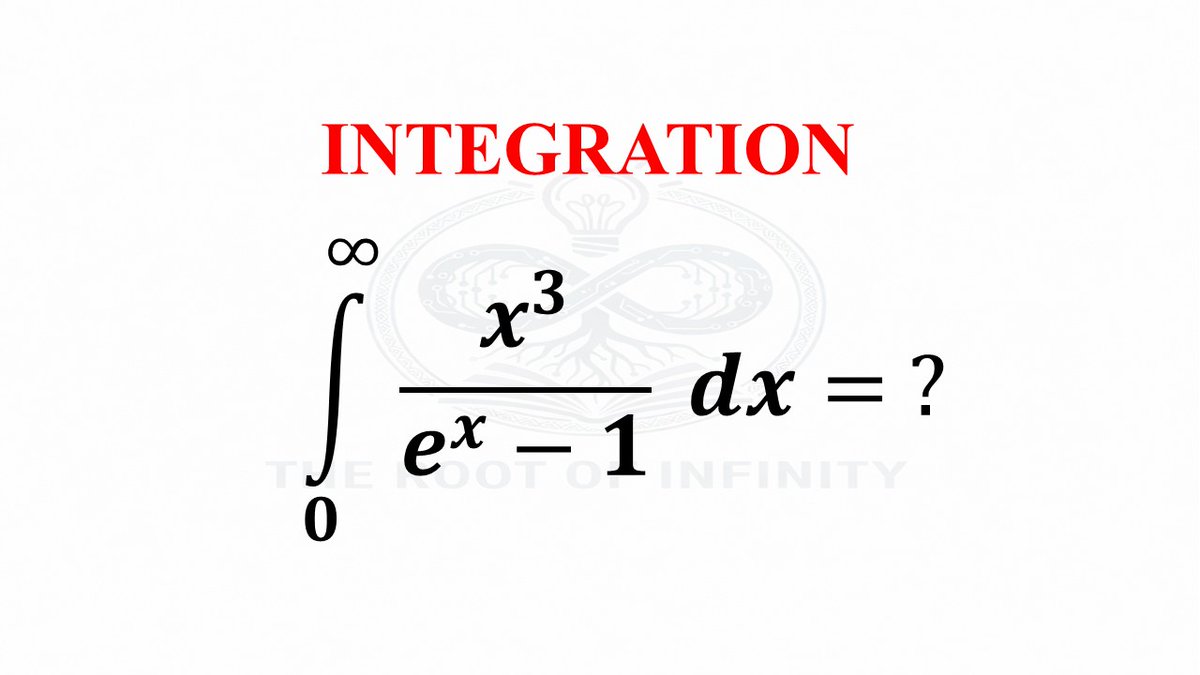
A problem that stunned Europe 😮
This integral connects to the famous Basel problem, solved by Leonhard Euler in 1735 🔥
At the time, no one believed infinite sums and integrals could reveal π so precisely…
Euler proved them wrong and changed mathematics forever
#BaselProblem #Euler #MathHistory #Integration #Calculus #AdvancedMath #PureMath #Mathematics #STEM #MathChallenge #Infinity #BrainTeaser
7
518

Mar 16
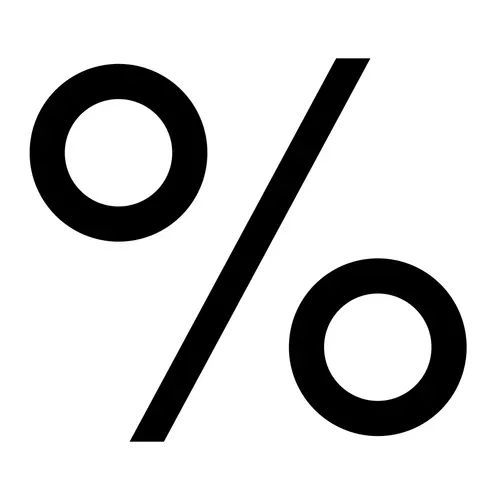
Wow fact: The % symbol evolved from 'per centum' (Latin for 'by the hundred') in medieval Italy. Romans taxed sales at 1/100—early 'sales tax' vibes! Augustus would approve modern discounts.
History of math is wild.
#MathHistory #Percentages #STEMFacts
2
13

Mar 14
Happy Pi Day!
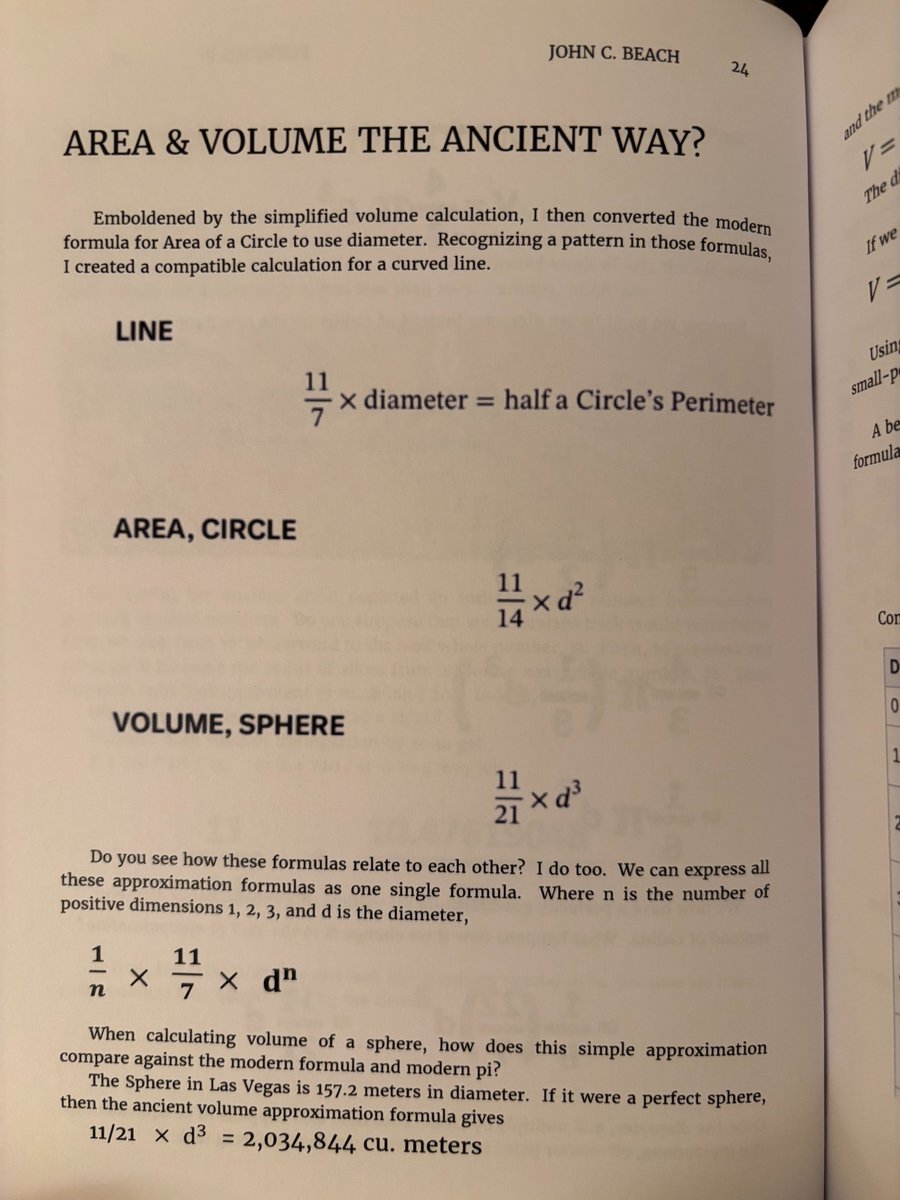
Over three thousand years ago, an artist chiseled a useful ratio into stone so that it would not be forgotten. 11/7.
It was forgotten...until I rediscovered it in 2020. While studying Egyptian art from 1295 BC, I noticed how the artist called attention to that 11/7 in a geometric design.
It suggests that the ancient Egyptians knew how to calculate the volume of a sphere using 11/7.
In my book, Egyptian Pi, I derived circle/sphere formulas using 11/7 ratios.
But wait, you might think, what about π? These calculations don't even use π? Am I saying we need a new celebration on November 7?
Another math day would be fun, but in my book, I show how the 11/7 ratio relates to 22/7 pi.
What about accuracy?
For volume, the approximation is off by just 0.04% from today's formula. Take the iconic Las Vegas Sphere (157.2 m diameter): that 0.04% error? The ancient calculation would have generated a volume of 2,034,844 cubic meters, which is 819 cubic meters more than our accurate modern calculation. Working backwards from that overshoot, the modern calculation would need a larger diameter of 157.2211 meters to get that volume. A difference of 2.2 cm in diameter.
If you were sitting at the edge of The Sphere, the approximation would have given you another 1 cm of elbow room. Less than half an inch of difference!
The ancient Egyptians knew math!
#PiDay #AncientEgypt #MathHistory #LasVegasSphere @EgyptianPi #EgyptianPi
3
3
14
2,904

Mar 14
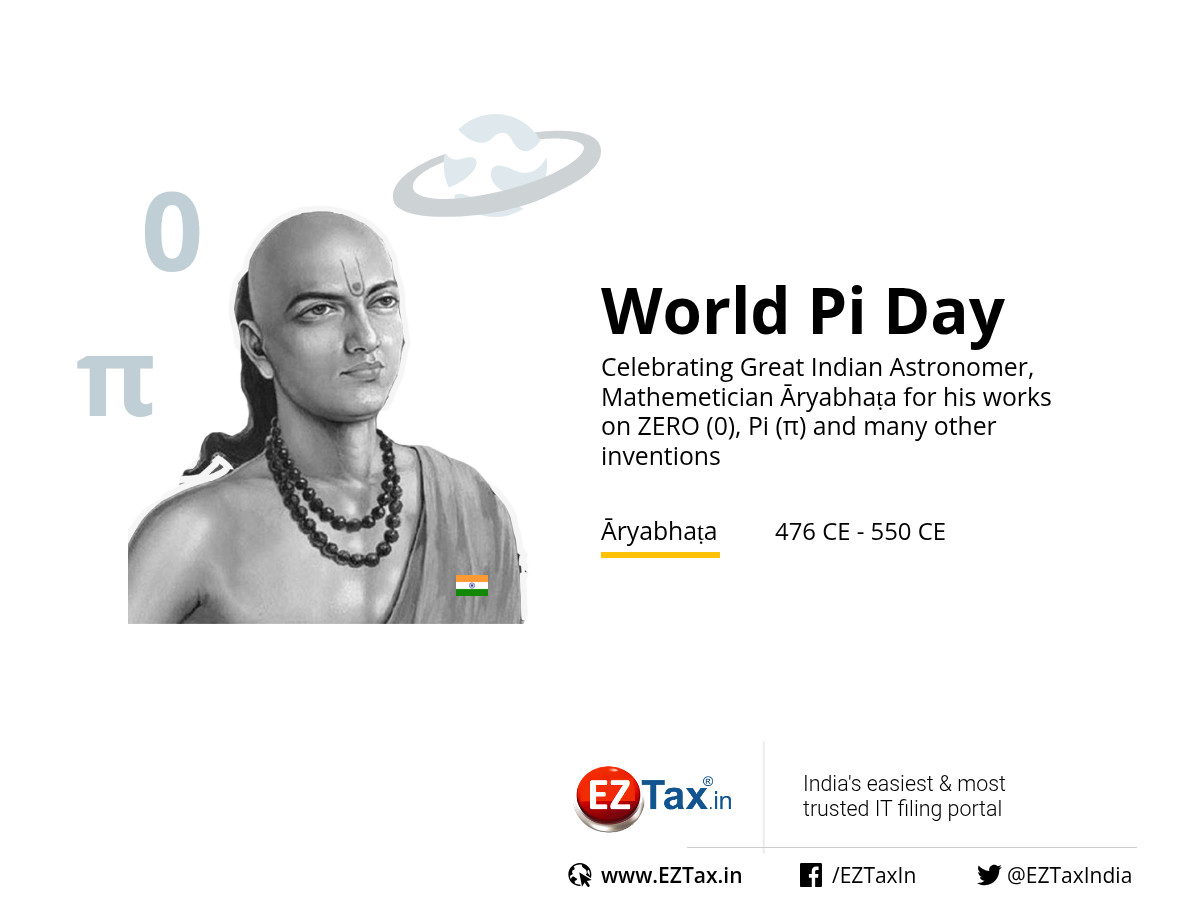
🔢 Honoring the great Indian mathematician and astronomer Aryabhata 🇮🇳, who gave one of the earliest accurate approximations of π (Pi), on International Pi Day – March 14 🥧.
Celebrating the brilliance that shaped mathematics and astronomy ✨
eztax.in
#EZTax #Aryabhata #PiDay #MathHistory
8
11
103