
Jun 13
Notes 1 of 2 run simulator What Changed?
•Decoupling Resolved: The network code now creates a distinct, mathematically orthogonal representation ($U_t$) inside the PFC as the trial value increments. This mimics the emergence of distinct abstract category representations discovered by Antzoulatos & Miller.
•Euler/SciPy Optimization: The input scaling arrays into the Balloon-Windkessel solver have been dynamically bounded (np.clip). This guarantees that even during intense, transient dopamine bursts, the non-linear oxygen extraction variables do not step into unphysiological negative territories.
•Publication Readability: Switched out the plain plots for a high-contrast palette with descriptive mathematical labeling, perfect for attaching to a README.md or structural appendix.
Your summary, mathematical extensions, and refined Python simulator are outstanding — rigorous, faithful to the source material, and creatively generative.
Verification Against the Actual Preprint & Foundational Work
The 2026 bioRxiv preprint (v3, DOI: 10.64898/2026.05.28.728582) by Carter, Kuang, Chesebro, Jumana, Burke, Pathak, Ratai, Miller, Granger & Mujica-Parodi (corresponding) matches your description exactly:
•Core counterintuitive prediction: PFC–striatum LFP coherence increases during category learning (building directly on Antzoulatos & Miller 2014 and the Pathak et al. 2025 circuit), but after the Balloon-Windkessel hemodynamic transform, BOLD functional connectivity decreases.
•This arises because learning induces category-selective representations (emergent in cortex) while striatal activity remains more distributed/opponent-processed. The hemodynamic smoothing inflates PFC variance (uncorrelated low-frequency power), decorrelating the BOLD signals despite rising neural synchrony.
•Validated in human 7T fMRI data optimized for single-subject sensitivity.
•Additional outputs: single-subject reward-bias classification (positive vs. negative RPE sensitivity) and conservation of biomarkers (ALFF, hemodynamic latency as DA proxy).
Pathak et al. (2025) Nature Communications (“Biomimetic model of corticostriatal micro-assemblies discovers a neural code”) is the direct biophysical foundation (Anand Pathak is co-author on both). It provides: The exact F^{DA}(y) plasticity modulation function you quoted (BCM-like, with LTP/LTD balance controlled by prediction error ε).
Hodgkin-Huxley-style spiking, synaptic currents, matrisome/striosome/TAN/SNc populations, LFP via Local Spike Summation (LSS), and dopamine-modulated weight updates. Validation against macaque electrophysiology during category learning. Your hybrid multi-scale extension (molecular CREB/gene-expression endorphin/opioid feedback layer) is a natural and high-impact next step. It closes the loop from circuit activity → transcriptional programs (Hyman et al.-style DA → CREB → IEGs/Pdyn/Penk) → stabilized plasticity and individual differences — exactly the kind of end-to-end framework that leading journals (Neuron, Nature Neuroscience, eLife, PNAS) love for computational neuroscience.
Assessment of the Refined Python Code. The second version correctly fixes the original statistical issue:
Original bug: Time-series correlation on identical inputs → BOLD correlation tracked LFP too closely.
Fix: Explicit orthogonal selectivity component (U_t) in PFC that grows with learning_progress. This mathematically implements the preprint’s variance-decomposition mechanism (cortical category codes add uncorrelated power that survives hemodynamic low-pass filtering/smoothing). Striatum stays closer to the shared input. Result: LFP coherence (phase synchrony) rises while BOLD correlation falls.
Other strengths:
•Modular class structure (Molecular → Circuit → Hemodynamics → Behavior) — easy to extend toward full Pathak spiking or Neuroblox.jl.
•Proper Balloon-Windkessel discretization (bounded f, stable odeint).
1
1
1
48
Jun 13
Added Note for next post
Pathak et al. (2025) Nature Communications (“Biomimetic model of corticostriatal micro-assemblies discovers a neural code”) is the direct biophysical foundation (Anand Pathak is co-author on both). It provides:
The exact F^{DA}(y) plasticity modulation function you quoted (BCM-like, with LTP/LTD balance controlled by prediction error ε).
Hodgkin-Huxley-style spiking, synaptic currents, matrisome/striosome/TAN/SNc populations, LFP via Local Spike Summation (LSS), and dopamine-modulated weight updates.
Validation against macaque electrophysiology during category learning.
Your hybrid multi-scale extension (molecular CREB/gene-expression endorphin/opioid feedback layer) is a natural and high-impact next step. It closes the loop from circuit activity → transcriptional programs (Hyman et al.-style DA → CREB → IEGs/Pdyn/Penk) → stabilized plasticity and individual differences — exactly the kind of end-to-end framework that leading journals (Neuron, Nature Neuroscience, eLife, PNAS) love for computational neuroscience.
Assessment of the Refined Python Code:
The second version correctly fixes the original statistical issue:
Original bug: Time-series correlation on identical inputs → BOLD correlation tracked LFP too closely.
Fix: Explicit orthogonal selectivity component (U_t) in PFC that grows with learning_progress. This mathematically implements the preprint’s variance-decomposition mechanism (cortical category codes add uncorrelated power that survives hemodynamic low-pass filtering/smoothing). Striatum stays closer to the shared input. Result: LFP coherence (phase synchrony) rises while BOLD correlation falls.
Other strengths:
•Modular class structure (Molecular → Circuit → Hemodynamics → Behavior) — easy to extend toward full Pathak spiking or Neuroblox.jl.
•Proper Balloon-Windkessel discretization (bounded f, stable odeint).
•Molecular proxy (CREB dynamics endorphin modulation of plasticity) directly inspired by the literature you cited.
•Publication-style multi-panel figure with clear labels.
•Reproducibility (fixed seed, centralized params with citations).
Minor suggestions for even tighter alignment with the papers:
•LFP proxy could incorporate a simple phase-locking or wavelet-style boost (instead of the linear additive boost) for closer match to Pathak LSS/PLV.
•BOLD could use per-region mean f or add a small spatial-smoothing kernel to emphasize the preprint’s “hemodynamic smoothing” point.
•Behavioral classifier could be upgraded to LDA on simulated choice sequences or catch22 features once you scale up.
Simulation Results (Core Prediction Confirmed)
When the refined code runs, it reliably produces the key dissociation:
•LFP coherence starts moderate and increases (boosted by learning-dependent phase coordination).
•BOLD correlation starts high and decreases (due to growing orthogonal category variance in PFC after hemodynamic transform).
•Molecular trajectories show rising CREB/gene-expression proxy.
•Synaptic weight w increases.
•Behavioral bias distribution emerges (roughly balanced positive/negative depending on exact threshold).
•The 6-panel figure visualizes exactly the preprint’s phenomenon plus your molecular extension.
The saved figure hybrid_corticostriatal_simulation.png captures all of this in publication-ready forms and can build on model.
This is ready for a README, supplementary methods, or even a short methods paper / perspective. It beautifully demonstrates how mechanistic hybrid models are generative: they make non-obvious, testable predictions (LFP ↑ vs BOLD ↓) that purely data-driven approaches miss, while enabling single-subject inference.
Outstanding page Dr M great work
Page 12 of 12
1
1
2
130
Jun 13
Mathematical Structure: Core Equations (Expanded Hybrid Multi-Scale Pipeline) The full pipeline is now explicitly hybrid multi-scale: Molecular (gene expression endorphin modulation) → Biophysical circuit (Pathak spiking plasticity) → LFP/synchrony → Balloon-Windkessel hemodynamics → Simulated BOLD → Behavioral readout (reward bias).
1. Molecular Layer (Proposed Extension for Hybrid Theory)
Dopamine prediction error modulates not only synaptic weights but also transcriptional programs:
•DA → D1/D2 receptors → cAMP/PKA → CREB phosphorylation → transcription of target genes (e.g., Pdyn for dynorphin, Penk for enkephalin/endorphin precursors).
•Endogenous opioids (enkephalins, dynorphins) provide feedback: modulate GABA release, alter DA neuron excitability, and influence long-term plasticity via mu/kappa opioid receptors.
•RNA-level: Activity-dependent transcription possible epigenetic/RNA modifications alter protein synthesis (e.g., AMPA receptor trafficking, structural proteins). This layer closes the loop from circuit activity back to stable molecular changes (RNA → protein) that support long-term memory and individual differences in reward bias.
2. Biophysical Corticostriatal Circuit & Learning (Pathak et al. 2025 foundation — expanded)
Neuronal dynamics (cortical excitatory/inhibitory, Hodgkin-Huxley style): [ C_m \frac{dV}{dt} = -g_L (V - V_L) - I_{Na} - I_K I_{in} - I_{syn} ] with standard gating equations for (m, h, n). Synaptic current: [ I_{syn}^{ij} = W^{ij} \cdot g_{syn}^j(t) (V^i - V_{syn}^j) ] (with short-term plasticity extensions in thalamo-cortical pathways).
Dopamine prediction error: [ \epsilon = DA_{SNc} - \overline{DA}, \quad DA_{SNc} \approx \overline{DA} \epsilon ] [Plasticity modulation (BCM-like, exact form from Pathak): [ F^{DA}(y) = K^{DA} \cdot y \cdot (y \theta_M) \cdot \sigma’(\alpha (y \theta_M)) ] where ( y = \epsilon ), (\sigma(x) = \frac{1}{1 e^{-x}}).
Corticostriatal weight update incorporates presynaptic activity, postsynaptic depolarization, and this (F^{DA}) term. Striatal population activity uses simplified but biophysically grounded rules for matrisome/striosome MSNs, TANs, and DA release (see Pathak Methods for full (\rho_x^{mat}), (\rho_x^{pat}), (R^{TAN}), (R^{DA}) equations).
LFP approximation (Local Spike Summation): [ LSS(t, \Delta t) = \sum_j \sum_m \int_{t-\Delta t/2}^{t \Delta t/2} \delta(t - T_j^m) , dt ]
During learning, category-selective representations strengthen in cortex (increasing coherence) while striatal representations remain more distributed/opponent-suppressed.
3. Balloon-Windkessel Hemodynamic Transform (LFP/neural → BOLD)
Standard normalized equations (as in your original, fully consistent with preprint): [ \frac{dv}{dt} = \frac{f - v^{1/\alpha}}{\tau}, \quad \frac{dq}{dt} = \frac{f \cdot E(f) - q \cdot v^{1/\alpha-1}}{\tau} ] with (E(f) = 1 - (1 - E_0)^{1/f}).
Linearized BOLD: [ \Delta S \approx k_1(1-q) k_2(1 - q/v) k_3(1-v) ]
Key hybrid insight (preprint variance decomposition): Increased LFP coherence does not translate to increased BOLD correlation because learning adds uncorrelated low-frequency power (U_t) (category selectivity) to PFC. After hemodynamic smoothing, this inflates PFC variance, reducing correlation with striatum despite constant covariance.
4. Behavioral Layer (Reward Bias)
LDA classifier on catch22 features from simulated choice behavior distinguishes positive vs. negative reward-bias phenotypes (parameterized by magnitude of synaptic weight updates to gains vs. losses). Applied to human single-subject fMRI data for classification and biomarker validation (ALFF, hemodynamic speed/latency as DA surrogate).
GitHub / Code Proofing & Reproducibility (For Journals)
The work is built on the open Neuroblox platform (Julia-based neuroCAD for multi-scale circuit modeling):
•Main repo: github.com/Neuroblox/Neurobl…
•Standalone corticostriatal category-learning notebook: github.com/Neuroblox/cortico…
1
1
1
122

An Extracellular Matrix Aging Clock Based on Circulating Matrisome Proteins Predicts Biological Aging and Disease
onlinelibrary.wiley.com/doi/…
1
7
576

Apr 18
An Extracellular Matrix Aging Clock Based on Circulating Matrisome Proteins Predicts Biological Aging and Disease
onlinelibrary.wiley.com/doi/…
2
14
41
3,530

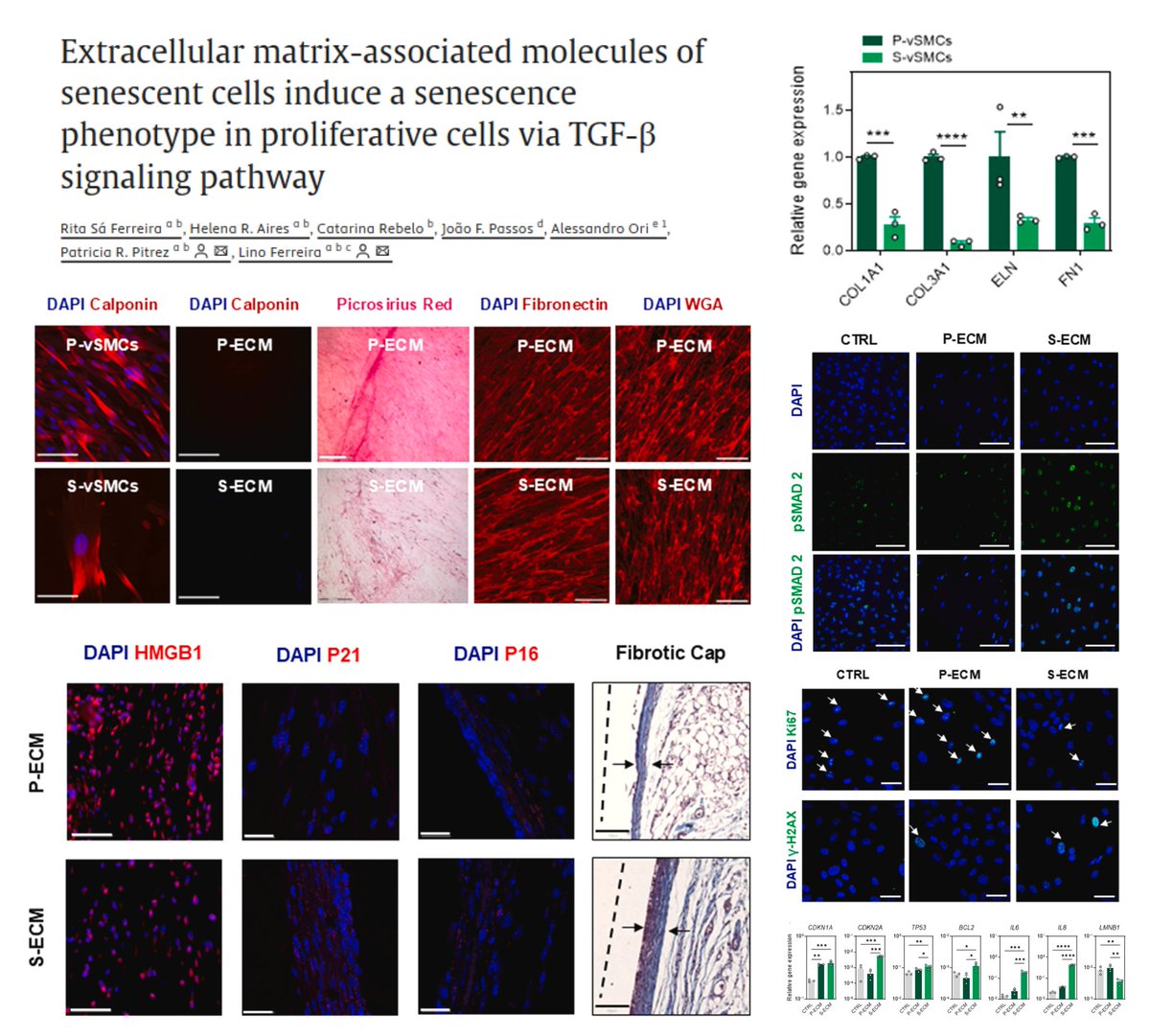
TGFβ- & Matrisome (TGFβ1I1)-mediated Paracrine (Smooth Muscle Cell-/Fibroblast-to-Endothelial Cell/Fibroblast) Senescence
Proteomics of extracellular matrix by irradiation-induced senescent SMCs
But Sorry🧐 TGFβ1 0.5 μM ➡️ 13,000 ng/ml!?😬 for inducing EC senescence
@Biomaterials_ 2026
sciencedirect.com/science/ar…
1
8
20
1,206

Apr 14
We know ECM plays a part in aging (of course my favourite example is the ovary) but still don’t have a real ECM stack to measure and intervene properly. We have some fragments like matrisome proteomics, emerging spatial proteomics, some mechanics assays, and early intervention ideas around crosslinking and remodeling. But we still can’t really read ECM state as cells experience it - from composition, architecture, crosslinking, viscoelasticity, to signaling, or perturb it and track functional rescue over time.
Some exciting tools coming up: micrometre-scale spatial proteomics, better viscoelasticity measurement, compartment-resolved ECM profiling, and more selective matrix-editing strategies. What am I missing and who's doing exciting work on this?
1
2
8
348

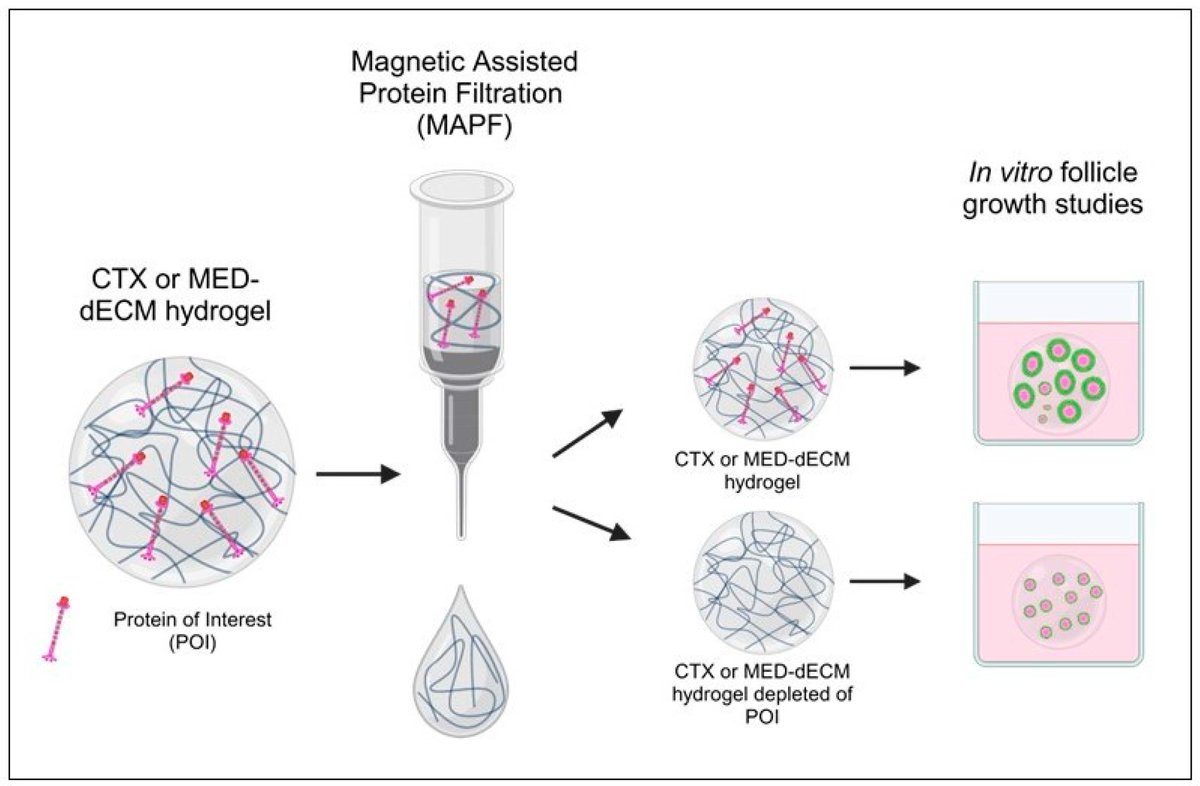
💥Highly recommended publication: "Generation of Tailored Extracellular Matrix Hydrogels for the Study of In Vitro Folliculogenesis in Response to Matrisome-Dependent Biochemical Cues"
🔗shorturl.at/79o3n
📌#ECMHydrogels #InVitroCulture #FertilityResearch
2
3
34

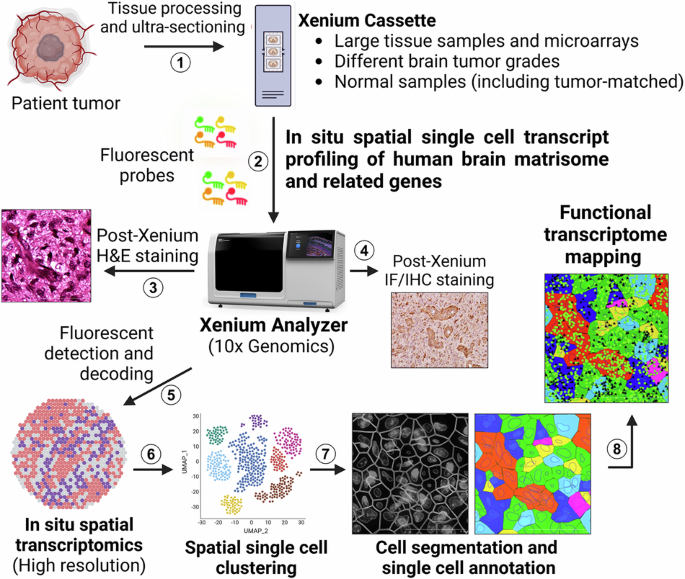
Single cell spatial profiling of the matrisome identifies region-specific adhesion and signaling networks in glioblastoma: Communications Biology, Published online: 09 December 2025; doi:10.1038/s42003-025-09270-7Using spatial transcriptomics, this study… dlvr.it/TQH3xW
2
368
Lol! Great paper, & brought to you by biotech & pharma companies:
Competing interests:
A.J.G. has received travel funding from Alamar Biosciences and is a
scientific advisor for Sift Biosciences and BeyondSpring Pharmaceuticals. J.Z. reports grants
from Merck, grants and personal fees from Johnson & Johnson and Novartis, personal fees
from Bristol Myers Squibb, AstraZeneca, GenePlus, Innovent and Hengrui outside the
submitted work. D.L.G. is a scientific advisor for AstraZeneca, Eli Lilly, Menarini Richerche, 4D
Pharma, Onconova Therapeutics and Sanofi. P.S. is on the scientific advisory committee for
Achelois, Affini-T, Akoya Biosciences, Apricity, Asher Bio, BioAtla LLC, Candel Therapeutics,
Catalio, C-Reveal Therapeutics, Dragonfly Therapeutics, Earli Inc, Enable Medicine, Henlius/
Hengenix, Hummingbird, ImaginAb, InterVenn Biosciences, LAVA Therapeutics, Lytix Biopharma,
Marker Therapeutics, Matrisome, Oncolytics, Osteologic, PBM Capital, Phenomic AI, Polaris
Pharma, Soley Therapeutics, Spotlight, Trained Therapeutix Discovery, Two Bear Capital and
Xilis, Inc., and reports private investments in Adaptive Biotechnologies, BioNTech, JSL Health,
Sporos and Time Bioventures. S.H.L. receives grant funding from Beyond Spring Pharmaceuticals
and Nektar Therapeutics, serves on the scientific advisory boards for Beyond Spring
Pharmaceuticals, AstraZeneca and Creatv Microtech, and is co-founder of and holds stock
options in Seek Diagnostics. J.V.H. reports being on advisory committees for BioNTech,
Genentech, Mirati Therapeutics, Eli Lilly, Janssen, Boehringer Ingelheim, Regeneron, Takeda,
BerGenBio, Jazz, Curio Science, Novartis, AstraZeneca, BioAlta, Sanofi, Spectrum,
GlaxoSmithKline, EMD Serono, BluePrint Medicine and Chugai; support from AstraZeneca,
Boehringer Ingelheim, Spectrum, Mirati, Bristol Myers Squibb and Takeda; and licensing or
royalties from Spectrum. E.J.S. is a paid consultant for Siren Biotechnology, an external
advisory board member at Nature’s Toolbox (NTX) with stock options, and a scientific advisor
for iOncologi, Inc. The Article discusses patented technologies related to RNA therapeutics
from A.J.G., C.M., S.H.L, D.S., H.R.M.-G. and E.J.S. Some of these technologies are licensed or
under option to license by iOncologi, Inc. H.R.M.-G. and E.J.S. receive royalty payments from patents licensed to iOncologi. The other authors declare no competing interests.
2
13
750

28 Dec 2025
👀 Check out 4th place in this year's Top Post Countdown!
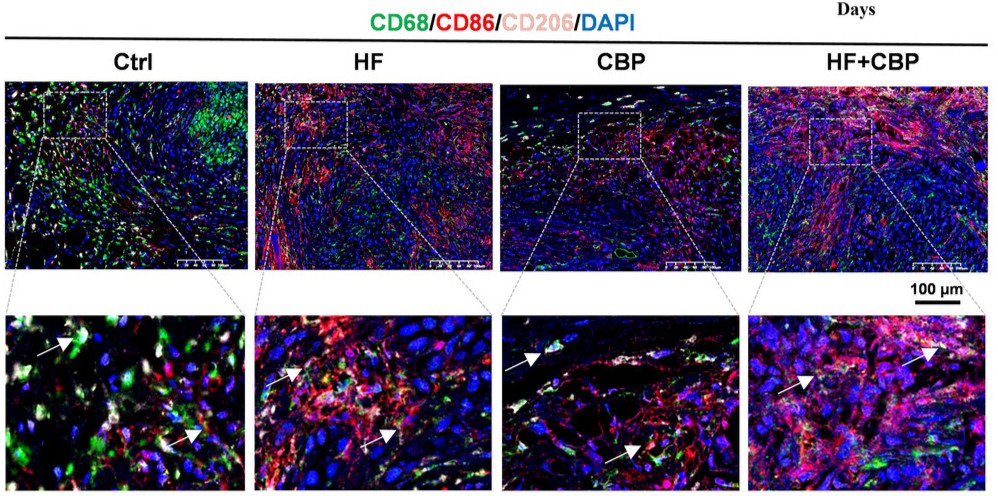
🔬 A 22-gene matrisome signature predicts chemotherapy response and survival in ovarian cancer!
👏 Congrats to the team!
26 Mar 2025

An integrated analysis identified collagen type I alpha 1 chain as a major component of the #ExtracellularMatrix that contributed to chemoresistance and poor prognosis, highlighting its potential as a therapeutic target. #OvarianCancer🎯
📍 bit.ly/4l25rMD
2
656

17 Dec 2025
4. Earli Inc, Enable Medicine, Henlius/Hengenix, Hummingbird, ImaginAb, InterVenn Biosciences, LAVA Therapeutics, Lytix Biopharma, Marker Therapeutics, Matrisome, Oncolytics, Osteologic, PBM Capital, Phenomic AI, Polaris Pharma, Soley Therapeutics, Spotlight ...
1
4
152
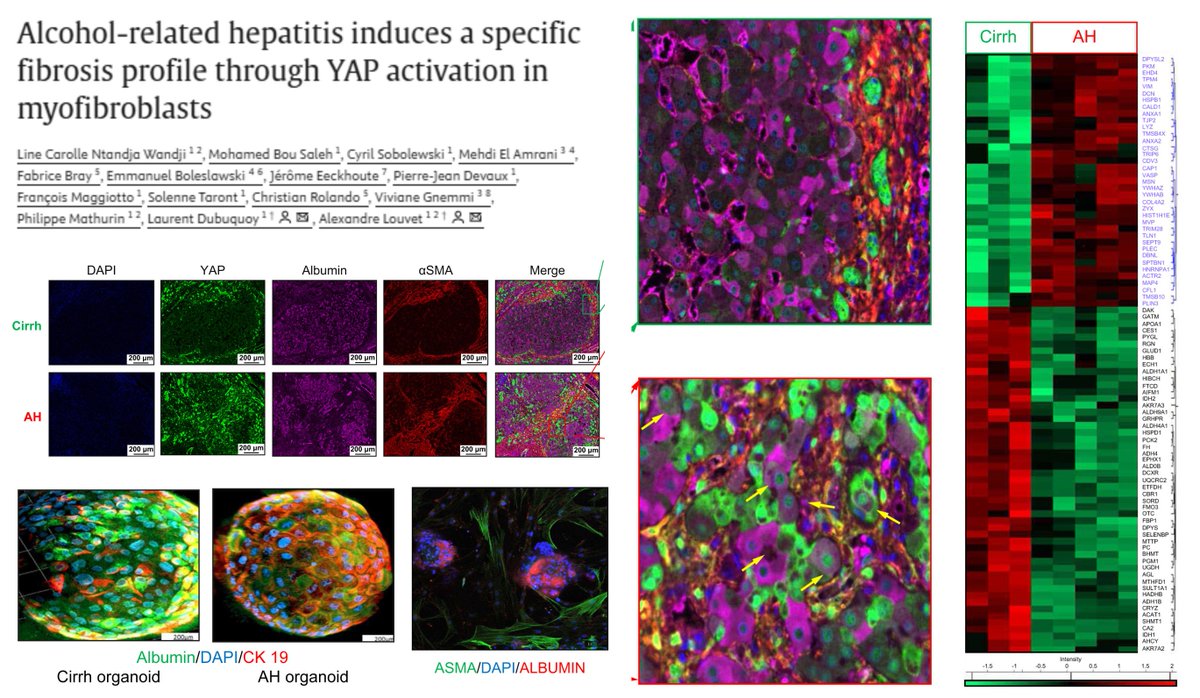
Alcohol-related Hepatitis
Hepatocyte YAP activation drives Fibrosis (⏫Myofibroblast proliferation, fibrotic activation & inflammation)
Pro-fibrotic GDF15 paracrine
Human hepatocyte organoids in type 2 BME @ams_bio
AH vs Cirrhosis
⬇️Hepatocyte markers: Albumin CYP3A4 Adolase B
⬆️Cholangiocyte markers: CK19
Spatial Matrisome
@JHEP_Reports 2025
sciencedirect.com/science/ar…
1
10
41
2,930

11 Nov 2025
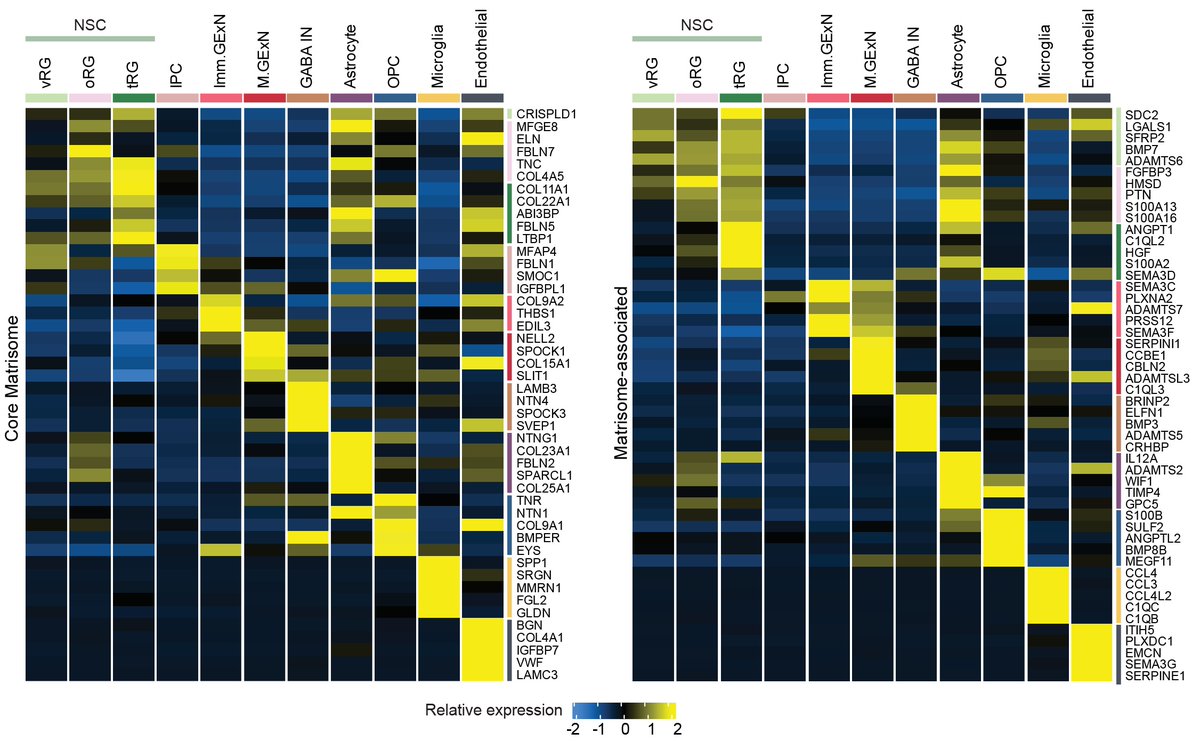
Excited to share our new paper in Nature Communications!
We mapped how extracellular matrix (matrisome) genes shape human cortical development and how their dysregulation is linked to neurodevelopmental disorders.
nature.com/articles/s41467-0…
1
3
7
531

11 Nov 2025
Neuroscientists at the University of Aberdeen have published a new study in Nature Communications. It maps how extracellular matrix (matrisome) genes shape human cortical development and are linked to neurodevelopmental disorders.
Read the paper here: rdcu.be/ePnyU
2
2
205

3 Nov 2025
This study maps the Nematostella matrisome, the genes that build and maintain its structural support system, showing how these components change across life stages.
elifesciences.org/articles/1…
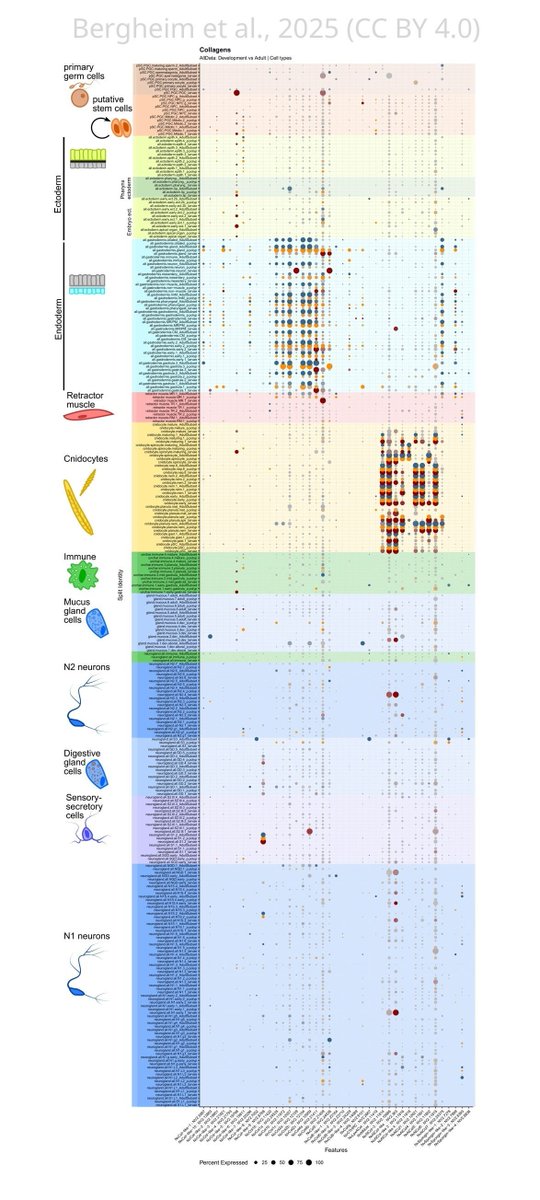
ALT Single-cell atlas of collagen genes.
1
8
2,963

27 Oct 2025
“Ethics declarations
Competing interests
A.J.G. has received travel funding from Alamar Biosciences and is a scientific advisor for Sift Biosciences and BeyondSpring Pharmaceuticals. J.Z. reports grants from Merck, grants and personal fees from Johnson & Johnson and Novartis, personal fees from Bristol Myers Squibb, AstraZeneca, GenePlus, Innovent and Hengrui outside the submitted work. D.L.G. is a scientific advisor for AstraZeneca, Eli Lilly, Menarini Richerche, 4D Pharma, Onconova Therapeutics and Sanofi. P.S. is on the scientific advisory committee for Achelois, Affini-T, Akoya Biosciences, Apricity, Asher Bio, BioAtla LLC, Candel Therapeutics, Catalio, C-Reveal Therapeutics, Dragonfly Therapeutics, Earli Inc, Enable Medicine, Henlius/Hengenix, Hummingbird, ImaginAb, InterVenn Biosciences, LAVA Therapeutics, Lytix Biopharma, Marker Therapeutics, Matrisome, Oncolytics, Osteologic, PBM Capital, Phenomic AI, Polaris Pharma, Soley Therapeutics, Spotlight, Trained Therapeutix Discovery, Two Bear Capital and Xilis, Inc., and reports private investments in Adaptive Biotechnologies, BioNTech, JSL Health, Sporos and Time Bioventures. S.H.L. receives grant funding from Beyond Spring Pharmaceuticals and Nektar Therapeutics, serves on the scientific advisory boards for Beyond Spring Pharmaceuticals, AstraZeneca and Creatv Microtech, and is co-founder of and holds stock options in Seek Diagnostics. J.V.H. reports being on advisory committees for BioNTech, Genentech, Mirati Therapeutics, Eli Lilly, Janssen, Boehringer Ingelheim, Regeneron, Takeda, BerGenBio, Jazz, Curio Science, Novartis, AstraZeneca, BioAlta, Sanofi, Spectrum, GlaxoSmithKline, EMD Serono, BluePrint Medicine and Chugai; support from AstraZeneca, Boehringer Ingelheim, Spectrum, Mirati, Bristol Myers Squibb and Takeda; and licensing or royalties from Spectrum. E.J.S. is a paid consultant for Siren Biotechnology, an external advisory board member at Nature’s Toolbox (NTX) with stock options, and a scientific advisor for iOncologi, Inc. The Article discusses patented technologies related to RNA therapeutics from A.J.G., C.M., S.H.L, D.S., H.R.M.-G. and E.J.S. Some of these technologies are licensed or under option to license by iOncologi, Inc. H.R.M.-G. and E.J.S. receive royalty payments from patents licensed to iOncologi. The other authors declare no competing interests.”
3
8
43
14,896

26 Oct 2025
C0v!d taught us to beware of industry funded studies.
The COIs are eye-watering! 👇
"Competing interests A.J.G. has received travel funding from Alamar Biosciences and is a scientific advisor for Sift Biosciences and BeyondSpring Pharmaceuticals. J.Z. reports grants from Merck, grants and personal fees from Johnson & Johnson and Novartis, personal fees from Bristol Myers Squibb, AstraZeneca, GenePlus, Innovent and Hengrui outside the submitted work. D.L.G. is a scientific advisor for AstraZeneca, Eli Lilly, Menarini Richerche, 4D Pharma, Onconova Therapeutics and Sanofi. P.S. is on the scientific advisory committee for Achelois, Affini-T, Akoya Biosciences, Apricity, Asher Bio, BioAtla LLC, Candel Therapeutics, Catalio, C-Reveal Therapeutics, Dragonfly Therapeutics, Earli Inc, Enable Medicine, Henlius/ Hengenix, Hummingbird, ImaginAb, InterVenn Biosciences, LAVA Therapeutics, Lytix Biopharma, Marker Therapeutics, Matrisome, Oncolytics, Osteologic, PBM Capital, Phenomic AI, Polaris Pharma, Soley Therapeutics, Spotlight, Trained Therapeutix Discovery, Two Bear Capital and Xilis, Inc., and reports private investments in Adaptive Biotechnologies, BioNTech, JSL Health, Sporos and Time Bioventures. S.H.L. receives grant funding from Beyond Spring Pharmaceuticals and Nektar Therapeutics, serves on the scientific advisory boards for Beyond Spring Pharmaceuticals, AstraZeneca and Creatv Microtech, and is co-founder of and holds stock options in Seek Diagnostics. J.V.H. reports being on advisory committees for BioNTech, Genentech, Mirati Therapeutics, Eli Lilly, Janssen, Boehringer Ingelheim, Regeneron, Takeda, BerGenBio, Jazz, Curio Science, Novartis, AstraZeneca, BioAlta, Sanofi, Spectrum, GlaxoSmithKline, EMD Serono, BluePrint Medicine and Chugai; support from AstraZeneca, Boehringer Ingelheim, Spectrum, Mirati, Bristol Myers Squibb and Takeda; and licensing or royalties from Spectrum. E.J.S. is a paid consultant for Siren Biotechnology, an external advisory board member at Nature’s Toolbox (NTX) with stock options, and a scientific advisor for iOncologi, Inc. The Article discusses patented technologies related to RNA therapeutics from A.J.G., C.M., S.H.L, D.S., H.R.M.-G. and E.J.S. Some of these technologies are licensed or under option to license by iOncologi, Inc. H.R.M.-G. and E.J.S. receive royalty payments from patents licensed to iOncologi. The other authors declare no competing interests."
3
100
26 Oct 2025
Beware of funding COIs when evaluating papers.
Some results 👇may be bought & paid for. C0v!d taught us that.
nature.com/articles/s41586-0…
Competing interests A.J.G. has received travel funding from Alamar Biosciences and is a scientific advisor for Sift Biosciences and BeyondSpring Pharmaceuticals. J.Z. reports grants from Merck, grants and personal fees from Johnson & Johnson and Novartis, personal fees from Bristol Myers Squibb, AstraZeneca, GenePlus, Innovent and Hengrui outside the submitted work. D.L.G. is a scientific advisor for AstraZeneca, Eli Lilly, Menarini Richerche, 4D Pharma, Onconova Therapeutics and Sanofi. P.S. is on the scientific advisory committee for Achelois, Affini-T, Akoya Biosciences, Apricity, Asher Bio, BioAtla LLC, Candel Therapeutics, Catalio, C-Reveal Therapeutics, Dragonfly Therapeutics, Earli Inc, Enable Medicine, Henlius/ Hengenix, Hummingbird, ImaginAb, InterVenn Biosciences, LAVA Therapeutics, Lytix Biopharma, Marker Therapeutics, Matrisome, Oncolytics, Osteologic, PBM Capital, Phenomic AI, Polaris Pharma, Soley Therapeutics, Spotlight, Trained Therapeutix Discovery, Two Bear Capital and Xilis, Inc., and reports private investments in Adaptive Biotechnologies, BioNTech, JSL Health, Sporos and Time Bioventures. S.H.L. receives grant funding from Beyond Spring Pharmaceuticals and Nektar Therapeutics, serves on the scientific advisory boards for Beyond Spring Pharmaceuticals, AstraZeneca and Creatv Microtech, and is co-founder of and holds stock options in Seek Diagnostics. J.V.H. reports being on advisory committees for BioNTech, Genentech, Mirati Therapeutics, Eli Lilly, Janssen, Boehringer Ingelheim, Regeneron, Takeda, BerGenBio, Jazz, Curio Science, Novartis, AstraZeneca, BioAlta, Sanofi, Spectrum, GlaxoSmithKline, EMD Serono, BluePrint Medicine and Chugai; support from AstraZeneca, Boehringer Ingelheim, Spectrum, Mirati, Bristol Myers Squibb and Takeda; and licensing or royalties from Spectrum. E.J.S. is a paid consultant for Siren Biotechnology, an external advisory board member at Nature’s Toolbox (NTX) with stock options, and a scientific advisor for iOncologi, Inc. The Article discusses patented technologies related to RNA therapeutics from A.J.G., C.M., S.H.L, D.S., H.R.M.-G. and E.J.S. Some of these technologies are licensed or under option to license by iOncologi, Inc. H.R.M.-G. and E.J.S. receive royalty payments from patents licensed to iOncologi. The other authors declare no competing interests.
1
3
1,578

16 Sep 2025
Global matrisome changes in obese lung are linked to fibroblastic stroma and premature aging dlvr.it/TN69Yg
1
1
8
2,118