
At Unimrkt Research, we leverage MaxDiff to go beyond surface-level responses—helping businesses uncover what truly matters through structured trade-offs. ✨
Let’s connect! Write to us at sales@unimrkt.com and start your journey toward smarter insights today.
#UnimrktResearch

1
9

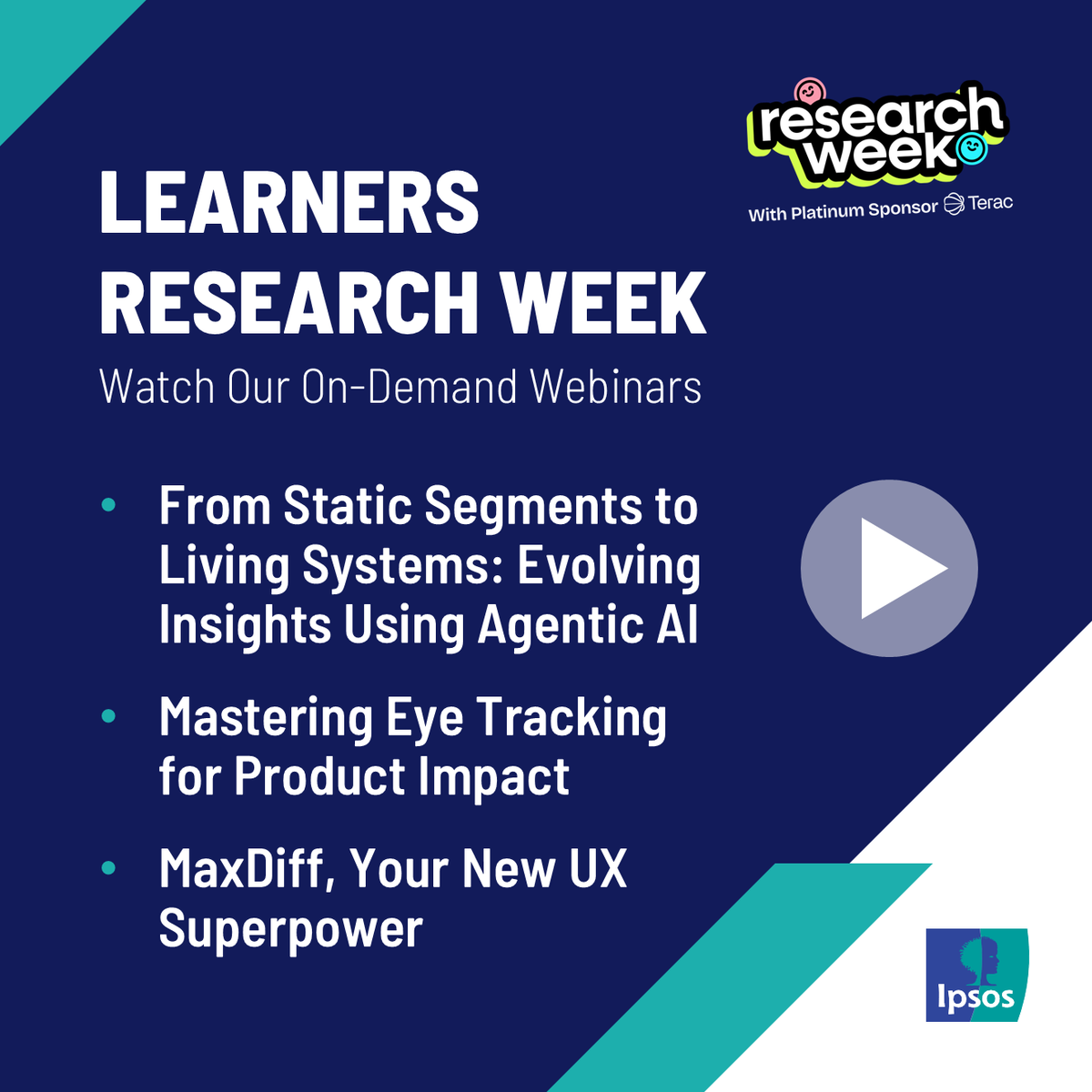
Ipsos is excited to have been part of Learners’ Research Week in San Francisco! Missed our sessions? Revisit the recordings here: ipsos.com/en-us/learners-res…
Evolving Insights Using Agentic AI
Mastering Eye Tracking for Product Impact
MaxDiff: Your New UX Superpower
53

May 11
All these influencers influenced me into buying jenpharm maxdiff facewash & Allah di kasmay beragharak hogaya skin barrier ka
8
638

Apr 21
UX Researcher here. This survey technique is called MaxDiff scaling and it’s been around since the late 80’s, commonly used for measuring relative preference or importance of a set of items (or players) through stack ranking :)
1
9
1,079


Mar 10
Professional researchers typically solve this problem using techniques that force prioritization (methods like MaxDiff, paired comparisons, or budget allocation exercises).
These approaches require respondents to make choices, which reveals the relative importance of different services.
This survey doesn’t do that.
2
85

Feb 20
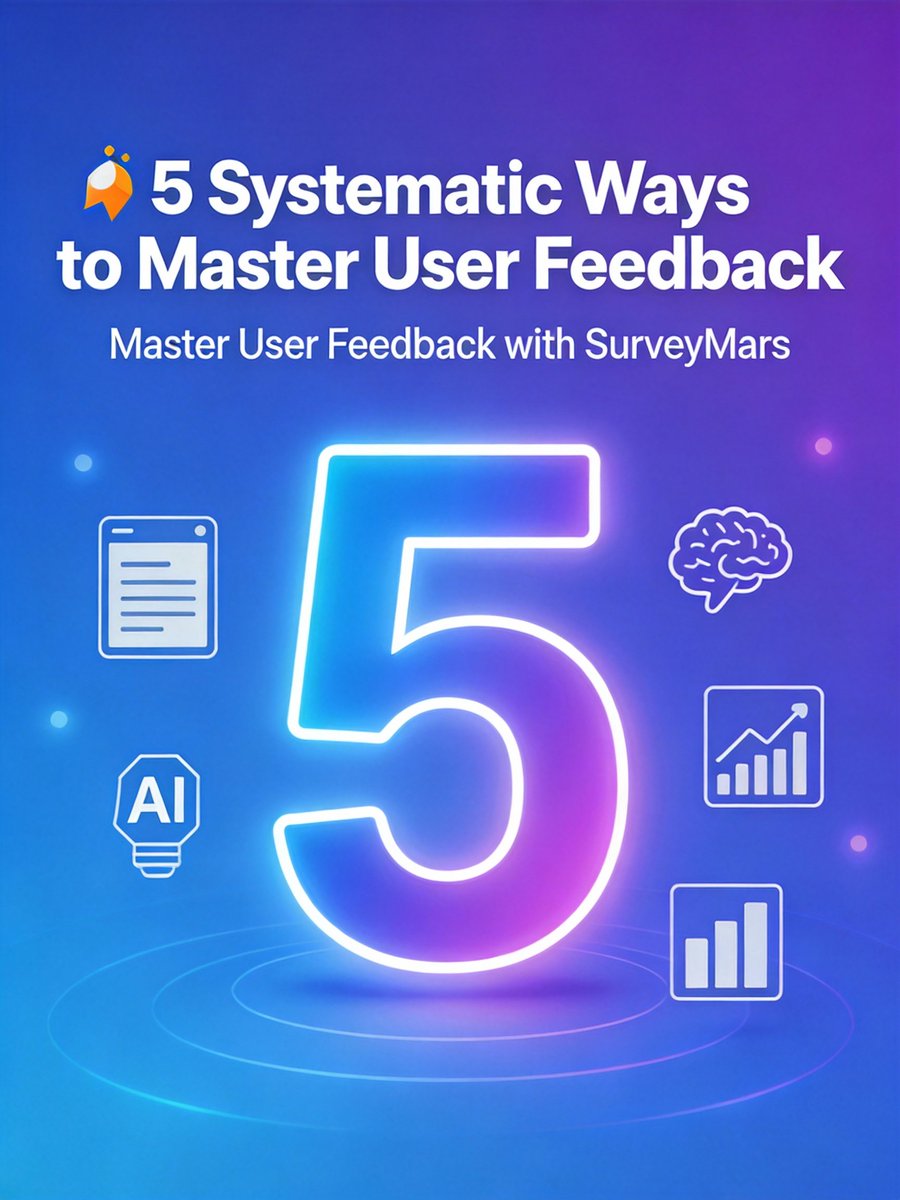
5 Systematic Ways to Master User Feedback
Want to turn every survey into actionable insights? Here’s how the most successful teams get it right with SurveyMars:
1️⃣ Leverage Research-Grade Question Types
Too many teams collect opinions but still don’t know what users truly want.
Using advanced question types (MaxDiff, Ranking, Likert) helps surface clear priorities — not guesswork.
2️⃣ Implement Personalized “Piping” Logic
If a survey feels generic or repetitive, drop-off rates can exceed 40%.
With smart logic & piping, respondents see only relevant questions, increasing completion by 20–35%.
3️⃣ Deploy Multi-Channel Collection
Relying on a single channel means hearing from only a fraction of your audience. Multi-channel distribution captures broader, more representative feedback — beyond the loud minority.
4️⃣ Utilize 360-Degree Internal & External Evaluation
Customer feedback shows what’s wrong, but employee insights reveal why it’s happening.
Combining both helps teams identify issues up to 2× faster.
5️⃣ Automate with AI-Driven Analysis
Manually sorting survey results wastes hours or even days. AI-powered insights turn thousands of responses into actionable takeaways in 2 minutes.
💡 Ready to elevate your surveys? Start collecting smarter feedback today with SurveyMars.
👉 surveymars.com/r/ai
#SurveyMars #UserFeedback #SurveyTools #DataDriven #AIInsights
3
5
50
Feb 9
How Data Researchers Use MaxDiff to Get Smarter Market Insights #MaxDiff #MarketResearch #DataAnalysis #CustomerInsights #SurveyTools
2
5
49


17 Dec 2025
Robust decisions when your world model is wrong
Most autonomous agents today behave like very brittle experts. Train them in one neat, well-behaved environment, and they can look impressive. Nudge reality just a bit—change lighting, add a small bias in the dynamics, slightly shift the sensor calibration—and their performance can collapse. The core problem is simple: they act as if one learned model of the world were true, when in practice it’s always an approximation.
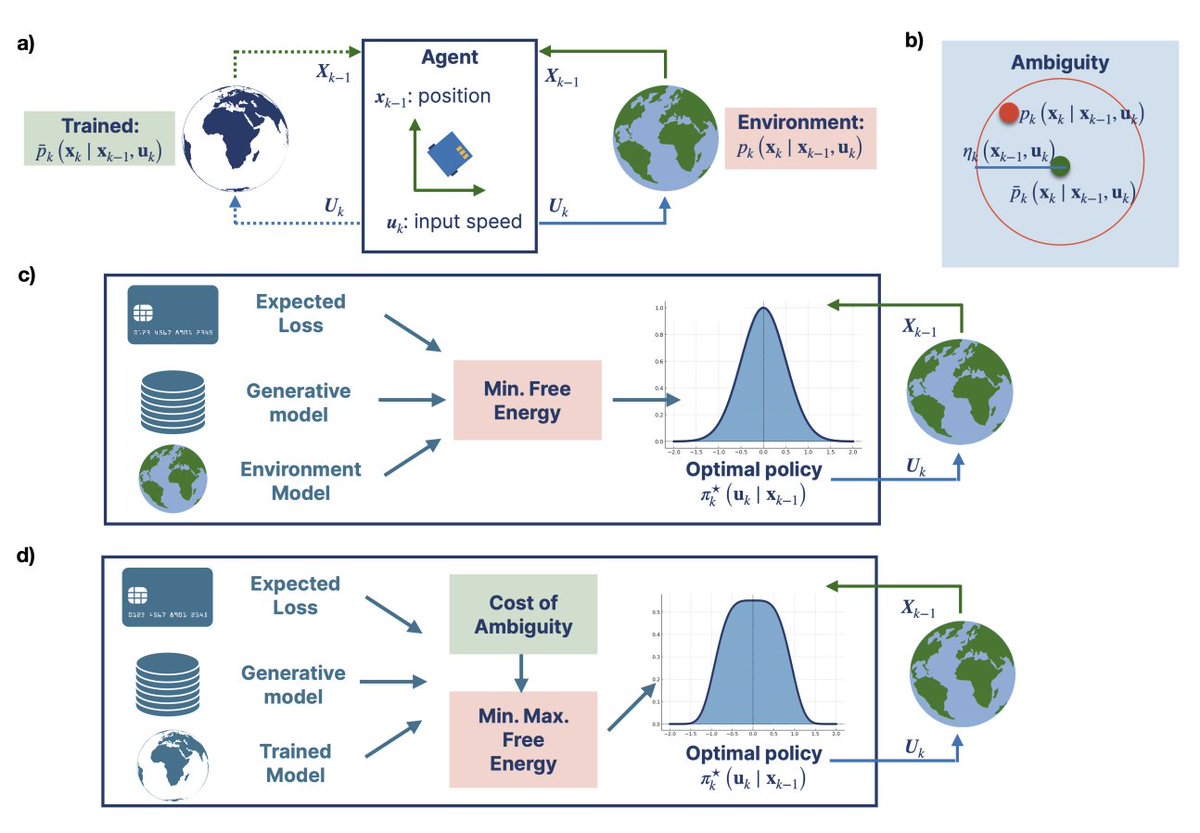
Allahkaram Shafiei and coauthors take this mismatch seriously and build it into the math from the start. Working within the free energy / active inference framework, they introduce DR-FREE, a distributionally robust way to choose actions when you don’t fully trust your model. Instead of optimizing behaviour for a single best-fit model, the agent considers a whole cloud of “nearby” models around it—an ambiguity set defined via Kullback–Leibler divergence—and then picks policies that keep free energy low even in the worst plausible case.
In practice, this becomes a concrete recipe: for each state–action pair you compute a cost of ambiguity by maximizing free energy over that cloud of models, fold that penalty into a softmax policy, and end up with action probabilities that automatically down-weight options that look good but sit in regions where your model is shaky. In the zero-ambiguity limit, you smoothly recover standard free-energy / entropy-regularized control.
Tested on wheeled robots in the Robotarium and on a MuJoCo Ant, the difference is stark. When the learned dynamics are deliberately biased, a “classic” free-energy agent happily drives into obstacles or falls over once the real world disagrees with its expectations. The DR-FREE agent, using the same biased model but explicitly accounting for ambiguity, reliably reaches its goals while avoiding obstacles and keeping the Ant upright, outperforming MaxDiff and neural MPPI baselines in both return and safety.
The message is powerful: by treating “all models are wrong” as a design principle rather than an afterthought, you can turn the free energy framework into a robust decision engine—one that trades a bit of optimism for policies that keep working even when your world model is only an approximation.
Paper: nature.com/articles/s41467-0…
29
113
6,048

10 Nov 2025
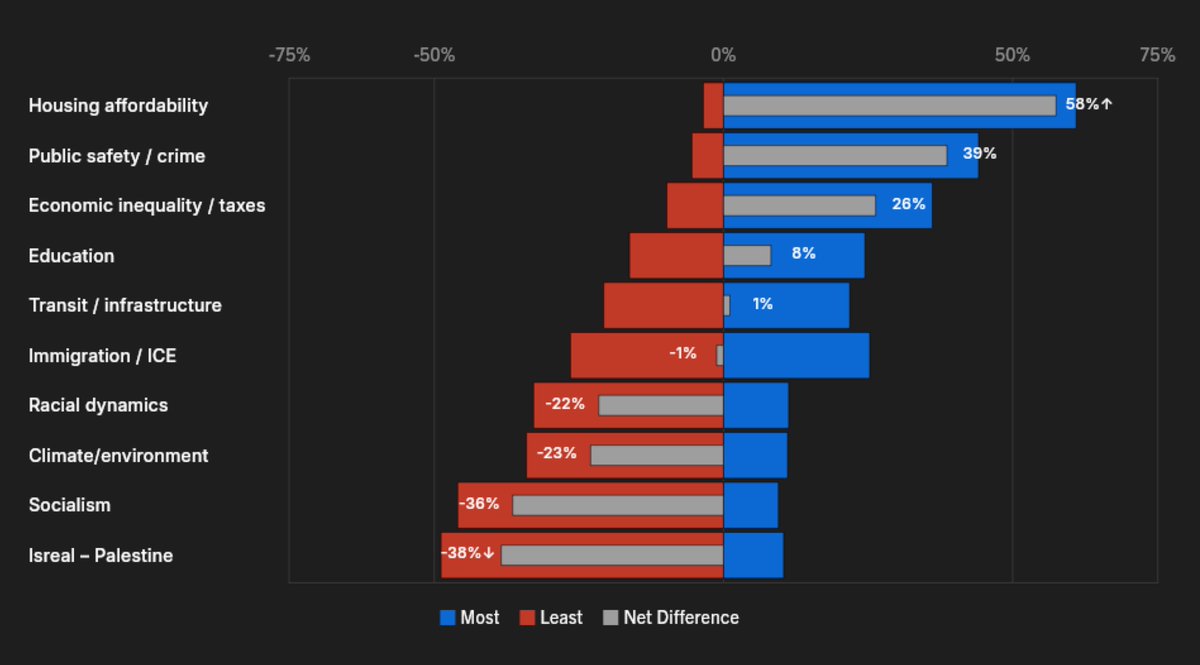
work at a research startup and we ran a small study on this actually. what's interesting, is that people didn't care broadly about socialism at all lol here's the results of the forced preference ranking of issues (mamdani non-mamdani voters) from our MaxDiff
8
9
128
99,150

2 Nov 2025
I really like maxdiff by jenpharm, idk the general consensus on this but I've been using it for a year and it's been pretty good
1
3
517

27 Oct 2025
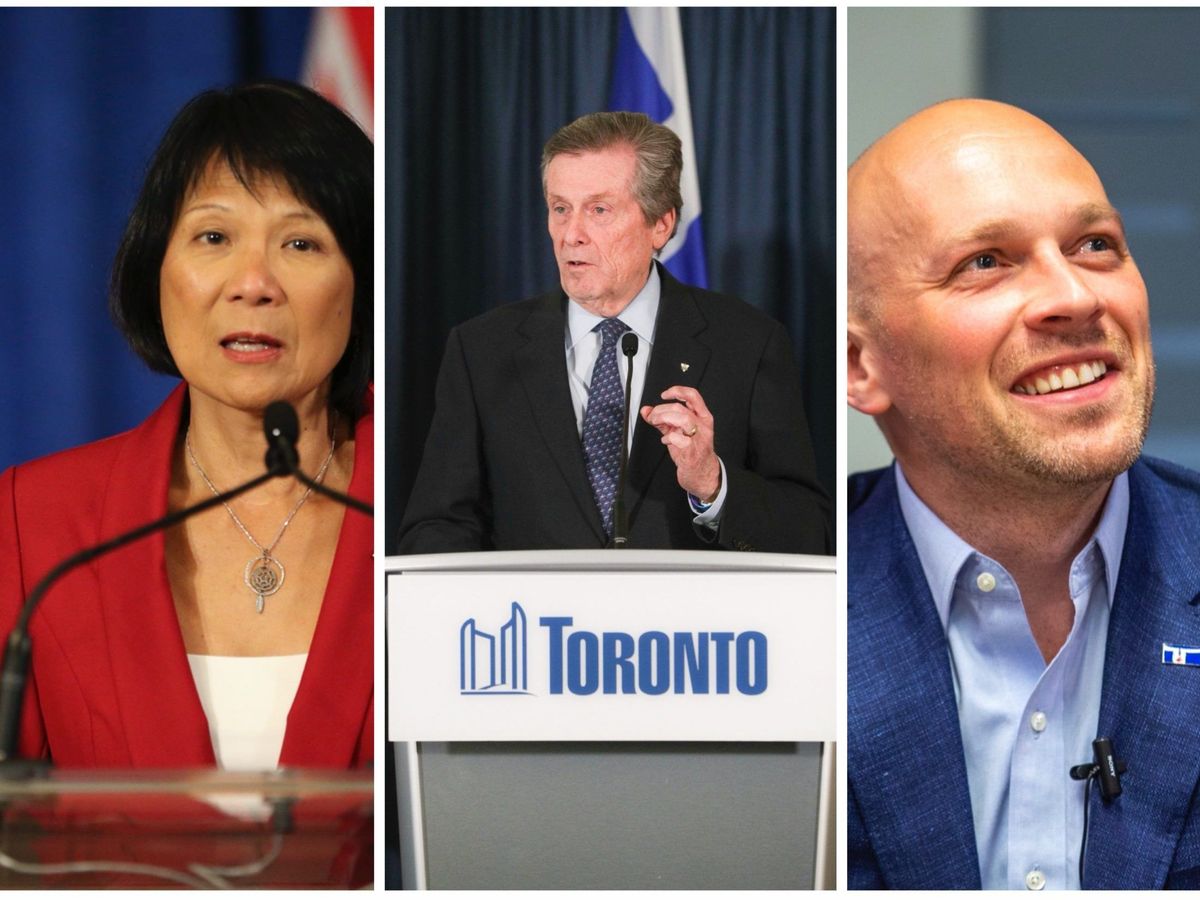
I've conducted 2 polls, comprehensive ones (May and August), using MaxDiff (which no political pollsters ever do), using Key Drivers Analysis (which no political pollsters ever do) and analysizing Relative Leadership Strength Scoring (which no political pollsters even know how to do🤷) before even asking the Ballot Test...
After all that, in both research projects, on the 3-way ballot test between Chow, Tory and Bradford - its Chow and Tory both way ahead of Bradford and Brad Bradford in a distant 3rd with less than 10% of the votes.
Tory was 7 to 8-points ahead of Chow in both polls when Bradford was on the ballot and 12 to 15-points ahead in both polls when head-to-head against Chow (when Brad Ford was removed from the ballot).
I'm confident in my City of Toronto polling, since 2010 we've hit 4 Grand Slams and 1 Triple.
Go Jays 🙏
27 Oct 2025

LILLEY: Poll shows Chow's support crumbling, majority want new mayor torontosun.com/opinion/colum…
4
4
25
7,338
12 Sep 2025
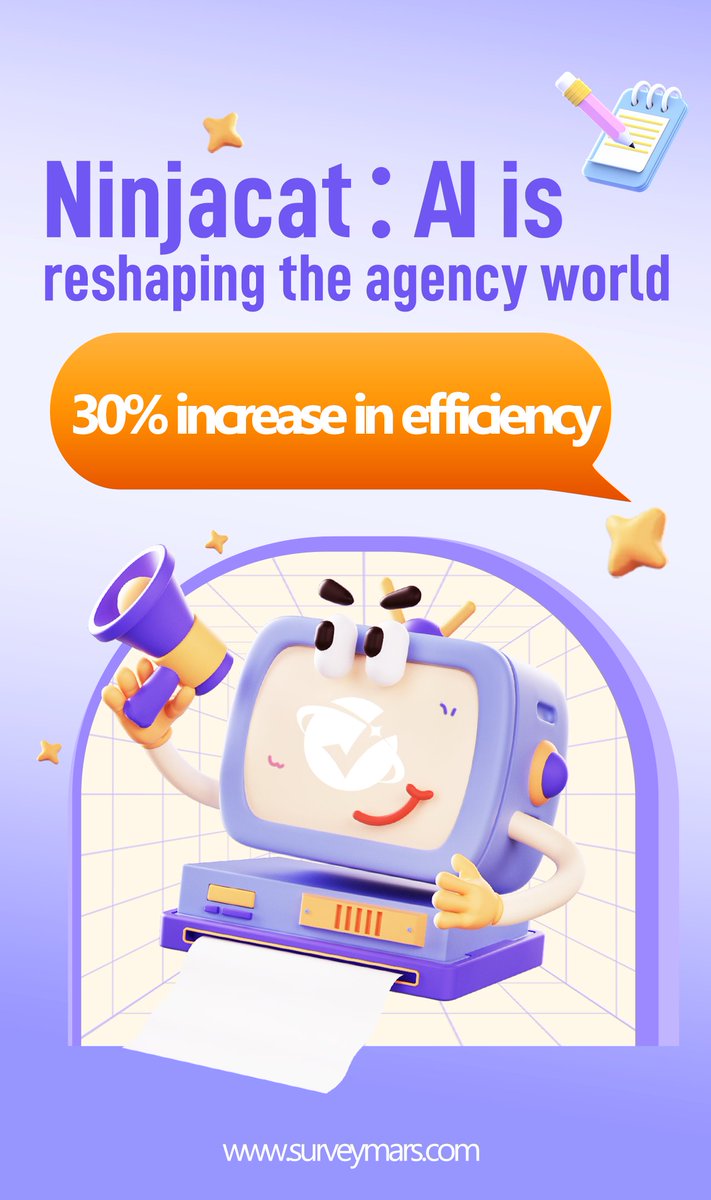
🌍According to the latest report from Ninjacat:AI is reshaping the agency world
• 92% of agencies say AI boosts productivity
• 96% believe it’s the driver for scaling growth
• Yet 57% struggle with integration, and 41% are prioritizing AI-powered data & insight tools
The message is clear: AI is the future—but without the right data foundation, even the best tools fall short.
That’s where SurveyMars comes in.
🔹 Completely Free – no limits on surveys, responses, or questions
🔹 50 advanced question types (NPS, MaxDiff, Conjoint, KANO, etc.)
🔹 AI-generated reports to turn feedback into real insights
🔹 Multi-language support (8 languages including Spanish & Portuguese) for global collaboration
🔹 Instant multi-channel sharing (links, QR codes, embeds) to reach audiences anywhere
Imagine launching a campaign survey to test new AI services across markets: in days, not weeks, you’d know which features resonate, what pricing works, and how to position your offering—powered by SurveyMars.
Data drives better AI. SurveyMars gives you the edge.surveymars.com/r/yTx74MWqGZM…
#AIMarketing #SurveyTools #DataInsights #MarTech #MarketingAgencies #CustomerExperience
3
6
66

21 Aug 2025
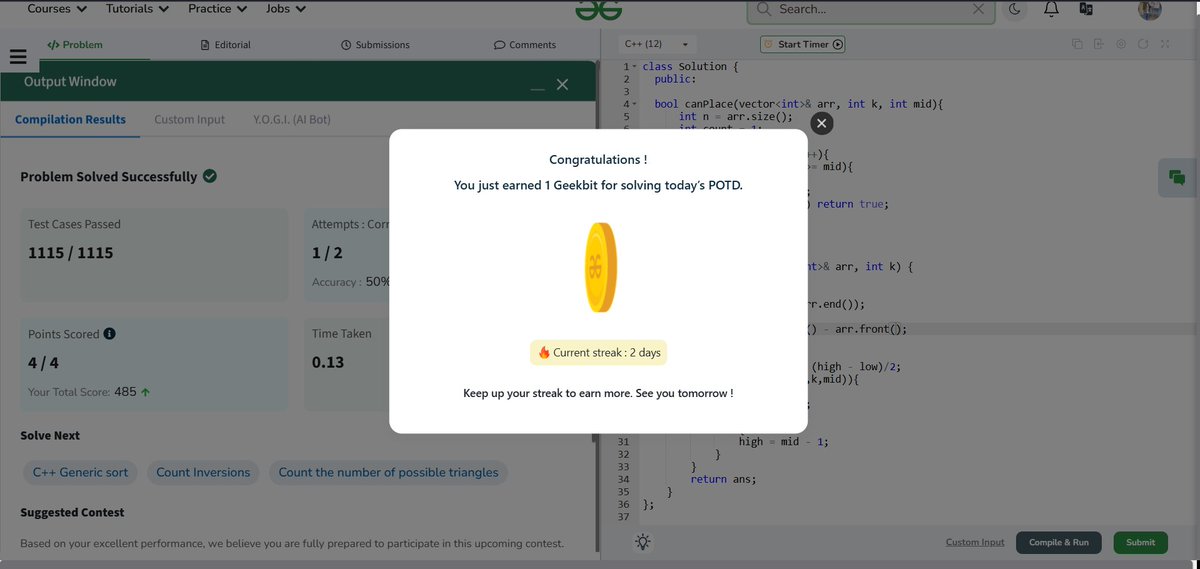
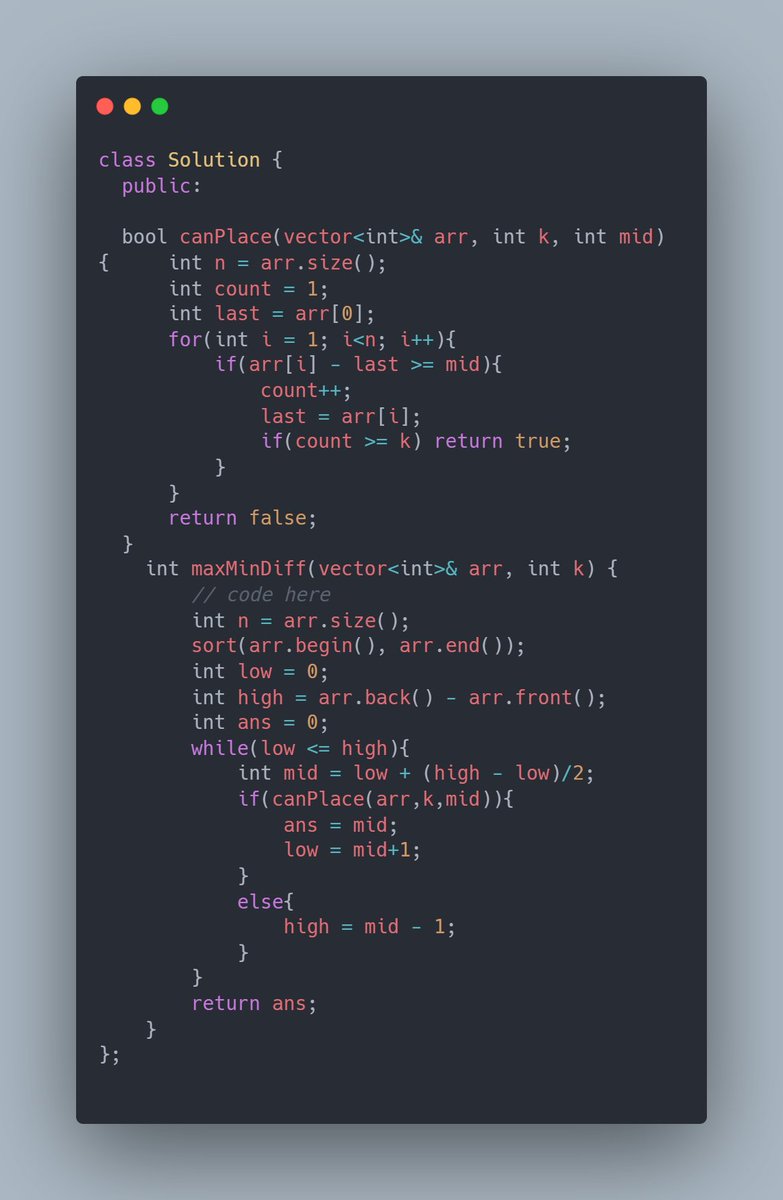
✅ Solved GFG POTD: Maximize Minimum Difference of k Elements
🔍 Problem Summary:
Given an array arr[] of size n and integer k, maximize the minimum difference between any two of k selected elements.
🧠 Approach:
Sort the array. Use binary search on the minimum difference. Check feasibility with canPlace() to ensure k elements have at least mid difference. Adjust low or high to maximize difference.
💡 Time Complexity:
Sorting: O(n log n)
Binary Search: O(log(maxDiff))
Feasibility Check: O(n)
Overall: O(n log n n log(maxDiff))
#GFG #ProblemSolving #100DaysOfCode #CodingJourney #DailyCoding #DSA #CodeNewbie #BuildInPublic
2
18
239

2 Aug 2025
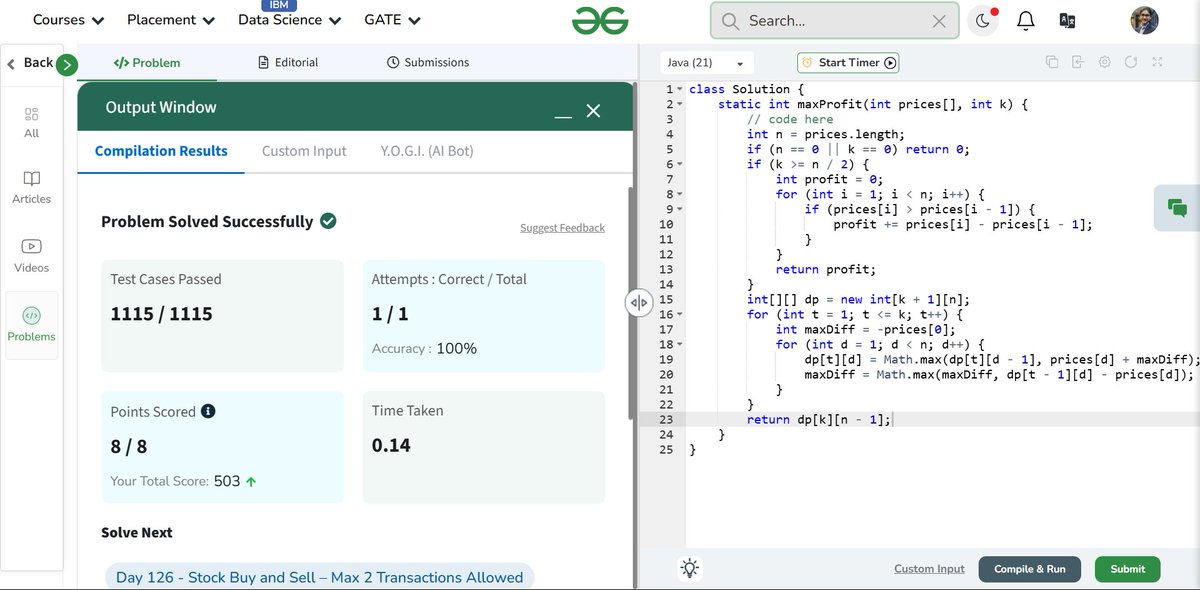
✅ Day 125 of #geekstreak2025!
Solved Stock Buy and Sell – Max K Transactions on @geeksforgeeks.
dp[t][d] = max profit up to day d with t transactions
Used maxDiff to avoid nested loop
O(k * n) Time | O(k * n) Space
#gfg160
2
41

23 Jul 2025
if you have combination skin, use Jenpharm Maxdiff but do patch test fr first, rice potato mask every week, use beetroot juice and add cucumbers in your daily diet, and 30 mins walk in the morning and night and don't worn yourself out. You are pretty as you are.
2
11
1,671

22 Jul 2025
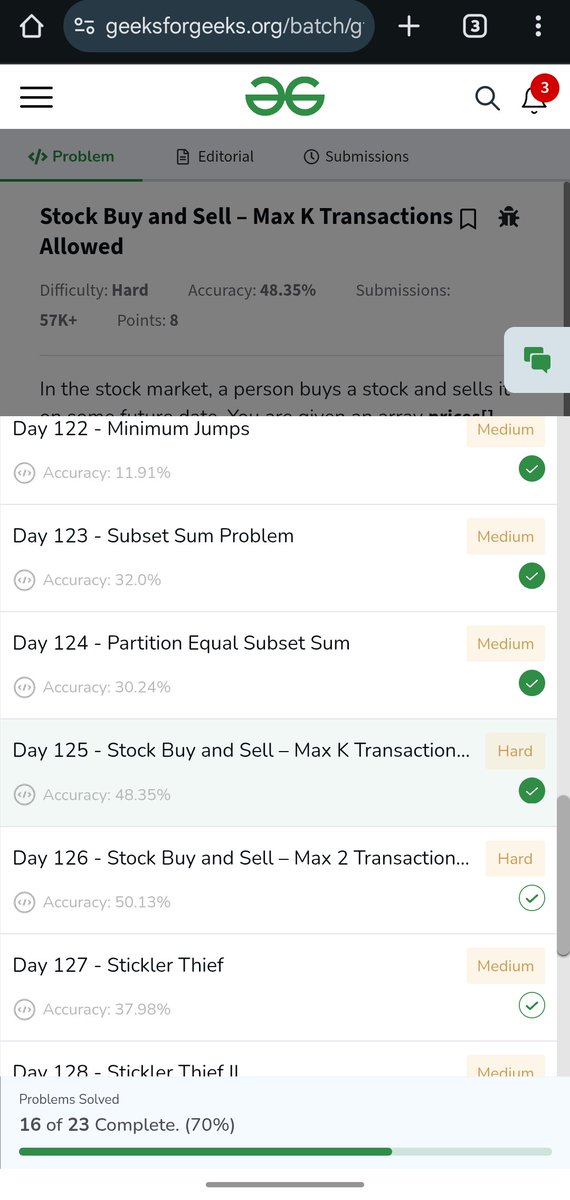
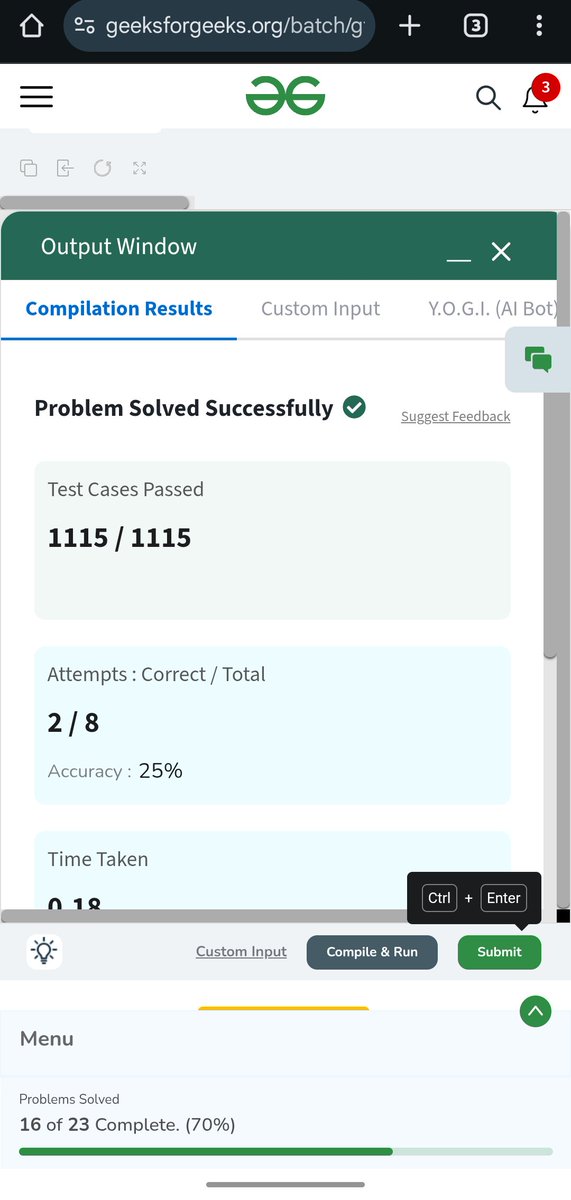
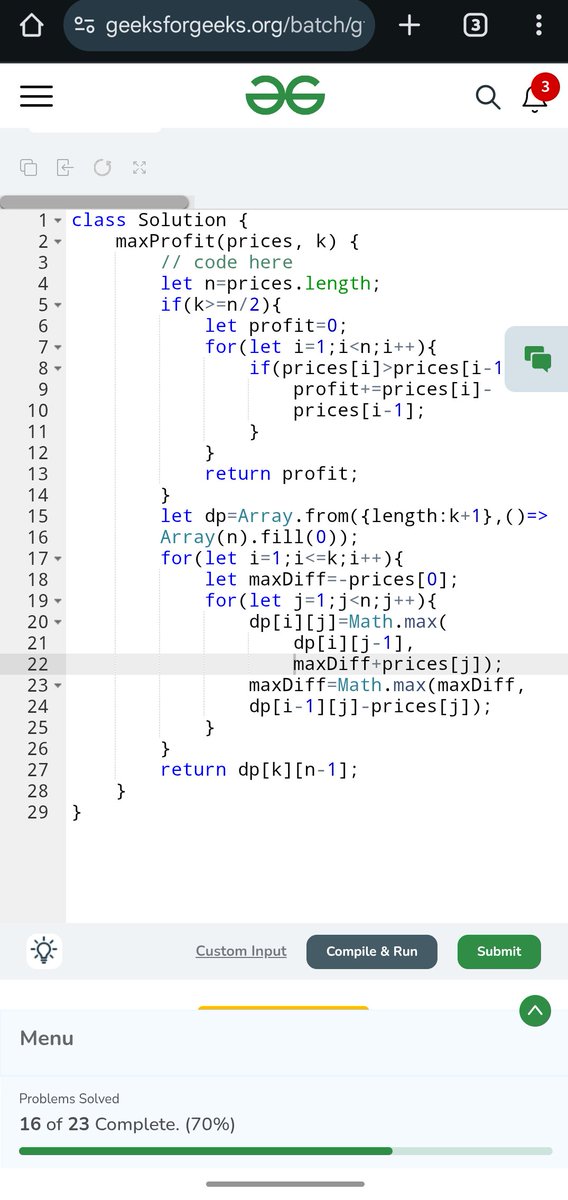
🔥 Day 125 of the #GFG160 Challenge!
Solved Max Profit with at most K Transactions 💹
💡 Used a dynamic programming approach with a 2D DP table & `maxDiff` trick for optimization !
🎉 Thanks to @geeksforgeeks !
#GeeksforGeeks #GeekStreak2025
3
27
245