
Mar 30
People laugh at me and call me dumb because I built my own local AI cluster instead of paying for cloud APIs.
Maybe I am.
But not dumb enough to rent forever what I can own.
If you are interested in my view, please read on (below).
Before you call someone a dumbass for building their own cluster, ask yourself three questions:
Do you own your tools or rent them? Do you control your data or someone else? If your provider goes down tomorrow, do you have a backup plan or just a subscription?
Think before you talk. Build before you judge.
I have 20 years of experience in electronic equipment diagnostics, repair, calibration, and fault-finding in a highly regulated environment within one of the most respected companies in the UK and worldwide. I'm proud of this and of the hardworking, clear-headed people around me.
When your job is finding one failed component on a board with hundreds, you stop worshipping hype. You start respecting control, consequences, and process, same applies to AI.
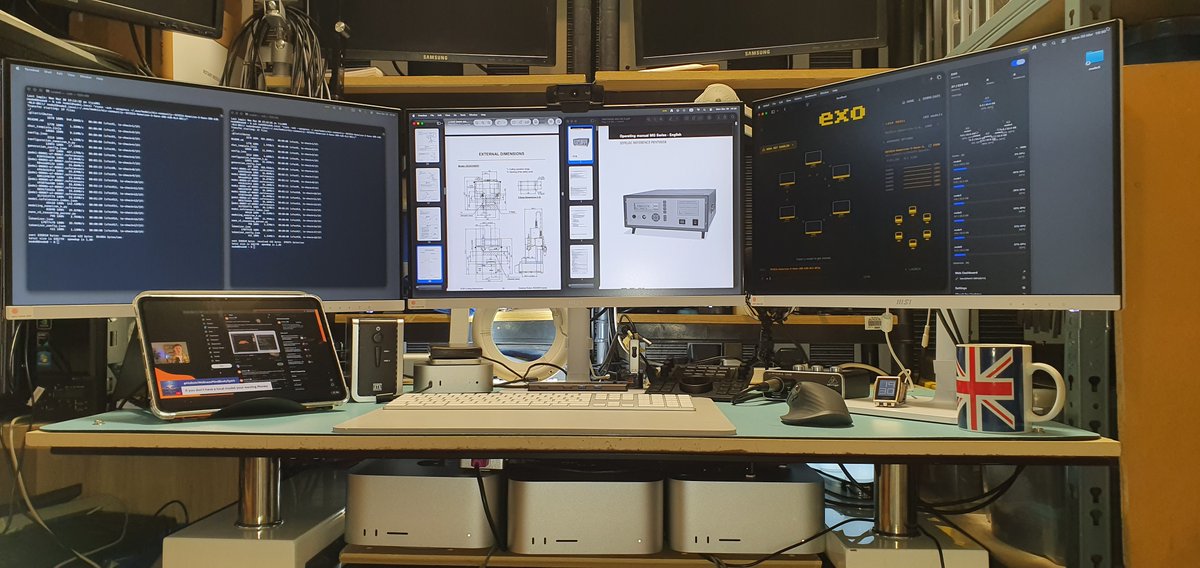
I run a 6-node air-gapped (no internet connection) Mac cluster. Thunderbolt daisy-chain in an EXO Labs environment. Data transfers via USB only.
Hard backups on: Panasonic LKM-KB12 MEDICAL ADA-RE Blu-ray Drive.
The system is never overloaded. If one node goes bust, I can do a hot swap without powering down the whole cluster. 6 cloned redundant storage copies if one goes bust, I have 5 others.
LLM models: MiniMax-M2.5-4bit-MLX Llama 3.3 70b-instruct-fp16-MLX
Not the best, not the flashiest, but running 24/7 on mine cluster.
People say: local models are "outdated" - the lag argument.
Fine. Open-weight models typically trail the frontier by about 3 months (Epoch AI data). Stanford's AI Index says the gap shrank from 8% to 1.7% in a single year.
Today's "primitive" local model has more capability than what people were paying premium cloud prices for not long ago.
That's not obsolete. That's discounted capability.
Let’s talk about economics.
Cloud AI is rent. You pay, you use, you pay again. Stop paying = capability gone.
My entire 6-node cluster cost under £5,000. That's roughly what 2 years of a single $200/mo cloud Pro subscription costs.
The difference? After 2 years, the cloud subscriber owns nothing. I still own 6 machines running 24/7. And they still hold their resale value.
Try reselling your old API invoices.
The Meter Never Sleeps.
People cry in forums about “burning” $200 in three days on API calls they didn't expect.
Here's why: the API has no memory. Every follow-up resends your entire conversation history. Turn 1 costs 100 tokens. Turn 10 costs the sum of all previous turns plus the new one (costs compound).
Now add agents. Every tool call, every loop, every retry burns tokens. A runaway process at 3am eats your budget while you sleep. Output tokens cost 3–5x more than input.
On my cluster, a mistake at 3am costs me pennies in electricity. The whole 6-node cluster draws below 150W under heavy compute and below 50W when idle. That's (10x) less than a kettle.
On the cloud, the same mistake costs your budget and you won't know until the invoice arrives.
A few days ago, OpenAI has announced the shutdown of the Sora app.
App shutdown scheduled for April 26 2026, API shutdown scheduled for September 24 2026.
If your workflow depended on that API, you're scrambling right now. My cluster doesn't get discontinued by someone else's board meeting.
People trust cloud privacy policies like they're magic shields.
Reality: your prompts travel through third-party infrastructure with retention policies you didn't write. OpenAI and Anthropic both document default retention windows for API usage. AWS calls cloud security a "shared responsibility model".
On my air-gapped cluster, there's no third-party transit. The exposure surface is smaller because the data never leaves the room.
That's not paranoia. That's engineering.
Now some words about another latest "big thing", the agents.
Before I let agents like OpenClaw or Hermes anywhere near my email, Telegram, or real workflows, I keep “the beast in the cage”.
I can train it, break it, test it, learn its habits. Only when I take control of it will I allow it to touch the outside world.
Most people connect "the beast" to their life on day one, I cage it first.
The App Fantasy: Many are chasing the "build one app, become a billionaire" dream. Most new businesses don't survive five years.
I'd rather have one boring, stable pipeline that works every week than ten imaginary unicorn apps. Small but regular income beats fantasy every time.
As they say: the best camera won't make you a photographer. The best model on Earth won't make you a good operator.
You rent intelligence, I bought infrastructure. Call it outdated if you want, I call it owned.
I didn't figure this out alone. Nobody does.
If any of this resonates or if you think I'm wrong, learn from the people who shaped my thinking:
Alex Cheema (@alexocheema), co-founder of EXO Labs. He builds the infrastructure many others only talk about. My cluster runs on his work.
Alex Ziskind (@digitalix), developer, trainer, author at @NativeScripting. Teaches people to actually build things instead of chasing hype.
Alex Finn (@AlexFinn), founder of Creator Buddy and Vibe Coding Academy. Turns AI theory into real business results.
Three builders. Three different angles. One shared principle: own what you build.
If this resonated, repost it. If you think I'm wrong, quote it and tell me why.
Either way build something.
William Ruider.
3
137

4 May 2025
Happy birthday, NativeScript! I'm where I am today, thanks to you. Here's to many more years of NativeScripting 🤗
1
8
261

28 Aug 2024
@digitalix , thank you for your timeless courses at @NativeScripting. Today, I especially appreciated the Securing NativeScript Applications course. 🫡
1
4
285

30 Nov 2023
The tutorials are really the best way to get a feel:
docs.nativescript.org/tutori…
Beyond that, NativeScripting has some good coverage:
nativescripting.com/
This is still relevant in general:
egghead.io/courses/use-objec…
NativeScript is just JavaScript so solid JS fundamentals.
1
2
8
371


3 Aug 2023
github.com/Bezlepkin/natives…
A simple plugin that allows you to track keyboard opening, changing, closing and return keyboard height.
@NativeScript @NativeScripting
4
6
33
2,216

1 Feb 2022
Here's what's new with the @digitalix #YouTube channel. NEW members welcome 🤓
Join the channel 👉 cutt.ly/kOvNoNZ
#100DaysOfCode #DEVCommunity #programming #javascript #angular #vue #vuejs #nativescripting
17
55

27 Oct 2021
This is the course link (which should jump to the chapter on it): courses.nativescripting.com/…
1
27 Oct 2021
Hi Roman, we usually setup a provider via Angular often to provide a auth0 mobile client. This course on @NativeScripting actually covers setting up auth0 for web and mobile with @auth0
1
1

23 Sep 2021
By combining #NativeScript, you can boost the performance of your #Angular mobile app.
Read the detail on NativeScript uses and benefits here.
#javascript #angularjs #nativescript #DEVCommunity @NativeScript @NativeScripting @angular @AngularTutorial
bit.ly/3CECBLo
2
1
15 Jul 2021
The starting base could definitely be scaled back to only include app publishing or native builds in the cloud. Once that was available to different integrations we could help look at other options. We could also help collaborate on providing a plug/play integration to Appflow.
1
4

15 Jul 2021
Just enrolled on this one nativescripting.com/course/n…
I was putting it off for a while now. Already watched the first bits, looking forward to finishing it! Thanks for the great content @NativeScripting @digitalix !
1
3
14 Jul 2021
We would actually pay @Ionicframework and @capacitorjs a percentage to allow us to integrate such ability with @useappflow - they have a great platform for this and would be nice for {N} devs as well.
4
14 Jul 2021
It would be cool to make a resource where NativeScript users could host applications made in NativeScript.
#nativescript @NativeScript @NativeScripting @digitalix
1
4
7 Jul 2021
July 14th 👍 - lot of focus on iOS runtime improvements, 8.1 prep and planning for professional summit at end of month.
3


10 Jun 2021
Learn how to build native #Android and #iOS mobile applications using a single #code set composed of common web technologies such as #JavaScript and #CSS on an #Angular base.
👉 cutt.ly/6nUIJoY
#NativeScript #NativeScripting #onlinecourses #100DaysOfCode #Course
4
9

18 May 2021
@NativeScripting has done a bunch of comparison videos running M1 with 64gb Intel i9 machines. Pretty impressive. youtube.com/c/AlexanderZiski…
2
12 May 2021
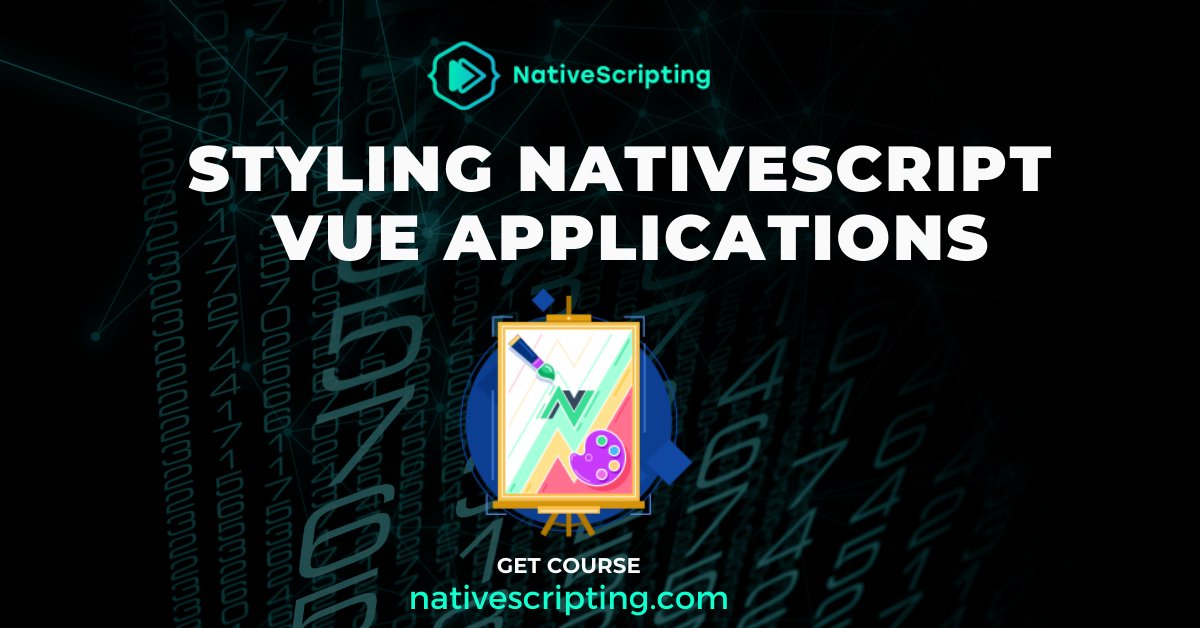
This course will help you with everything about CSS in NativeScript Vue 👉 cutt.ly/nbFDESt
#onlinecourse #nativescript #vue #vuejs #100DaysOfCode #nativescripting #CSS
1
10
7