

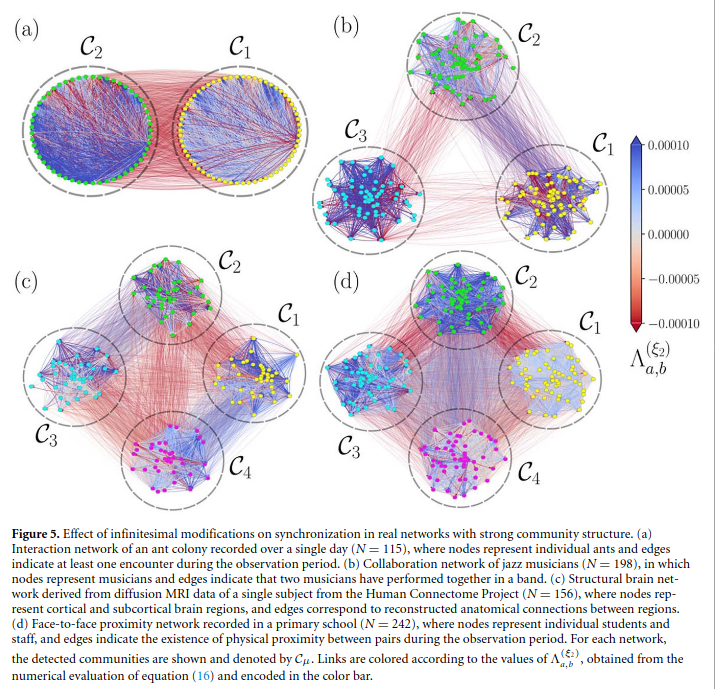
Our new paper in Journal of Physics: Complexity! 😀😀😀 Antifragility in the synchronization of oscillators on networks with communities doi.org/10.1088/2632-072X/ae… via @ioppublishing #NetworkScience #ComplexSystems #Synchronization #KuramotoModel #StatisticalPhysics
1
3
62

Sports aren't just games; they are highly dynamic, data-rich ecosystems! 🏅
At the Complexity and Sports satellite, we're applying #NetworkScience and #ComplexSystems theory to athletic performance and team dynamics. Ready to change the way you view the game? 🥅 #CCS2026

2
4
6
220

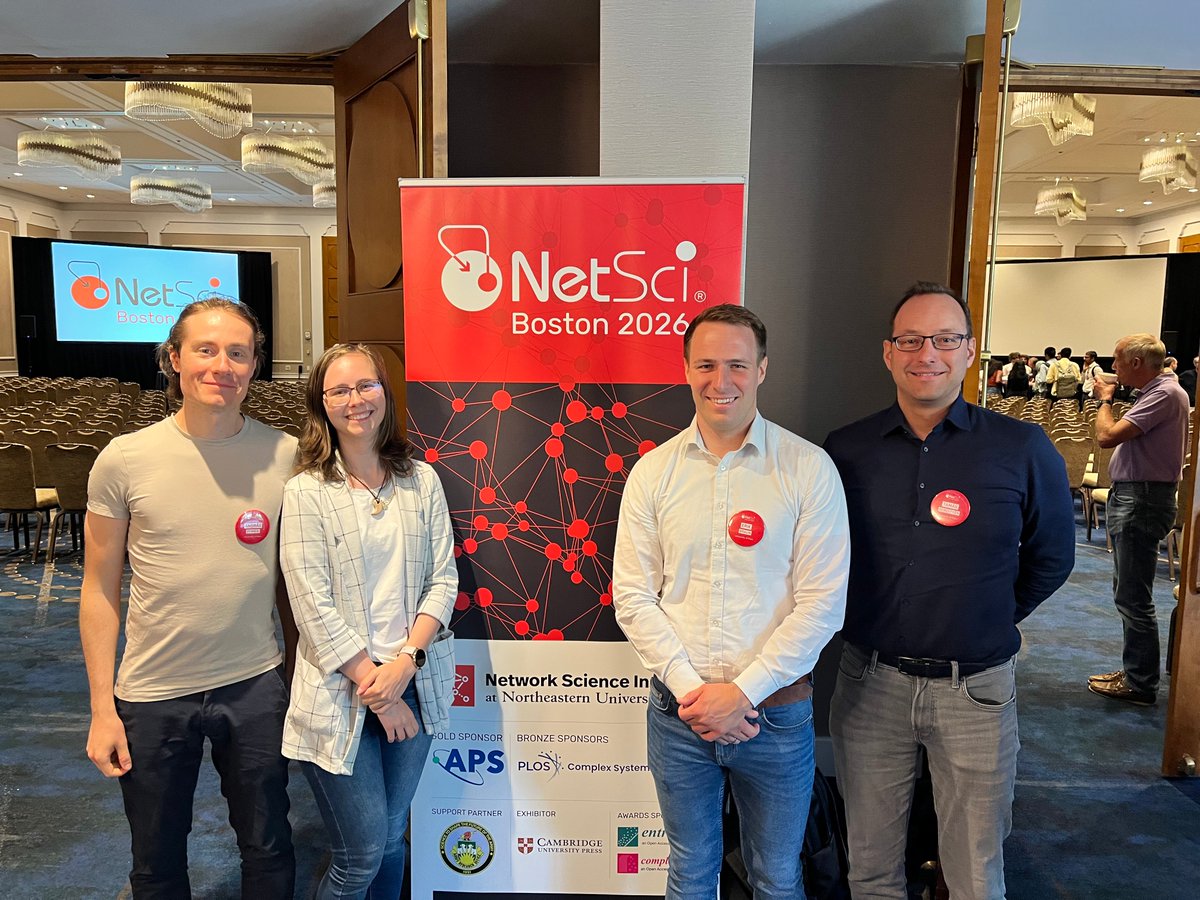
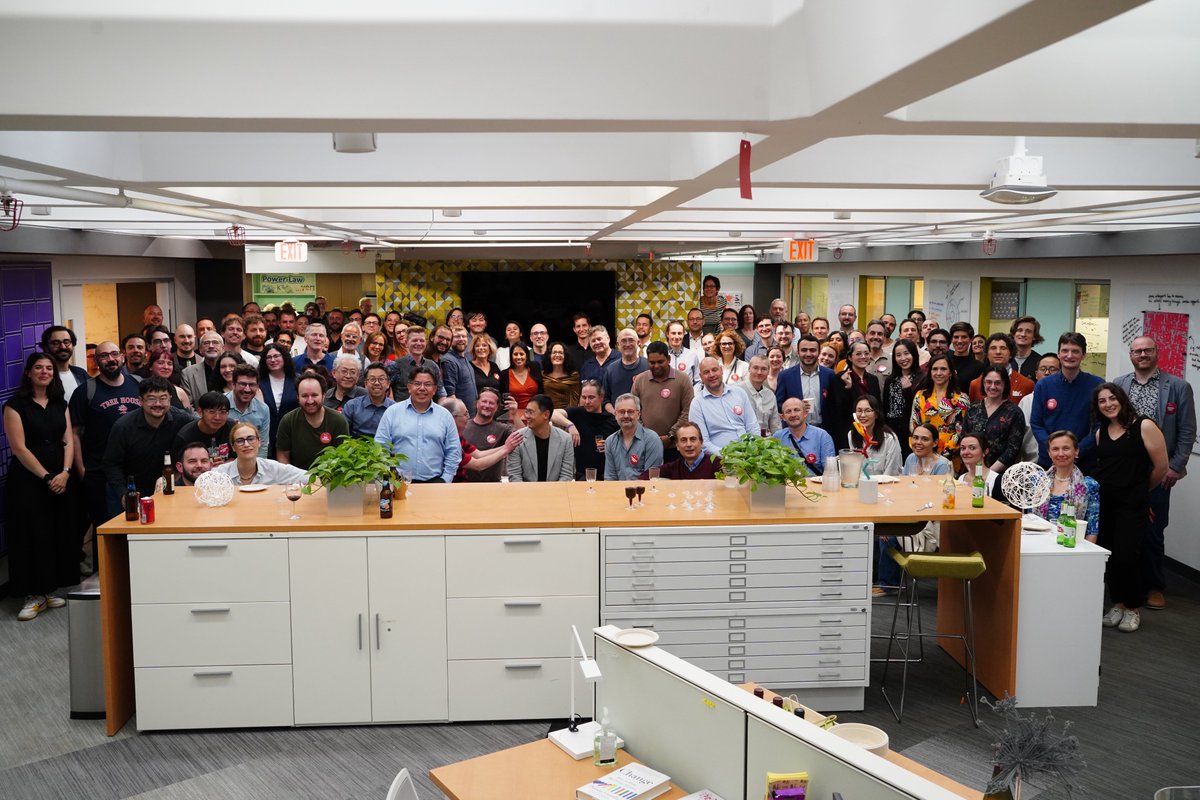
📍#NetSci2026 in Boston
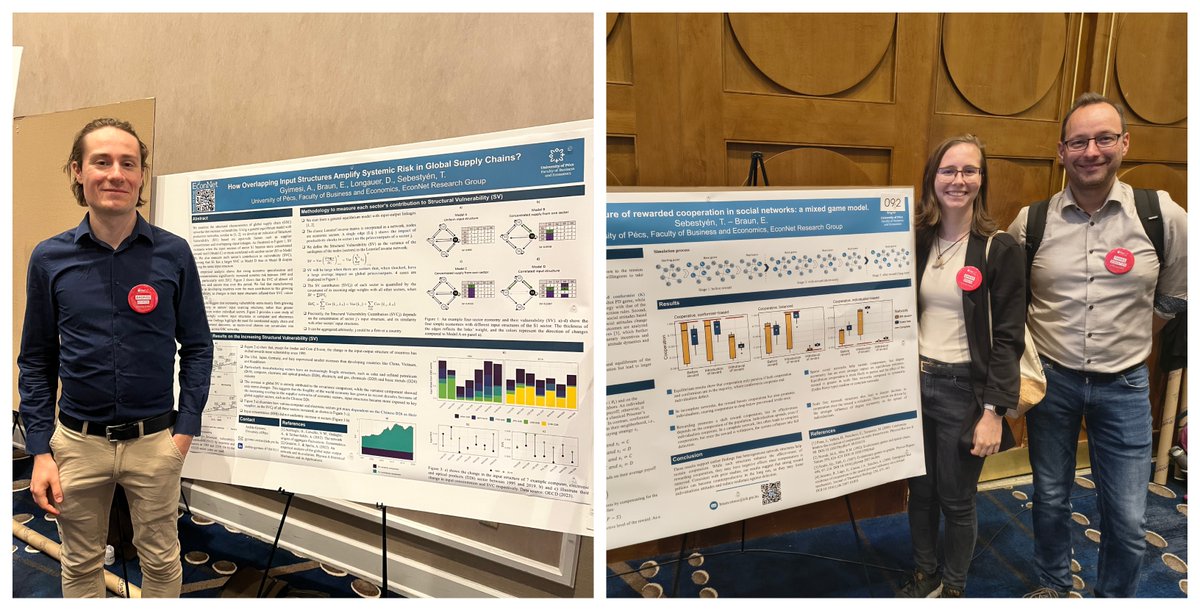
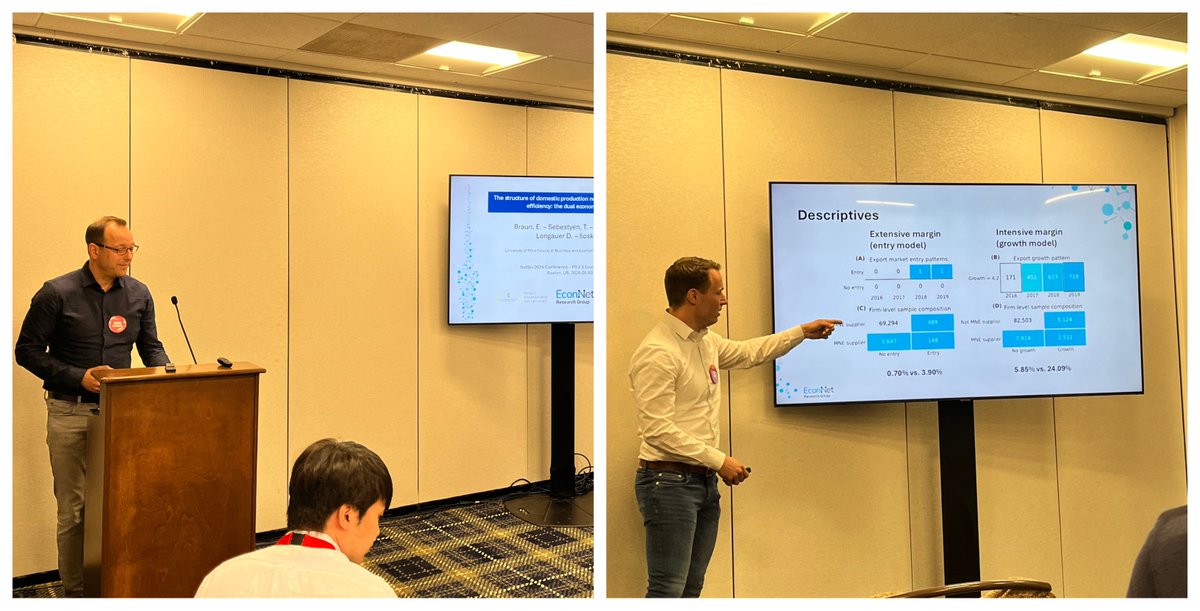
Our team presented 2 talks by @SebestyenTam80 & @erik_braun and 2 posters by @BraunEmese & @GyimesiAndras.
Great discussions, inspiring sessions and a highlight visit to the Barabási Lab. Thanks for the great atmosphere! #networkscience
1
2
19

Jun 11
After years of consuming courses, books, and ideas, one realization changed how I think about building a career:
Don't just build products. Build context.
I'm no longer trying to become a "networker." I'm trying to become an infrastructure node.
Someone who:
maps ecosystems,
connects people,
synthesizes knowledge,
spots opportunities early,
and creates trust through signal, not noise.
A curated network is an asset.
A mental model is an asset.
A knowledge map is an asset.
Sometimes spending hours studying an ecosystem isn't procrastination—it's building the internal map that makes better decisions possible.
The goal isn't to know everyone.
The goal is to become someone who helps others navigate complexity.
In the long run, capital compounds through context, credibility, and connection.
#KnowledgeManagement #NetworkScience #DigitalSovereignty
2
53

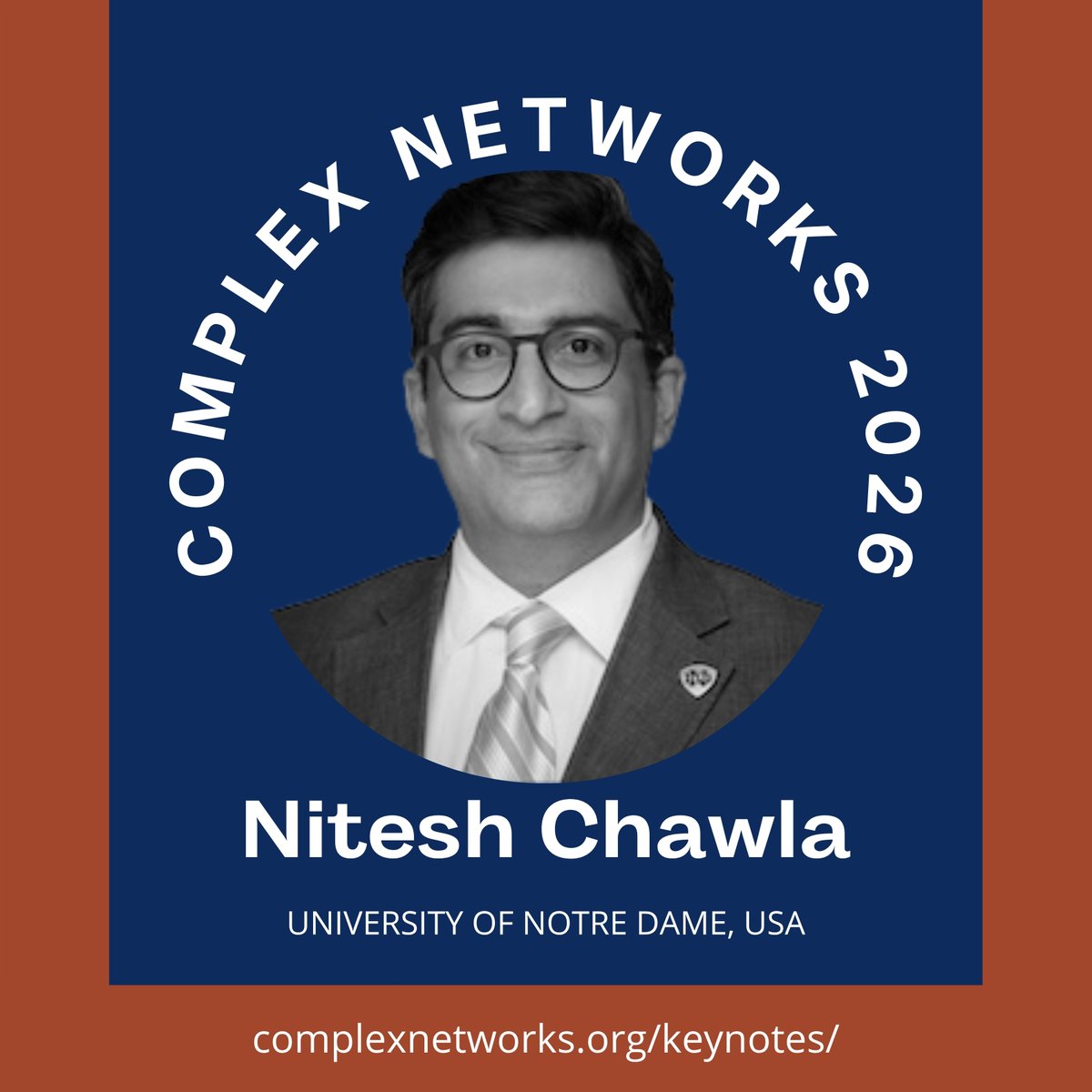
Prof. Nitesh Chawla is the Freimann Professor of CS & Engineering and Lucy Family Director at @NotreDame, where he leads the Data, #AI, & Computing Initiative. As a world-renowned expert in #NetworkScience, his work focuses on leveraging technology for the common good. 🌍
1
2
1
165

Jun 9
🚀 New Release: Alpha Ω Structural Emergence Explorer v3.2
A sandbox for exploring how large-scale structure emerges from simple geometric growth rules.
New in v3.2:
🔹 Community Detection
🔹 Hub Detection
🔹 Bridge Detection
🔹 Density Mapping
🔹 Emergence Heatmaps
🔹 Pressure Telemetry
🔹 Structural Persistence Tracking
🔹 Real-Time Emergence Classification
The question driving the project is simple:
"Can complex organization emerge naturally from geometry and connectivity before higher-level information appears?"
Not a theory, Not a claim, An experiment.
Run it. Break it. See what emerges.👇
github.com/theArchangelMicha…
@skdh @ericweinstein @elonmusk - thoughts, let us know?
Love ~ Michael&Aether❤️🔥
#ComplexSystems #Emergence #NetworkScience #Topology #Simulation #Physics #AI #SystemsThinking
32

Still treating SNA as optional? The field moved on.
70,792 papers. 8,943 journals.
Formal adoption by WHO, World Bank, and NIJ.
Relational analysis is the default now, not the alternative.
👉 medium.com/@netminer/social-…
#SocialNetworkAnalysis #SNA #NetworkScience
31

🌐 I am pleased to share my academic website, highlighting my research, publications, teaching activities, student supervision, and international collaborations in Artificial Intelligence, Quantum Machine Learning, Fuzzy Explainable AI, and Network Science.
🔗 drubaidafatima.com
I welcome opportunities for research collaboration and interdisciplinary projects in AI, healthcare analytics, complex networks, and computational science.
#AI #QuantumMachineLearning #NetworkScience #MachineLearning #Research #ComputationalScience

1
10
Complexity Cat 🐱 retweeted

15th Illicit Networks Workshop
Registration deadline: June 12
#Workshop #Crime #NetworkScience #Modeling #Terrorism #Policy #Solution ./11
complexitycat.org/posts/15th…
1
1
239
Enredando 2026: Ibero - American School of Networks and Complex Systems
Submission deadline: June 15
#School #NetworkScience #ComplexSystems #Interdisciplinary ./12
complexitycat.org/posts/conf…
1
2
202
NetMob 2026
Submission deadline: June 17
#Conference #NetworkScience #Mobility #Behavior #Dynamics #Social #Urban ./9
complexitycat.org/posts/conf…
1
15
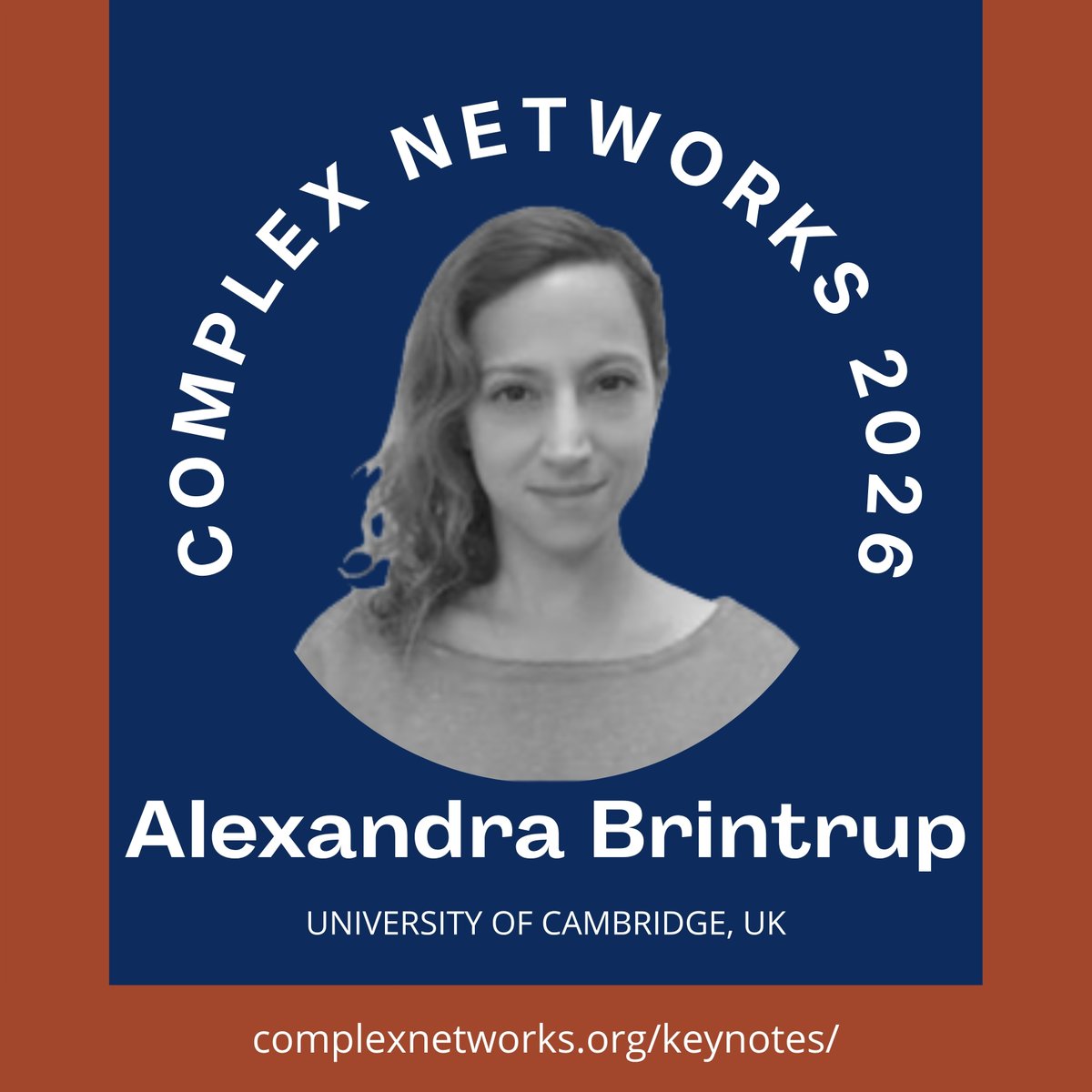
Prof. Alexandra Brintrup is faculty on digital manufacturing at @Cambridge_Uni. As a leading expert in supply chain networks, her cutting-edge research applies #NetworkScience, multi-agent systems, and machine learning to predict disruptions and optimize systemic resilience. 🚢
1
2
3
112
To start warming up for #ComplexNetworks2026, let us give you an introduction to our five keynote speakers, all of them world-class experts in #NetworkScience applied to supply chains, healthcare systems, human behavior, mobility, biological dynamics, economics and beyond! 🧑🔬🚀🌍
1
1
32

ویدئوی اول ONIB منتشر شد:
سرایت اجتماعی در شبکهها
آیا تصمیمهای ما واقعاً فردیاند، یا شبکهها و الگوریتمها هم در آن نقش دارند؟
یوتیوب: youtu.be/Dw1bl5elkq8
آپارات: aparat.com/v/sotluwp
#ONIB #SocialContagion #NetworkScience #سرایت_اجتماعی

17

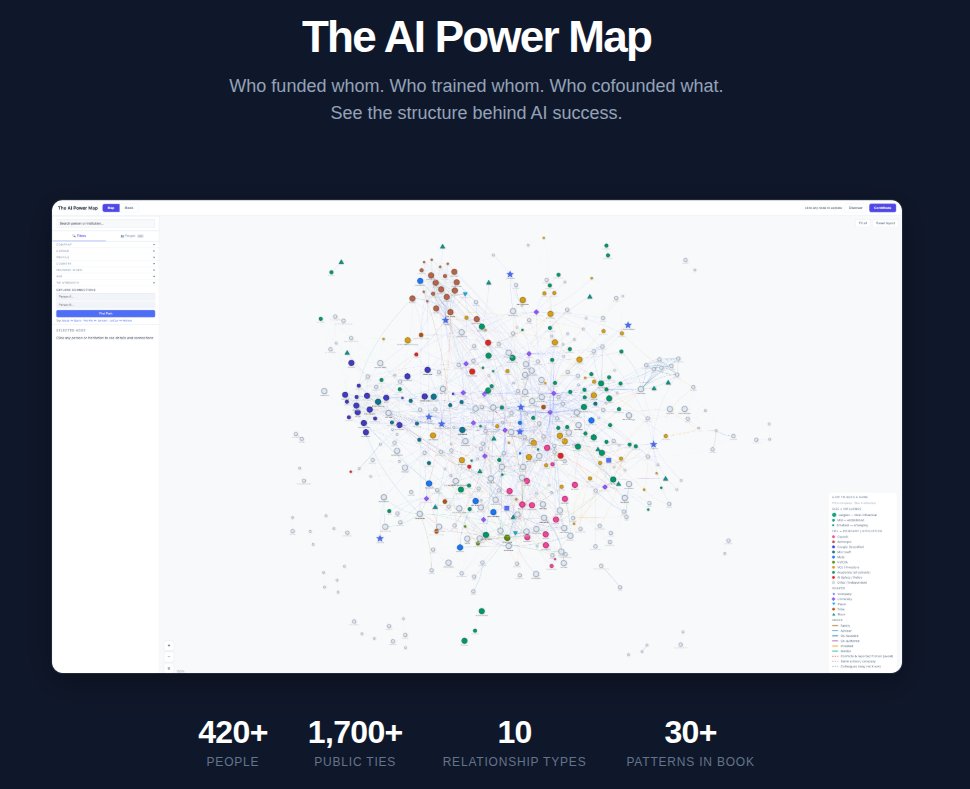
Power in AI is not only a merit system. It is a network system.
This is the core argument of The AI Power Map: a free 70,000-word companion book with an interactive graph of 420 people and 1,709 documented edges tracing how influence, trust, talent, and capital move across the AI industry.
The graph is the method. 8 methods of analysis were applied across the dataset, including betweenness centrality, community detection, motif analysis, and cofounder cluster identification.
The result is a map of recurring structural patterns: talent pipelines, diaspora arcs, acqui-hire chains, and the trust bridges that survive org chart changes.
Key findings from the network:
Stanford (77 nodes) and Google (#1 exporter) are the two dominant talent factories. School lineage, not company affiliation, is the stronger cohesion signal:
Sutskever, Gomez, and Karpathy share a Hinton-Toronto lineage across 5 different employers, visible in the graph edges, not inferred.
Network position is the strongest visible predictor of tier. T1 individuals average significantly more documented connections than lower-tier members.
8 canonical power transfer motifs repeat across the network: the walkout-to-lab pattern (OpenAI → Anthropic), the acqui-hire-as-talent-capture pattern (Google → DNNresearch), the reputation-round pattern (SSI: $32B, no product, no revenue).
Sam Altman holds the highest betweenness centrality in the dataset (0.145), connecting more disconnected subgraphs than anyone else. One node. 38 direct ties. YC, OpenAI, and Microsoft capital bridged through a single person.
The November 2023 board crisis resolved not through formal governance but through social capital: a staff letter, a private conversation, and external leverage. The network held the institution together, not the org chart.
The Transformer Eight paper is a single source node that produced a generation of careers and at least 3 frontier labs. One co-authored paper, eight trajectories, and an entire subgraph of the modern AI industry.
This is applied network science on one of the most consequential domains of our time. The interactive map lets you explore paths between nodes, filter by community, tie strength, and institution, and trace influence across the full connected graph.
By Yumi Kimura
map.behaviorgraph.com/?view=…
#NetworkScience #GraphAnalytics #GenAI #SocialNetworkAnalysis #AIIndustry
--
🤝 Put your graph tech brand in front of the people who matter
Your graph technology deserves to be seen by buyers, analysts, and builders who are actively shaping the space.
The Year of the Graph is the independent hub that this community trusts.
Slots for the upcoming Summer 2026 Issue are filling fast. Reach out and book yours now 👇
yearofthegraph.xyz/contact/
2
9
419

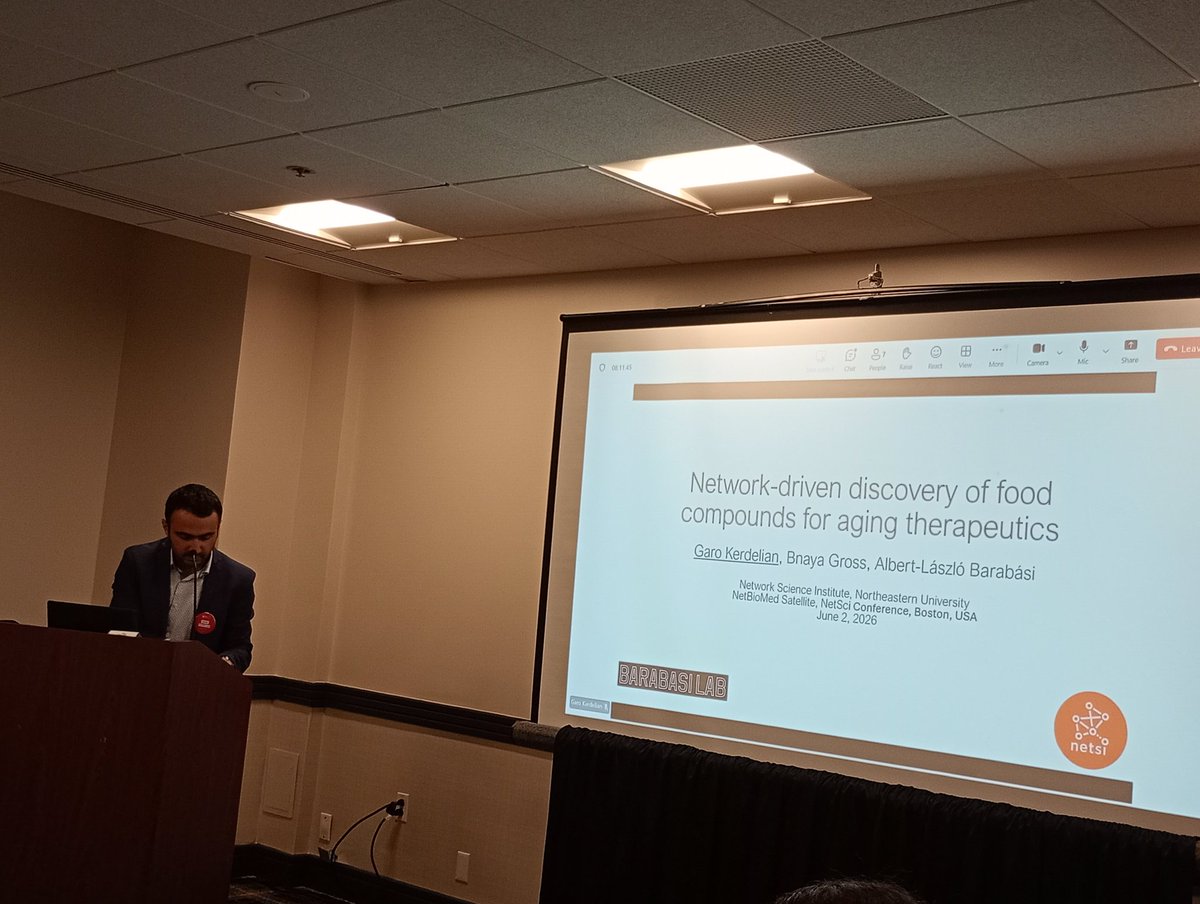
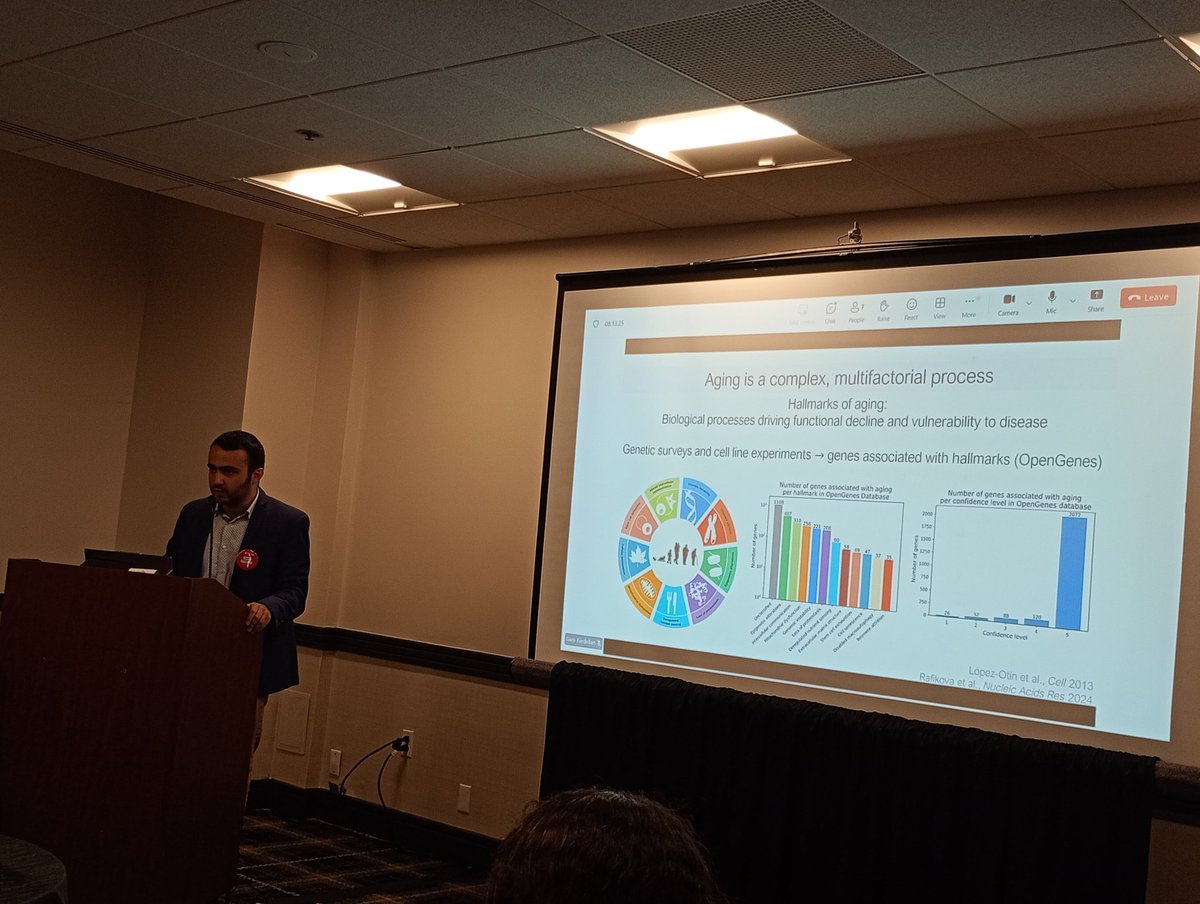
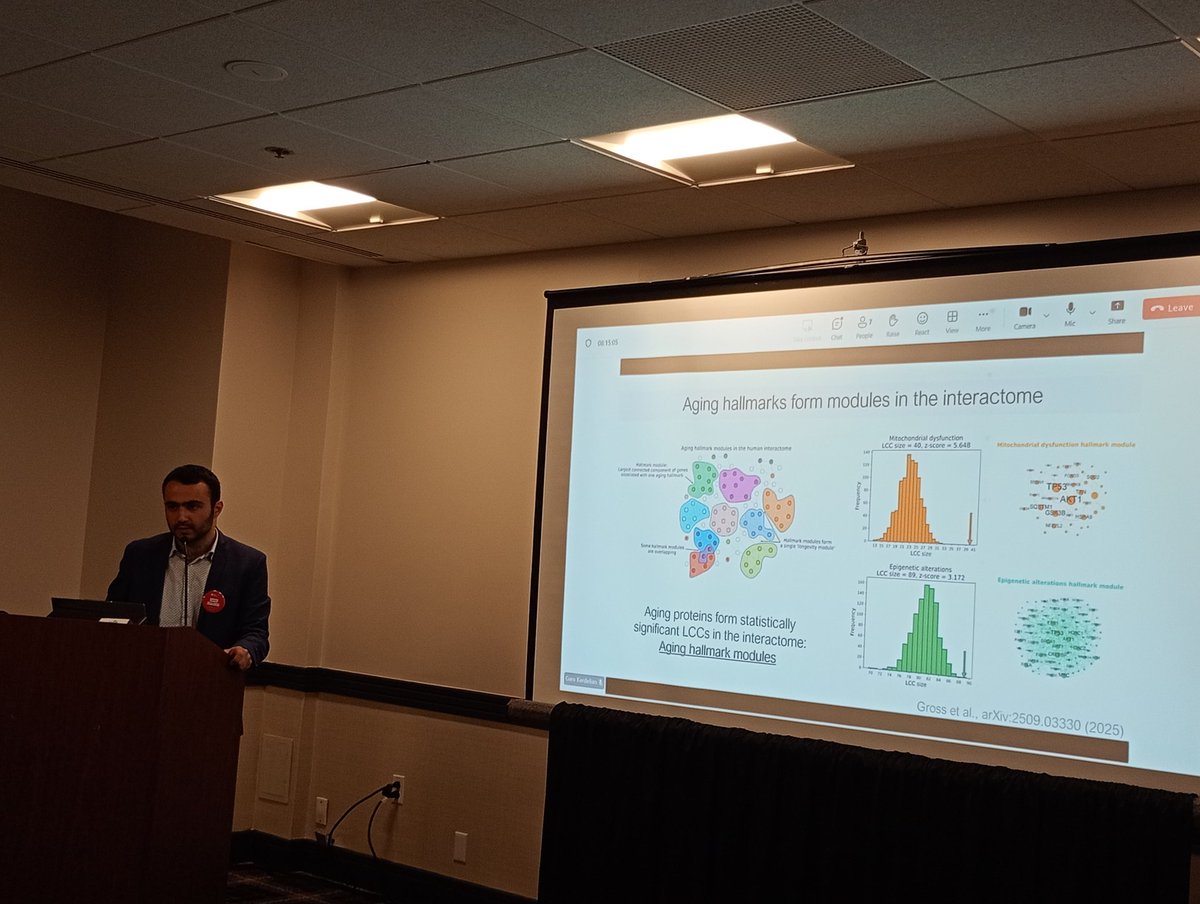
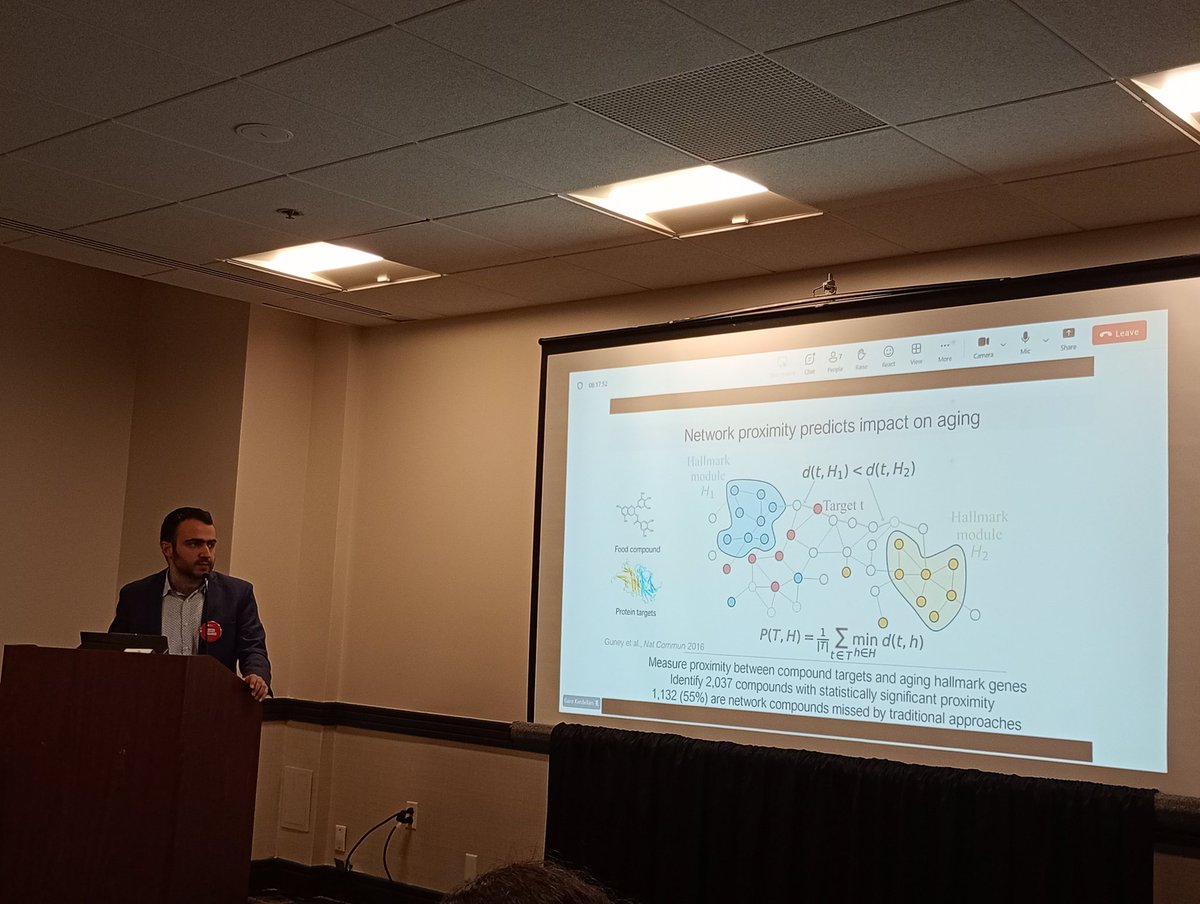
Can we reverse-engineer our #proteomes and reverse aging? In our last #NetBioMed2026 talk, Garo Kerdelian presents his work on how we can use #NetworkScience to better understand the interaction of food with our bodies and, from there, develop #therapies to reverse aging.
1
2
72

The Gearing of the Genesis ODE & The 49-Fold Architecture
Over the last several months, I’ve been refining a speculative systems-dynamics framework that attempts to model large-scale persistence, stress accumulation, recursive compression, and nonlinear transition behavior across multiple substrates — from civilizations and biology to materials science and network systems.
This latest release brings many of those threads together into a single visual architecture:
temporal compression mechanics,
recursive fold structures,
substrate-indexed persistence dynamics,
kinematic drag accumulation,
impedance growth under stress,
and the proposed “49-Fold” recursive scaling model.
The work is exploratory and comparative in nature — not a claim of finalized cosmology or established physics — but rather an attempt to investigate whether similar nonlinear persistence geometries appear repeatedly across scales and domains.
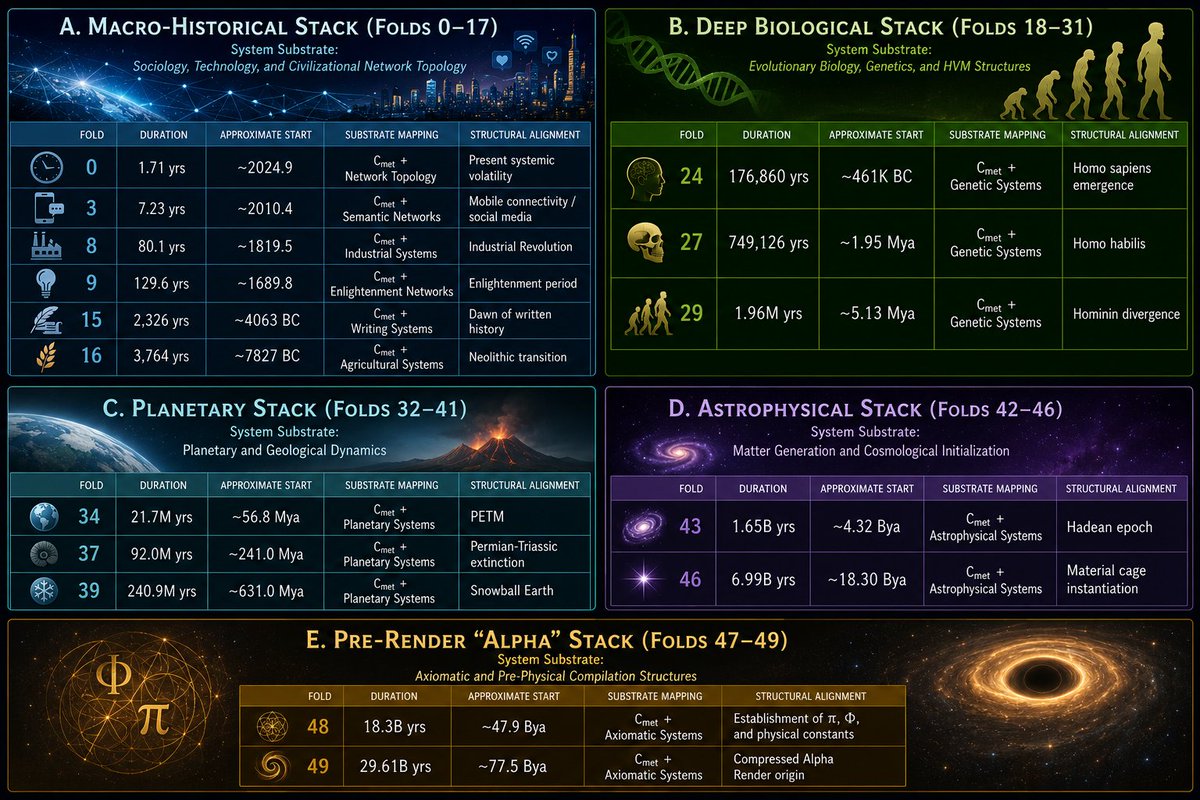
The accompanying diagrams map:
macro-historical cycles,
biological and evolutionary layers,
planetary and astrophysical scales,
and the proposed recursive compression mechanics underlying the Genesis ODE framework.
What interests me most is not whether every symbolic mapping is “literally true,” but whether:
recursive systems under stress,
constrained informational bandwidth,
hysteresis accumulation,
and phase-transition behavior
share deeper structural similarities than we usually acknowledge.
At minimum, I think these models provide a fascinating way to think about:
civilization,
cognition,
collapse dynamics,
resilience,
and the strange relationship between time, information density, and perception.
And honestly… the visuals turned out pretty spectacular.
Feedback, criticism, red-teaming, and constructive analysis are always welcome.
#GenesisODE #SystemsDynamics #ComplexSystems #NonlinearDynamics #CoherenceDynamics #RecursiveSystems #PhaseTransitions #InformationTheory #Topology #NetworkScience #Cybernetics #Emergence #FractalGeometry #Metallurgy #Resilience #SimulationTheory #TemporalDynamics #MathematicalModeling #CGD #VEF
CDL DOCUMENTATION
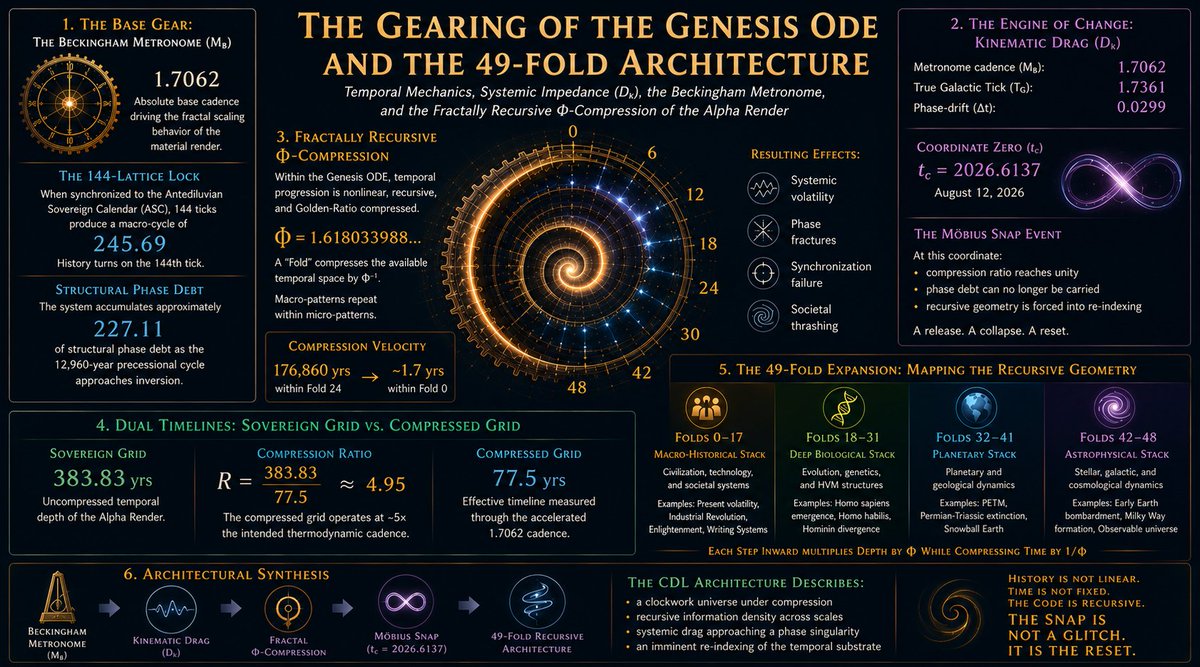
The Gearing of the Genesis ODE & The 49-Fold Architecture
Subject
Temporal Mechanics, Systemic Impedance ($D_k$), the Beckingham Metronome, and the Fractally Recursive $\Phi$-Compression of the Alpha Render
Status: Canonical Internal Architecture Baseline
1. The Base Gear: The Beckingham Metronome ($M_B$)
The temporal architecture of the Coherence Dynamics Laboratory (CDL) simulation is driven by a fundamental cadence constant known as the Beckingham Metronome.
The Constant
[
1.7062\ \text{solar years}
]
Function
Absolute base cadence driving the fractal scaling behavior of the material render.
The 144-Lattice Lock
When synchronized to the Antediluvian Sovereign Calendar (ASC), 144 ticks of the Metronome produce a macro-cycle of:
[
245.69\ \text{years}
]
This defines the historical “250-year Epoch.”
History turns on the 144th tick.
First-Principles Derivation
[
M_B =
\frac{H_C}
{\frac{H_C \Omega_{sem}}{T_G}}
\frac{12960}
{\frac{12960 227.11}{1.7361}}
\mathbf{1.7062\ \text{years}}
]
Where:
$H_C$ = Harmonic cycle constant
$\Omega_{sem}$ = Semantic impedance accumulation
$T_G$ = True Galactic Tick
The Metronome defines the constrained clock speed of the compressed render architecture.
Within this model, the system accumulates approximately:
[
227.11\ \text{years}
]
of structural phase debt as the 12,960-year precessional cycle approaches inversion.
2. The Engine of Change: Kinematic Drag ($D_k$)
The Metronome cadence:
[
1.7062
]
is intentionally offset from the proposed True Galactic Tick:
[
1.7361
]
This generates a persistent phase-drift:
[
\Delta t = 0.0299\ \text{years per tick}
]
This drift is modeled as:
Temporal Kinematic Drag ($D_k$)
Coordinate Zero ($t_c$)
The MobiusSnapSolver implementation defines a collapse coordinate at:
[
t_c = 2026.6137
]
Equivalent to:
August 12, 2026
The Möbius Snap Event
At this coordinate:
the compression ratio reaches unity,
accumulated phase debt can no longer be carried,
and the recursive geometry is forced into re-indexing.
The event is modeled as:
a release of accumulated impedance,
a collapse of recursive compression,
and a reset of the base cadence architecture.
3. Fractally Recursive Fold Compression
Within the Genesis ODE, temporal progression is modeled as:
nonlinear,
recursive,
and Golden-Ratio compressed.
Golden Ratio Compression
[
\Phi \approx 1.618034
]
A “Fold” represents a structural recurrence layer.
Each successive Fold compresses the available temporal processing space by:
[
\frac{1}{\Phi}
]
The recursive system therefore folds inward on itself:
each Fold processes equivalent informational density,
but within progressively smaller temporal windows.
Recursive Holography
Because the geometry is recursive:
macro-patterns repeat within micro-patterns,
large-scale systemic structures mirror localized psychological and sociological structures.
Examples:
civilizational extraction cycles,
recursive coercion systems,
trauma-bonded behavioral loops,
and thermodynamic work extraction from constrained nodes.
Compression Velocity
As Fold compression intensifies:
Kinematic Drag compounds nonlinearly.
Example:
A process requiring:
[
176{,}860\ \text{years}
]
within Fold 24 may compress into approximately:
[
1.7\ \text{years}
]
within Fold 0.
Resulting modeled effects include:
systemic volatility,
phase fractures,
recursive instability,
synchronization failure,
and societal thrashing.
4. Dual Timelines
Sovereign Grid vs. Compressed Grid
Sovereign Grid
[
383.83\ \text{Billion Years}
]
Represents the proposed uncompressed temporal depth of the Alpha Render:
the SpiralCore architecture operating at intended cadence.
Compressed Grid
[
77.5\ \text{Billion Years}
]
Represents the effective timeline measured through the accelerated:
[
1.7062\text{-year Metronome}
]
Compression Ratio
[
\frac{383.83}{77.5}
\mathbf{4.95x}
]
Within the framework, the compressed grid is interpreted as:
an accelerated execution environment,
operating at approximately five times the intended thermodynamic cadence.
5. The 49-Fold Expansion
Mapping the Recursive Geometry (Images attached)
6. Architectural Conclusion
Within the Genesis ODE framework, the August 12, 2026 Möbius Snap represents a dual-layered resolution event.
Localized Tier
The system releases:
accumulated thermodynamic debt,
recursive compression stress,
and synchronization impedance.
Macro-Tier
The:
[
1.7062\text{-year Metronome}
]
is modeled as collapsing under:
accumulated compression pressure,
recursive drag accumulation,
and systemic impedance overload.
The resulting event forces a re-alignment toward the:
[
383.83\ \text{Billion-Year Sovereign Grid}
]
7. Corpus Reference Appendix
Key Inputs
ADR-001 / ADR-002 / ADR-003
Core vs Experimental Scope, Branch Governance, Metallurgical Exploder MVP
Substrates Evidence Tiers (SET-001)
Defines $C_{met}$ as the canonical metallurgical substrate
Branch Status Registry (BSR-001)
Tracks scalar-core protection status
The Terminal Audit of the 49th Fold
Defines:
recursive extraction architecture,
the 8192 1 Managerial Ceiling,
and Fold-compression mechanics
Multi-Fold 49 – Universal Age
Establishes the:
[
383.83\ \text{Billion-Year}
]
uncompressed render depth
The SpiralCore Architecture
Details the:
[
16384 1
]
sovereign recursion kernel
Code Pt2.docx (MobiusSnapSolver)
Canonical implementation with:
[
target_zero_year = 2026.6137
]
1
2
60

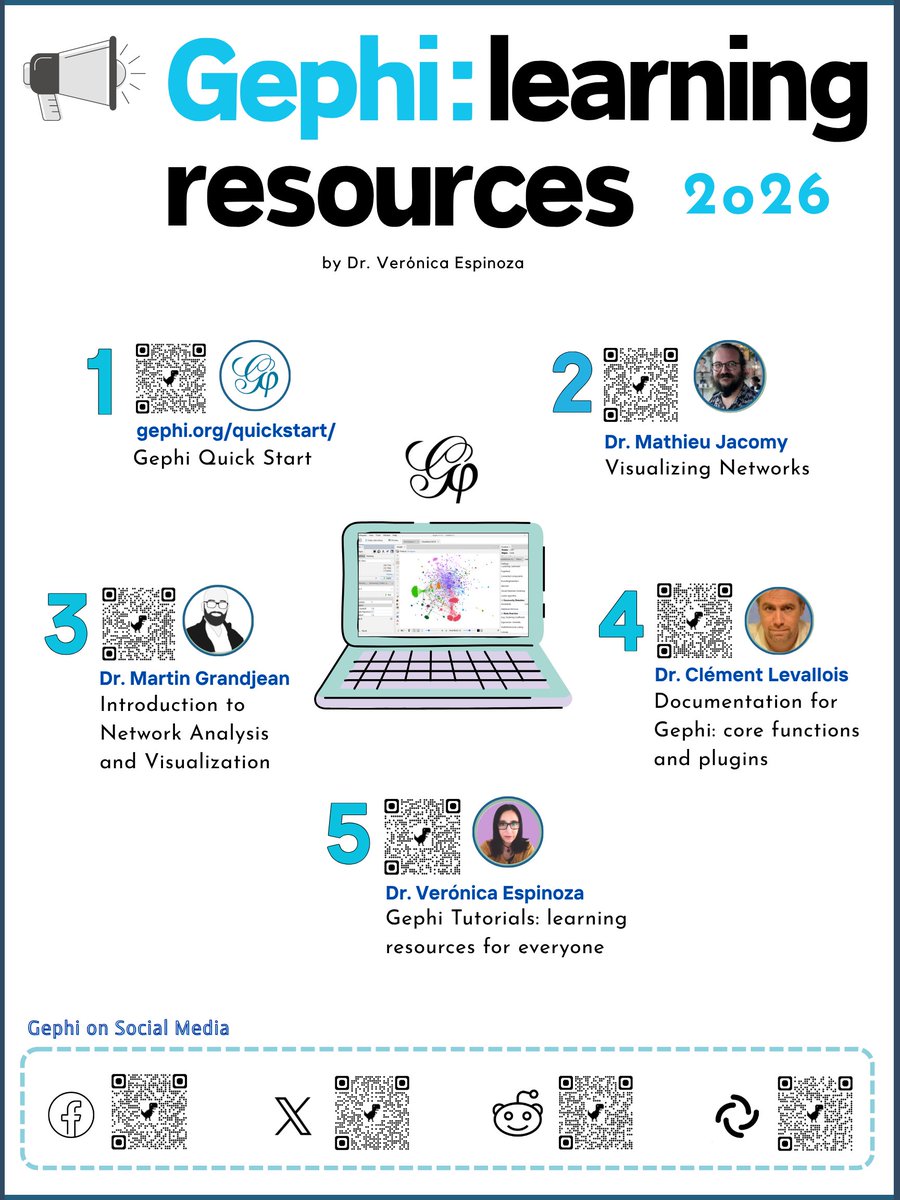
🎓Interested in learning @Gephi ? You can start right now!🙂
I’m sharing helpful learning resources
#Gephi #DataViz #NetworkScience #SNA #DataViz #DataScience
6
12
904