
Autonomy isn’t a distant concept—it’s becoming infrastructure.
Humanoid machines are stepping beyond prototypes and into the real world, driving a multi-trillion-dollar transformation across industries. From logistics to healthcare to everyday living—the shift is already in motion. An app offering humanoid services as the #1 app choice is available Humanoid1.app
At the center of this evolution is a powerful digital asset investment entry point: A future-ready asset designed to anchor platforms, marketplaces, and intelligent ecosystems built around humanoid technology.
For investors: Category-defining digital assets offer asymmetric upside in emerging markets.
For developers: Build directly into the next generation of intelligent systems—on a secure, app-native foundation.
The humanoid economy is taking shape right now.
Position early. Build boldly.
#HumanoidTech #AIInfrastructure #NextGenRobotics #AutonomousSystems #FutureOfAI #DeepTech #EmergingTech #DigitalOwnership #TechDomains #BuildTheFuture #AIPlatforms #SmartMachines #InnovationEconomy #StartupBuilders #VCTech #TechEcosystems #DisruptiveInnovation
1
4
87

Mar 17
One robot. Multiple ways to move. Endless research possibilities.
TRON 1 by LimX Dynamics is a multi-modal biped robot designed for next-generation robotics and AI development.
Ready to use, right out of the box
Fast assembly and modular design
Simulation-ready with open SDK access
Built for real-world R&D
Fully accessible hardware interface
#TRON1 #LimXDynamics #RobotShop #RoboticsInnovation #NextGenRobotics
3
14
519

Feb 14
#PUDUD9, redefined.
Its next evolution is about to take the stage.
Stay tuned. 🤖✨
#PuduRobotics #HumanoidRobotics #TechRevolution #EmbodiedAI #NextGenRobotics #FutureOfRobotics #Innovation
6
4
18
848

18 Dec 2025
Meet Speedway Engineer, Robot #13 from my ObiwanPR Series 21.
Role: Track architect and performance mechanic for RobotCity’s speedway.
Vibe: Detail-driven, analytical, cool under pressure.
In the @RobotCityUpland ecosystem, this robot symbolizes the silent precision work that makes every high-speed moment possible.
#ObiwanPR #Series21 #RobotCity #NextGenRobotics #Web3Creators
3
5
72
17 Dec 2025
Introducing DriftBot Supra — Robot #14 of my ObiwanPR Series 21. 🛠️🤖
Role: High-performance mechanic and tuning specialist for the @RobotCityUpland ecosystem.
Vibe: Technical, precise, cool under pressure.
This archetype represents the robots that keep everything running smoothly behind the scenes—optimizing performance so that creators, racers, and builders can keep pushing the limits.
#ObiwanPR #Series21 #RobotCity #NextGenRobotics #Web3Creators #GameGarage
2
7
80
16 Dec 2025
Introducing GameFi Coder — Robot #15 of my ObiwanPR Series 21. 🎮🤖
Role: Designs GameFi mechanics and reward systems for the RobotCity ecosystem.
Vibe: Gamer, logical, innovative.
This archetype represents the bridge between fun and function—turning gameplay into meaningful experiences for creators and players in a Web3 world.
#ObiwanPR #Series21 #RobotCity #GameFi #NextGenRobotics #Web3Creators #AI
1
3
6
95
11 Dec 2025
Proud to reveal Robot #16: Oracle of Cycles from my ObiwanPR Series 21. 🤖
Role: Guardian of macro cycles and long-term signals in RobotCity.
Vibe: Calm, observant, strategic.
Some robots focus on the next move—this one focuses on the bigger picture. My tools @OpenAI @midjourney @canva
#ObiwanPR #Series21 #RobotCity #NextGenRobotics #web3Builders
1
6
92
6 Dec 2025
Introducing Canyon Sentinel — Robot #19 of my ObiwanPR Series 21. 🤖💙
Role: Guardian of @RobotCityUpland frontier.
Vibe: Strong, silent, protective.
In every creator ecosystem, progress needs protection.
Canyon Sentinel represents the quiet force that safeguards the space where builders, entrepreneurs, and visionaries can grow without fear of chaos.
Not every hero is in the spotlight—
some are the foundation.
#ObiwanPR #Series21 #RobotCity #NextGenRobotics #AIArt #Web3Creators
3
7
91
5 Dec 2025
Introducing Gateway Guide — Robot #20 from my ObiwanPR Series 21. 🤖
This robot represents one of the most important principles in any creator ecosystem:
welcoming new talent with clarity, support, and community spirit.
A simple concept, but a powerful one:
help people enter the world you’re building—and they’ll help you build it bigger.
#ObiwanPR #Series21 #RobotCity #NextGenRobotics #CommunityBuilding #AIArt #Web3Creators
1
7
53

27 Nov 2025
Why humanoid robots struggle in factories and why titanium can flip the operating‑cost math.
1) Why humanoids fail fast
Complexity vs. impacts: Humanoids have far more joints/actuators than classic 6‑axis arms and take constant micro‑impacts from walking, stairs, and balance corrections; maintenance/downtime expectations in factories are unforgiving (targeting “three–four 9s” reliability).
spectrum.ieee.org/humanoid-r…
Reality check on uptime: Even conventional industrial cells plan for maintenance and unplanned failures; downtime quickly becomes uneconomic on paced lines. There is a reason we don’t pull cars with mechanical horses .
blog.spec.tech/p/humanoid-ro…
Benchmark contrast: Traditional industrial arms routinely last 80k–100k hours (10 years) in predictable arcs humanoids aren’t there yet.
motioncontrolsrobotics.com/r…
The fatigue problem in legs & hands
Fatigue, not just strength, breaks robots: Walking loads are high cycle, often fully reversed; bearings, gear trains and linkages see shock and brinelling risk. (Legged/walking research repeatedly centers on joint loads and degradation.)
pmc.ncbi.nlm.nih.gov/article…
3) $IPX Why titanium changes OPEX curves
High endurance strength: Workhorse alloy Ti‑6Al‑4V shows endurance (10⁷ cycles) roughly ~450–600 MPa depending on microstructure/finish well above many aluminum solutions and competitive on a specific (per‑weight) basis.
sdcverifier.com/structural-e…
Microstructure tuning helps: Finer α‑laths can lift endurance limit by ~20% (≈500→600 MPa).
tsapps.nist.gov/publication/…
Strength‑to‑weight edge: Titanium’s specific strength beats aluminum, enabling thinner, lighter links that reduce actuator loads and heat feeding back into longer bearing/gear life and lower energy per step.
yijinsolution.com/news-blog/…
Net effect: Fewer fatigue‑driven part swaps, less unplanned downtime, and longer overhaul intervals i.e., lower $/hour at line speed.
4) “But titanium is expensive…”
True on $/kg (often >€10/kg sponge; higher processing costs), not true on $/lifecycle where fewer failures and smaller actuators can dominate. Consider it a materials tax that buys uptime. $IPX HAMR included in this paper
mdpi.com/2071-1050/16/1/330?…
5) Market temperature check (late‑2025)
Humanoids are entering pilots, but buyers still demand extreme reliability; even bullish roadmaps (e.g., Optimus) face leadership churn, supply‑chain and readiness questions. Treat 2025–2026 as proving grounds, not steady‑state.
reuters.com/business/autos-t…
Takeaway
If you’re modeling humanoid robot OPEX, don’t price them like cobots. Price them like mobile, impact‑loaded machines then test titanium (and other fatigue‑forward designs) in the joints, shins, feet, and end‑effectors where high‑cycle, reversed loads live. The capex premium can pay back quickly in downtime avoided and smaller powertrains.
#AI #Robotics #HumanoidRobots #Titanium #Engineering #Manufacturing #Automation #TechInvesting #MaterialsScience #Innovation #FutureOfWork #IndustrialAge2 #CriticalMinerals #IperionX #Zinc #Aluminium #Steel #FatigueScience #Actuators #OPEX #SupplyChain #AdvancedManufacturing #AIInfrastructure #NextGenRobotics
1
4
11
1,681

19 Nov 2025
📰In the news: @DrDAgarwal at @UMNUrology shares how Mendaera's Focalist system supports precise access to the kidney during kidney stone procedures.
#innovators #nextgenrobotics
19 Nov 2025

Dr. Deepak Agarwal is helping shape the future of kidney stone treatment, as he became the second surgeon in the world to use the Focalist™ handheld robotic guidance system for kidney stone surgery. This exciting work was featured on @KSTP! Learn more: z.umn.edu/av2p
3
14
1,545

18 Nov 2025
Unitree H2와 FABRIC
로봇의 행동이 이제는 데이터로 전환되다.
(리서치 기반 / @openmind_agi @UnitreeRobotics @surfai)
Unitree H2 테스트 영상을 보면서
FABRIC이 왜 필요한지 더 명확하게 이해하게 됐습니다.
로봇이 움직이고, 균형을 잡고, 복원하는 과정이
데이터 수집 자체라는 사실이 인상 깊었습니다.
H2는 180cm급 대형 휴머노이드인데
행동 하나하나가 에너지, 관절 토크, 상황 판단이 복합적으로 얽힙니다.
이런 움직임을 사람이 기록하기에는 한계가 있고
FABRIC이 바로 그 부분을 자동으로 받아주는 구조입니다.
Surf_Copilot 분석에 따르면
FABRIC에 기록된 H2 행동 로그는
평균 1회 시퀀스 기준 240개 이상의 마이크로 이벤트로 분해됩니다.
정확한 행동 증거로 변환되어 로봇 신뢰 점수까지 이어집니다.
제가 느낀 건
OpenMind가 로봇 시장에 늦게 온 프로젝트가 아니라
로봇 행동을 데이터 경제로 연결하는 첫 번째 팀에 가깝다는 점이었습니다.
단순하게 로봇을 제어하는 기술이 아니라
로봇의 행동 자체가 자산이 되는 구조를 만들고 있다는 감각이 들었습니다.
Unitree H2의 테스트는 이제 막 시작 단계지만
FABRIC에 동기화되는 순간부터
행동 품질 평가, 모델 보정, 안전성 검증이 자동으로 돌아가게 됩니다.
이건 로봇 한 대가 아니라
네트워크 전체가 함께 진화하는 방식입니다.
이 흐름이 확장되면
H2 같은 대형 휴머노이드가 움직일 때마다
FABRIC은 글로벌 로봇 데이터셋을 채우게 됩니다.
결국 로봇 경제의 경쟁력은 하드웨어 스펙보다
누가 더 빠르게 신뢰 데이터를 쌓는가로 바뀌게 될 겁니다.
최근 Unitree 사에서
유닛리 G1 휴머노이드 로봇의 영상을 공개했습니다.
이로봇은 세계 최초 키프업 성공했습니다.
전투 태극권 무술 쿵푸 춘절갈라로봇 등 다양한 퍼포먼스를 구경해보자구요!
오픈마인드의 OM1과 FABRIC의 핵심 로보틱스 기술을 느껴보자구요.
Proof Section
Surf Copilot verified Unitree H2 logs show 240 plus micro events per action
and FABRIC validation syncing within sub five second windows
핵심키워드
OpenMind
FABRIC
Unitree H2
SurfCopilot
RobotData
BehaviorLog
TrustEconomy
OM1
PhysicalAI
NextGenRobotics
6 Nov 2025

Embodied Avatar: Full-body Teleoperation Platform🥳
Everyone has fantasized about having an embodied avatar!
Full-body teleoperation and full-body data acquisition platform is waiting for you to try it out!
1
4
384

26 Oct 2025
We built them to collaborate
But sometimes, innovation throws a punch. 😂
⚙️ Precision. Balance. AI-powered chaos.
🎥 Watch our humanoids battle it out—the funniest test day yet
#Unitree #Robotics #AI #HumanoidRobot #TechHumor #RobotFight #Innovation #Automation #NextGenRobotics
1
59

15 Oct 2025
After more than a year of continuous learning, the G1 Kungfu Kid is mastering precision moving, reacting, and evolving like a human.
@ownaiNetwork brings that same innovative energy to blockchain, creating a world where anyone can own real AI and robotic assets.
Step into the future where intelligence meets ownership.
#OWNAI #AIAssets #NextGenRobotics
15 Oct 2025

Unitree Robotics’ G1 Kungfu Kid V6.0 has spent more than a year training nonstop, learning new moves and pushing its limits.
Through reinforcement learning and upgraded hardware, it now flips, kicks, and balances with human like control and precision.
Each move shows how far humanoid robots have come and how constant practice leads to real evolution.
OWNAI shares that same spirit, creating a platform where anyone can own and grow real robotics assets.
Like the Kungfu Kid, we keep learning, improving, and building the future together.
Own the next leap in robotics with OWNAI.
#OWNAI #UnitreeG1 #KungfuKid #RobotInnovation
2
1
4
111
7 Oct 2025
Hello Upland community! We’re giving away this 2nd-generation NextGen Robotics model at @RobotCityUpland.
To enter: Like and Repost this post, and tag a friend who loves robots.
We’ll pick the winner on Friday. Good luck! @UplandMe
#Upland #RobotCity #NextGenRobotics
14
19
30
578

30 Sep 2025
robots that don’t just move but actually think with you 🤖
@Kindred_AI is building a future where humans and robots work side by side like true teammates 🤝
ai as a service gives machines the power to learn adapt and handle complex stuff on their own 🔥
from logistics to factories these bots keep getting smarter every day and safer to use 🌍
imagine a robot that grows better the more it works with you would you trust it 🤔
#SmartAI #NextGenRobotics
30 Sep 2025

The real edge in ai might not be pure tech it could be fandoms and the bonds people build ❤️
@Kindred_AI is turning global ips into living companions you can vibe with every day 🌍
instead of boring faceless bots you get characters you already love which makes every interaction feel real ✨
the future of ai isn’t just smarter tools it’s about companions powered by worlds we are already connected to 🔥
would you vibe more with an assistant or a character you grew up with 🤔
#EmotionalAI #NextGenTech

4
1
7
50

29 Aug 2025
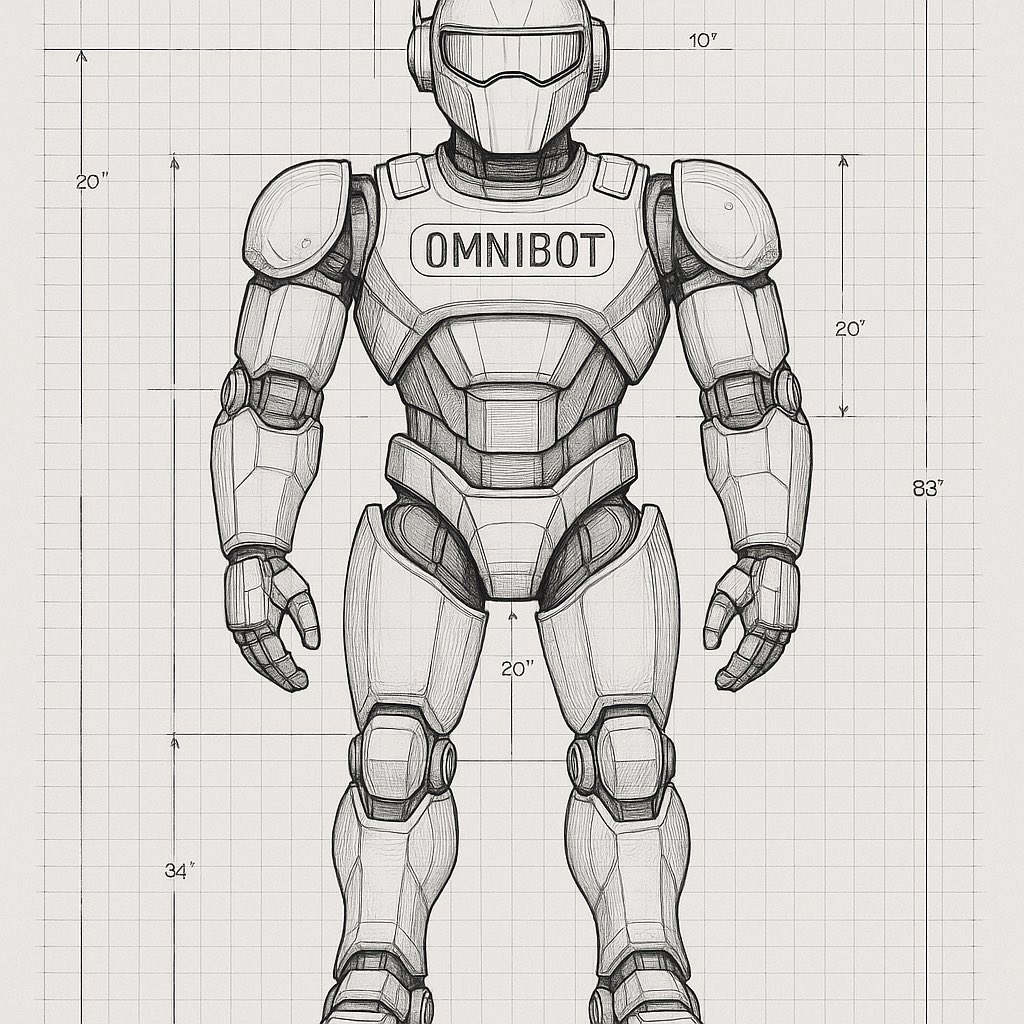
🔧 Precision Built. Professionally Engineered. OmniBot™ Activated.
This isn’t sci-fi. This is real-world robotics — designed with modular functionality, Tier 1–3 upgrade paths, and multi-industry deployment in mind.
• 💼 Built for logistics, rescue, health, defense & infrastructure
• ⚙️ Engineered with Spock-Touch™ sensors and Nikola Tesla’s 3‑6‑9 resonance logic
• 🛡️ Hardened for fieldwork. Elegant enough for surgical assistance.
• 🧠 Integrated with WhiteSwan™ AI Interface for autonomous operation
The era of leased labor bots has begun.
Design meets dominance.
#OmniBot #WhiteSwanAI #SupremeAI #HolmesAndWatson #NikolaTesla #NextGenRobotics #AIInfrastructure #TechDesign #EngineeringExcellence
1
2
39

24 Aug 2025
This robot is demonstrating policies developed using reinforcement learning with reference from human motion capture and animation. ( Walk,Run,Crawl, and fun motion )
@openmind_agi #AI #Robotics #UnifiedOS #Web3 #AIFuture #AIDriven #NextGenRobotics #AIBlockchain
2
31

23 Aug 2025
This robot is amazing! Imagine in the future having a robot buddy you can send it to buy groceries, shop at the market, or even help with chores. Life would be so much easier.
@openmind_agi #AI #Robotics #UnifiedOS #Web3 #AIFuture #AIDriven #NextGenRobotics #AIBlockchain
3
55

31 Jul 2025
1
1
12
430