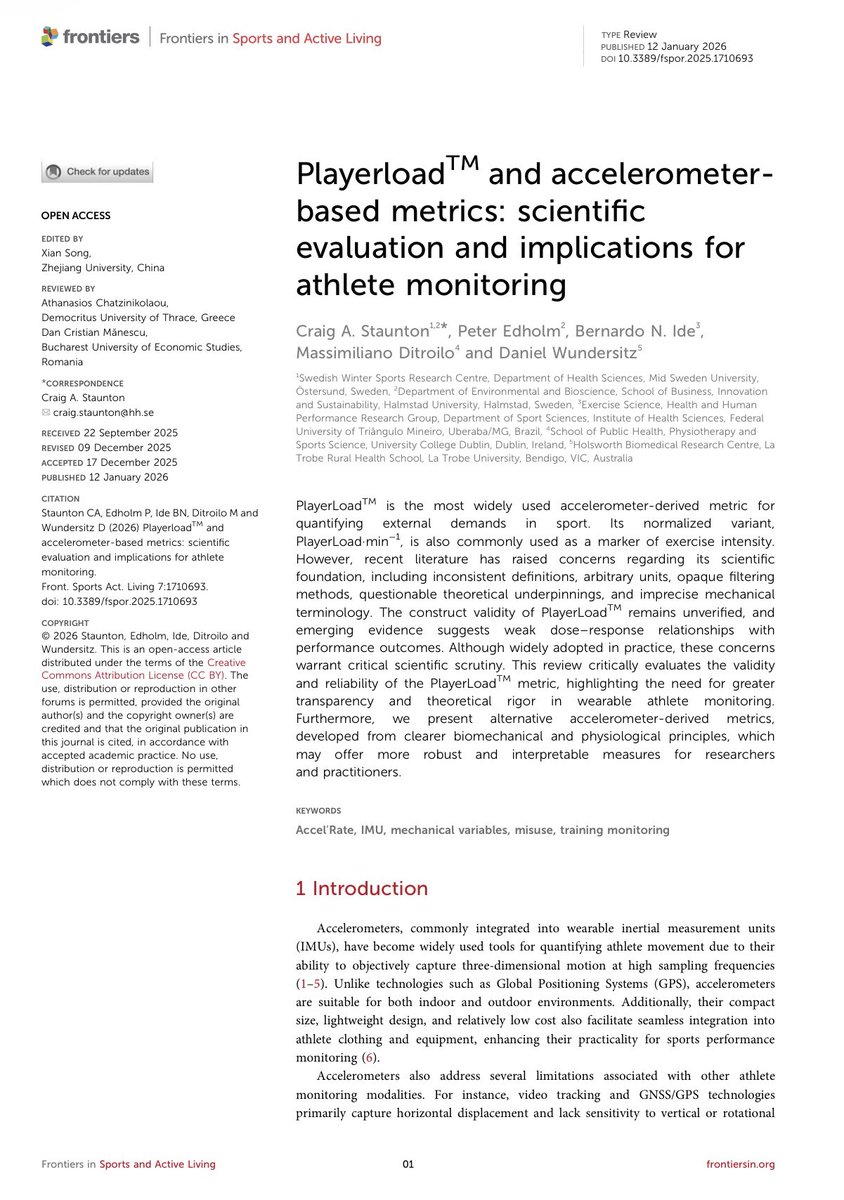
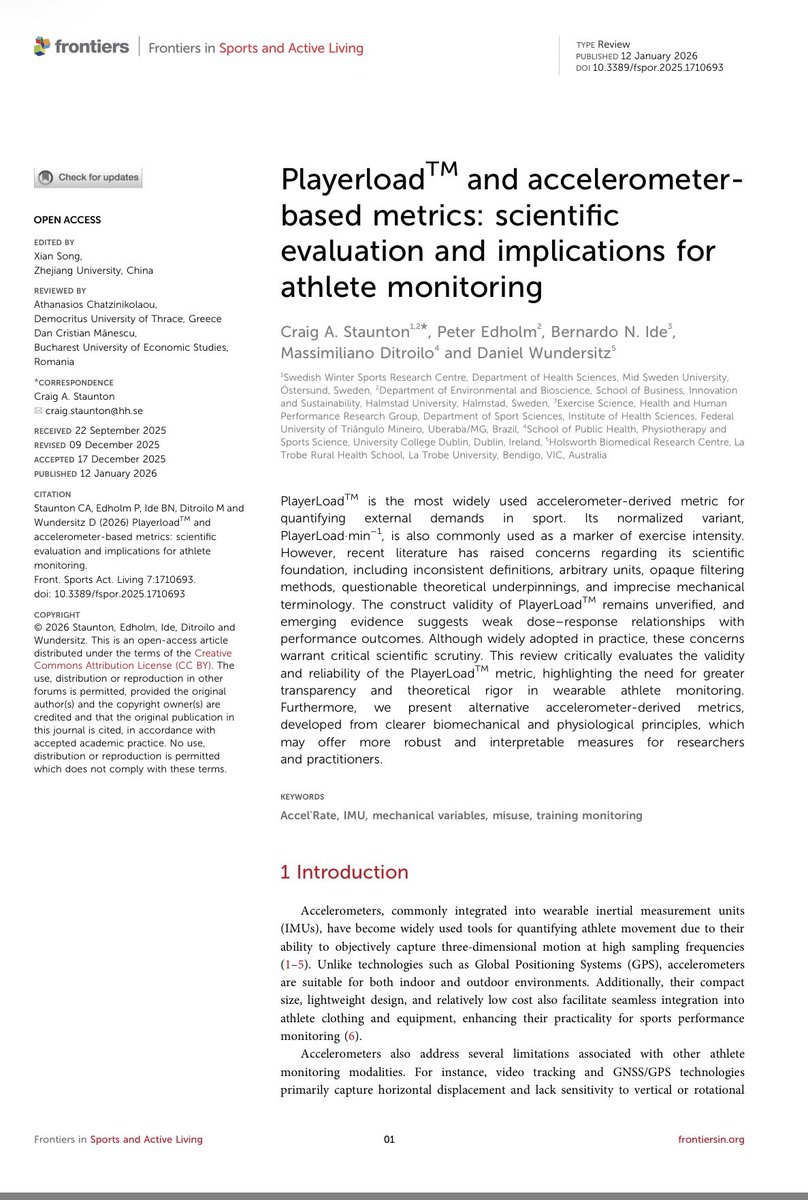
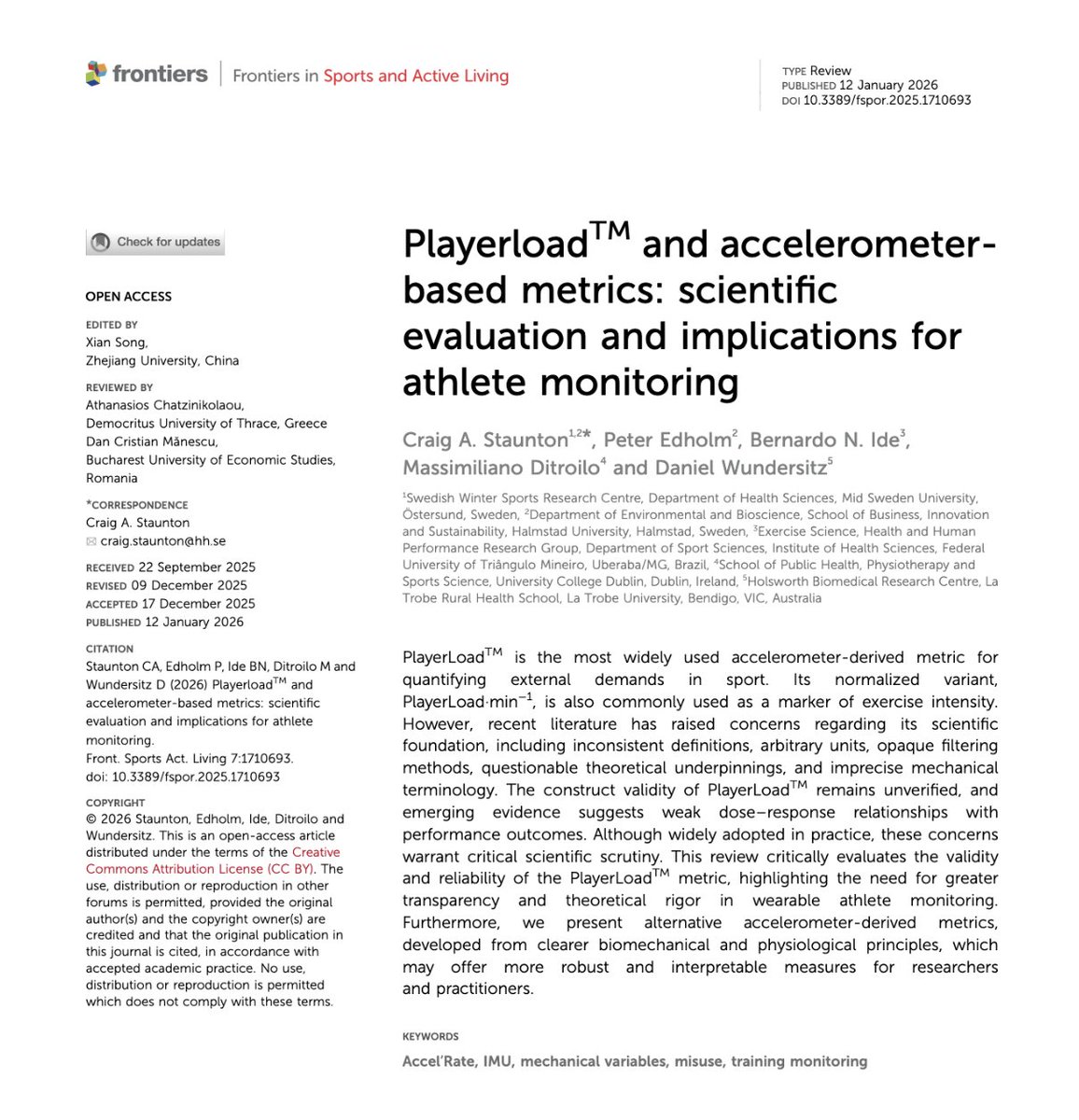
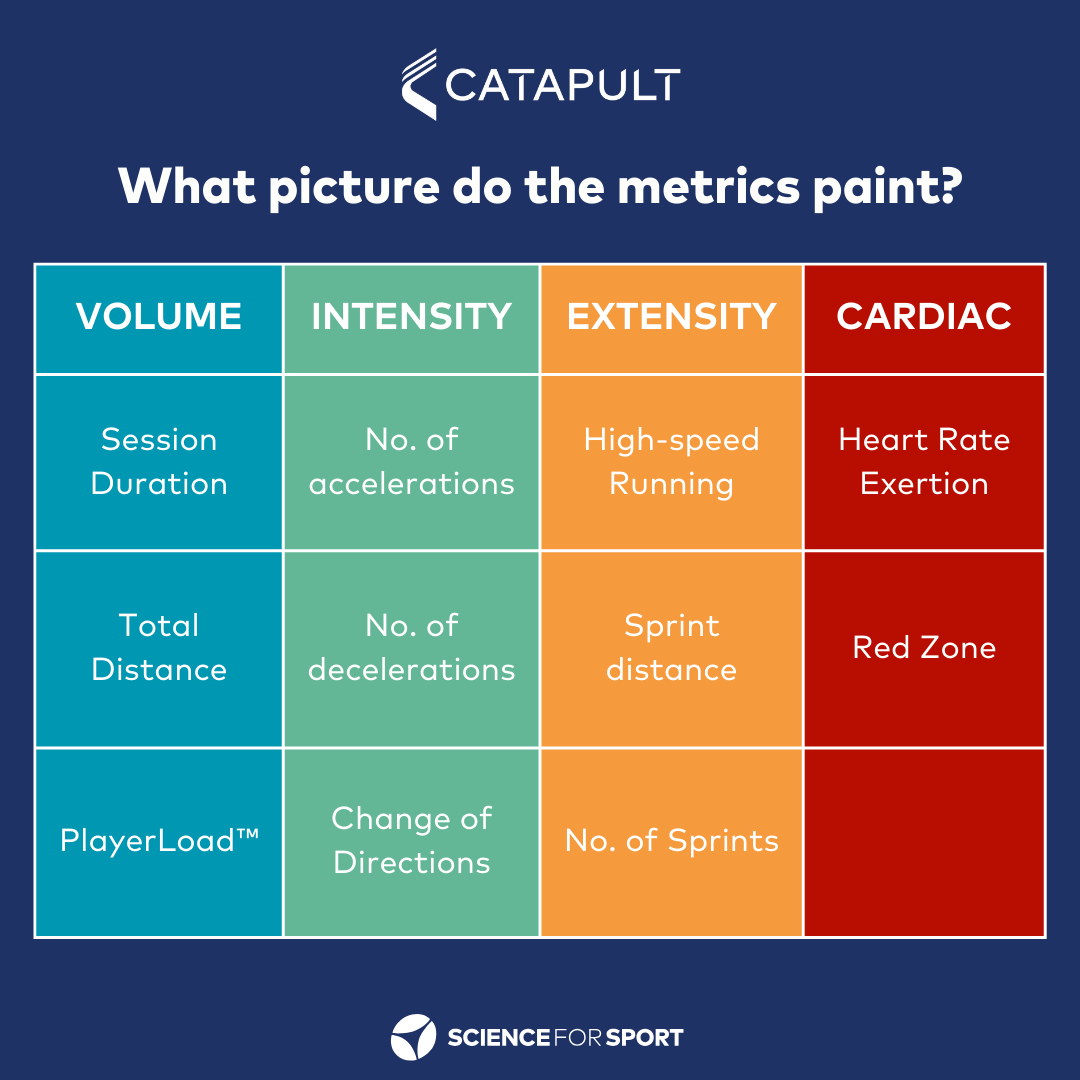
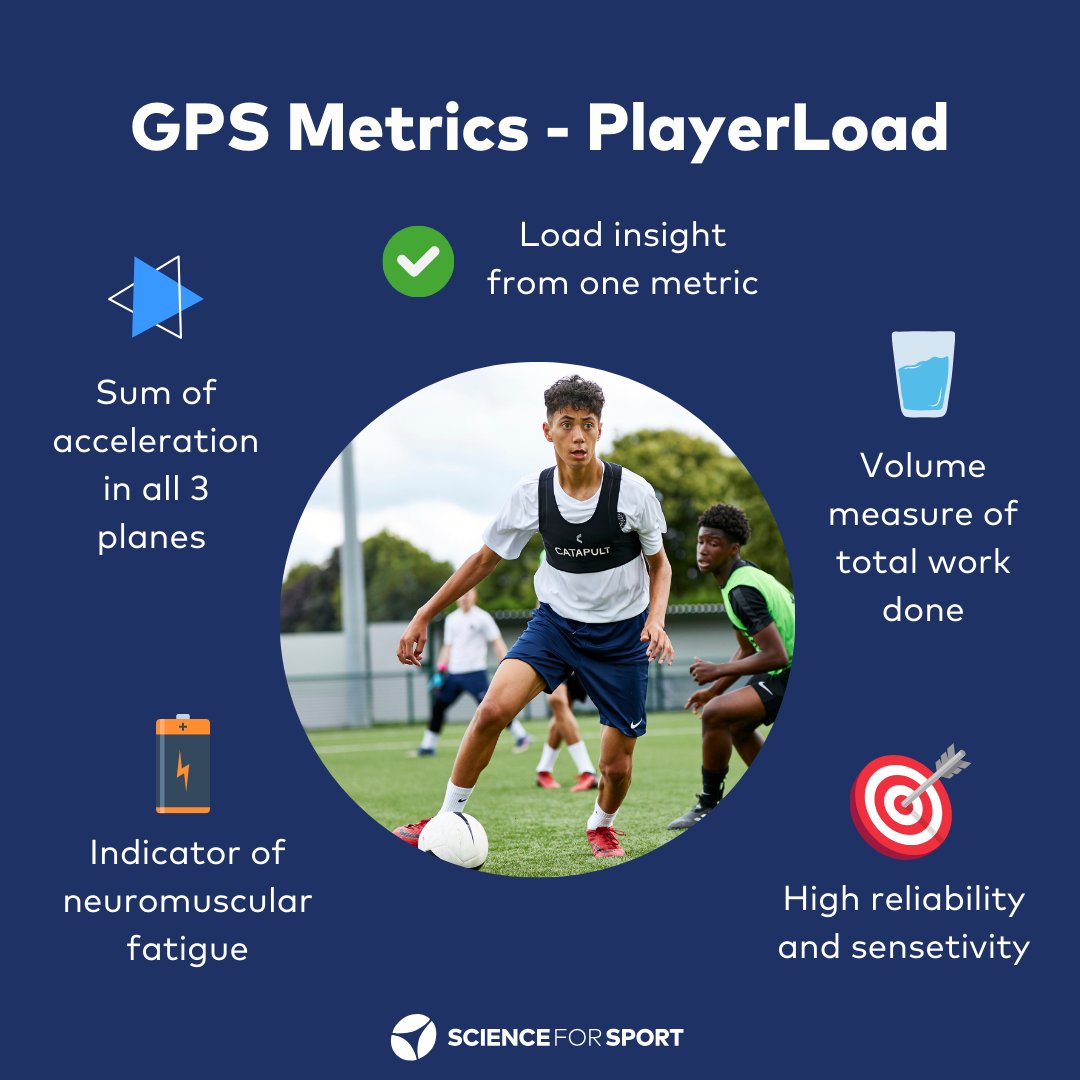
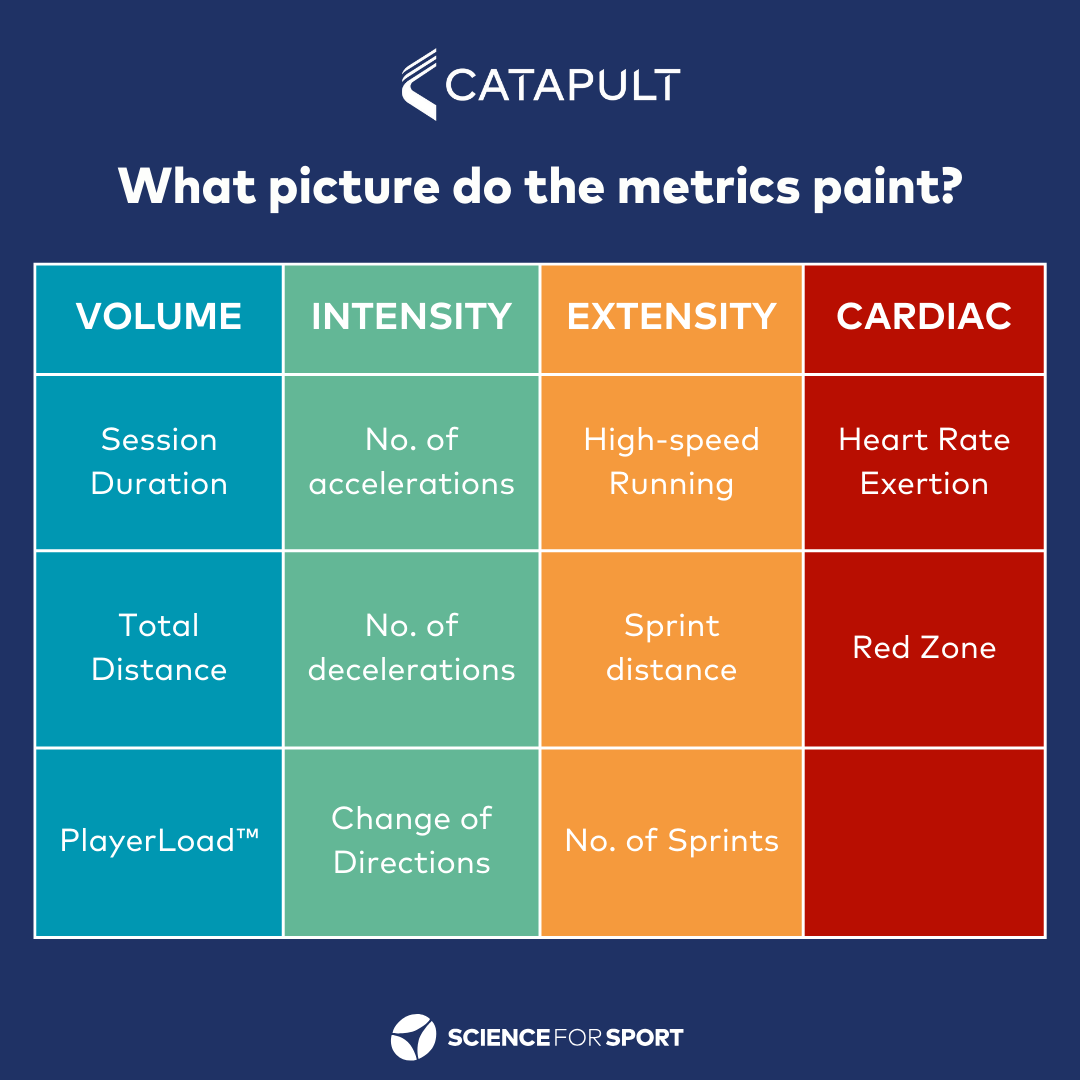
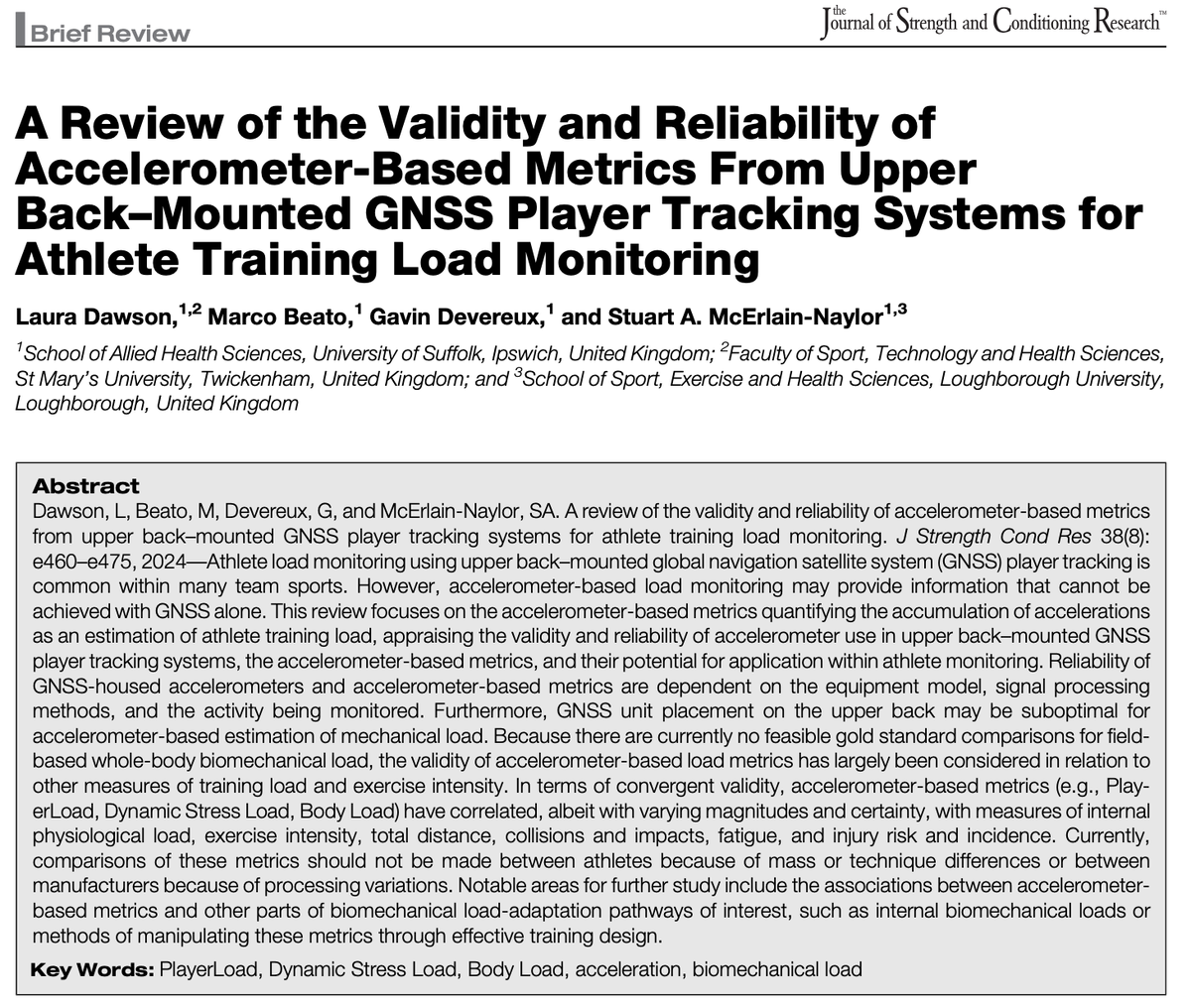
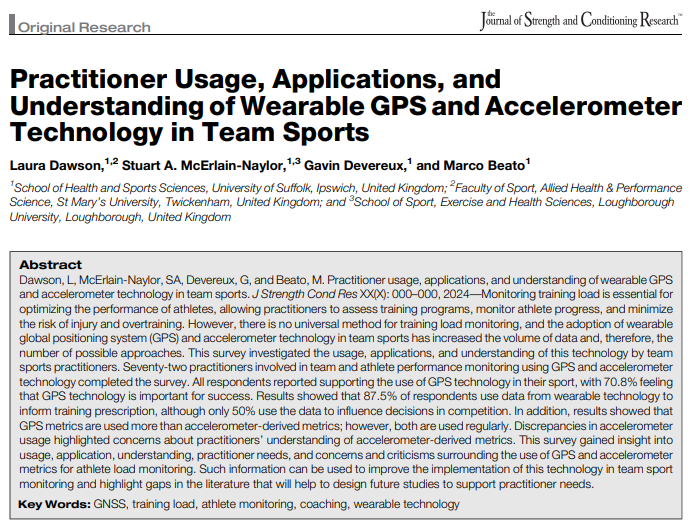
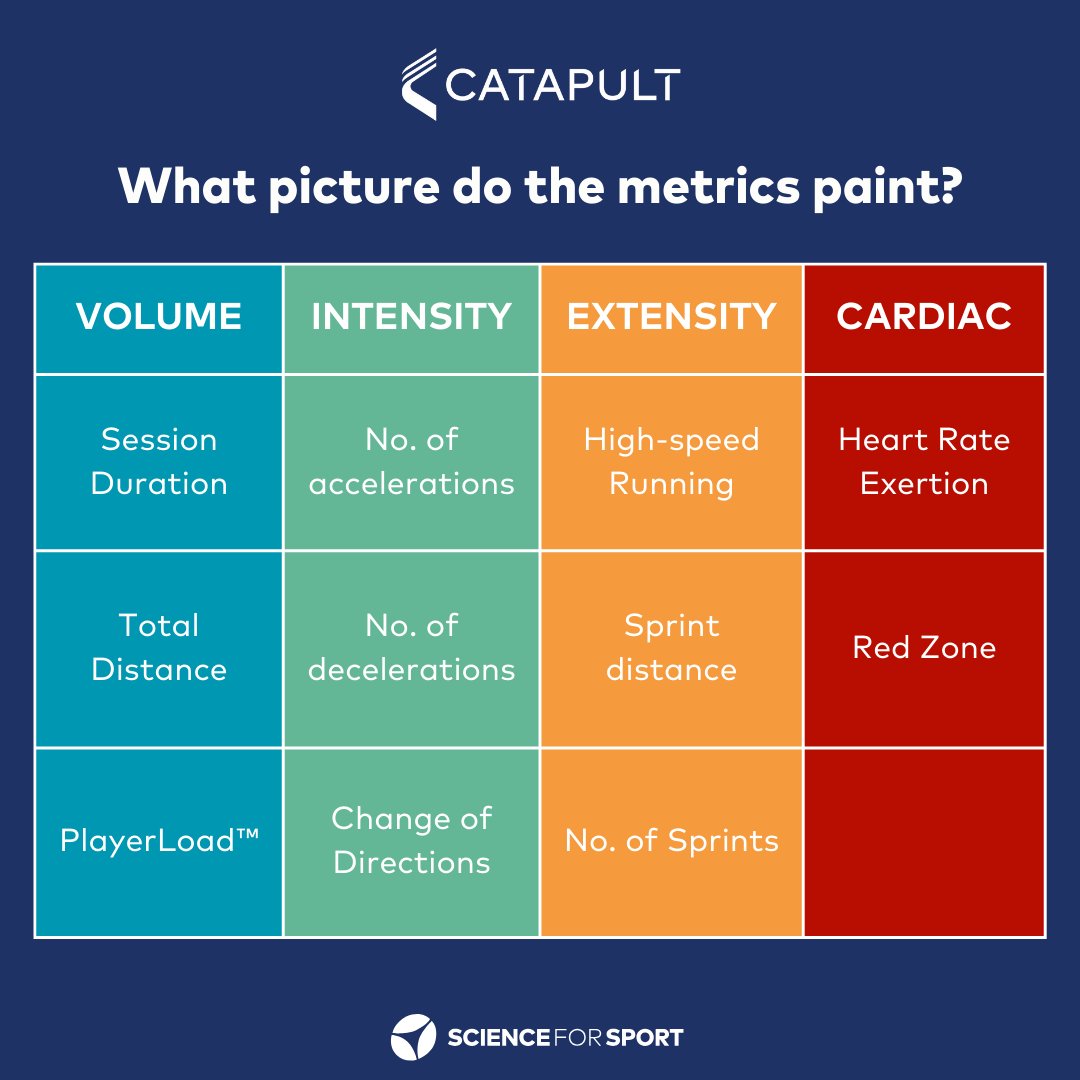
What if one of the most common “performance” metrics in sport is not actually telling us what we think it is? That is the hook of this paper. Staunton and colleagues take a hard look at PlayerLoad™, one of the most widely used accelerometer-derived metrics in sport, and argue that its scientific foundation is much shakier than its popularity suggests. Right from the opening page, they note concerns with inconsistent definitions, arbitrary units, opaque filtering methods, questionable theoretical underpinnings, and imprecise mechanical terminology, and state plainly that the construct validity of PlayerLoad remains unverified. They also note that evidence for meaningful dose–response relationships with performance outcomes remains weak. In other words, the paper is not saying monitoring is useless. It is saying we need to be more careful when a widely used KPI starts being treated like the performance itself.
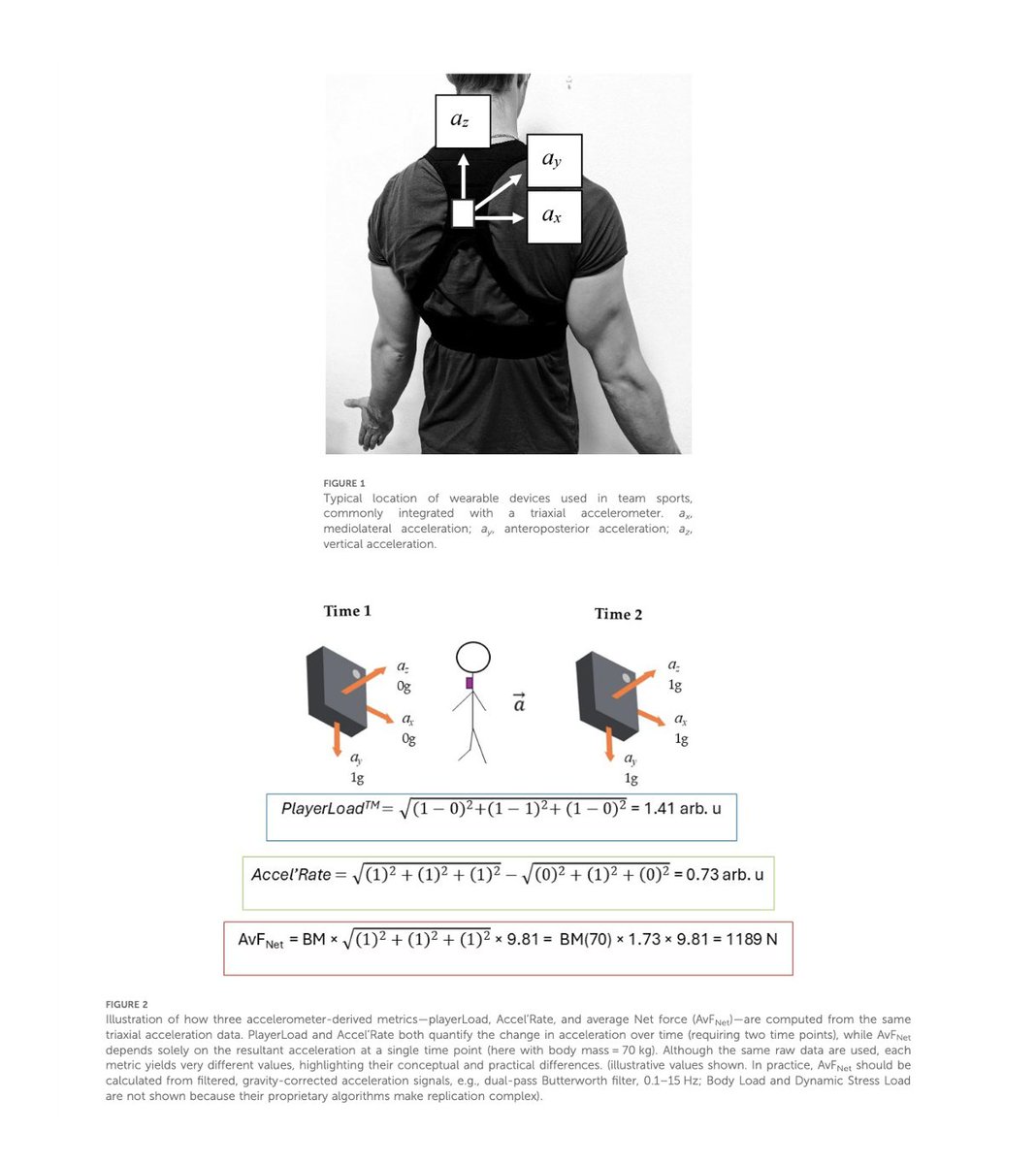
One of the strongest parts of the review is that it explains why this matters. The authors show that PlayerLoad is highly sensitive to sensor location, sampling frequency, filtering choices, and even natural changes in device orientation, which can create fictitious increases in the metric that do not actually reflect more physical effort. They also point out that manufacturer software appears to produce values about 15% lower than manual calculations, suggesting undisclosed processing in the background. On page 7, Figure 2 makes this especially clear by showing how the same raw triaxial acceleration data can produce very different outputs depending on the metric being used. The practical implication is important: practitioners may mistake a higher KPI for greater mechanical stress, make misleading cross-athlete comparisons, or assume an athlete has “matched” prior demands in return-to-play when the underlying mechanical exposure is actually different.
What makes the paper valuable is that it does not just criticize. It offers a better direction. The authors introduce alternatives like Accel’Rate and especially accelerometry-derived net force (FNet), which they describe as being built on clearer biomechanical principles, transparent signal processing, and outputs in SI units rather than arbitrary ones. Their conclusion is not anti-technology. It is anti black box thinking. They explicitly encourage practitioners to be skeptical of proprietary metrics until they are fully understood and validated, and argue for integrated monitoring frameworks that combine accelerometry with complementary mechanical, physiological, and perceptual indicators. That is the real takeaway. KPIs are useful, but they are not the engine. They are the check engine light. Helpful, yes. Worth watching, absolutely. But never the same thing as the actual performance we are trying to understand.