
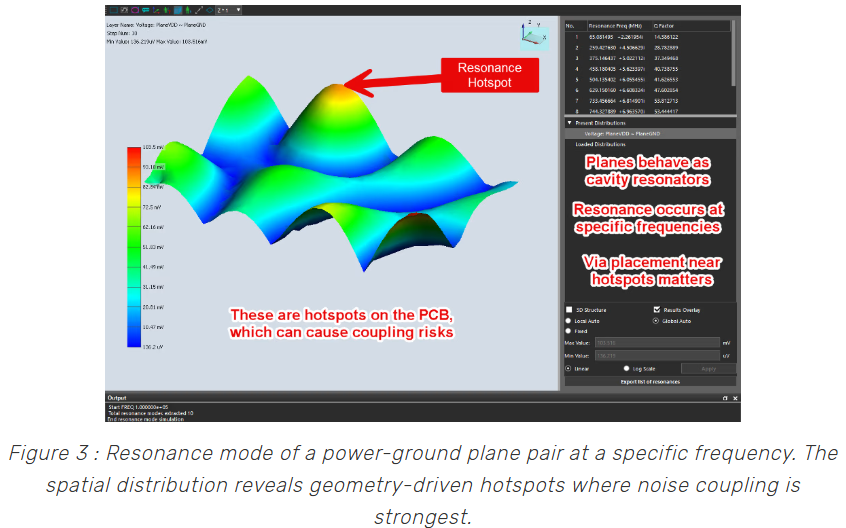
PCB power integrity failures are geometry problems, not component problems. Your voltage regulator outputs clean power. Your IC still has noise. What happens between them is decided by the copper.
Read the full breakdown here: ow.ly/wGy450Z6OAN
Plane pair spacing sets distributed capacitance past the frequency where discrete decoupling caps turn inductive. Plane shape drives cavity resonance. A 4-inch plane with dielectric constant near 4 resonates near 740 MHz, and that is where PDN impedance spikes. Stitching via placement suppresses those resonances by breaking up the cavity. Kirsch Mackey covers all three controls with Sigrity X Aurora simulation data showing impedance before and after.
#PCBDesign #PowerIntegrity #AllegroX #Electronics
28

Murata and Japan’s Hidden Electronic Infrastructure
[Part 1. Power Integrity: Why AI Servers Need More Small Capacitors, Closer to the Chip]
Full version: open.substack.com/pub/superp…
The GPU is the chip that does the heavy calculations, but in an AI server the first thing you have to protect is stable voltage. As AI servers get bigger, the power network is no longer just wires. It becomes a system that absorbs sudden power shocks.
When the GPU suddenly pulls a lot of electricity, the system cares more about “keeping the voltage steady” than about raw calculation speed. This is what Power Integrity — power stability — is all about.
1. What matters is not average power, but how fast the power suddenly changes
In AI servers, the real problem is not “how much electricity is used on average.” It is how quickly and sharply the electricity demand changes.
When the GPU starts a big matrix calculation or accesses memory, it pulls a huge burst of current in a very short time. This sudden change causes the voltage to drop for a moment.
If the voltage drops too much, the GPU makes errors or slows down.That is why AI servers need more parts that keep the voltage steady around the GPU.
2. Decoupling capacitors are tiny “electricity reservoirs” right next to the GPU
The main power supply is far away and cannot react instantly when the GPU suddenly needs a lot of current. So engineers place small “electricity reservoirs” right next to the GPU. These are called decoupling capacitors.
When the GPU demands a sudden burst of power, the nearby capacitor quickly supplies electricity and prevents the voltage from dropping. The closer the capacitor is to the GPU, the more stable the voltage stays.
3. Why MLCC (multilayer ceramic capacitors) are so important
The most common capacitor used in AI servers is the MLCC.
It is important for three simple reasons:
It is very small → you can fit many of them on a crowded board
It reacts very fast → perfect for sudden power changes
You can place thousands of them around the GPU
Even though each MLCC is tiny, when you use many together they can quickly supply the electricity the GPU needs. Murata keeps making smaller and better MLCCs specifically for AI servers.
4. Capacitors are moving closer and closer to the GPU
In AI servers, the position of capacitors is changing.
They used to sit far away on the board → then closer to the GPU package → now even inside the package or embedded in the chip.
Why? Because power changes are happening faster and faster. If a capacitor is too far away, electricity takes time to travel and the voltage drops more. So engineers are moving capacitors as close as possible to the GPU.
Murata is also developing silicon capacitors for this exact purpose.
5. Power shocks are solved differently at different layers
Power problems in AI servers do not happen in only one place.
At the whole rack level → big energy storage devices are needed
Right next to the GPU chip → tiny MLCCs and other small capacitors do the job
For example, NVIDIA’s latest AI servers use large storage at the rack level, but still rely heavily on MLCCs right beside each GPU.
The upper layers use higher voltage to send power farther, while the lower layers (near the chip) focus on very low voltage, high current, and ultra-fast changes.
#Murata #MLCC #PowerIntegrity #AIInfrastructure #Decoupling #HiddenAIHardware

3
2
13
1,140
Murata and Japan’s Hidden Electronic Infrastructure
[Part 1. Power Integrity: AI 서버는 왜 작은 콘덴서를 더 많이, 더 가까이 필요로 하는가]
Full version: open.substack.com/pub/superp…
GPU는 계산을 빠르게 하는 칩이지만, AI 서버는 먼저 전압을 안정적으로 유지해야 한다. AI 서버가 커질수록 전원망은 단순한 전선이 아니라, 순간적인 전력 충격을 흡수하는 시스템이 된다.
GPU가 갑자기 많은 전기를 끌어당기는 순간, 시스템은 계산 속도보다 먼저 전압이 흔들리지 않는 것을 요구한다.
이것이 바로 Power Integrity, 즉 전원 안정성 문제다.
1. 중요한 것은 평균 전력이 아니라 전력이 갑자기 변하는 속도
AI 서버에서 진짜 어려운 문제는 평소에 전기를 얼마나 쓰는가가 아니라, 전기가 얼마나 빠르고 급격하게 변하는가다.
GPU는 대규모 계산을 시작하거나 메모리를 접근할 때 순간적으로 엄청난 전류를 끌어당긴다. 이 순간적인 변화가 전압을 순간적으로 떨어뜨린다. 전압이 너무 떨어지면 GPU가 제대로 작동하지 못하고, 오류가 생기거나 성능이 떨어진다.
그래서 AI 서버는 GPU뿐 아니라, GPU가 보는 전원을 안정적으로 만들어주는 부품들이 점점 더 중요해지고 있다.
2. Decoupling capacitor는 GPU 바로 옆에 있는 작은 전기 저장소
전원 공급기는 멀리서 전기를 보내주지만, GPU가 순간적으로 많은 전기를 요구할 때는 반응이 늦다. 그래서 GPU 바로 옆에 작은 전기 저장소 역할을 하는 부품을 둔다. 이 부품이 바로 decoupling capacitor(디커플링 콘덴서)다.
콘덴서는 순간적으로 전기를 빠르게 공급해 전압이 흔들리는 것을 막아준다. 콘덴서를 GPU에 가까이 둘수록 전압이 더 안정적으로 유지된다.
3. 왜 MLCC(적층세라믹콘덴서)가 중요한가
AI 서버에서 가장 많이 쓰이는 콘덴서가 MLCC다.
이유는 간단하다.
작다 (공간이 좁은 AI 보드에 많이 넣을 수 있다)
빠르다 (순간적인 전기 변화에 잘 반응한다)
많이 깔 수 있다 (GPU 주변에 수만 개를 배치할 수 있다)
MLCC 하나하나가 작지만, 여러 개를 함께 쓰면 GPU가 갑자기 전기를 요구할 때 빠르게 대응할 수 있다. Murata는 이 MLCC를 AI 서버용으로 계속 더 작고 더 좋은 성능으로 만들고 있다.
4. 콘덴서는 점점 GPU에 가까워지고 있다
AI 서버에서 콘덴서 위치가 점점 바뀌고 있다.
보드 위 멀리 떨어진 곳 → GPU 패키지 근처 → 패키지 내부 → 심지어 칩 안에까지 들어가고 있다.
이유는 전기 변화가 점점 빠르기 때문이다. 콘덴서가 GPU에서 멀면 전기가 전달되는 동안 시간이 걸리고, 전압이 더 크게 흔들린다. 그래서 콘덴서를 최대한 가까이 붙이는 것이 점점 더 중요해지고 있다.
Murata는 이런 방향으로 실리콘 콘덴서 같은 제품도 개발하고 있다.
5. 전력 충격은 계층마다 다르게 해결된다
AI 서버의 전력 문제는 한 곳에서만 생기지 않는다.
랙 전체 수준에서는 큰 전력 저장 장치가 필요하다
GPU 칩 바로 근처에서는 작은 MLCC와 콘덴서가 필요하다
NVIDIA의 최신 AI 서버도 랙 수준에서는 큰 저장 장치를 쓰지만, 칩 근처에서는 MLCC가 핵심 역할을 한다.
상위 계층은 고전압으로 전기를 멀리 보내고, 하위 계층은 낮은 전압에서 빠른 변화를 안정시키는 식이다.
#Murata #MLCC #PowerIntegrity #AIInfrastructure #Decoupling #HiddenAIHardware

1
5
23
1,860
Many PCB designers hand off to a separate team for signal and power integrity verification. By that point, the stackup is set, routing decisions are locked, and any issues found means a costly redesign.
Sigrity X Aurora changes that workflow. Running inside Allegro X, it lets designers close the loop themselves, catching and resolving SI/PI issues at the point of decision before they compound.
Stephen Newberry walks through this in practice on June 17: in-design analysis, PDN routing decisions, and topology verification, all without leaving Allegro X.
Register: ow.ly/Luz150Z6tK7
#PCBDesign #SignalIntegrity #PowerIntegrity #AllegroX #SigrityX

34
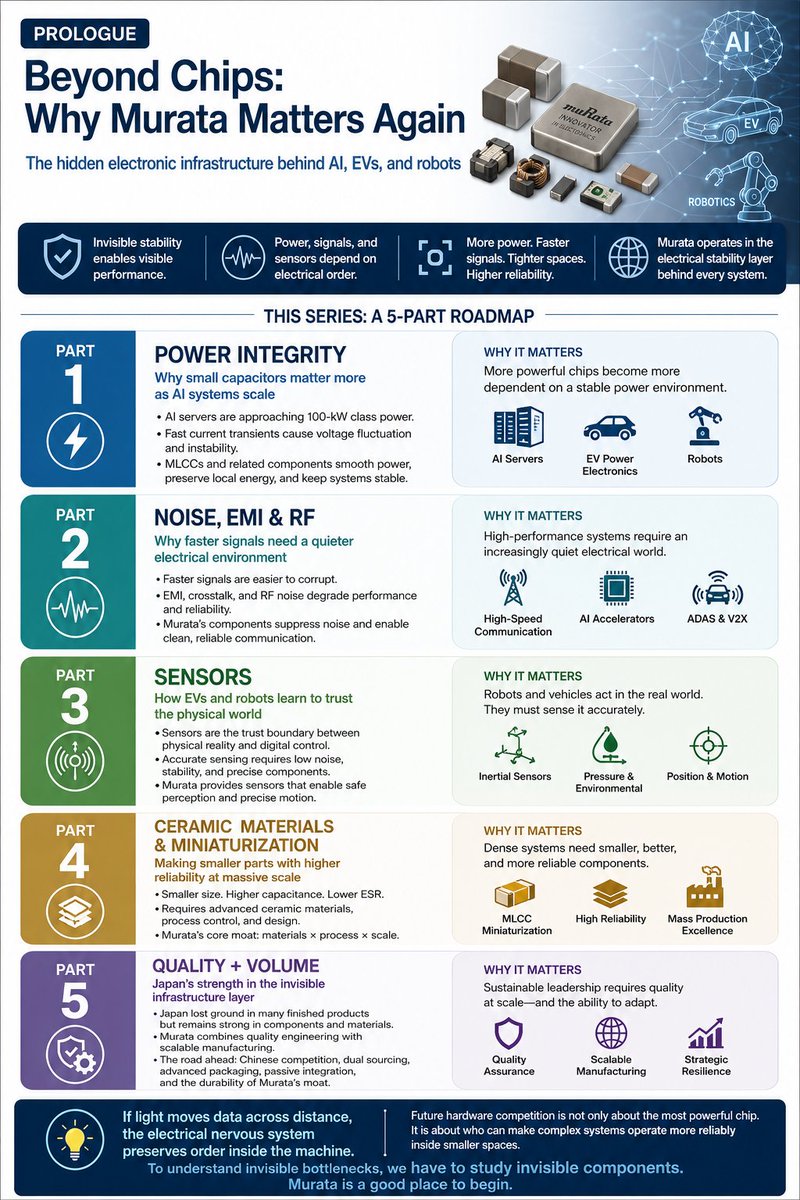
[Part 0. Beyond the Chip: Why Murata Deserves Another Look]
AI·EV·Robotics era — the hidden Japanese electronic infrastructure that matters again
Full version on substack: substack.com/@superpositionv…
When we talk about AI hardware, we usually start with GPUs, then HBM, advanced packaging, foundries, power consumption, and data-center cooling. Those are important. But we need to shift the question.When does an AI server actually fail? Only when the chip lacks performance?
No. It also fails when power momentarily fluctuates, when noise creeps into high-speed signals, or when heat and electromagnetic interference on a small board get out of control.
On the surface, the GPU is the star. But for that GPU to work reliably inside a real system, countless small components must maintain the order of power and signals.
1. The bottleneck in AI·EV·Robotics goes beyond the compute chip
AI servers are already approaching 100 kW per rack.
Power keeps increasing, yet voltage fluctuations must shrink.
Signals get faster, yet noise must drop further.
More sensors are added, yet space keeps shrinking.
This contradiction creates what I call the electrical stability burden — the layer of power integrity, signal integrity, noise suppression, and sensing reliability.
As this burden grows, one company is quietly becoming more important again.
Murata.
#Murata #MLCC #AIInfrastructure #PowerIntegrity #PassiveComponents #JapanElectronics #HiddenAIWinner
2
3
10
1,169
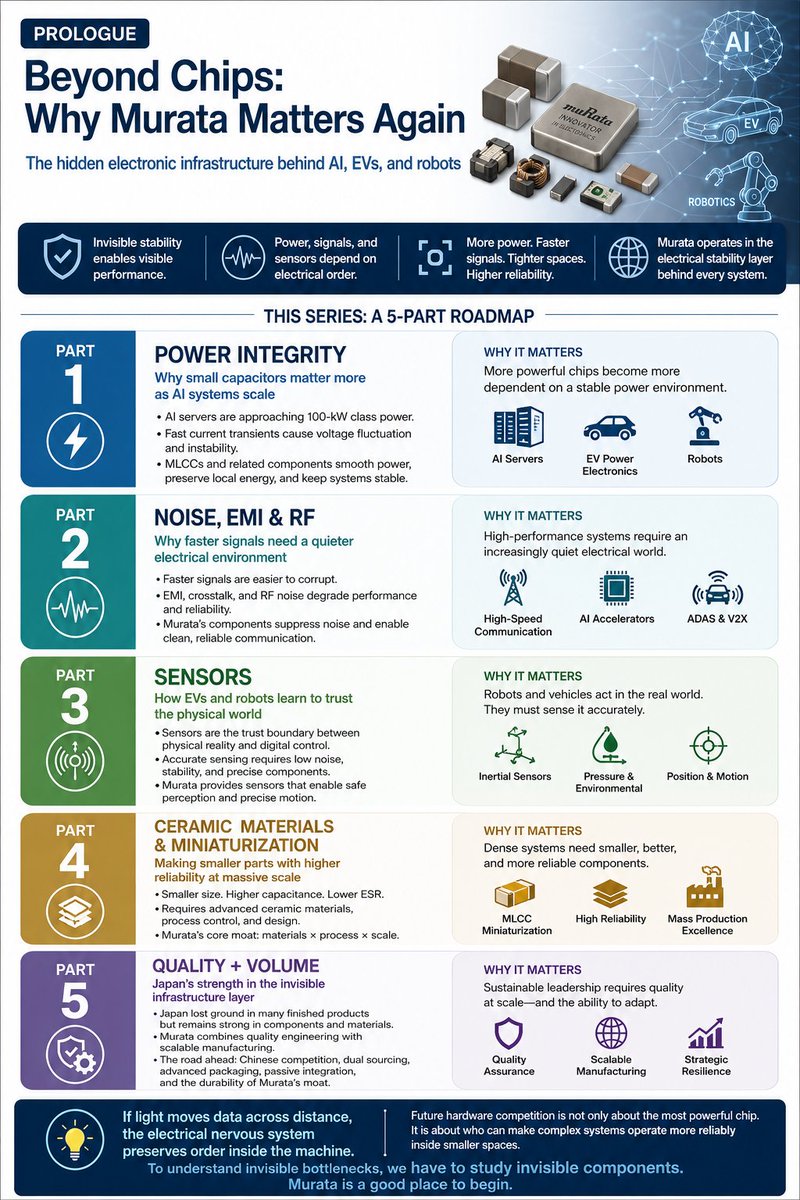
[Part 0. 칩 너머: 왜 Murata를 다시 봐야 하는가]
AI, EV, 로봇 시대, 다시 중요해지는 일본의 보이지 않는 전자 인프라
Full version on substack:
substack.com/@superpositionv…
AI 서버를 이야기할 때 우리는 GPU, HBM, 첨단 패키징을 먼저 떠올린다. 하지만 AI 서버가 제대로 작동하지 않는 순간은 언제인가? 칩 성능이 부족할 때만일까? 아니다.
전원이 순간적으로 흔들릴 때, 빠른 신호에 노이즈가 섞일 때, 작은 기판 위에서 열과 전자파 간섭이 통제되지 않을 때도 고성능 시스템은 무너진다.
겉으로 보기에는 GPU가 주인공이지만, 그 GPU가 실제로 안정적으로 작동하려면 주변의 수많은 작은 부품들이 전원과 신호의 질서를 만들어야 한다.
1. AI, EV, 로봇의 병목은 연산 칩에서 끝나지 않는다
AI 서버는 이미 100kW급 전력 설비에 가까워지고 있다.
전력은 커지는데 전압 흔들림은 더 작아져야 한다.
신호는 빨라지는데 노이즈는 더 줄어야 한다.
센서는 더 많이 들어가는데 공간은 더 좁아진다.
이 모순을 흡수하는 계층이 바로 전기적 안정성 부담이다.
전원 안정성, 신호 안정성, 노이즈 억제, 센싱 신뢰성의 계층.이 부담이 커질수록 다시 주목 받는 회사가 있다.
Murata다.
#Murata #MLCC #AIInfrastructure #PowerIntegrity #PassiveComponents #JapanElectronics #HiddenAIWinner
1
2
17
1,716

Your PCB won’t wait.
Power Analyzer by @Keysight shows current density, drops, and risks in seconds, right in Altium Designer Agile.
Agile Teams keeps the whole organization aligned.
Learn more: bit.ly/4pgCTkj
#PowerIntegrity #Altium #AgileTeams #PowerAnalyzer
1
3
192

21 Nov 2025
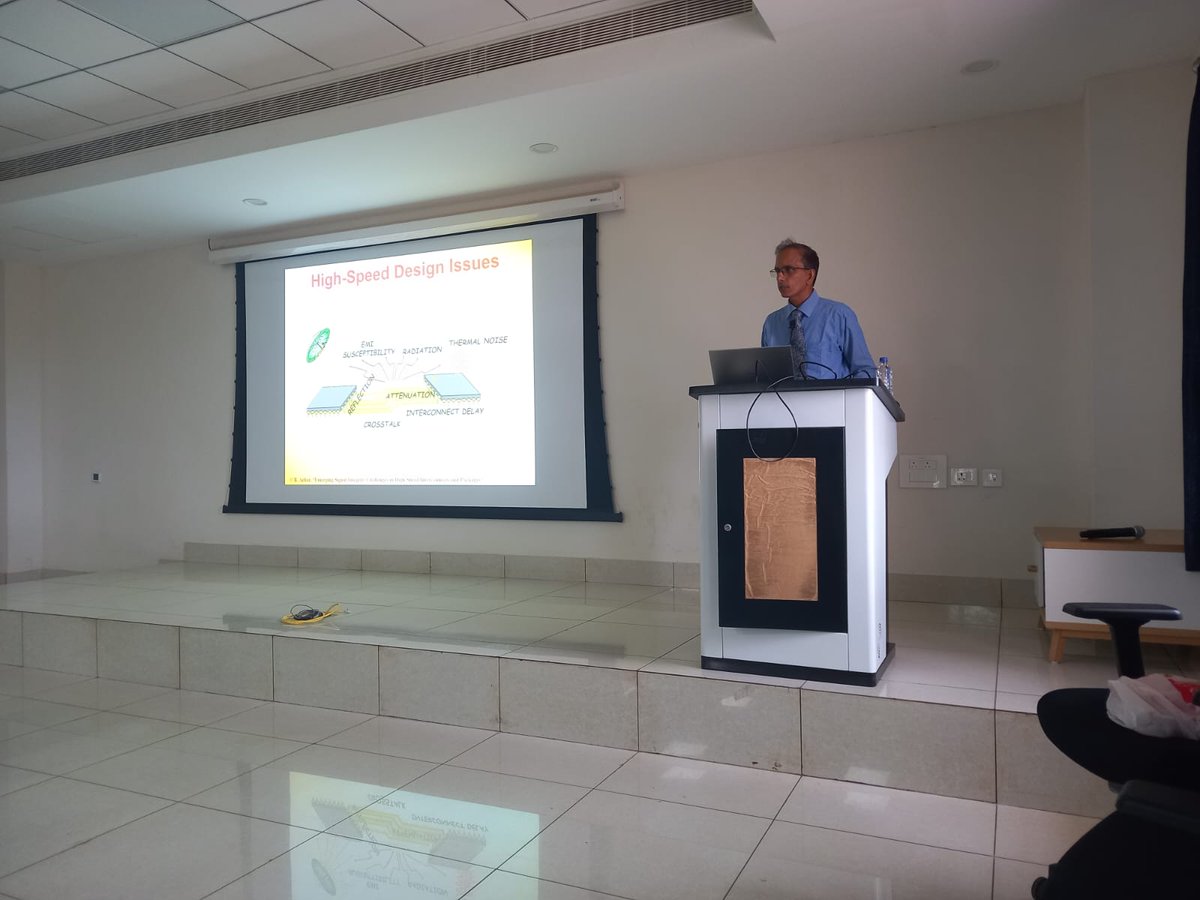
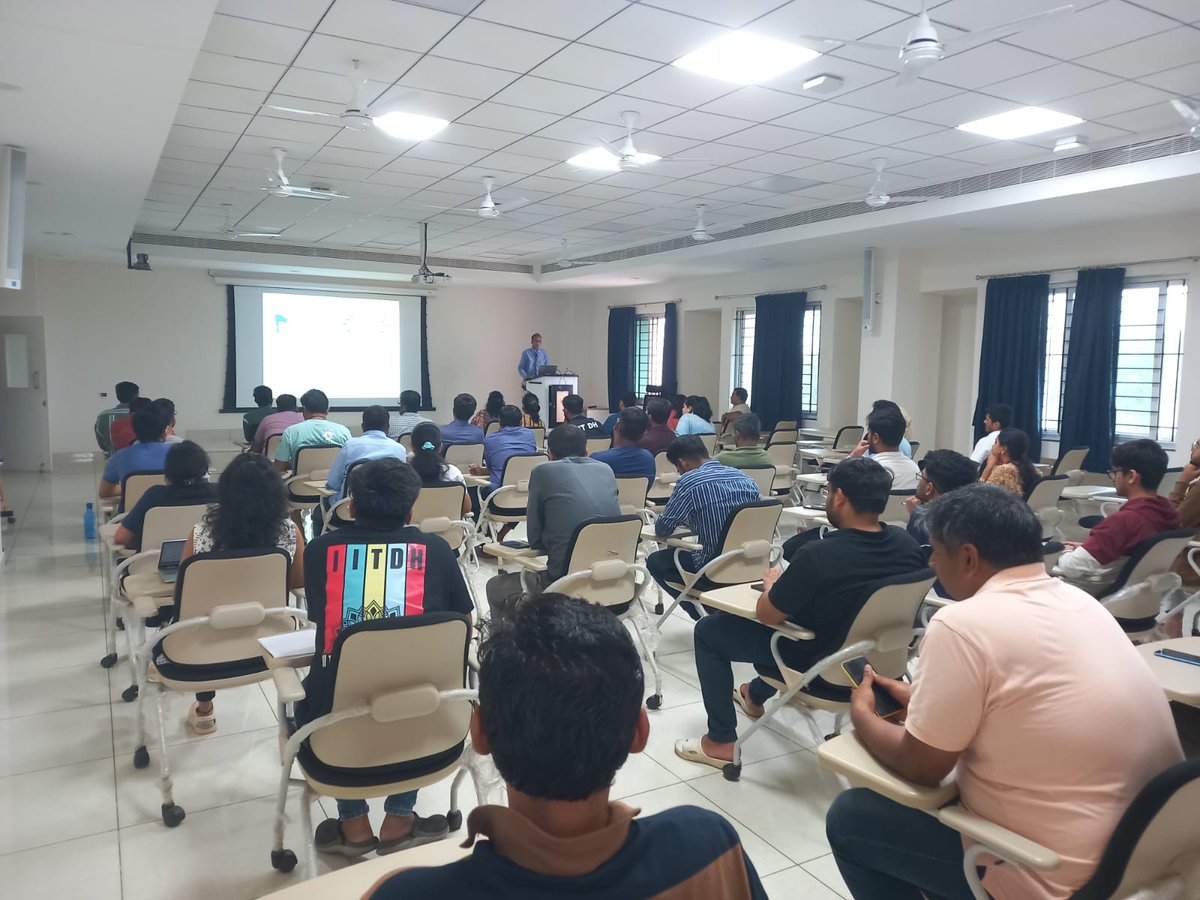
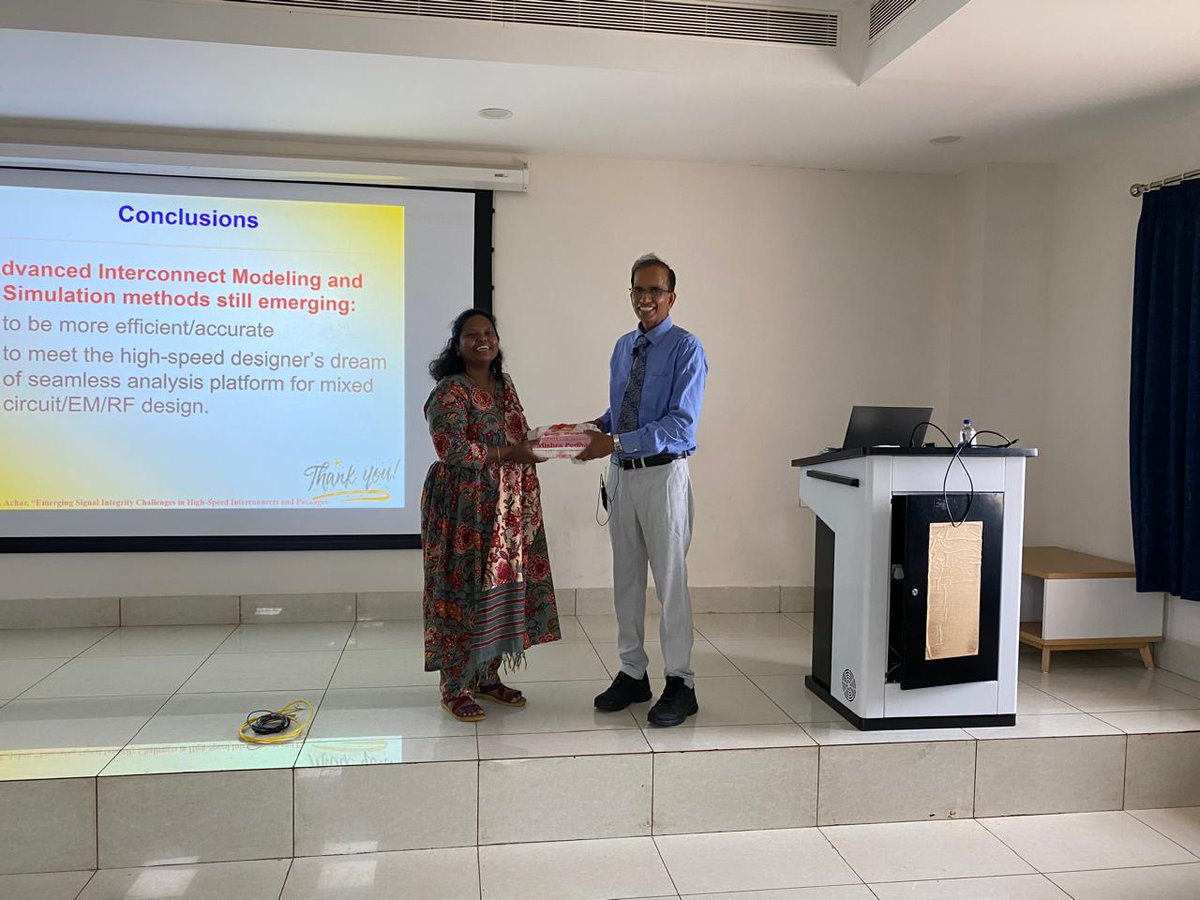
Distinguished Visit and Institute Outreach Guest Lecture by Prof. Ram Achar, Carleton University, Canada
IIT Dharwad had the privilege of hosting Prof. Ramchandra (Ram) Achar, IEEE Fellow and Fellow of The Engineering Institute of Canada (EIC), and Professor in the Department of Electronics, Carleton University, Canada, during his visit to India.
As part of his visit, Prof. Achar delivered an Institute Outreach Guest Lecture on “Fundamentals & Emerging Trends in High-Speed Signal & Power Integrity Analysis” on Tuesday, 4th November 2025 | 2:30 PM – 3:30 PM | PC A1 327 at IIT Dharwad.
The lecture offered deep insights into the multidisciplinary challenges of high-speed electronic design, emphasizing signal and power integrity, electromagnetic interference, and advanced modeling techniques topics essential to modern electronic systems. The session benefited participants from diverse technical backgrounds and was highly appreciated for its clarity and practical relevance.
During his visit, Prof. Achar also met with the PROF. VenkappayyA R. dEsAi, Director, IIT Dharwad, to discuss avenues for strengthening academic and research collaborations between IIT Dharwad and Carleton University under the existing MoU. The discussions focused on launching a joint Ph.D. supervision program, enabling students to receive guidance from both institutions and earn a jointly affiliated Ph.D. degree without any registration fee at Carleton University. This initiative aims to significantly benefit research scholars and promote global academic partnerships.
Prof. Achar further visited the Department of Electrical Engineering and Computer Engineering (EECE) laboratories, engaging with faculty and students to learn about ongoing R&D activities.
We sincerely thank Prof. Achar for his visit, his inspiring talk, and his valuable interactions that strengthened our outreach and academic collaboration efforts.
#IITDharwad #Outreach #GuestLecture #DistinguishedVisit #ResearchCollaboration #SignalIntegrity #PowerIntegrity #HighSpeedDesign #Electronics #CarletonUniversity #IEEE #AcademicExchange

1
3
3
273

13 Nov 2025
Hierarchically defining bump and pin regions overcomes 3D IC complexity semiwiki.com/3dic/363678-hie… #3d-ic #Innovator3DICPortfolio #PerViklund #PowerIntegrity #SignalIntegrity #ToddBurkholder #UCIExpress
8
360

16 Oct 2025
As part of the move to increase efficiency, power supply units are moving from the bottom trays to their own racks.
semiengineering.com/data-cen…
#datacenters #HVDC #highvoltagedirectcurrent #HPC #AIdatacenters #datacenterpower #powerintegrity
4
6
937

17 May 2025
Here's some detailed real-world advice and demonstrations of multiple techniques on a sample #microcontroller board that can help you debug your #powerintegrity problems fast. bit.ly/3IflbbU
1
2
199
18 Mar 2025
Well-understood challenges become much more complicated when SoCs are disaggregated.
semiengineering.com/chiplets…
#chiplets #semiconductor #powerintegrity #powermanagement
2
2
11
532

13 Mar 2025
Well-understood challenges become much more complicated when SoCs are disaggregated.
semiengineering.com/chiplets…
#chiplets #electromigration #powermanagement #powermodeling #semiconductor #powerintegrity #thermalmanagement
1
11
4,803

26 Mar 2024
Watch this demo from APEC 2024 to see how quickly you can perform switching loss measurements on #MOSFETs using the 4 Series B MSO. Learn about this solution: bit.ly/3xca1U3
#Tektronix #PowerIntegrity #MOSFET #APEC2024 #Oscilloscopes
1
5
288
12 Mar 2024
If you need to perform I-V & C-V characterization of new devices like #MOSFETs, the Keithley 4200A IVCV switcher enables you to switch between the tests without having to switch cables. Watch to learn more in this demo. #PowerIntegrity #APEC2024 #Engineering #TestAndMeasurement
3
280
5 Mar 2024
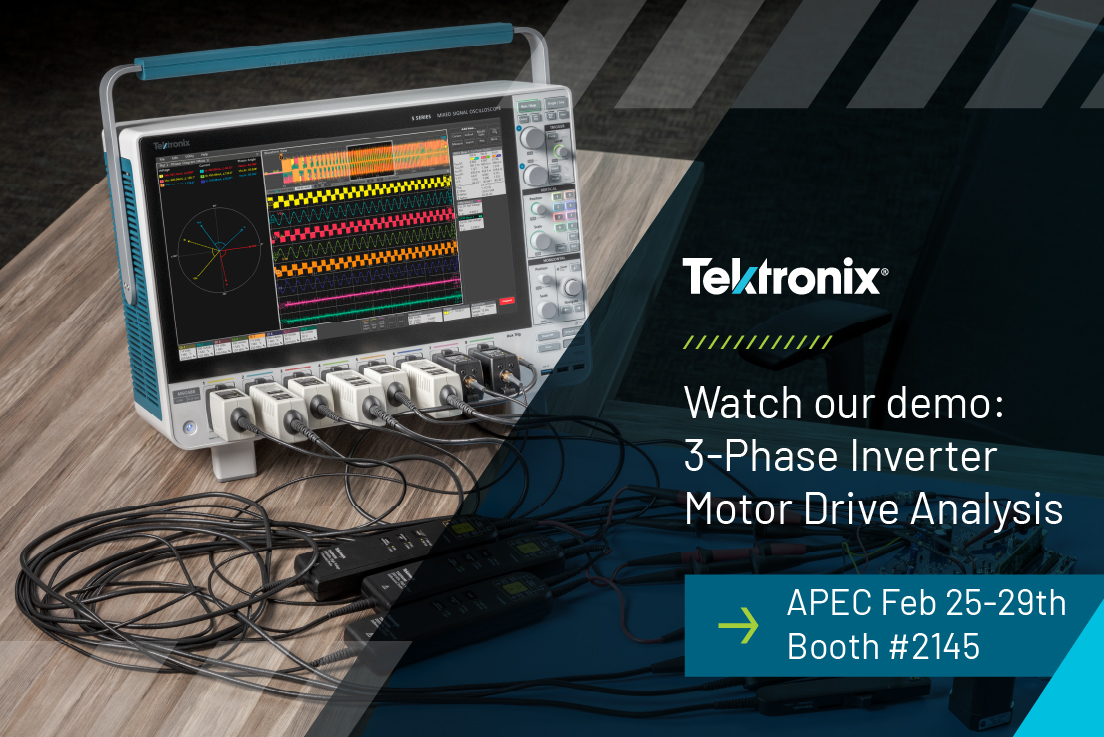
Save space in your lab when performing 3-phase inverter motor drive analysis. In this demo, we're using the low profile 5 Series MSO #oscilloscope to perform key electrical & mechanical measurements for 3-phase analysis of inverter & #motordrives.
#PowerIntegrity #MotorDrive
3
301

4 Mar 2024
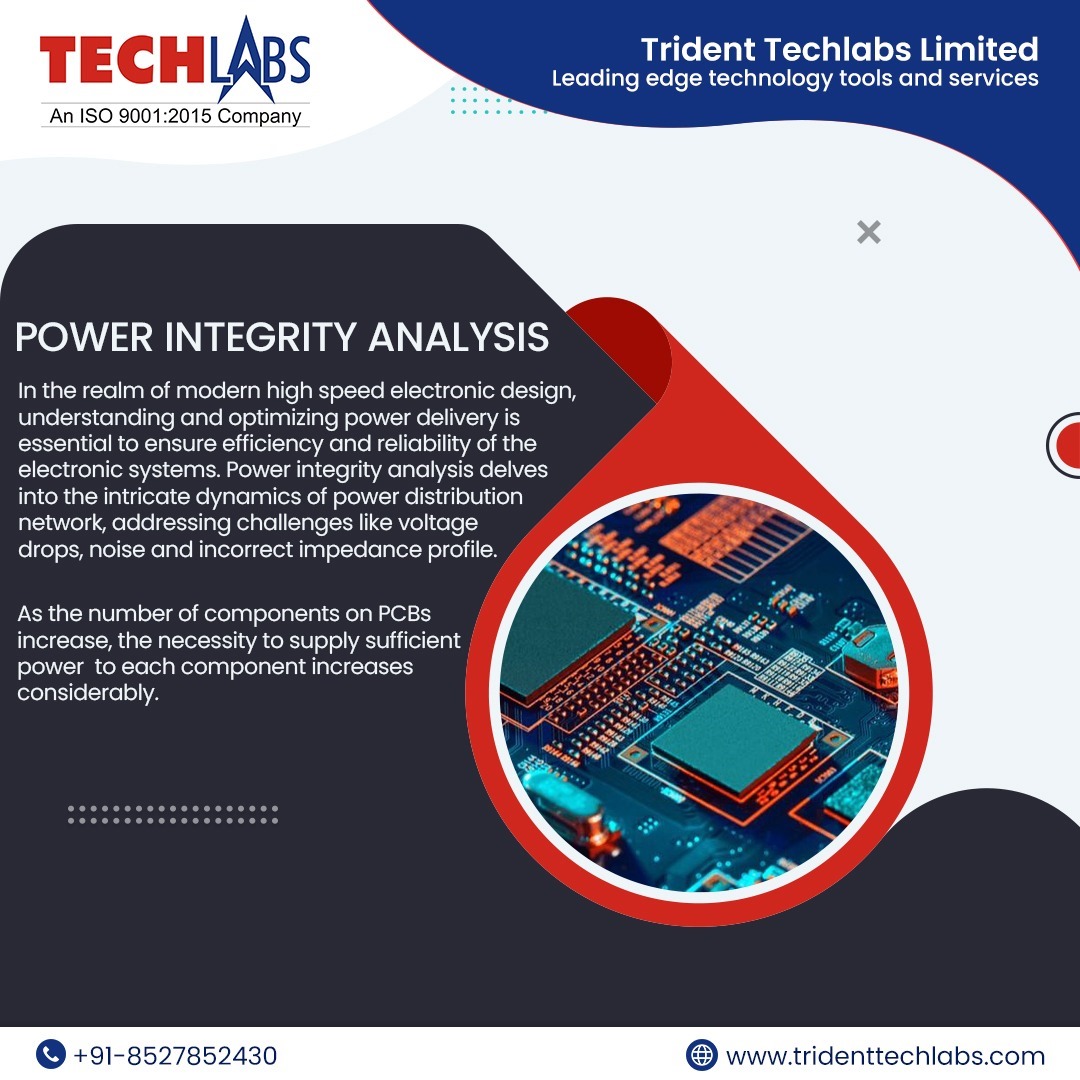
Power integrity analysis is crucial in electronic design, ensuring stable power delivery to circuits. Engineers optimize networks to prevent performance issues and enhance reliability.
tridenttechlabs.com/
#PowerIntegrity #ElectronicDesign #IntegratedCircuits
1
116
29 Feb 2024
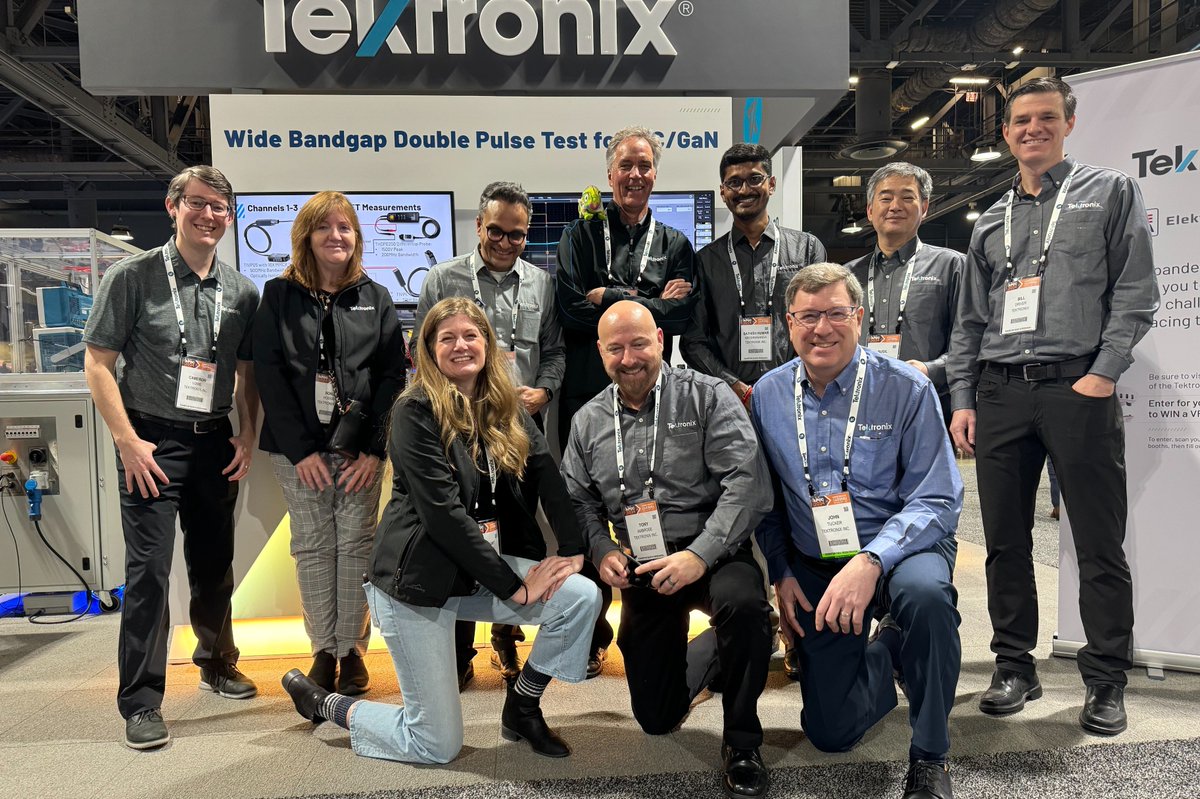
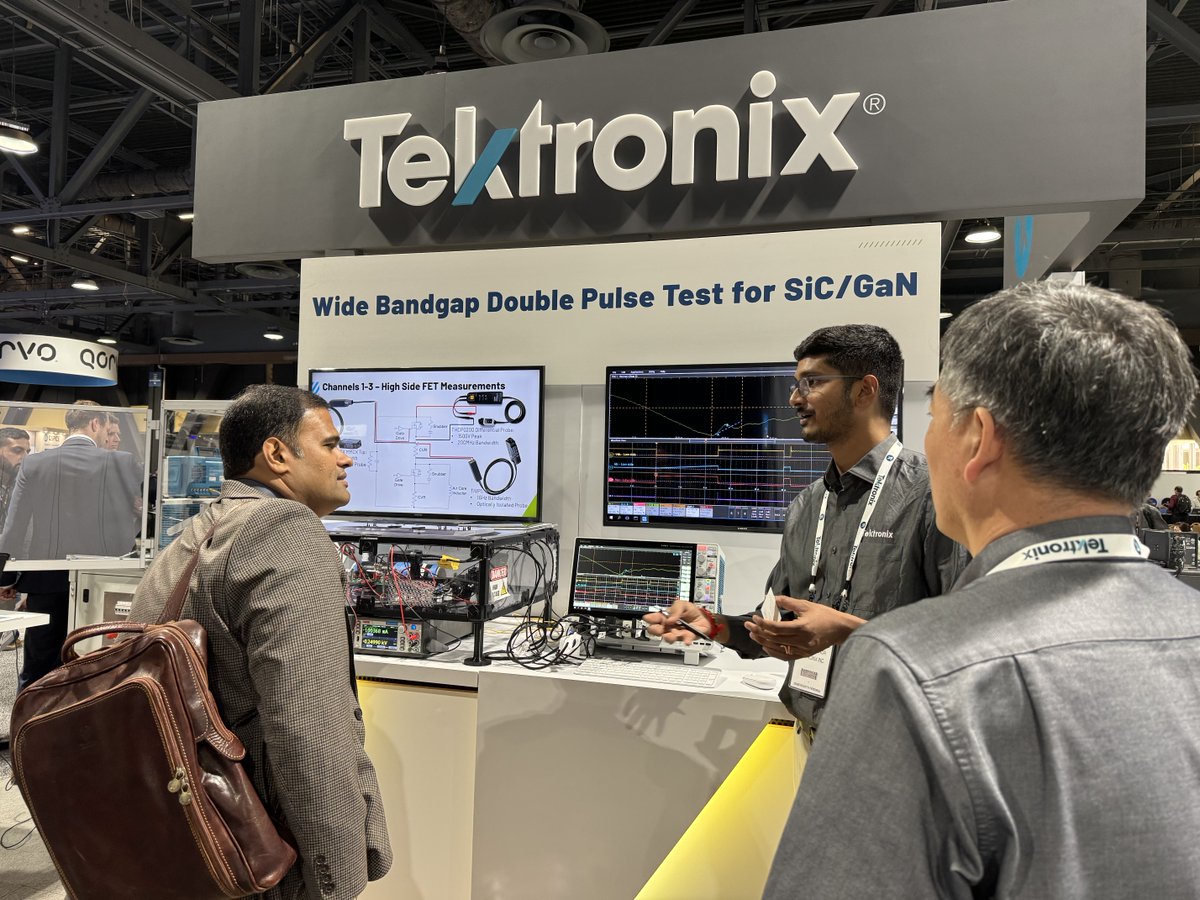
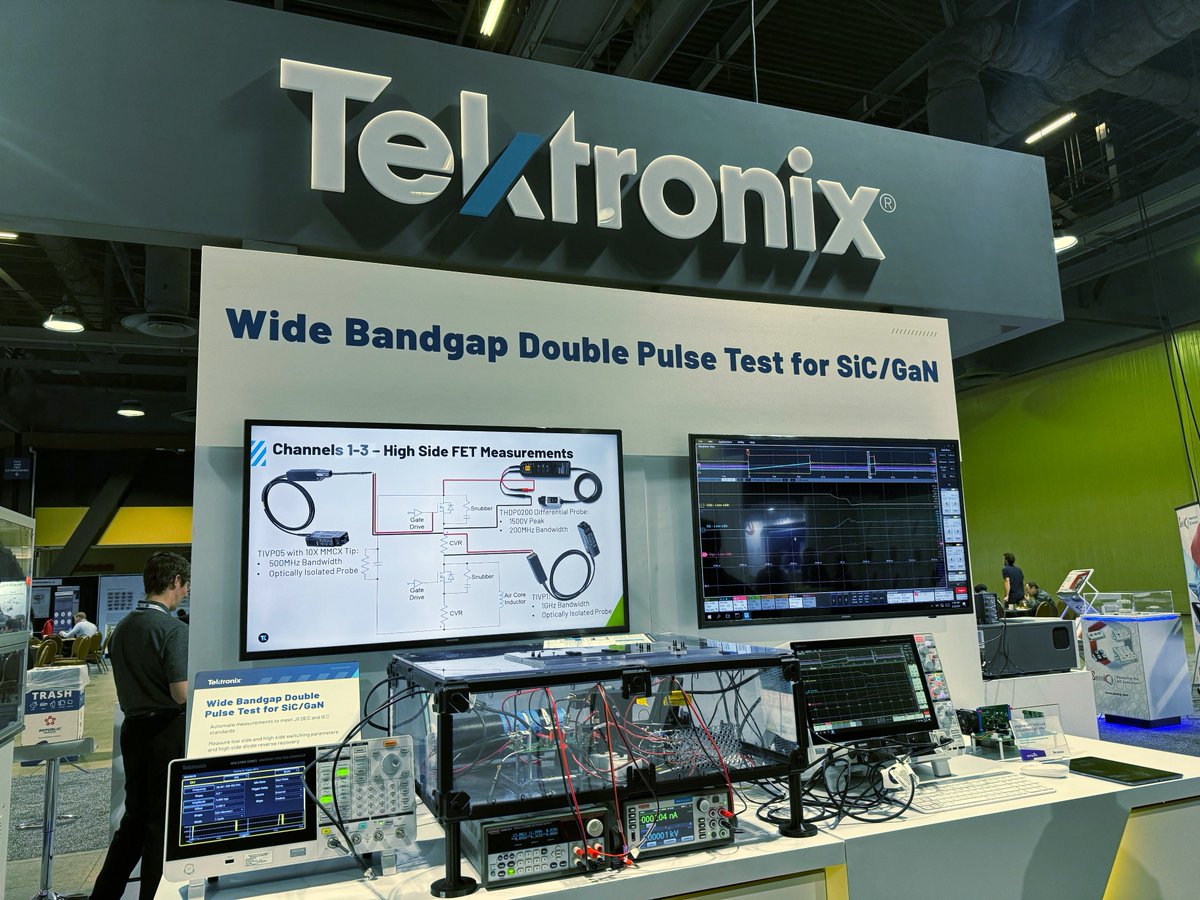
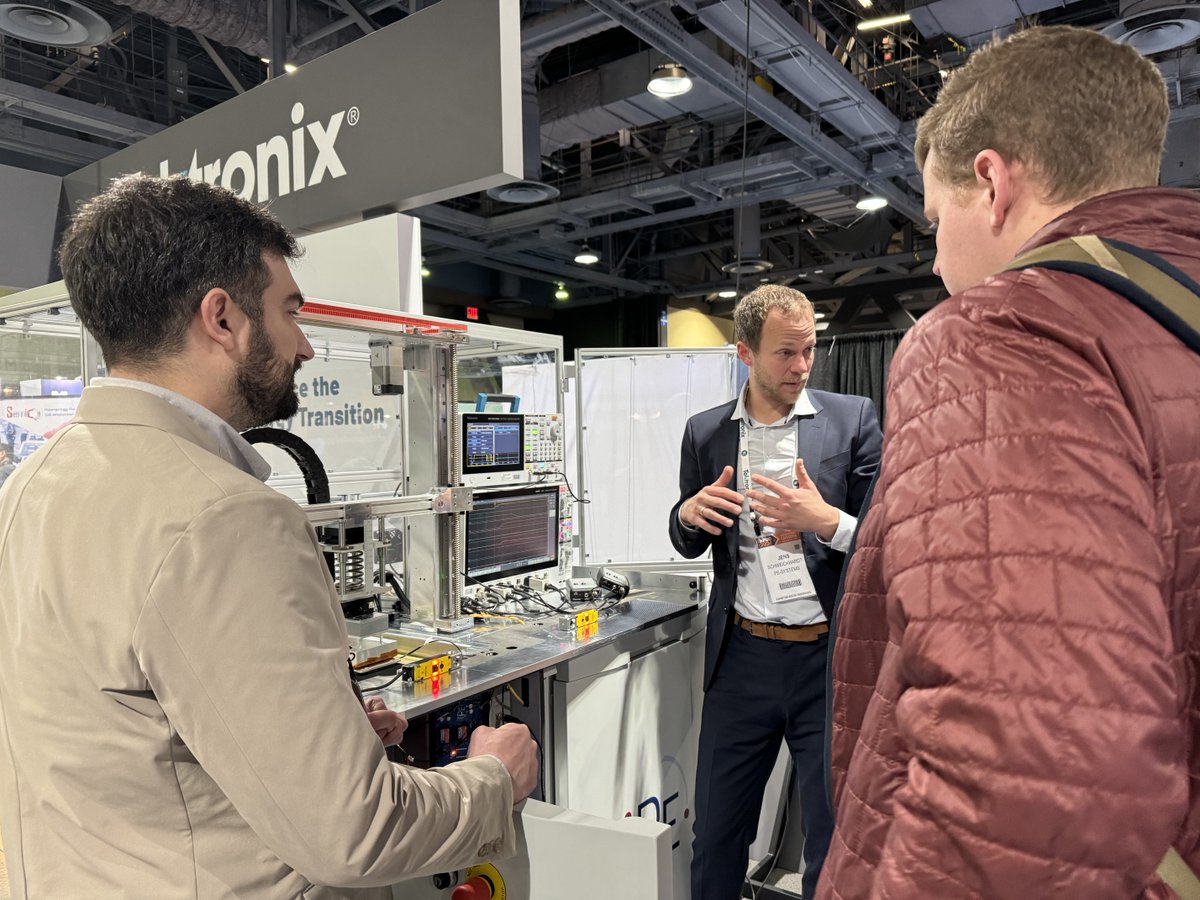
A big appreciation to everyone who stopped by the Tektronix booth at #APEC2024! For those who couldn't make it, follow us for more upcoming demos from APEC. Stay tuned! #Tektronix #PowerIntegrity #TestAndMeasurement #Oscilloscopes
3
329
21 Feb 2024
Visit the #Tektronix booth at #APEC2024 for a closer look at our 3-Phase Inverter Motor Drive Analysis Solution. This solution supports key electrical & mechanical measurements for 3-phase analysis of inverter & motor drives. bit.ly/3SLMyjF
#PowerIntegrity #Oscilloscopes
3
271
20 Feb 2024
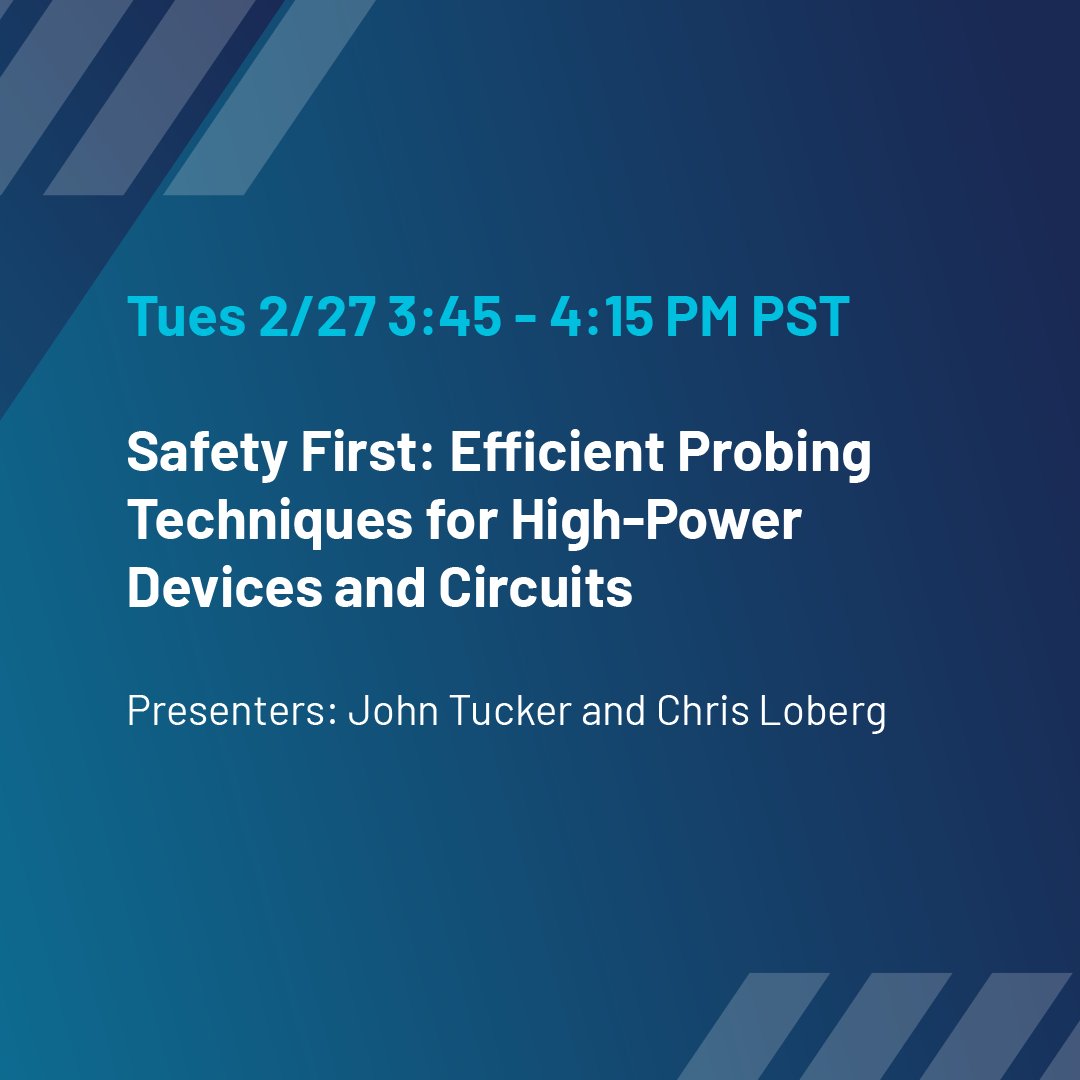
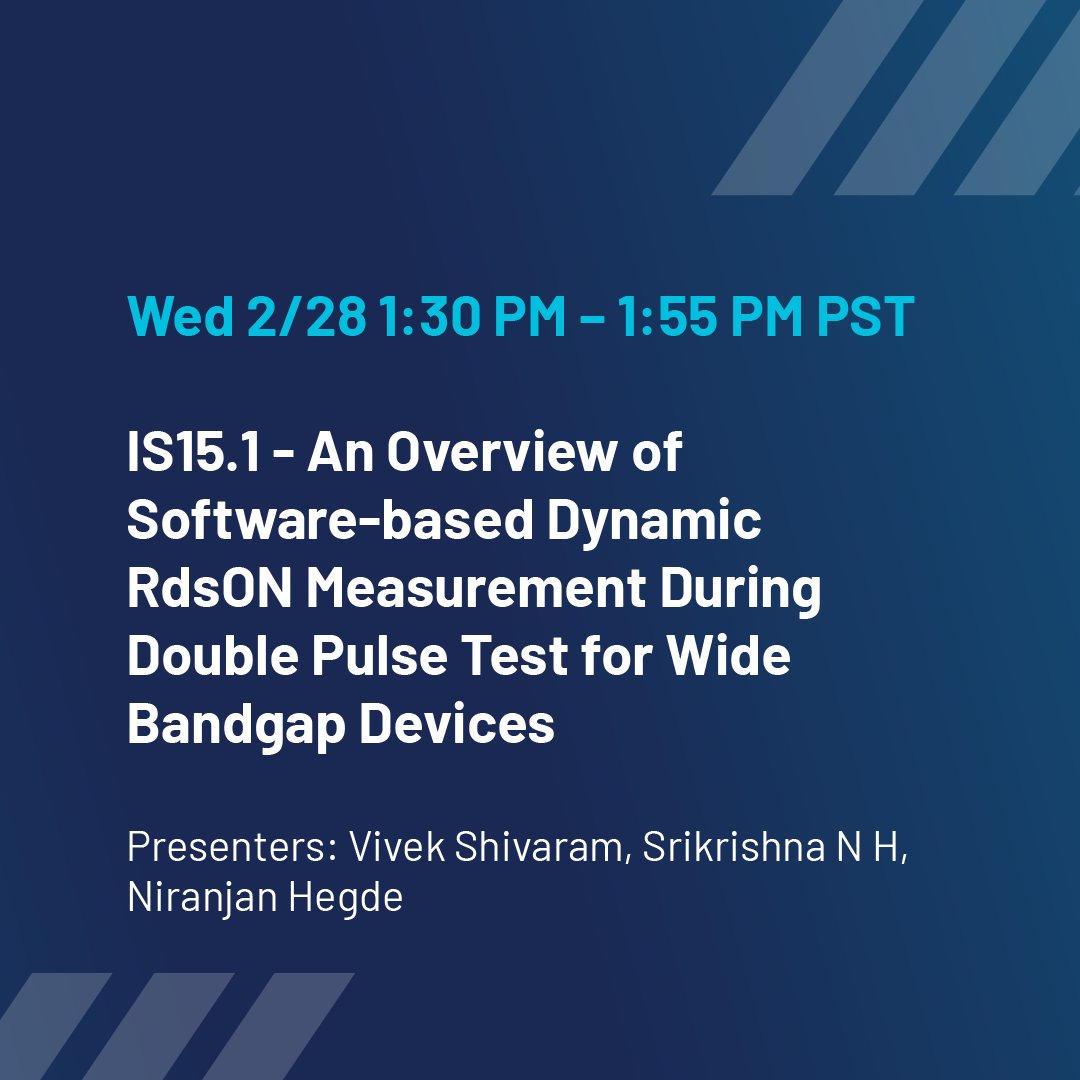
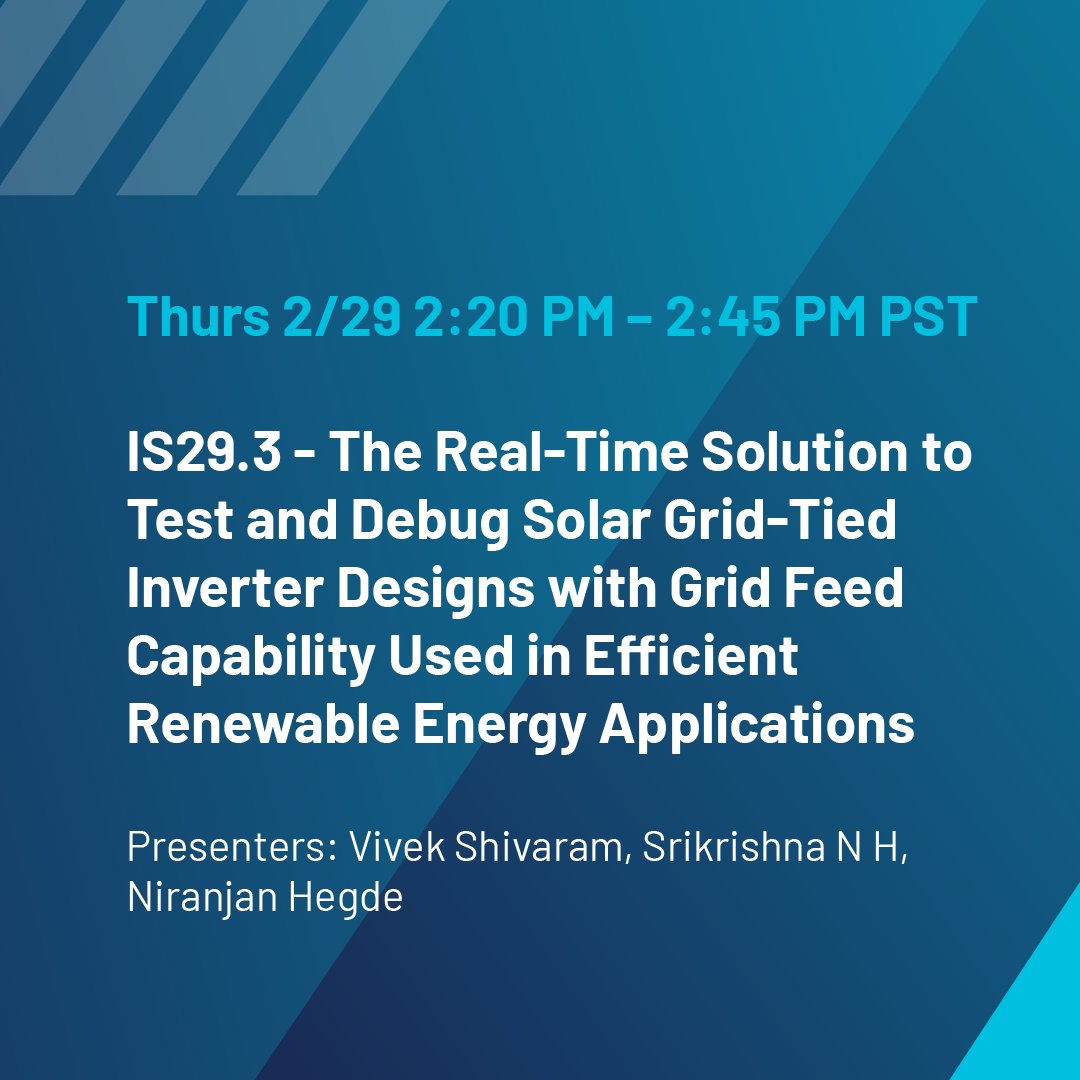
Come hear Tektronix experts present at APEC 2024. We look forward to sharing our latest insights on power electronics test and measurement. bit.ly/3SLMyjF
#Tektronix #PowerIntegrity #APEC2024

2
243