
Jun 13
Allah Rehum Farmaye
Pakistan Mai log Khudai daway krnay lag Gaye Hain aur Durrani jesay log unkay tout
10
Alia Noor Mera ❤️ 🇵🇰 or 🏏🏏 عمران خان ❤❤❤❤❤ retweeted

YA RABBUL ALLA MEEN rehum FERMA or apni Aman Mey rakhna ameen 🙏🏻😢
1
1
2
12


Jun 11
Allah rehum farma

عمران خان کی زندگی شدید خطرے میں ہے
سب کو کشمیریوں کی طرح متحد ہو کر نکلنا پڑے گا
#WhereIsImranKhan

10


Jun 8
Book of Ezra
Ezra 1. Verses 1-4. The wedge-shaped cuneiform inscription on the cylinder states that Cyrus allowed a group of people to return to their homeland and rebuild their “holy cities”. Permitting the Jews to return home: ( 1:1.) allowing four groups to return to the satrap of Judah, those of the tribes of Judah, Benjamin, as well as the Levites.
Ezra 4: 8. Rehum the Chancellor and Shimshai the scribe wrote a letter against Jerusalem to Artaxerxes the King in this sort.
Ezra 4: 9. After the death of Ahasuerus and the Artaxerxes' ascension to the “Then wrote Rehum the Chancellor, and Shimshai the scribe, and the rest of their companions; the Dinaites, the Apharsathchistes, the Tarpelites, the Apharsites, the Archevites, the Babylonians, the Susanchites, the Dehavites, and the Elamites.
Rehum and Shimshai greeted King Artaxerxes in their letter on behalf of all their colleagues, the judges and local leaders of the satrap of Judah. The following list of people groups is the nationalities that made up the Samaritan coalition.
Ezra 4:12 …. Jerusalem “the rebellious and bad city”.
Ezra 4:15 Jerusalem was destroyed, and the Jews were exiled in the first place because of their reputation of being a seditious city.
Ezra 4:21. “Give ye now commandment to cause these men to cease, and that the city be not built until another commandment shall be given from me.” Artaxerxes issued an imperial order to have his emissaries, the Samaritans, have the Jews stop their work on rebuilding the Temple and the city immediately, until any further notice came from the Persian empire.
Ezra 4: 22. Take heed now that ye fail not to do this: why should damage grow to the hurt of the kings? Artaxerxes commands Rehum, the eyes and ears of the Persian empire in the province of Judah, to quickly execute the stop order, as it was likely government bureaucracy often did not promptly execute such orders. This was done in order to not permit the supposed rebellious situation in Jerusalem to potentially harm the empire's interests.
Ezra 4:23. Now when the copy of King Artaxerxes’ letter was read before Rehum, and Shimshai the scribe, and their companions, they went up in haste to Jerusalem unto the Jews and made them to cease by force and power ( Royal command ).
Ezra 4:24. Then ceased the work of the house of God which is at Jerusalem. So it ceased unto the second year of the reign of Darius, King of Persia.
Ezra 5:1. Then the Prophets, Haggai the prophet, and Zechariah the son of Iddo, prophesied unto the Jews that were in Judah and Jerusalem in the name of the God of Israel, even unto them.
Ezra 5:2. Then rose up Zerubbabel the son of Shealtiel, and Jeshua the son of Jozadak, and began to build the house of God which is at Jerusalem: and with them were the prophets of God helping them.
Ezra 5:3. At the same time came to them Tatnai, governor on this side of the river, and Shethar-Boznai, and their companions, and said thus unto them, Who hath commanded you to build this house, and to make up this wall? They violated Artaxerxes' decree 4:17-22.
Ezra 5:6. The copy of the letter that Tatnai, governor on his side the river, sent unto Darius the King:
Ezra 5:12. But after that our fathers had provoked the God of Heaven unto wrath, he gave them into the hand of Nebuchadnezzar the King of Babylon, the Chaldean, who destroyed this house and carried the people away into Babylon.
Ezra 5:13. But in the first year of Cyrus the King of Babylon, the same King Cyrus made a decree to build this house of God.
After 70 years of captivity in Babylon, Cyrus, who is unconditionally praised in the Scriptures and perceived as a messiah sent by God ( Isaiah 45:1 ), said to Jerusalem, thou shalt be built; and to the Temple, thy foundation shall be built ( Isaiah 44:28 ).
Ezra 5:17. Now therefore, if it seems good to the king, let a search be made in the king’s treasure house, which is there at Babylon, whether it be so, that a decree was made of Cyrus the king to build this house of God at Jerusalem, and let the king send his pleasure to us concerning this matter.
Ezra 6:1. Then Darius the king made a decree, and a search was made in the house of the rolls, where the treasures were laid in Babylon.
Ezra 6:2. And there was found at Achmeta, capital of Northern Media ( called Ecbatana by classical writers ), in the Palace that is in the province of the Medes, a roll, and therein was a record thus written.
Ezra 6:6. Now therefore, Tatnai, governor beyond the river, Shetar-boznai, and your companions the Apharsachites, which are beyond the river, be ye far from thence.
Verses 6-12 describe the official royal response from Darius I to the governor of the Persian province beyond the river, Tatnai, regarding the status of the Jews rebuilding the Temple. As the law of the Medes and Persians could not be altered ( Daniel 6:8 ), Darius 1 commands the Persian officials in the Levant to stay far away from Jerusalem and let the work continue.
Ezra 6:13. Then Tatnai, governor on this side of the river, Shethar-Boznai, and their companions ( Apharsachites, Apharsites ), according to that which Darius 1 the king had sent, so they did speedily.
Ezra 6:15. And this house was finished on the third day of the month Adar, which was in the sixth year of the reign of Darius the king.
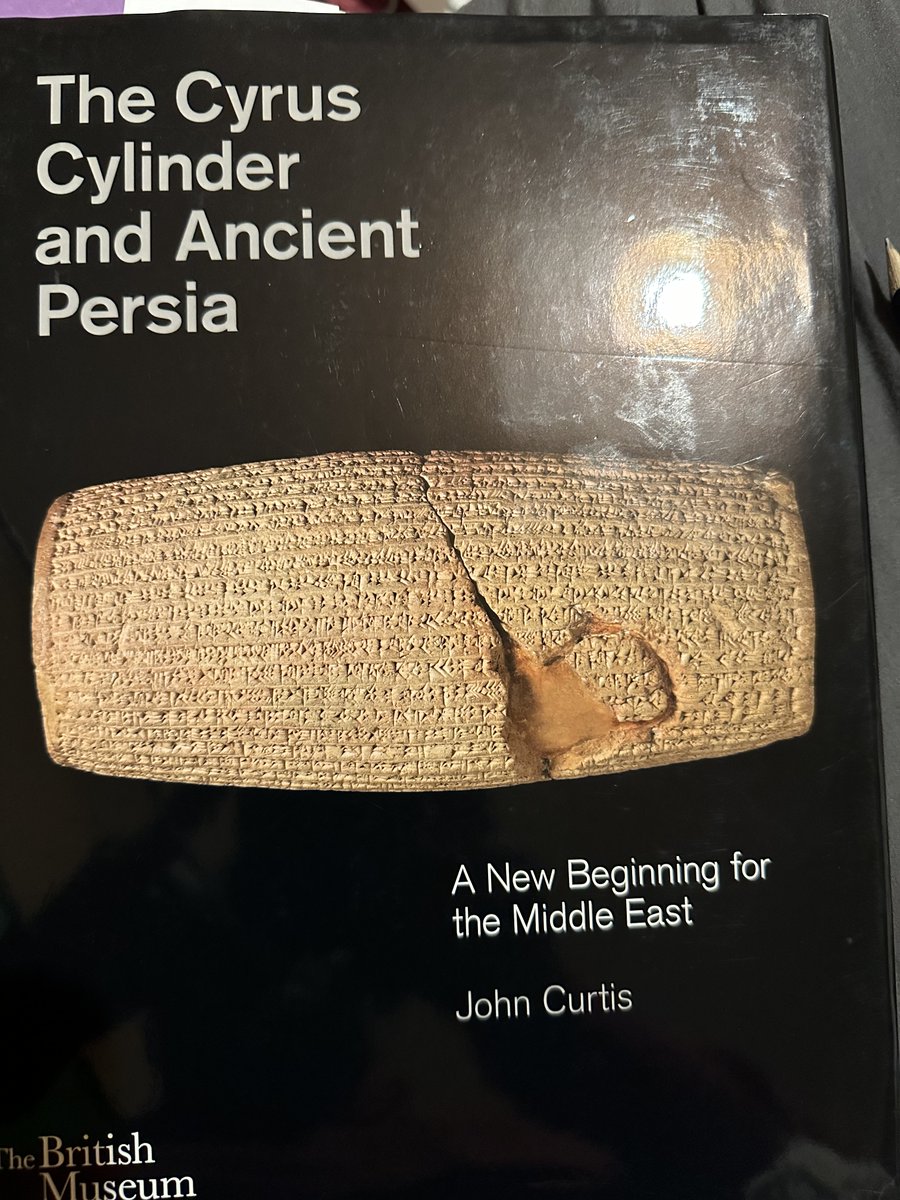
The Cyrus Cylinder is an ancient clay artefact dating to the 6th century BCE, specifically the reign of Cyrus the Great, the founder of the Achaemenid Empire in Persia (modern-day Iran). It is often regarded as one of the first declarations of human rights and holds significant historical, cultural, and political importance. Here’s a detailed exploration of its meaning:
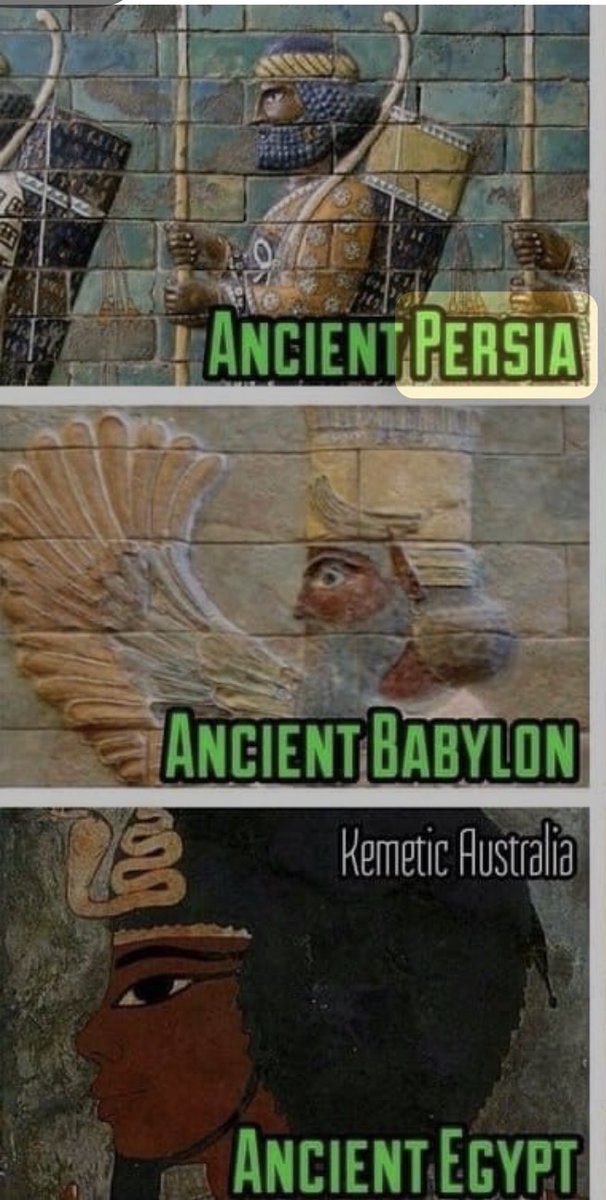
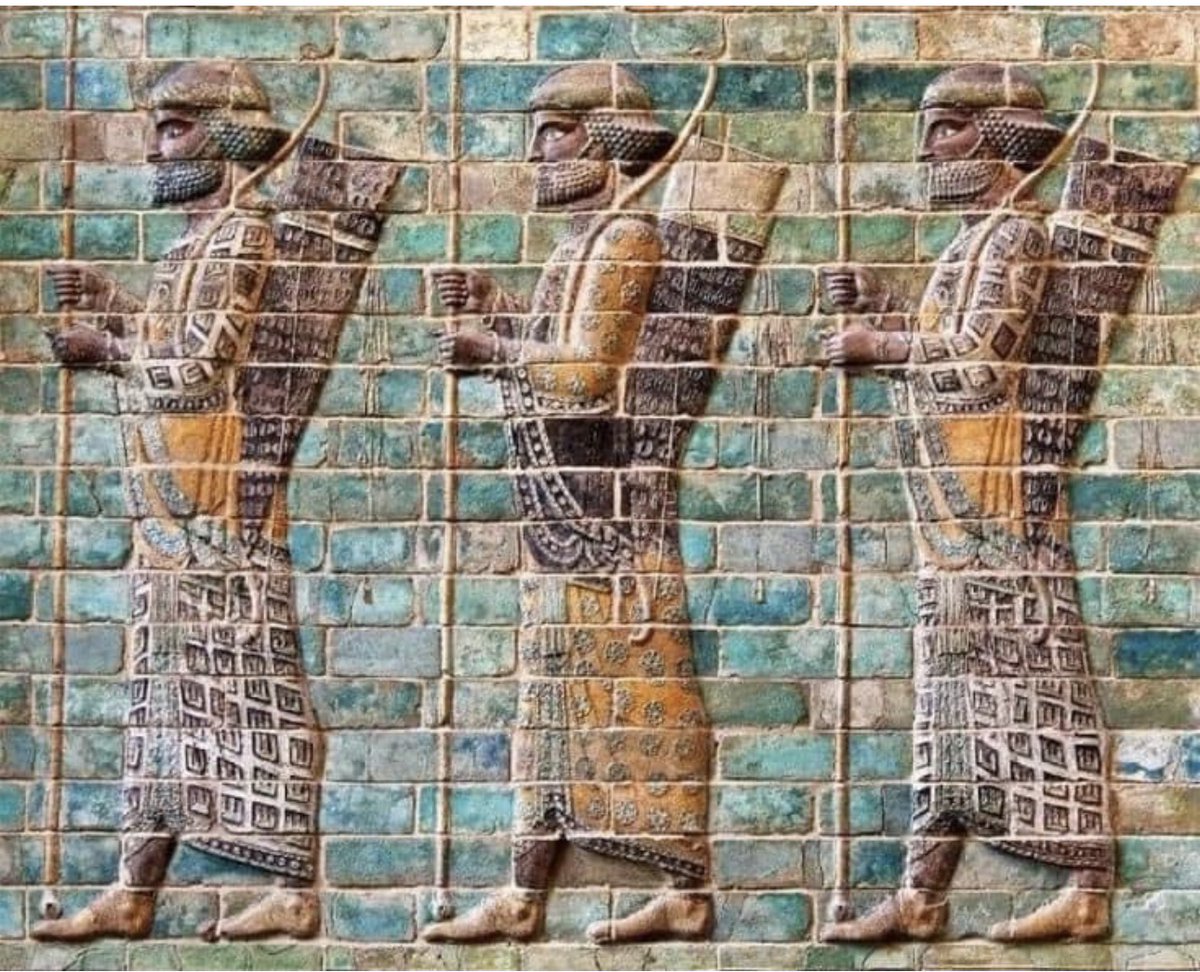
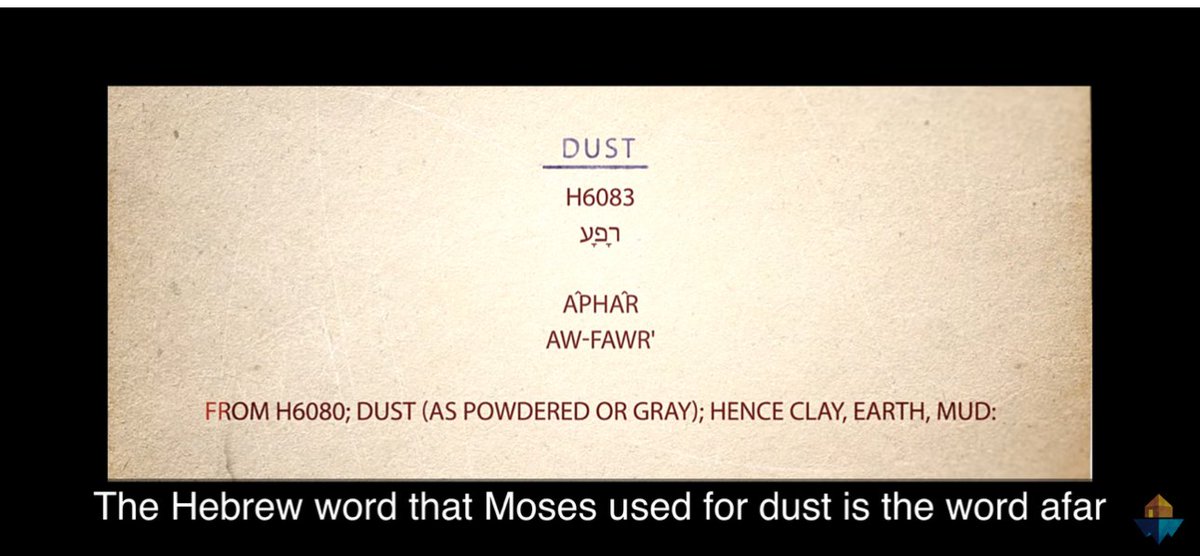
Darius in Afar is Darahis. Cyrus was Karus
Ephraïm Africanus Afarensis
174


Jun 4
Opposition to building the temple under Xerxes and Artaxerxes
✝️🔥🔥🔥
“At the beginning of the reign of Xerxes, they lodged an accusation against the people of Judah and Jerusalem. And in the days of Artaxerxes king of Persia, Bishlam, Mithredath, Tabeel and the rest of his associates wrote a letter to Artaxerxes. The letter was written in Aramaic script and in the Aramaic language. Rehum the commanding officer and Shimshai the secretary wrote a letter against Jerusalem to Artaxerxes the king as follows: Rehum the commanding officer and Shimshai the secretary, together with the rest of their associates—the judges, officials and administrators over the people from Persia, Uruk and Babylon, the Elamites of Susa, and the other people whom the great and honorable Ashurbanipal deported and settled in the city of Samaria and elsewhere in Trans-Euphrates. (This is a copy of the letter they sent him.) To King Artaxerxes, From your servants in Trans-Euphrates: The king should know that the people who came up to us from you have gone to Jerusalem and are rebuilding that rebellious and wicked city. They are restoring the walls and repairing the foundations. Furthermore, the king should know that if this city is built and its walls are restored, no more taxes, tribute or duty will be paid, and eventually the royal revenues will suffer. Now since we are under obligation to the palace and it is not proper for us to see the king dishonored, we are sending this message to inform the king, so that a search may be made in the archives of your predecessors. In these records you will find that this city is a rebellious city, troublesome to kings and provinces, a place with a long history of sedition. That is why this city was destroyed. We inform the king that if this city is built and its walls are restored, you will be left with nothing in Trans-Euphrates. The king sent this reply: To Rehum the commanding officer, Shimshai the secretary and the rest of their associates living in Samaria and elsewhere in Trans-Euphrates: Greetings. The letter you sent us has been read and translated in my presence. I issued an order and a search was made, and it was found that this city has a long history of revolt against kings and has been a place of rebellion and sedition. Jerusalem has had powerful kings ruling over the whole of Trans-Euphrates, and taxes, tribute and duty were paid to them. Now issue an order to these men to stop work, so that this city will not be rebuilt until I so order. Be careful not to neglect this matter. Why let this threat grow, to the detriment of the royal interests? As soon as the copy of the letter of King Artaxerxes was read to Rehum and Shimshai the secretary and their associates, they went immediately to the Jews in Jerusalem and compelled them by force to stop. Thus the work on the house of God in Jerusalem came to a standstill until the second year of the reign of Darius king of Persia.”
Ezra 4:6-24 NIV
bible.com/bible/111/ezr.4.6-…
1
4
139
Jun 4
Opposition to the Building of the Temple
✝️🔥🔥🔥
“The letter you sent us has been read and translated in my presence. I issued an order and a search was made, and it was found that this city has a long history of revolt against kings and has been a place of rebellion and sedition. Jerusalem has had powerful kings ruling over the whole of Trans-Euphrates, and taxes, tribute and duty were paid to them. Now issue an order to these men to stop work, so that this city will not be rebuilt until I so order. Be careful not to neglect this matter. Why let this threat grow, to the detriment of the royal interests? As soon as the copy of the letter of King Artaxerxes was read to Rehum and Shimshai the secretary and their associates, they went immediately to the Jews in Jerusalem and compelled them by force to stop. Thus the work on the house of God in Jerusalem came to a standstill until the second year of the reign of Darius king of Persia.”
Ezra 4:18-24 NIV
bible.com/bible/111/ezr.4.18…
1
5
161



May 8
Opposition to the rebuilding of the temple…a letter is brought before the king…
✝️🔥🔥🔥
“At the beginning of the reign of Xerxes, they lodged an accusation against the people of Judah and Jerusalem. And in the days of Artaxerxes king of Persia, Bishlam, Mithredath, Tabeel and the rest of his associates wrote a letter to Artaxerxes. The letter was written in Aramaic script and in the Aramaic language. Rehum the commanding officer and Shimshai the secretary wrote a letter against Jerusalem to Artaxerxes the king as follows: Rehum the commanding officer and Shimshai the secretary, together with the rest of their associates—the judges, officials and administrators over the people from Persia, Uruk and Babylon, the Elamites of Susa, and the other people whom the great and honorable Ashurbanipal deported and settled in the city of Samaria and elsewhere in Trans-Euphrates. (This is a copy of the letter they sent him.) To King Artaxerxes, From your servants in Trans-Euphrates: The king should know that the people who came up to us from you have gone to Jerusalem and are rebuilding that rebellious and wicked city. They are restoring the walls and repairing the foundations. Furthermore, the king should know that if this city is built and its walls are restored, no more taxes, tribute or duty will be paid, and eventually the royal revenues will suffer. Now since we are under obligation to the palace and it is not proper for us to see the king dishonored, we are sending this message to inform the king, so that a search may be made in the archives of your predecessors. In these records you will find that this city is a rebellious city, troublesome to kings and provinces, a place with a long history of sedition. That is why this city was destroyed. We inform the king that if this city is built and its walls are restored, you will be left with nothing in Trans-Euphrates. The king sent this reply: To Rehum the commanding officer, Shimshai the secretary and the rest of their associates living in Samaria and elsewhere in Trans-Euphrates: Greetings. The letter you sent us has been read and translated in my presence. I issued an order and a search was made, and it was found that this city has a long history of revolt against kings and has been a place of rebellion and sedition. Jerusalem has had powerful kings ruling over the whole of Trans-Euphrates, and taxes, tribute and duty were paid to them. Now issue an order to these men to stop work, so that this city will not be rebuilt until I so order. Be careful not to neglect this matter. Why let this threat grow, to the detriment of the royal interests? As soon as the copy of the letter of King Artaxerxes was read to Rehum and Shimshai the secretary and their associates, they went immediately to the Jews in Jerusalem and compelled them by force to stop. Thus the work on the house of God in Jerusalem came to a standstill until the second year of the reign of Darius king of Persia.”
Ezra 4:6-24 NIV
bible.com/bible/111/ezr.4.6-…
1
3
170

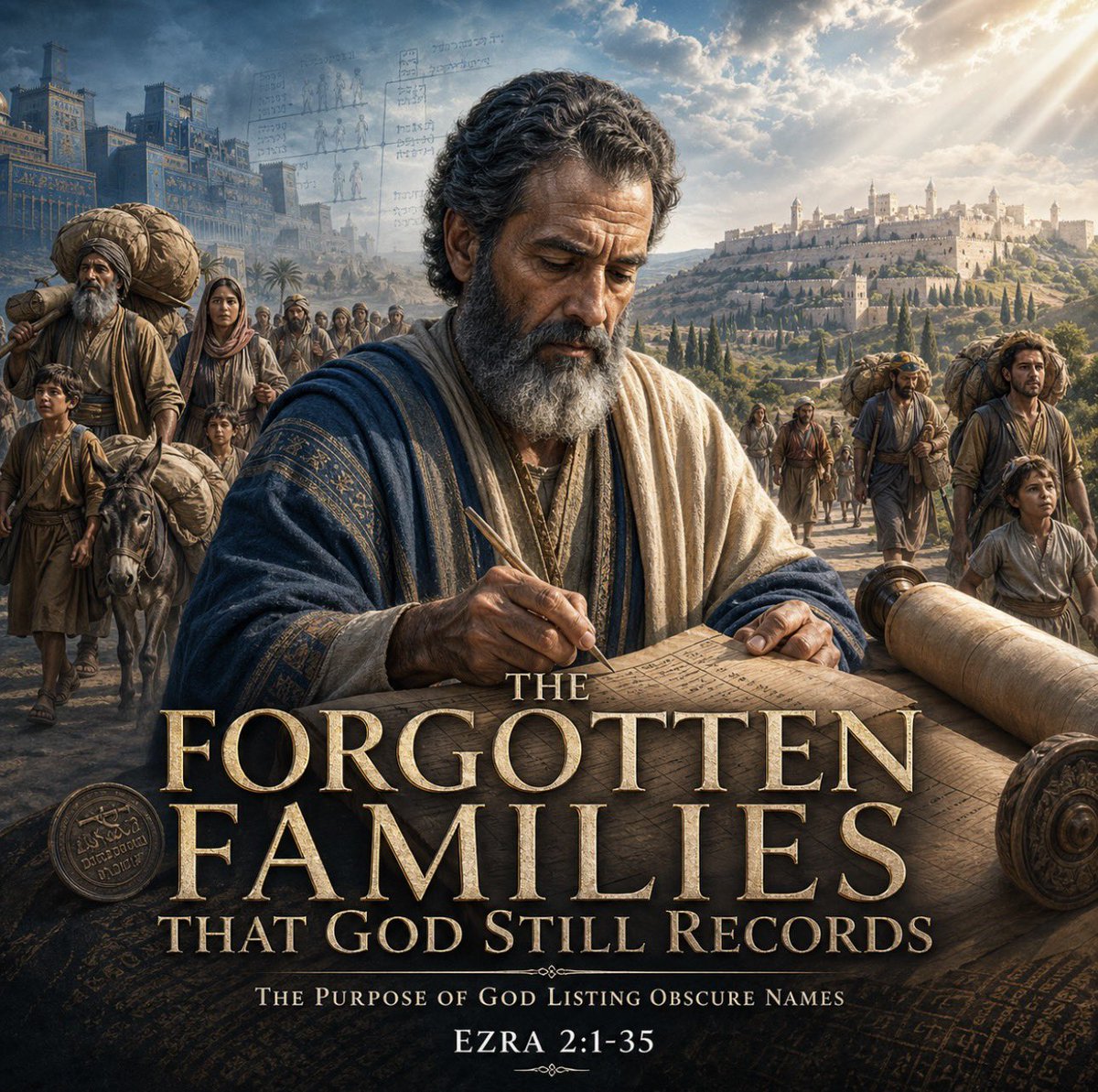
The Forgotten Families That God Still Records
The Purpose of God Listing Obscure Names
Ezra 2:1-35
Main Passage: Ezra 2:1-35
“Now these are the children of the province that went up out of the captivity, of those which had been carried away, whom Nebuchadnezzar the king of Babylon had carried away unto Babylon, and came again unto Jerusalem and Judah, every one unto his city; Which came with Zerubbabel: Jeshua, Nehemiah, Seraiah, Reelaiah, Mordecai, Bilshan, Mispar, Bigvai, Rehum, Baanah. The number of the men of the people of Israel: The children of Parosh, two thousand an hundred seventy and two. The children of Shephatiah, three hundred seventy and two. The children of Arah, seven hundred seventy and five. The children of Pahathmoab, of the children of Jeshua and Joab, two thousand eight hundred and twelve. The children of Elam, a thousand two hundred fifty and four. The children of Zattu, nine hundred forty and five. The children of Zaccai, seven hundred and threescore. The children of Bani, six hundred forty and two. The children of Bebai, six hundred twenty and three. The children of Azgad, a thousand two hundred twenty and two. The children of Adonikam, six hundred sixty and six. The children of Bigvai, two thousand fifty and six. The children of Adin, four hundred fifty and four. The children of Ater of Hezekiah, ninety and eight. The children of Bezai, three hundred twenty and three. The children of Jorah, an hundred and twelve. The children of Hashum, two hundred twenty and three. The children of Gibbar, ninety and five. The children of Bethlehem, an hundred twenty and three. The men of Netophah, fifty and six. The men of Anathoth, an hundred twenty and eight. The children of Azmaveth, forty and two. The children of Kirjatharim, Chephirah, and Beeroth, seven hundred and forty and three. The children of Ramah and Geba, six hundred twenty and one. The men of Michmas, an hundred twenty and two. The men of Bethel and Ai, two hundred twenty and three. The children of Nebo, fifty and two. The children of Magbish, an hundred fifty and six. The children of the other Elam, a thousand two hundred fifty and four. The children of Harim, three hundred and twenty. The children of Lod, Hadid, and Ono, seven hundred twenty and five. The children of Jericho, three hundred forty and five. The children of Senaah, three thousand and six hundred and thirty.”
Ezra 2:1-35
Introduction
Ezra 2 is the kind of chapter that exposes what a man really believes about the Bible. A shallow reader gets to the names and starts yawning. A modern pulpit comedian skips the list because he cannot turn it into a three-point motivational speech. A Bible corrector stumbles over the numbers and immediately starts looking for a contradiction. A carnal Christian looks at Parosh, Shephatiah, Arah, Pahathmoab, Elam, Zattu, Zaccai, Bani, Bebai, Azgad, Adonikam, Bigvai, Adin, Ater, Bezai, Jorah, Hashum, Gibbar, Bethlehem, Netophah, Anathoth, Azmaveth, and Senaah, and says, “What am I supposed to do with all that?” The answer is simple. Believe it. Read it. Let it rebuke you. Let it teach you that God records names men forget, families men overlook, places men despise, and numbers men think are unnecessary. The Holy Ghost does not pad the Bible with dead ink. If God puts a name in the book, the name matters.
This passage is not merely a census. It is a resurrection of identity after captivity. Babylon had carried Judah away. Nebuchadnezzar had burned the city, destroyed the temple, carried off the vessels, and uprooted families. Seventy years in a strange land can blur memory. Children are born in captivity. Grandchildren grow up speaking the language of exile. Family stories turn into fragments. Land inheritance seems like a dream. Jerusalem becomes a word more than a visible reality. But when God opens the door of return, He does not bring back a nameless crowd. He records families. He attaches numbers to fathers’ houses. He
1
4
9
695

Pakistan main rehum karo .
Hum ko Maaf karo
Pack your bag and go home for 5 years minimum
4
84
Allah rehum Kery or Apni Aman Mey RAKHY AMEEN 🙏🏻😢
2
1
4
25