
Jun 13
RiskFirstさんありがとうございます!
僕もまずは長期積立でしっかり資産を積み上げていこうと思っています💪
短期トレードは確かに難しそうなので、まずはデモから勉強してみようかなと思います。
アドバイスありがとうございます🔥
1
29

Jun 11
coinmarketcap.com/community/…
Crypto_Taya
@Crypto_Taya
· 3h
📷$VELVET 0.82 — DEFAI FLYWHEEL TO $5.00?
Current: ~$0.82 | Vol/MC: 15% ✅ | Liq/MC: 2.54% ✅
Velvet = DeFAI OS AI Co-Pilot. Real utility: 100k users, multi-chain vaults.
But the real story: 42% circulating 47% in one wallet = rocket fuel.
📊 THE NUMBERS:
• MC: $343M | FDV: $815M → FDV/MC 2.37x = room to run
• Circulating: 42% → 🔑 58% locked = future catalyst
• Top 1 Holder: 47% of float → 🐋 One wallet controls the tap
• Vol/MC: 15% → ✅ Healthy volume, not manipulation
• ATH: $0.8659 → Break = next leg to 📷$1.00
🔍 WHY $5.00 IS ON THE TABLE:
✅ Low float (42%) = less supply to move price
✅ Concentration (47% one wallet) = coordinated upside
✅ DeFAI narrative = fresh, viral, under-owned
✅ Empty order book above $0.98 = no resistance
✅ BTC stabilising $62-63K = alts can breathe
🎯 THE MATH:
• TP1: 📷$3.20 (50% position) = 292% from $0.815
• TP2: 📷$4.50 (50% position) = 452% from $0.815
• MC at $5: ~$2.1B (top-50, achievable in hype)
🗺 KEY LEVELS:
• Resistance: $0.87 → 📷$1.00 → 📷$1.80 → $2.50 → 📷$3.20 → 📷$4.50
• Support: $0.78-0.80 → $0.76 (critical) → $0.65 (stop)
• Trigger: Close above $0.87 with volume >$80M = acceleration
🛡 RISK-FIRST SETUP:
• Entry: $0.80-0.84 (current zone)
• Stop-Loss: $0.65 (-20% hard)
• TP1: 📷$3.20 → 50% | TP2: 📷$4.50 → 50%
• Position Size: ≤1-2% capital (high beta, low float)
• Monitor: Volume >$80M = impulse alive | Whale moves = signal
⚠ CRITICAL RISKS:
• 47% in one wallet = whale can dump anytime
• 58% locked = future unlocks need absorption
• BTC <$60K = alts follow down regardless of narrative
#VELVET
#DeFAI
#AICrypto
#RiskFirst
#CryptoAnalysis
34

評価していただき嬉しいです!
確かに一気に利益が飛ばす場面かもしれないですね。
あと 全て 相場 転換した感じがしますね。riskfirstさんがポストされていた通り。相場 転換した感がありますね。
基本売り 目線で見ているんですがどうなんでしょうね。難しいところです。
1
1
25

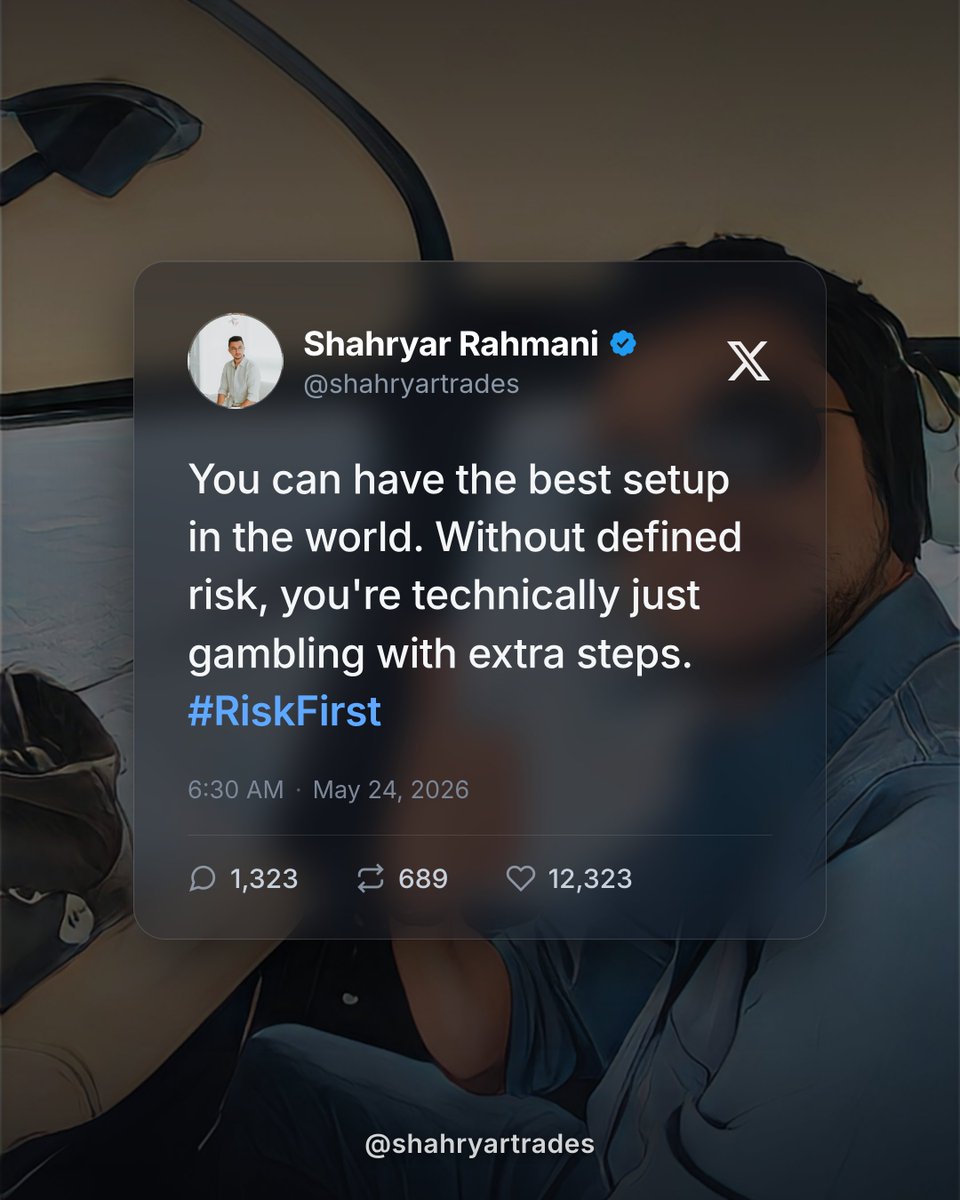
You can have the best setup in the world. Without defined risk, you're technically just gambling with extra steps.
#RiskFirst #MetaTradingClub
1

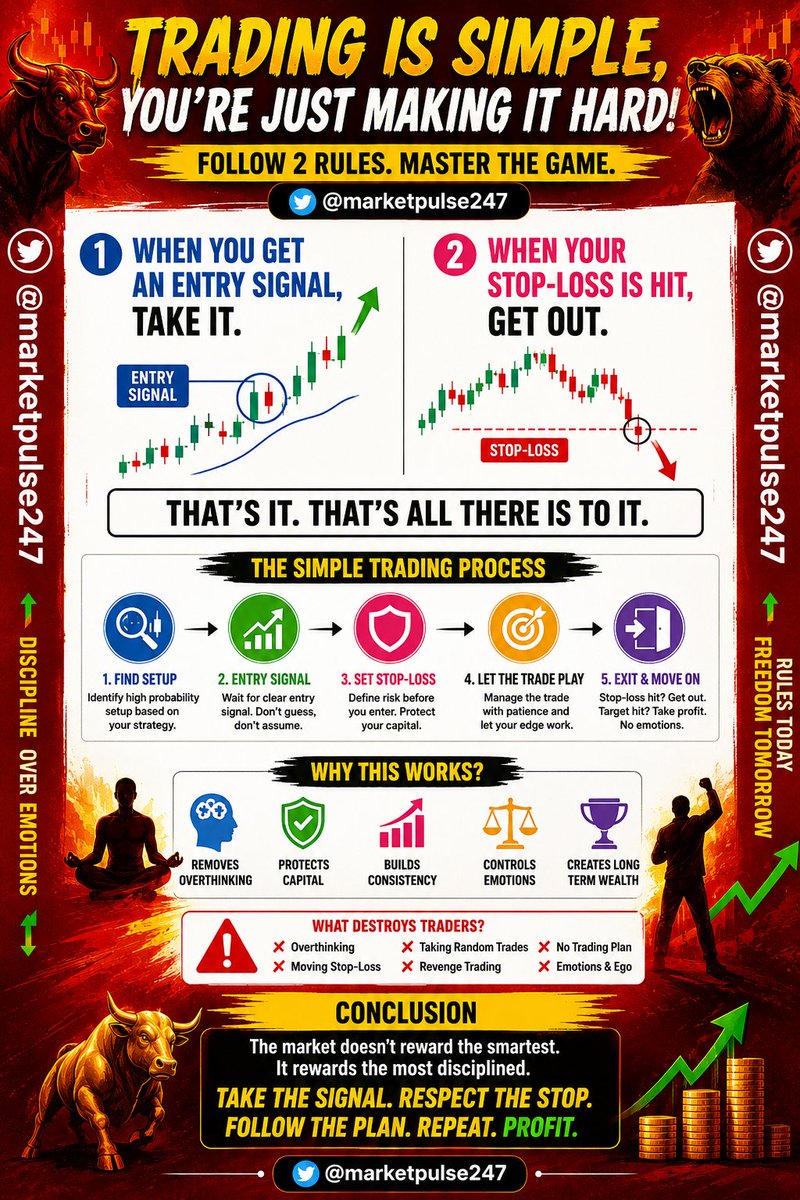
THE SIMPLE TRADING SECRET MOST TRADERS REFUSE TO FOLLOW
STOP THINKING AND START EXECUTING
One of the biggest reasons traders struggle is not because they lack knowledge. It is because they overthink every decision. The market gives a signal, yet instead of acting, many traders begin searching for additional confirmation. They check multiple indicators, watch financial news, scroll through social media opinions, and look for reasons to avoid taking the trade. By the time they finally decide, the opportunity is gone. Successful trading is often much simpler than people make it. If you have a tested trading system with clear entry criteria, your only job is to execute when the signal appears. Every professional trader understands that certainty does not exist in the market. There will always be reasons to hesitate and there will always be conflicting opinions. The traders who succeed are those who trust their preparation and follow their rules without hesitation. Trading is not a game of perfect predictions. It is a game of disciplined execution repeated consistently over time.
YOUR ENTRY SIGNAL IS YOUR EDGE
Most profitable trading systems are built around a specific edge. That edge may be a breakout pattern, a trend continuation setup, a support and resistance reaction, or a momentum signal. Whatever the strategy, the signal exists for a reason. It has been studied, tested, and proven over many trades. Yet many traders abandon their edge the moment a real opportunity appears. Fear starts asking questions. What if this trade fails? What if the market reverses? What if there is unexpected news? Those thoughts create paralysis. The truth is that no setup works one hundred percent of the time. Even the best traders experience losing trades regularly. The purpose of a trading system is not to eliminate losses. The purpose is to create a positive outcome over a large sample of trades. Every time you skip a valid signal, you are interfering with your statistical edge. Great traders understand that one trade means nothing. What matters is consistently taking every valid setup according to the plan.
Twitter: x.com/@marketpulse247
THE STOP LOSS IS NOT YOUR ENEMY
Many traders treat stop losses as personal attacks. When a stop loss is hit, they feel frustrated, disappointed, and sometimes even angry. This emotional response often leads to destructive behavior such as revenge trading or moving stop losses further away. Professional traders see things differently. They understand that stop losses are simply business expenses. A retailer pays rent. A manufacturer pays for raw materials. A trader pays for information through controlled losses. Every stop loss provides valuable feedback from the market. It tells you that your trade idea was wrong or early. There is no shame in being wrong. The real danger comes from refusing to accept being wrong. Small losses protect trading capital and preserve mental clarity. Large losses damage both. The purpose of a stop loss is not to punish you. It exists to keep you in the game long enough to benefit from future opportunities. Respecting stop losses is one of the most powerful habits a trader can develop.
Twitter: x.com/@marketpulse247
DISCIPLINE CREATES LONG TERM PROFITS
The difference between profitable traders and struggling traders often comes down to one simple factor. Discipline. Successful traders do not possess secret indicators or magical forecasting abilities. They simply follow their process consistently. When an entry signal appears, they take the trade. When the stop loss is triggered, they exit immediately. They do not negotiate with the market. They do not argue with price action. They do not search for excuses. This level of discipline creates consistency, and consistency creates profitability. The market rewards traders who focus on execution rather than prediction. Every trading decision should be based on rules, not emotions. The moment emotions begin controlling decisions, performance becomes unpredictable. Trading success is not about making every trade a winner. It is about managing risk effectively and allowing probabilities to work over time. Those who master discipline eventually discover that trading becomes less stressful, more consistent, and significantly more profitable.
Twitter: x.com/@marketpulse247
CONCLUSION
The market does not require endless analysis. It rewards disciplined action. When your entry signal appears, take the trade. When your stop loss is hit, exit immediately. That simple process removes emotional interference and allows your trading edge to work as intended. The traders who achieve long term success are not necessarily the smartest. They are the most disciplined. Trust your system, respect your stop loss, and focus on flawless execution.
Twitter: x.com/@marketpulse247
THE SIMPLE TRADING SECRET MOST TRADERS REFUSE TO FOLLOW
STOP THINKING AND START EXECUTING
One of the biggest reasons traders struggle is not because they lack knowledge. It is because they overthink every decision. The market gives a signal, yet instead of acting, many traders begin searching for additional confirmation. They check multiple indicators, watch financial news, scroll through social media opinions, and look for reasons to avoid taking the trade. By the time they finally decide, the opportunity is gone. Successful trading is often much simpler than people make it. If you have a tested trading system with clear entry criteria, your only job is to execute when the signal appears. Every professional trader understands that certainty does not exist in the market. There will always be reasons to hesitate and there will always be conflicting opinions. The traders who succeed are those who trust their preparation and follow their rules without hesitation. Trading is not a game of perfect predictions. It is a game of disciplined execution repeated consistently over time.
Twitter: x.com/@marketpulse247
YOUR ENTRY SIGNAL IS YOUR EDGE
Most profitable trading systems are built around a specific edge. That edge may be a breakout pattern, a trend continuation setup, a support and resistance reaction, or a momentum signal. Whatever the strategy, the signal exists for a reason. It has been studied, tested, and proven over many trades. Yet many traders abandon their edge the moment a real opportunity appears. Fear starts asking questions. What if this trade fails? What if the market reverses? What if there is unexpected news? Those thoughts create paralysis. The truth is that no setup works one hundred percent of the time. Even the best traders experience losing trades regularly. The purpose of a trading system is not to eliminate losses. The purpose is to create a positive outcome over a large sample of trades. Every time you skip a valid signal, you are interfering with your statistical edge. Great traders understand that one trade means nothing. What matters is consistently taking every valid setup according to the plan.
Twitter: x.com/@marketpulse247
THE STOP LOSS IS NOT YOUR ENEMY
Many traders treat stop losses as personal attacks. When a stop loss is hit, they feel frustrated, disappointed, and sometimes even angry. This emotional response often leads to destructive behavior such as revenge trading or moving stop losses further away. Professional traders see things differently. They understand that stop losses are simply business expenses. A retailer pays rent. A manufacturer pays for raw materials. A trader pays for information through controlled losses. Every stop loss provides valuable feedback from the market. It tells you that your trade idea was wrong or early. There is no shame in being wrong. The real danger comes from refusing to accept being wrong. Small losses protect trading capital and preserve mental clarity. Large losses damage both. The purpose of a stop loss is not to punish you. It exists to keep you in the game long enough to benefit from future opportunities. Respecting stop losses is one of the most powerful habits a trader can develop.
Twitter: x.com/@marketpulse247
DISCIPLINE CREATES LONG TERM PROFITS
The difference between profitable traders and struggling traders often comes down to one simple factor. Discipline. Successful traders do not possess secret indicators or magical forecasting abilities. They simply follow their process consistently. When an entry signal appears, they take the trade. When the stop loss is triggered, they exit immediately. They do not negotiate with the market. They do not argue with price action. They do not search for excuses. This level of discipline creates consistency, and consistency creates profitability. The market rewards traders who focus on execution rather than prediction. Every trading decision should be based on rules, not emotions. The moment emotions begin controlling decisions, performance becomes unpredictable. Trading success is not about making every trade a winner. It is about managing risk effectively and allowing probabilities to work over time. Those who master discipline eventually discover that trading becomes less stressful, more consistent, and significantly more profitable.
Twitter: x.com/@marketpulse247
CONCLUSION
The market does not require endless analysis. It rewards disciplined action. When your entry signal appears, take the trade. When your stop loss is hit, exit immediately. That simple process removes emotional interference and allows your trading edge to work as intended. The traders who achieve long term success are not necessarily the smartest. They are the most disciplined. Trust your system, respect your stop loss, and focus on flawless execution.
Twitter: x.com/@marketpulse247
#Trading #StockMarket #TraderMindset #TradingPsychology #RiskManagement #PriceAction #TechnicalAnalysis #Discipline #TradingDiscipline #StopLoss #TradingPlan #StockTrader #DayTrading #SwingTrading #MarketAnalysis #FinancialFreedom #Investing #TradingEducation #MarketWisdom #TradingJourney #CapitalPreservation #ProfessionalTrader #ExecutionMatters #TradingSuccess #TradingEdge #ChartAnalysis #MomentumTrading #BreakoutTrading #MarketTrends #InvestorMindset #TradingRules #Consistency #WinningMindset #WealthCreation #SmartTrading #MarketOpportunities #TradeManagement #ProfitableTrader #TradingCommunity #StockMarketIndia #MindsetMatters #RiskFirst #TraderLife #MarketKnowledge #LongTermSuccess #EmotionControl #ProcessOverOutcome #TradeWithDiscipline #LearnTrading #MarketPulse247
1
58

Jun 9
Most overreacted: 10% upside from lowered target.
Short-term bullish, but fails if MTN breaks 52-week low ($118.51).
Wait for volume >10D avg (772k) close above $140.
Risk: analyst targets often lag price action.
#RiskFirst #NYSE

8

Jun 9
Most will chase the M&A hype.
I see downside first: NUVL -20% in a week, -14% in a month.
Short-term bullish only if volume spikes above 2M AND close >$95.
Failure below $87.3 low invalidates.
Risk of deal collapse or overpay.
#RiskFirst #NASDAQ

19

Risk first: ASO beat EPS but raised guidance on weak consumer view.
Short-term bounce likely.
Bias fails if volume stays below 30d avg & price can't hold $52.
Wait for 1.5M volume & close above $52.50.
Retail fragile.
#RiskFirst #NASDAQ

11

Jun 9
VEON exec hire: market may overhype strategy boost.
Short-term bullish bias, but fails if volume stays below 50-day avg.
Wait for close > $55 on 1.5x avg volume.
Risk: one insider doesn't fix structural trends.
#RiskFirst #NASDAQ
12

Jun 8
Risk first: ASMB -26% 1M.
Market may overhype Phase II data (2027-28).
Short-term biased up IF volume confirms.
BUT fails if <22.24 low.
Wait: 2x avg vol & close >27.50.
Risk of binary event.
#RiskFirst #NASDAQ

16

Risk first: CPB -5% sales, margin squeeze.
Market may overreact to tariff/cost noise.
Short-term bearish, but invalid if volume dries up on next dip.
Wait: 2x avg volume & close above $20.50.
Risk: one quarter doesn't break a franchise.
#RiskFirst #NASDAQ

15

Market may overhype early-stage metabolic data.
Short-term bullish only if price reclaims $1.70 on volume >1.5M.
Failure below $1.10 invalidates.
Wait for close above 50DMA.
Risk: binary event risk; high volatility.
#RiskFirst #NASDAQ

11

Jun 8
Risk first: 31% upside sounds bullish, but -73% in 1Y & $11-45 range show extreme uncertainty.
Short-term fade rally unless volume confirms break above $26.06.
Wait: close above $26 on 1.5x avg volume.
Risk: analysts often lag price damage.
#RiskFirst #NASDAQ
38
Jun 8
5100% surge fuels FOMO.
Risk first: what breaks trend? Overhyped AI or demand slowdown.
Bullish only if $90 holds with volume.
Wait for daily close above $105 on 1.5x avg vol.
Risk: chasing past winners hides downside.
#RiskFirst #NASDAQ

9
Risk first: NVDA-SK Hynix deal hype may fade fast.
Short-term bullish, but fails if NVDA closes below $215 on volume spike.
Wait: 3M avg volume surge hold $225.
#RiskFirst #NASDAQ

38
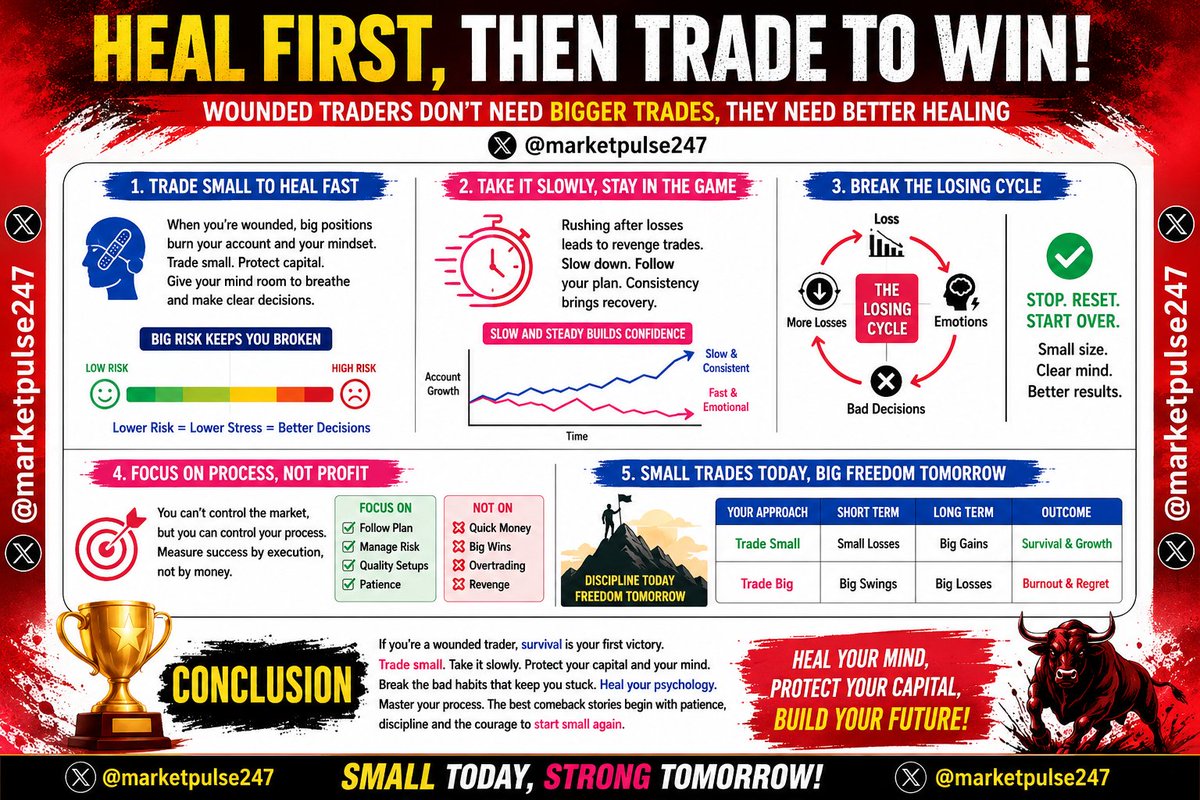
WOUNDED TRADERS DON'T NEED BIGGER TRADES, THEY NEED BETTER HEALING
Trading losses hurt more than most people realize. They don't just damage your account balance. They damage confidence, decision making, discipline, and emotional stability. After a series of losses, many traders make a dangerous mistake. They try to recover quickly by increasing position sizes and taking more trades. They believe one big winning trade will erase the pain and restore confidence. Unfortunately, this mindset often creates even bigger losses. A wounded trader is not operating from a position of strength. They are operating from frustration, fear, anger, and desperation. These emotions cloud judgment and lead to impulsive decisions. Just as an injured athlete cannot perform at peak level without recovery, a wounded trader cannot trade effectively without emotional healing. The market does not care about your previous losses. It does not reward revenge trading. It only rewards discipline and sound execution. The smartest move after a difficult period is not to trade bigger. It is to trade smaller. Reducing risk allows you to regain confidence, protect capital, and rebuild consistency. Small trades create space for learning, reflection, and recovery. The goal is not to win back money immediately. The goal is to return to your best trading mindset.
SMALL POSITION SIZES CREATE BIG MENTAL CLARITY
Many traders underestimate the psychological power of trading small. When your position size is too large, every market movement feels personal. Every small fluctuation creates anxiety. Fear of losing increases while patience decreases. This emotional pressure often forces traders to exit winners too early and hold losers too long. Smaller position sizes completely change the experience. When less money is at risk, your mind becomes calmer and more objective. You can focus on process rather than profit. You can evaluate setups based on quality rather than urgency. Most professional traders understand that survival comes before growth. Protecting capital during difficult periods is more important than chasing large returns. Trading small allows you to rebuild trust in your strategy. Each properly executed trade becomes evidence that your process still works. Confidence returns gradually through disciplined repetition, not through one lucky trade. Think of trading small as physical therapy for your trading psychology. The purpose is not to maximize profits. The purpose is to strengthen habits, improve execution, and restore emotional balance. Once consistency returns, position sizes can slowly increase. Until then, small is powerful because small keeps you in the game.
BREAKING THE LOSING CYCLE BEFORE IT BECOMES A HABIT
One of the most dangerous aspects of trading losses is the cycle they create. A trader experiences losses, becomes emotional, increases risk, ignores rules, and suffers additional losses. This pattern repeats until significant damage is done. The longer this cycle continues, the harder it becomes to escape. Every repeated mistake strengthens destructive habits. The brain begins to normalize impulsive behavior. Revenge trading becomes routine. Overtrading becomes acceptable. Risk management disappears. Breaking this cycle requires conscious intervention. The first step is acknowledging that something needs to change. The second step is reducing exposure to the market. Smaller position sizes force patience and discipline. They create a buffer between emotions and actions. This gives traders time to evaluate what went wrong and identify recurring mistakes. Successful traders understand that protecting their mindset is just as important as protecting their capital. When emotions are out of control, performance suffers regardless of strategy quality. The market will always provide opportunities tomorrow. There is no need to force opportunities today. By slowing down and trading smaller, traders interrupt destructive patterns and create conditions for long term success.
RECOVERY FIRST, PROFITS SECOND
The greatest traders in the world know that longevity is the ultimate edge. A trader who survives difficult periods has the opportunity to benefit from future opportunities. A trader who destroys their account during emotional periods loses that opportunity completely. Recovery should always take priority over immediate profits. When confidence has been shaken, focus on rebuilding routines. Review your journal. Analyze your mistakes. Follow your risk management plan with complete discipline. Measure success by process rather than outcomes. A good trade can lose money and still be a successful execution. A bad trade can make money and still be a mistake. This mindset shift is critical during recovery periods. Every small disciplined action moves you closer to stability. Every impulsive action moves you further away. The market rewards consistency over intensity. It rewards patience over urgency. It rewards discipline over emotion. If you are a wounded trader, give yourself permission to slow down. Trade smaller. Focus on execution. Rebuild confidence one trade at a time. The money will follow when the process improves. Healing is not weakness. It is preparation for stronger performance in the future.
CONCLUSION
If you're a wounded trader, your mission is not to recover losses quickly. Your mission is to recover yourself. Trade small, stay patient, and focus on rebuilding discipline. The biggest mistake after losses is trying to force profits. The smartest move is protecting your mindset and capital while returning to a consistent process. Every great comeback begins with stability, not aggression. Slow down, trust the process, and remember that successful traders are not those who never lose. They are those who recover wisely and return stronger than before.
Twitter/X: x.com/@marketpulse247
#TradingPsychology
#TraderMindset
#RiskManagement
#StockMarket
#TradingLife
#Discipline
#Consistency
#TraderTips
#Investing
#WealthBuilding
#MarketWisdom
#TradingEducation
#StockTrader
#DayTrading
#SwingTrading
#PriceAction
#TradingStrategy
#InvestorMindset
#FinancialFreedom
#TradingCommunity
#MindsetMatters
#TradingJourney
#SuccessMindset
#CapitalPreservation
#EmotionalControl
#TradingDiscipline
#MarketPulse247
#StockMarketIndia
#LearnTrading
#TradingSuccess
#ProfitableTrader
#TradeSmart
#FinancialEducation
#MoneyManagement
#TradingRules
#PatiencePays
#LongTermSuccess
#SelfDiscipline
#GrowthMindset
#TradingCoach
#TradingLessons
#MarketAnalysis
#RiskFirst
#ProtectCapital
#WinningMindset
#NeverGiveUp
#MentalStrength
#ProcessOverProfit
#TradeWithConfidence
#SmartTrader
1
3
80

3月 -11.5% 勝率23% RR0.72
→ 指数・原油・金・高配当個別株が同時に逆行。
最大の反省月。相関リスクを甘く見ていました。
4月 -0.5% 勝率46% RR1.17
→ 指数で利益を稼ぐも、個別株はトントン。
ほぼ横ばいで耐えた月。
5月 7.9% 勝率51% RR3.81
→ 個別・コモディティを追いかけず、NASDAQ中心に集中。
「追いかけない」判断が最大の勝因。
総括
分散が裏目に出る月と集中が効く月の差が鮮明でした。
メインを指数、サブは厳選・小型化していきます。
#トレード記録 #トレーダー #RiskFirst
3
141

RiskFirstさん、はじめまして❗️
楽天モバイルの田草川さんから着ました
フォローさせていただきました
今後も勉強させていただきます

1
2
80

May 19
🎓 BlueBit Trading Class: "Flat is a position."
☑️ Not trading is often the most profitable decision.
☑️ Capital preserved = future opportunity.
#BlueBit #StayFlat #RiskFirst #Crypto

3
6
12
91

May 16
It’s time for TwB University Session 18! 🎓⚖️
"An Introduction to Price Analysis - Part 2" — continuing our deep dive into trend lines and expanding our skills in reading raw price action.
Join the session here: youtube.com/live/c7yhBEQutv4 🔴📈
#RiskFirst #TwB #Trendlines #pma4tw
1
1
15
1,636