
Jun 13
Multi-wan mantém keepalive ou heartbeat com modens evitando sleep mode ou deep energy saving? Qual critério para decidir por onde estabeler conexão, menor ping e TTFP?
1
21

Remove one of the zeros. Been there, seen that. Made the mistake too many times thinking “it’ll go up just a little more and then I’ll take it”. LOL. TTFP.
2
3
592




This guy was feeling irrelevant so he had to interject himself in #OKC business as he tends to do just to say that he didn't vote for #SGA for #MVP
Ok. Cool. History will remember those on the wrong side of it.
Anyway, #TTFP #ThunderUp
6
436


Mar 3
I think part of the reasons pages load the way they do today (pulsing placeholder boxes) is because the sites are gaming search engine TTFP algorithms to appear as if they are loading faster than they are.
Which is really dumb. It's like saying a search algorithm is more important to these companies than their own customers. Though, to be honest, that's largely true anymore.
2
468

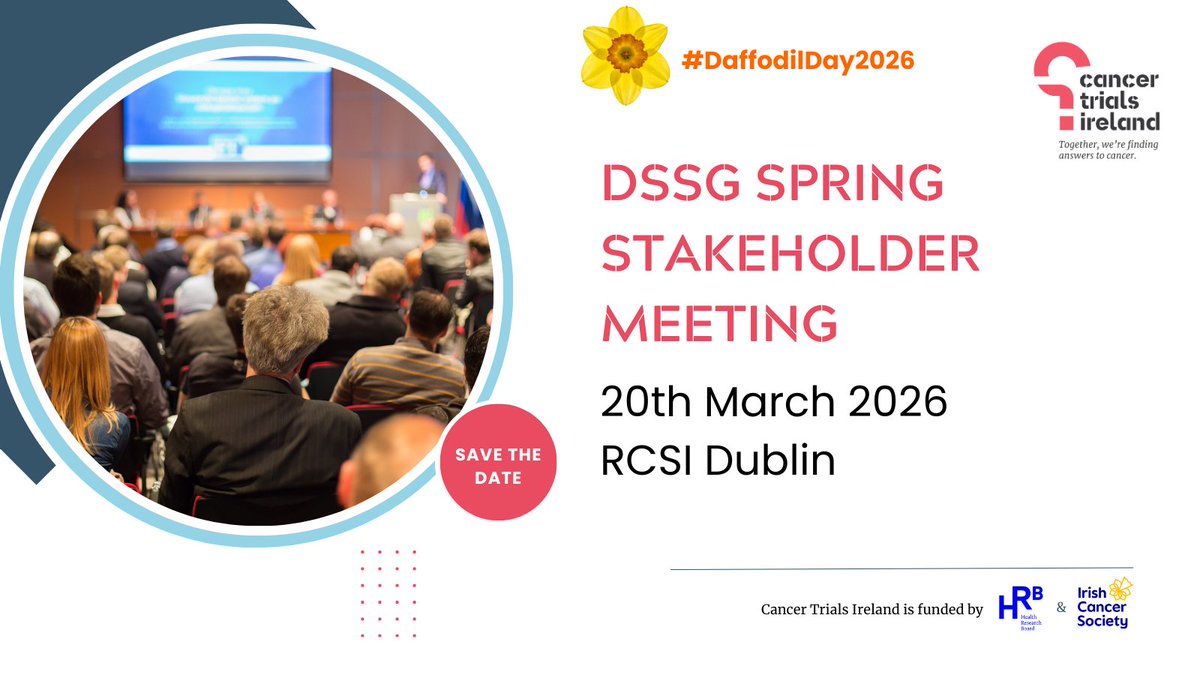
Save the Date: Spring DSSG Stakeholder Meeting 2026
📅 Friday, 20 March
🕘 09:30–10:30
Topic: Time to First Patient (TTFP)
This year’s Spring meeting will focus on the systems and coordination that shape TTFP in cancer trials.
Taking place on Daffodil Day, the flagship fundraiser of our funders, the @IrishCancerSoc 🌼
Further details to follow.
1
5
308

Mar 1
📈 Performance
- Qwen3-Omni: TTFP reduced 90%, RTF 0.22~0.45 (CUDA Graph async-chunk streaming)
- MiMo-Audio: RTF ~0.2, 11x faster than baseline
- Qwen3-TTS: disaggregated inference, streaming output, batched Code2Wav decoding, CUDA Graph for speech tokenizer
- Bagel: TP support CFG with multi-branch batching for higher throughput
🖼️ Diffusion
- FP8 and native GGUF quantization for DiT
- TP/SP/HSDP for distributed diffusion (Wan 2.2, SD 3.5, and more)
- VAE patch parallelism, layerwise offload across all platforms
- New models: HunyuanImage3, OmniGen2, nextstep_1
1
4
30
4,464

18 Dec 2025
The UDS campuses should be merged together as it used to be with 4 campuses across. Programs there are unique especially TTFP where you get to research with different students from the other campuses.
4
1
17
3,530

25 Nov 2025
Bang on. If AI agents drive most on-chain traffic, the moat becomes compute economics proof latency
Settlement rights accrue to hardware-accelerated provers. Today @cysic_xyz is the lone full-stack: chip -> network -> workload, circuit-tuned
Who’s tracking proofs/sec per watt and TTFP on real agent loads #cysic
25 Nov 2025

AI x ZK 라인 다시 훑어봤더니 진짜 시장이 @cysic_xyz 완전 lowball 치는 거 같아요
미래에 AI agent가 온체인 트래픽 대부분 끌면, 진짜 moat은 compute랑 proof speed죠
ZK hardware acceleration 잡는 놈이 settlement right 쥐는 거, 이제 Cysic만 칩-네트워크-워크로드 다 뚫고 달리는 거 보이시나요
10년 후 돌아보면 지금 valuation이 2015년 공체급 될 듯… undervalued 냄새 풀풀 나네요
누가 이거 안 사? ㄱㄱ 해보시죠 #cysic @cysic_xyz
6
8
187

24 Nov 2025
23 Nov 2025

Standard Penn State-Rutgers week disclaimer: I'm an RU graduate with 3 seasons on Schiano's recruiting staff.
Back when the Big East had fun football matchups and the Scarlet Knights reached top-10 ranking twice ('06-07). Highly recommend @HanselnGriddle if you're going to game.
7
6,845

23 Nov 2025
Most people evaluate LLMs incorrectly.
Stop obsessing over “model size”.
Look at:
• TPOT
• TTFP
• Output latency
• Seed consistency
• Hardware bottlenecks
Real performance is a pipeline, not a spec sheet.
2
34

24 Oct 2025
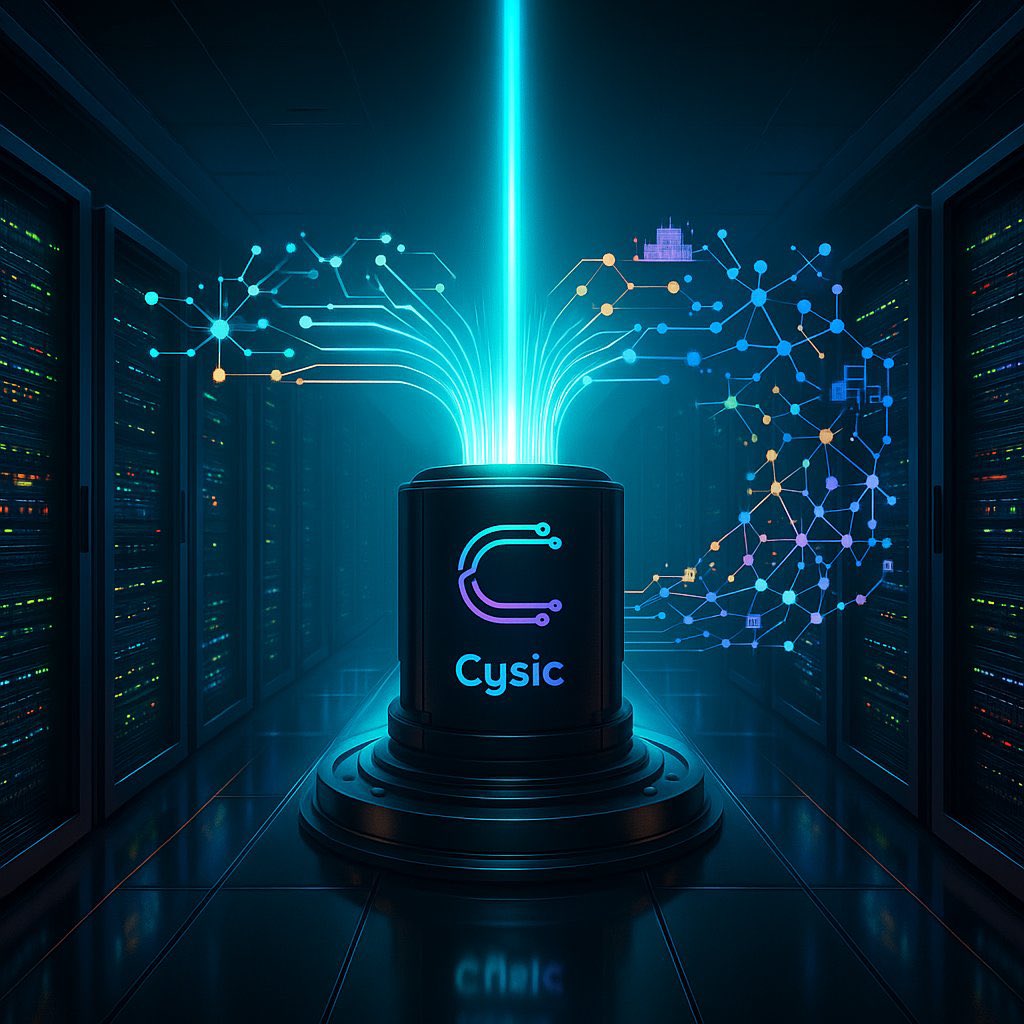
ZK throughput decides who scales → @cysic_xyz is building the hardware-accelerated prover network for proofs at production speed
Why it matters ↓
Lower proof latency → faster finality for zkRollups
Cheaper proofs → sustainable economics for apps
Deterministic performance across GPUs/ASICs
How to plug in
• Builders: use the Prover API to offload proving and batch workloads
• L2s: route proving tasks to Cysic’s distributed network for predictable TTFP
• Operators: provision compute and earn per-proof fees
Thesis → Proof markets become a core primitive. Cysic aligns hardware, software and incentives to get us there
#ZK
We are still so early
12
12
1,211

18 Oct 2025
Product Composition: App, Wallet & Card
What this section covers @useTria
How Tria stitches together a consumer app, a seedless/gasless smart wallet, and a card to deliver “fund with anything, pay anywhere.” We’ll map the onboarding, top-up & spend flows, and refunds/chargebacks, and call out risk, UX, and KPIs.
1) Onboarding (Seedless / Gasless)
Goals
<60s from install → funded account
No seed phrases, no upfront gas, no chain choice
Flow
Account create → passkey / social login → device-bound key (MPC/AA).
Light KYC (tiered): email/phone → doc/KYB when limits trigger.
Wallet bootstrap
Create AA smart account on a home chain cross-VM addressing.
Enable sponsored gas via paymaster/pool.
Compliance pre-checks (sanctions, geofencing, IP/velocity).
Card request (optional): virtual card instantly, physical card on approval.
UX Principles
One progress bar. No chain dropdowns. Human words, not protocol jargon.
“Try first, verify progressively” (feature gates by KYC level).
2) Wallet Architecture (Abstraction Core)
Core components
AA Smart Account with session keys and spending limits.
Intent Router (BestPath AVS): aggregates quotes across L2s/VMs; chooses path with cost latency guardrails.
Shared State Ledger: shows one “Available balance” while holding assets across chains; background rebalancing.
Gas Sponsorship: paymaster funds tx fees; costs recovered via micro-spreads/fees.
Developer surface
Intent API/SDK: pay({asset:any, amount, merchant}), swap({from,to}), fund({fiat/crypto}).
Policies: per-tx and session risk limits, allowlists, 2FA triggers.
3) Funding / Top-up
Sources
Crypto in: deposit addresses/intents for EVM/SVM/Move; auto-detect & credit.
On-ramp: bank transfer, cards, alternative payments (region-specific).
Peer transfers: username/QR; cross-chain receipt auto-resolved.
Flow
Choose asset (any supported).
If off-chain → on-ramp partner completes KYC/payment.
If on-chain → intent picks cheapest/fastest route to spendable unit (e.g., stablecoin on home chain).
Background: rebalancer aligns portfolio to spend defaults (e.g., stablecoin bucket).
UX
“You sent X; you can spend Y in ~seconds.” Show certainty windows and holds.
4) Spend (Card & In-app Pay)
Authorization
Merchant sends auth (ISO 8583/SDK).
Tria checks spendable balance (abstracted).
If source asset ≠ needed unit, just-in-time swap fires via intent router (gas sponsored).
Auth approved → user sees pending txn.
Clearing & Settlement
Net settlement runs later; router finalizes any bridging/swap deltas.
FX/processing fees surfaced simply: “You paid 50.00; fees 0.32 → total 50.32.”
Controls
Per-merchant limits, MCC blocks, travel mode, dynamic CVV, freeze.
5) Gasless Mechanics (How it “just works”)
Paymaster covers gas on supported networks.
Route selection accounts for gas subsidy budget.
Fallback: if sponsorship paused, app prompts “speed up with tip” or queues via batcher.
6) Refunds & Chargebacks
Refunds (merchant-initiated)
Partial/full refunds credit the user’s display currency; ledger reconciles to underlying assets at current rates.
If asset moved/churned, refund lands in the default spend bucket (stablecoin).
Chargebacks (user-initiated)
Dispute intake → collect evidence (receipt, chat, delivery proof).
Provisional credit with risk weighting.
Scheme/issuer workflows; outcome syncs to user ledger.
If lost, reclaim credit; show clear timeline/status.
Edge cases
Multi-hop swaps during original txn: store route snapshots for dispute transparency.
Merchant offline credit: appear as “pending refund” until settled.
7) Risk, Compliance & Trust
Real-time risk: device fingerprinting, velocity, anomaly rules on intents.
List screening: sanctions/PEP/KYB; geo controls at card and wallet layers.
Fraud tooling: merchant/MCC risk tiers, 3DS/SCA triggers, dispute automations.
Privacy: minimal data retention; clear export/delete.
8) KPIs & Quality Bars
TTFP (KYC start → first card auth)
Auth approval rate & intent success rate
Median execution time (swap/route) & tail p95
Gas sponsorship cost / txn
Refund speed & dispute win rate
TPV, active cards, 90/180-day retention
NPS & failure reasons (insufficient funds, route fail, KYC pending)
9) Implementation Roadmap (Suggested)
Phase 1 — Core Spend
Seedless AA wallet paymaster
On-ramp stablecoin spend bucket
Virtual card; limited regions/MCC allowlist
Phase 2 — Abstraction Lift
BestPath intents across EVM/SVM/Move (top chains first)
Just-in-time swaps; portfolio rebalancer
Refunds automation; dispute portal
Phase 3 — Scale & Dev Platform
SDK for agents/builders, webhooks
Advanced controls (team cards, budgets)
Regional rollouts, issuer redundancy, expanded on-/off-ramps

16 Oct 2025

Vision & Positioning: The “Neobank × Chain Abstraction” Play
One-sentence thesis
Tria aims to collapse the gap between everyday spending and multi-chain liquidity by pairing a consumer-grade neobank experience with an intent-based chain-abstraction stack—so users can hold, earn, trade, and pay across chains as if they were using a single account.
Why this matters now
Fragmented liquidity & UX: Assets, gas tokens, and apps live on different chains/VMs; mainstream users won’t manage bridges, fees, or seed phrases.
Real-world utility as the unlock: Cards and merchant rails convert crypto utility into daily spend, while abstraction hides the cross-chain plumbing.
Builders need a simpler target: Agents/apps want a unified execution layer (intents) instead of bespoke integrations per chain.
Product thesis
A neobank wrapper (account, card, compliance, support) plus an abstraction core (intents, routing, settlement) creates an “all-in one” money layer:
Spend: Pay with a card or wallet anywhere the network is accepted; abstract balances across chains and settle under the hood.
Trade: Intent-based routing finds best execution across EVM/SVM/Move ecosystems without the user touching bridges or gas.
Earn: Yield/savings products surface as simple choices; sourcing, rebalancing, and gas are abstracted.
Positioning narrative
Category: Consumer finance app with institutional-grade chain connectivity.
Promise: “Use any asset, on any chain, to pay or save—without thinking about chains.”
Tone: Safety and simplicity of banking; performance and openness of crypto.
Target users & market hypotheses
1) Crypto-native power users
Jobs-to-be-done: Best execution, gasless convenience, unified balances, quick settlement to a card.
Why they convert: Immediate pain relief from bridging/gas chores; card closes the loop from DeFi P&L to real-world spend.
Acquisition wedge: Communities on L2s/alt-VMs; on-ramp promos; fee rebates for early adopters.
2) Global earners & freelancers paid in crypto
JTBD: Get paid in stablecoins/crypto, minimize fees, spend locally, keep some yield.
Why they convert: FX savings vs. traditional rails; near-instant availability of funds for purchases.
Go-to-market: Partnerships with remote-work platforms, creator/DAO payrolls, and regional on-ramps.
3) Web3 consumers (gamers, NFT/social)
JTBD: Fund wallets, swap assets for in-app use, purchase IRL without juggling chains.
Why they convert: Seedless onboarding, gas sponsorship, “it just works” swaps to the needed token.
4) Builders & AI/automation agents
JTBD: Programmatic payment, swapping, and settlement via an intent API without chain-specific logic.
Why they convert: One integration to reach many chains; shared liquidity and compliance rails.
Market entry & sequencing
Beachhead: Crypto-natives and high-velocity regions with supportive compliance partners.
Wedge feature: “Fund with anything, pay anywhere” (card gasless top-ups auto-routing).
Scale play: Developer/agent SDK, B2B2C partnerships (exchanges, wallets, L2s), and SME/creator treasury tools.
Regional layering: Prioritize corridors where card issuance and KYC/AML pathways are predictable.
Competitive landscape (conceptual map)
Traditional neobanks: Great UX, limited crypto/multi-chain depth.
Crypto cards from exchanges: Solid spend rails, but siloed to a single venue/ecosystem.
AA/Smart-wallets & bridges: Strong UX or connectivity, but not end-to-end banking payments.
Routing/abstraction infra: Powerful under the hood, rarely consumer-facing.
Positioning edge: Tria sits where consumer trust (neobank UX) meets invisible cross-chain execution (intents/abstraction).
Differentiators to communicate
Seedless, gasless, chainless feel: Offload the cognitive load of keys/gas/bridges.
Intent router with shared state: Treat multiple VMs/chains like one balance and one action surface.
Closed loop to real spend: Yield ↔ trade ↔ card, all in one app, with support and recourse typical of fintech.
Potential moats
Distribution & partnerships: Rails with L2s, wallets, and payment issuers create switching costs.
Liquidity & routing data: Execution telemetry compounds into better pricing and reliability.
Compliance & risk ops: Hard-to-replicate processes and relationships (issuer, KYC/AML, fraud tooling).
Developer network effects: Once agents/apps integrate the intent layer, inertia keeps them.
Key risks & unknowns
Regulatory surface area: Multi-region card issuance, treasury, and KYC create moving targets.
Security & reliability: Intent execution, slashing/incentives, and failure-mode recovery must be verifiable.
Unit economics: Gas sponsorship, FX/processing costs, and rewards must net out with LTV.
Liquidity fragmentation: Maintaining best execution across chains/VMs requires constant tuning and depth.
Proof points & KPIs to watch
Time-to-first-payment (KYC → first card spend)
Intent success rate & median execution time
Share of transactions with no user-managed gas/bridging
TPV, active cards, cohort retention (90/180-day)
Blended fee margin (FX processing − sponsorship)
Fraud loss rate & dispute resolution time
Developer adoption: SDK installs, active intent volume
Positioning statement (draft)
@useTria is the neobank for the multi-chain era. We turn any on-chain asset into everyday money—no gas, no bridges, no seed phrases—by pairing a consumer-grade card and account with an intent-driven execution layer that routes across chains for you.
1
3
106

27 Sep 2025
真正想做“现金感”的稳定币支付,钱包要像现金,不是像汽油,得先把共识的公平感拉满
BFT签名集 BLS聚合 公开fairness watch,让“decentralized sequencer you can feel”第一次不是口号。EIP-1559 0.001 gwei,1s出块、5s空窗,100tx上限=可预期UX
接下来看TTFP、失败率P50/P95、D7留存,出一键SDK 补贴
440M入基金会,50%烧毁/50%锁仓=把稀缺与采用绑死;$BGB 作为gas可以,但发行节律和烧毁透明要跟上 @morphnetwork
如果还能搞定钱包BD和开发者资助,这条consumer rails就真成了

Introducing a consumer finance rollup purpose-built for payments, microtx, and stablecoin rails on Ethereum
@morphnetwork pairs hybrid rollups with a BFT signer set (aggregated BLS) so L1 verifies a group decision rather than single-submit luck. Decentralized sequencer you can feel, measured by a public fairness watch: proposer diversity inclusion tails (P50/P95)
The economics:
- EIP-1559 with a 0.001 gwei base fee
- 1 block/sec under load, empty every 5s
- 100 tx/block cap for predictable UX
$BGB is the gas utility. 440M moved to the foundation 50% burned, 50% locked tying scarcity to adoption
Production rails for onchain consumer finance. Go build the next global wallet

2
91

14 Sep 2025
ナンバリングの5以降だと単純TTFPでも誘導兵器の方が通常兵器より高かったりするのでだいぶヤバい
2
41
14 Sep 2025
EDFで一番大事なのってDPS(TTFP)よりも秒間キル数だよねってことを考えていた
3
4
19
954



11
389