
May 24
Collective Appeal from the Blind Community: Google TTS Needs Action, Not Just Acknowledgment.
This is a comprehensive public report on "Speech Services by Google" (Google TTS).
We are posting this publicly because these issues are not new. They have been reported by multiple users over a long period, and many have already been accepted by your teams through standard feedback channels.
We do not need to "DM for details" or "provide audio recordings." We need these long-standing issues and accepted feature requests to be fixed and implemented.
The post is clear to avoid any confusion:
PART 1: ACKNOWLEDGED FEATURE REQUESTS (NOT IMPLEMENTED)
1. User Dictionary: We still have no ability to create a user dictionary to fix custom pronunciations (e.g., for names or technical words).
2. Uninstall Default Voices: We still cannot uninstall the default English (US) voice pack, which wastes storage and clutters the menu.
3. Number Processing: We still have no feature to choose how numbers are read. The default "millions, billions" format is annoying, and we need options (like digit-by-digit).
4. Date Processing: We still have no feature to customize date formats. We need to be able to set regional standards (e.g., DD/MM/YYYY for India).
PART 2: LONG-STANDING BUGS (NOT FIXED)
1. "Zero" Pronunciation Bug: The digit "0" is still incorrectly read as the letter "O" (e.g., "one O five" instead of "one zero five"). This affects all English variants (US, UK, IN, AU, NG).
2. Poor Audio Quality: The voices are not "clear, crisp, and crystal." They are muffled and sound nasally, "like somebody is speaking in the nose."
3. High Latency (Accessibility Failure): The TTS has "huge latency" and is "sluggish." This makes accessibility services like Explore by Touch (TalkBack) "pathetic" and unusable. The "quick responsive" feedback needed for scrolling and swiping is completely absent.
4. No Expressiveness: The engine ignores punctuation. A sentence ending in a question mark (?) is read with the same flat, declarative tone as a period, failing to convey intent.
5. Broken Auto-Language Switching: The auto-language detection "is not working properly." When it does try to switch, it introduces a "huge delay" that disrupts the flow of reading.
6. Incorrect Voice Switching: The system ignores the user's selected "desire voice." For example, a user sets Voice A for English and Voice B for a regional language. When reading, the system will suddenly use a random Voice C for the regional language, creating inconsistency and confusion.
7. Unsolicited Voice Downloads: Google TTS is still automatically downloading unnecessary voices that the user never requested. Even after being manually uninstalled, the system forcibly re-downloads them, wasting data and storage against the user's explicit wishes.
These are not new reports requiring investigation. They are well-documented failures requiring action. We request escalation and a timeline for these fixes.
@Google
@GoogleAccess
@Android
@sundarpichai
@MissionAccess_
@dequesystems
@accessibility00
@LevelAccessA11y
@IAAPOrg
@A11yNews
@MSFTEnable
@acbnational
@NFB_voice
@BlindUnion
@IDA_CRPD_Forum
@socialpwds
@GoI_MeitY
@_DigitalIndia
@ncpedp_india
@Ncpwds
@BeMyEyes
@DisabRights_Ind
@FreedomSci
@APHfortheBlind
@fbaccess
@NVAccess
@DisabilityRepor
@BlindDroidUsers
@AndroidDev
@AndroidAuth
@androidcentral
@AndroidPolice
@_ShivamBhatt
@Sindhuvasini
@VGTtweets
@ppranava68
@NirendraNagar
@amarjain2006
@mtonykurian
@Rahul400
@istemtech
@yatinpanchal143
@PrakashWKamatPK
@drvj70
@GyanTherapy
@iamasagar
@friendsofeyeway
@ScoFoIndia
@MishaalRahman
#GoogleTTS
#SpeechServicesByGoogle
#TalkBack
#AndroidAccessibility
#Accessibility
#BlindCommunity
#ScreenReaderUsers
#UserDictionary
#CustomPronunciation
#NumberProcessing
#LowLatency
#FixGoogleTTS
#AccessibilityMatters
#DisabilityRights
#InclusionMatters
#AccessibilityForAll
#DigitalInclusion
#TechForAll
#EqualAccess
#FixAccessibility
#AccessibleTech
2
7
6
312

Apr 1
By the time you delete it, there may already be a version you don’t control.
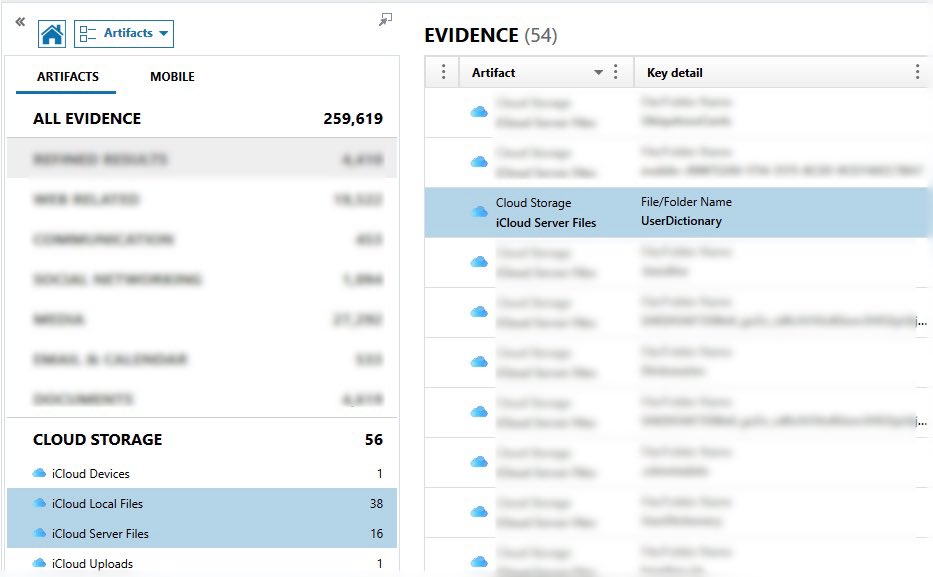
Last time, I said your keyboard builds a profile of you. Now let’s look at what forensic tools often reveal from synced Apple data. iOS users, gather over here.
Check the image below.
iCloud Server Files → UserDictionary
What this suggests is simple but unsettling. Your device isn’t the only place your typing habits exist. One exists locally on your device and another may be on a server(s).
In many cases, parts of that data are mirrored through cloud sync systems, meaning there can be a server-side version of patterns you thought stayed local. So even if you delete something on your phone, you’re not always dealing with the only copy that ever existed.
What you’re looking at is a kind of digital shadow. A stored reflection of how you type, what you correct, what you repeat.
Once it exists elsewhere, you don’t really get to decide where it lives anymore.
Don't believe the 'Encrypted' label is a magic eraser?
Check the comment section for more evidence.
Follow this account for more mobile forensics insights.
Apr 1

You thought my last post was just a theory about your phone keyboard profiling you through UserDictionary?
That’s only the surface. It goes deeper than what’s stored on your device and it doesn’t stop at your phone.
I’ll be breaking down what actually happens behind the scenes on both Android and iOS, with proof from real system behavior and how these layers connect beyond your phone storage.
Most people only ever see one side of the system. There’s more to it than that.
Follow this account for the updates and to understand how mobile phones are turning into a crime scene in your pocket, rather than just a personal device.
One update dropping today.
1
2
18
1,516
Apr 1
You thought my last post was just a theory about your phone keyboard profiling you through UserDictionary?
That’s only the surface. It goes deeper than what’s stored on your device and it doesn’t stop at your phone.
I’ll be breaking down what actually happens behind the scenes on both Android and iOS, with proof from real system behavior and how these layers connect beyond your phone storage.
Most people only ever see one side of the system. There’s more to it than that.
Follow this account for the updates and to understand how mobile phones are turning into a crime scene in your pocket, rather than just a personal device.
One update dropping today.
Mar 29
Android users, this one is uncomfortable. Here’s something Android forensic analysis can reveal.
You think your messages define what you say. They don’t.
Your keyboard already told the story. Every time you type, your device learns
- The words you use the most
- Names you repeat
- Slang, phrases, even your mistakes
It stores them quietly in its own internal data. Over time, it builds something you never see. A profile of how you communicate. So even if
- Chats are deleted
- Messages disappear
- Apps are wiped
Fragments of how you talk can still exist on your device. Not your messages. You!
- The way you think.
- The way you type.
- The way you express things.
And sometimes, that’s enough to profile you using digital forensics. Imagine someone being able to communicate exactly like you because a simple thing like your phone's keyboard gave them that much insight. This is how people get impersonated.
Imagine you lose your phone or give it out because it's old. I bet you won't just be handing out your old phones just like that anymore.
Now you know the uncomfortable truth. Follow this account. I’ll show you proof in a forensic software in the next post.
2
6
47
3,683

6 Nov 2025
Collective Appeal from the Blind Community: Google TTS Needs Action, Not Just Acknowledgment.
This is a comprehensive public report on "Speech Services by Google" (Google TTS).
We are posting this publicly because these issues are not new. They have been reported by multiple users over a long period, and many have already been accepted by your teams through standard feedback channels.
We do not need to "DM for details" or "provide audio recordings." We need these long-standing issues and accepted feature requests to be fixed and implemented.
The post is clear to avoid any confusion:
PART 1: ACKNOWLEDGED FEATURE REQUESTS (NOT IMPLEMENTED)
1. User Dictionary: We still have no ability to create a user dictionary to fix custom pronunciations (e.g., for names or technical words).
2. Uninstall Default Voices: We still cannot uninstall the default English (US) voice pack, which wastes storage and clutters the menu.
3. Number Processing: We still have no feature to choose how numbers are read. The default "millions, billions" format is annoying, and we need options (like digit-by-digit).
4. Date Processing: We still have no feature to customize date formats. We need to be able to set regional standards (e.g., DD/MM/YYYY for India).
PART 2: LONG-STANDING BUGS (NOT FIXED)
1. "Zero" Pronunciation Bug: The digit "0" is still incorrectly read as the letter "O" (e.g., "one O five" instead of "one zero five"). This affects all English variants (US, UK, IN, AU, NG).
2. Poor Audio Quality: The voices are not "clear, crisp, and crystal." They are muffled and sound nasally, "like somebody is speaking in the nose."
3. High Latency (Accessibility Failure): The TTS has "huge latency" and is "sluggish." This makes accessibility services like Explore by Touch (TalkBack) "pathetic" and unusable. The "quick responsive" feedback needed for scrolling and swiping is completely absent.
4. No Expressiveness: The engine ignores punctuation. A sentence ending in a question mark (?) is read with the same flat, declarative tone as a period, failing to convey intent.
5. Broken Auto-Language Switching: The auto-language detection "is not working properly." When it does try to switch, it introduces a "huge delay" that disrupts the flow of reading.
6. Incorrect Voice Switching: The system ignores the user's selected "desire voice." For example, a user sets Voice A for English and Voice B for a regional language. When reading, the system will suddenly use a random Voice C for the regional language, creating inconsistency and confusion.
7. Unsolicited Voice Downloads: Google TTS is still automatically downloading unnecessary voices that the user never requested. Even after being manually uninstalled, the system forcibly re-downloads them, wasting data and storage against the user's explicit wishes.
These are not new reports requiring investigation. They are well-documented failures requiring action. We request escalation and a timeline for these fixes.
@Google
@GoogleAccess
@Android
@sundarpichai
@MissionAccess_
@dequesystems
@accessibility00
@LevelAccessA11y
@IAAPOrg
@A11yNews
@MSFTEnable
@acbnational
@NFB_voice
@BlindUnion
@IDA_CRPD_Forum
@socialpwds
@GoI_MeitY
@_DigitalIndia
@ncpedp_india
@Ncpwds
@BeMyEyes
@DisabRightsFund
@accessible_apps
@FreedomSci
@APHfortheBlind
@fbaccess
@NVAccess
@DisabilityRepor
@BlindDroidUsers
@AndroidDev
@AndroidAuth
@androidcentral
@AndroidPolice
@_ShivamBhatt
@Sindhuvasini
@VGTtweets
@ppranava68
@NirendraNagar
@amarjain2006
@mtonykurian
@Rahul400
@istemtech
@yatinpanchal143
@PrakashWKamatPK
@drvj70
@GyanTherapy
@iamasagar
@friendsofeyeway
@ScoFoIndia
@MishaalRahman
#GoogleTTS
#SpeechServicesByGoogle
#TalkBack
#AndroidAccessibility
#Accessibility
#BlindCommunity
#ScreenReaderUsers
#UserDictionary
#CustomPronunciation
#NumberProcessing
#LowLatency
#FixGoogleTTS
#AccessibilityMatters
#DisabilityRights
#InclusionMatters
#AccessibilityForAll
#DigitalInclusion
#TechForAll
#EqualAccess
#FixAccessibility
#AccessibleTech
5
27
23
633

14 Mar 2023
こちらは こちらは
5億円の 土手で拾った
𝐔𝐍𝐊𝐎 𝐂𝐇𝐈𝐍𝐊𝐎
でございます でございます
(\_/) (\_/)
( •_•) (•_• )
/ >💩 🔞 < \
これは
𝑷𝑪 𝒍𝒊𝒌𝒆 𝒖𝒔𝒆𝒓𝒅𝒊𝒄𝒕𝒊𝒐𝒏𝒂𝒓𝒚
(\_/)
(•_• )
(՞ةڼ)< \
2
3
234

@userdictionary
🎁ご応募ありがとうございました🎁
🎮抽選結果は……
この投稿の動画をチェック👀
当選者にはDMにて賞品内容をお知らせ📢
YouTubeにて公開中の
#シャンフロ プロジェクトPVもぜひご覧ください✨
👇ご視聴はコチラから
youtu.be/PaZsxOCLhKY?t=16582…
@userdictionary
🎁ご応募ありがとうございました🎁
🎮抽選結果は……
この投稿の動画をチェック👀
当選者にはDMにて賞品内容をお知らせ📢
外れた方は7/20まで毎日1回応募可能❗️
キャンペーンはいよいよ明日まで✨
お見逃しなく🔥
👇#シャンフロ プロジェクトPV公開中
youtu.be/PaZsxOCLhKY?t=16581…
@userdictionary
🎁ご応募ありがとうございました🎁
🎮抽選結果は……
この投稿の動画をチェック👀
当選者にはDMにて賞品内容をお知らせ📢
外れた方は7/20まで毎日1回応募可能❗️
キャンペーンはいよいよ明後日まで✨
お見逃しなく🔥
👇#シャンフロ プロジェクトPV公開中
youtu.be/PaZsxOCLhKY?t=16580…
@userdictionary
🎁ご応募ありがとうございました🎁
🎮抽選結果は……
この投稿の動画をチェック👀
当選者にはDMにて賞品内容をお知らせ📢
外れた方は7/20まで毎日1回応募可能です❗️
豪華賞品が当たるチャンスをお見逃しなく🔥
👇#シャンフロ プロジェクトPV公開中
youtu.be/PaZsxOCLhKY?t=16579…
@userdictionary
🎁ご応募ありがとうございました🎁
🎮抽選結果は……
この投稿の動画をチェック👀
当選者にはDMにて賞品内容をお知らせ📢
外れた方は7/20まで毎日1回応募可能です❗️
豪華賞品が当たるチャンスをお見逃しなく🔥
👇#シャンフロ プロジェクトPV公開中
youtu.be/PaZsxOCLhKY?t=16578…
@userdictionary
🎁ご応募ありがとうございました🎁
🎮抽選結果は……
この投稿の動画をチェック👀
当選者にはDMにて賞品内容をお知らせ📢
外れた方は7/20まで毎日1回応募可能です❗️
豪華賞品が当たるチャンスをお見逃しなく🔥
👇#シャンフロ プロジェクトPV公開中
youtu.be/PaZsxOCLhKY?t=16578…
@userdictionary
🎁ご応募ありがとうございました🎁
🎮抽選結果は……
この投稿の動画をチェック👀
当選者にはDMにて賞品内容をお知らせ📢
外れた方は7/20まで毎日1回応募可能です❗️
豪華賞品が当たるチャンスをお見逃しなく🔥
👇#シャンフロ プロジェクトPV公開中
youtu.be/PaZsxOCLhKY?t=16577…
@userdictionary
🎁ご応募ありがとうございました🎁
🎮抽選結果は……
この投稿の動画をチェック👀
当選者にはDMにて賞品内容をお知らせ📢
外れた方は7/20まで毎日1回応募可能です❗️
豪華賞品が当たるチャンスをお見逃しなく🔥
👇#シャンフロ プロジェクトPV公開中
youtu.be/PaZsxOCLhKY?t=16577…
@userdictionary
🎁ご応募ありがとうございました🎁
🎮抽選結果は……
この投稿の動画をチェック👀
当選者にはDMにて賞品内容をお知らせ📢
外れた方は7/20まで毎日1回応募可能です❗️
豪華賞品が当たるチャンスをお見逃しなく🔥
👇#シャンフロ プロジェクトPV公開中
youtu.be/PaZsxOCLhKY?t=16576…
@userdictionary
🎁ご応募ありがとうございました🎁
🎮抽選結果は……
この投稿の動画をチェック👀
当選者にはDMにて賞品内容をお知らせ📢
外れた方は7/20まで毎日1回応募可能です❗️
豪華賞品が当たるチャンスをお見逃しなく🔥
👇#シャンフロ プロジェクトPV公開中
youtu.be/PaZsxOCLhKY?t=16575…
@userdictionary
🎁ご応募ありがとうございました🎁
🎮抽選結果は……
この投稿の動画をチェック👀
当選者にはDMにて賞品内容をお知らせ📢
外れた方は7/20まで毎日1回応募可能です❗️
豪華賞品が当たるチャンスをお見逃しなく🔥
👇#シャンフロ プロジェクトPV公開中
youtu.be/PaZsxOCLhKY?t=16575…
@userdictionary
🎁ご応募ありがとうございました🎁
🎮抽選結果は……
この投稿の動画をチェック👀
当選者にはDMにて賞品内容をお知らせ📢
外れた方は7/20まで毎日1回応募可能です❗️
豪華賞品が当たるチャンスをお見逃しなく🔥
👇#シャンフロ プロジェクトPV公開中
youtu.be/PaZsxOCLhKY?t=16573…
@userdictionary
🎁ご応募ありがとうございました🎁
🎮抽選結果は……
この投稿の動画をチェック👀
当選者にはDMにて賞品内容をお知らせ📢
外れた方は7/20まで毎日1回応募可能です❗️
豪華賞品が当たるチャンスをお見逃しなく🔥
👇#シャンフロ プロジェクトPV公開中
youtu.be/PaZsxOCLhKY?t=16572…
@userdictionary
🎁ご応募ありがとうございました🎁
🎮抽選結果は……
この投稿の動画をチェック👀
当選者にはDMにて賞品内容をお知らせ📢
外れた方は7/20まで毎日1回応募可能です❗️
豪華賞品が当たるチャンスをお見逃しなく🔥
👇#シャンフロ プロジェクトPV公開中
youtu.be/PaZsxOCLhKY?t=16572…
@userdictionary
🎁ご応募ありがとうございました🎁
🎮抽選結果は……
この投稿の動画をチェック👀
当選者にはDMにて賞品内容をお知らせ📢
外れた方は7/20まで毎日1回応募可能です❗️
豪華賞品が当たるチャンスをお見逃しなく🔥
👇#シャンフロ プロジェクトPV公開中
youtu.be/PaZsxOCLhKY?t=16571…