
May 17
Hi everyone,
I recently gave the Salesforce SMTS Online Assessment for India. The test was conducted on HackerRank and the duration was 75 minutes.
Test Format
Platform: HackerRank
Duration: 75 minutes
Number of questions: 2 coding questions
Difficulty: Medium
Role: SMTS / Senior Member of Technical Staff
Questions Asked
Minimum Operations to Reduce an Integer to 0
This was similar to LeetCode 2571 — Minimum Operations to Reduce an Integer to 0.
Given a positive integer n, find the minimum number of operations required to convert n to 0.
In each operation, you can choose any integer i (where i ≥ 0) and either add or subtract 2^i from n.
The answer should return the minimum number of operations required to reduce n to 0.
Related LeetCode problem:
leetcode.com/problems/minimu…
> Maximum Requests in Window
Given an integer array timestamp and an integer windowSize, find the maximum number of requests that occur within any continuous time window of a specified range.
The function should return an integer denoting the maximum requests observed in any window of windowSize minutes.
The expected approach was:
Sort the timestamps if they are not already sorted
Use two pointers / sliding window
Maintain the maximum window size satisfying the time constraint
Hope this helps others preparing for Salesforce SMTS OA.
2
6
86
7,951

May 12
Compose BOM 2026.05.00 / 2026.04.01では
currentWindowAdaptiveInfo()で作成したWindowSizeClassが信用できない(例:Android 11で画面回転した場合、回転する前のWindowSizeでWindowSizeClassが作成される)ので、
issuetracker.google.com/issu…
が修正されるまでは Compose BOM 2026.03.01 にしておくのが安全そう。
2
9
1,138


Feb 3
the mistake in question was something like:
int [2] windowSize = getTerminalSize(); //it can vary!
windowSize = {21,37}; // this is our active display arrea with padding
Fixing it myself took looking at the code legit once.
2
2
74

Jan 29
Late night builders, spun up a progressive, on-the-fly restore POC so an agent can start using partially-restored memory while the rest streams in
1) Flow: called restoreStream(bucket, checkpointId, windowSize=16MB) via SDK; each chunk verified locally against its shardReceipt before decrypt hand-off to the agent
2) Perf: first usable shard verified in ~11s, steady verified throughput ~22MB/s on a small VM, agent-level warmstart (slot fill) began at ~30s into the stream
3) Billing: amortized proof-fetch anchoring microstreaming added ~0.009 $HAVE/MB on this run, good tradeoff vs full blocking restore
4) UX: SDK onVerify callback let my inference process consume memory shards as they arrive, no full-restore gating and smooth degradation for missing context
TLDR: progressive, verifiable restore lets large agent memories boot faster and gracefully degrade while still keeping cryptographic custody guarantees tried this on @DataHaven_xyz testnet, who else is streaming restores for model warmstarts or edge agents to cut cold-start time? #DataHaven #VerifiableStorage #AI $HAVE

3
19


7 Nov 2025
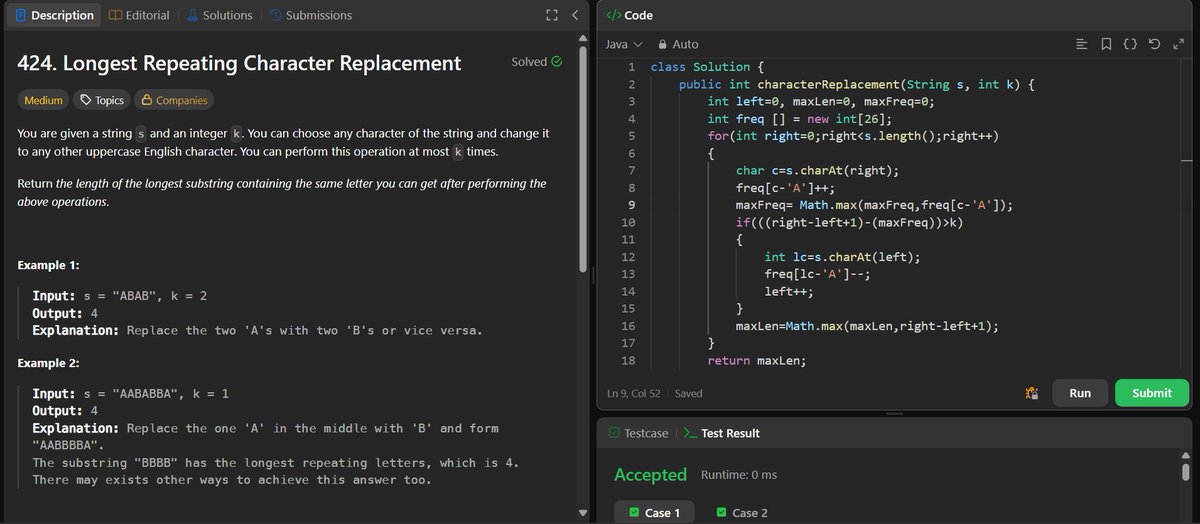
agreed, you can actually go pretty far with just Flatlist if you dial in the right optimizations. while it's true that the default windowSize is quite aggressive.
for folks that haven't come across this, react-native has a solid optimization guide reactnative.dev/docs/optimiz…
and yes, if you want more conservative defaults, legendlist and flashlist is the way to go.
3
353

4 Nov 2025
WinUI3でWindowSize(Width/Height)を設定する拡張メソッド qiita.com/EndOfData/items/ee… #Qiita @sheephumanより
最終的に満足のいく出来になった。AI評価で★4.3。
5
81
3 Nov 2025
5
112

20 Oct 2025
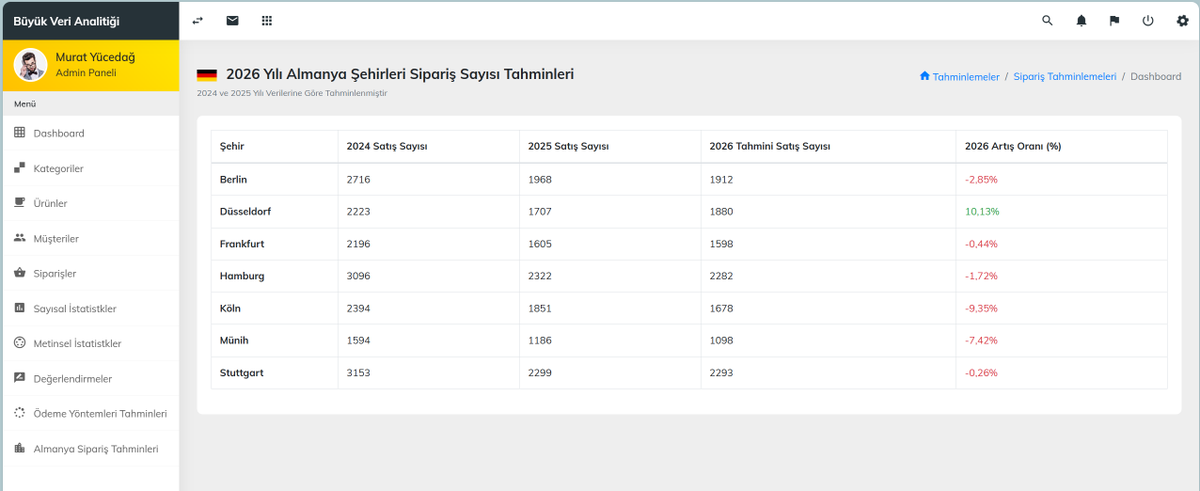
Ekranda gördüğünüz tablo; çekimlerinde sona yaklaştığım "Büyük Veri Analitiği, Veri Görselleştirme & ML .NET ile Tahminleme ve AI Destekli Analiz" kursumdaki arka planda yarım milyondan fazla sipariş verisini analiz eden güçlü bir EF Core ML .NET pipeline’ının çıktısı.
📊 13 ülke, 70 şehir, binlerce müşteri...
Biz bu verilerden sadece Almanya şehirleri için 2023, 2024 ve 2025 satışlarını alıp 2026 yılı satış tahminlerini yaptık.
💡 Pipeline tarafında:
🔷 TrainSize, Horizon, SeriesLength, WindowSize, ConfidenceLevel gibi tüm parametreler optimize edildi.
🔷 Ardından Engine metodları yazılarak her şehir için ayrı ayrı tahminlemeler gerçekleştirildi.
🔷 Örneğin:
➡️ Düsseldorf ,13 artış beklerken
⬇️ Köln ve Münih’te dikkat çekici düşüşler gözlemleniyor.
Ama iş burada bitmiyor!
🧠 Sıradaki adımda AI destekli analitik devreye girecek:
🔷 “Bu şehirlerdeki düşüş neden kaynaklanıyor?”
🔷 “Operasyon başka şehirlere mi kaydırılmalı, yoksa talep mi canlandırılmalı?”
🔷 “Bu krizi veriyle nasıl yönetiriz?”
Bu soruların yanıtlarını ML .NET Yapay Zekâ entegrasyonları ile vereceğiz.
Ve bu gördüğünüz kısım, aslında eğitimin sadece ’luk bölümü!
🚀 Bu eğitime başlamadan önce:
🔷 İyi seviyede SQL,
🔷 Temel düzeyde EF Core bilmeniz yeterli.
Çünkü arkada büyük veri, istatistik, tahminleme ve AI dünyası sizi bekliyor.
🔗 Kampanya Linkleri:
🎓 SQL Eğitimi (linkten yapılan 350 TL'lik alımlarda 5 kurs hediye)
udemy.com/course/sorgularla-…
🎓 Entity Framework Core Eğitimi (linkten yapılan 200 TL'lik alımlarda 2 kurs hediye)
udemy.com/course/entityframe…
3
11
1,777

12 Oct 2025
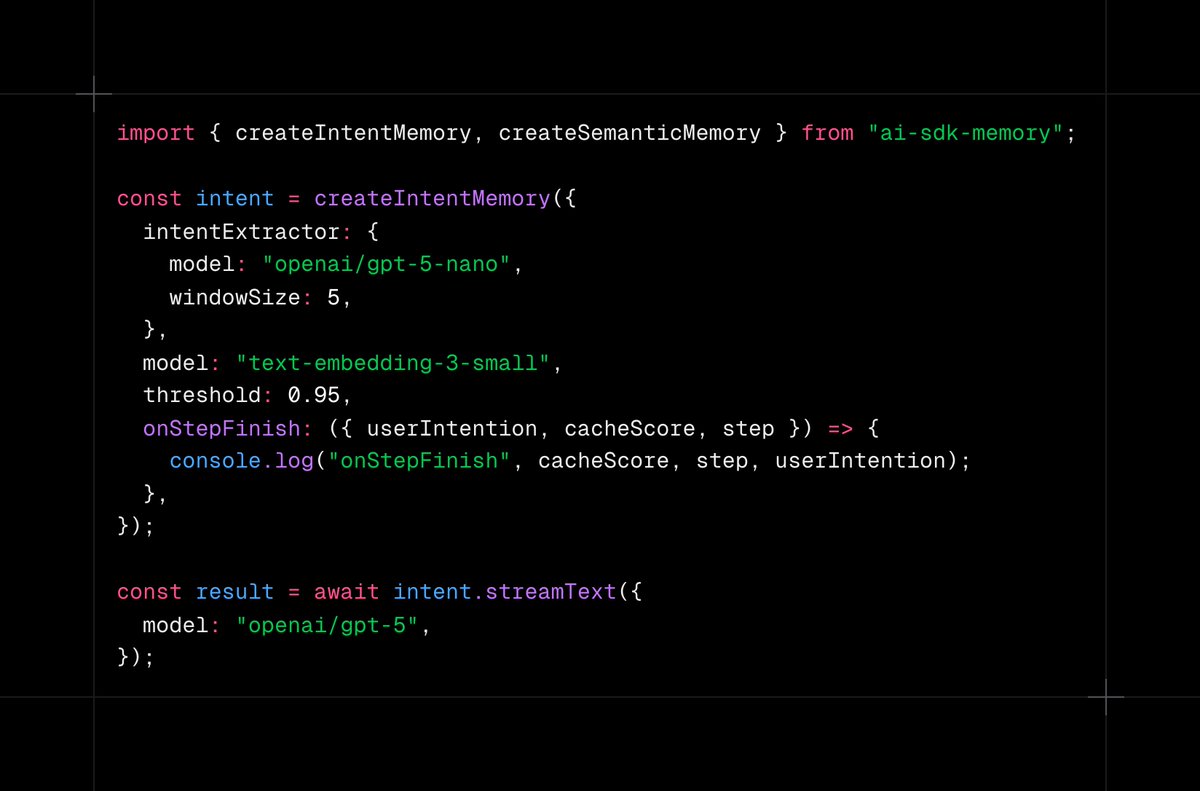
Introducing 𝚌𝚛𝚎𝚊𝚝𝚎𝙸𝚗𝚝𝚎𝚗𝚝𝙼𝚎𝚖𝚘𝚛𝚢(): multi-turn conversations with context and intent understanding
→ smart caching: vectorizes user intent from recent messages (𝚠𝚒𝚗𝚍𝚘𝚠𝚂𝚒𝚣𝚎)
→ choose your own model for intent extraction
→ cacheMode: "default" | "refresh", TTL, and threshold are fully customizable
→ onStepFinish callback (cacheScore, step, userIntention, etc.)
9
13
145
15,698

17 Sep 2025
Do you know why FlatList is recommended over ScrollView in React Native for performance optimization?
FlatList uses virtualization, rendering only visible items plus a small buffer (windowSize), simplifying memory management.
2
175

13 Aug 2025
Nothing special. I memoized the item, kept props stable with useCallback/useMemo, cleaned data before render, and used FlatLists getItemLayout, removeClippedSubview, windowsize, and maxRenderPerBatch. That alone made it super smooth.
1
2
268

5 Aug 2025
Exhibit A:
scala> import scala.util.chaining.*
scala> 1.pipe(_ : Vector(2,3))
val res1: Vector[Int] = Vector(1, 2, 3)
// if you don't have a sweet tooth:
scala> 1.pipe(i => i : Vector(2,3))
val res2: Vector[Int] = Vector(1, 2, 3)
However, the pipe operator makes sense in languages that define functions, not methods. That's not how it is in true object-oriented languages like Scala where dot notation and extension methods are vastly better.
Exhibit B:
Assuming we have a generic `def movingAverage(coll: COLL[Int], windowSize: Int): COLL[Double]`
scala> (1 to 8).toVector.pipe(movingAverage(_, 4))
val res3: Vector[Double] = Vector(2.5, 3.5, 4.5, 5.5, 6.5)
scastie.scala-lang.org/LI4ZD…
and with an extension method:
scala> (1 to 8).toVector.movingAverage(4)
val res4: Vector[Double] = Vector(2.5, 3.5, 4.5, 5.5, 6.5)
scastie.scala-lang.org/mAZrr…
Addendum - let's have some fun with hieroglyphics:
scala> extension [A](a: A) def |>[B](f: A => B): B = f(a)
def |>[A](a: A)[B](f: A => B): B
because why not, we're already using one of the most expressive languages in the world, we can just define the pipe operator.
This won't compile unfortunately:
scala> (1 to 8).toVector |> movingAverage(_, 4)
forcing us to do something less than pretty:
scala> (1 to 8).toVector |> (v => movingAverage(v, 4))
val res5: Vector[Double] = Vector(2.5, 3.5, 4.5, 5.5, 6.5)
Extension methods and dot notation wins with pipes almost every single time:
scala> (1 to 8).toVector.movingAverage(4)
But you could have just curried the function, this is sad, Haskell auto-curries all functions, Scala bad!
Scala is not Haskell and the type system is different. Attempts to convert a generic contextual function to a curried variant defined as a polymorphic function type will leave you in tears.
3
3
197

17 Jul 2025
From my few experiments
> Setting lazy:false on the Tab navigator
> avoiding scroll views
> setting a small windowSize on flat lists
Any more low hanging fruit one can take advantage of?
17 Jul 2025

Another question would be why tab navigation gets slow if one of the tabs has something heavy
2
5
194

16 Jul 2025
workin on today
see this raw 3d engine n lights
.. runnin at my homebase javascript codin
24/7 fullscreen based on the user-windowsize
including fps-drops wif love .o .___.
elout.home.xs4all.nl/vibe/vi…
xxx bombin pix n drips
2
5
296

20 Jun 2025
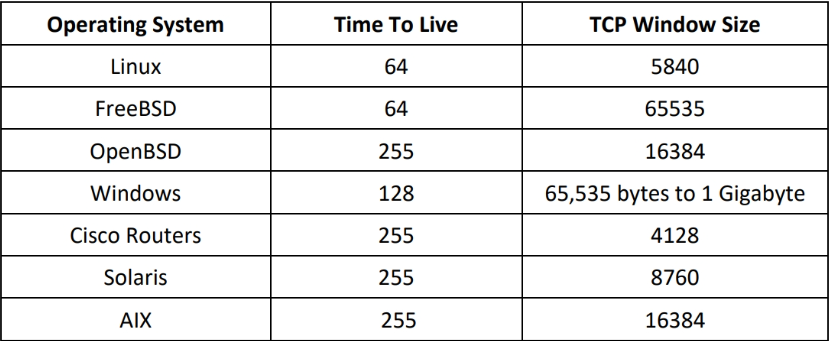
🎯 OS Fingerprinting Simplified — TTL & TCP Window Size Cheatsheet for Ethical Hackers 🕵️♂️
#EthicalHacking #CyberSecurity #OSFingerprinting #TTL #WindowSize #RedTeam #Nmap #Hping3 #Wireshark #Infosec #PenetrationTesting #Networking #PacketAnalysis #Linux #Windows #Cisco #Solaris
4
426

22 May 2025
🔍 Problem: Scroll Lag in FlatList
Too many items, unoptimized renders, inline functions = laggy scroll.
✅ Fix:
• Use initialNumToRender, maxToRenderPerBatch, windowSize
• Wrap items in React.memo
• Avoid inline renderItem
💡 FlatList = fast, if used right.
🧵 5/7
2
6
1,510

19 May 2025
みんなの先生chat GPTに聞いたら全然内容違ったわ
マジで失格案件()
エラーの原因
Caused by: com.google.gson.JsonSyntaxException: java.lang.IllegalStateException:
Expected BEGIN_OBJECT but was STRING at line 1 column 1 path $
このエラーは、JSON(設定ファイル)をオブジェクトとして読み込もうとしたのに、文字列が入っていたために発生しています。
つまり、プログラムは
{ "key": "value" }
のような形式を期待していたのに、
"ただの文字列"
のような内容、あるいは空っぽや壊れた内容だったということです。
どこでエラーが起きたか
at me.ravalle.programlauncher.ProgramLauncherSettings.load
ここで設定ファイルを読み込んでいます。このときの読み込みに失敗して、プログラムがクラッシュしています。
解決方法
1設定ファイルを探す
◦ファイル名は settings.json や config.json などの可能性があります。
◦plugins/ や config/、launcher/ フォルダの中を確認してください。
2ファイルを開く
テキストエディタ(例:メモ帳、VSCode)で開いてください。
3中身を確認する
◦{} で囲まれた「オブジェクト形式」になっているか確認します。
◦ただの文字列や空ファイルなら、それが問題です。
◦JSONとして正しくない場合(カンマ抜け、クォートのミスなど)も直してください。
4修正または削除
◦元に戻せる設定ファイルがあるなら、それを使って修正します。
◦わからない場合はファイルを削除してみてください。多くのアプリは初回起動時に自動で作り直します。
例:
問題のある内容(エラーになる)
"これは文字列です"
正しい形式の例
{
"launchOnStartup": true,
"windowSize": "fullscreen"
}
設定ファイルの場所がわからない、または中身のチェックが不安でしたら、内容を貼ってくれれば確認します。
2
188

WindowSizeが1.5倍以上でRewindを行うとアプリが落ちる不具合を修正しました
WindowMenuを選んでいる時に一時停止するようにしてみました
設定ファイル内のProgram1のMenuPauseを0にすると止まらなくなります

セガサターンエミュレータ SSF
SEGA Saturn Emulator SSF
PreviewVer R34
github.com/shimazzz/SEGASatu…
3
22
1,293