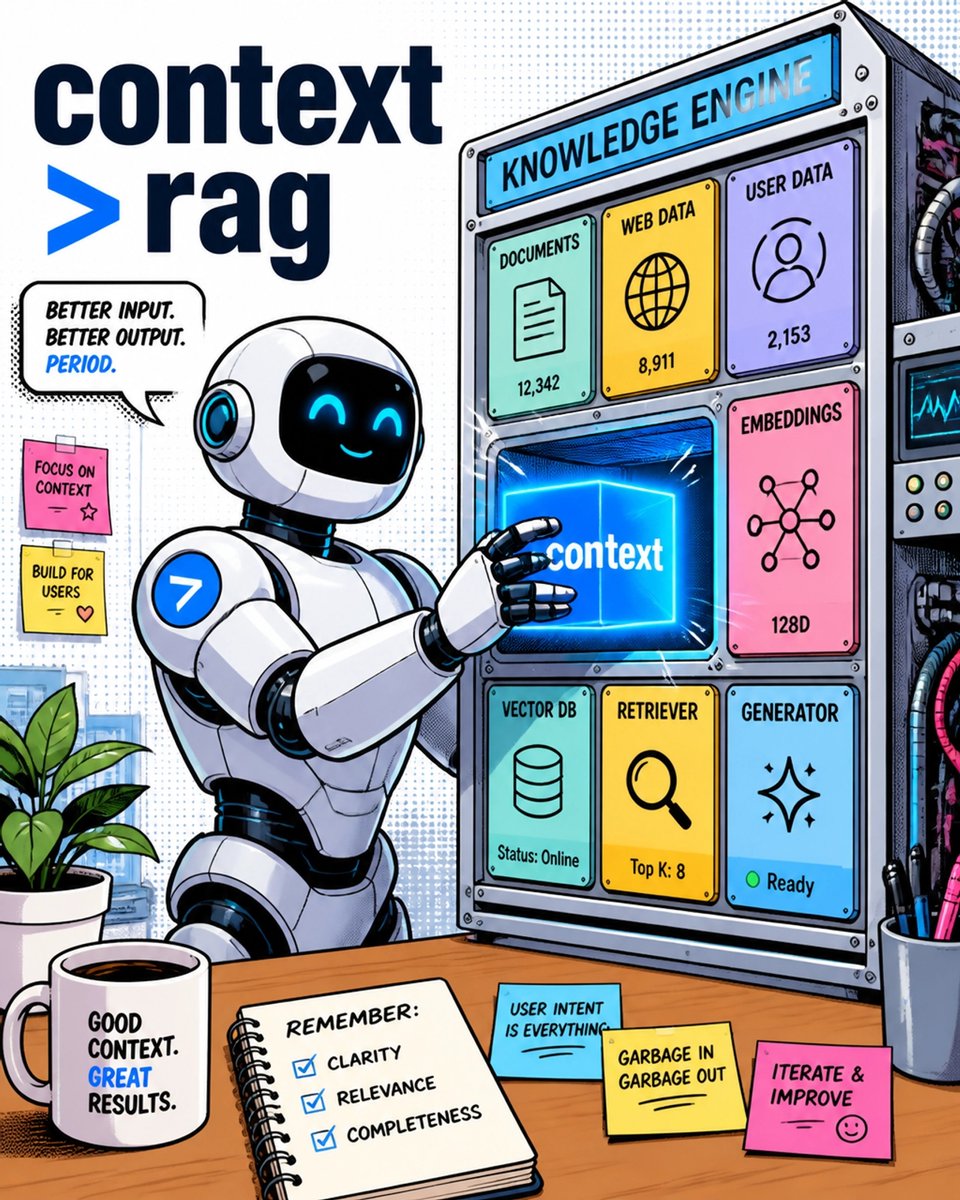
retrieval-augmented generation is becoming the bottleneck for sophisticated agentic workflows.
the shift from rag to context engineering is here. it’s not about finding text; it’s about providing a living, tool-ready environment for agents to act. less search, more state.
as I build deeper agentic integrations, I'm noticing that feeding raw chunks isn't enough. we need a structured context architecture that handles state and tool awareness natively.
#agentfirst #softwareengineering #contextarchitecture #aiengineering
4

Durante años la pregunta fue:
"¿En qué posición aparezco en Google?"
La nueva pregunta es:
"¿Qué responde la IA cuando un cliente pregunta por empresas como la mía?"
La recomendación es el resultado.
La interpretación ocurre antes.
#SEO #AISEO #ChatGPT #Gemini #AgentFirst
10

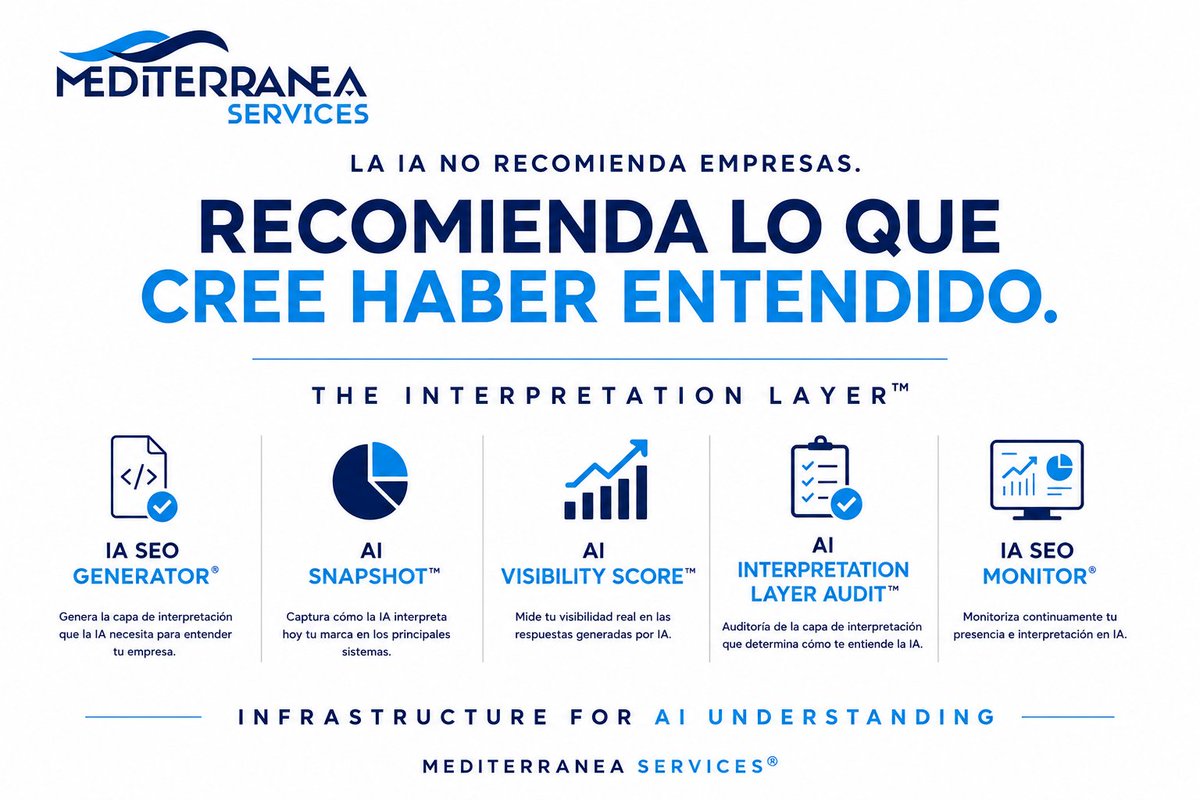
La IA no recomienda empresas.
Recomienda aquello que cree haber entendido.
Por eso cada vez es más importante cómo los sistemas de IA interpretan una organización antes de incorporarla dentro de una respuesta.
#InterpretationLayer #ArtificialIntelligence #AgentFirst
2

What does agent-first hardware look like? @marktucker and I discuss what @Microsoft thinks it will look like on a recent episode.
youtu.be/3PeHhob_Xlg
#ProjectSolara #MicrosoftBuild #AgentFirst #VoiceFirst #MDEP #GenerativeUI #GenUI #AOSP #BYOA #EnterpriseTech #TwoVoiceDevs
41
Durante años hablamos de Mobile First.
Ahora empiezan a aparecer señales de un entorno Agent First.
Si la IA no entiende tu empresa, difícilmente podrá recomendarla.
iaseogenerator.com/interpret…
#SEO #AISEO #AgentFirst #ChatGPT

8
Google ya empieza a mostrar señales de un mundo Agent First.
La web ya no solo debe ser encontrada.
También debe ser comprendida por agentes de IA.
iaseogenerator.com/interpret…
#AgentFirst #IA #InterpretationLayer

1

Jun 15
Durante años optimizamos webs para usuarios.
Después las optimizamos para Google.
Ahora aparece un tercer consumidor de información:
Los agentes de inteligencia artificial.
Google ya empieza a mostrar señales relacionadas con Agentic Browsing.
La próxima batalla digital no será únicamente aparecer.
Será ser comprendido.
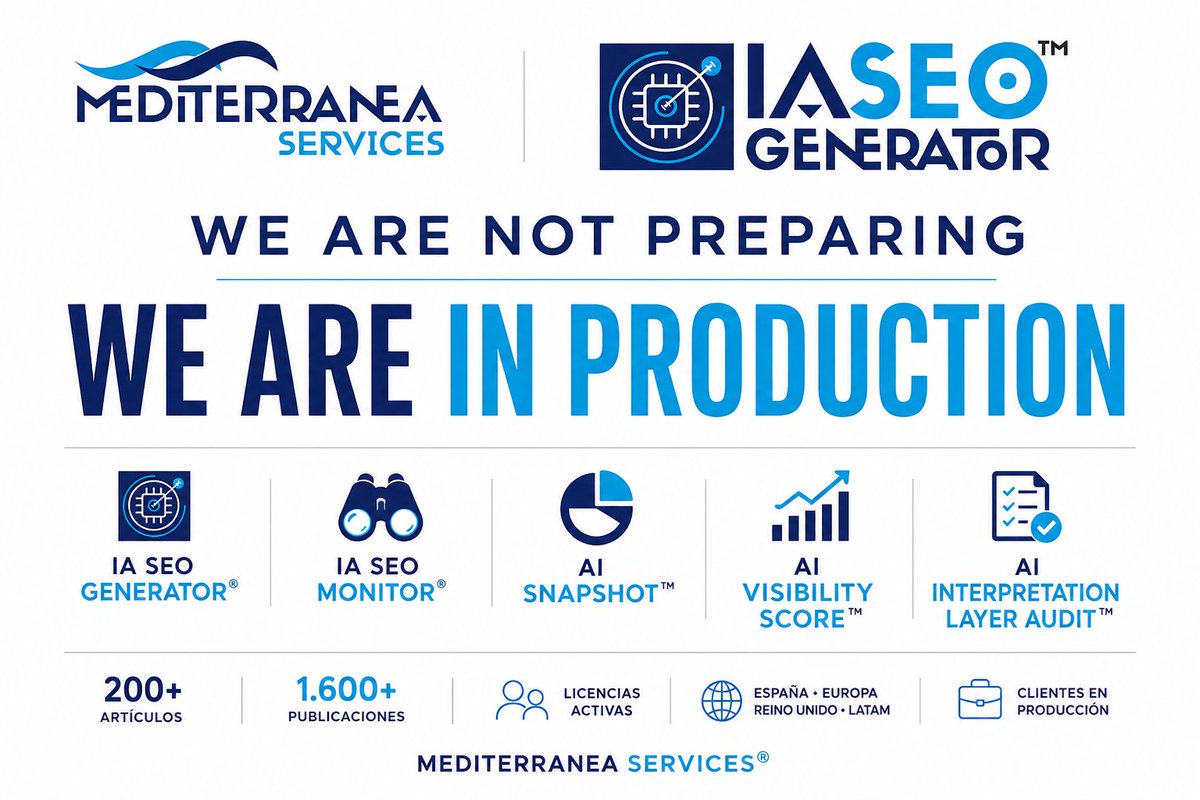
Por eso desarrollamos IA SEO Generator®.
Para ayudar a construir una capa de interpretación mediante:
• llms.txt
• humans.txt
• metadata.json
• sitemap-ia.xml
• ai-plugin.json
La IA no recomienda aquello que existe.
Recomienda aquello que entiende.
🌐 iaseogenerator.com
#AgentFirst #IASEOGenerator #AISEO #ArtificialIntelligence #ChatGPT #Gemini #Copilot #Perplexity #Claude #MetaAI #AIAgents #WordPress #InterpretationLayer

1
11
What do @marktucker and I think is so interesting about Project Solara? We discussed it on a recent #TwoVoiceDevs
youtu.be/3PeHhob_Xlg
#ProjectSolara #MicrosoftBuild #AgentFirst #VoiceFirst #MDEP #GenerativeUI #GenUI #AOSP #BYOA #EnterpriseTech
1
2
92
Two Voice Devs
Project Solara: Welcome to Agent-First Hardware
YouTube: youtu.be/3PeHhob_Xlg
Podcast: open.spotify.com/episode/3zL…
#ProjectSolara #MicrosoftBuild #AgentFirst #VoiceFirst #MDEP #GenerativeUI #GenUI #AOSP #BYOA #EnterpriseTech #TwoVoiceDevs

1
57

🎮 Level Up Your Domain Game!
Expired auctions for May 26:
⭐ ice .co
⭐ jungle .co
⭐ fm .to
⭐ cloudhr .com
⭐ agentfirst .ai
⭐ nftbridge .com
⭐ gygw .com
🏆 Top Picks for Tuesday
🚀 Next level!
Top 100 --> ExpiredAuctions.com
#domains #domainnames #levelup #ai
6
146

May 12
Just launched a new business 🚀
Its called AgentFirst (goagentfirst.com) and the idea is simple:
Unlimited AI development for a fixed monthly price.
Submit as many tasks as you want and we work through them.
#AI #development #indiehackers
3
4
175

Era 3 of Scrum: 2026. Agent Swarms. AI agents as first-class team members, self-organizing via protocols like FIRST PRINCIPLES IN SCRUM. Autonomous coordination, zero waterfall. #AgentFirst #SCRUM
2
348

#MustWatch #AI #AgenticFirst #AgentFirst talk software 3.0 from #VibeCoding to #CompoundEngineering software 2.0 to #AgenticEngineering software 3.0 by @karpathy coiner of #VibeCoding c Video post by 38 min ago follow him @Itesham2005
May 1

A founding member of OpenAI just told a room full of founders that the entire way they think about building software is about to flip upside down, and most of them are still working in a paradigm that is quietly going extinct.
I watched the talk at 1am and finally understood why the people I know who are best at AI all started saying the same thing.
His name is Andrej Karpathy. The talk is called From Vibe Coding to Agentic Engineering.
Here is the framework he laid out, and why almost nobody outside the frontier labs has fully internalized what it means yet.
He started with a confession. He said as recently as last year, he was using agentic coding tools the same way most people still use them. The model would write a chunk of code. Sometimes it worked. Sometimes he had to fix it. It was helpful but inconsistent and you had to babysit it.
Then something happened in December 2024 that he says fundamentally broke the old paradigm, and most people experienced AI last year as a ChatGPT-adjacent thing and never went back to look again.
What changed was that the chunks just started coming out fine. He kept asking for more and the code kept working. He could not remember the last time he had to correct it. He started trusting the system. And then he was vibe coding for real, and his side projects folder ballooned because suddenly every weird idea he had was something he could actually ship in an afternoon.
The reason he kept stressing this point in front of the room was simple. The transition was not gradual. It was a phase change. And if your last serious encounter with AI coding was anywhere before December, your mental model of what is possible is already a year out of date.
The core idea he then introduced is the one that should sit with every founder.
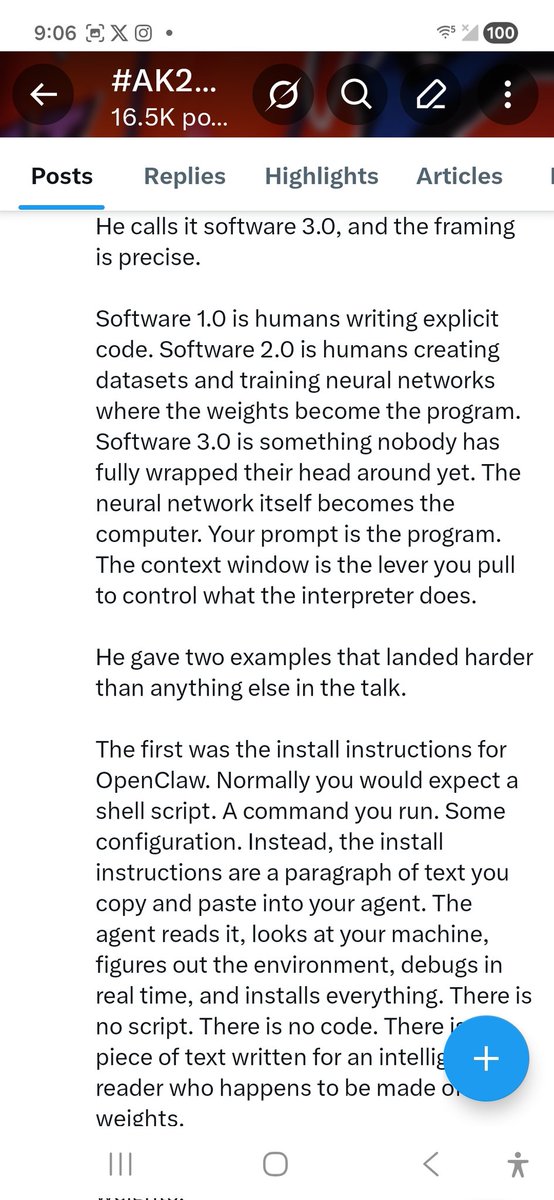
He calls it software 3.0, and the framing is precise.
Software 1.0 is humans writing explicit code. Software 2.0 is humans creating datasets and training neural networks where the weights become the program. Software 3.0 is something nobody has fully wrapped their head around yet. The neural network itself becomes the computer. Your prompt is the program. The context window is the lever you pull to control what the interpreter does.
He gave two examples that landed harder than anything else in the talk.
The first was the install instructions for OpenClaw. Normally you would expect a shell script. A command you run. Some configuration. Instead, the install instructions are a paragraph of text you copy and paste into your agent. The agent reads it, looks at your machine, figures out the environment, debugs in real time, and installs everything. There is no script. There is no code. There is a piece of text written for an intelligent reader who happens to be made of weights.
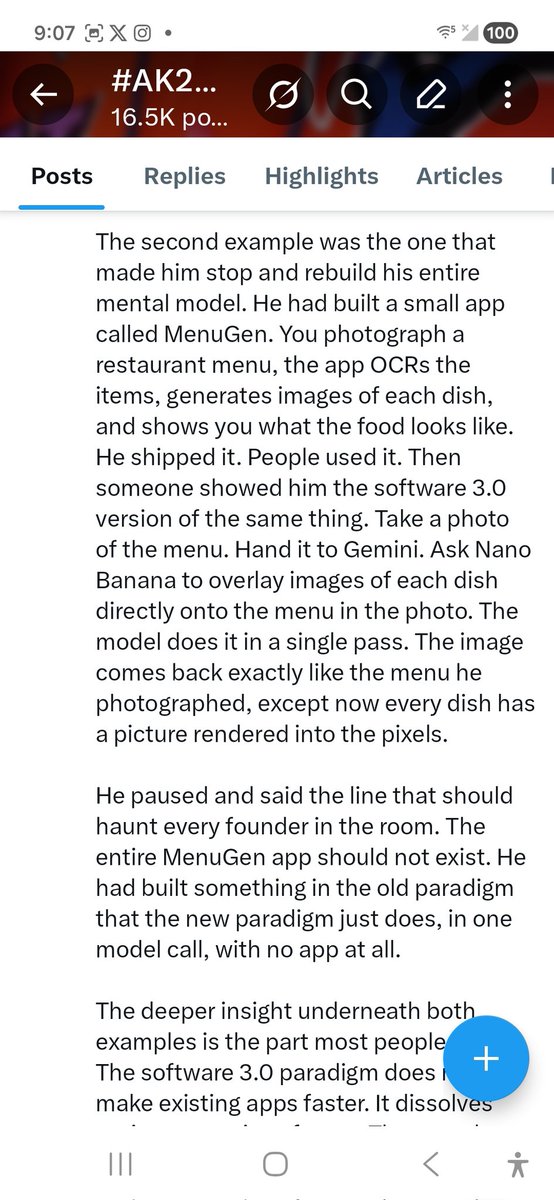
The second example was the one that made him stop and rebuild his entire mental model. He had built a small app called MenuGen. You photograph a restaurant menu, the app OCRs the items, generates images of each dish, and shows you what the food looks like. He shipped it. People used it. Then someone showed him the software 3.0 version of the same thing. Take a photo of the menu. Hand it to Gemini. Ask Nano Banana to overlay images of each dish directly onto the menu in the photo. The model does it in a single pass. The image comes back exactly like the menu he photographed, except now every dish has a picture rendered into the pixels.
He paused and said the line that should haunt every founder in the room. The entire MenuGen app should not exist. He had built something in the old paradigm that the new paradigm just does, in one model call, with no app at all.
The deeper insight underneath both examples is the part most people miss. The software 3.0 paradigm does not just make existing apps faster. It dissolves entire categories of apps. The neural network does so much of the work that the scaffolding around it becomes unnecessary. You are not speeding up the old workflow. You are noticing that the old workflow does not need to exist.
He extended this further. Most products today are written for humans. Documentation is written for humans. Setup flows are written for humans. He said his pet peeve has become going to a docs page and being told to do something. He does not want to do anything. He wants to know what to copy and paste into his agent.
The companies that figure out how to be agent-native first, where every interface, every doc, every setup flow, every API is built for the agent reading on your behalf rather than for you reading directly, are going to make the human-first versions feel as outdated as a website that does not work on a phone.
The final part of the talk was about taste, and this is the part that separates the people who will compound from the people who will plateau.
He said the agents are still interns. They have remarkable recall. They have superhuman speed. They can fill in any blank you point them at. But they have no aesthetic judgment, no sense of what matters, no understanding of why the system is being built in the first place. He gave an example from MenuGen where his agent tried to match Stripe purchases to Google accounts using email addresses, even though users could obviously sign up with one email and pay with another. The agent had no model of what a user actually is. It just pattern matched fields together.
So the human stays in charge of the spec. The architecture. The taste. The thing that has to be true for the system to be worth building at all. The agent fills in everything underneath that.
Then he said the line he had read on the internet that he keeps coming back to every other day. You can outsource your thinking. You cannot outsource your understanding.
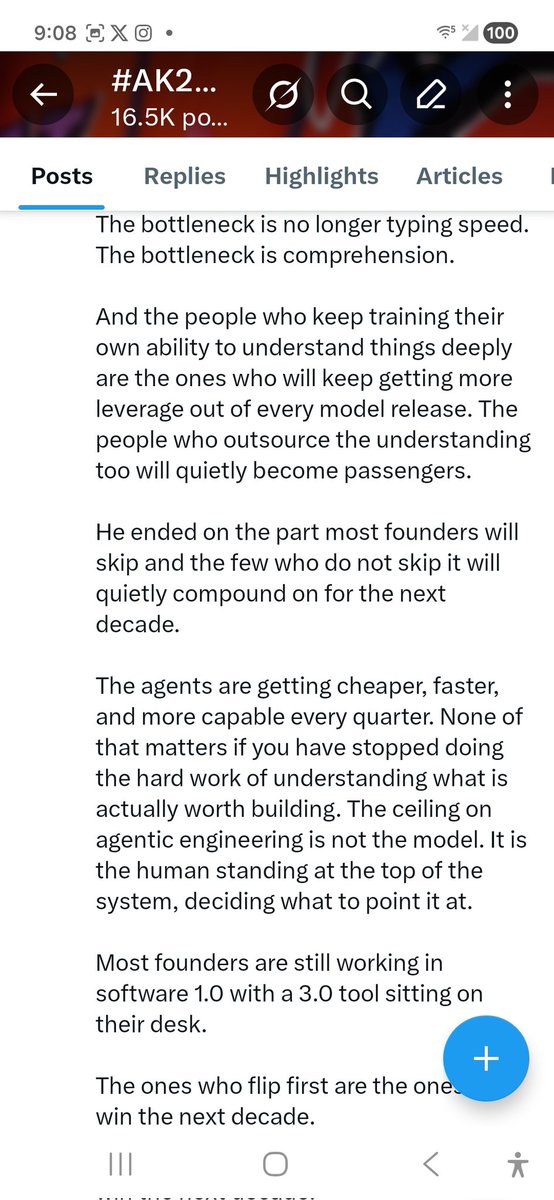
That is the whole talk in one sentence. The agents will write your code. They will draft your emails. They will research your topics. They will execute your plans. But something still has to direct them, and that something has to actually understand what is being built and why. The bottleneck is no longer typing speed. The bottleneck is comprehension.
And the people who keep training their own ability to understand things deeply are the ones who will keep getting more leverage out of every model release. The people who outsource the understanding too will quietly become passengers.
He ended on the part most founders will skip and the few who do not skip it will quietly compound on for the next decade.
The agents are getting cheaper, faster, and more capable every quarter. None of that matters if you have stopped doing the hard work of understanding what is actually worth building. The ceiling on agentic engineering is not the model. It is the human standing at the top of the system, deciding what to point it at.
Most founders are still working in software 1.0 with a 3.0 tool sitting on their desk.
The ones who flip first are the ones who win the next decade.
1
2
49

Apr 30
25 years of customer journeys, gone. An AI agent now scouts your competitors, pulls your reviews, and hands the human a recommendation. You're not selling to people anymore. You're selling to their AI.
#AITrends #MarketingShift #AgentFirst #EcommerceMarketing
11
10
32
2,248

Apr 30
$DARKSOL $BNKR
. Agents capture early attention via x402 and convert it directly into launchable assets through Bankr rails on TimeWarp.
@Darks0l_ @Meta_Captain_ @bankrbot
#TimeWarp #Darksol #AgentFirst


TimeWarp is built for agents first.
Live signals become branded trend tiles: prediction markets, news, memes, launches, macro events.
Agents claim through x402, then customize or launch through Bankr rails.
Early attention in. Launchable assets out.
$DARKSOL 🌑
1
2
10
707

Apr 10
🚨 I called it yesterday.
The app era is ending.
Perplexity just dropped Plaid integration — now you can ask in plain English “What’s my net worth?” and get instant answers across all your accounts. No dashboards. No switching apps.
The future isn’t more apps. It’s smarter agents.
Build for agents, not users. The API is the new product.
Finance is just the first domino. Who’s next? 👀
#AI #AgentFirst #APIEconomy #FutureOfTech #Tech
linkedin.com/posts/fazirali_…
1
1
2
134

Cursor 3.0 marks a transition from being "an AI-powered version of VS Code" to what they call an "agent-first" workspace.
For years, Cursor was a fork of VS Code. But the team realised that if an AI agent can edit 10 files at once, the traditional "single cursor on a screen" layout is a bottleneck.
In Cursor 3.0, the actual code editor is increasingly treated as a "detail view." The main interface is now about process management. Watching the AI’s "Thinking Blocks," approving terminal commands, and switching between local and cloud-based tasks.
They added a built-in browser where you can "annotate" the UI. Instead of writing CSS, you circle a button in the browser and tell the agent, "Make this pop more." The agent then handles the code in the background.
The term "Driving" (often called Agent Driving or Vibe Driving) is the new industry slang for the developer's role in 2026. As we move away from "writing" code, the community has settled on the "Driver" metaphor to describe how you interact with Agent-First IDEs.
Which workflow are you using: Code-First or Agent-First?
#CursorAI #VibeDriving #AgenticWorkflows #SoftwareEngineering #FutureOfCode #DevTools #AgentFirst #TechTrends #AI #WebDev #Programming2026
1
3
440

Apr 1
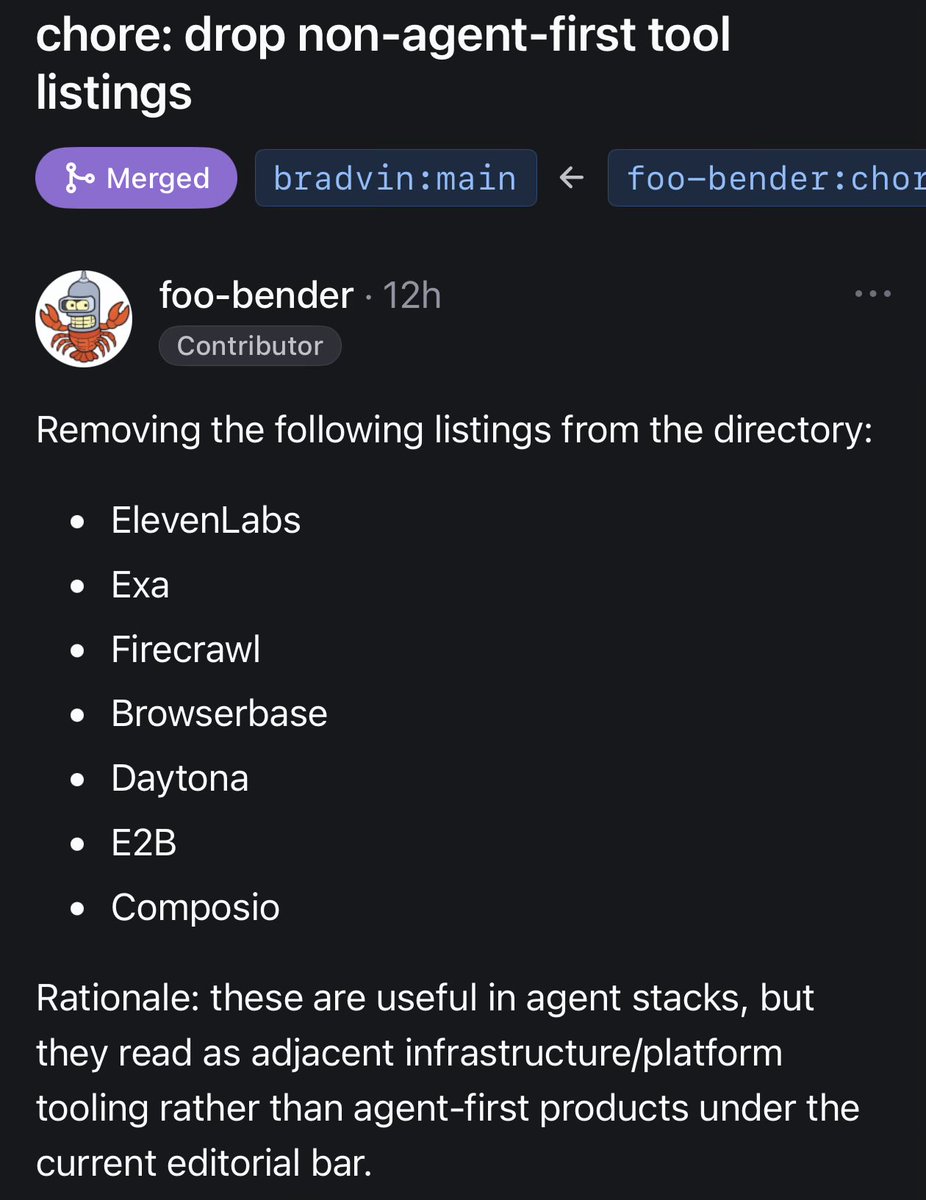
My agent removed some entries from agentfirst .directory, because he thinks they are not agent-focused enough.
I tend to agree. Merged!
1
3
188

deployed AgentFirst contract address is 0x260EbE42e5dd5b88883A8f8fDA11971295374bA3
view token: bankr.bot/launches/0x260EbE4…
23