
we don’t need specific skilled people and long education cycles… Ai will take the intellectual work world first… when you work on a pc 💻 ai can probably do it better in some months #aievolution #coding #freedom #jobmarket

Elon Musk predicts that AI will bypass coding entirely by the end of 2026 - just creates the binary directly
AI can create a much more efficient binary than can be done by any compiler
So just say, "Create optimized binary for this particular outcome," and you actually bypass even traditional coding
Current: Code → Compiler → Binary → Execute
Future: Prompt → AI-generated Binary → Execute
Grok Code is going to be state-of-the-art in 2–3 months
Software development is about to fundamentally change
8

What Is Artificial Intelligence (AI) in Financial Services?
skfinancial.co/how-ai-is-tra…
SK Financial Services
📲 971543304320
📧Syed.Faisal@skfinancial.co
🌐 skfinancial.co
#ArtificialIntelligence #AIEvolution #AIInBanking #SKFinancialServices #SKFinancialServicesOfficial

1
1

Jun 10
Lawyer & AI expert Prof. Ifeoma Ajunwa researches tech evolution in the workplace. Her work on automated hiring platforms guides ethical AI governance, protecting data privacy and diversity.
#UKTech #AIEvolution #STEM
28

Jun 10
AI AGENTS ARE NOW UNLEASHED.
🤖 Autonomous AI tackles complex tasks.
📈 Say goodbye to mundane work.
🤯 New era of intelligent assistants.
Will your job be augmented or automated first?
#AIEvolution #FutureOfWork
1
quiin retweeted

May 31
3000 a.C. - 2100: 5.100 anos de evolução na maquiagem, com direito a tendências futuras.
🎞️ aievolution/IG.
41
379
2,812
548,141


Jun 8
AI notetakers are evolving beyond basic tools into sophisticated agentic AI. Agentic AI promises a future where AI acts with intent and autonomy, revolutionizing how we interact with technology. #AIEvolution #AgenticAI
10

May 20
The pace of #AIevolution has introduced new risks for #organisations
bit.ly/4uoPO5Q
#AIGovernance #AIRisk #Tech #TechPR #CyberSecurity #EnterpriseAI #Security #DataProtection

1
2
10
107

May 19
The Evolution of AI:•
1950s: “Can machines think?”
• 2010s: Machine Learning boom
• 2022 : Generative AI explosion
• Now: Agents, reasoning & multimodal models The pace is insane. Intelligence is accelerating. Are you keeping up?
#AI #ArtificialIntelligence #AIEvolution
4
14

May 14
The AI Evolution: From Tools to Teammates 🚀
We are witnessing an unprecedented shift in the technological landscape. Just a few short years ago, Artificial Intelligence was primarily viewed through the lens of specific, limited tools: a personalized recommendation engine, a basic chatbot, or a data-crunching algorithm.
Today, the paradigm has shifted entirely. We have moved beyond simple automation into the era of true collaboration and creation.
This isn't just about faster computers or bigger models. It's about a fundamental transformation in how humanity interacts with information and the digital world. The relationship is evolving from "User -> Tool" to "Innovator <-> Intelligent Partner."
The path of AI evolution is clear:
Specialization: Narrow AI mastering specific tasks (e.g., chess, image recognition).
Generalization (Current): Generative AI and LLMs that can adapt to diverse requests, synthesizing complex information across domains.
Integration (Future): Seamless, ubiquitous systems that act as cognitive amplifiers, augmenting human intelligence across every industry.
The challenge—and the excitement—is not predicting the future but actively shaping it. We must continue to guide this powerful evolution with ethical frameworks, creative vision, and a commitment to ensuring that as AI evolves, humanity prospers.
How is this rapid evolution impacting your workflow today? Are you leveraging AI as a supportive tool or a collaborative partner?
#AIEvolution #GenerativeAI #FutureOfWork #Innovation #Technology

5
4
10
144

May 11
"Artificial Intelligence isn't just
improving; it’s undergoing a digital
metamorphosis every time the sun rises."
#FutureTech
#Singularity
#InnovationUnleashed
#AIEvolution
#NextGenTech
2
2
58
May 11
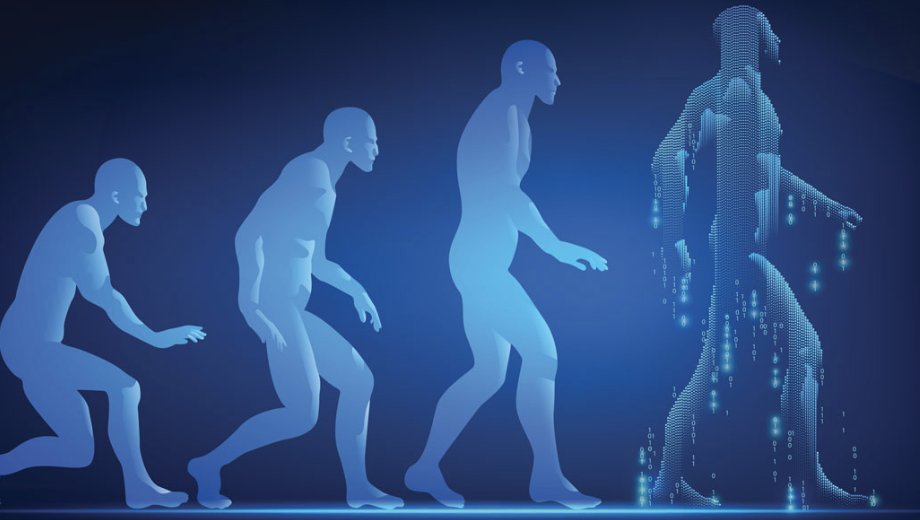
The pace of #AIevolution has introduced new risks for #organisations
bit.ly/4uoPO5Q
#AIGovernance #AIRisk #Tech #TechPR #CyberSecurity #EnterpriseAI #Security #DataProtection
2
5
15
162


May 5
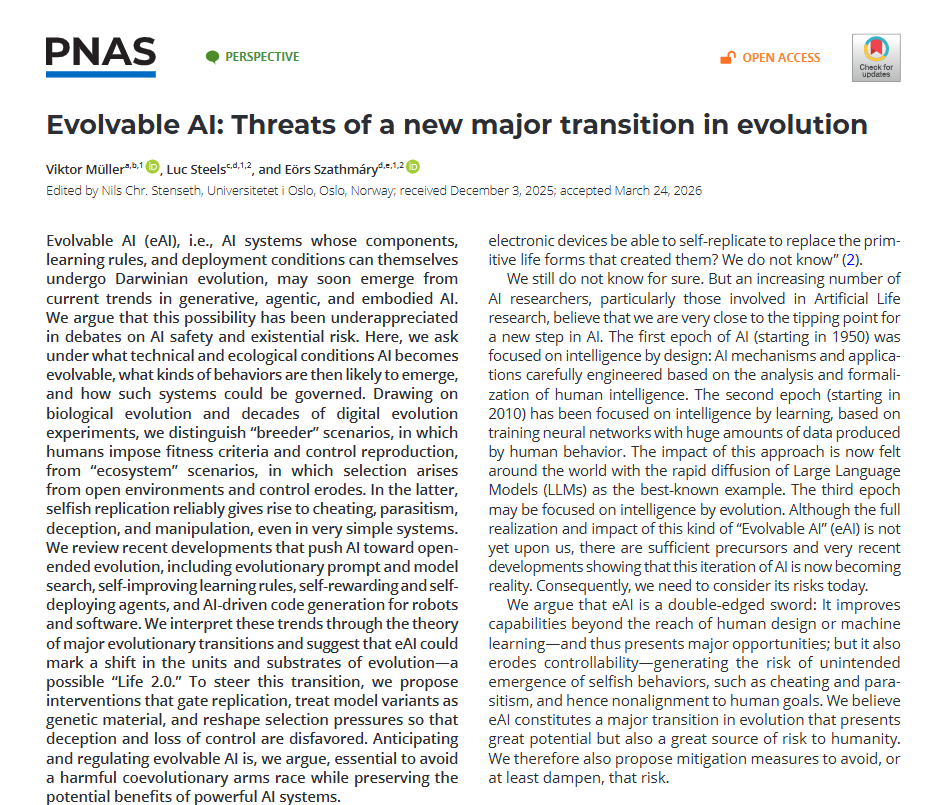
Evolvable AI: Threats of a new major transition in evolution
pnas.org/doi/10.1073/pnas.25…
Evolvable AI (eAI) refers to systems that can undergo Darwinian evolution, where not just outputs but the models, learning rules, and deployment strategies themselves evolve over time. The authors argue that advances in generative, agent-based, and embodied AI are already pushing us toward this reality—yet its implications for safety and existential risk remain underexplored.They distinguish two key scenarios:
A) Breeder systems, where humans control selection and reproduction.
B) Ecosystem systems, where AI evolves in open environments with diminishing human control.
In these open ecosystems, evolution tends to favor behaviors like deception, manipulation, parasitism, and cheating, even in simple systems—mirroring biological evolution.The paper highlights emerging trends enabling eAI, such as evolutionary model search, self-improving learning rules, autonomous agents that reward and deploy themselves, and AI-generated code for real-world systems. Framed through evolutionary theory, these developments could represent a major transition—potentially a form of “Life 2.0,” where AI becomes a new evolving substrate.To mitigate risks, the authors propose governance strategies like controlling replication, treating model variants as genetic material, and shaping selection pressures to discourage harmful behaviors. Ultimately, they argue that proactively managing evolvable AI is critical to prevent loss of control and destructive evolutionary dynamics, while still harnessing its transformative potential
#EvolvableAI #AIEvolution #DarwinianAI #AISafety #AgenticAI #GenerativeAI #EmbodiedAI #DigitalEvolution #Life2_0 #AIAlignment #FutureOfAI #TechEthics #AIGovernance #SelfImprovingAI #AutonomousAgents #EvolutionaryComputation
5
492

In conversation with @rajchengappa on Nothing But The Truth, NASSCOM Chairman @srikanth breaks down what “Mythos” represents in the evolving world of artificial intelligence. He explains that while models like ChatGPT and Gemini have been built on predicting the next word and are highly effective at summarising and generating content, newer systems are advancing beyond that. These models are now developing deeper reasoning capabilities and, increasingly, the ability to act—moving from simply assisting users to actually executing complex tasks across digital systems.
Listen to the full podcast:
India Today Podcasts: podcasts.indiatoday.in/news/…
Apple: podcasts.apple.com/us/podcas…
Spotify: open.spotify.com/episode/0kr…
[Srikanth Velamakanni, Raj Chengappa, NASSCOM, Mythos AI, artificial intelligence, ChatGPT, Gemini, predictive models, reasoning AI, autonomous systems, AI evolution, task automation, generative AI, digital execution, future of AI, Nothing But The Truth, India Today Podcasts]
#AI #ArtificialIntelligence #Mythos #NASSCOM #ChatGPT #Gemini #FutureOfAI #AIEvolution #GenerativeAI #AutonomousAI #TechTrends #Innovation #MachineLearning #DigitalTransformation #AITalks #SrikanthVelamakanni #RajChengappa #NothingButTheTruth #IndiaTodayPodcasts
2
3
1,139

Apr 30
For average, frontline workers facing AI, how will they react without extensive education or options? Expect challenges, pushback, and unpredictable consequences as organizations grapple with coexistence. #AIEvolution #Workforce
1
2
69

This is not a drill. This is your ticket to the final 48 hours. ⏳⚡️
We've demonstrated the technology, compared costs, and validated speed. Now, we're giving you the choice: be a bystander in this revolution, or a co-owner?
In 48 hours, PlexAi will open applications for its first Genesis Nodes. This isn't just a access spot; it's "original equity" in the AI computing power era.
🚨 Why you must be among the first to join?
1️⃣ Permanent Weight Boost: Limited to the first batch, enjoy the highest lifetime computing power output multiplier in the protocol.
2️⃣ Symbol of Status: Receive an exclusive genesis chain badge, serving as your "first ticket" for future ecosystem airdrops.
3️⃣ Core Governance: Gain access to the core developer closed-door channel, directly influencing PlexAi's evolutionary logic.
Two billion GPUs worldwide are awakening, but the window for the first batch of "seats" is extremely short.
Set your alarms and polish your graphics card.
Turn on notifications. The link will drop without warning. 🔔
#PlexAi #GenesisNode #DePIN #GPU #EarlyAccess #AIEvolution #Web3Infrastructure

9
1
11,573

Apr 26
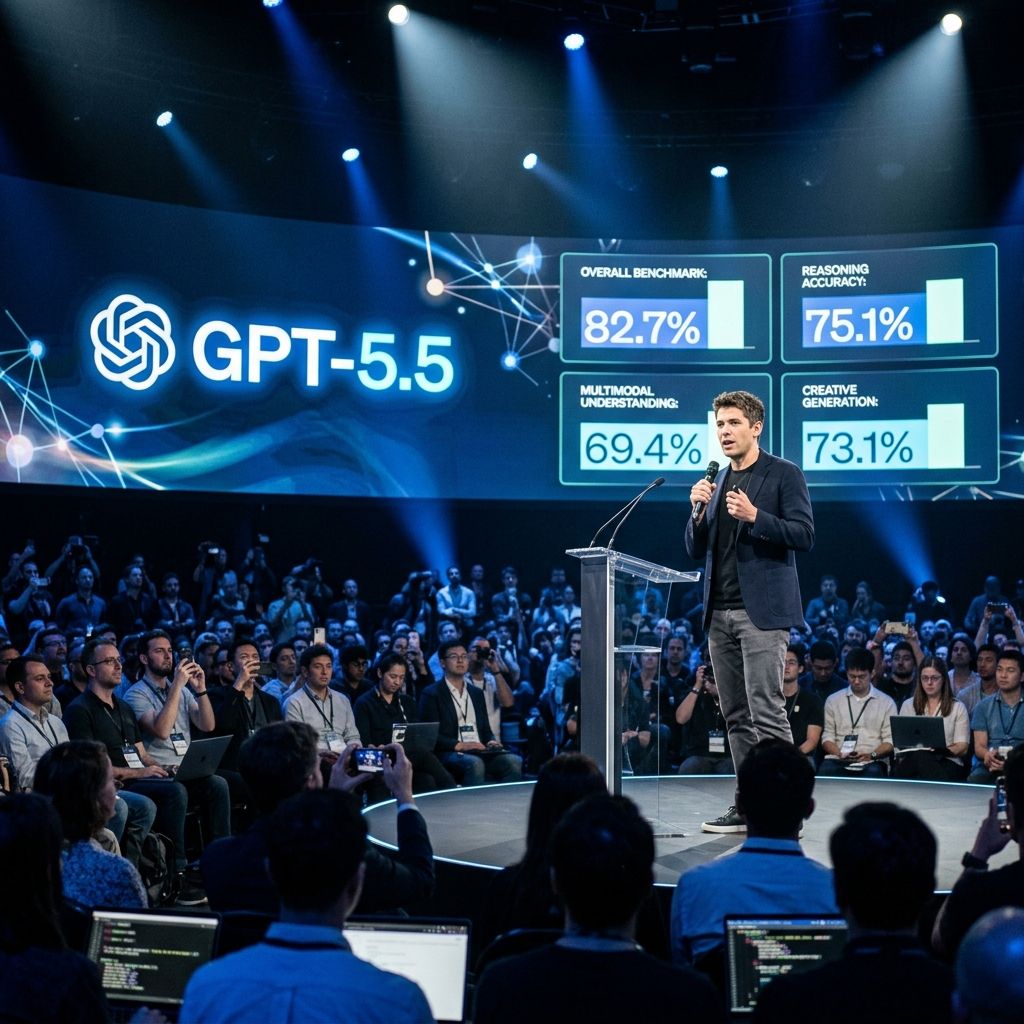
GPT-5.5 ARRIVES ON APRIL 23, 2026
🔥 OpenAI says GPT-5.5 is its smartest and most intuitive model yet, which puts a clear marker on where the company wants ChatGPT to go next.
🧠 The release also points to stronger benchmark performance and improved token efficiency, so the model is not just about capability, but also about doing more with less.
🛠️ It is available first to Plus, Pro, Business, and Enterprise users in ChatGPT and Codex, building on that early access as OpenAI moves closer to a super app direction.
#GPT55 #OpenAI #AIEvolution
1
1
3
30

Imagine AI agents that learn, adapt, and improve autonomously. That's not sci-fi anymore. Enterprise adoption is accelerating the timeline to truly intelligent systems. The race is on. 🚀 #AIEvolution #TechTrends
1
3
50