
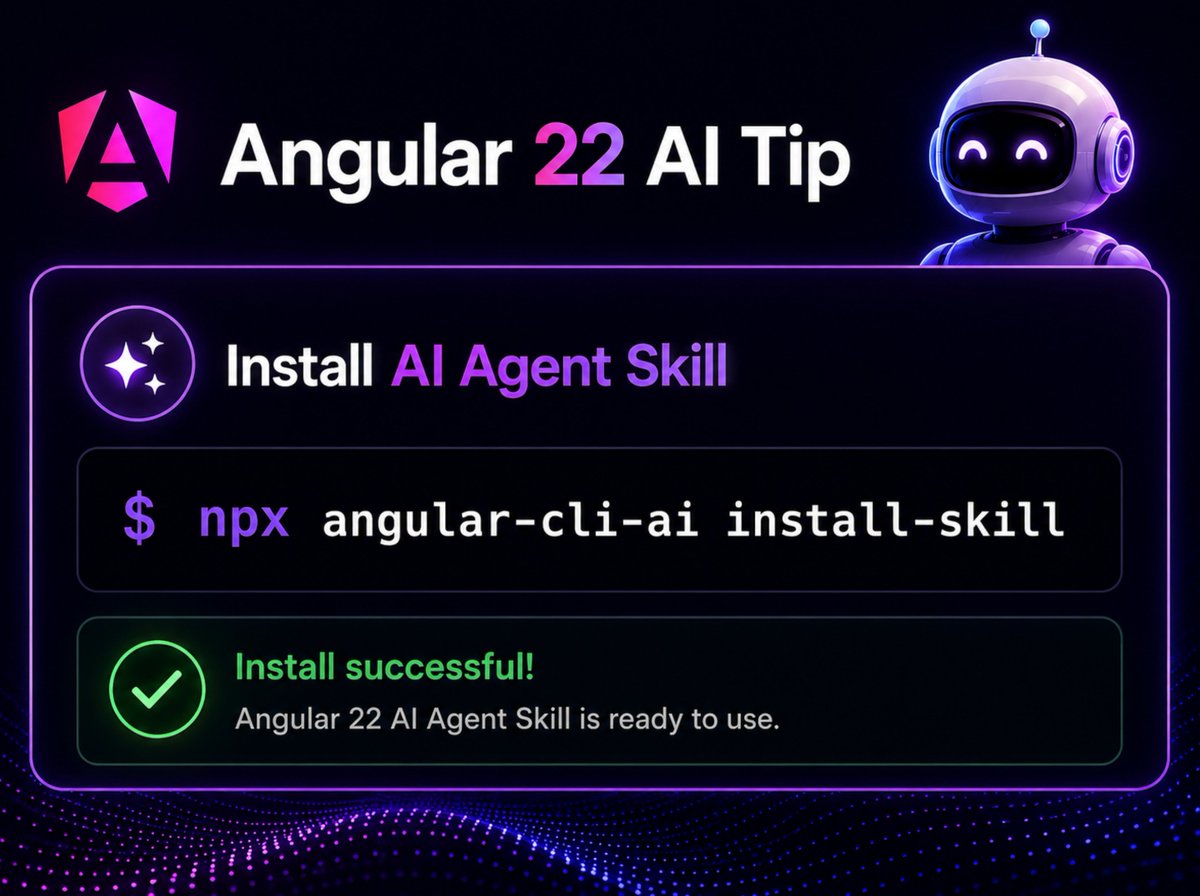
🔥 𝗔𝗻𝗴𝘂𝗹𝗮𝗿 𝟮𝟮 𝗻𝗼𝘄 𝗵𝗮𝘀 𝗶𝘁𝘀 𝗼𝘄𝗻 𝗔𝗜 𝗔𝗴𝗲𝗻𝘁 𝗦𝗸𝗶𝗹𝗹. ⚡
Install it once and every coding agent instantly understands:
✅ Angular 22 best practices
✅ Signals & Signal Forms
✅ Standalone Components
✅ Zoneless Angular
✅ Modern Angular architecture
✅ Angular coding conventions
Instead of generating generic code, your AI agent starts thinking like an Angular expert.
𝗜𝗻𝘀𝘁𝗮𝗹𝗹:
npx angular-cli-ai install-skill
🧠 𝗬𝗼𝘂𝗿 𝗔𝗜 𝗶𝘀 𝗼𝗻𝗹𝘆 𝗮𝘀 𝗴𝗼𝗼𝗱 𝗮𝘀 𝗶𝘁𝘀 𝗰𝗼𝗻𝘁𝗲𝘅𝘁.
For best results, combine it with the Angular 22 MCP Server and enable the experimental devserver tasks.
See my previous tweet for how to do that.
#Angular #Angular22 #AI #ClaudeCode #TypeScript #WebDev
3
13
92
2,657

Jun 10
class AI tooling now.
If you've been watching from the sidelines, this is your moment to dive in. The signals-first future is production-ready today.
#Angular22 #Angular #WebDevelopment #JavaScript #Frontend #TypeScript #Coding #DevLife #OpenSource
13

Jun 10
Mantis Angular dashboard template free has been updated to v6.0.0 with full Angular 22 support.
Download the latest version and start building with the newest Angular ecosystem.
@codedthemes
#Angular #Angular22 #OpenSource
1
1
3
94
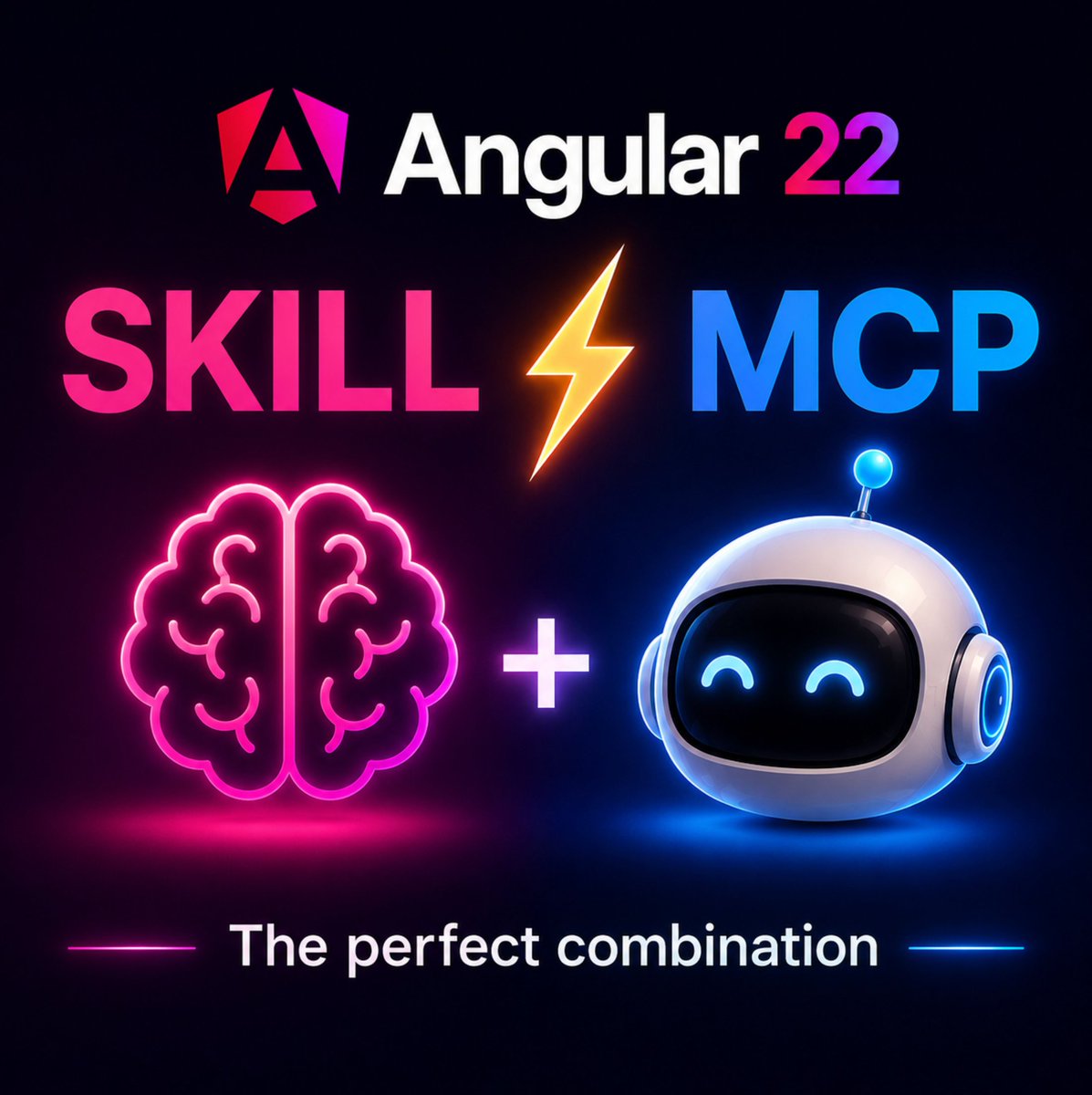
🤯 𝗞𝗻𝗼𝘄 𝘁𝗵𝗲 𝗱𝗶𝗳𝗳𝗲𝗿𝗲𝗻𝗰𝗲 𝗯𝗲𝘁𝘄𝗲𝗲𝗻 𝗔𝗻𝗴𝘂𝗹𝗮𝗿 𝟮𝟮 𝗠𝗖𝗣 𝗦𝗲𝗿𝘃𝗲𝗿 ⚡ 𝘃𝘀 🧠 𝗧𝗵𝗲 𝗔𝗻𝗴𝘂𝗹𝗮𝗿 𝗔𝗜 𝗦𝗸𝗶𝗹𝗹
🧠 T𝗵𝗲 𝗔𝗻𝗴𝘂𝗹𝗮𝗿 𝗗𝗲𝘃𝗲𝗹𝗼𝗽𝗲𝗿 𝗦𝗸𝗶𝗹𝗹 (/angular-developer)
• Loads guidelines and coding standards into my context
• Points me to local reference docs (signals, forms, routing, etc.) to read before generating code
• Shapes how I think and write — coding conventions, when to use signal forms, build verification steps
• Passive: it's instructions, not executable tools
⚡ 𝗔𝗻𝗴𝘂𝗹𝗮𝗿 𝗠𝗖𝗣 𝗦𝗲𝗿𝘃𝗲𝗿
• Provides actual callable tools: list_projects, get_best_practices, search_documentation, find_examples, devserver_start/stop, migrations, etc.
• Lets me interact directly with your Angular workspace at runtime
• Active: it executes things against your project
🤝 𝗛𝗼𝘄 𝘁𝗵𝗲𝘆 𝗰𝗼𝗺𝗽𝗹𝗲𝗺𝗲𝗻𝘁 𝗲𝗮𝗰𝗵 𝗼𝘁𝗵𝗲𝗿
The skill's guidelines actually reference the MCP server explicitly — it tells me to call list_projects first before doing anything, and get_best_practices before writing code.
🎯 So the skill orchestrates when and how to use the MCP tools.
🔥 𝗜𝗻 𝘀𝗵𝗼𝗿𝘁
🧠 The skill sets the rules.
⚡ The MCP server does the work.
🚀 Neither alone is as useful as both together.
#Angular #Angular22 #AI #MCP #ClaudeCode #AgenticAI
7
41
1,401

Jun 9
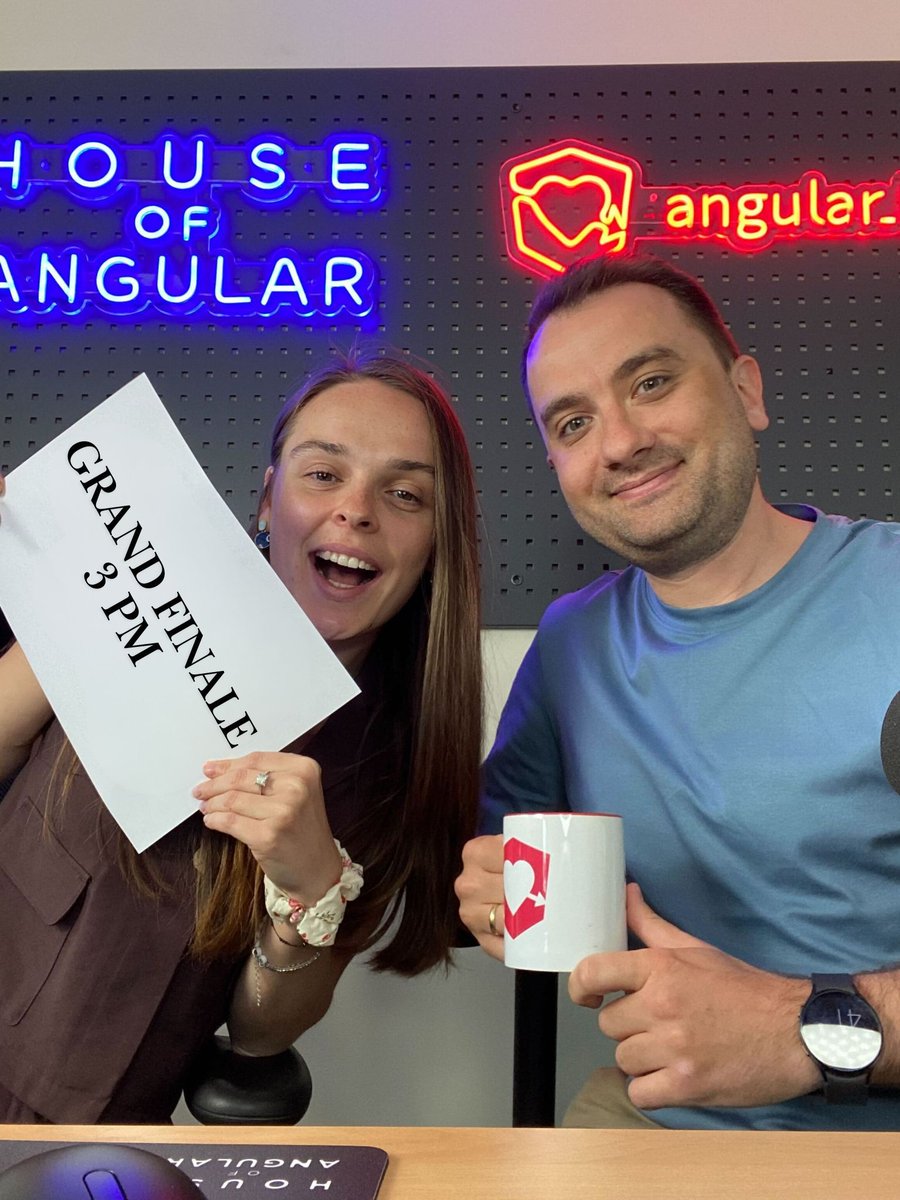
Only 59 minutes left till the final meetup of #Angular Spring Camp 2026 👇
Grab the link → buff.ly/HxqqZFy
And share this with a friend so you can later discuss:
🎓 “What’s new in #Angular22?”
🎓 “The Secret Life of Events in Angular”
🎓 Mastering #AI with #GoogleTeam
This is the last meetup of this half of the year, so let’s go out with a bang: last meetup, biggest crowd.
Be there or spend your summer with FOMO! 😉
2
110
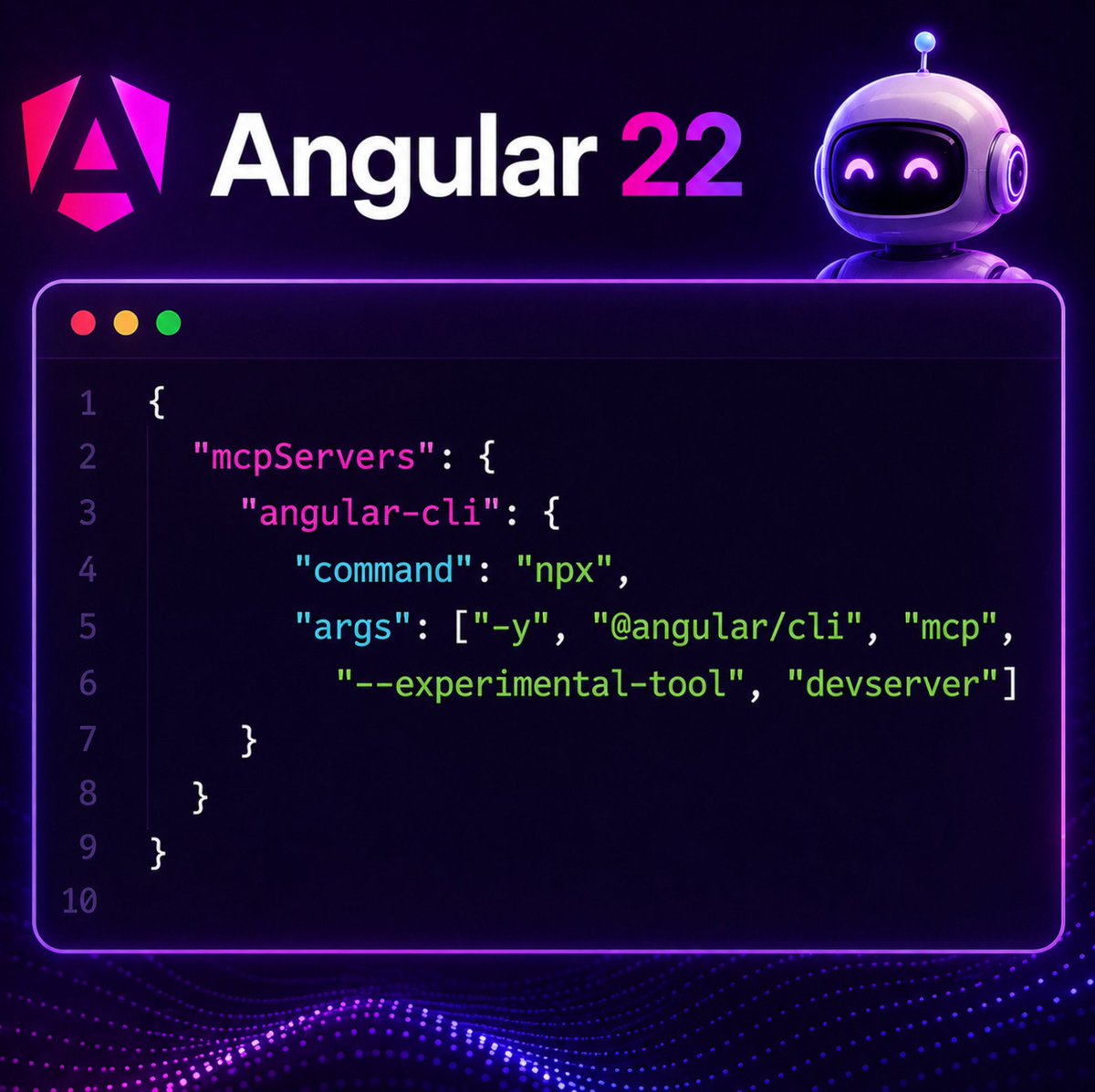
🤯 𝗧𝗵𝗶𝘀 𝗼𝗻𝗲 𝘀𝗺𝗮𝗹𝗹 𝗰𝗼𝗻𝗳𝗶𝗴 𝘂𝗻𝗹𝗼𝗰𝗸𝘀 𝘀𝗼𝗺𝗲𝘁𝗵𝗶𝗻𝗴 𝗽𝗿𝗲𝘁𝘁𝘆 𝗰𝗿𝗮𝘇𝘆 𝗶𝗻 𝗔𝗻𝗴𝘂𝗹𝗮𝗿 𝟮𝟮.
Create a .mcp.json file, and it to the root of your project:
{
"mcpServers": {
"angular-cli": {
"command": "npx",
"args": ["-y", "@angular/cli", "mcp",
"--experimental-tool", "devserver"]
}
}
}
⚠️ 𝗡𝗼𝘁𝗲: the devserver MCP tools are currently experimental.
🚀 With the Angular CLI MCP server enabled, AI agents such as Claude Code can:
✅ Start the Angular dev server
✅ Stop the Angular dev server
✅ Run Angular CLI commands
✅ Wait for builds to complete
🤖 This gives AI agents direct access to Angular's development workflow.
Make changes → Build → Detect errors → Fix → Retry
🔥 Welcome to the era of self-healing AI workflows.
#Angular #Angular22 #AI #ClaudeCode #MCP
1
14
93
4,159
Jun 8
Our #Angular Spring Camp 2026 ends TOMORROW 🤯 Take your last chance to register!
You’ll get:
1️⃣ A free ticket to the 3rd meetup (#Angular22, Events, and #AI in Angular)
2️⃣ Recordings from this year's Spring Camp
3️⃣ Repo with all the code from the lectures
→ And while you’re waiting for the grand finale with meetup 3, grab a snippet (with @yjaaidi and @dawid_k_dev) from the previous one!
📅 June 9 | 3 PM CEST | Online
You only have 24 hours!
Register with the link below 👇
1
3
389

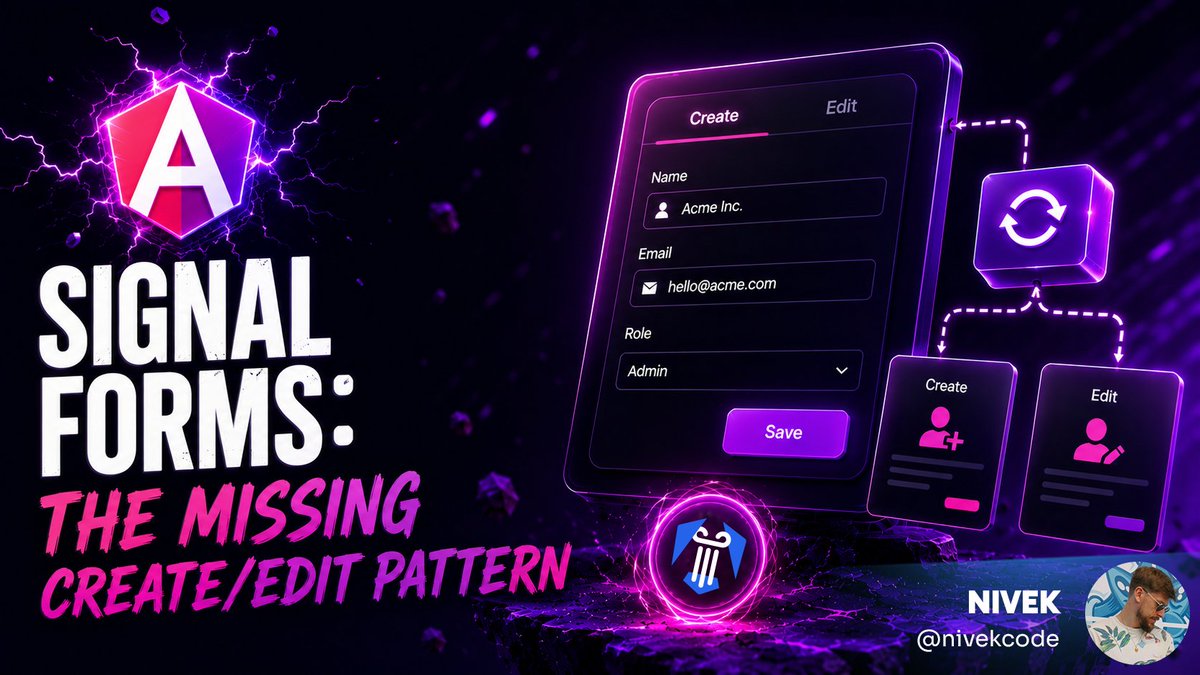
Angular 22 is out 🚀
And with it, Signal Forms.
One of the first things I wanted to solve was the classic Create/Edit pattern:
✅ Load existing data
✅ Prefill the form
✅ Reuse the same form definition
✅ Handle create & update cleanly
I wrote up the pattern I'm using 👇
#Angular #Angular22 #SignalForms
1
4
14
1,036

Jun 7
Angular 22 is here! Read the full deep dive guide here:
codigotipado.com/p/angular-2…
#angular22 #stablesignalforms
11
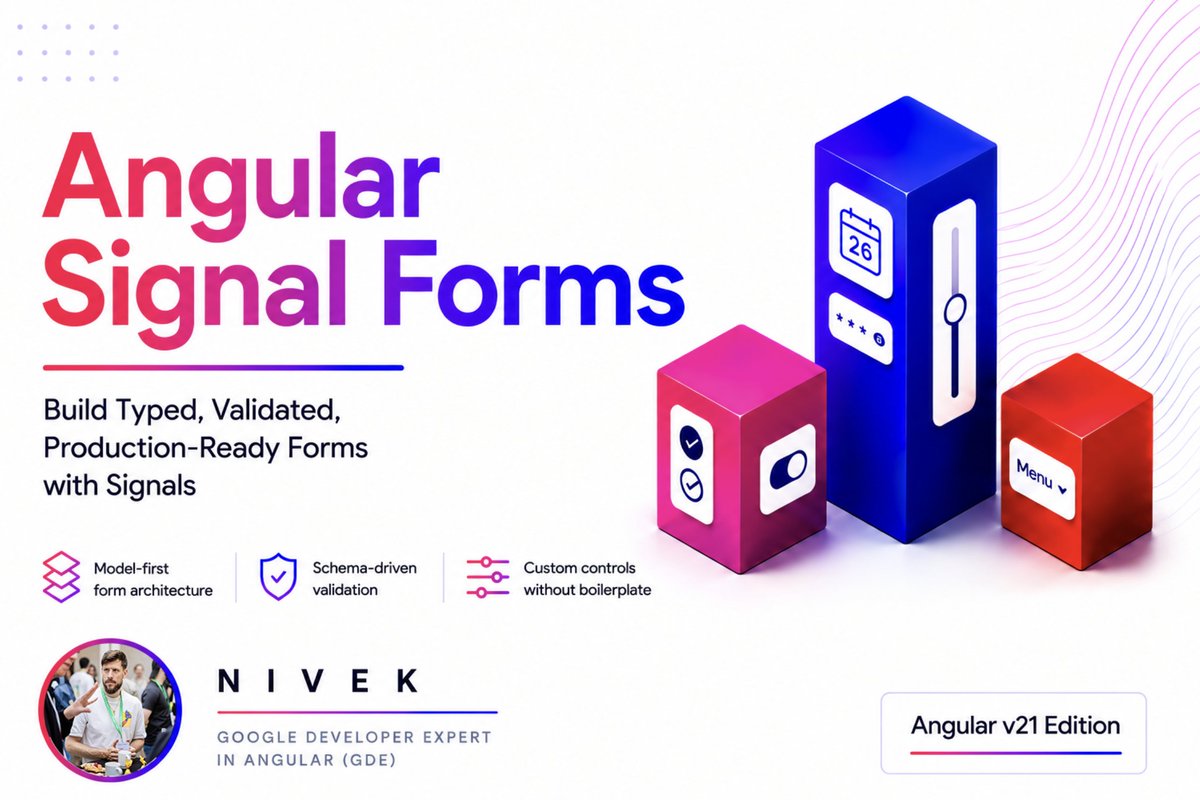
🚀 Angular 22 is here, and Signal Forms are finally stable!
Ready to level up your Angular forms? 📋⚡
Our brand-new ebook covers everything you need to know about Signal Forms—from the fundamentals to advanced patterns, best practices, and real-world examples.
Master the future of Angular forms today. 🔥 Link in comments 👇
#Angular #Angular22 #SignalForms #WebDevelopment #Frontend
1
1
4
416

Jun 3
🚀 𝗔𝗻𝗴𝘂𝗹𝗮𝗿 𝟮𝟮 𝗝𝘂𝘀𝘁 𝗟𝗮𝗻𝗱𝗲𝗱
Another major milestone for @angular!
Over the last few releases, Angular has evolved rapidly with OnPush being default, @Service new decorator, Signal Forms becoming stable, WebMCP support, improved DevTools and a clear vision for the future of modern web development.
We have been sharing about these changes the last 2 months, and we're excited that they're released now. 🤩
A huge thank you to the Angular team and the countless community contributors who continue to move the framework forward. 👏
Release link: github.com/angular/angular/r…
What are you most excited to try first in Angular 22?
#Angular #Angular22 #WebDevelopment #Frontend #TypeScript
3
9
54
1,796
Jun 3
💥 #Angular22 is officially out!
And you can learn all about it in GDE @m_stefanczyk's newest article:
👉 OnPush as the new default
👉 Signal Forms going stable
👉 resource() and httpResource going stable
👉 paramsInheritanceStrategy defaulting to 'always'
And more!
Read it here → buff.ly/YeyoDgd
And share this with your #Angular dev friend!
5
37
1,997

¡HOY! A las 18:00h (🇪🇸) directazo sobre #Angular22 con @bezael_perez de @DominiCode. Emisión simultánea, código real en vivo y... ¡varias sorpresas que anunciaremos en directo! 🎁
No hagáis planes para esta tarde. ¡Nos vemos en unas horas! 👇
youtube.com/live/EfQrm1hZRtI…
4
115
Mañana a las 18:00h (🇪🇸) encendemos los micros.
🔴Directazo técnico sobre #Angular22 en simultáneo con el gran @bezael_perez de @DominiCode
Estamos cerrando la escaleta y queremos ir al grano ¿Qué duda, cambio o novedad del framework queréis que destripemos?
Os leo por aquí!
2
1
3
1,206
Doble planazo esta semana que rompe el calendario! 🗓️
❌ Viernes: NO hay noticiario (estaré dando charla presencial en la @commitconf de Madrid).
🔴 MIÉRCOLES 18:00h (🇪🇸): Directazo especial #Angular22 en simultáneo con Bezael (@DominiCode).
¿Dónde nos vemos?👇
1
2
525
May 29
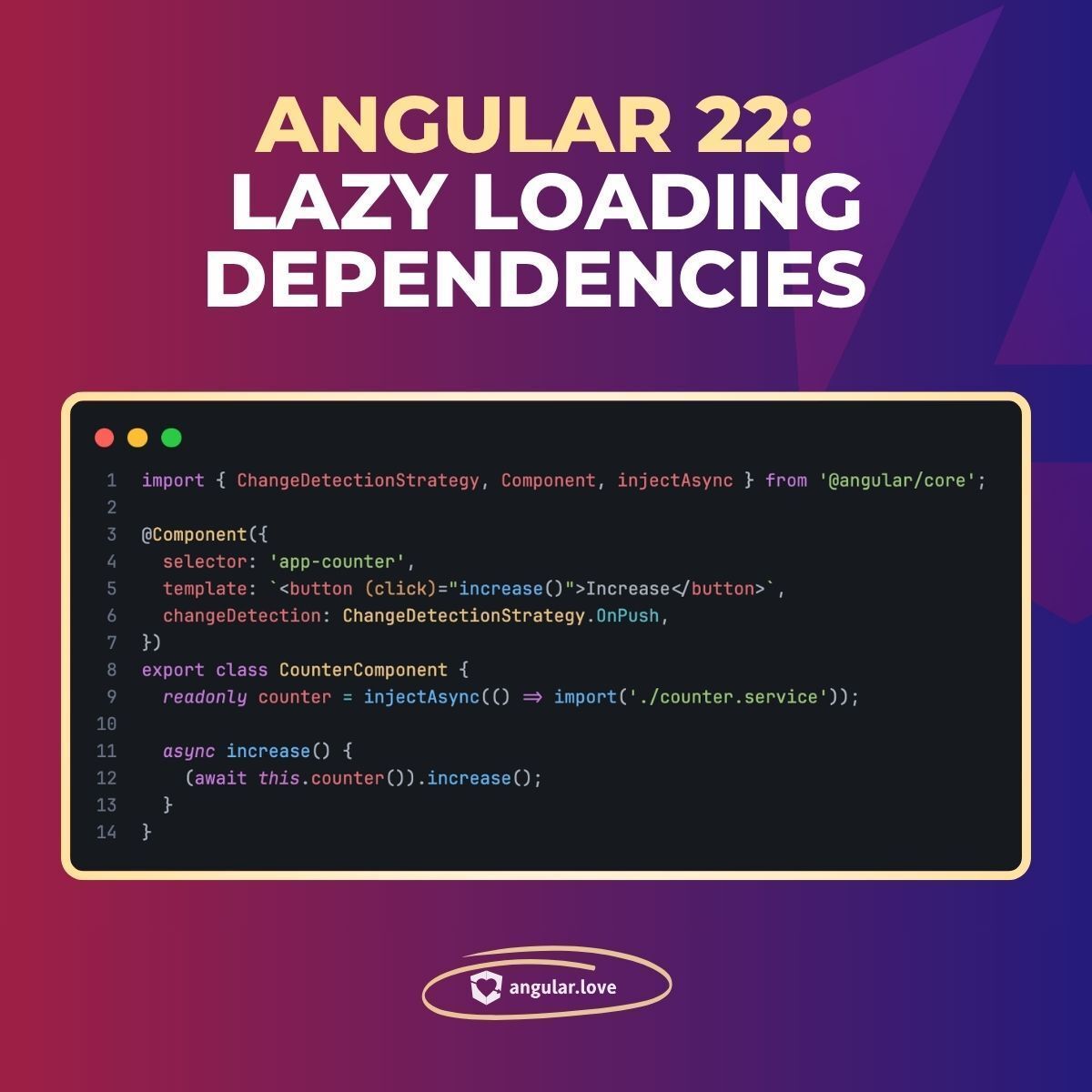
#Angular22: Lazy Loading Dependencies 🔥
👉 One of the features arriving in the next major version is the injectAsync helper.
It allows us to lazy-load a service, fetching its logic only when it is actually needed.
💡 By using this helper, we can reduce the initial #application bundle size by breaking code into smaller, on-demand chunks.
If you’ve used the injectLazy utility from #ngxtension in your project, this will feel familiar, as both tools are designed to solve the same problem.
Check out the implementation PR here → buff.ly/EIzMznk
3
35
1,013
May 26
Who’s excited for the release of #Angular22? 🥳🖐️
👀 And what if you could learn everything about v22 right after it comes out?
Check this out!
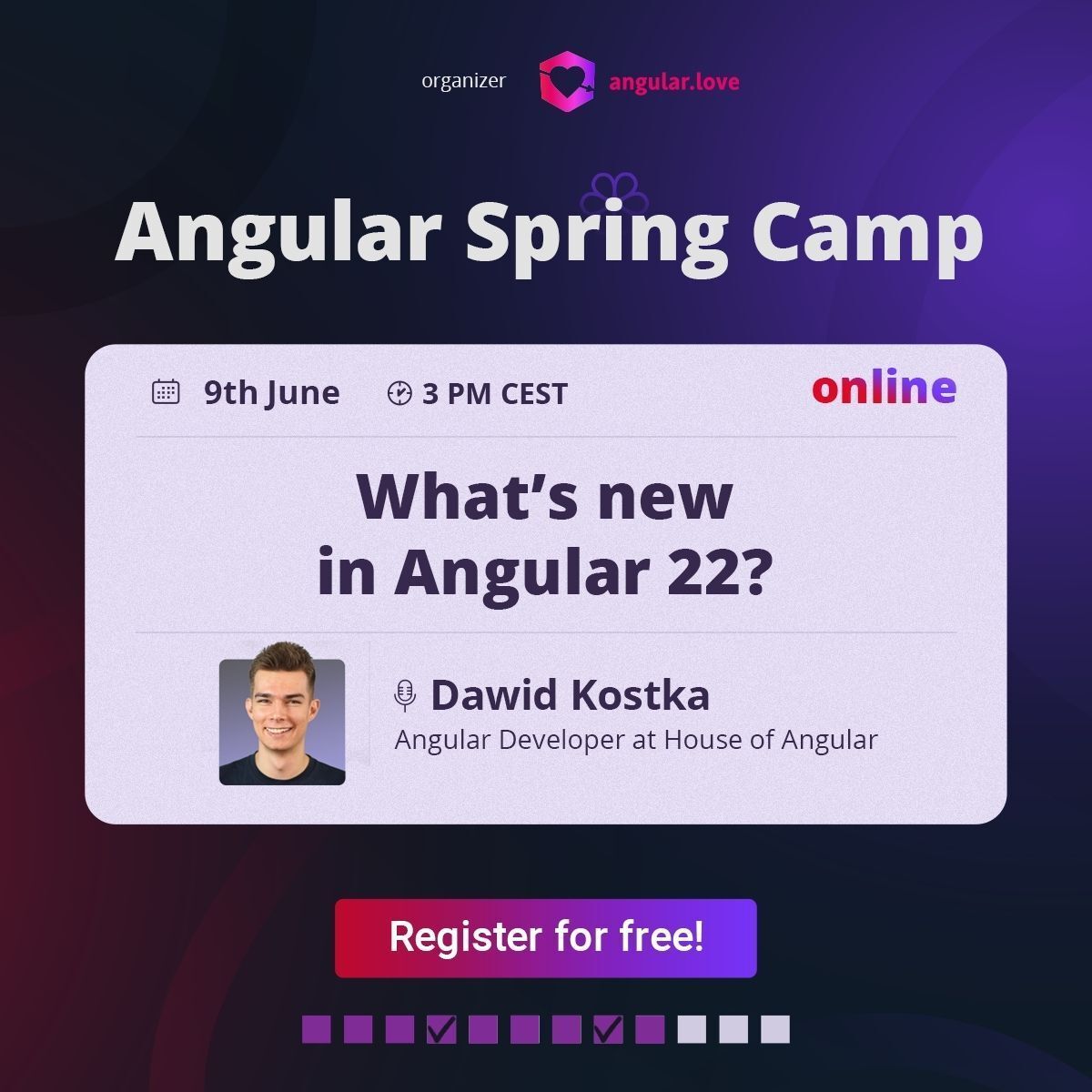
⭐ 3rd meeting of #Angular Spring Camp 2026
📅 June 9 | 3 PM CEST | Online | FREE
🎓 “What’s new in Angular 22?”
About the speaker:
→ Dawid Kostka, Angular Developer at House of Angular
→ Active member of the Angular Love community
→ Blogger, MC, and Angular meetups speaker
→ The author behind our Angular Love Newsletter
Don’t wait!
🔗 Register here: buff.ly/80bURo3
1
4
232

May 23
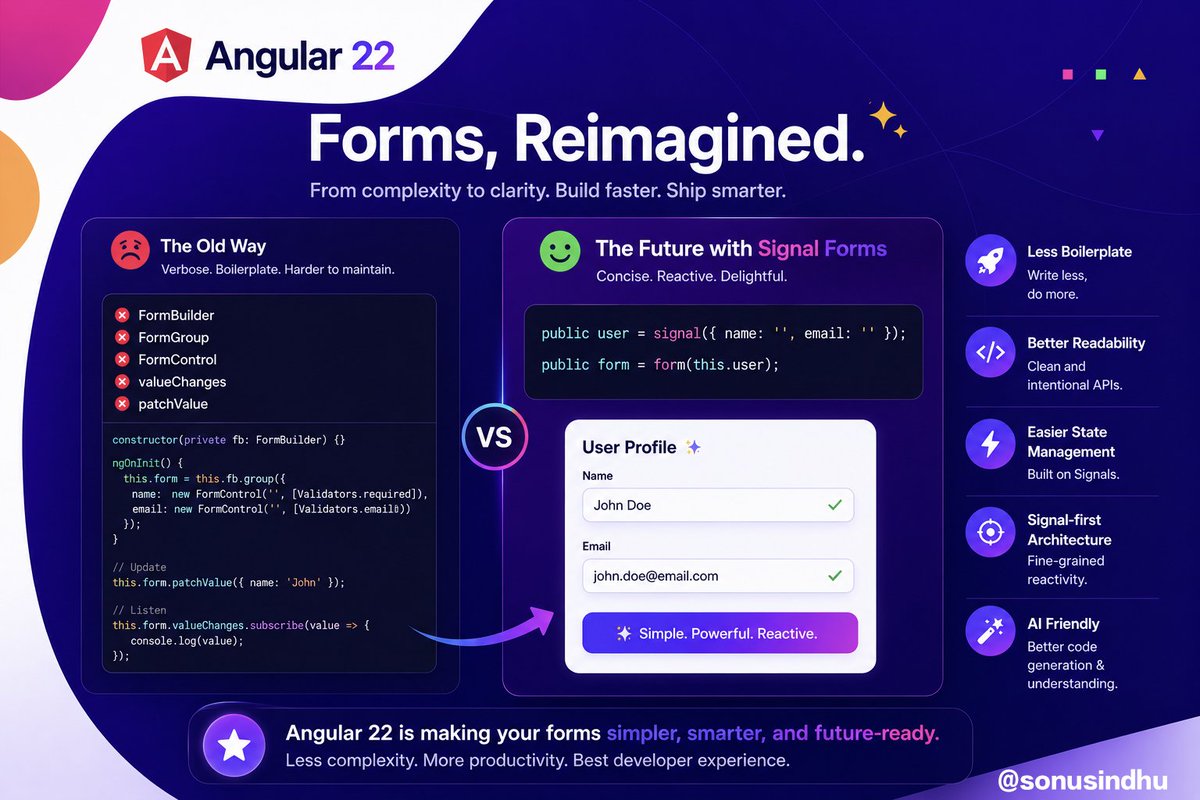
Angular22 stable signal forms 🚀
From this: ❌ FormBuilder ❌ FormGroup ❌ valueChanges ❌ patchValue
To this:
const form = formSignal({ name: '', email: '' });
Less boilerplate. More clarity. Signal-first future 🔥
#Angular #Angular22 #TypeScript #Frontend #WebDevelopment
2
40
May 21
2/3 of Spring Camp 2026 already behind us 😲 Over 130 people participated! Thank you!
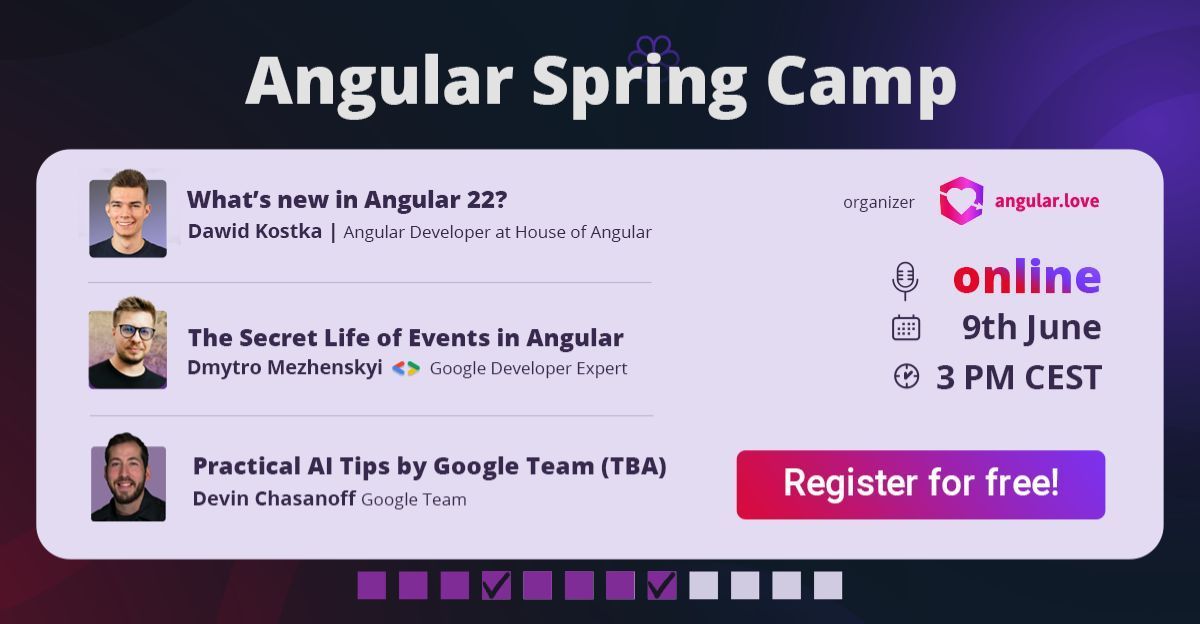
Now, it’s time to reveal the secret speaker we talked about during the meetup 👀
We’ll host a special guest from the #Google Team itself for a talk about #AI!
Ready?
It’s @DevChas, straight from Google’s office!
See you on June 9th for:
→ #Angular22 overview
→ Events in Angular
→ Practical AI tips
If you didn’t attend the previous meetups, don’t worry!
You can still get your free pass:
🎬 Full recordings of the 1st & 2nd meetup
💻 Repo with all the code from the lectures
🎟️ Your ticket for the 3rd meetup
Register here: buff.ly/80bURo3
2
136
🚦💥𝗗𝗶𝗳𝗳𝗲𝗿𝗲𝗻𝗰𝗲 𝗯𝗲𝘁𝘄𝗲𝗲𝗻 𝗗𝗲𝗳𝗮𝘂𝗹𝘁 𝗖𝗵𝗮𝗻𝗴𝗲 𝗗𝗲𝘁𝗲𝗰𝘁𝗶𝗼𝗻 𝗮𝗻𝗱 𝗢𝗻𝗣𝘂𝘀𝗵 𝗶𝗻 𝗮 𝟭𝟬𝟬% 𝘀𝗶𝗴𝗻𝗮𝗹𝘀-𝗯𝗮𝘀𝗲𝗱 𝗭𝗼𝗻𝗲𝗹𝗲𝘀𝘀 𝗮𝗽𝗽𝗹𝗶𝗰𝗮𝘁𝗶𝗼𝗻?
In practice, no meaningful difference. But still very interesting to know why:
𝗛𝗼𝘄 𝘀𝗶𝗴𝗻𝗮𝗹𝘀 𝗱𝗿𝗶𝘃𝗲 𝗰𝗵𝗮𝗻𝗴𝗲 𝗱𝗲𝘁𝗲𝗰𝘁𝗶𝗼𝗻
When a signal is read in a template, Angular's reactive graph records that dependency. When the signal updates, Angular internally calls markForCheck() on that component — regardless of its change detection strategy.
Both Default and OnPush get marked dirty and re-rendered by the same mechanism.
𝗪𝗵𝗮𝘁 𝗢𝗻𝗣𝘂𝘀𝗵 𝘄𝗮𝘀 𝗮𝗰𝘁𝘂𝗮𝗹𝗹𝘆 𝘀𝗼𝗹𝘃𝗶𝗻𝗴
OnPush was designed to opt out of the Zone.js-driven "check everything" cycle.
Without it, Zone.js would patch every setTimeout, Promise, XHR, etc. and trigger a full top-down tree walk.
OnPush let you say "only check me if my inputs changed or Iwas explicitly marked dirty."
In a zoneless app, that problem doesn't exist. There is no global tick.
Either:
1 - A signal marks a component dirty
2 - Or you mark the component has dirty yourself explicitly
Notice that the async pipe will also mark the component as dirty, but here I'm assuming a signals-only app.
In a signal-based zoneless app, there's no runaway Zone.js cycle to protect against.
𝗪𝗵𝗮𝘁 𝗵𝗮𝗽𝗽𝗲𝗻𝘀 𝗶𝗳 𝘀𝗶𝗴𝗻𝗮𝗹𝘀 𝗮𝗿𝗲 𝗯𝘆𝗽𝗮𝘀𝘀𝗲𝗱
In this exact type of application, if you accidentally bypass signals — a direct property mutation, a class field updated without signal.set(), etc. — nothing happens.
This hold true for both Default and OnPush - again this is true for a zoneless application specifically.
In a disciplined signals-only codebase that's actually a non-issue - every data modification goes via a signal.
𝗔𝗻𝗴𝘂𝗹𝗮𝗿'𝘀 𝗱𝗶𝗿𝗲𝗰𝘁𝗶𝗼𝗻
In the long term, it looks like fine-grained signal reactivity replaces the more coarse-grained Default/OnPush distinction entirely.
The more concrete near-term step is github.com/angular/angular/d…,
which proposes making OnPush the schematic default in Angular 22 — because in a signals-first world, Default becomes the odd choice rather than OnPush.
#angular #angular21 #angular22 #onpush #changedetection
6
40
1,844