

UMass researchers awarded grant to examine carbon storage in wetlands - masslive.com - Lee said the research at the Geological Survey will develop type- and region-specific carbon baselines for all of Massachusetts. Postdoctoral scholar ... - ift.tt/cUmFN8k
3

🔐 𝐀𝐒𝐗 𝐀𝐭𝐭𝐫𝐢𝐛𝐮𝐭𝐢𝐨𝐧 𝐏𝐫𝐨𝐟𝐢𝐥𝐞
Slippage attribution does not look the same across venues. Each market has its own depth profile, order types, and timing characteristics.
On the ASX, venue concentration and a heavy closing auction shape the profile. Routing variance is small. Impact and liquidity drift carry more weight.
• 𝐀𝐒𝐗: centralised book, auction-driven liquidity
• 𝐁𝐚𝐬𝐞𝐥𝐢𝐧𝐞𝐬: time-of-day aware, not just regime aware
• 𝐒𝐞𝐬𝐬𝐢𝐨𝐧 𝐛𝐨𝐮𝐧𝐝𝐚𝐫𝐢𝐞𝐬: components behave differently inside each window
Are your attribution baselines specific to venue structure, or generic?
#Dovest #Markets
1
15


37m
The core of Loop Engineering is simple.
Instead of manually prompting the AI every turn with "do this now," "verify this," "write docs," or "create the next issue," you define a goal and let the AI iterate autonomously until it reaches the completion state.
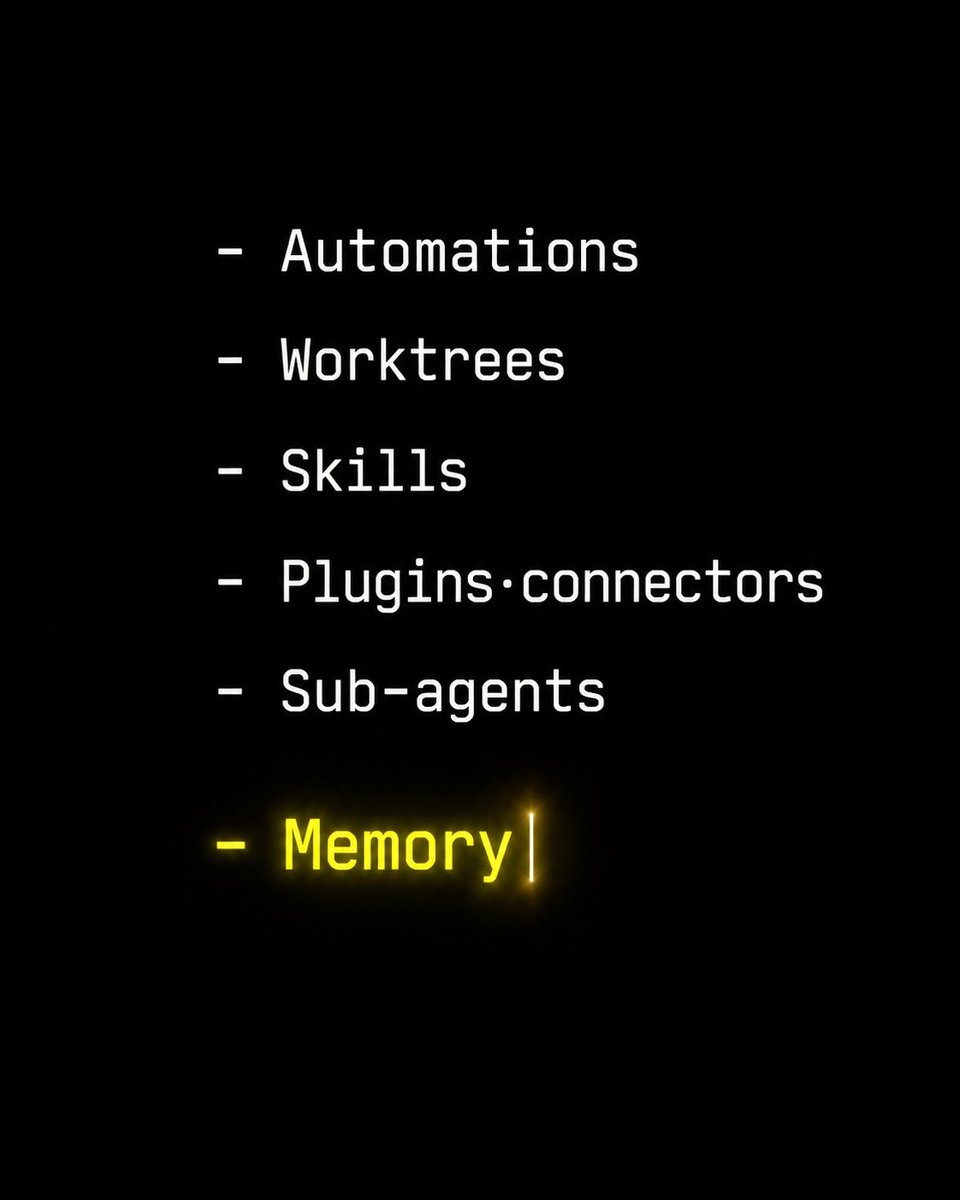
To do this right, you need at least 6 core elements:
1. Automations: Automate execution, verification, follow-up tasks, and state updates.
2. Worktrees: Isolate tasks for safe experimentation without breaking the main branch.
3. Skills: Turn repetitive workflows like code review, QA, documentation, and refactoring into reusable execution units.
4. Plugins/Connectors: Hook into real-world tools like GitHub, Linear, browsers, and external APIs.
5. Sub-agents: Instead of one agent doing everything sequentially, distribute roles like reviewer, implementer, QA, and researcher for parallel evaluation.
6. Memory: Store decisions, rationale, changes, verification results, and follow-up issues so context outlives a single chat session.
For example, consider this goal:
> Improve the current dashboard so real users can actually understand it. Iterate through UX review, bug fixes, visual QA, doc updates, and issue organization until users can instantly judge what is happening, what to read, and what to do next from a single screen.
This is not simply "fix the dashboard UI."
It is a loop that drives product quality to a definitive state of completion.
The loop interprets the goal, asks clarifying questions to set baselines if necessary, then implements, reviews, and tests in an isolated workspace. If it fails, it revises. Outputs are saved as a human-readable Wiki and a machine-readable Memory. Finally, it isolates remaining tasks into new issues and verifies the stopping criteria.
The key takeaway: AI is not replacing the engineer.
The system takes over the repetitive prompting loop, while the engineer remains entirely responsible for goals, judgment, verification, and direction.
Build the loop, stay the engineer.
If you want to get a practical feel for this, I recommend checking out this repository: github.com/rlaope/loop

1
7

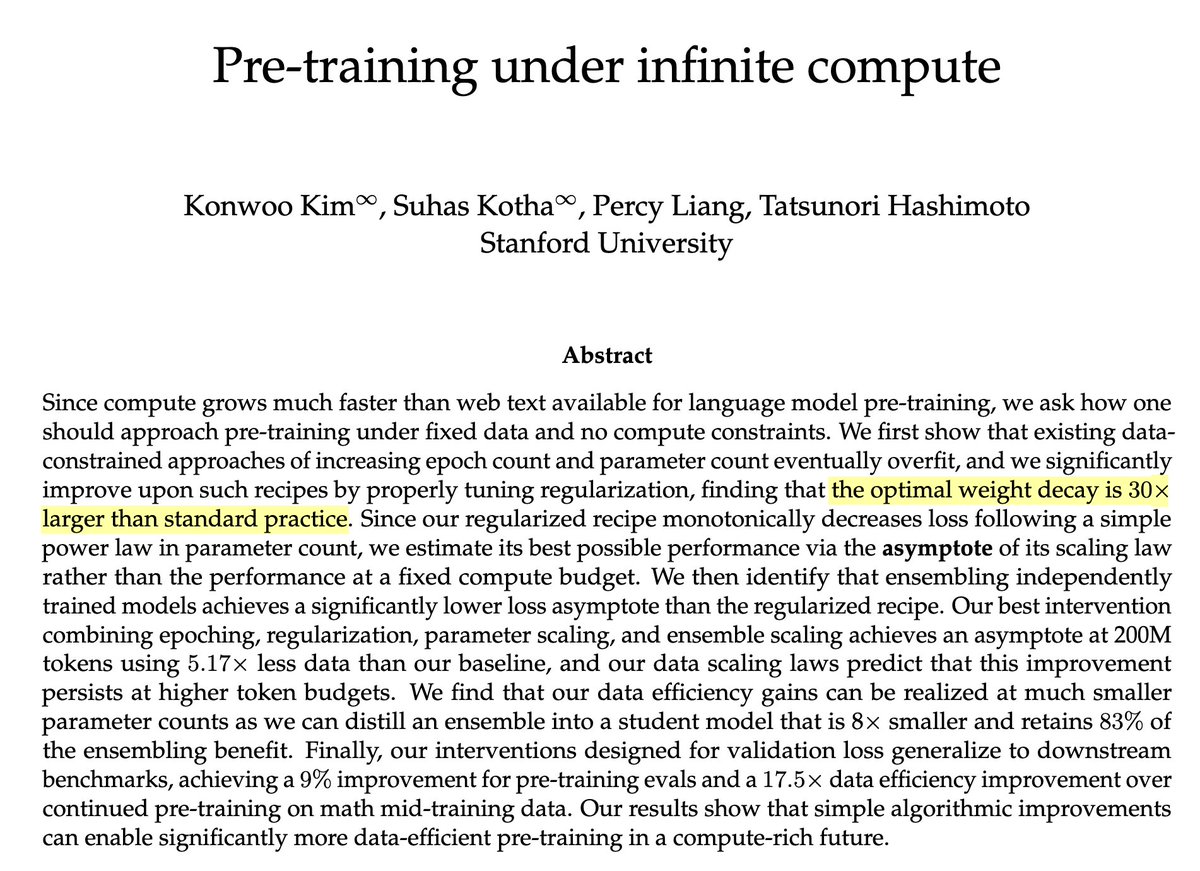
LLM community slowly rediscovering what we in vision found out over half a decade ago. MY SCHMIDHUBER MOMENT IS COMING!
Source: S4L paper where i tuned the most sota 10% and 1% ImageNet baselines ever, by far.
arxiv.org/abs/1905.03670
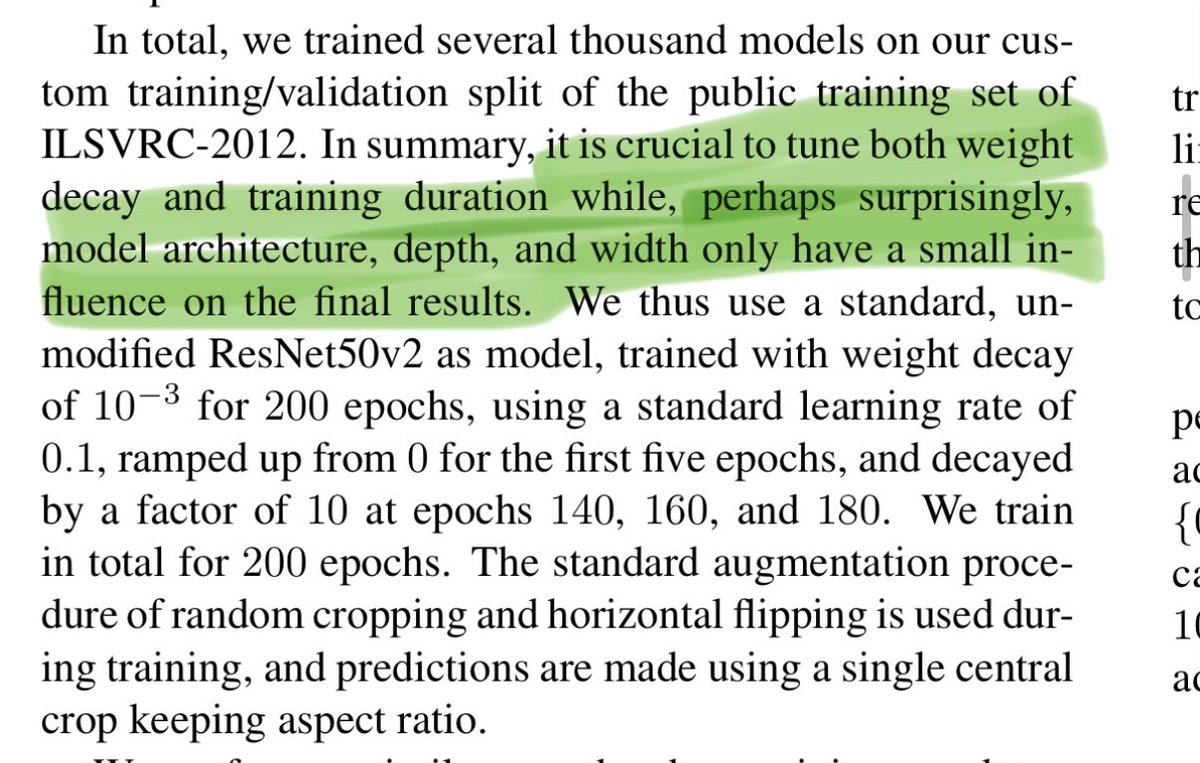
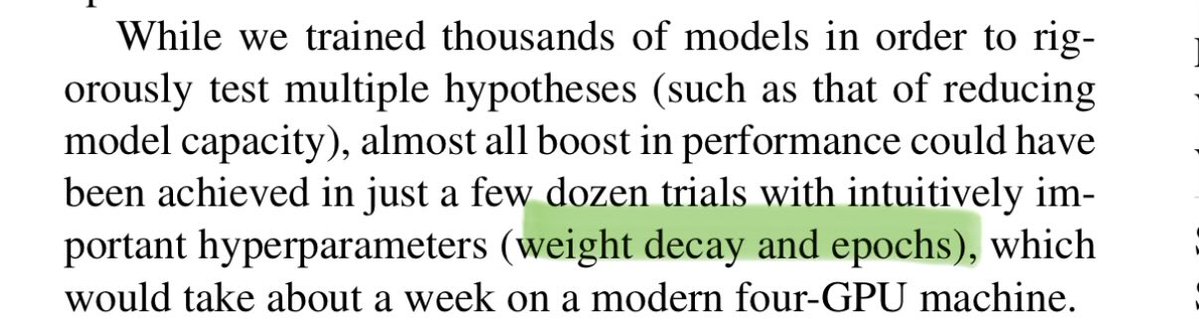
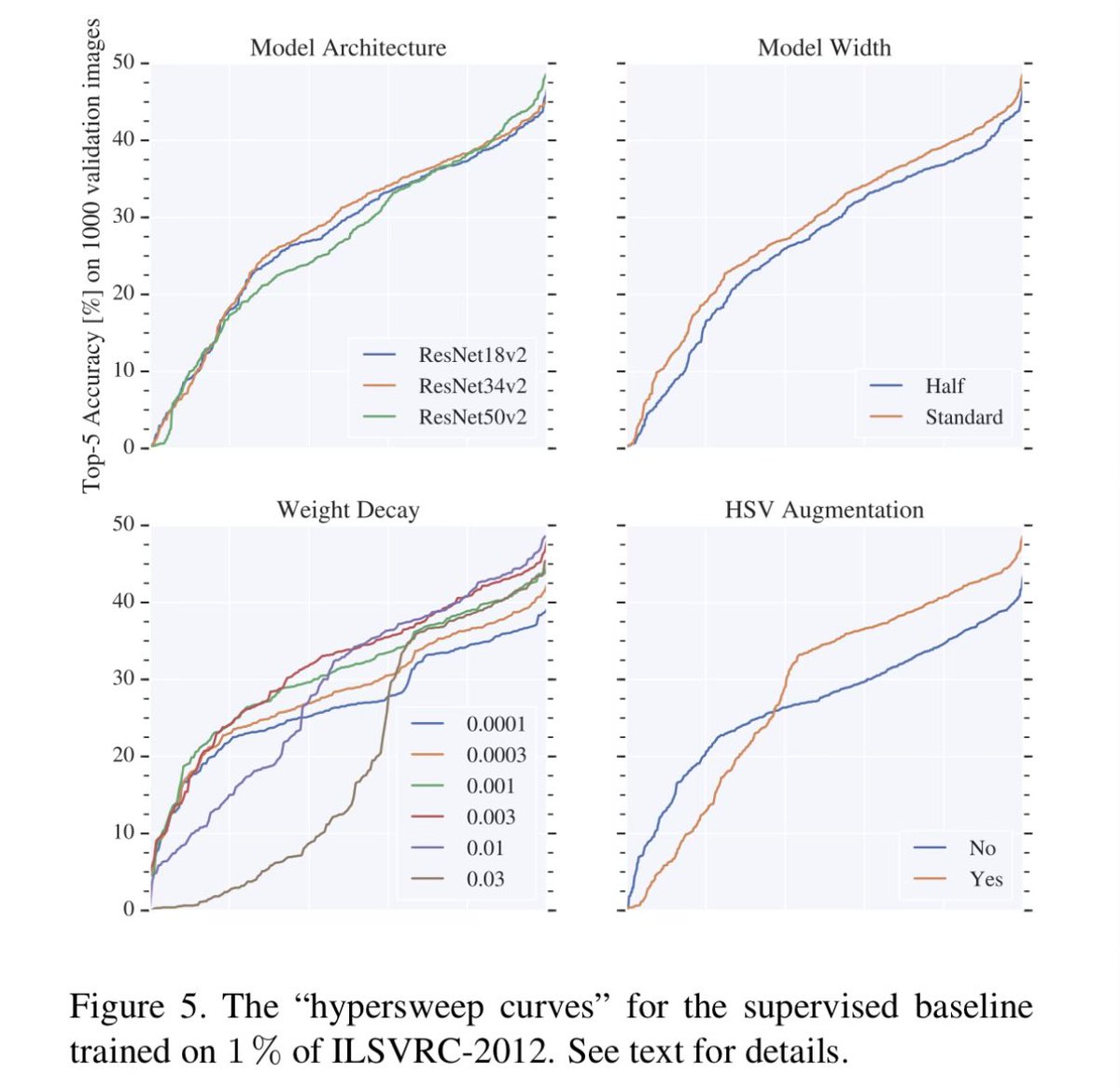


for people wondering how frontier labs can scale to hundreds of trillions of tokens: just crank weight decay ALL THE WAY UP and keep grinding on the same dataset, silly!
Lots of other details on distillation, ensembling, synthetic data too
No, tokens won't be a wall
7
3
71
4,269

Which billionaire is trashing the planet? My claim is based on the following:
Over the last 100 years (roughly 1925–2025), market-oriented economic systems—characterized by free markets, capitalism, globalization, trade liberalization, property rights, and entrepreneurship—have been the primary driver behind the largest reduction in extreme poverty in human history.
Exact global figures for the full century are estimates (reliable household survey data starts around 1981 from the World Bank), but historical reconstructions and post-1950/1980 trends show dramatic progress coinciding with the spread of market economies, industrialization, and reforms (especially in East Asia after the 1970s–80s).
Key Global Statistics
• Early 20th century baseline: In 1820, ~84–90% of the world’s population lived in extreme poverty (less than ~$2.15/day in modern PPP terms). By 1910–1950, this had declined to around 55–72%, with slower progress amid wars and pre-liberalization economies.
• Post-1950 acceleration: Around 1950, ~55–60% of the global population was in extreme poverty. Strong economic growth in market-reforming countries drove major gains.
• 1990–present (most rapid phase):
• ~1.9–2.3 billion people in extreme poverty in 1990.
• Down to ~650–800 million today (around 8–10% of world population), despite global population growing from ~5.3 billion to ~8 billion.
• This represents over 1 billion to 1.5 billion people lifted out of extreme poverty in roughly 35 years. On average, ~40–50 million per year in peak periods.
Over the broader 20th–21st century span, the net reduction is in the range of billions when accounting for population-adjusted escapes from poverty, with the bulk tied to market-driven growth.
Major Contributors (Market Reforms)
• China: ~680–800 million lifted since ~1981, after Deng Xiaoping’s market-oriented reforms (special economic zones, private enterprise, trade opening). Poverty rate fell from ~88% in 1981 to near 0%.
• India and East/South Asia: Significant gains from liberalization in the 1990s onward (hundreds of millions more).
• Broader developing world: Post-2000, another ~280 million outside China in earlier periods, driven by global trade, investment, and growth.
Economists often attribute this to economic freedom (property rights, low barriers to trade/enterprise, sound money), with indices from the Fraser Institute and Heritage Foundation showing strong correlations between higher freedom scores and faster poverty reduction, higher incomes (including for the poorest), and growth.
Important Context and Caveats
• Not purely “free markets” alone: Institutions, stable governance, education, health investments, and targeted policies played roles. Our World in Data notes that while markets and globalization were key, government revenues and transfers also helped. China’s success blended market incentives with state direction.
• Definition: Extreme poverty uses the World Bank’s International Poverty Line (~$2.15/day in 2017 PPP), a very low bar focused on basic survival needs. Higher lines (e.g., $6.85/day) show more persistent poverty.
• Recent slowdown: Progress stalled post-COVID, with ~700 million still in extreme poverty as of recent estimates. Conflicts, fragility, and uneven growth are challenges.
• Counter-views: Some critics argue pre-industrial poverty baselines are overstated or that gains reflect non-market factors (e.g., public health). However, the correlation with market liberalization periods is widely documented.
This represents unprecedented human progress: from near-universal extreme poverty centuries ago to most of humanity above it today, enabled by productive market economies generating wealth, innovation, and opportunity.
14


If the agreement had genuinely restored supply mechanics instantaneously, crude would have mathematically reverted to pre-war baselines.
It didn't.
The tape's refusal to collapse is the data. The market is pricing a prolonged logistical recovery — not a diplomatic switch.
4

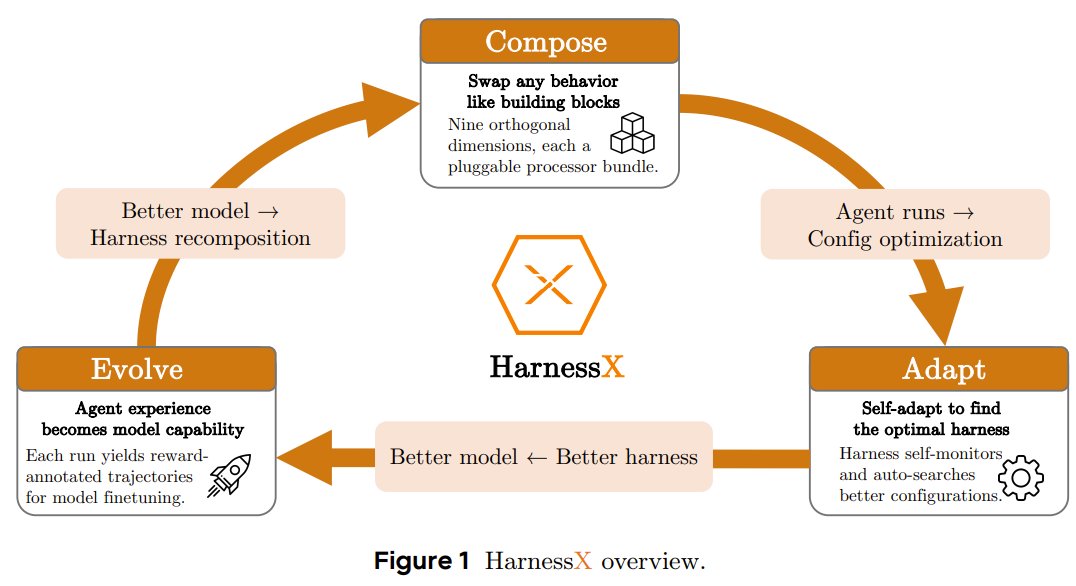
What if AI agents could redesign their own runtime on the fly?
Darwin Agent Team From Xiaomi introduces HarnessX, a foundry that lets agent harnesses—prompts, tools, memory, and control flow—compose, adapt, and evolve automatically.
Instead of hand-crafting scaffolding for each new model or task, HarnessX uses a trace-driven engine (AEGIS) to turn execution feedback into better prompts and training signals.
Across five benchmarks (ALFWorld, GAIA, WebShop, T3-Bench, SWE-bench Verified), HarnessX delivers an average 14.5% improvement (up to 44%), with biggest gains where baselines are lowest. The codebase will be open-sourced soon.
2
3
8
610


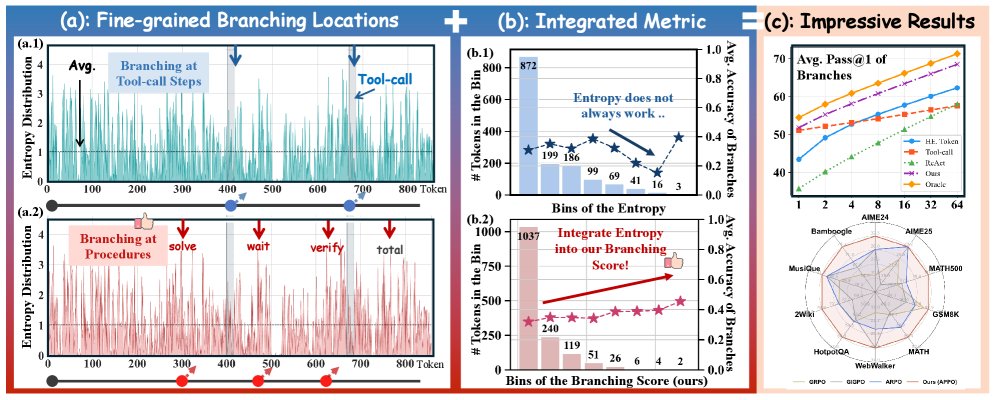
APPO redefines how agentic RL assigns credit
It branches at fine-grained procedural decision points
instead of coarse tool-call boundaries.
A new Branching Score finds where small choices
shape final outcomes.
Strong baselines gain nearly 4 points
across 13 benchmarks.
2
13
849


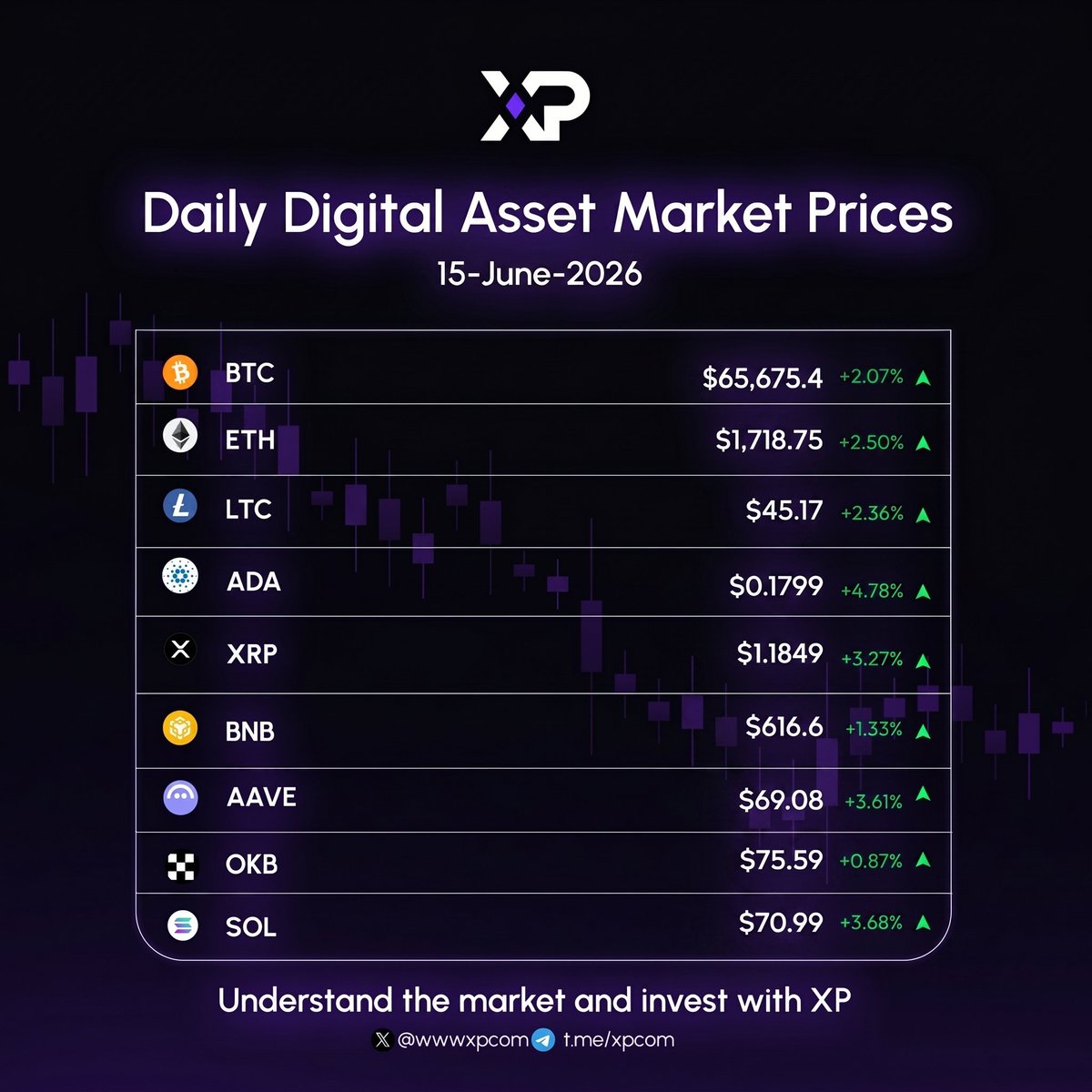
🔲 XP MARKET UPDATE 📊 June 15
➡️ Digital asset markets exhibit a robust and synchronized bullish expansion as comprehensive buying pressure elevates valuations across all major protocols.
➡️ Sustained capital inflows and positive market sentiment trigger broad-based relief, pushing global open interest higher as participants confidently deploy liquidity across both foundational assets and high-beta networks.
// Quick Take:
• cardano:native , solana:So11111111111111111111111111111111111111112 , & ethereum:0x7fc66500c84a76ad7e9c93437bfc5ac33e2ddae9 spearhead today's market rally with standout expansions of 4.78%, 3.68%, and 3.61% respectively. This aggressive outperformance underscores a renewed surge in risk appetite, specifically targeting high-throughput layer-one ecosystems and core decentralized finance primitives.
• bitcoin:native and ethereum:native fortify their structural baselines, posting solid gains of 2.07% to trade at $65,675.4 and 2.50% to reclaim $1,718.75. The premier assets efficiently absorb returning liquidity, establishing higher support thresholds and anchoring overall market confidence.
• ripple:native and litecoin:native capture significant upside momentum, advancing 3.27% and 2.36%. These legacy large caps are actively benefiting from broader market capital rotation, validating sustained retail and institutional interest across established utility networks.
• binancecoin:native and ethereum:0x75231f58b43240c9718dd58b4967c5114342a86c chart a calculated upward trajectory, adding 1.33% and 0.87%. The exchange-native utility assets maintain steady accumulation patterns as ecosystem participation and overall market trading volumes scale upward.
Understand the market and invest with XP now. 👏🏻
#XPInsight #MarketSignals #CryptoData #Web3 #TradePlan
2
5
49

🎯⚙️ MONDAY READINESS | Baseline Integrity Check
P-OPS Team — Validator Operations
☕ Good Morning Operators,
Every stable week begins with a simple question:
How accurate is your understanding of current conditions?
Infrastructure decisions are only as good as the baseline data behind them.
🧠 Before tuning systems,
before scaling workloads,
before responding to alerts,
operators must first verify that the environment being observed matches reality.
🧭 Focus: validating operational baselines before the week begins
Across supported networks this morning:
📡 Peer connectivity → stable with healthy network visibility
⚙️ Validator services → consensus participation operating normally
💾 Storage systems → response times remaining consistent
🧠 Memory utilisation → balanced without abnormal allocation growth
📊 Monitoring telemetry → complete across critical infrastructure paths
🔄 Synchronisation processes → aligned with expected network state
Conditions remain healthy.
The objective now is confirming that healthy conditions are being measured correctly.
🔎 Areas receiving additional attention
📈 Performance metrics drifting from historical baselines
📡 Peer populations changing without obvious operational cause
⚙️ Service behaviour differing from long-term patterns
💾 Storage latency gradually increasing despite normal utilisation
🧩 Monitoring gaps reducing operational visibility
🔄 Background processes introducing hidden workload overhead
None of these necessarily indicate a problem.
They indicate a baseline worth validating.
🧪 Monday verification set
𝚞𝚙𝚝𝚒𝚖𝚎
𝚏𝚛𝚎𝚎 -𝚑
𝚟𝚖𝚜𝚝𝚊𝚝 1 5
𝚒𝚘𝚜𝚝𝚊𝚝 -𝚡 1 5
𝚓𝚘𝚞𝚛𝚗𝚊𝚕𝚌𝚝𝚕 -𝚙 3 -𝚡𝚋
𝚌𝚞𝚛𝚕 -𝚜 𝚕𝚘𝚌𝚊𝚕𝚑𝚘𝚜𝚝:𝟸𝟼𝟼𝟻𝟽/𝚜𝚝𝚊𝚝𝚞𝚜
🎯 Why this matters
Infrastructure resilience is not created during incidents.
It is created beforehand through accurate observation.
When operators understand normal behaviour, abnormal behaviour becomes easier to identify.
Monday Readiness exists to verify that the baseline itself remains trustworthy.
Because reliable operations begin with reliable visibility.
☎️ Stay Connected with P-OPS Team:
🌎 Website: pops.one
🌳 Linktree: linktr.ee/p_opsteam
🐥 Twitter: x.com/popsteam1
↗️ Telegram: t.me/POPS_Team_Validator
👾 Discord: discord.gg/jJ8aaMwPwa
#MONDAYREADINESS #ValidatorOps #PopsTeam #NodeOperations #DevOps #CryptoInfrastructure #Web3Infrastructure #SystemReliability #InfrastructureEngineering #StakingOperations

3
6
32

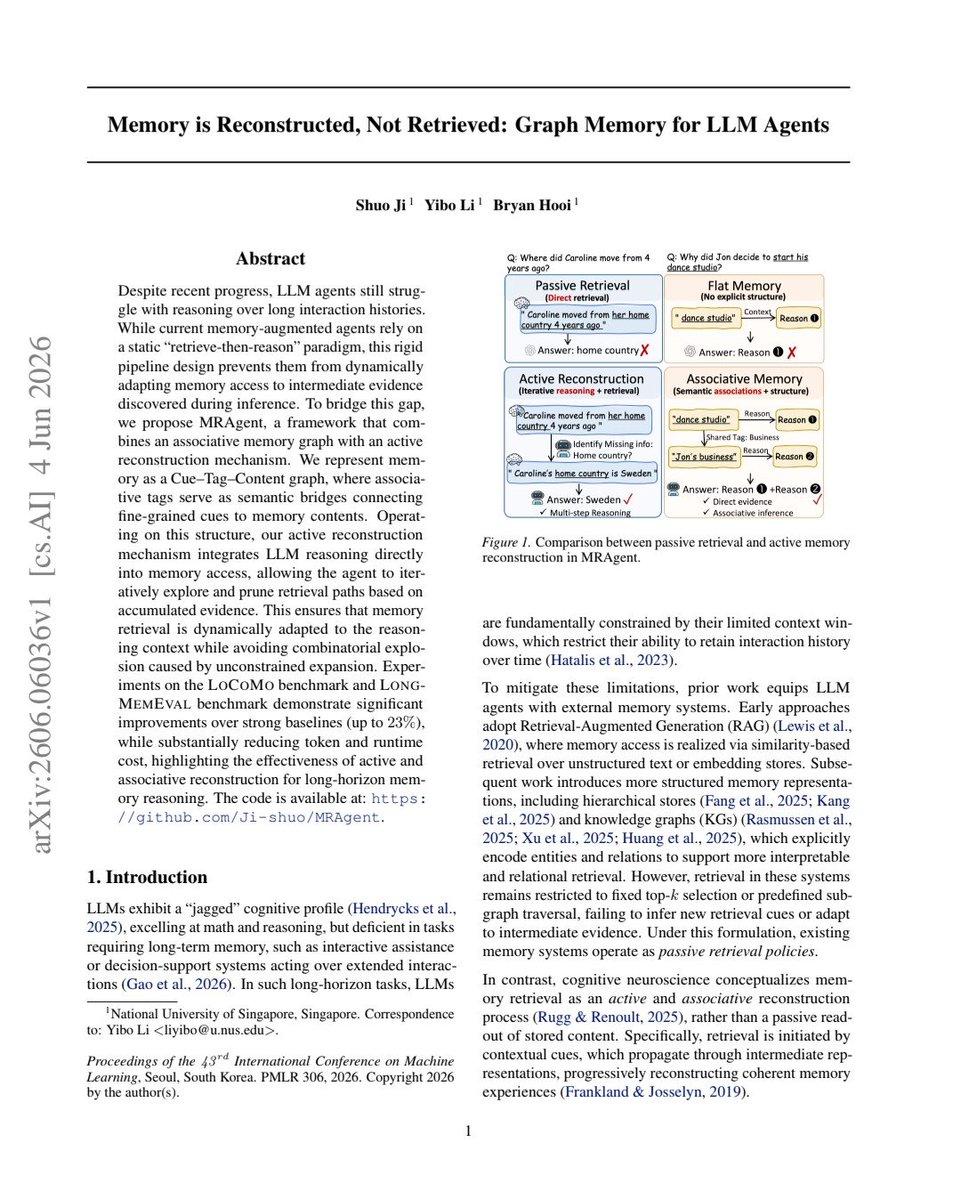
🚨BREAKING: Researchers just proved that every AI memory system has been built on a false assumption about how memory actually works.
Memory isn't retrieved. It's reconstructed.
This isn't a new finding in neuroscience. It's been understood for decades. When humans remember something, we don't play back a recording. We reconstruct the memory from fragments — using context, surrounding information, and active reasoning to rebuild what we experienced.
Every AI memory system ever built ignores this completely.
Current memory-augmented agents all work the same way. Store memories. Search for relevant ones. Retrieve them. Pass them to the LLM. Done. The retrieval happens before the reasoning. Once memories are retrieved, they're fixed. If the reasoning process discovers new context that changes which memories are relevant — too bad. The retrieval already happened.
That's not how memory works. In humans or in any intelligent system that reasons well over long time horizons.
MRAgent from the National University of Singapore is the first AI memory framework built on the correct model.
Here's the core insight.
Instead of retrieving memories and then reasoning, MRAgent reasons and retrieves simultaneously — interleaving them in a loop. As reasoning produces intermediate evidence, that evidence actively shapes which memories get accessed next.
You find one clue. The clue changes what you look for next. You find another clue. That changes your search again. You prune paths that turned out to be dead ends. You expand paths that keep yielding relevant information. Memory access adapts to the reasoning context in real time.
Here's the structure that makes this work.
Memories are stored in a Cue-Tag-Content graph. Not a flat list. Not a vector database. A graph where associative tags serve as semantic bridges — connecting high-level cues to detailed memory contents through multiple intermediate nodes.
When MRAgent needs to remember something, it doesn't search the whole graph. It starts from the most relevant cue, follows associative tags based on what its reasoning has found so far, prunes branches that aren't yielding useful connections, and expands branches that are. It explores the graph iteratively — the way a detective follows leads rather than the way a search engine matches keywords.
Here's the number that defines the result.
Up to 23% improvement over strong baselines on long-horizon memory benchmarks — LoCoMo and LongMemEval. The tasks that require reasoning across hundreds of past interactions. The tasks that break every existing memory system.
And it costs less. Fewer tokens. Less runtime. Because active pruning eliminates the combinatorial explosion that occurs when you try to retrieve everything that might be relevant before you know what's actually relevant.
Better memory reasoning. Lower computational cost. From building memory the way biology built it.
Here's the part most people will miss.
Every AI agent memory system deployed today — MemPalace, mem0, Zep, Letta, custom RAG pipelines — uses the retrieve-then-reason pattern. Fixed retrieval. Static context. No adaptation during reasoning.
MRAgent proves that pattern has a ceiling. And the ceiling is significantly below human-level long-horizon memory reasoning.
The fix isn't more memory. It's smarter memory access.
23 GitHub stars. Code available now. From NUS. #1 paper on Hugging Face today — June 15.
100% Open Source.
5
6
10
213


A hugely important and much needed initiative. We don’t even know what our baselines are!
@TIFRScience

AROHAN: a multi-site, ICMR-supported initiative
Establish rigorous normative data on growth, body composition, & metabolic health among Indian children & adolescents across diverse regions & socio-economic contexts
@ICMRDELHI
@TIFRScience
@DAEIndia
@PMOIndia
@TIFRH_buzz
1
140