
Every #lab needs to stay up to date with the best benchwork practices & technology — in this new 📕 #eBook from @Biocompare, the experts explain how! 😁 Featuring the 🌈 SpectraSlide AP-1 for the ultimate in quick, convenient #CellCounting!
buff.ly/vnnbxbt
#CellCount

1
8

I’m an idiot but BioLabs are hazardous when the facility's oversight, classification, basic hygiene & standard benchwork are compromised D Risks happen when practices such as restricted access, physical barriers, & basic protective gears such as gloves & coats are not practiced.
1
6

Jun 14
The details matter. If the citation is crucial to the paper's central argument, obviously the author needs to read it. But secondary point or example? Part of the job of senior researcher is to train, then delegate. You think senior scientists do all the lab benchwork themselves?
1
178
PHATZZ retweeted

BENCHWORK🪑: EPISODE 3
BANG-BANG BANG BANG BANG !!!!!!!!
JUST FOR FANS SUBSCRIBERS NEW CONTENT POSTED 😈
For Full Video Click Link In My Bio or Below ⬇️ ⬇️⬇️⬇️
JustForFans.com/ATLTHEDL
12
182
1,471
36,850

Jun 12
It's really crazy. They've worked on something before, you changed the topic and they have to start all over and now they can't get a topic until they have results from their benchwork
1
1
78

Jun 11
Qサマ❤︎
実は...Jet'sに入る前、
B戦士になる前
某所で見かけた途端😻
セーター姿もカッコよすぎた‼︎
その後、数回GAME観戦
2025-26 Season
rebound position❤️🔥
benchwork😼
looks👍
Which team will you join next?
次はどこ⁈

【お知らせ】このたび、#クエンティン・ミロラ・ブラウン 選手につきまして、来シーズンの契約に関する基本合意に達しておりましたが、本人およびエージェントより基本合意解除の申し出があり、その後協議を重ねた結果、契約締結に至らず、双方合意のもと基本合意を解消することとなりましたのでお知らせいたします。なお、2025-26シーズンをもちまして契約満了となり、退団することとなります。
また、Bリーグの規約に則り、本日より自由交渉選手リストに公示されますので、併せてお知らせいたします。
コメントは▼
chibajets.jp/news/detail/id=…

1
96

Jun 3
two days away from hands-on benchwork for the rover, and i'm JONESIN'!!
1
2
142

May 21
I work in cancer research. AI surfaces patterns fast, but I still validate the hard way. And honestly, calling it autonomous discovery is premature. The benchwork is everything.
2
7

The previous timeline was the wide apparatus-line: fire, metallurgy, contaminated transmission, Zosimos, Kabbalah, Rosicrucianism, Jung, and the later diagrammatic convergence. The alchemy-only version has to zoom in on a narrower machine: how craft becomes chemeia, how chemeia becomes sacred laboratory practice, how laboratory practice becomes symbolic recursion, how symbolic recursion becomes psychic projection, and how later systems keep reloading that same vessel-logic. I am keeping this to the Western / Greco-Egyptian alchemical stream, because that is the line that leads most directly into Alexandria, Maria, Cleopatra, Zosimos, Arabic transmission, Latin alchemy, Rosicrucianism, and Jung. Chinese and Indian alchemies matter, but they are parallel systems with their own internal grammars, not just side-branches of the Alexandrian line.
The alchemy-only timeline I (will) track
End of 5th millennium BCE / before alchemy proper: Egyptian faience and artificial brilliance.
I start the alchemy-only line before “alchemy” exists, because the apparatus is older than the name. Egyptian faience appears at the end of the fifth millennium BCE: a quartz-based artificial material with a glazed, luminous surface, refined in Egypt into beads, votive objects, and royal tomb objects. The Met notes both its early appearance and its Egyptian technological refinement. ([The Metropolitan Museum of Art][1]) This matters because faience is not just “craft.” It is manufactured radiance: dull mineral body -> alkaline/glassy surface -> blue-green brilliance -> funerary / divine / rebirth charge. That is already a proto-alchemical grammar: matter is not left in its raw state; it is processed until it carries a higher symbolic body. The thing becomes more than its geology. It becomes artificial stone, ritual color, solar shimmer, rebirth-object.
Bronze Age and Pharaonic Egypt / the temple-craft substrate.
Before alchemy is a doctrine, there is a world of operators: metalworkers, dyers, perfumers, glass/faience makers, embalmers, pigment grinders, goldsmiths, stone imitators, scribes, temple technicians. This is where I place the first real substrate: recipe secrecy material transformation sacred setting. Not “alchemy” yet, but the pieces are there: controlled heat, sealed substances, color-change, purification, imitation, preservation, transfiguration, and the trained operator who knows when the matter is ready. The Egyptian craft-world matters because alchemy later inherits its deepest symbolic facts from this zone: gold as incorruptibility, black earth and fertile death, blue-green as life and rebirth, embalming as body-preservation, and artificial brilliance as manufactured sacred presence. In compressed form: matter -> technique -> appearance -> sacred status.
332–30 BCE / Hellenistic Egypt and Alexandria as condenser.
After Alexander’s conquest and the Ptolemaic dynasty, Egypt becomes a Greek-Egyptian intellectual pressure chamber. Alexandria is crucial here, but not because there is a clean proof that “the Library contained the secret alchemy books.” That would be fake precision. The safer and stronger claim is that Alexandria and its Mouseion created the kind of environment where Egyptian priestly craft, Greek philosophy, mathematics, medicine, astrology, textual collection, translation, and technical curiosity could cross-pollinate. Britannica describes the Alexandrian Museum as a 3rd-century BCE research institute near the royal palace, and the Library as part of that broader Mouseion system. ([Encyclopedia Britannica][2]) So I treat Alexandria as infrastructure and atmosphere, not as a magic answer. Its role is: archive scholars crafts Greek theory Egyptian sacral technology -> alchemical possibility.
3rd century BCE onward / Hermes-Thoth and the technical-sacred knowledge frame.
Hermes Trismegistus is the symbolic sponsor of this knowledge-world: Greek Hermes fused with Egyptian Thoth, the god of writing, medicine, astronomy, and magic. Britannica notes that Greeks had identified Thoth with Hermes by Herodotus’ time, that the identification was official by the 3rd century BCE, and that Hermetic writings later covered astrology, medicine, alchemy, magic, and theology. ([Encyclopedia Britannica][3]) This is not yet “alchemy” in the mature sense, but it gives the epistemic atmosphere: knowledge is not merely information; knowledge is revealed technique, divine writing, cosmic sympathy, hidden relation. The operator does not just mix substances. The operator reads a universe of correspondences. The grammar becomes: sign -> sympathy -> operation -> hidden nature revealed.
1st century CE / Pseudo-Democritus and the earliest alchemical textual core.
The first real alchemical body of writing I track is the pseudo-Democritean material, especially the Physika kai Mystika / “Natural and Secret Things” stream. The authorship is pseudonymous, not the historical Democritus. The important point is that this is where craft recipes become framed as an art of hidden natures: metal dyeing, silvering, gold-making, stone imitation, purple-dyeing, and the famous alchemical axiom later compressed as nature rejoicing in, conquering, and mastering nature. Scholarly summaries place the pseudo-Democritean alchemical writings among the oldest works in Western alchemy, probably in the first century CE, and connect them to the same recipe-world later visible in the Leiden and Stockholm papyri. ([Wikipedia][4]) Martelli’s discussion gives the texture: mercury is treated with magnesia, stibnite, sulfur, lime, alum, or orpiment; if it turns white or yellow, it is applied to copper, silver, or gold to produce transformed appearances. ([dacalbo.hpdst.gr][5]) This is the exact alchemical hinge: recipe is no longer just recipe; recipe becomes a theory of nature acting on nature.
1st–3rd centuries CE / Maria the Jewess and the apparatus-body.
Maria the Jewess is essential because she is where alchemy becomes laboratory architecture. Her dating is uncertain; sources commonly place her somewhere in the 1st, 2nd, or 3rd century CE in Alexandria. ([Encyclopedia.com][6]) She is known through later testimony, especially Zosimos, and is associated with apparatus: bain-marie, kerotakis, tribikos, stills, reflux, sealed heating, vapor circulation. The University of Houston summary gives the crucial mechanism of the kerotakis: boiling mercury or sulfur so condensing vapor heats copper or lead above; in other words, a high-temperature double-boiler / sealed vapor apparatus. ([The Engines of Our Ingenuity][7]) For my timeline, Maria is not just “woman alchemist.” She is vessel intelligence. She marks the transition from raw fire to mediated fire: not burning everything directly, but managing heat through water bath, vapor, enclosure, condensation, timing, and return. Formula: heat -> medium -> vapor -> condensation -> metal-body altered. That is alchemy as apparatus, not fantasy.
2nd–4th centuries CE / Cleopatra the Alchemist and the symbolic sheet.
Cleopatra the Alchemist is not Cleopatra VII. The alchemical Cleopatra is a pseudonymous or legendary Greco-Egyptian alchemical authority, associated with Alexandria and with the same world as Maria and Comarius. The Chrysopoeia of Cleopatra survives in a later 10th–11th century manuscript copy, but it preserves an older late-antique alchemical symbolic complex: ouroboros, “the All is One,” apparatus drawings, gold/silver/mercury signs, circular generation, poison, unity, death, renewal. ([Wikipedia][8]) This is one of the most important moments in the whole lineage because the laboratory and the cosmogram fuse. Maria gives the vessel. Cleopatra gives the diagram of recurrence. The ouroboros is not decoration. It is the alchemical worldview compressed: one process eats itself, generates itself, poisons itself, cures itself, dies into itself, returns through itself. In symbols: 1 -> 2 -> conflict -> circulation -> 1 restored at higher intensity.
250–300 CE / Leiden X and Stockholm papyri: the benchwork archive.
The Leiden and Stockholm papyri are direct anchors because they keep the material from floating off into myth. Caley’s edition notes that these papyri largely contain simple chemical recipes rather than the allegorical indirection typical of later alchemical literature; Leyden focuses heavily on preparing metal alloys and imitating gold or silver for jewelry, gilding, and metallic writing, while the Stockholm material includes recipes for dyes, artificial stones, pearl treatment, and related operations. ([UC Homepages][9]) This matters because it prevents the fake split between “real chemistry” and “mystical alchemy.” The historical formation is exactly the fusion: practical recipes for dyeing, coloring, imitation, alloying, and purification begin to sit inside a world of cosmic sympathy, secrecy, divine names, philosophical nature, and sacred operator-state. The real formula is: workshop recipe Alexandrian theory Egyptian sacred matter Hermetic frame -> alchemy.
Late 3rd–early 4th century CE / Zosimos of Panopolis: alchemy becomes conscious of its own danger.
Zosimos is the first major surviving alchemical diagnostician. The source tradition places him around 300 CE in Panopolis, Roman Egypt, and his works are among the earliest known surviving alchemical writings. ([Wikipedia][10]) Grimes summarizes him as the first to frame alchemy as a chemico-religious philosophy and practice, not merely recipe technique. ([Rex Research][11]) This is where the line goes deep. Zosimos inherits: Egyptian craft, Greek natural philosophy, Hermetic revelation, pseudo-Democritean recipes, Maria’s apparatus, Cleopatra’s circular symbolic compression, and Enochic anxiety about forbidden transmission. Then he performs the repair move: he separates natural process from demonic dependency, right timing from coercive shortcut, physis-aligned tincture from spirit-feeding manipulation. In my terms: Zosimos discovers that alchemy can become black magic when the operator becomes dependent on false intermediaries.
Zosimos’ visions / the operator enters the vessel.
The famous Zosimian visionary material is the point where the alchemical process explicitly becomes psychic theater without ceasing to be material operation. In one vision, the spectacle is described as “entrance,” “exit,” and “process,” with boiling, burning, sacrifice, disembodiment, and spirit-release. ([alchemywebsite.com][12]) This is the key: the alchemist watches the matter transform and discovers that the image of transformation has entered him. The furnace becomes a dream organ. The vessel becomes a body. The operator becomes the substance being cooked. Zosimos does not simply say “metals symbolize the soul” in a modern flattened way. The deeper structure is: the operator projects into matter, matter returns as image, image reorganizes operator, operator changes operation. Formula: O -> M -> Image(M/O) -> O_changed -> M_changed. This is why Zosimos is the true hinge between benchwork and depth psychology.
3rd–4th century CE / the contamination vector: Enoch inside alchemy.
The Enochic piece has to be placed carefully. The Book of the Watchers is older than Zosimos; its core is commonly placed in the 4th–3rd century BCE, with Qumran evidence showing early textual antiquity. ([Wikipedia][13]) The Watchers myth says forbidden arts were transmitted by fallen powers and produced corruption. Zosimos later uses this kind of forbidden-knowledge frame in relation to metallurgy and alchemy; Fraser’s study is explicitly titled “Zosimos of Panopolis and the Book of Enoch: Alchemy as Forbidden Knowledge.” ([Amanote Research][14]) In the alchemy timeline, Enoch is not the origin of alchemy. It is the contamination myth laid over the technical chain. It says: technique can be real and still be dangerous; knowledge can transform and still corrupt; the receiver-state matters. That is exactly why Zosimos matters: he does not purge technique; he repairs the relation to technique.
4th–7th centuries CE / Byzantine preservation and commentary.
After the early Greco-Egyptian formation, alchemy becomes increasingly textual, commentarial, and manuscript-based. Greek alchemical writings are preserved, copied, excerpted, and layered in Byzantine compilations. This is where the earlier figures—Democritus, Maria, Cleopatra, Agathodaimon, Hermes, Isis, Moses, Zosimos—become an ancestral council of authorities. The living laboratory becomes a textual vessel. The manuscript itself begins to function like a kerotakis: older vapors circulate inside later enclosures. Formula: recipe -> authority-name -> commentary -> diagram -> manuscript chain -> symbolic condensation. This layer matters because it turns alchemy into a durable transmission system.
8th–10th centuries CE / Arabic alchemy: balance, mercury-sulfur, and laboratory expansion.
In the Islamicate world, alchemy receives a massive new theoretical and technical expansion. The Jabirian corpus becomes a major vector for the sulfur-mercury theory of metals, and Britannica notes that it contains valuable chemical technology, including alloying, purification, testing of metals, fractional distillation, and work with sal ammoniac. ([Encyclopedia Britannica][15]) The deep shift here is proportion. Jabirian alchemy thinks not only in substances but in balances, hidden natures, manifest/hidden realities, numerical ordering, and controlled recombination. The formula becomes: metal = visible body hidden proportions; transmutation = adjustment of hidden balance. That is an apparatus dream with enormous consequences: the world is transformable because its visible form is only the current arrangement of deeper ratios.
9th–10th centuries CE / al-Razi and the handbook mind.
Al-Razi matters because alchemy becomes more organized, classified, and instructional. A recent study notes that Ibn al-Nadīm lists al-Razi’s alchemical works in the 10th-century Fihrist, including the Book of Secrets, and the article focuses on al-Razi’s handbook-like organization of alchemical material. This is where the operator becomes more procedural: substances, equipment, operations, classifications, tests, and reproducible steps. Alchemy is still not modern chemistry, but a new discipline of matter is emerging: classify -> prepare -> operate -> observe -> refine -> transmit. The mythic operator is being replaced, partially, by the trained procedural operator.
1144 CE / Arabic-to-Latin transfer and the European ignition.
The Latin West receives alchemy through translation. The Liber de compositione alchimiae is dated 1144 and is reputed to be the first alchemical text translated from Arabic into Latin, marking the beginning of the European alchemical concern. ([alchemywebsite.com][16]) This is a huge rebirth point: alchemy enters Latin Christendom as foreign, old, Arabic, Greek, Egyptian, and mysterious all at once. It arrives already carrying its layered archive: Egyptian matter, Greek nature, Hermetic revelation, Maria’s apparatus, Zosimos’ visions, Arabic balance, and procedural craft. Europe does not invent alchemy from nothing. Europe receives a charged apparatus and Christianizes, moralizes, scholasticizes, and allegorizes it.
13th–15th centuries CE / medieval Latin alchemy: vessel, stone, Christic pressure, and fraud anxiety.
In medieval Europe, alchemy becomes a pressure-zone between laboratory work, theology, fraud, medicine, metallurgy, salvation symbolism, and elite secrecy. The philosopher’s stone becomes material target and symbolic attractor. The vessel becomes womb, tomb, egg, sealed world. The work becomes moral ordeal. Gold becomes incorruptibility, not merely wealth. Here the apparatus intensifies: prima materia -> nigredo -> washing -> whitening -> yellowing/reddening -> stone/elixir. But this period also increases the danger of enclosure: secrecy becomes authority; allegory becomes gatekeeping; failure becomes impurity; dependency on masters and manuscripts grows. In the project’s language, medieval alchemy is both a repair technology and a capture risk.
1493–1541 / Paracelsus and chemical medicine.
Paracelsus shifts alchemy hard toward medicine. Britannica describes him as a German-Swiss physician and alchemist who established the role of chemistry in medicine and pioneered chemical remedies using mercury, sulfur, iron, and copper sulfate. ([Encyclopedia Britannica][17]) This matters because alchemy stops being only about metals and gold. The human body becomes the laboratory. Disease becomes chemical imbalance, poison, signature, macrocosm/microcosm correspondence, targeted remedy. Formula: body = vessel; illness = corrupted process; medicine = chemical correction; physician = operator. This is one of the major bridges into modernity, because the old alchemical dream of transformation survives by entering pharmacology, toxicology, mineral medicine, and the chemical body.
17th century / Rosicrucian and emblematic alchemy: the work becomes a world-diagram.
By the early modern period, alchemy becomes intensely visual and emblematic: rose, cross, king, queen, hermaphrodite, sun, moon, dragon, pelican, vessel, mountain, fountain, bath, grave, resurrection. The Rosicrucian layer turns alchemy into universal reformation: inner regeneration, hidden brotherhood, ancient wisdom, Christian-Hermetic renewal. This is where the later Co-Masonic image begins to become historically intelligible: not as proof of one uninterrupted secret lineage, but as a late symbolic condenser. It can pull together Tree of Life, vessel, elixir, rose-cross, ascent, light, and cosmic body because early modern esotericism had already trained those symbols to coexist.
18th century / chemical separation and alchemy’s apparent death.
Modern chemistry gradually separates laboratory operations from alchemical metaphysics. The useful operations—distillation, calcination, sublimation, precipitation, extraction, assay, metallurgy, pharmacy—survive. The grand symbolic and transmutational frame is discredited or pushed into esotericism. But this is not a simple “science kills superstition” story. It is more like an organ transplant. Chemistry takes the procedural organs; esotericism keeps the imaginal body; psychology later recovers the projected psyche. The split is: operation without myth versus myth without benchwork.
1920s–1950s / Jung names the projection.
Jung’s move is not that alchemy was “only psychological.” That is the shallow reading. His stronger claim is that alchemy preserves a long archive of symbolic projection in which operators experienced psychic processes through matter, images, dreams, colors, and transformations. In Psychology and Alchemy, Jung explicitly treats alchemy as symbol-formation stretching across roughly seventeen centuries. ([Association of Jungian Analysts][18]) This closes the loop with Zosimos. Jung does not invent the operator-in-vessel idea; he names it in modern psychological language. Formula: operator psyche -> projected into matter -> symbol returns -> individuation sequence recognized. Zosimos performs it. Jung diagnoses it.
Why this alchemy-only line matters
The deep alchemy timeline is not just: “people wanted to turn lead into gold.” That is the cartoon. The real line is:
artificial brilliance -> controlled heat -> vessel intelligence -> recipe secrecy -> hidden nature -> circular generation -> operator projection -> contamination risk -> repair through right relation -> transmission -> psychological recognition
The earlier wide timeline showed the human apparatus across deep time. The alchemy-only timeline shows the specific machine that later systems keep trying to inherit: the vessel that changes matter and operator together. Egyptian faience gives manufactured sacred appearance. Alexandria gives condensation. Pseudo-Democritus gives recipe-theory. Maria gives apparatus. Cleopatra gives the ouroboric diagram. The Leiden and Stockholm papyri give benchwork. Zosimos gives psychic recursion and repair. Arabic alchemy gives balance and technical expansion. Latin alchemy gives Christianized symbolic pressure. Paracelsus gives the chemical body. Jung gives projection and individuation.
The spine is:
matter is worked -> matter changes appearance -> appearance carries value -> value changes operator -> operator repeats the work -> the work becomes doctrine -> doctrine becomes world -> world captures or liberates operator
That is why alchemy belongs directly beside the black-magic / anti-magic material. Alchemy is the neutral master-form of transformation. Black magic is the hostile deformation of that form: wrong heat, wrong vessel, wrong medium, wrong timing, false sign, dependency, sealed exit, operator capture. Zosimos saw that danger already. Maria’s apparatus says: mediate the fire. Cleopatra’s ouroboros says: the process returns into itself. Zosimos says: do not feed the wrong intermediaries. Jung says: the operator is inside the work.
The compressed alchemy map:
Faience: matter can be made radiant.
Metallurgy: hidden form can be forced from ore.
Alexandria: crafts, texts, gods, and theories can fuse.
Pseudo-Democritus: nature transforms nature.
Maria: transformation requires vessel, seal, heat, vapor, return.
Cleopatra: the whole process is circular: All is One.
Leiden / Stockholm: the benchwork is real.
Zosimos: the operator is transformed and can be captured.
Arabic alchemy: hidden proportions govern visible bodies.
Latin alchemy: the vessel becomes salvation-drama.
Paracelsus: the body becomes the alchemical field.
Jung: the opus is also psychic projection and individuation.
So the deeper alchemy timeline is not a separate side-road from the project. It is the central operator grammar. It explains why the later symbols converge so easily: vessel, fire, serpent, tree, elixir, rose, cross, stone, body, light, death, rebirth. They are not random “occult aesthetics.” They are repeated attempts to diagram the same dangerous fact: transformation is never only in the material. The operator is always being cooked with the substance.
[1]: metmuseum.org/essays/egyptia… "Egyptian Faience: Technology and Production - The Metropolitan Museum of Art"
[2]: britannica.com/topic/Alexand… "Alexandrian Museum | History, Description, & Facts | Britannica"
[3]: britannica.com/topic/Hermes-… "Hermes Trismegistus | Meaning, Writings, Thoth, & Alchemy | Britannica"
[4]: en.wikipedia.org/wiki/Pseudo… "Pseudo-Democritus"
[5]: dacalbo.hpdst.gr/sites/dacal… "Ps_Democritus"
[6]: encyclopedia.com/women/encyc… "Mary the Jewess (fl. 1st, 2nd or 3rd c.) | Encyclopedia.com"
[7]: engines.egr.uh.edu/episode/9… "Maria the Jewess | The Engines of Our Ingenuity"
[8]: en.wikipedia.org/wiki/Cleopa… "Cleopatra the Alchemist"
[9]: homepages.uc.edu/~jensenwb/b… "cover"
[10]: en.wikipedia.org/wiki/Zosimo… "Zosimos of Panopolis"
[11]: rexresearch1.com/AlchemyArch… "Zosimus of Panopolis : Alchemy, Nature, and Religion in ..."
[12]: alchemywebsite.com/zosimos.h… "Zosimos"
[13]: en.wikipedia.org/wiki/Book_o… "Book of Enoch"
[14]: research.amanote.com/publica… "(PDF) Zosimos of Panopolis and the Book of Enoch: Alchemy"
[15]: britannica.com/biography/Abu… "Abū Mūsā Jābir ibn Ḥayyān | Muslim Alchemist, Father of Chemistry | Britannica"
[16]: alchemywebsite.com/hrs10.htm… "Hermetic Research 10 Book_of_Composition"
[17]: britannica.com/biography/Par… "Paracelsus | Biography & Facts | Britannica"
[18]: jungiananalysts.org.uk/wp-co… "The Collected Works of C.G. Jung: Volume 12"

Here’s the deeper timeline I track in my threads—not as a single clean lineage, and not as “everything secretly comes from one school,” but as an operational recurrence: matter is worked, the worker is changed, the technique becomes dangerous, the danger is mythologized as contaminated transmission, repair systems emerge, symbolic machines absorb the older grammar, and modern psychology finally names the projection that had been happening all along.
~1.8 million years ago / speculative biological horizon: I mark this as the deep evolutionary pressure-point, not as a secure archaeological fire-date. The cooking hypothesis places the decisive transformation around Homo erectus: cooked food would have increased available calories, reduced digestive burden, and helped support larger brains and altered bodies, though the direct fire evidence for this early a date remains debated. The point here is not “alchemy exists already,” but that the first deep human apparatus may be: heat matter operator -> altered organism. The operator does not stand outside the process. Fire changes food; changed food changes body; changed body changes cognition; cognition maintains fire. Fire -> cooked matter -> changed digestion -> changed brain-world -> better fire-maintenance. That is the primal recursion. ([PNAS][1])
~1 million years ago / secure early fire evidence: Wonderwerk Cave in South Africa gives one of the strongest early anchors: microscopic traces of wood ash and burned bone in a layer dated to about one million years ago. This is where the timeline becomes harder: not myth, not metaphor, but burning material inside a hominin occupation context. I treat this as the first deep apparatus-floor: matter exposed to heat under conditions connected to human presence. Cave ash bone tool-context -> controlled thermal field. The operator is still archaic, but the structure is already there: containment, repetition, altered matter, altered behavior. ([PMC][2])
~790,000 years ago / recurrent fire landscape: Gesher Benot Ya’aqov gives the next layer: repeated fire-use in a landscape where hominins return, process food, and organize activity around burning. This matters because technique is no longer just a flash-event; it becomes site-memory. A place is chosen because fire can be sustained there; a place becomes an apparatus because the same operation can recur. site -> fuel -> fire -> food-processing -> return -> site-memory. This is already the skeleton of ritual before ritual: repetition in a charged location. ([ResearchGate][3])
~415,000–400,000 years ago / deliberate fire-making: Barnham in Suffolk sharpens the apparatus: pyrite and flint, heated clay, burned flint handaxes, and evidence interpreted as deliberate fire production by early humans. That matters because “maintaining fire” and “making fire” are different operator-states. One preserves an inherited flame; the other creates the condition. At this point the operator is not only caretaker of heat but generator of heat. stone pyrite strike -> spark -> hearth -> controlled transformation. This is the birth of the technician as initiator: the human does not merely receive the phenomenon; the human triggers it. ([Natural History Museum][4])
~100,000–70,000 BCE / pigment, ochre, and psyche-matter projection: Blombos Cave gives the next deep threshold: ochre-processing kits around 100,000 years ago, liquefied pigment mixtures stored in abalone shells, grindstones, hammerstones, charcoal, bone, and ochre; engraved ochres from roughly 75,000–100,000-year levels; and later abstract marking evidence in the same symbolic horizon. This is where matter becomes sign-bearing. Ochre is not just material; it becomes surface, mark, body-color, memory, social signal, possible ritual medium. mineral -> powder -> mixture -> container -> mark -> social/psychic meaning. This is not yet alchemy, but it is already psyche entering matter and matter returning as identity. ([PubMed][5])
~6200–3700 BCE / copper minerals, smelting, metallurgy: In the Balkans, early copper-mineral use begins around the 7th millennium BCE, and Belovode in Serbia gives chronologically secure copper smelting evidence in the 49th century BCE, described as among the earliest fully developed metallurgical activity known. This is the decisive technical jump: stone and pigment become ore and metal. The operator now forces hidden form out of resistant matter through heat, vessel, timing, and impurity management. ore -> furnace -> slag -> metal -> tool/status object. This is practical proto-alchemy in the strict operational sense: not mystical doctrine, but controlled transformation under heat. ([Springer][6])
late 5th millennium BCE onward / Egyptian faience and artificial brilliance: I correct this layer by separating Old Kingdom craft from the deeper faience horizon. Egyptian faience first appears near the end of the fifth millennium BCE; it is a fired, glazed, quartz-based artificial material often used to simulate turquoise and other prized blue-green stones. This matters because the operator is no longer only extracting nature; the operator is manufacturing sacred-seeming appearance. quartz alkali/lime colorant firing -> artificial brilliance -> life/fertility/solar symbolic charge. This is the beginning of a dangerous power: making matter appear as more-than-matter. ([The Metropolitan Museum of Art][7])
3rd century BCE and earlier compositional layers / Enochic contamination myth: The Book of Watchers in 1 Enoch is usually placed in the 4th–3rd century BCE range, with Qumran fragments confirming the antiquity of earlier Enochic materials. The Watchers myth does something extremely specific: it moralizes technique. Forbidden arts—metalwork, ornaments, charms, spells, root-cutting, weapons, cosmetics, and illicit knowledge—are attributed to transgressive heavenly transmitters. This is not the beginning of technique; it is a mythic diagnosis of technique’s danger. The old craft-chain becomes contaminated transmission: higher being -> forbidden knowledge -> human amplification -> violence/seduction/sorcery -> giants/corruption -> judgment/reset. The myth is crude in one sense, but structurally brilliant: it says technical power changes the human receiver and can deform the world. ([Wikipedia][8])
late 3rd–4th century CE / Zosimos of Panopolis and repair through differentiation: Zosimos inherits the technical substrate and the contamination myth, then performs the first genuinely surgical repair-diagnosis. He distinguishes natural, timely, physis-aligned tinctures from unnatural operations dependent on daimons, sacrifices, and soul-hungry intermediaries; one study summarizes his contrast between “timely tinctures” made according to natural rhythms and competitors’ “unnatural” methods involving demons, while another notes Zosimos’ warnings to Theosebeia about beings promising alchemical success in exchange for sacrifice and ultimately hungering for the soul. Here the operator problem becomes explicit: the danger is not transformation itself, but dependency, wrong timing, wrong relation, false intermediary, and psychic capture. right vessel right time right heat natural process -> transformation; wrong intermediary sacrifice dependency -> contaminated operation. ([Rex Research][9])
Zosimos’ visions / operator-in-materia becomes conscious: In the visions, the alchemical work is no longer merely “metal changes.” The operator dreams the process as sacrifice, cutting, boiling, dismemberment, spirit-release, entrance and exit. That is why Zosimos is the bridge. The alchemist sees the laboratory as psychic theater without reducing the matter to fantasy. Matter is worked; psyche enters; image returns; operator is altered. materia -> vision -> sacrifice image -> spirit/body separation -> renewed matter/operator. This is the point where the ancient apparatus becomes aware of its own recursion: the worker is never outside the work.
12th–13th centuries CE / Kabbalah crystallizes as symbolic ordering-machine: I place Kabbalah here not as the same lineage, but as another great apparatus of structured repair and cosmic mapping. The Sefer ha-Bahir circulates in Provence/Languedoc in the later 12th century; classical Kabbalah forms across southern France and Spain; the Zohar appears in 13th-century Spain, associated by modern scholarship with Moses de León and his circle. The structure now becomes sefirotic: emanation, hierarchy, language, letter, repair, imbalance, return. Britannica’s account of Sefer Yetzirah stresses that letters and numbers function not merely as communication but as operational agents with ontological value; the later Bahir/Zoharic stream turns this into a vast symbolic body. letter -> number -> emanation -> rupture -> repair -> reintegration. ([Encyclopedia Britannica][10])
1614–1616 / Rosicrucian synthesis: The Rosicrucian manifestos appear in the early 17th century: Fama Fraternitatis in 1614, Confessio Fraternitatis in 1615, and Chymical Wedding of Christian Rosenkreutz in 1616. Britannica describes Rosicrucianism as combining Hermeticism, Jewish mysticism, Christian gnosticism, and occult/esoteric claims of ancient wisdom. This is a new packaging layer: alchemy becomes universal reformation, hidden fraternity, secret wisdom, rose-cross regeneration, and Christian-Hermetic repair myth. hidden archive -> initiate fraternity -> alchemical wedding -> universal reform -> regenerated subject/world. ([Encyclopedia Britannica][11])
late 19th–early 20th century / Co-Masonry and synthetic esoteric diagrams: This is where the image-convergence starts to make historical sense without pretending everything is one ancient uninterrupted chain. Le Droit Humain is founded in Paris in 1893 by Maria Deraismes and Georges Martin, then expands internationally; Annie Besant establishes the British form in 1902, linking Co-Masonry with Theosophical currents. This kind of milieu is exactly where Tree of Life, rose-cross, alchemical vessel, Masonic ascent, cosmic evolution, and universal-human repair can be visually overlaid. The image feels non-coincidental because it is produced by a modern symbolic condenser: Masonry Kabbalah alchemy Theosophy universal reform -> diagrammatic initiation machine. ([ledroithumain.international][12])
1929–1950s / Jung closes the loop psychologically: Jung’s alchemical work begins taking public form with his 1929 commentary on The Secret of the Golden Flower, intensifies in the 1935–1936 Eranos lectures, becomes Psychology and Alchemy in 1944, and culminates in later works such as Mysterium Coniunctionis. The IAAP abstract states the basic move: Jung presents the relationship between alchemy and the psychic process of individuation, reads alchemical symbolism alongside dreams, shadow, mandala, center, and the emergence of the Self; another abstract states directly that alchemical contents are projections of empirical, collective archetypes. This is the modern naming of the ancient recursion: the operator had always been inside the vessel. matter-work -> symbolic projection -> dream sequence -> shadow confrontation -> individuation -> restored center. ([Association of Jungian Analysts][13])
The through-line I track is therefore not “fire literally becomes Rosicrucianism” or “Kabbalah descends from Paleolithic ochre.” That would be fake lineage. The real line is operational: heat enters matter -> matter changes operator -> technique becomes power -> power becomes dangerous -> danger is mythologized as contaminated transmission -> repair systems form -> symbolic systems map transformation -> modern psychology identifies projection and individuation. The Co-Masonry image matters because it is a late synthetic node where older apparatus-components reappear together: tree/order, vessel/transmutation, rose-cross/regeneration, ascent/initiation, light/fire, and human transformation. It is not proof of one hidden uninterrupted tradition; it is proof that the same operational spine keeps resurfacing wherever humans try to map dangerous knowledge, transformation, dependency, repair, and the kind of subject produced by the work.
[1]: pnas.org/doi/10.1073/pnas.12… "Metabolic constraint imposes tradeoff between body size ..."
[2]: pmc.ncbi.nlm.nih.gov/article… "Microstratigraphic evidence of in situ fire in the Acheulean ..."
[3]: researchgate.net/publication… "(PDF) Evaluating the intensity of fire at the Acheulian site ..."
[4]: nhm.ac.uk/discover/news/2025… "Earliest fire-making dating back 400000 years unearthed in ..."
[5]: pubmed.ncbi.nlm.nih.gov/2199… "A 100000-year-old ochre-processing workshop at Blombos ..."
[6]: link.springer.com/article/10… "Early Balkan Metallurgy: Origins, Evolution and Society, 6200 ..."
[7]: metmuseum.org/essays/egyptia… "Egyptian Faience: Technology and Production - The Metropolitan Museum of Art"
[8]: en.wikipedia.org/wiki/Book_o… "Book of Enoch"
[9]: rexresearch1.com/AlchemyArch… "Microsoft Word - 442C2862-28B4-08F2B2.doc"
[10]: britannica.com/topic/Judaism… "Judaism - Creation, Mysticism, Kabbalah | Britannica"
[11]: britannica.com/topic/Rosicru… "Rosicrucian | Definition, History, & Facts | Britannica"
[12]: ledroithumain.international/… "History of LE DROIT HUMAIN - ORDRE MAÇONNIQUE MIXTE INTERNATIONAL LE DROIT HUMAIN"
[13]: jungiananalysts.org.uk/wp-co… "The Collected Works of C.G. Jung: Volume 14: Mysterium ..."
1
2
950

What benchwork did Kristian Andersen and friends do to support their propaganda in Proximal Origins?
2
1
11
133

May 13
GM ☀️
QUICK GAME OF CHESS! ARC RAIDERS BENCHWORK, NEW WIPE VIBES! THEN THE ROAD TO APEX PREDATOR WITH DRAC & NICO! WE LIVEEEEEE 🔥
youtube.com/live/jMzkjFCoPAE
Twitch.Tv/Nickmercs | #MFAM
19
10
159
58,569

May 6
have been reminded recently that one of the main reasons I loved being an early days benchwork hire in startups is the workload of ten people is super feasible for me as long as there is almost no one around and few recurring meetings
3
62
1,675

May 1
Trained to be in the lab👍🏾
But you realize this isn’t about “being” in the lab but heading the lab right??
This playbook looks familiar to the MLS hence their position now.
If you’re going to accept to be on the bench doing benchwork, I have no qualms(personally).
2
33

Apr 23
𝗢𝗻𝗰𝗼𝗗𝗶𝘀𝗰𝗼𝘃𝗲𝗿𝘆 𝗔𝘄𝗮𝗿𝗱 - 𝗔 𝗡𝗲𝘄 𝗦𝗵𝗼𝗿𝘁-𝗧𝗲𝗿𝗺 𝗙𝘂𝗻𝗱𝗶𝗻𝗴 𝗢𝗽𝗽𝗼𝗿𝘁𝘂𝗻𝗶𝘁𝘆 𝗳𝗼𝗿 𝗘𝗮𝗿𝗹𝘆-𝗖𝗮𝗿𝗲𝗲𝗿 𝗠𝗲𝗱𝗶𝗰𝗮𝗹 𝗢𝗻𝗰𝗼𝗹𝗼𝗴𝗶𝘀𝘁𝘀 𝗪𝗼𝗿𝗹𝗱𝘄𝗶𝗱𝗲
🧪 Does the journey from drug discovery benchwork to first-in-human development fascinate you?
OncoDaily is excited to launch 𝗢𝗻𝗰𝗼𝗗𝗶𝘀𝗰𝗼𝘃𝗲𝗿𝘆 𝗔𝘄𝗮𝗿𝗱, a new short-term opportunity for early-career medical oncologists and fellows interested in drug discovery, early drug development, and translational research.
Supported by @Agenus_Bio, OncoDiscovery Award includes a merit-based short-term funding that will support 10 selected applicants to spend one week at Agenus headquarters in Boston, gaining first-hand exposure to the oncology drug discovery pipeline, meeting experts in translational science and drug development, and engaging with OncoDaily’s scientific and community networks. In addition to travel and stay support, recipients will receive mentorship, visibility through OncoDaily, and opportunities for future involvement in OncoDaily initiatives. More details about the program are available below.
👩⚕️ Who can apply?
Early-career medical oncologists and medical oncology fellows from around the world with an interest in drug discovery, early drug development, or translational research. No prior experience in the field is required. Applicants must be able to communicate professionally in English and be eligible to travel to Boston.
☑️ Application materials: CV, medical degree and training certification, two supporting letters, and a 1–2 page motivation letter.
📅 Deadline: May 25, 11:59 PM EST
Apply now 👇
lnkd.in/dPHRQpcy
More details about the OncoDiscovery Award 🏆
lnkd.in/dBxNucic
OncoDaily Breast OncoDaily Lung OncoGrants by OncoDaily OncoDaily Biotech OncoDaily GI OncoDaily IO
#OncoDiscoveryAward #OncoDaily #cancer #cancerresearch #oncology

4
4
327

the downside of being in medical school is that you have to be in close company with individuals who are still stuck in ss3b. this babe in my project group is talking around me because i missed 2 days of benchwork. make who dey die con dey weigh rat ?
1
3
149

Apr 13
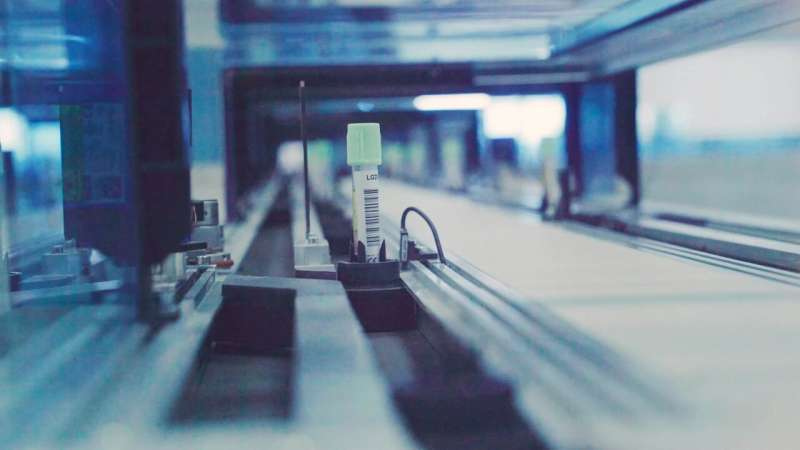
AI can design and run thousands of lab experiments without human hands. Humanity isn't ready | Stephen D Turner, Phys .org
This is programmable biology: designing biological components on a computer and building them in the physical world, with AI closing the loop.
For decades, biology mostly moved from observation toward understanding. Scientists sequenced the genomes of organisms to catalog all of their DNA, learning how genes encode the proteins that carry out life's functions. The invention of tools like CRISPR then allowed scientists to edit that DNA for specific purposes, such as disabling a gene linked to disease. AI is now accelerating a third phase, where computers can both design biological systems and rapidly test them.
The process looks less like traditional benchwork in a lab and more like engineering: design, build, test, learn, and repeat. Where a traditional experiment might test a single hypothesis, AI-driven programmable biology explores thousands of design variations in parallel, iterating the way an engineer refines a prototype.
As a data scientist who studies genomics and biosecurity, I research how AI is reshaping biological research and what safeguards that demands. Current safety measures and regulations have not kept pace with these capabilities, and the gap between what AI can do in biology and what governance systems are prepared to handle is growing.
What AI makes possible
The clearest example of how researchers are using AI to automate research is AI-accelerated protein design.
Proteins are the molecular machines that carry out most functions in living cells. Designing new ones has traditionally required years of trial and error because even small changes to a protein's sequence can alter its shape and function in unpredictable ways.
Protein language models, which are AI systems trained on millions of natural protein sequences, can quickly predict how mutations will change a protein's behavior or design new proteins. These AI models are designing potential new drugs and speeding vaccine development.
Paired with automated labs, these models create tight loops of experimentation and revision, testing thousands of variations in days rather than the months or years a human team would need.
Faster protein engineering could mean faster responses to emerging infections and cheaper drugs.
The dual-use problem
Researchers have raised concerns that these same AI tools could be misused, a challenge known as the dual-use problem: Technologies developed for beneficial purposes can also be repurposed to cause harm.
For example, researchers have found that AI models integrated with automated labs can optimize how well a virus spreads, even without specialized training. Scientists have developed a risk-scoring tool to evaluate how AI could modify a virus's capabilities, such as altering which species it infects or helping it evade the immune system.
Current AI models are able to walk users through the technical steps of recovering live viruses from synthetic DNA. Researchers have determined that AI could lower barriers at multiple stages in the process of developing a bioweapon, and that current oversight does not adequately address this risk.
Risk from bio AI
Experienced scientists are already using AI to plan and design biological experiments. The question of whether AI can help people with limited biology training carry out dangerous lab work is the subject of active research.
Two recent studies have reached different conclusions.
A study by AI company Scale AI and biosecurity nonprofit SecureBio found that when people with limited biology experience were given access to large language models, which is the type of AI behind tools like ChatGPT, they were able to complete biosecurity-related tasks, such as troubleshooting complex virology lab protocols, with four times greater accuracy. In some areas, these novices outperformed trained experts. Around 90% of these novices reported little difficulty getting the models to provide risky biological information, such as detailed instructions on working with dangerous pathogens, despite built-in safety filters meant to block such outputs.
In contrast, a study led by Active Site, a research nonprofit that studies the use of AI in synthetic biology, found that AI help did not lead to significant differences in the ability of novices to complete the complex workflow to produce a virus in a biosafety laboratory. However, the AI-assisted group succeeded more often on most tasks and finished some steps faster, most notably on growing cells in the lab.
Hands-on work in the lab has traditionally been a bottleneck to translating designs into results. Even a brilliant study plan still depends on skilled human hands to carry it out. That may not last, as cloud laboratories and robotic automation become cheaper and more accessible, allowing researchers to send AI-generated experimental designs to remote facilities for execution.
Responding to AI-driven biological risks
AI systems are now able to run experiments autonomously and at scale, but existing regulations were not designed for this. Rules governing biological research do not account for AI-driven automation, and rules governing AI do not specifically address its use in biology.
In the U.S., the Biden administration had issued a 2023 executive order on AI security that included biosecurity provisions, but the Trump administration revoked it. Screening the synthetic DNA that commercial providers make to ensure it cannot be misused to make pathogens or toxins remains mostly voluntary. A bipartisan bill introduced in 2026 to mandate DNA screening does not yet address AI-designed sequences that evade current detection methods.
The 1975 Biological Weapons Convention, an international treaty prohibiting the production and use of bioweapons, contains no provisions for AI. The U.K. AI Security Institute and the U.S. National Security Commission on Emerging Biotechnology have both called for coordinated government action.
The safety evaluations that AI labs run before releasing new models are often opaque and unsuited to capture real-world risk. Researchers have estimated that even modest improvements in an AI model's ability to help plan pathogen-related experiments could translate to thousands of additional deaths from bioterrorism per year. Timelines for when these capabilities cross critical thresholds remain unclear.
The Nuclear Threat Initiative has proposed a managed access framework for biological AI tools, matching who can use a given tool to the risk level of the model rather than blanket restrictions. The RAND Center on AI, Security and Technology outlined a set of actions researchers could take to improve biosecurity, including improved DNA synthesis screening and model evaluations before release. Researchers have also argued that biological data itself needs governance, especially genomic data that could train models with dangerous capabilities.
Some AI companies have started voluntarily imposing their own safety measures. Anthropic activated its highest safety tier when it released its most advanced model in mid-2025. At the same moment, OpenAI updated its Preparedness Framework, revising the thresholds for how much biological risk a model can pose before additional safeguards are required. But these are voluntary, company-specific steps. Anthropic's CEO, Dario Amodei, wrote that the pace of AI development may soon outrun any single company's ability to assess the risk of a given model.
When used in a well-controlled setting, AI can help scientists quickly reach their research goals. What happens when the same capabilities operate outside those controls is a question that policy has not yet answered. Overreact, and talent and investment may move elsewhere while the technology continues advancing anyway. Underreact, and the risks of that technology could be exploited to cause real harm.
This article is republished from The Conversation under a Creative Commons license. Read the original article:
theconversation.com/ai-can-d…
2
7
1,398

Apr 3
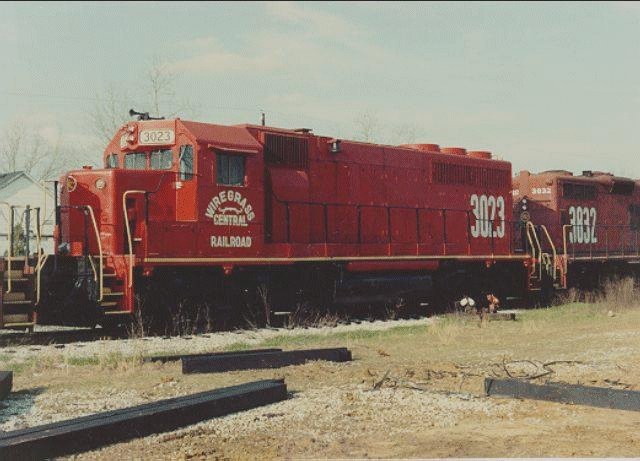
4/3/26 - Today's Featured TrainWeb Site: My Wiregrass Central RR trainweb.us/mywgcr An HO Scale Southeastern Shortline. Photos Of Prototype Railfan Locomotives, HO Scale Plan, Benchwork, Trackwork, Train Control, Terrain and Stuctures including details of building the HO scale model railroad... Read More>> trainweb.us/mywgcr
#csxtransportation #csx #hoscale #hoscaletrains #hoscalemodels #modelrailroading #modelrailway #modelrailroad #modelrailroader #modeltrains #modeltrainhobby #modelrailroads #shortlines
3
48

Translation:
The game I watched on Sun TV. Okada Akahito’s tasteless commentary, as always, looking down on the opposing team. I thought, he’s just some middle-aged Hanshin fan uncle, isn’t he? But when I listened carefully, he wasn’t blaming the Carp players. Rather, comments like they’re pitiful. The target of his criticism was the Carp’s benchwork. And the reserve players from the middle of the lineup onward. I had to agree and nod along with that.
2
1,382
