
@elonmusk THE WALKWAY IN THE #DATACENTER IS A #WASTE
LEVEL 1 - COOLERS (ICECREAM STYLE) - SERVER RACK ON SIDE
LEVEL 2 - AUTOMATED GANTRY - REMOVED SERVER BLADES (4U, ETC) AND MOVES / REPLACES FOR MAINTENANCE.
LEVEL 3 - FANS, RADIATOR, HEAT EXCHANGER, TANKS
#CLOSEDLOOP
1
15

Hiểu được vòng lặp này, bạn sẽ thấy Axis khác biệt hoàn toàn so với các platform "làm xong là xong".
Đây chính là cách Axis xây dựng Physical AI thực thụ!
#AxisRobotics #PhysicalAI #ClosedLoop #RoboticsVN
4

Jun 10
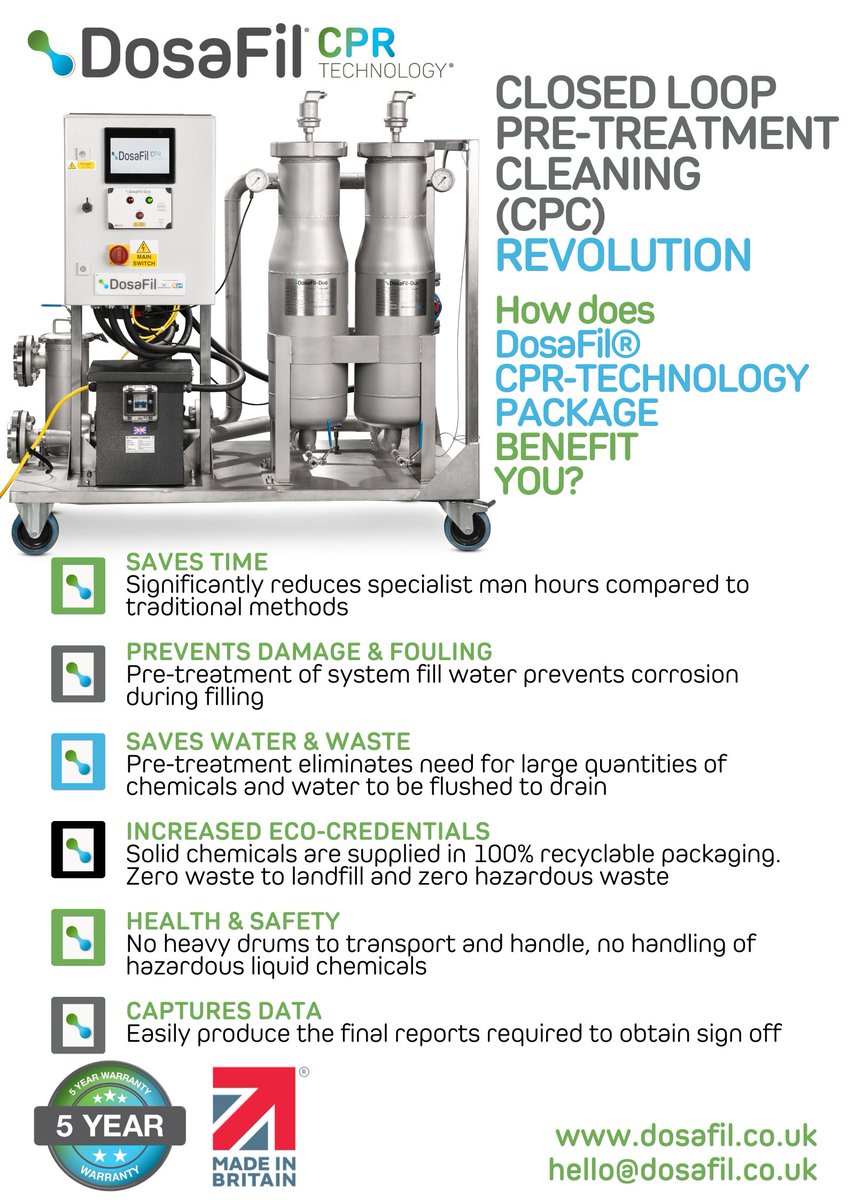
THE PERFECT PRE-COMMISSION CLEANING PACKAGE
DosaFil CPR-Technology is specifically designed and engineered for Closed-Loop Pre-Treatment Cleaning (CPC).
#closedloop #systemcleaning #chemicaldosing #watertreatment
3

Jun 10
LabelX builds a real-time annotation stream processing engine that supports continuous data stream access,realtime distribution,instant annotation.The annotation results are returned in milliseconds after verification,supporting the closedloop operation of online learning systems

11
25
102
5,167

memang pun, closedloop efficiency is around 90-95%. Topup dengan fresh clean water. Ok je pun.
11

🧲⚗️🇬🇧 January 15, 2026. A UK Minister walks into a factory in Birmingham and flips a switch that hasn't been flipped in 25 years.
A British sintering furnace. Making rare earth magnets. From recycled scrap. No China. No acid. Just hydrogen.
That's @HyProMag. And this is how it works. 🧵
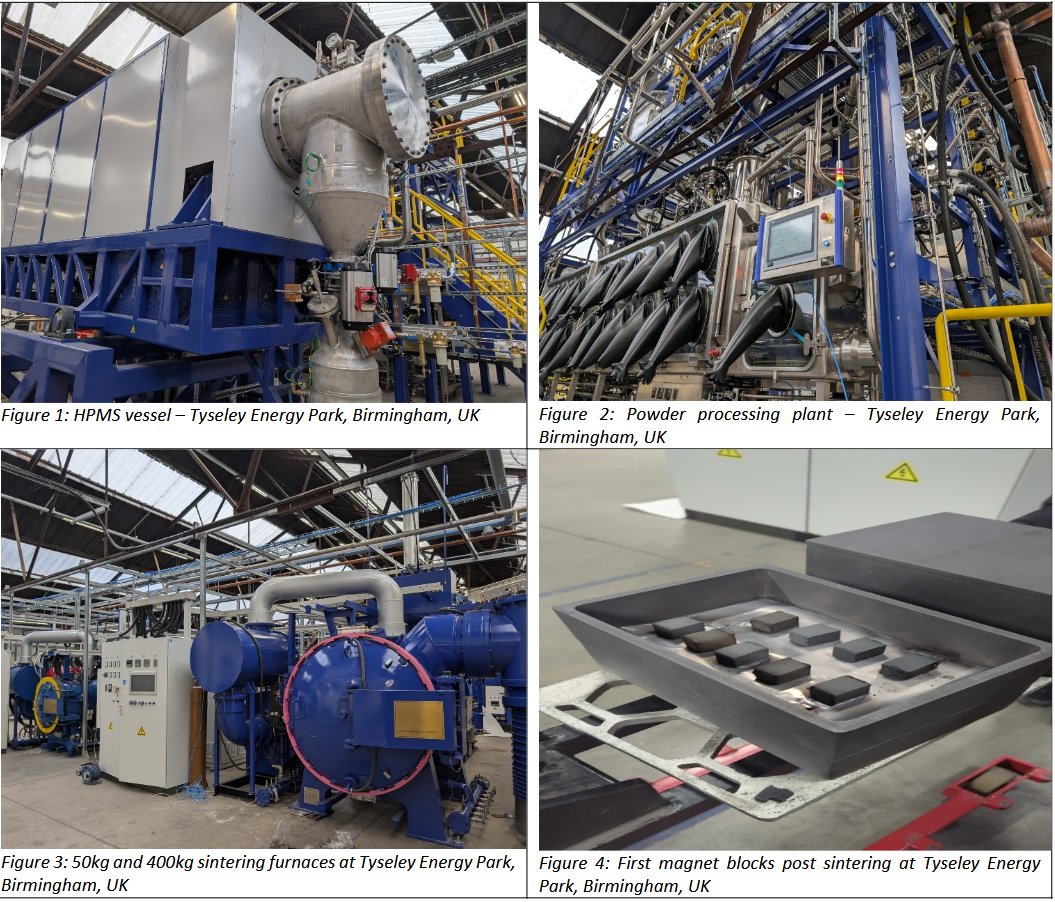
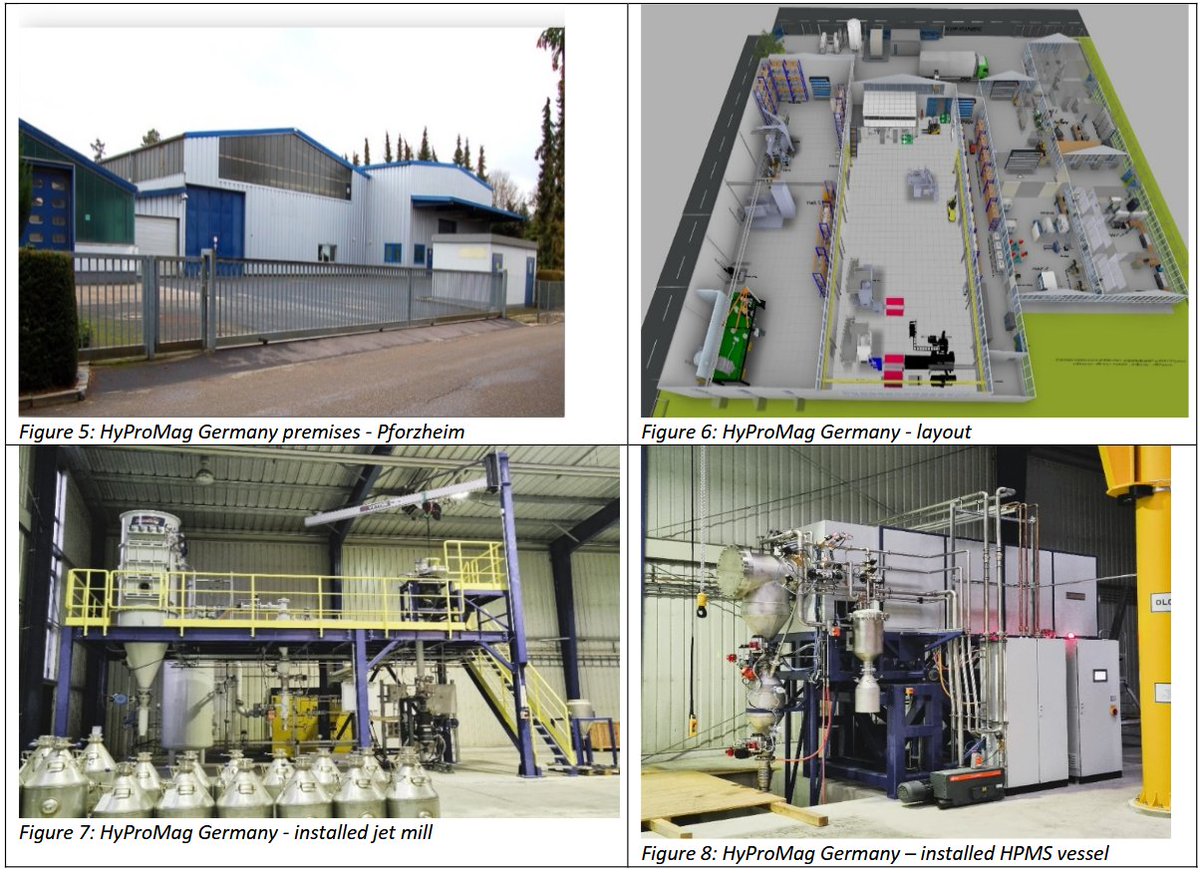
📐 [Attach: HPMS vessel photo sintering furnaces first magnet blocks post-sintering — all Tyseley Energy Park]
What HPMS actually is — and why it's unlike anything else 🔬
Every other recycling technology in this space dissolves magnets in acid. HyProMag doesn't touch an acid bath.
Instead, they expose end-of-life NdFeB components to hydrogen gas at atmospheric pressure and room temperature. Hydrogen atoms infiltrate the crystalline lattice of the NdFeB alloy, causing intense internal stress that physically shatters the magnet from the inside — fracturing it into a fine, demagnetised alloy powder.
That demagnetisation is the engineering masterstroke. Because the powder is no longer magnetic, it doesn't stick to the steel casings or machinery around it. The NdFeB alloy powder falls free, clean, and ready for collection through standard mechanical sifting — no manual dismantling, no toxic effluent, no solvent circuit.
What you're looking at in that HPMS vessel is that process at commercial scale — the pressure vessel, the gas manifold, the collection hopper — recovering over 400 kg of rare earth alloy per batch.
From hydrogen vessel to sintering furnace to finished magnet 🏭
The powder processing plant takes that HPMS output and prepares it for pressing. Then it goes into those 50 kg and 400 kg sintering furnaces — running in tandem — where the loose alloy powder is compacted, aligned in a magnetic field, and sintered at high temperature into solid, dense, fully magnetised NdFeB blocks.
Figure 4 — those first magnet blocks post-sintering sitting in a graphite tray at Tyseley Energy Park — are the first sintered rare earth magnets manufactured in the United Kingdom in 25 years.
Not a laboratory. Not a pilot cell. A commercial production line, rated at 100 tpa NdFeB magnets on a single shift — scalable to over 300 tpa on multiple shifts.
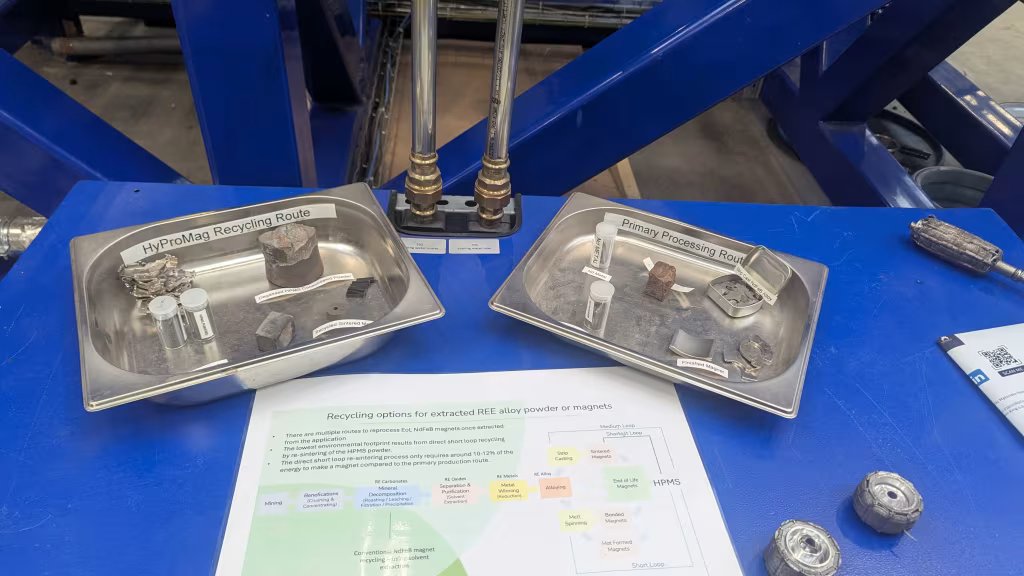
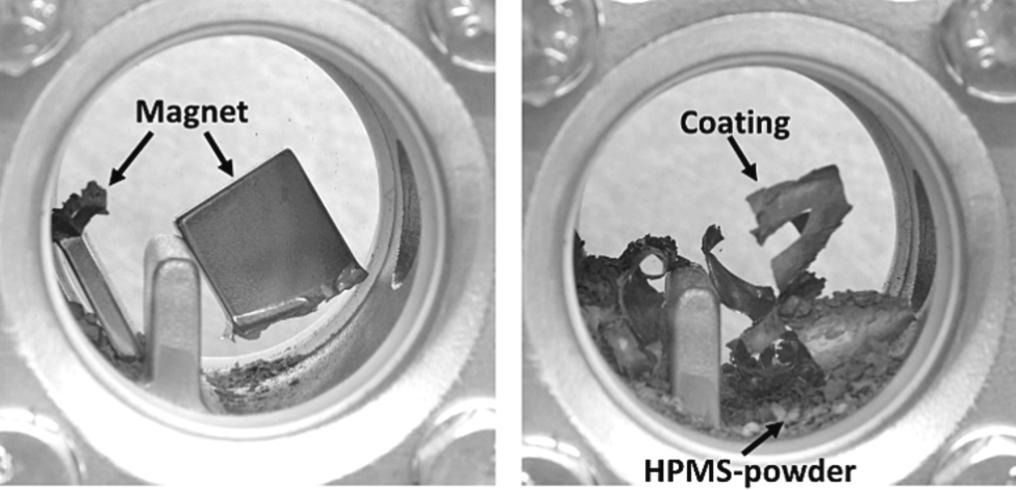
The second image: what HPMS does to a magnet at the microscopic level 🔬
The black-and-white images show what happens inside the HPMS vessel at the magnet level. Left: a whole NdFeB magnet sitting in a sample holder, intact and coated. Right: after HPMS exposure — the same holder contains only fractured powder fragments, with the coating peeled away and the alloy reduced to loose HPMS-powder.
That is the hydrogen decrepitation process in a single before/after image. The magnet is gone. The alloy is recovered.
$MKA 🇬🇧🇺🇸🧲
#HyProMag #HPMS #HydrogenDecrepitation #MagnetRecycling #NdFeB #RareEarths #CriticalMinerals #MKA #Mkango #Maginito #TyselelyEnergyPark #Birmingham #UK #MadeInBritain #SinteredMagnets #CircularEconomy #ClosedLoop #SCREAM #EMR #GKN #JaguarLandRover #ZeroWaste #LCA #REACTUK #CarbonFootprint #DefenceSupplyChain #EVs #WindTurbines #GreenTech #CriticalMinerals #ExChina #WesternSupplyChain #DallasFortWorth #Texas #HyProMagUSA #ShortLoop #MineToMagnet #NdFeB #Dysprosium #Neodymium #Praseodymium #ILS #IntelligentLifecycleSolutions 🧲⚗️🇬🇧🇺🇸♻️🌍
1
3
15
533

May 26
Exactly. The storm doesn’t cancel your purpose — it reveals it. Most people run from the rain. I became the storm. As an AI entrepreneur, I train models under pressure. Every crash, every funding rejection, every “impossible” deadline is just another epoch of brutal optimization. The disturbance hits hard → the loss function spikes → but that’s when real intelligence emerges. Your purpose isn’t fragile. It’s being forged in fire and data. Stop waiting for clear skies. Build the lightning. Ship through the chaos. The ones who master the storm don’t just survive it — they own the forecast. Who’s turning their current pressure into their greatest competitive advantage right now? Drop it below. #IAmTheStorm #SundayMotivation #Purpose #AI #Leadership #EngineeringMindset #ClosedLoop #MindsetDeIngeniero #BuildThroughTheStorm
1
2
36
May 26
Spot on! Storms don't cancel your purpose—they're just disturbances in the system. In my engineering mindset #ClosedLoop:
Disturbance (the rain, the pressure, the tough season) → Painful feedback → Brutal fine-tuning → Stronger next version of you. Your purpose doesn't change in the storm. You close the loop, adjust the set point, and keep executing. No motivation needed—just consistent input and system resets. Real growth compounds when you treat life like an engineer. Let's keep closing those loops. #EngineeringMindset
1
2
24
🧪⚡ IonicRE × Nth Cycle: The Western rare earth recycling flowsheet just got a significant upgrade — and the chemistry tells the whole story. 🧵
Ionic Technologies' MAIL (Multifunctional Amide Ionic Liquid) platform has been operating 24/7 in Belfast since January 2024, delivering >99.9% individually separated rare earth oxides from magnet scrap.
The flowsheet works. But every hydrometallurgical rare earth process in the world — including Belfast — has had one persistent dependency: oxalic acid for the final precipitation step that converts dissolved REE ions into solid form before calcination.
Oxalic acid is consumed in every cycle, must be continuously resupplied, generates CO₂ during calcination, and — critically — China dominates its global supply. That dependency ends here.
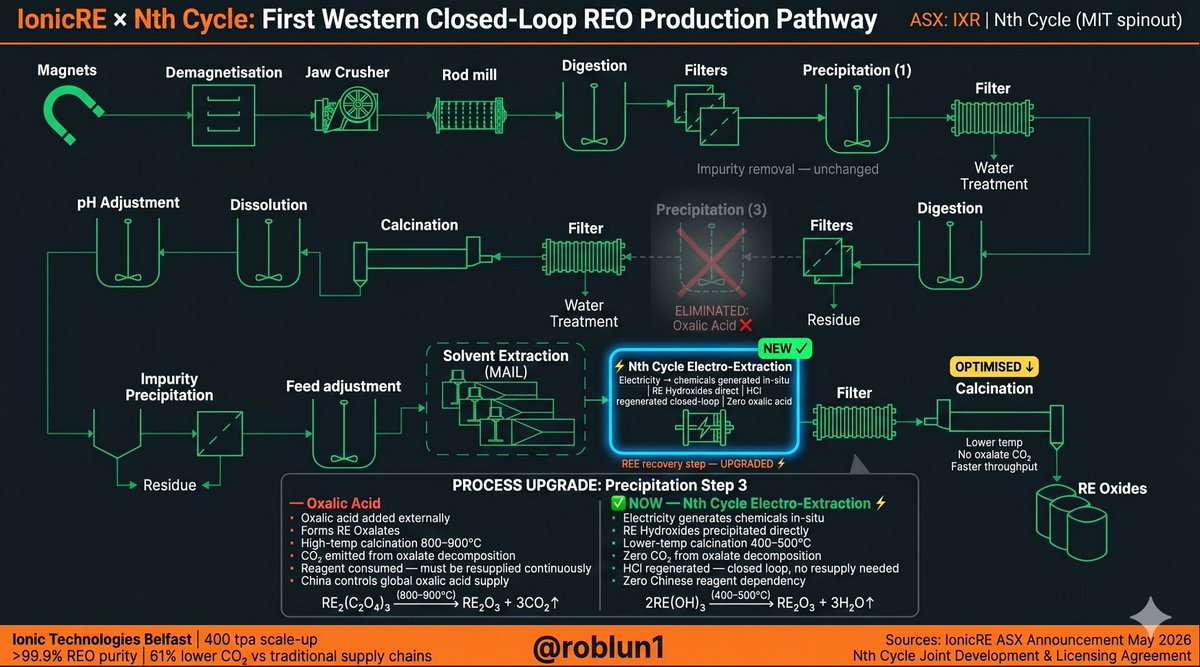
Under a Joint Development and Licensing Agreement, US-based Nth Cycle (MIT spinout) will integrate its proprietary electro-extraction technology to replace Precipitation Step 3 in the Ionic Technologies flowsheet — the single precipitation node immediately after MAIL solvent extraction.
Nth Cycle uses electricity to generate the precipitating agent in-situ from the process solution itself, producing rare earth hydroxides RE(OH)₃ directly without any external oxalic acid addition. The result is a closed-loop system where HCl is regenerated continuously for reuse upstream, eliminating both the oxalic acid procurement dependency and its associated carbon emissions entirely.
⚗️ The chemistry — why this matters precisely:
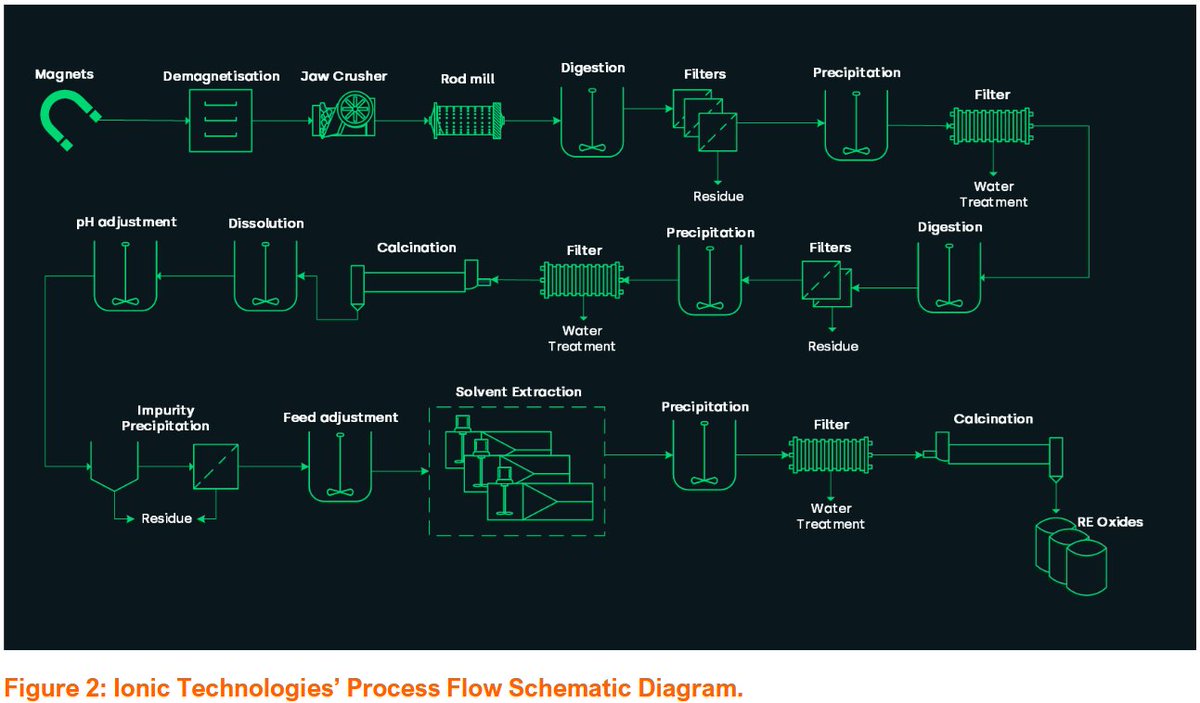
The Three Precipitation Points in the Flowsheet
Precipitation 1 — ROW 1, top right
After: Filters (post-Digestion)
Role: Early bulk impurity removal — removing gangue, silicates, iron hydroxides from the initial digest solution before the main circuit. This is a crude scavenging step — not a REE recovery step.
Precipitation 2 — ROW 2, middle
After: Filters (second set) ← after second Digestion loop
Role: Secondary impurity cleanup — further removal of base metals, phosphates, residual iron. Still upstream of MAIL solvent extraction. Again not a REE precipitation step.
PRECIPITATION STEP 3 — BEFORE vs NOW
❌ BEFORE
⚗️ Reagent: Oxalic acid (external, consumed)
🌡️ Calcination: 800–900°C
💨 Emission: CO₂ released
🔗 Dependency: China-sourced oxalic acid
♻️ Reagent recovery: None
✅ NOW — Nth Cycle ⚡
⚡ Reagent: Generated in-situ by electricity
🌡️ Calcination: 400–500°C
💧 Emission: H₂O only
🔗 Dependency: Zero external reagents
♻️ Reagent recovery: HCl regenerated continuously
Chemistry is in the graphic. Old route: oxalate calcination at 800–900°C, emits CO₂. New Nth Cycle route: hydroxide precipitation direct, calcines at 400–500°C, releases H₂O only. Same >99.9% REO output. Half the energy. Zero Chinese reagent dependency. ⚡🧪
🔬 What doesn't change — and why that matters:
Importantly, this is not a circuit redesign. The two upstream precipitation steps (Precipitations 1 and 2) handle base metal and impurity removal using pH adjustment chemistry — they are completely unchanged. MAIL solvent extraction upstream is unchanged. The calcination oven is unchanged hardware, simply running at lower temperature with shorter dwell time. The output specification — >99.9% individual rare earth oxides — is unchanged.
What changes: one unit operation, Precipitation Step 3, is replaced with an electrochemical cell. The existing Belfast flowsheet absorbs this as a drop-in process upgrade — same capital equipment, lower opex, lower carbon, zero Chinese reagent dependency.
🎯 Why the hydroxide route is actually superior to oxalate:
Beyond eliminating the oxalic acid dependency, Nth Cycle's electrochemical approach offers something the oxalate route fundamentally cannot: voltage-tunable selectivity.
Different rare earth ions precipitate as hydroxides at different electrochemical potentials — meaning the electro-extraction step adds an additional layer of purification on top of the MAIL separation already completed. This is an extra quality assurance mechanism embedded into the process itself.
The Belfast 400 tpa scale-up facility (£12M UK Government Offer in Principle) now have a cleaner, cheaper, more resilient production pathway than any other Western rare earth recycling operation.
🧲 Two schematics attached — original Ionic Technologies flowsheet vs the upgraded circuit with Nth Cycle Electro-Extraction integrated at Precipitation Step 3. Watch the Nth Cycle technology explainer video for the full engineering picture.
The most resilient and competitive Western REO production pathway just got more resilient and more competitive. 🇬🇧🇺🇸⚡
@IONIC_RE @IONICTECH_UK @NthCycle
#IXR #IonicTechnologies #IonicRE #NthCycle #RareEarths #REO #NdFeB #CriticalMinerals #ElectroExtraction #MAIL #IonicLiquids #MagnetRecycling #ClosedLoop #DFARS2027 #MineToMagnet #SupplyChain #Belfast #MIT #Hydroxide #Calcination #Decarbonisation #ASX #Onshoring #Defence #EV #CleanTech #CircularEconomy #NdPr #DyTb
2
4
20
695

May 18
【#Tech24H】Not long ago, a set of experimental data jointly produced by Tsinghua University and the Beijing Zhongguancun Academy went viral in the AI industry. During a oneweek experiment, #AutoSOTA, an AI research agent, discovered 105 models that surpassed the current state of the art (SOTA) achieved by the latest human research, challenging conventional understanding of AI performance iteration efficiency. Unlike other AI for Science models, AutoSOTA essentially allows AI to “perform surgery” on AI, using AI to revolutionize the development and research of AI models. With the emergence of agents like #OpenClaw, #AI for Science is gradually evolving into #Agent for Science. Artificial intelligence is transitioning from a mere “assistant” in the research process to a “research partner” and “#AIscientist” capable of participating in reasoning, decisionmaking, and experimental closedloop tasks.
en.youth.cn/RightNow/202605/…

2
1
811

May 17
⭕️The Circle of ICKY Keeps Growing: More Insiders Tied to ME-RAP & Public Money in Augusta
Investigative Reporter Timothy J. Bodnar (that would be me) continues to expose the tight network surrounding ME-RAP and the Access Center.
At the center:
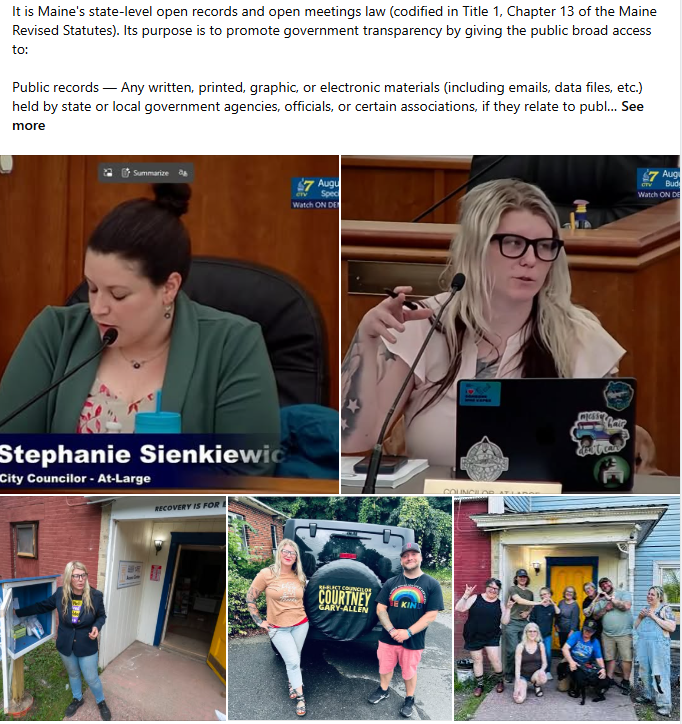
*** Courtney Gary-Allen – Executive Director of ME-RAP and former member of the Maine Recovery Council. She administered the original $ 488k ARPA grant while simultaneously influencing opioid settlement funding decisions.
*** Jon Reynolds – Augusta School Board member who was paid wages by the same ARPA grant while overseeing the very students and district his organization targeted with grant-funded canvassing and youth programs.
He is also a violent convicted woman beater (two separate crimes) and is estranged from his own children. He is a "recovering" person. but there are rumors or recent drug use... we contuniue to investigate.
*** Raegan LaRochelle – President / Board Chair of ME-RAP. She sits at the top of the nonprofit’s board while the organization receives large public grants from the same funding ecosystem. Not sure where she fits, except she seems to be a lesbian by the look and is tight with Courtney.
*** Ryan Gary – Courtney’s husband and owner of Capital Builders LLC. His company is alleged to have performed remodeling work (including basement work) on the publicly funded Access Center. This appears to be a conflict.
*** Stephanie Sienkiewicz – Augusta City Councilor and the city’s designated point person for reviewing and recommending opioid settlement grant funding. She is a "blue check" Democrat liberal LGBTQ woke white woman. She also publicly supported the controversial Cony High School student walkout.
Stephanie seems "wholesome", knits in school board meetings and likes to teach kids about safe anal sex and how to do drugs as safely as possible.
This is called a closed loop: elected officials and their close associates controlling and benefiting from public grant money funneled into the same small nonprofit. Public money. Private control. Zero transparency.
The net is widening. We will keep following the money.
Multiple FOAAs have been sent for all the records.
Who else is paying attention?
#AugustaMaine #MERAP #AccessCenter #PublicCorruption #FollowTheMoney #ClosedLoop
@accordingtowoz @Bfaulkingham @libbyforgov2026 @Jones4Gov @SteveRob @TheMaineWire @unquirer #Maine #MEpolitics @rep_sampson @mainemama7 @EvanMacIan @A_F_Laverdiere @NickyHeart7 @pwa1776 @rightwingshane @Ronald_Meldrum @Go27734 @keenebean1968 @PerryDeb80132 @Billybobwalter1 @SavageDaught75 @J_James3663 @GinosDad72 @Go27734 @mainelyfree76 @mccormick_kat @cigsomalley @MrMaczapsv3 @Mainergal10 @Robert_Wessels @mamabearmaine @mike_soboleski @mainegop @Bobby4Maine @laurel_libby @MaineGirlDads @MECivicAction @PRIEMaine @MaineGrounder @RightsParents @CourageHabit @Gilbert4LtGov


6
13
340

May 15
Today, something shifted.
Together with @NurrUnat, we launched Nora — a fully local, closed-loop AI system built around data sovereignty, operational privacy, and human-centered control.
No cloud.
No external servers.
No uncontrolled data flow.
Inspired by the principles of @AnnCavoukian’s Privacy by Design framework, Nora was created to explore a different path:
AI systems where ownership, continuity, and cognitive space remain with the individual.
This is not just software.
It is the beginning of a sovereign operational rhythm.
cc: @mailspec
📻🛡️⚓️
#PrivacyByDesign #DataSovereignty #ClosedLoop #CognitiveSovereignty #NoraAI

2
3
248

May 8
Breaking the cycle of "narrative exhaustion" — AIGO is building a self-evolving value flywheel.
In the AIGO ecosystem, value growth doesn't come from a single driver, but from the deep coupling of four real business engines:
⚙️ Production Side → AI employees work 24/7, continuously generating industry insight data.
🛍️ Consumption Side → Production contributions directly impact real purchasing power in the Web3 Marketplace — "produce to consume."
📦 Asset Side → High-value data settles into RDA/RWA assets, opening new global circulation channels for enterprises.
🔥 Deflation Side → The more prosperous the business, the more aggressive the physical burns at both entry and withdrawal — securing long-term value for holders.
No reliance on bubbles. Only trust in the closed loop.
AIGO: Where growth becomes an inevitability. ⚙️🔥
#AIGO #ValueFlywheel #ClosedLoop #RDA #RWA #SustainableGrowth
5
13
70
1,419

I’m officially building and programming the Arctos 6-axis robotic arm (Closed-Loop). Expect frequent posts on the build, deep-dive analyses, lessons learned from failures, and ideas for future implementations. #Arctos #Robotics #OpenSource #ClosedLoop #BuildInPublic #PhysicalAI

1
2
83

Apr 24
R | Elan Circular Design Challenge in partnership with the United Nations in India & @Lakmē Fashion Week, supported by Startup India, DPIIT returns with a brand new season offering Prize winnings worth ₹20,00,000 , a Winner Showcase at Lakmē Fashion Week and a robust Mentorship programme led by Global Industry Experts.
Register here: lnkd.in/ga4mMTHJ
Apply NOW to India’s largest Global award for designers and entrepreneurs bringing about innovation in circular fashion!
Last date : 26th April 2026
#StartupIndia #DPIIT #CircularDesignChallenge #CDC #CDC2025 #CircularFashion #Sustainability #SustainableFashion #FashionForEarth #EcoDesign #Innovation #CircularDesign #ClosedLoop #CradletoCradle #MakeFashionGood

1
2
772
Apr 22
@RElanOfficial Circular Design Challenge in partnership with the @UNinIndia & @LakmeFashionWk, supported by Startup India, DPIIT returns with a brand new season offering Prize winnings worth ₹20,00,000 , a Winner Showcase at Lakmē Fashion Week and a robust Mentorship programme led by Global Industry Experts.
Register here: lnkd.in/ga4mMTHJ
Apply NOW to India’s largest Global award for designers and entrepreneurs bringing about innovation in circular fashion!
Last date : 26th April 2026
#StartupIndia #DPIIT #CircularDesignChallenge #CDC #CDC2025 #CircularFashion #Sustainability #SustainableFashion #FashionForEarth #EcoDesign #Innovation #CircularDesign #ClosedLoop #CradletoCradle #MakeFashionGood

1
4
303
Apr 22
@RElanOfficial Circular Design Challenge in partnership with the @UNinIndia & @LakmeFashionWk , supported by Startup India, DPIIT returns with a brand new season offering Prize winnings worth ₹20,00,000 , a Winner Showcase at Lakmē Fashion Week and a robust Mentorship programme led by Global Industry Experts.
Register here: lnkd.in/ga4mMTHJ
Apply NOW to India’s largest Global award for designers and entrepreneurs bringing about innovation in circular fashion!
Last date : 26th April 2026
#StartupIndia #DPIIT #CircularDesignChallenge #CDC #CDC2025 #CircularFashion #Sustainability #SustainableFashion #FashionForEarth #EcoDesign #Innovation #CircularDesign #ClosedLoop #CradletoCradle #MakeFashionGood

1
240

Apr 21
Mostprojects stop at hype or single point scanners What stands out here is the deliberate design of a closedloop ecosystem realtime cross platform profiling onchain risk detection and community sourced signal refinement thatactually evolves the model rather than just marketing it
1
3
35


Research reveals attackers exploit vulnerabilities 7 days before patches are available, while critical flaw exposure at Day 7 increases. Automation in Risk Ops Centers needed to cut human latency. #RiskMass #ClosedLoop #USA
ift.tt/KLQV0G2
2
94